Abu Simbel Temple Guide: Everything You Need to Know
Plan your visit to Abu Simbel with insider tips on tickets, transport from Aswan, the best time to arrive, and what most tourists completely miss.
Audio Guide: Abu Simbel Temple Guide: Everything You Need to Know
Quick Facts
- Best time to visit
- October to February for cooler temperatures. February 22 and October 22 for the solar alignment, but book well in advance.
- Entrance fee
- EGP 900 per person (approx. $18 USD). Students with ISIC card: EGP 450. Tripod permit: EGP 50 extra.
- Opening hours
- Daily 5am to 6pm, last entry 5:30pm. Opens early to accommodate the Aswan convoy arrival.
- How to get there
- Shared convoy minibus from Aswan: EGP 250 to 350 per person each way, departs 4am. Private car hire: EGP 1,500 to 2,500 return. EgyptAir flight from Aswan: from EGP 3,500 round-trip, 40 minutes, plus EGP 50 to 100 taxi from airport.
- Time needed
- 2 to 3 hours minimum for both temples. 4 hours if exploring the full perimeter and taking the interior slowly.
- Cost range
- Budget EGP 1,200 to 1,800 per person for the day including transport and tickets. Mid-range EGP 2,500 to 4,500 if flying.
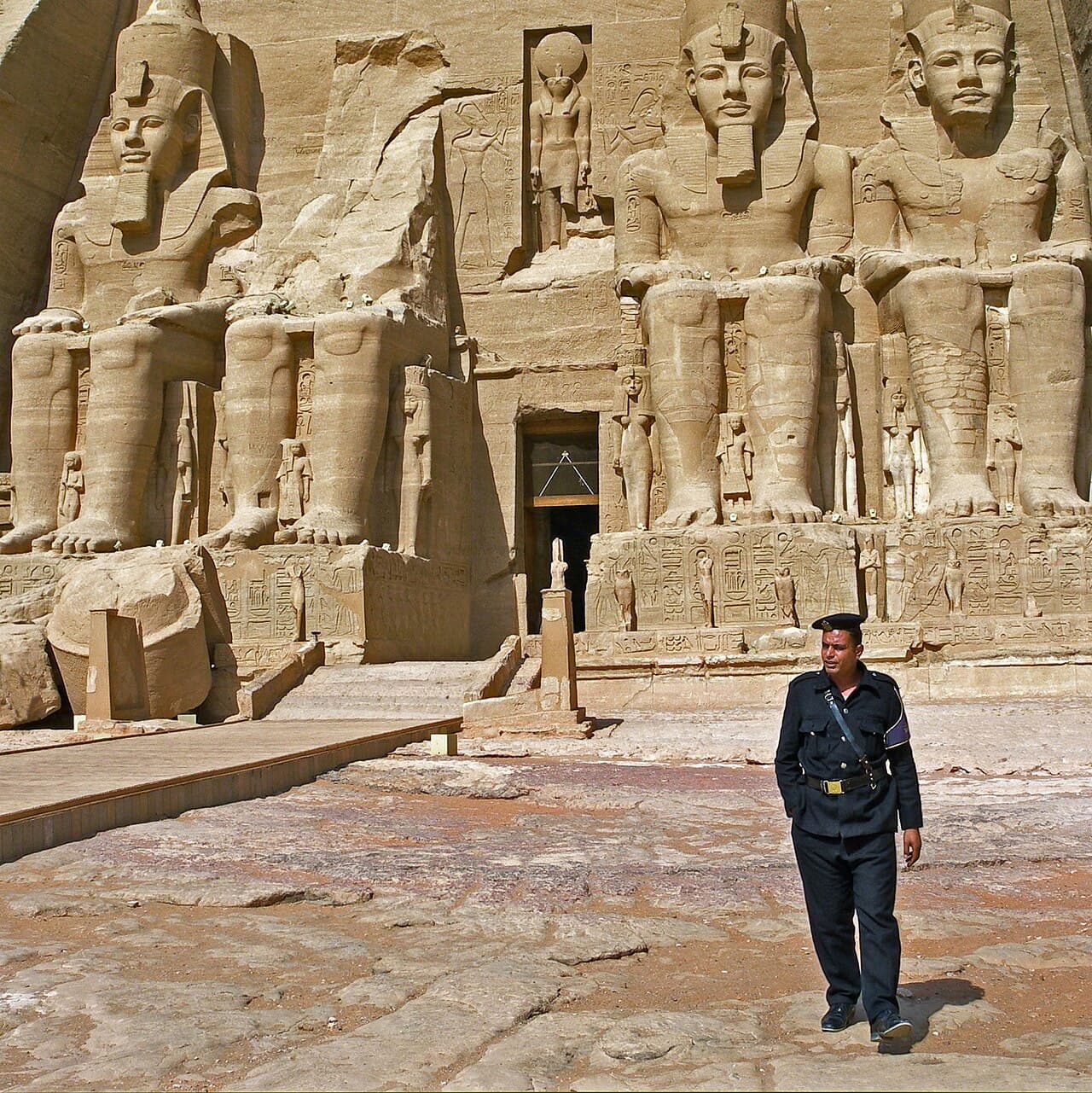
At 4am, the convoy of minibuses leaves Aswan in absolute darkness, headlights cutting through desert air that smells of dust and cool stone. Three hours later, you step out into the Nubian sun and face four seated colossi, each 20 meters tall, carved directly into a sandstone cliff above Lake Nasser. Ramesses II had this temple built so that twice a year, on February 22 and October 22, sunlight would penetrate 63 meters into the mountain and illuminate three of the four statues in the innermost sanctuary. The fourth statue, representing Ptah, god of the underworld, remains in permanent shadow. That detail alone tells you what kind of engineering mind conceived this place in 1264 BCE.
This Abu Simbel temple guide covers the practical realities of getting here, what to prioritize inside, and how to avoid the mistakes that leave most visitors feeling they only skimmed the surface.
Quick Facts
Best time to visit: October through February for cooler temperatures. February 22 and October 22 for the solar alignment event (book months in advance).
Entrance fees: EGP 900 per person (approx. $18 USD) for the main temple complex. The ticket covers both the Great Temple of Ramesses II and the smaller Temple of Hathor dedicated to Nefertari. Students with a valid ISIC card pay EGP 450.
Opening hours: Daily 5am to 6pm. The site opens before sunrise specifically to accommodate the convoy schedule. Last entry is 5:30pm.
How to get there: Three realistic options from Aswan. First, the organized convoy departs from the Aswan Tourist Office area at 4am (also a 11am convoy, less common) and arrives around 7am. Private minibus seats cost roughly EGP 250 to 350 per person each way through a local operator. Second, private car hire runs EGP 1,500 to 2,500 for a return trip depending on negotiation and vehicle quality. Third, EgyptAir operates flights from Aswan to Abu Simbel Airport (roughly 40 minutes), with round-trip fares starting around EGP 3,500 to 5,000 depending on the season. The airport is 3km from the temples and taxis charge EGP 50 to 100 for the transfer.
Time needed: 2 to 3 hours minimum if you are thorough inside both temples. Allow 4 hours if you want to walk the full exterior perimeter and take the interior at a slower pace.
Cost range: Budget EGP 1,200 to 1,800 per person for the day including transport, tickets, and a meal. Mid-range EGP 2,500 to 4,500 if flying.
The Two Temples and What You Are Actually Looking At
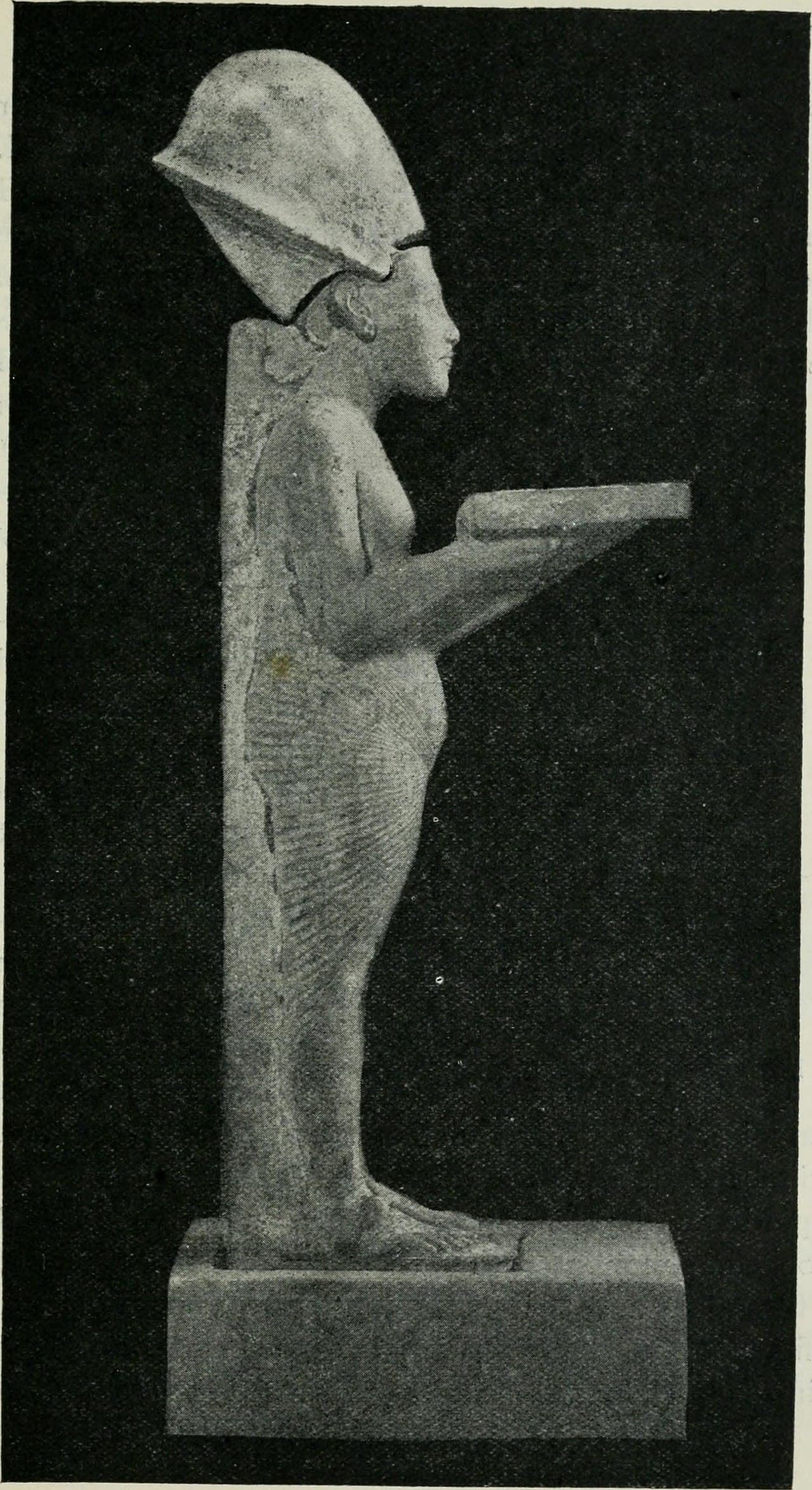
Most visitors spend 80 percent of their time in the Great Temple and hurry through the Temple of Hathor. That is a mistake. The smaller temple is one of only two in ancient Egypt built to honor a queen as a goddess in her own lifetime. Nefertari's face appears on the facade in equal scale to Ramesses II, which in the visual language of ancient Egyptian art is a radical statement.
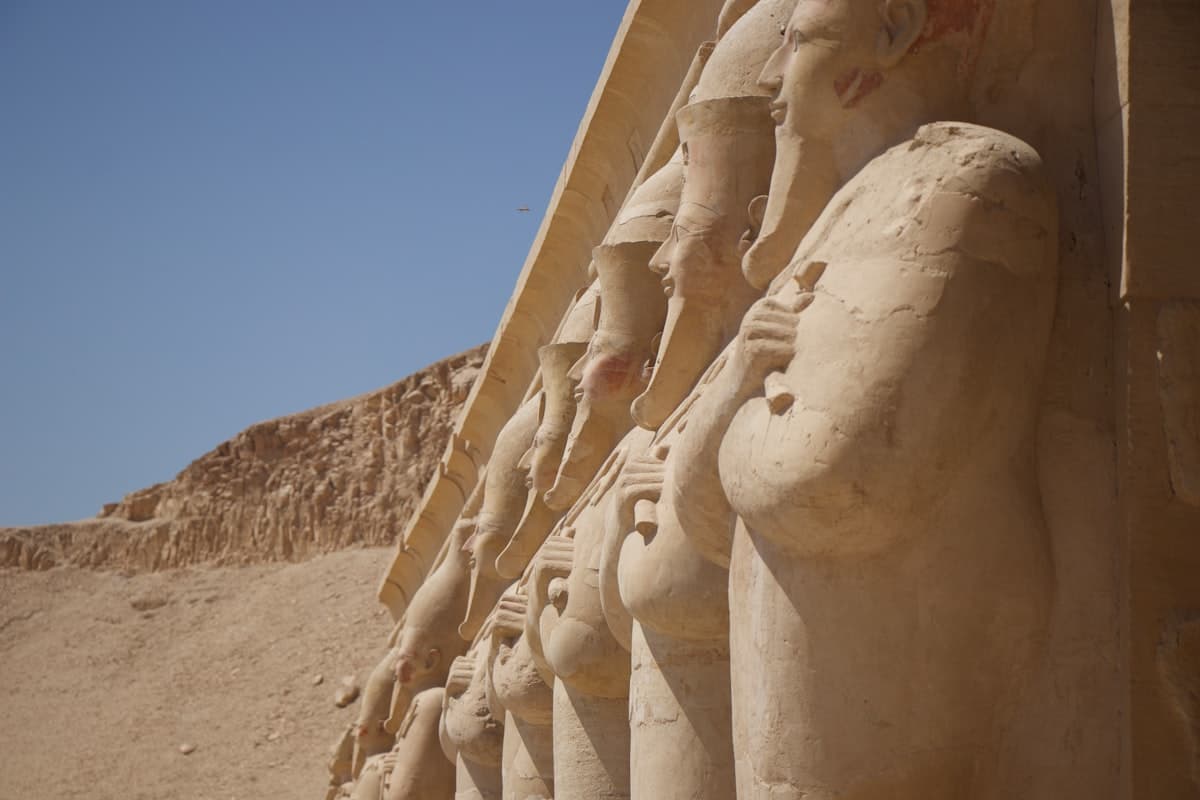
Inside the Great Temple, the hypostyle hall contains eight Osiride statues of Ramesses, each one slightly different in expression. The walls document the Battle of Kadesh in obsessive detail. Egyptologists still debate whether it was an Egyptian victory or a tactical draw, but Ramesses commissioned this version and it covers nearly every surface. Look at the lower registers near the entrance columns where Nubian and Libyan prisoners are depicted. The individuality of faces here is unusually fine for large-scale relief work.
The innermost sanctuary is small and often crowded. Your eyes take 45 seconds to adjust from the bright exterior. When they do, you see four seated figures: Ramesses II, Ra-Horakhty, Amun-Ra, and Ptah. The solar alignment on the two equinox-adjacent dates sends light directly onto all but Ptah. If you visit on an ordinary day, the effect of light in this room is still remarkable in the morning hours when shafts filter through the entrance.
The Relocation Story Most Guides Rush Through
What you are standing in front of is not where this temple originally stood. Between 1964 and 1968, UNESCO coordinated the dismantling and relocation of both temples, cutting them into 1,041 blocks weighing up to 30 tonnes each and reassembling them 65 meters higher and 200 meters back from the original site. The work saved the complex from the rising waters of Lake Nasser following the construction of the Aswan High Dam. The artificial mountain you see behind the temples was built to replicate the appearance of the original cliff.
There is a small, often-overlooked viewing platform inside the artificial dome that encases the rear of the Great Temple. Ask the guards at the far left of the site about access. It gives you a view of the concrete and steel structure that holds everything in place, which is genuinely disorienting given how seamlessly the facade reads as a natural rock formation from the outside.
The Solar Alignment Events: February 22 and October 22
These two dates draw thousands of visitors and require planning that most people underestimate. Aswan hotels fill up weeks in advance. The convoy on these dates leaves at the standard time, but the site opens to ticket holders from around 4:30am to allow people to position themselves inside the sanctuary before sunrise.
The actual illumination lasts approximately 20 minutes. The atmosphere inside, with several hundred people packed into a chamber designed for temple priests, is intense and loud in a way that sits uneasily with the original purpose of the space. If you want the visual experience without the crowd noise, consider the dates one or two days before or after. The alignment is nearly identical and the crowds drop dramatically.
The Egyptian government stages a cultural festival around the February date in particular, with Nubian music and performances outside the temple complex from the evening before. If you stay in Abu Simbel village overnight, you can attend the evening event and be at the gates before the convoy arrives.
Abu Simbel Village: Staying Overnight
Almost no one stays overnight, and that is exactly why you should consider it. The Seti Abu Simbel Lake Resort and the smaller Eskaleh Eco-Lodge are the two properties with the most consistent reviews. Eskaleh is owned by a Nubian family and serves meals using produce from their garden. Rooms run EGP 2,200 to 3,500 per night for a double.
Arriving the afternoon before means you get the early morning light on the facade before the convoy pulls in at 7am. Between roughly 5:30am and 7:15am, you may have the site nearly to yourself. The quality of the light at that hour, angled and orange across the sandstone faces, is something the midday photos you see online do not convey.
The village itself has a small waterfront along Lake Nasser. Nubian families run tea stalls and simple restaurants serving ful, tamiya, and grilled fish from the lake. The Nile perch from Lake Nasser, grilled with cumin and served with flatbread, is a meal worth building time into your schedule for.
Common Mistakes Tourists Make
Arriving with the main convoy and expecting a calm experience. The convoy deposits 200 to 400 people simultaneously. The first 45 minutes after arrival are chaotic. If you are not staying overnight, ask your driver to join the convoy but position you to enter immediately when gates open rather than waiting for the group to organize.
Ignoring the Temple of Hathor entirely. Some visitors spend four minutes inside and leave. The painted relief work in the hypostyle hall here is better preserved than in the Great Temple and the coloring, particularly the blue and yellow in the upper registers, is extraordinary in morning light.
Not bringing cash in EGP. There is one ATM near the ticket office and it is unreliable. Bring all the cash you need from Aswan. The EGP 900 entry fee, plus EGP 50 for a photography permit if you want to use a tripod, plus any tips, adds up quickly.
Tipping every guard who offers unrequested information. Some guards will attach themselves to you and deliver a brief commentary, then expect EGP 100 to 200. A polite shukran and continuing to walk is the correct response if you did not ask for their services. Guides who are worth their fee will be pre-arranged.
Underestimating the midday heat from April through September. At 11am in July the air temperature in Abu Simbel exceeds 40 degrees Celsius and the stone radiates additional heat. The convoy schedule means many visitors are there during the worst of the heat. If you are visiting in summer, the overnight option is not a luxury, it is practical temperature management.
Leaving without walking behind the Great Temple. The path around the left side of the cliff leads to a less-visited angle of the facade and a view of the lake that most visitors never see. It takes ten minutes and the silence compared to the main plaza is notable.
Booking a tour that includes only two hours at the site. Some Aswan day tours, particularly cheap ones marketed at the budget hotels along Corniche el-Nil, budget 90 minutes including the drive from the parking area. That is not enough time. Verify the site time with any operator before booking.
Practical Tips
Book convoy seats or a private vehicle through your Aswan hotel or a verified local agency the day before at the latest. During high season (October to February), seats on shared vehicles fill by midday the previous day.
Bring at least 2 liters of water per person. There is a small cafe near the ticket office selling water at EGP 20 to 30 per bottle, but the selection is limited and it is often crowded.
Wear closed shoes. The path around the perimeter involves uneven stone and compacted sand that gets into sandals in a frustrating way.
The photography permit for professional equipment and tripods costs EGP 50 at the ticket window. Standard phone and camera photography is included in the entrance fee. Flash photography inside is prohibited and the guards enforce this consistently.
If you hire a licensed Egyptologist guide in Aswan to accompany you, the knowledge transfer justifies the cost. Expect to pay EGP 600 to 1,200 for a qualified guide for the full day including transport time. Ask your hotel to contact the Aswan Guides Syndicate for verified names rather than accepting recommendations from touts near the ferry landing.
For the flight option, check in at Aswan Airport at least 90 minutes before departure. The airport is small but the EgyptAir domestic check-in process can be slow. The flight itself is 40 minutes and the aerial view of Lake Nasser and the desert is a useful orientation for understanding the geography of the relocation project.
Frequently Asked Questions
The Weekly Dispatch
More on Egypt, every Friday.
Cultural depth and places most guides never mention.
No spam. Unsubscribe anytime.