Abydos Temple: Egypt's Sacred Osiris Pilgrimage Site
Abydos temple was Egypt's holiest Osiris pilgrimage site for 3,000 years. Here's what most visitors miss about this extraordinary place in Upper Egypt.
Quick Facts
- Best time to visit
- October to February. Upper Egypt winters are warm and clear, ideal for extended outdoor visits. July and August regularly exceed 42°C and should be avoided entirely.
- Entrance fee
- EGP 450 (approx $9 USD) for both the Seti I and Ramesses II temples. Students with valid ISIC cards pay EGP 225.
- Opening hours
- Daily 6am to 5pm (summer, April to September), 6am to 6pm (winter, October to March). Inner sanctuaries may not open until 7am even when the site is technically open.
- How to get there
- Train from Luxor to El Balyana station (2 to 2.5 hrs, EGP 60 to 90 second class), then tuk-tuk or microbus to the site (EGP 20 to 30). Private car from Luxor with driver runs EGP 800 to 1,200 round trip. Organized day tours from Luxor cost EGP 800 to 1,500 per person including transport.
- Time needed
- 3 hours minimum for Seti I Temple. Full day if combining with the Ramesses II Temple, the Osireion viewpoint, and Dendera Temple.
- Cost range
- Budget EGP 600 to 900 per day (public transport, no guide). Mid-range EGP 2,000 to 3,500 per day (private car, licensed Egyptologist guide, meals).
For three thousand years, Egyptians believed that dying near Abydos guaranteed resurrection. Not metaphorical resurrection. Literal, bodily, eternal life. They shipped their dead here from Memphis, from Alexandria, from Nubia. They paid enormous sums to have cenotaphs carved into the desert cliffs. When they couldn't afford the journey, they left small stelae along the processional road so that Osiris, walking his sacred route, would read their names and remember them. Abydos was not a temple you visited once. It was a place you spent your whole life trying to reach.
Most visitors who make it to this site in Upper Egypt spend two hours walking through Seti I's hypostyle hall, photograph the Abydos King List, and leave. They miss almost everything.
Quick Facts
Best time to visit: October through February, when Upper Egypt temperatures stay below 30°C. Avoid July and August entirely.
Entrance fees: The Seti I Temple costs EGP 450 (approximately $9 USD). The smaller Ramesses II Temple nearby is included in the same ticket. Students with valid ISIC cards pay EGP 225. Foreign researchers with Ministry of Antiquities documentation sometimes access restricted areas with advance arrangement.
Opening hours: Daily 6am to 5pm in summer (April to September), 6am to 6pm in winter (October to March). The site is technically open at 6am but guards often don't unlock the inner sanctuaries until 7am. Arrive at 6am anyway: the light on the outer pylons at sunrise is worth the wait even if you can't get inside yet.
How to get there: Abydos sits about 11km from the town of El Balyana (also spelled El Baliana), which is on the main Upper Egypt railway line between Cairo and Luxor. Trains from Luxor to El Balyana take roughly 2 to 2.5 hours; second-class tickets cost EGP 60 to 90. From El Balyana station, a tuk-tuk or microbus to the temple runs EGP 20 to 30. Shared service taxis from Sohag (35km north) cost EGP 15 to 20 per seat. Driving from Luxor takes about 2.5 hours via the Nile road. Most organized tours from Luxor charge EGP 800 to 1,500 per person including transport and a guide.
Time needed: Minimum 3 hours for the Seti I Temple alone. A full day if you combine it with the Ramesses II Temple and the Osireion. Add another hour if you plan to walk any portion of the ancient processional way into the desert.
Cost range: Budget travelers doing this by public transport and without a guide can manage EGP 600 to 900 for the day including transport from Luxor and food. Mid-range with a private car and licensed guide runs EGP 2,000 to 3,500.
Why This Place Matters
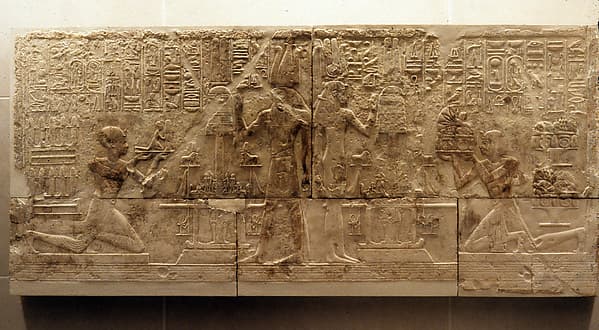
Abydos is where the idea of Egypt was invented, or close enough to it. The earliest kings of the First Dynasty, the pharaohs who unified the country around 3100 BCE, chose this desert edge as their burial ground. Nobody is entirely sure why. The site had been sacred for centuries before that, a place where predynastic communities buried their dead and left offerings. Something about the landscape, the narrow valley cutting back into the limestone cliffs toward a peak that may have evoked the primordial mound of creation mythology, made people feel that the boundary between the living and the dead was thin here.
By the Middle Kingdom, around 2000 BCE, Abydos had become inseparable from Osiris. The god of resurrection, of the inundation, of the cycles that keep Egypt alive, was believed to be buried here. His head specifically. Different temples in different cities claimed other body parts (the fragmentation of Osiris by his brother Set, and the recovery of those pieces by his wife Isis, is one of Egyptian mythology's central narratives), but the head at Abydos was the most important claim. The annual Mysteries of Osiris festival re-enacted his death and resurrection in a dramatic procession that drew pilgrims from across Egypt and, eventually, from across the Mediterranean world.
The temple you walk through today was built by Seti I, who ruled from roughly 1290 to 1279 BCE, and completed by his son Ramesses II. Seti I was one of the most accomplished builder-kings in Egyptian history, and this temple was his personal statement of theological seriousness. He was restoring Egyptian prestige after the chaos of the Amarna period, when the pharaoh Akhenaten had dismantled the traditional religious order. Seti built at Abydos not just to honor Osiris but to demonstrate that the old Egypt was back.
What You'll Actually See: The Temple of Seti I
The approach is misleading. The front of the temple is a mess, the outer hypostyle hall roofless and eroded, and you may wonder in the first ten minutes whether the journey was worth it. Keep walking.
The inner hypostyle hall, still roofed, is where Abydos becomes something different from any other Egyptian temple. The painted reliefs here are among the finest in Egypt, and unlike the reliefs at Karnak or Medinet Habu, they haven't been systematically defaced by later Christian communities or Napoleonic-era European tourists who removed entire wall sections. The colors on some pillars remain so vivid, blue and ochre and a particular green that Egyptian craftsmen made from powdered malachite, that you'll find yourself pressing your face close to the stone to confirm they haven't been restored. They haven't, mostly. What you're seeing is actual New Kingdom paint, three thousand years old, protected by the roof Seti built.
The temple has seven sanctuaries running side by side, dedicated to Seti I himself and to six deities: Ptah, Re-Horakhty, Amun-Re, Osiris, Isis, and Horus. This arrangement is unusual. Most Egyptian temples have a single main deity with subsidiary chapels. The seven-sanctuary design made Abydos function as a theological encyclopedia of the most important divine relationships in New Kingdom religion. Walking from one sanctuary to the next, you're reading a cosmological argument carved in stone.
In the Osiris sanctuary complex, which extends back from the main hall, the reliefs become more intimate. Seti is shown not in the triumphant military poses common in New Kingdom temples but in acts of offering and devotion: presenting ma'at (the feather of truth and cosmic order) to Osiris, performing purification rites, being welcomed into the divine presence. There's a quality of private belief here that you don't often feel in Egyptian temples, which tend toward the declarative and the monumental.
The Abydos King List
In a corridor off the main hall, Seti I had his craftsmen carve a list of 76 royal cartouches, the names of pharaohs from Menes (the legendary first king) through to Seti himself. It was not a historical record in the modern sense. Several pharaohs were deliberately omitted: Hatshepsut, the female pharaoh whose memory her successors erased; Akhenaten, the religious revolutionary; and the short-reigned pharaohs of the post-Amarna period. This was dynastic theology, not historiography, a claim about legitimate succession and the unbroken chain from the gods to Seti.
When European scholars first encountered this list in the nineteenth century, they used it as evidence that the biblical account of ancient history was wrong. Manetho's king lists and the Abydos list between them gave Egypt a documented royal history stretching back far longer than any other civilization. The Egyptologist Jean-François Champollion, who deciphered hieroglyphs in 1822, considered the Abydos King List one of the most significant inscriptions in the ancient world. Today it's protected behind glass, slightly recessed, and most visitors photograph it quickly and move on without knowing that what they're looking at was, for nineteenth-century scholars, a seismic document.
The Osireion: The Building You Almost Certainly Won't Be Able to Enter
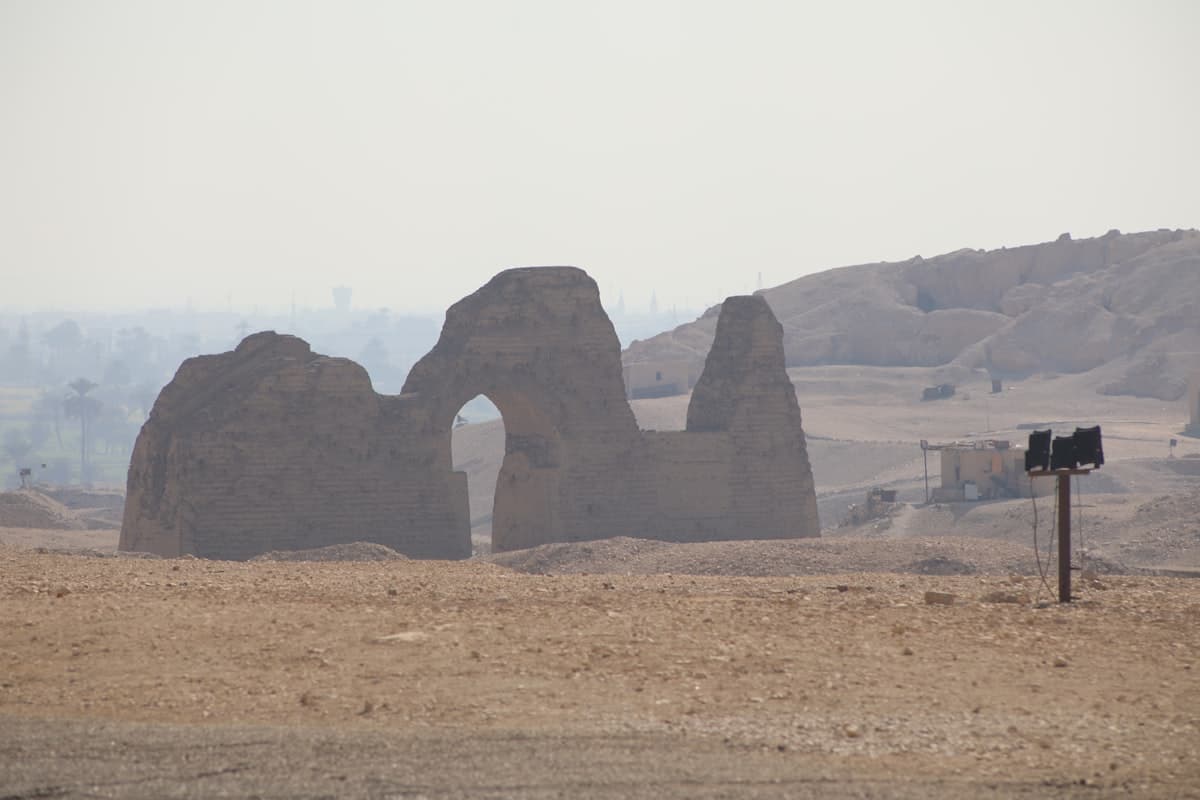
Behind the Seti I Temple, half-submerged in groundwater that has been rising for decades, is the Osireion. This is one of the strangest structures in Egypt. Seti I built it to represent the mythological tomb of Osiris, the place from which the god was resurrected. The architecture deliberately mimics Old Kingdom style, all massive granite blocks with no decoration, evoking an age of primordial power. The central island within the structure, now underwater, was designed to represent the primordial mound of creation.
The Osireion is currently inaccessible to general visitors, blocked by a locked gate and by the water itself. You can see it from above, peering down into what looks like a flooded pit of enormous stones. This is worth doing. The scale of the blocks, each one weighing tens of tons, set without mortar and fitted with the precision you see in Old Kingdom pyramid complexes, is clarifying. Seti's architects were not copying Old Kingdom style in the way we might create a historical pastiche. They were attempting to summon the actual metaphysical atmosphere of a much earlier sacred architecture. Whether you find that admirable or strange depends on your tolerance for the Egyptian relationship with the past, which was always recursive and always reverent.
The Connections
Abydos does not exist in isolation from the rest of Egyptian history, and understanding its afterlife matters as much as understanding its origins.
The Coptic Christian community at nearby Deir Mari Girgis (the Monastery of Saint George) sits on ground that was continuously sacred for at least four thousand years before Christianity arrived. Early Coptic communities in Upper Egypt were not simply replacing pagan religion. They were, in many cases, the same families who had served in temple rituals for generations, reframing their relationship to the sacred in a new theological language while keeping the same geography, the same desert-edge orientation, the same sense that this particular piece of ground was different from the land around it.
The Islamic town of El Balyana, your base for visiting Abydos, sits in a landscape shaped by the ancient processional routes. The roads that pilgrims walked to reach Abydos during the Mysteries festivals followed the same Nile-edge topography that medieval Muslim traders and travelers used. The Delta-to-Aswan route is one of the oldest continuously used corridors in the world, and every civilization that occupied the Nile Valley used versions of the same path.
Abydos also connects to Luxor in a specific and underappreciated way. The festivals of Osiris at Abydos and the Opet festival at Karnak were theologically linked. Amun at Karnak and Osiris at Abydos were not competing deities. They were complementary aspects of the Egyptian understanding of royal legitimacy and cosmic renewal. Pilgrims who attended both festivals in a single year were performing something like a complete religious circuit, north to south, the two poles of New Kingdom theological life.
Common Mistakes
Arriving without a guide and expecting to understand what you're seeing. The Seti I Temple is one of the most complex theological programs in Egyptian art. Without some preparation (a good book, a licensed Egyptologist guide, or at minimum a detailed audioguide), you'll walk through some of the finest painted reliefs in Egypt without knowing what any of them mean. The site does not sell detailed English-language guidebooks on-site.
Going in July or August. Upper Egypt in midsummer is not a difficult experience, it's a physiologically dangerous one. Temperatures at the site regularly exceed 42°C. The water you bring will be warm within thirty minutes. Two visitors have required medical attention for heat exhaustion at this site in recent years. Go in winter.
Spending all your time in the main hall and skipping the Osiris sanctuary complex. Most visitors follow the main axis of the temple and miss the side chapels entirely. The Osiris sanctuary complex, accessible through a doorway off the main hall to the rear left, contains some of the most refined painting in the building.
Not looking up. The ceilings in the inner hypostyle hall retain astronomical paintings: stars, constellations, and in some sections the circular astronomical calendar that shows Egyptian knowledge of celestial cycles. You will get a crick in your neck. It is worth it.
Assuming the Ramesses II Temple is a lesser copy of the Seti I Temple. Ramesses II completed and modified his father's temple and also built his own separate structure about 300 meters to the north. It's smaller and more damaged but contains a different set of mythological scenes, including some of the clearest surviving depictions of the Osiris resurrection cycle. Most tours skip it entirely. Don't.
Visiting on a Friday morning. The site is much busier on Fridays when Egyptian school groups and domestic tourists visit in larger numbers. Saturday morning is quieter. The absolute quietest period is weekday mornings in January.
Not accounting for the walk to the Osireion. The path from the main temple to the Osireion is unpaved, unshaded, and longer than it looks on maps. In summer this is a serious consideration. Wear shoes, not sandals, and bring more water than you think you need.
Practical Tips
The optimal approach to Abydos is to arrive on the first train from Luxor that reaches El Balyana before 8am, giving you the site almost to yourself for the first two hours. By 10am, tour buses from Luxor have typically arrived. By 11am in summer you'll want to be finished anyway.
Hire a licensed guide in Luxor rather than accepting offers from individuals at the site entrance. The Ministry of Tourism and Antiquities issues licenses to guides who have passed examinations in Egyptology, and the difference between a licensed Egyptologist guide and an unlicensed tout is the difference between understanding what you're looking at and not. Expect to pay EGP 400 to 700 for a private guide for the day, more if they're providing transport as well.
Photography without flash is permitted throughout the temple. Tripods require a separate permit obtained in advance from the Supreme Council of Antiquities office in Cairo or sometimes from the local inspectorate in El Balyana. Phone cameras are completely fine for most purposes.
There is one small kiosk near the entrance selling water and packaged snacks. Bring your own food if you're staying more than three hours. The nearest restaurants are in El Balyana town.
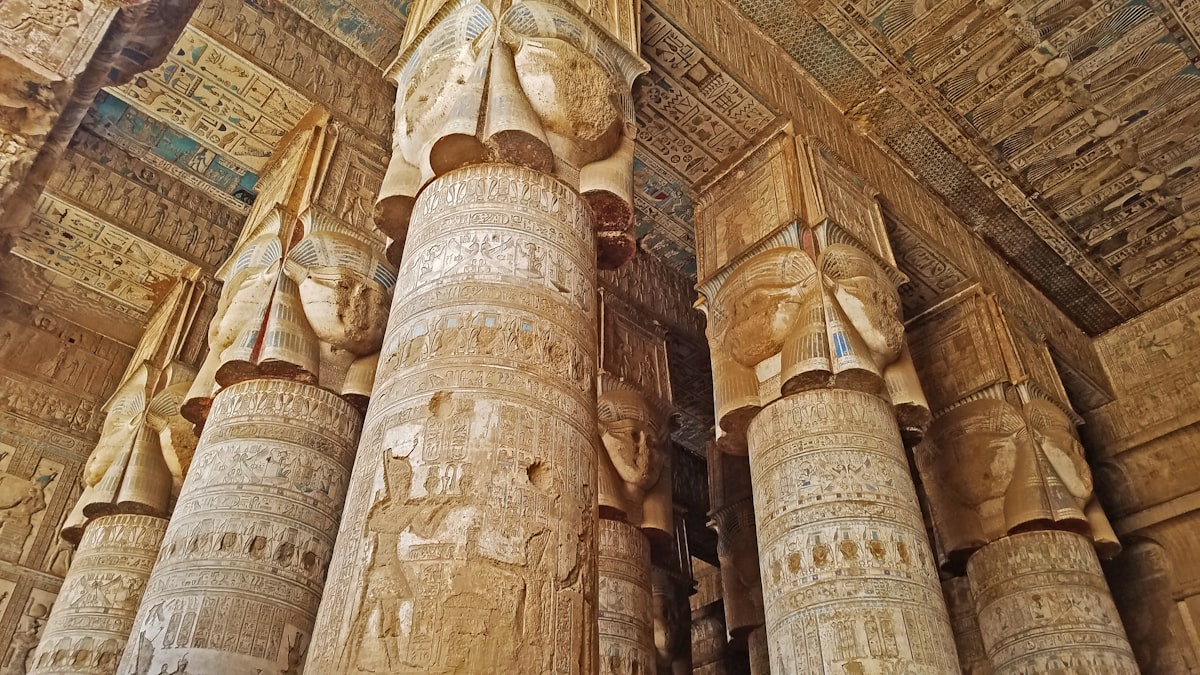
If you're combining Abydos with Dendera Temple (the Ptolemaic Hathor temple about 60km to the south, near Qena), most private car arrangements can cover both in a single long day. Dendera is a different era, a different deity, and a completely different atmosphere, but the two sites in combination give you a sense of how Egyptian religious architecture evolved across two thousand years. It's a genuinely illuminating pairing that almost no package tour offers.
Frequently Asked Questions
The Weekly Dispatch
More on Egypt, every Friday.
Cultural depth and places most guides never mention.
No spam. Unsubscribe anytime.