Alexandria Jewish History and Synagogues: A Vanished World
Alexandria once held one of the world's great Jewish communities. Here is what survives, what was lost, and why the Alexandria Jewish history still matters.
Quick Facts
- Best time to visit
- October to April. Alexandria's Mediterranean climate makes summer visits humid and crowded. Winter light on the city's European-style facades is exceptional, and the cooler temperatures make walking between sites comfortable.
- Entrance fee
- Eliyahu Hanavi synagogue: free, by appointment only. Bassatine cemetery: free, coordination required. No formal ticket system exists for either site.
- Opening hours
- Eliyahu Hanavi: weekday mornings by prior arrangement only, no fixed public hours. Bassatine cemetery: accessible by arrangement, typically 9am-3pm.
- How to get there
- From Cairo: Spanish train service from Ramses Station, EGP 120-200 depending on class, 2.5 hours. Within Alexandria: tram from Raml Station (EGP 3-5) to Manshiyya area for the synagogue. Taxi from Raml to Bassatine cemetery: EGP 80-120.
- Time needed
- 2-3 hours for Eliyahu Hanavi with a knowledgeable guide. Add 2 hours for Bassatine cemetery. Half a day minimum if combining both. Full day if including the Raml district architectural walk.
- Cost range
- Budget EGP 400-700 per day in Alexandria including accommodation, food, and local transport. Mid-range EGP 1,200-2,000 per day. Cairo day-trip via train adds EGP 240-400 round trip.
Quick Facts
Best time to visit: October to April, when Alexandria's Mediterranean humidity drops and the light on the city's Belle Époque facades turns softer and more forgiving.
Eliyahu Hanavi Synagogue entrance fee: Currently managed by the Egyptian Jewish Community Foundation. Entry is by appointment only and generally free, though a donation to restoration funds is appropriate. Contact the foundation via the Egyptian Ministry of Tourism or through the Bassatine Cultural Foundation before arrival.
Opening hours: Eliyahu Hanavi is not open to drop-in visitors. Coordination through official channels typically yields visits on weekday mornings. Allow at least two weeks of lead time.
How to get there: From Alexandria's Ramses train station (itself a short walk from the city center), take a taxi to the Manshiyya district near Orabi Square. Taxis from Sidi Gaber station cost around EGP 50-80. From Cairo, the Spanish train service runs Alexandria-bound trains from Ramses Station starting at EGP 120 for second class, EGP 200 for first class, two and a half hours each way.
Time needed: Two to three hours for the synagogue itself, half a day if you are pairing it with the Bassatine Jewish Cemetery and the surrounding Raml district where much of Alexandrian Jewish commercial life once concentrated.
Cost range: Budget EGP 400-700 per day in Alexandria (accommodation, food, local transport). Mid-range EGP 1,200-2,000 per day.
---
At its peak in the 1940s, Alexandria held a Jewish population of roughly 65,000 people. They ran banks, cotton brokerages, law firms, and publishing houses. They built synagogues that could seat thousands. They published newspapers in Judeo-Spanish, French, and Arabic simultaneously. Within thirty years, nearly all of them were gone. The community did not slowly fade. It was dismantled: by the 1948 Arab-Israeli war, by Nasser's nationalizations, by the 1956 Suez Crisis that resulted in mass expulsions, and by a gradual making-strange of people whose families had been Alexandrian for two thousand years.
What remains is not a ruin exactly. It is more like a held breath.
Why This Place Matters
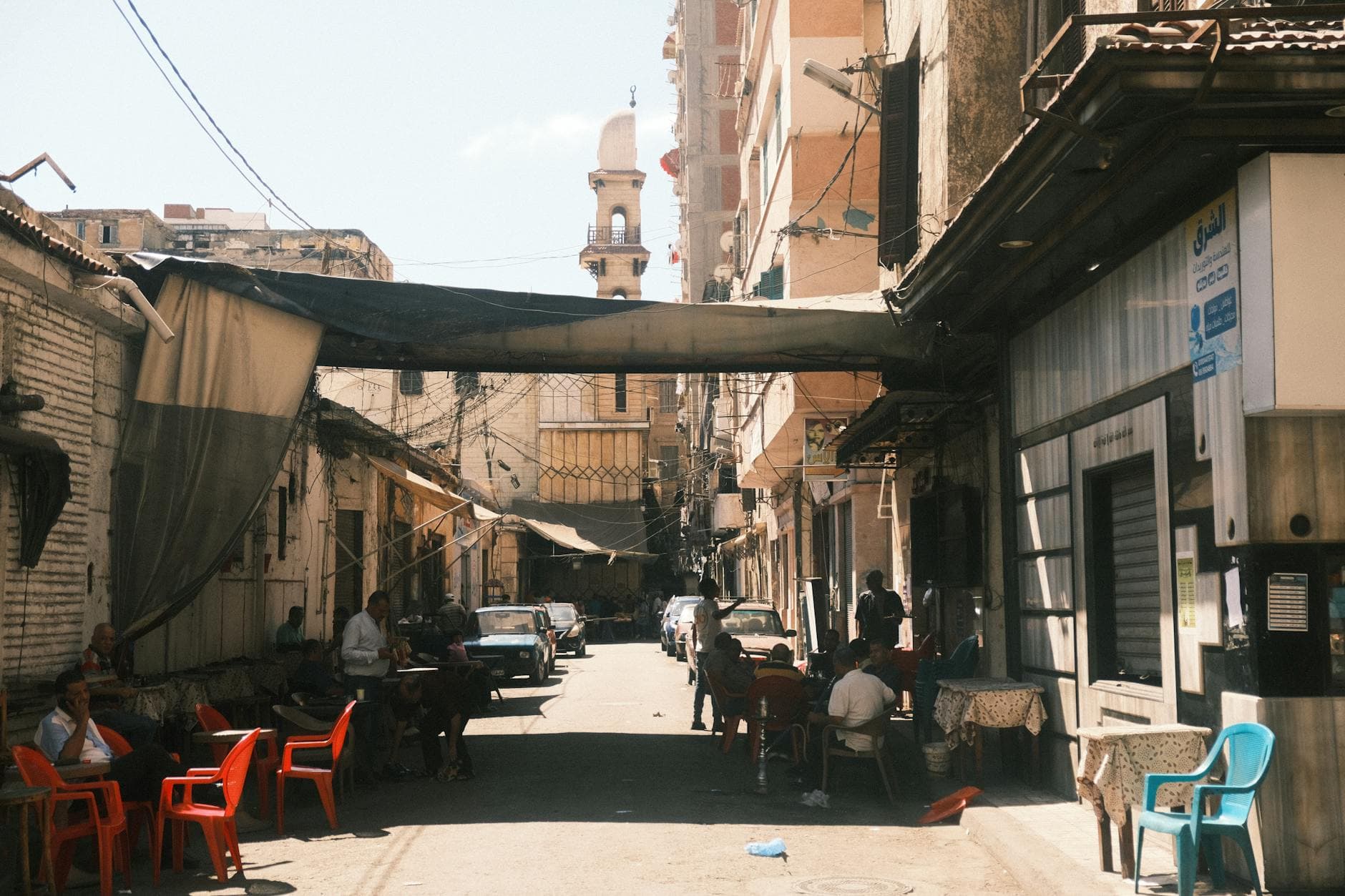
Alexandria's Jewish history does not begin in the nineteenth century with the cotton merchants and the cosmopolitan cafes. It begins, as most things in this city do, with Alexander the Great. Alexander deliberately settled Jews in his new city around 331 BCE, recognizing them as reliable administrators and traders. Within a century, Alexandria's Jewish quarter was one of the largest in the ancient world, stretching along what is now the eastern harbor district.
The Septuagint, the Greek translation of the Hebrew Bible that became the foundation of Christian scripture, was produced here, according to tradition, by seventy-two Jewish scholars working on the island of Pharos, which also held the ancient lighthouse. This was not a minor footnote. The Septuagint shaped the entire trajectory of Western religious thought for two thousand years. It was an Alexandrian Jewish project.
Philo of Alexandria, the first-century philosopher who attempted to reconcile Jewish theology with Greek philosophy, worked and wrote here. His ideas about the Logos directly influenced early Christian theology, particularly the Gospel of John. If you have ever read the opening of John, "In the beginning was the Word," you are reading an idea that passed through an Alexandrian Jewish mind.
By the time the Arab conquest arrived in 641 CE, Alexandria's Jewish community had already survived Roman persecution, Christian violence, and Byzantine restrictions. It would continue to survive, shrink, adapt, and occasionally flourish for thirteen more centuries. The nineteenth-century cosmopolitan community that built Eliyahu Hanavi synagogue was not an anomaly. It was the latest chapter of a very long story.
Eliyahu Hanavi: What You Will Actually See
The Eliyahu Hanavi synagogue, built in its current form in 1354 and substantially renovated in the nineteenth century, sits on Nabi Daniel Street in the heart of the old city. The street name itself is a layered piece of Alexandrian history: Nabi Daniel means "the Prophet Daniel," and local tradition long held that Alexander the Great was buried beneath a mosque at this very spot. Archaeologists still argue about it.
The synagogue's exterior is restrained, almost deliberately unassuming, a survival strategy that Alexandrian Jews had learned over centuries. Inside, the scale shifts completely. The sanctuary can hold 700 people. Marble columns run in double rows toward an ark that was restored between 2020 and 2023 with funding from Egyptian-American Jewish diaspora organizations, in coordination with the Egyptian government. The bimah, the central reading platform, is inlaid with geometric patterns that echo the Mamluk tilework you see in Cairo's Islamic quarter, because Alexandrian Jewish craftsmen and Mamluk craftsmen were working in the same city at the same time, sharing visual vocabularies.
The women's gallery upstairs is intact. So are the original wooden benches, carved with Arabic floral motifs. A Torah scroll, one of very few remaining in Egypt, is kept here under climate-controlled conditions. You will not be permitted to photograph it.
What the synagogue cannot show you is what made it live: the sound of a full congregation on Yom Kippur, the smell of the particular incense blend used in Sephardic rite services, the specific acoustic quality of Hebrew prayers in a room designed to carry them. That knowledge left with the people.
The Bassatine Cemetery
If Eliyahu Hanavi is the community's surviving monument, Bassatine is its archive. Located in the southeastern outskirts of Alexandria, Bassatine is one of the oldest Jewish cemeteries in the world still in active use, though "active" is relative when fewer than ten Jews remain permanently in Alexandria. Gravestones here span from medieval Arabic-script inscriptions to ornate French and Italian marble monuments from the Belle Époque period, when Alexandrian Jewish families commissioned elaborate funerary architecture to signal their prosperity and permanence.
The cemetery fell into serious disrepair through the 1980s and 1990s. Sections were vandalized, graves collapsed, records were lost. A restoration project led by diaspora organizations began in the 2000s and continues incrementally. What you see today is a place caught between decay and recovery: cleaned pathways adjacent to overgrown sections, restored headstones next to ones still half-buried in grass.
The names on the stones tell the community's full geography. Families from Livorno, from Aleppo, from Salonika, from Morocco, and from families that had been in Egypt so long their origins were simply listed as "Alexandria" across multiple generations.
The Connections
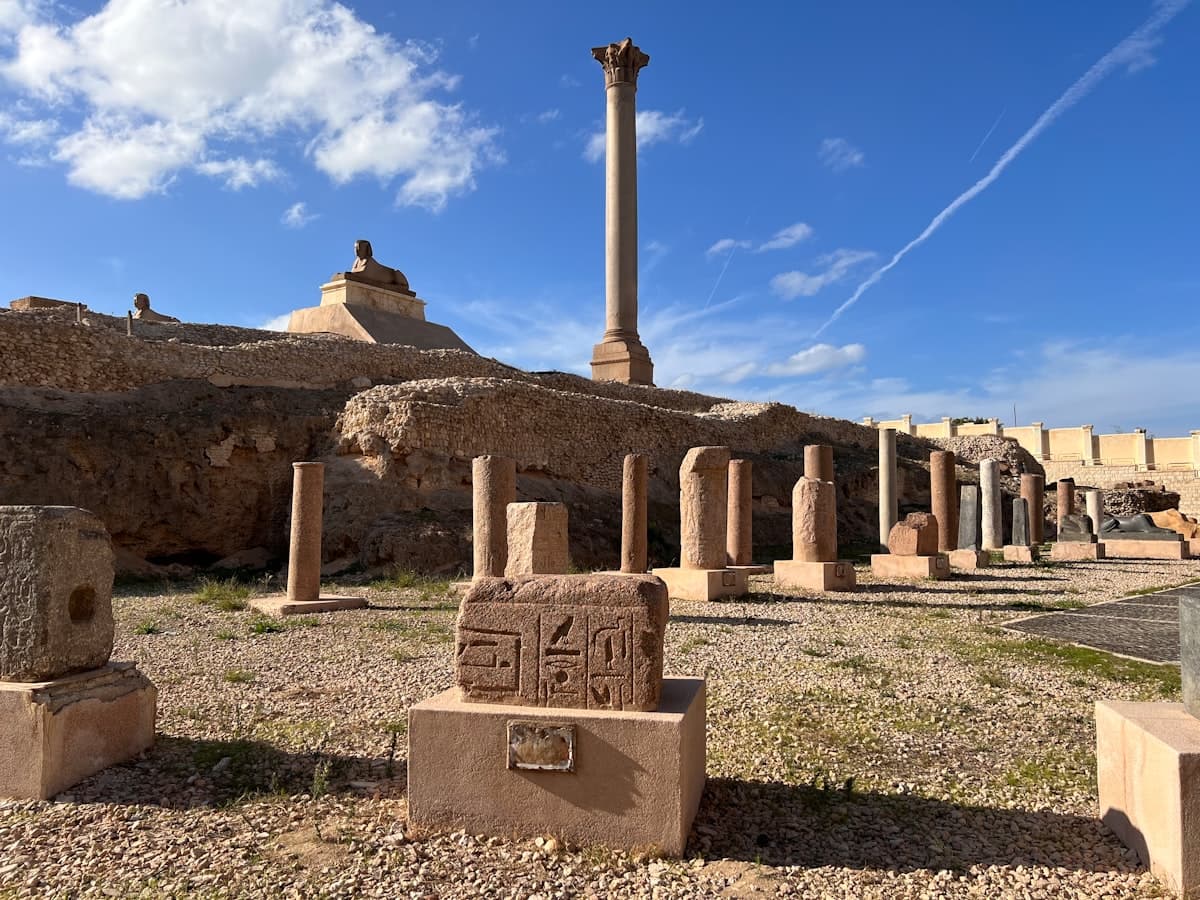
The Alexandria Jewish history cannot be separated from the broader story of Mediterranean cosmopolitanism that made this city what it was between roughly 1850 and 1952. The same decades that produced Jewish cotton merchants produced Greek textile traders, Italian architects, Lebanese journalists, and Armenian photographers. They all built institutions within blocks of each other: synagogues, Orthodox churches, Maronite churches, Catholic schools, Masonic lodges.
The Greek community's synagogue and the Jewish community's synagogue were on parallel streets. The Alliance Israélite Universelle school, which educated generations of Alexandrian Jewish children in French-language secular curriculum, sat near the Lycée Français that educated children from every other community. The communities were not always friends. They competed economically and sometimes politically. But they made the same city.
Nasser's nationalizations of 1956-1961 did not target Jews specifically, at least not on paper. They targeted foreign-owned property and capital. But because the Alexandrian Jewish community had, over several generations, become the city's dominant class in cotton trading and finance, the nationalizations effectively destroyed the economic basis of Jewish life in the city. The families that left were not fleeing pogroms. They were leaving because their businesses had been taken, their passports revoked, and their children's futures foreclosed.
Many went to Paris, to São Paulo, to Montreal, to Tel Aviv. They carried Alexandria with them in a specific way: the Egyptian Jewish diaspora is unusually well-documented because its members were unusually literate and connected. The memoirs, cookbooks, photograph collections, and oral history projects produced by this diaspora are some of the richest sources on cosmopolitan Alexandria we have. Lawrence Durrell, who was not Jewish but who lived among this community in the 1940s, absorbed it deeply enough to write the Alexandria Quartet. His books are fiction, but they photograph a social world that otherwise left almost no physical trace.
Common Mistakes
Arriving without an appointment. The Eliyahu Hanavi synagogue is not a walk-in attraction. The handful of visitors who attempt to approach without coordination are turned away at the door, sometimes with some embarrassment on both sides. Contact the Egyptian Ministry of Tourism's Alexandria office or reach out through diaspora organizations like the Association Internationale Nebi Daniel well in advance.
Treating this as a Holocaust site. The Alexandrian Jewish community was not destroyed by the Holocaust, though some members perished in it. The forces that ended this community were Suez, Nasser, Arab nationalism, and Israeli statehood, a completely different and more locally specific history. Arriving with a European framework will make you miss what actually happened here.
Skipping Bassatine in favor of the synagogue only. The cemetery is harder to reach and less photogenic, but it contains more actual historical information. The names, dates, and epitaphs tell you who these people were in ways the restored synagogue interior cannot.
Confusing Eliyahu Hanavi with Alexandria's other synagogues. At its peak, Alexandria had around twelve functioning synagogues. The Menasce synagogue in the Ibrahimiya district is now a community center. The synagogue in Moharram Bey has been demolished. Several others have been converted or absorbed into neighboring buildings. Only Eliyahu Hanavi is accessible to visitors.
Photographing without explicit permission. The community is small, protective of its remaining assets, and has been burned before by photographs that appeared on social media without context. Ask before every image, and accept a no without argument.
Missing the neighborhood around the synagogue. Nabi Daniel Street and the surrounding Manshiyya district retain Belle Époque apartment buildings, some still with Hebrew inscriptions above doorways, others with Stars of David worked into their ironwork, left in place by later tenants who either did not notice or did not think removal was worth the effort.
Expecting a completed restoration. The work at both Eliyahu Hanavi and Bassatine is ongoing and underfunded. Approach both sites with the patience appropriate to a living preservation project, not a finished museum.
Practical Tips
The single most useful thing you can do before this visit is contact the Foundation for the Preservation of the Jewish Heritage in Egypt, or the Association Internationale Nebi Daniel, both of which facilitate visits for researchers and respectful tourists. A letter explaining your interest, whether historical, genealogical, or journalistic, significantly improves your chances of a meaningful visit rather than a locked-gate experience.
Bring water and wear shoes you do not mind getting dusty. The Bassatine cemetery paths vary between paved and unpaved depending on which restoration phase has reached which section.
If you read French, the bibliography on Alexandrian Jewish life is extensive and rewarding: Robert Sole's novels, Gini Alhadeff's memoir "The Sun at Midday," and the scholarship of Joel Beinin on Egyptian Jews in the twentieth century will all deepen what you see.
The area around Eliyahu Hanavi is a working-class commercial district with good street food. The kosher restaurants that once made this neighborhood specific are gone, obviously, but the ful and ta'amiyya shops on the adjacent lanes are some of the better ones in central Alexandria.
Alexandria's tram system, one of the oldest in Africa and still running, costs EGP 3-5 per ride and gives you a street-level view of the city that no taxi can match. The Raml Station tram stop puts you within fifteen minutes' walk of Eliyahu Hanavi.
If you are conducting genealogical research, the Egyptian National Archives in Cairo hold property records, naturalization documents, and civil registration files that predate the 1956 expulsions. Access requires a formal research application but is available to legitimate researchers.
Frequently Asked Questions
The Weekly Dispatch
More on Egypt, every Friday.
Cultural depth and places most guides never mention.
No spam. Unsubscribe anytime.