Bahariya Oasis Guide: Egypt's Desert Beyond the Pyramids
Bahariya Oasis holds a necropolis of gilded mummies that rewrote what we know about Roman Egypt. This guide goes deeper than the desert surface.
Quick Facts
- Best time to visit
- October through March. Daytime temperatures are 18 to 28°C and nights are cold but manageable. Summer temperatures regularly exceed 45°C in the open desert and pose genuine health risks.
- Entrance fee
- Bahariya Museum and necropolis: EGP 300 per person (approx $6 USD). Western Desert national park vehicle fee: EGP 100 per vehicle (approx $2 USD). Individual tomb and temple sites may require additional inspectorate fees of EGP 50 to 100.
- Opening hours
- Museum and archaeological sites: daily 8am to 5pm. Desert excursions operate on safari schedules arranged through local operators.
- How to get there
- Public bus from Cairo Turgoman terminal: EGP 120 to 180 one way, 4-hour journey. Private car hire from Cairo: EGP 1,500 to 2,500 round trip. Package tours from Cairo including transport, accommodation, and White Desert safari start at EGP 2,500 per person for two nights.
- Time needed
- Half a day for Bawiti town, museum, and monuments. One overnight minimum for Black Desert and White Desert. Two nights recommended for a complete experience including the hot springs at Bir el-Ghaba.
- Cost range
- Budget: EGP 800 to 1,200 per day including guesthouse, group desert tour, and meals. Mid-range private experience: EGP 2,500 to 4,000 per day.
The mummies were found by a donkey.
In 1996, a guard at the Temple of Alexander the Great in Bahariya Oasis was riding his donkey when one of its legs broke through the desert floor and into a buried chamber. Inside were gilded mummies, hundreds of them, stacked in the sand as if they had simply been waiting. Egyptologists would later call it the Valley of the Golden Mummies. Estimates suggest the necropolis holds as many as 10,000 bodies, making it one of the largest burial grounds ever discovered in Egypt. As of this writing, less than two percent of it has been excavated.
This is Bahariya. Not a ruin you can photograph and leave. A place that is still becoming itself.
Quick Facts
Best time to visit: October through March, when daytime temperatures stay under 28°C. Summer in the Western Desert is not discomfort, it is danger.
Entrance fees: The Bahariya Museum and Valley of the Golden Mummies site costs approximately EGP 300 per person (roughly $6 USD). The Black Desert and White Desert are accessed through the national park fee of EGP 100 per vehicle (roughly $2 USD). Most visitors combine sites through a guided day-tour or overnight desert safari.
Opening hours: The museum and necropolis open daily from 8am to 5pm. Desert excursions are not bound by museum hours but require permits organized through licensed local guides.
How to get there: Bahariya is 365km southwest of Cairo. Public buses depart from Cairo's Turgoman bus station (also called the Cairo Gateway terminal near Ramses); the journey takes around 4 hours and costs EGP 120 to 180 one way. Private car hire from Cairo runs EGP 1,500 to 2,500 for a round trip depending on the vehicle. Most visitors coming for the White Desert arrange transport through Bahariya-based tour operators who bundle the bus ticket, accommodation, and desert safari into a package starting around EGP 2,500 per person for two nights.
Time needed: The town of Bawiti and its monuments need half a day. The Black Desert and White Desert together require a minimum of one overnight. Two nights is the honest minimum if you want to feel the place rather than just photograph it.
Cost range: Budget travelers staying in local guesthouses and joining group safari tours can manage on EGP 800 to 1,200 per day. Mid-range private experiences run EGP 2,500 to 4,000 per day.
Why Bahariya Matters
Most people frame the Western Desert oases as isolation, as places that exist outside the main story of Egyptian civilization. Bahariya contradicts that completely.
The oasis has been continuously inhabited since at least the Old Kingdom, around 2700 BCE, when it supplied wine to the pharaonic court in Memphis. The ancient Egyptians called it Zeszes. It appears in administrative records as a tax-paying province, not a frontier outpost. Tutankhamun's successor, Ay, ruled briefly from here before consolidating power at Thebes. Ramesses II and Ramesses III both claimed authority over it. The town of Bawiti sits on the same site that has been occupied, built over, and reoccupied for roughly four thousand years.
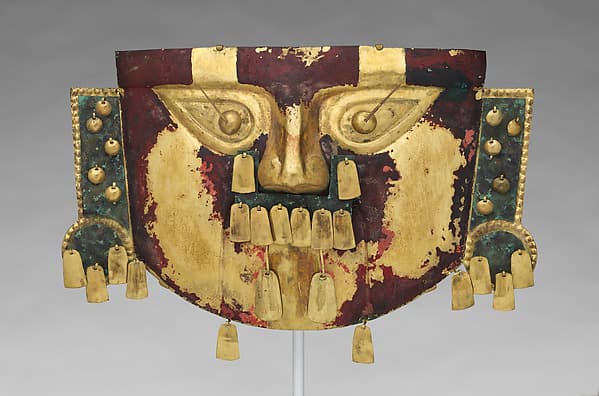
Then the Greeks arrived. Then the Romans. And here is what the Valley of the Golden Mummies tells you about empire: by the time Rome controlled Egypt, the oasis population was prosperous enough to commission gilded cartonnage mummy cases, the expensive kind, and elaborate painted shrouds depicting gods from multiple traditions simultaneously. You see Osiris and Anubis alongside Greek-style portrait faces and Roman dress. The people buried here were neither fully Egyptian nor fully Roman nor fully Greek. They were Bahariyans, negotiating all three identities at once, and the archaeological record shows it in their face.
The Coptic period followed. Then the Arab conquest in the 7th century CE. The oasis converted to Islam gradually, kept its water, kept its dates and olives, kept its particular version of itself. The hot springs that still bubble at the edge of Bawiti were used by Roman legionaries, by Coptic monks, by medieval Arab geographers who wrote about them in travelogues, and by the occasional Cairo journalist on a press trip who needs to remember what her body feels like outside a city.
What You Actually See: Bawiti and Its Buried Layers
The town of Bawiti is not scenic in the way travel writing usually means. It is a working oasis town with a central market, a few government buildings, several competing tour operators, and an abundance of satellite dishes. You should not expect otherwise.
What it has, below and beside the ordinary surface, is remarkable.
The Antiquities Inspectorate Museum in Bawiti holds four of the golden mummies found in 1996, displayed in the original coffins. The gold leaf on the faces is not ceremonial excess. It reflects a genuine theological position: gold was the flesh of the gods, so casing the dead in it was an act of transformation, an argument that this person had become divine. Standing in front of a mummy whose face is covered in hammered gold and whose chest painting shows Osiris rendered in a distinctly Hellenistic style, you understand that Egypt's history of absorbing and remaking external influences did not begin with the Arab conquest or the Ottoman period. It is structural. It is what Egypt does.
A short walk from the museum brings you to the Temple of Ain el-Muftella, a cluster of four chapels dedicated to the local deity Bes, typically depicted as a dwarf with a lion's face. Bes was not a state god. He was a household god, worshipped for protection during childbirth, against nightmares, against the specific anxieties of domestic life. The fact that he had a dedicated temple complex in Bahariya, funded by local governors during the 26th Dynasty, tells you something about how Egyptian religion worked at the edges of official power. The priests here were not performing state theology. They were managing the fears of a community.
The Tomb of Bannentiu, located nearby, is one of the best-preserved painted tombs outside of Luxor and almost nobody is looking at it. Bannentiu was a wealthy merchant, the son of a governor, and his tomb paintings are dense with detail. The colors have survived because the desert air has almost no humidity. You can stand in a painted chamber from the 7th century BCE and see blue that looks applied last year.
The Black Desert and the White Desert
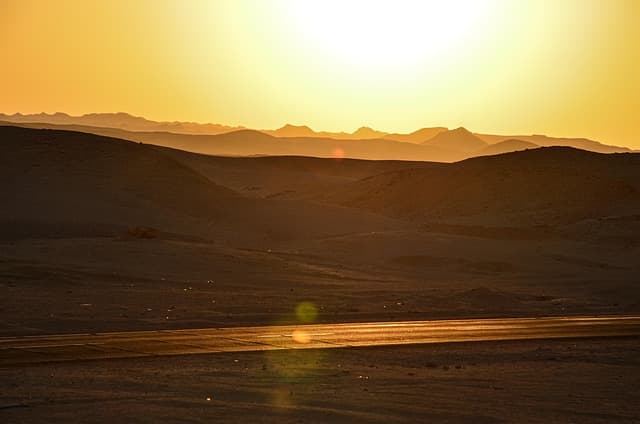
The landscape changes about 20km south of Bawiti. The ground turns black, not metaphorically but actually, because it is covered in volcanic stone and basalt fragments deposited by ancient volcanic activity. The Black Desert is bleak and geological and strange. Most visitors pass through it quickly on the way to the White Desert, which is a mistake. Spend an hour at sunset in the Black Desert. The light turns the black stone a deep reddish purple and the silence is absolute in a way that Luxor, even at its quietest, has never managed.
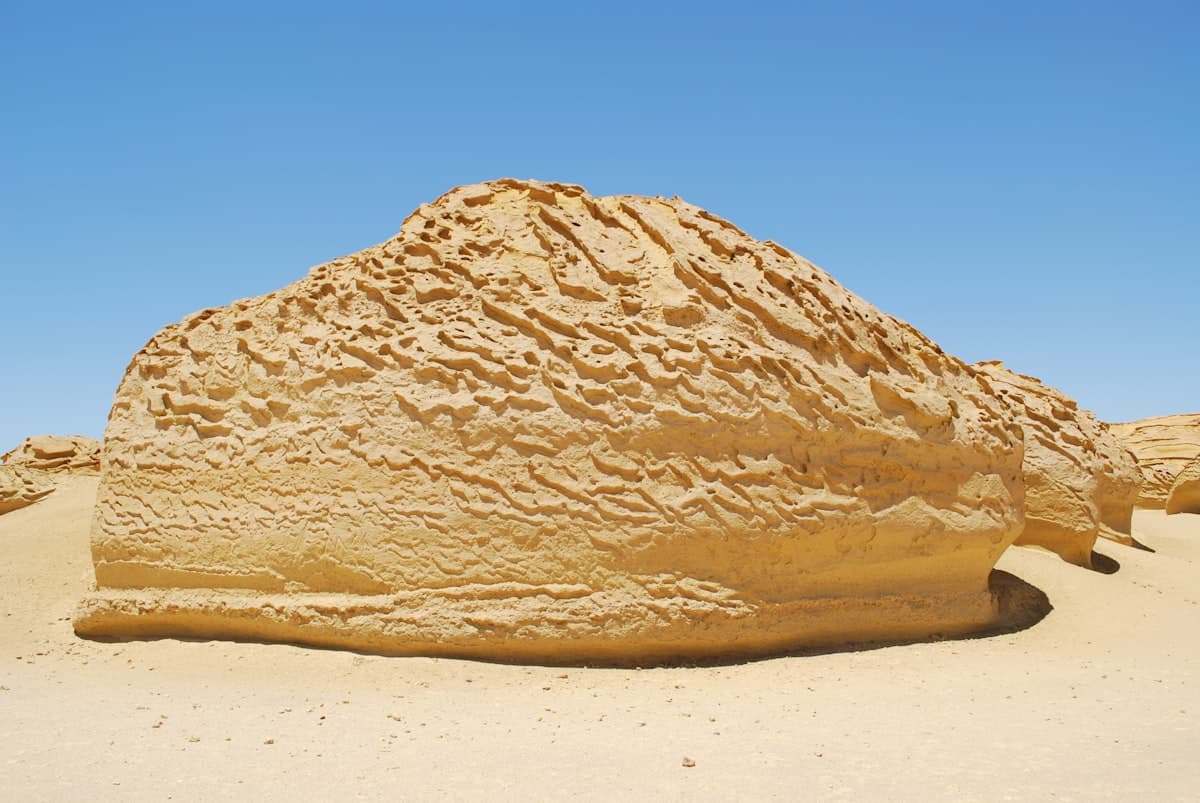
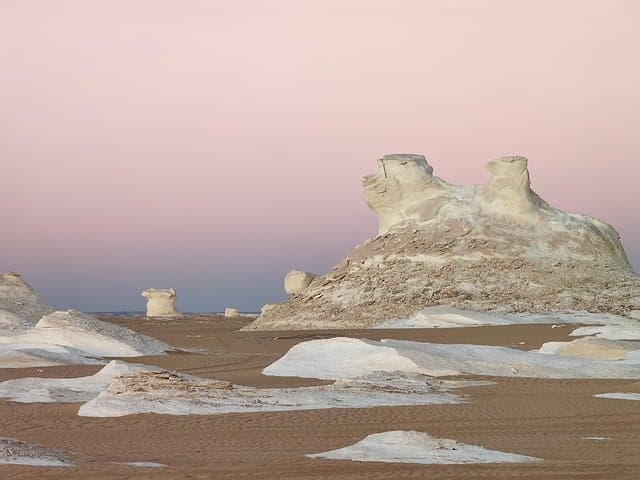
The White Desert, declared a national park in 2002, is where the Western Desert trips justify themselves. The chalk-white formations are the eroded remnants of a seabed. This entire landscape was underwater approximately 80 million years ago, and the calcium carbonate deposits left by marine organisms became the limestone plateau, which wind eroded into the formations you see now. They resemble mushrooms, chickens, rabbits, human figures, depending on the hour and your imagination. At full moon, they are phosphorescent in a way that does not photograph accurately.
Camping overnight here is the right choice. The stars are not just numerous, they are overwhelming. The Milky Way is visible to the naked eye as a structural feature of the sky, not an atmospheric suggestion. The temperature drops sharply after 10pm even in spring, so budget travelers sleeping in tour-operator tents should bring a proper sleeping bag regardless of what month it is.
The Connections
Bahariya's wine production in antiquity connects it directly to the great religious economy of the New Kingdom. The vineyards were not casual agriculture. Wine was essential for temple rituals, for offerings, for elite consumption in both life and death. An oasis 365km from the Nile was sufficiently valuable as a wine producer that the pharaonic state maintained administrative control over it through multiple dynasties.
The Alexander the Great temple in Bawiti is one of only two temples in Egypt confirmed to have been built in Alexander's name during his own lifetime. The other is at Luxor. Alexander visited Egypt in 331 BCE, was declared a god by the oracle at Siwa Oasis (further west), and built or commissioned temples as he moved. The Bahariya temple is small, largely ruined, and not currently accessible to visitors because the site sits beneath modern buildings. But its existence tells you that Bahariya was important enough for Alexander to notice, which means it was important enough for the Ptolemies who followed him to maintain, which explains the prosperous Greco-Roman burial culture that produced the golden mummies two centuries later. One donkey's leg connects all of it.
The road between Bahariya and Farafra Oasis to the south follows a route that Coptic hermits used in the 4th and 5th centuries CE, walking between desert monasteries. The same route was used by medieval Arab caravans. The same route is what your 4WD drives today. The desert does not offer many options. The paths that work tend to stay paths.
Common Mistakes
Attempting the White Desert as a day trip from Cairo. The math does not work. Four hours of bus travel each way plus the site gives you perhaps three hours of actual desert before you need to leave. You will see nothing properly and you will be exhausted. Overnight is the minimum.
Booking a tour operator without checking their desert safety record. The Western Desert has real hazards: vehicles get stuck in soft sand, temperatures are extreme, disorientation is possible in featureless terrain. Use operators registered with the Egyptian Tourism Authority. Ask specifically whether your driver has navigation equipment, not just a phone with a map.
Skipping the Bannentiu tomb because it requires a separate arrangement. The main museum ticket does not automatically include all the archaeological sites. Ask at the inspectorate office in Bawiti about combination tickets and what is currently accessible. Sites open and close based on conservation work.
Underestimating the cold at night. The Western Desert in October through February has daytime temperatures of 20 to 28°C and nighttime temperatures that drop to 4 to 8°C. Sleeping bags rated to at least 5°C are non-negotiable for camping.
Bringing insufficient cash. There are no functioning ATMs in Bawiti that reliably accept international cards. Bring more Egyptian pounds than you think you need. The nearest reliable banking services are in Cairo.
Photographing local women without permission. Bahariya is a conservative rural community. General landscape and monument photography is fine. Pointing a camera at people, particularly women, without asking first is not fine and will create genuine friction with local guides and residents.
Expecting the Valley of the Golden Mummies to look like a major excavation site. Most of it is still buried sand. What you see at the museum are four mummies in a modest display space. The significance is intellectual and historical, not visually spectacular. If you go expecting Tutankhamun's treasury, you will miss what the place is actually saying.
Practical Tips
The Bahariya oasis guide experience is most coherently organized through one of the established local operators in Bawiti. Eden Garden Hotel and Tours, Western Desert Tours, and Bir Gebel are frequently cited by independent travelers for vehicle quality and guide knowledge. Prices are negotiable, especially in summer when visitor numbers drop.
For accommodation, Bawiti has guesthouses ranging from EGP 300 to 900 per night. The hot springs at Bir el-Ghaba, about 15km from town, can be visited as a standalone trip for a small guide fee (roughly EGP 50 to 100). Bathing in the spring after a desert day is not a luxury addition. It is what you do.
The museum in Bawiti is small and can be seen in about 45 minutes. Do not rush Bannentiu's tomb. Sit with the paintings for a while. This man paid for these images to accompany him into whatever came next, and the specificity of what he chose tells you more about daily life in 7th century BCE Bahariya than any interpretive panel.
If you are traveling from Cairo independently, the bus from Turgamon departs around 7am and 3pm. Book a day in advance at the station or through the West Delta bus company. The journey is usually comfortable, occasionally crowded on weekends, and stops at a roadside rest area with reasonable tea.
Bring a headscarf regardless of your gender. The desert wind is substantial and the sun reflects off white chalk formations with real intensity. Polarized sunglasses are not optional in the White Desert at midday.
Frequently Asked Questions
The Weekly Dispatch
More on Egypt, every Friday.
Cultural depth and places most guides never mention.
No spam. Unsubscribe anytime.