Ben Ezra Synagogue Cairo: Jewish History in the Heart of Coptic Egypt
Ben Ezra Synagogue holds Cairo's deepest Jewish history and the world's most important medieval archive. Here's what most visitors completely miss.
Quick Facts
- Best time to visit
- October to March for cooler temperatures. Arrive before 10am on any day to avoid tour group crowds, which peak between 10am and noon.
- Entrance fee
- EGP 180 per adult (approx $3.70 USD), EGP 90 for students. Ticket covers the full Coptic Cairo compound including the Hanging Church and Coptic Museum.
- Opening hours
- Daily 9am to 4pm. Last entry is typically 3:30pm. Closed on no specific weekly day but check locally during major Egyptian public holidays.
- How to get there
- Metro Line 1 to Mar Girgis station (EGP 8 to EGP 15 from downtown Cairo). Three-minute walk from platform to compound entrance. Uber or Careem from downtown: EGP 50 to EGP 120 depending on traffic.
- Time needed
- 1 hour for Ben Ezra alone. 2 to 3 hours for the full Coptic Cairo compound including the Coptic Museum and Hanging Church.
- Cost range
- EGP 200 to EGP 400 for a morning visit including Metro transport, compound ticket, and coffee. Add EGP 100 to EGP 200 if including the Coptic Museum shop or a meal nearby.
The most consequential collection of medieval documents ever discovered was found stuffed inside a storage room above a synagogue in Cairo, and it sat there for roughly nine hundred years before anyone thought to look. When a Cambridge scholar named Solomon Schechter climbed into that geniza in 1896, he pulled out 300,000 fragments of text that rewrote everything historians thought they knew about daily life in the medieval Islamic world. The Ben Ezra Synagogue is where that happened. That alone should be enough.
Quick Facts
Best time to visit: October through March, when heat is manageable and the light inside the synagogue is at its clearest. Avoid Friday mornings when the area around the Coptic quarter sees heavier foot traffic. Entrance fee: Included in the general Coptic Cairo compound ticket: EGP 180 for adults (approximately $3.70 USD), EGP 90 for students. The ticket covers access to the Hanging Church, the Church of St. Sergius and Bacchus, and the Ben Ezra Synagogue. Opening hours: Daily 9am to 4pm. Arrive before 10am if you want the place to yourself. How to get there: The Metro is the sanest option. Take Line 1 to Mar Girgis station (about EGP 8 to EGP 15 depending on your origin station). The synagogue is a three-minute walk from the platform. Taxis and ride-hailing apps like Uber or Careem cost EGP 50 to EGP 120 from downtown Cairo depending on traffic. Don't attempt this by car during morning rush. Time needed: One hour minimum for the synagogue alone. Two to three hours if you're visiting the full Coptic Cairo compound, which you should. Cost range: EGP 200 to EGP 400 for the morning including transport, ticket, and a coffee at the small café near the compound entrance.
Why This Place Matters
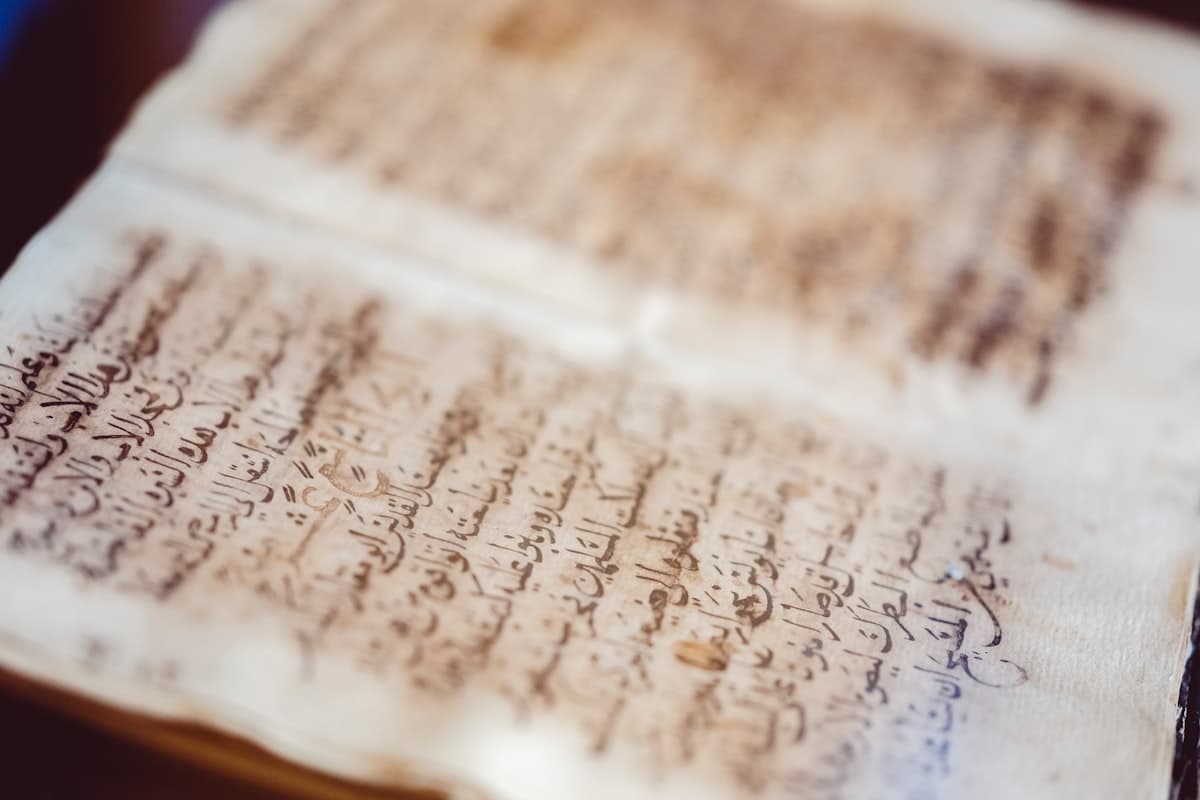
Ben Ezra is not a functioning synagogue. It hasn't held a regular congregation in decades. Egypt's Jewish community, which once numbered around 80,000 people concentrated mostly in Cairo and Alexandria, now counts fewer than ten elderly individuals in the entire country. That collapse happened fast: the 1948 war, Nasser's nationalizations in 1956, and the broader hostility that followed each Arab-Israeli conflict pushed families out within a single generation. Apartments were left mid-furnished. Businesses were abandoned. The community that produced figures like the philosopher Maimonides simply ceased to exist in Egypt within about thirty years.
But the building itself predates almost everything. The site where Ben Ezra Synagogue stands is old enough that the water table beneath it sits at roughly the same level it did when this was the Roman fortress city of Babylon-in-Egypt, the walled settlement that preceded Islamic Cairo by six centuries. According to one tradition, this is the location where the Pharaoh's daughter found the infant Moses in the reeds. The tradition is unprovable and almost certainly symbolic, but it tells you something important: this stretch of the Nile bank has been considered sacred ground by three separate Abrahamic traditions for longer than most countries have existed.
The synagogue's name comes from Abraham Ben Ezra, the twelfth-century Spanish Jewish scholar, philosopher, and poet who visited Cairo and reportedly helped the congregation acquire or restore the building. The structure you see today, though, is largely a nineteenth-century rebuild. The Coptic patriarch gave the original building to Cairo's Jewish community around 882 CE, after the community helped finance the restoration of a Coptic church. That transaction, a Muslim ruler permitting a land transfer between Christian and Jewish communities, captures something genuine about medieval Cairo that tends to get lost in modern narratives about the Middle East.
The Cairo Geniza: The Archive That Rewrote History
A geniza is a storage chamber used by Jewish communities to preserve texts that contain the name of God. Jewish law prohibits destroying such documents, so worn-out books, letters, contracts, and legal papers accumulated in sealed rooms until they could be ritually buried. The Ben Ezra geniza followed this practice for centuries. What made it exceptional was the dry Cairo climate, which preserved documents that would have disintegrated anywhere in Europe, and the community's apparent decision to deposit not just religious texts but everything: grocery lists, business correspondence, marriage contracts, court documents, children's schoolwork, and personal letters in Judaeo-Arabic, Hebrew, Aramaic, and Arabic.
Schechter's haul from 1896 is now split between Cambridge, the Jewish Theological Seminary in New York, and dozens of other institutions worldwide. The fragments have revealed, among other things, that medieval Cairo had a functioning legal system in which women could initiate divorce, that Jewish and Muslim merchants formed business partnerships that operated across the entire Mediterranean and into India, and that a Jewish trader named Khalaf ibn Ishaq wrote letters home from India in the eleventh century that read with the exhausted warmth of someone who just wants to get back to his family. The Geniza documents are to medieval Islamic social history what the Dead Sea Scrolls are to biblical scholarship, and they came from a storage room in a building you can visit for about $3.70.
The geniza chamber itself is not open to visitors. You'll see a small door near the women's gallery that marks the approximate location, but the room was emptied out over a century ago and what remains is architectural memory, not physical archive.
What You'll Actually See Inside
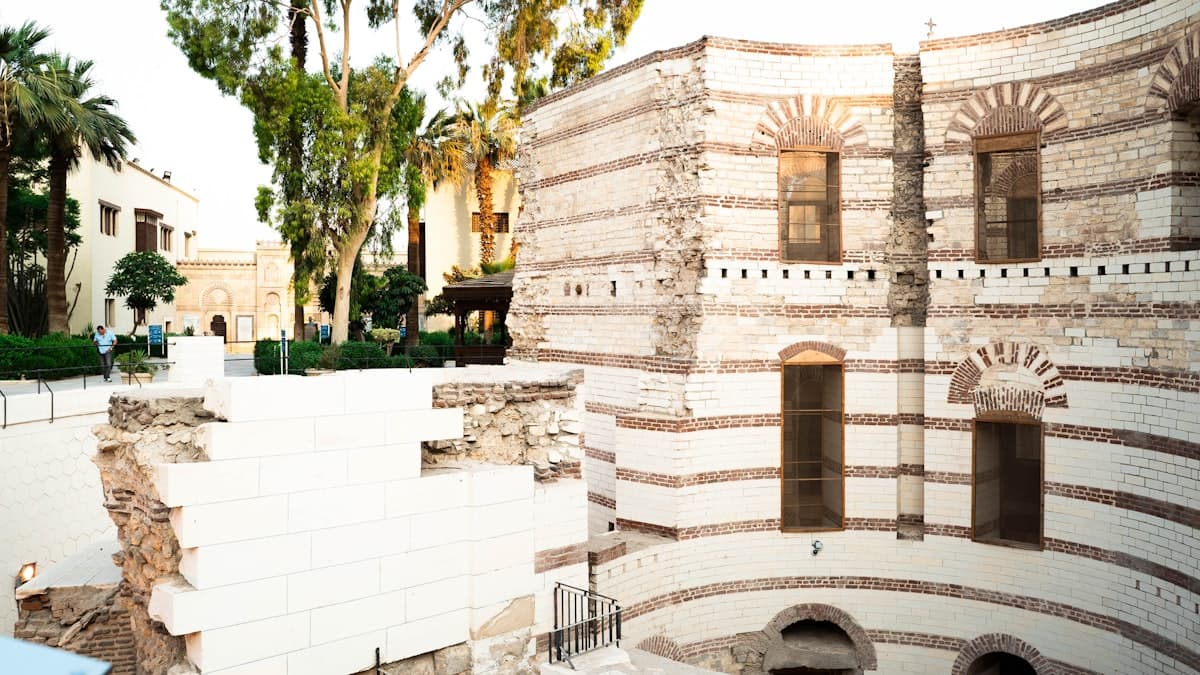
The interior is a long rectangular hall divided by two rows of marble columns into a nave and two side aisles, a plan that echoes Byzantine church architecture more than it does the great Sephardic synagogues of Europe or the Ottoman synagogues of Istanbul. The columns are ancient: some are believed to have been taken from earlier Roman or early Christian structures on the site. The carved wooden Torah ark at the eastern wall is the piece most visitors photograph. It's genuinely old, its latticed woodwork detailed and worn in a way that renovations haven't quite managed to erase.
The women's gallery runs along three sides of the upper level, screened by carved wooden mashrabiyya panels. The quality of that woodwork is worth studying closely. It's the same craft tradition you'll find in Mamluk and Ottoman houses across Islamic Cairo, a reminder that Jewish, Christian, and Muslim artisans in medieval Cairo trained in the same workshops and often worked the same sites.
The floor level of the synagogue sits lower than the surrounding ground, which is intentional. This was a common architectural practice in communities under Islamic rule, as laws in certain periods prohibited new houses of worship from being taller than existing mosques. By depressing the floor, communities could create interior height without violating the letter of the restriction. You're literally descending into the history of the building when you walk through the door.
The Connections
The Ben Ezra Synagogue sits inside Coptic Cairo, which sits inside the walls of Babylon-in-Egypt, which sits on the Nile bank that gave Cairo its strategic reason to exist. Within a five-minute walk, you have the Hanging Church (built into the Roman water gate towers), the Church of St. Sergius and Bacchus (which tradition holds was built over the cave where the Holy Family sheltered during the Flight into Egypt), and the ruins of the Roman fortress walls themselves. The site is not a Jewish quarter, a Christian quarter, or a Muslim quarter. It is all of them simultaneously, which is the most accurate thing you can say about Cairo in general.
Two kilometers north is the mosque of Amr ibn al-As, the first mosque built on African soil, constructed in 642 CE by the Arab general who conquered Roman Egypt and effectively ended the era that produced Babylon-in-Egypt. Amr chose to build his new city north of the Roman fortress rather than inside it, a decision that preserved Coptic Cairo as a distinct enclave within what became Fustat, then Al-Qata'i, then Al-Qahira: the city that grew in layers, each civilization building on the literal rubble of the last.
Maimonides, the greatest medieval Jewish philosopher, lived in Fustat (Old Cairo) for most of his adult life. He served as court physician to Saladin's vizier and wrote his most important works, including the Guide for the Perplexed, while living within walking distance of Ben Ezra. His signature appears on documents in the Cairo Geniza. He was buried in Tiberias, but Cairo made him who he was.
Common Mistakes
Visiting only the synagogue. The Coptic Cairo compound is one of the most densely layered historical sites in a city full of layered historical sites. Spending forty minutes at Ben Ezra and leaving means you've missed the Hanging Church, the Coptic Museum (whose collection includes the earliest surviving Coptic textiles and a Nag Hammadi codex), and the Church of St. Sergius, which has a crypt that floods seasonally from the Nile water table in a way that has barely changed in two thousand years.
Assuming you need a guide. The site has sufficient English signage to navigate independently. Many of the licensed guides stationed near the compound entrance have detailed knowledge of Islamic Cairo but superficial familiarity with the Jewish history specifically. If you want depth on the Cairo Geniza and the community's history, read S.D. Goitein's one-volume condensation of his five-volume study, "A Mediterranean Society", before you arrive. It will transform what you see.
Arriving after 11am on weekends. Tour groups move through Coptic Cairo in a predictable wave between 10am and noon. The interior of the synagogue is small. Twelve people make it feel crowded. Thirty make it difficult to look at anything.
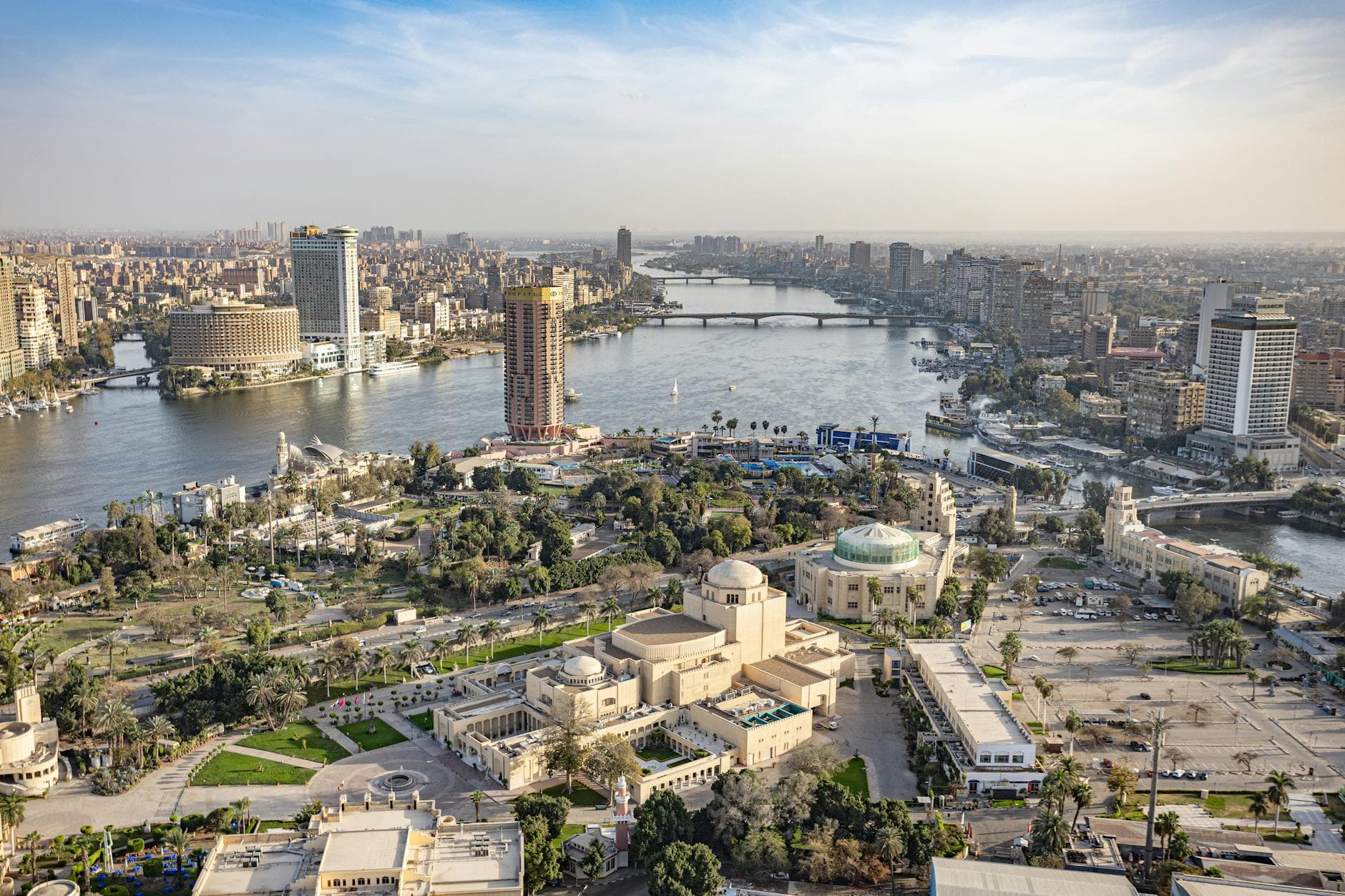
Ignoring the exterior walls. The outer courtyard contains fragments of Roman stonework incorporated into later Coptic and then Islamic construction phases. You're looking at three building cultures in a single wall if you know what to look for.
Treating this as a sad story only. The Jewish community's collapse was real and its causes were largely political violence and forced displacement. But the 1,000-year story of Jews in Cairo is not primarily a tragedy. The Geniza documents show a community that was commercially integrated, legally protected in most periods, and culturally productive in ways that shaped Islamic civilization as much as they shaped Jewish civilization. That's the more accurate and more interesting frame.
Missing the Coptic Museum. It's fifty meters from the synagogue entrance and houses objects that belong in any serious conversation about early Christianity, late Roman Egypt, and the period during which Judaism, Christianity, and Islam were all still forming their identities in this exact geography.
Rushing to see everything in one morning. Combined with the Coptic Museum and the Hanging Church, this site warrants three hours minimum. If you try to fold it into the same day as the Egyptian Museum and Khan el-Khalili, you'll see all three and understand none of them.
Practical Tips
Dress modestly. The site is primarily a religious heritage complex that includes active Coptic Christian spaces. Shoulders and knees covered is appropriate regardless of the heat.
The Mar Girgis Metro station is directly adjacent to the compound entrance. If you're staying downtown, this is the easiest and fastest way to arrive. The station is on Line 1 (the red line) and is clearly marked.
The small café near the entrance to the Coptic compound serves decent coffee and cold water. Use it. The interior of the synagogue has no climate control, and even in winter the compound can get warm by midday.
Photography is permitted inside Ben Ezra. Be considerate if other visitors are present. The acoustics of the stone interior mean that voices and camera sounds carry.
If you're arriving with a serious interest in the Cairo Geniza specifically, the Geniza documents themselves are not in Cairo. The main collections are at Cambridge University Library and the Jewish Theological Seminary in New York. The Friedberg Genizah Project has digitized and made searchable the majority of the surviving fragments online, which is one of the more remarkable things the internet has made possible.
Tickets are purchased at the main compound entrance, not at individual buildings. The single ticket covers everything inside the compound. Keep it with you.
Frequently Asked Questions
The Weekly Dispatch
More on Egypt, every Friday.
Cultural depth and places most guides never mention.
No spam. Unsubscribe anytime.