Blue Hole Dahab Diving Guide: What Nobody Tells You
The Blue Hole Dahab has claimed more lives than almost any dive site on earth. Here is what you need to know before you enter the water.

Quick Facts
- Best time to visit
- March to May and September to November. Best visibility, comfortable water temperatures between 22 and 26 degrees Celsius, and smaller crowds than summer or peak winter.
- Entrance fee
- No formal government entrance fee. Bedouin conservation levy approximately EGP 50 (around $1 USD), collected irregularly. Guided dive packages EGP 1,200 to EGP 2,200 (approx $25 to $45 USD) including equipment.
- Opening hours
- Accessible sunrise to sunset daily. Dive centers begin guided dives from 7am. Best light and smallest crowds in the early morning.
- How to get there
- Tuk-tuk from central Dahab: EGP 60 to EGP 100 (15 minutes). Taxi: EGP 80 to EGP 150. Bicycle rental from town: EGP 50 to EGP 80 per day. No public bus service. Many dive centers include transport in packages.
- Time needed
- Snorkelers: 2 hours minimum. Certified recreational divers: half a day for two dives with briefing and surface interval. Technical divers planning to dive the Arch: full day minimum including planning session.
- Cost range
- Budget recreational diver: EGP 1,200 to EGP 1,800 per day. Mid-range with nitrox and full guiding: EGP 2,500 to EGP 4,000 per day. Technical diving packages from EGP 6,000 per day.
The plaques are what stop you first. Before you even look at the water, you see them: small memorial tablets fixed to the rock above the Blue Hole, bearing names in Arabic, Russian, French, English, Hebrew. Some have photographs. Some have nothing but a name and a year. There are more than 130 of them. This is not a statistic that dive operators mention in their marketing, but it is the first thing you should understand about the Blue Hole Dahab diving guide that nobody writes honestly: this is one of the most lethal recreational dive sites on the planet, and it is also one of the most extraordinary places you will ever put on a mask.
The two things are not unrelated.
Quick Facts
Best time to visit: March to May and September to November. Water visibility is best in spring and autumn, when surface temperatures sit between 22 and 26 degrees Celsius. Summer is manageable but crowded. January and February bring wind off the mountains that makes surface conditions choppy and the walk to the site less pleasant.
Entrance fee: There is no formal government entrance fee to the Blue Hole itself. The site sits on Bedouin land managed by the South Sinai Bedouin Authority. A small conservation fee of approximately EGP 50 (around $1 USD) is sometimes collected at the entrance, though enforcement is irregular. Your dive center fees are the real cost: a guided shore dive here runs EGP 1,200 to EGP 2,200 (roughly $25 to $45 USD) depending on the operator, including equipment rental.
Opening hours: The site is accessible from sunrise to sunset. Most dive centers begin guided dives by 7am, when light penetrates the hole most cleanly and crowds are thinner.
How to get there: From central Dahab, the Blue Hole is approximately 8 kilometers north along the coast road. A tuk-tuk from the Mashraba promenade costs EGP 60 to EGP 100 and takes about 15 minutes. Taxis charge EGP 80 to EGP 150. Many divers cycle it in 25 minutes on bikes rented from town for EGP 50 to EGP 80 per day. There is no public bus service.
Time needed: Snorkelers can see the hole adequately in 2 hours. Certified divers should plan at least half a day, including the briefing, two dives, and surface intervals. If you intend to dive the Arch, budget a full day and factor in the mandatory technical dive planning.
Cost range: Budget diver: EGP 1,200 to EGP 1,800 per day. Mid-range with nitrox and guide: EGP 2,500 to EGP 4,000 per day. Technical diving (trimix, doubles) starts at EGP 6,000 and rises steeply.
Why This Place Matters
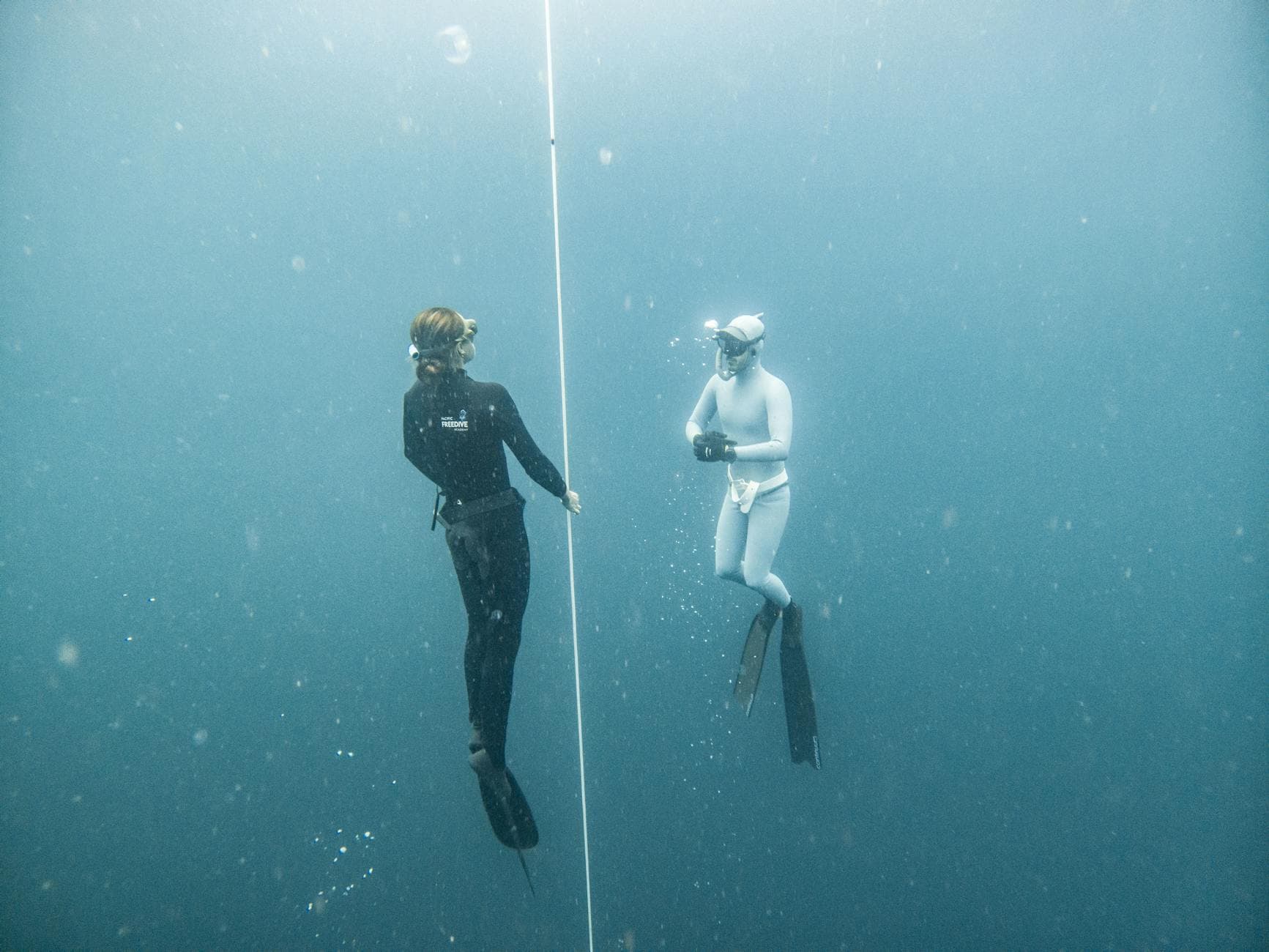
The Blue Hole is a sinkhole in the coral reef, roughly 300 meters in diameter at the surface and plunging to approximately 130 meters before opening into a tunnel system that has never been fully mapped. It sits at the edge of the Sinai Peninsula, where the African tectonic plate and the Arabian plate are pulling apart to form the Gulf of Aqaba. The entire coastline here is a crack in the earth. The Blue Hole is, in a geological sense, the most honest expression of that crack: a vertical shaft into the deep rift.
The Bedouin who live in this area, primarily the Tarabin tribe, have fished these waters for centuries. They called the hole different things at different times, most of them translating roughly to the deep place or the dark eye. They knew it as a place where fish congregated at the edges but where nets could not reach the bottom. Commercial diving as a recreational activity arrived here in the 1980s, carried in by Israeli tourists in the years after the Camp David Accords returned Sinai to Egypt in 1982. The dive centers that now line the Dahab promenade grew directly from that post-treaty moment, when a formerly closed military zone suddenly became accessible to civilians from across the border.
What most visitors to the Blue Hole Dahab diving site do not realize is that the famous and deadly feature called the Arch, a tunnel that connects the hole to the open sea at approximately 52 to 56 meters depth, was not always the primary draw. In the early years of recreational diving here, the site was celebrated for its sheer wall diving and extraordinary coral at 20 to 40 meters. The Arch became an obsession gradually, as more advanced divers pushed deeper, and as the deaths began to accumulate and paradoxically attract more people who wanted to prove something.
What You Will Actually See
From the surface, the Blue Hole is a circle of deep indigo surrounded by turquoise shallows. The contrast is sharp enough to seem artificial, like something painted rather than formed. You enter via a metal ladder bolted into the rock, descend through gin-clear water past a coral garden that begins almost immediately, and within a few fin kicks the bottom drops away entirely beneath you.
The walls are alive in ways that Red Sea walls generally are. Lionfish hang motionless in the shadows of coral overhangs. Napoleon wrasse of improbable size move through the middle water with the unhurried confidence of things that have no predators. The coral itself, predominantly table coral and brain coral, is in better condition than most Dahab sites because the depth discourages the casual snorkeler damage that has stripped reefs elsewhere in the Gulf of Aqaba.
At 15 to 30 meters, the experience is genuinely remarkable and the risks are standard recreational. This is the depth range in which the site earns its reputation legitimately, without requiring you to bet your life.
The Arch and Why It Kills People
The Arch sits at 52 to 56 meters at its shallowest point. This is, in itself, already beyond recreational dive limits, which top out at 40 meters. The Arch is a technical dive. The problem is that it does not look like one from inside the Blue Hole. You can see the daylight through it from well above. The tunnel appears close. It does not appear to be at 55 meters. This visual compression, combined with nitrogen narcosis, which sets in for most divers somewhere between 30 and 40 meters and impairs judgment in ways the diver rarely recognizes, has killed people who entered the water with no intention of diving that deep.
Many of the 130-plus deaths recorded here followed the same pattern: a diver at 25 or 30 meters sees the Arch glow below them, feels the particular confident warmth of narcosis, decides to go a little deeper, and does not come back up. The Arch is not the deepest point in the hole, but the swim through it requires enough bottom time that recreational air supplies run critical, and the ascent on the open ocean side, away from the protected cove, introduces currents and disorientation.
If you are not a qualified technical diver with trimix experience and a current certification in deep diving, you look at the Arch from a safe distance. This is not overcaution. It is the reason you will be alive to dive somewhere else next week.
The Connections
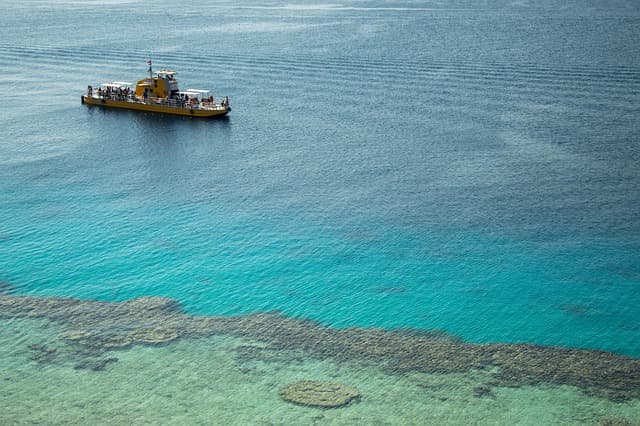
Dahab sits in a landscape that has been a crossroads for longer than most of recorded history. The Sinai Peninsula connects Africa to Asia and has been crossed by armies, traders, pilgrims, and refugees for at least 4,000 years. The turquoise mines of Serabit el-Khadim in northern Sinai were being worked by Egyptians during the Middle Kingdom, roughly 4,000 years ago, and the workers who died there left behind some of the earliest known alphabetic inscriptions, a script that scholars now trace as an ancestor of modern Arabic, Hebrew, and Latin letters. The Sinai was not a wilderness between civilizations. It was the corridor through which civilizations moved.
The Bedouin presence around Dahab represents a different kind of continuity. The Tarabin and Muzeina tribes who occupy South Sinai are not remnants of a static ancient culture. They are people who negotiated relationships with Ottoman administrators, British surveyors, Egyptian military governments, and Israeli occupying forces over the course of two centuries, and who emerged from all of it with a functional claim on the land around the dive sites that foreign operators pay fees to use. The conservation levy at the Blue Hole goes, in theory, to Bedouin community funds. The reality of where that money ends up is, like many things in Sinai, complicated.
The coral reef itself connects the Blue Hole to the broader Red Sea system, one of the youngest seas on the geological calendar, formed roughly 30 million years ago as Arabia and Africa separated. The fish you see here are genetically distinct from their Pacific cousins. The Red Sea has been isolated enough, and long enough, to evolve its own species. The Napoleon wrasse hovering at 25 meters does not exist in the same form anywhere else on earth.
Common Mistakes
Treating it as a snorkeling site without briefing. The Blue Hole's drop-off is immediate and unmarked. Snorkelers who swim over the edge of the coral shelf without understanding the topography can find themselves suddenly above 100 meters of open water, which causes panic in people with no diving experience. Snorkel only in the clearly marked shallower zones.
Choosing a dive center based on price alone. Dahab has excellent operators and it has operators who will take your money, skip the site briefing, and let you descend without adequate supervision. The price difference between a competent guide and a negligent one is often EGP 300 to EGP 500, which is not a meaningful amount against your life. Ask specifically: will my guide be in the water with me, not just on the surface? What is the maximum depth for today's dive? What is the abort procedure?
Underestimating nitrogen narcosis. This is especially important for divers who have done most of their diving in pools or in shallow tropical reefs. The Blue Hole descends fast and the walls are distracting. Narcosis does not announce itself. If you have not dived regularly below 25 meters in the past six months, treat this site with considerable humility.
Going without a dive computer. Rental computers are available from any reputable center. Diving here without one, relying on a guide's timing or your own estimation of depth, is not reasonable. The topography punishes guesswork.
Skipping the Bell entrance for beginners. The Bell is an alternate entry point to the north of the Blue Hole, which allows divers to descend through a chimney formation and enter the main hole at around 26 meters without passing directly over the deep center. It gives less experienced divers a more controlled introduction to the site. Many guides do not offer it unless you ask.
Visiting midday in summer. Between 11am and 3pm from June through August, the site is at its most crowded and the surface temperature can make extended surface intervals uncomfortable. The light quality is also poorest for photography.
Assuming your travel insurance covers diving. Most standard travel insurance policies explicitly exclude diving injuries. Verify your policy before you get in the water, and consider DAN (Divers Alert Network) coverage, which costs roughly $35 USD annually and covers evacuation to a hyperbaric chamber. The nearest chamber is in Sharm el-Sheikh, about 90 kilometers south.
Practical Tips
Book your dive center before you arrive in Dahab, especially if you are traveling between March and May or in October. The better operators, including Nesima Dive Center and Octopus Dive, fill morning slots fast. Walk-ins frequently end up with the least experienced guides.
Bring your own water and snacks. The cafes at the Blue Hole site serve food, and the Bedouin tea is genuinely good, but prices are higher than in town and you will be more comfortable if you are not depending on site facilities for hydration during surface intervals.
The walk from the parking area to the water entry is about 10 minutes over uneven rock. Dive booties, which your rental gear will include, handle this fine, but anyone with mobility issues should ask their dive center about the exact terrain before committing.
Photography: bring an underwater housing if you have one. The visibility in the Blue Hole, regularly exceeding 30 meters, rewards wide-angle work. The coral garden between 5 and 20 meters is the most photogenic zone. Below 30 meters, the light drops sharply and the photographs become difficult without strobes.
The memorial plaques are above the water entry on the right-hand side. Take a moment with them. They are not morbid tourism. They are the honest record of what this place is, and they will make you a more careful diver.
After your dive, the town of Dahab is 8 kilometers south and worth the tuk-tuk ride back for an evening. The promenade along the Mashraba is the kind of place where Bedouin families, European long-term residents, Egyptian dive instructors, and Israeli day-trippers all share the same strip of waterfront without apparent friction, which, given the political geography of the Sinai, is its own kind of quiet achievement.
Frequently Asked Questions
The Weekly Dispatch
More on Egypt, every Friday.
Cultural depth and places most guides never mention.
No spam. Unsubscribe anytime.