Cairo Jewish Quarter: What Haret al-Yahud Actually Was
Cairo's Jewish quarter, Haret al-Yahud, holds the story of a community 2,500 years in the making. Here is what the streets still carry.
Quick Facts
- Best time to visit
- October to March. Cairo's heat makes walking these dense urban streets uncomfortable between June and September. October and November offer the most manageable temperatures with good morning light.
- Entrance fee
- Ben Ezra Synagogue: EGP 150 per person (approx $3 USD). Coptic Museum nearby: EGP 200 (approx $4 USD). Street access to the quarter is free.
- Opening hours
- Ben Ezra Synagogue: Saturday to Thursday 9am to 4pm, closed Fridays and Jewish holidays. Arrive before 11am for quieter conditions.
- How to get there
- Metro Line 1 to Mar Girgis station (EGP 8, approx $0.16), then 10-minute walk north. Uber or Careem from Downtown Cairo costs EGP 40 to 70. Avoid flagged taxis without agreeing on a price first.
- Time needed
- 2 hours for Ben Ezra and a quarter walk. Half a day if combined with Coptic Cairo churches and Amr Ibn al-As Mosque.
- Cost range
- Budget EGP 300 to 500 including transport and entrance. Mid-range EGP 800 to 1,500 with a licensed guide and lunch.
At its peak in 1948, Cairo had roughly 75,000 Jewish residents. By 1979, fewer than 250 remained. The Haret al-Yahud, Cairo's old Jewish quarter in the Gamaliya district, did not empty because of a single event but because of a slow hemorrhage across three decades: the 1948 war, nationalizations under Nasser, social pressure, economic exclusion, and the quiet arithmetic of emigration. What is left is not ruins exactly. It is more like a held breath.
This is not a place you visit to see a thriving community. You visit it to understand how a city metabolizes loss, and how remarkably, stubbornly, some things survive.
Quick Facts
Best time to visit: October to March, when Cairo's heat is tolerable for walking the narrow lanes. Friday mornings are quietest before the midday prayer crowd.
Entrance fees: Ben Ezra Synagogue charges EGP 150 per person (approximately $3 USD). Sha'ar Hashamayim (Adly Street) is generally closed to the public but can be arranged through the Jewish Community of Cairo with advance notice. The streets of the quarter itself are free to walk.
Opening hours: Ben Ezra Synagogue is open Saturday through Thursday, 9am to 4pm. It is closed on Fridays and Jewish holidays. Arrive before 11am if you want the space to yourself.
How to get there: Take the Cairo Metro Line 1 to Mar Girgis station (EGP 8, roughly $0.16). The station exits directly into the Coptic Cairo compound, from which the Jewish quarter is a 10-minute walk north along the Corniche into Gamaliya. Alternatively, a Uber or Careem from Downtown Cairo costs EGP 40 to 70 depending on traffic. Do not take a taxi unless you enjoy negotiating. The Haret al-Yahud proper sits just off Sharia Muski, northeast of the Coptic compound, near the intersection with the old fabric markets.
Time needed: Two hours for Ben Ezra and a walk through the quarter. Half a day if you extend into the surrounding Coptic Cairo, the Amr Ibn al-As Mosque, and the street markets.
Cost range: Budget EGP 300 to 500 for entrance, transport, and tea. Mid-range EGP 800 to 1,500 if you add lunch in Coptic Cairo or a guide.
---
Why This Place Matters
Jews have lived continuously in Egypt since at least the 6th century BCE. That is not a footnote. The Elephantine papyri, found on an island near Aswan, document a Jewish military colony serving the Persian rulers of Egypt in 495 BCE, complete with their own temple, their own legal disputes, and their own letters asking Jerusalem what to do about Passover. By the time Alexander the Great founded Alexandria in 331 BCE, Jews were already an established Egyptian community, not newcomers.
The Haret al-Yahud as a distinct neighborhood crystallized in the Fatimid period, roughly the 10th and 11th centuries CE, when Cairo was founded and its population organized into community-specific quarters: Christians here, Jews there, various Muslim factions elsewhere. This was not apartheid. It was the standard urban logic of medieval Islamic cities, and it came with legal protections, community courts, and, crucially, property rights.
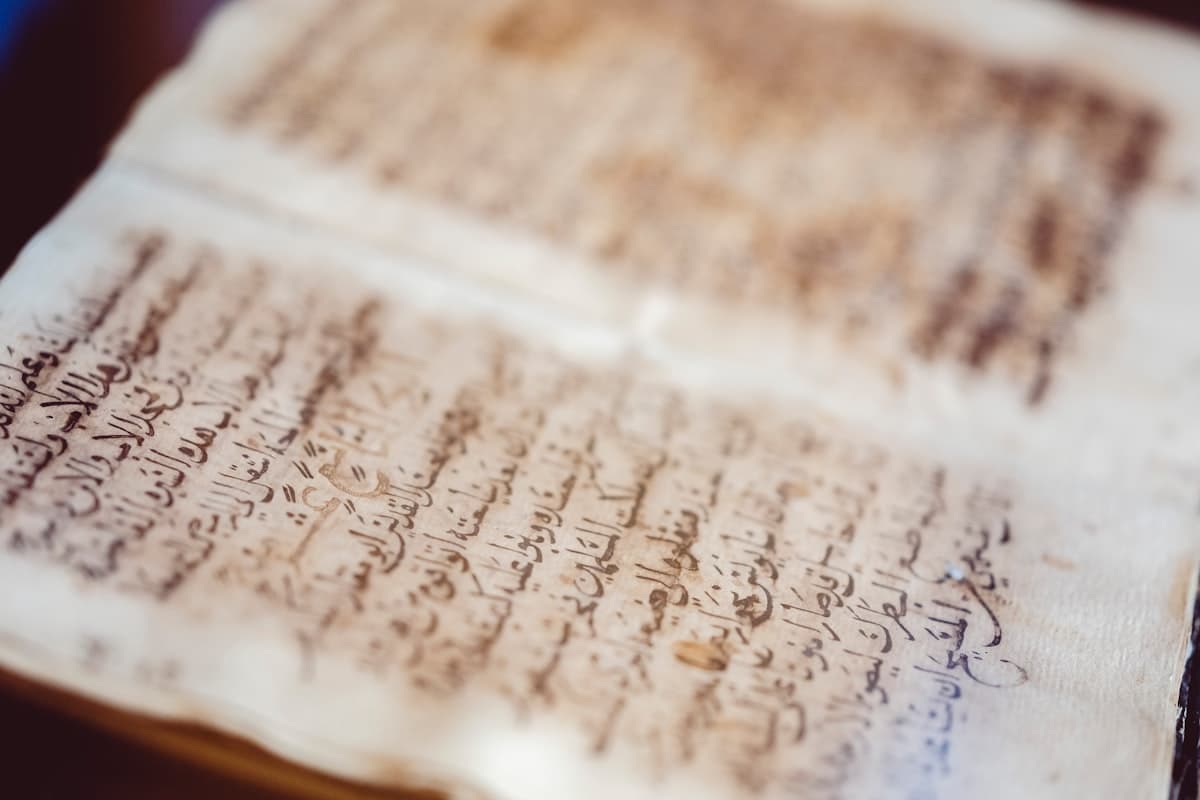
The Ben Ezra Synagogue at the heart of this history is older than it looks. It occupies a site that tradition holds was purchased from the Coptic community in the 9th century CE, though the current structure dates largely to reconstruction in the 12th century. Here is the fact that will stop you: in 1896, Solomon Schechter, a Cambridge scholar, climbed into the synagogue's geniza, a storage chamber where worn religious texts were kept rather than destroyed, and found approximately 400,000 manuscript fragments dating back to the 10th century. They included letters between merchants trading across the Mediterranean, religious texts, court documents, medical prescriptions, children's writing practice, and personal correspondence. The Cairo Geniza, as it is now known, is one of the most significant archival discoveries in human history. It rewrote what we know about medieval Jewish life, Mediterranean trade, and daily existence in Fatimid and Ayyubid Egypt. Most of it now lives in Cambridge.
---
What You Will Actually See
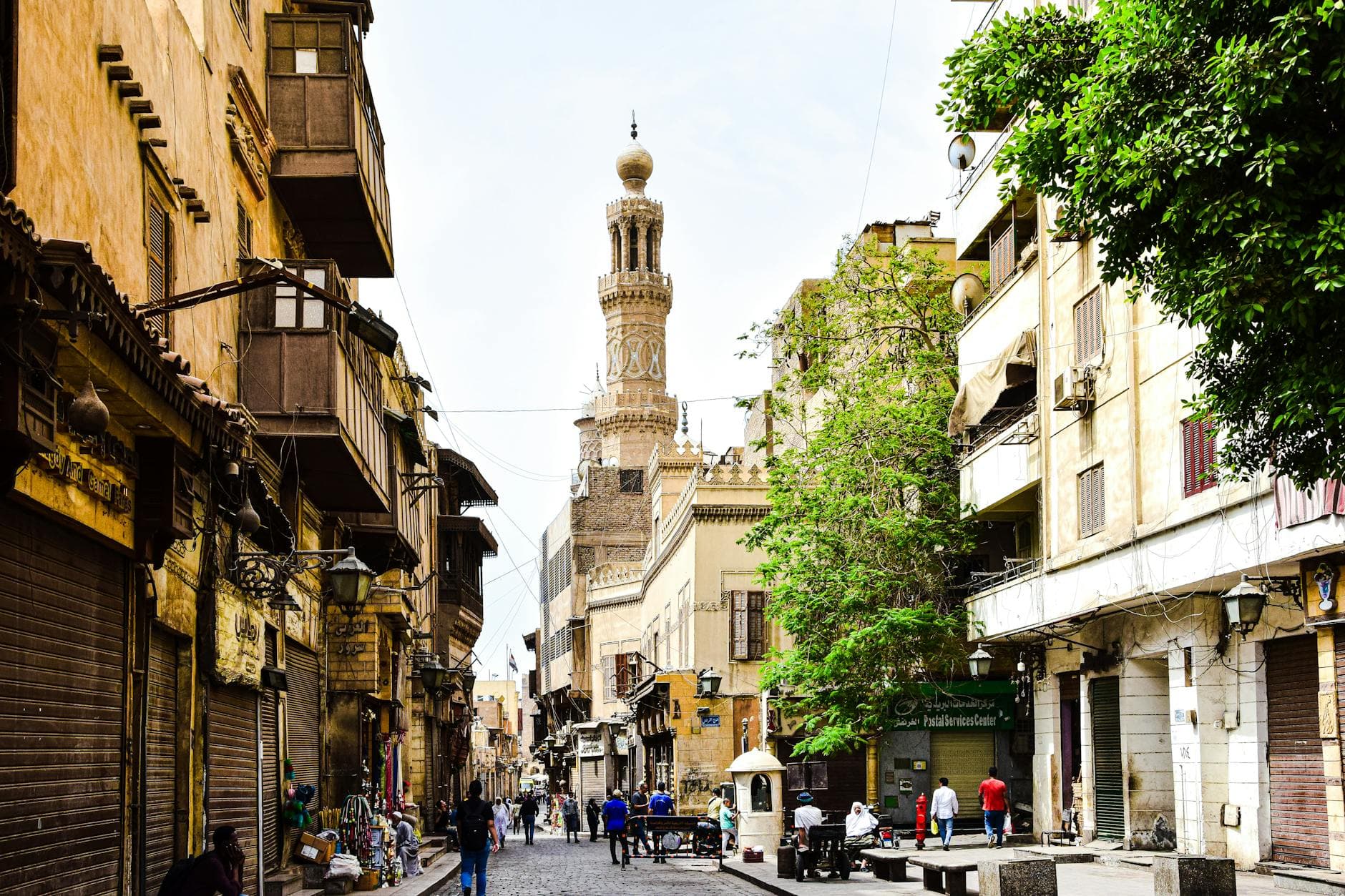
The Haret al-Yahud today is a residential neighborhood wearing its history lightly and sometimes not at all. The streets are narrow, the buildings mostly 19th and early 20th century, the walls the particular shade of ochre-grey that Cairo's air eventually turns everything. You will hear children, street vendors, the percussion of someone fixing a motorcycle. What you will not hear is Hebrew.
Ben Ezra Synagogue is the anchor. When you walk in, the first thing you notice is the quiet, which in this city is itself remarkable. The interior is a restored double nave with wooden galleries, blue and white tiles, and an ornate wooden ark housing Torah scrolls. The restoration, funded largely by outside Jewish organizations in the 1980s and 1990s, is careful and somewhat sterile, as restorations tend to be when the community being honored is no longer present to use the space. Services are rarely held here now. The caretakers are Muslim Egyptians.
What the restoration cannot fake is the geniza alcove. Schechter removed everything, of course, but standing in that narrow chamber with its rough stone walls, you can feel the specific weight of what accumulated there: seven centuries of papers that a community could not throw away because God's name might appear on them, and that a scholar found because a woman named Agnes Lewis tipped him off after buying fragments in a Cairo bazaar. The whole story is a sequence of near-misses that succeeded.
Outside the synagogue, look for the Hebrew-engraved lintels on buildings that are now ordinary Cairo apartments. Some residents know what the writing says. Some do not. Nobody has removed them.
The Sha'ar Hashamayim Question
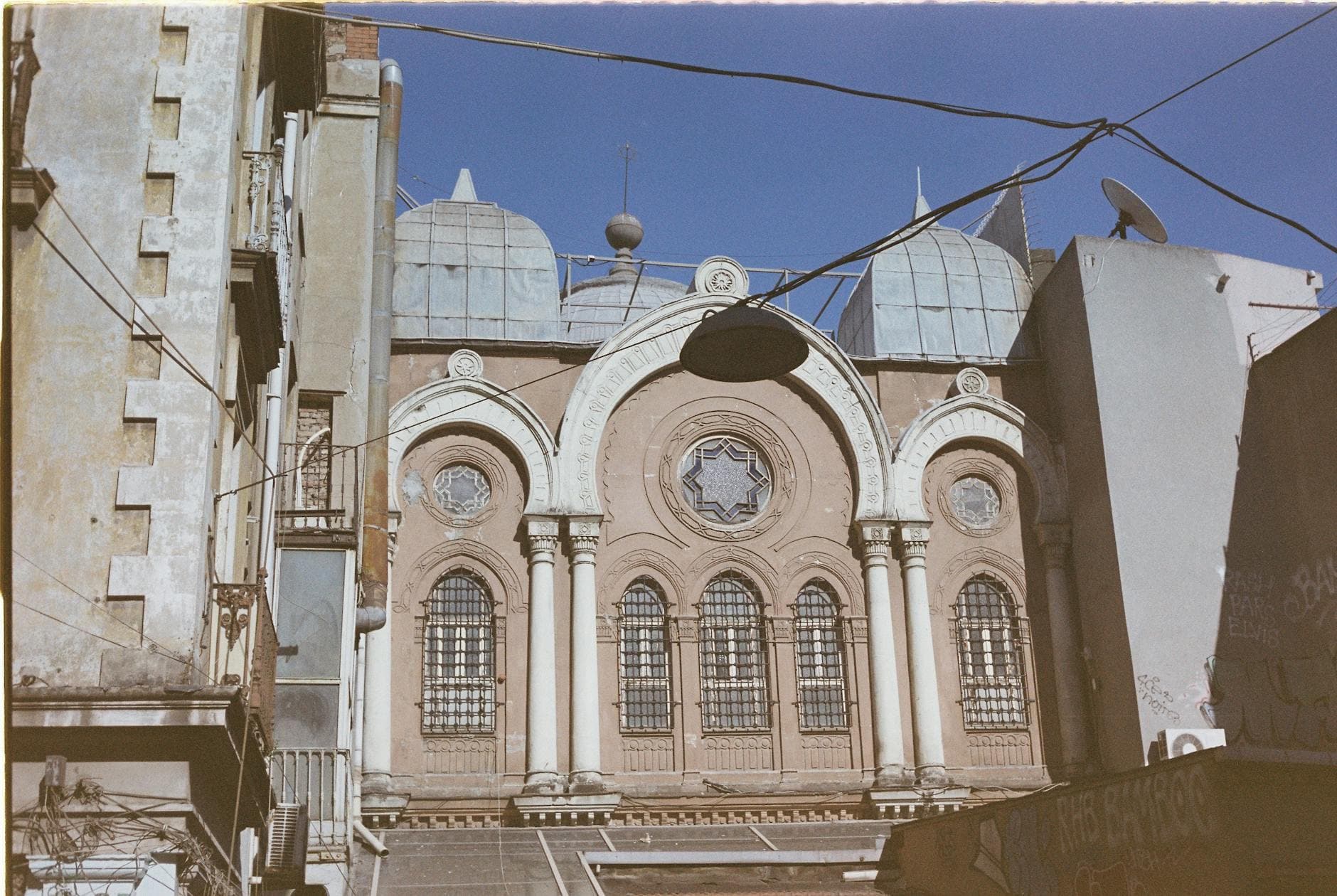
Cairo has a second significant synagogue that most visitors never see: Sha'ar Hashamayim on Adly Street in Downtown Cairo, built in 1905 and once the grandest synagogue in Africa. It seats 700 and is almost never used. The Egyptian government restored its exterior, which is a kind of statement. The Jewish Community of Cairo, which now numbers perhaps six to ten practicing members (mostly elderly women), technically controls access. Getting inside requires a written request and some patience. It is worth the effort. The stained glass, the massive chandeliers, the sheer scale of a space built for a community that no longer exists here, carries an emotional charge that Ben Ezra, with its tourist traffic, cannot quite match.
---
The Connections
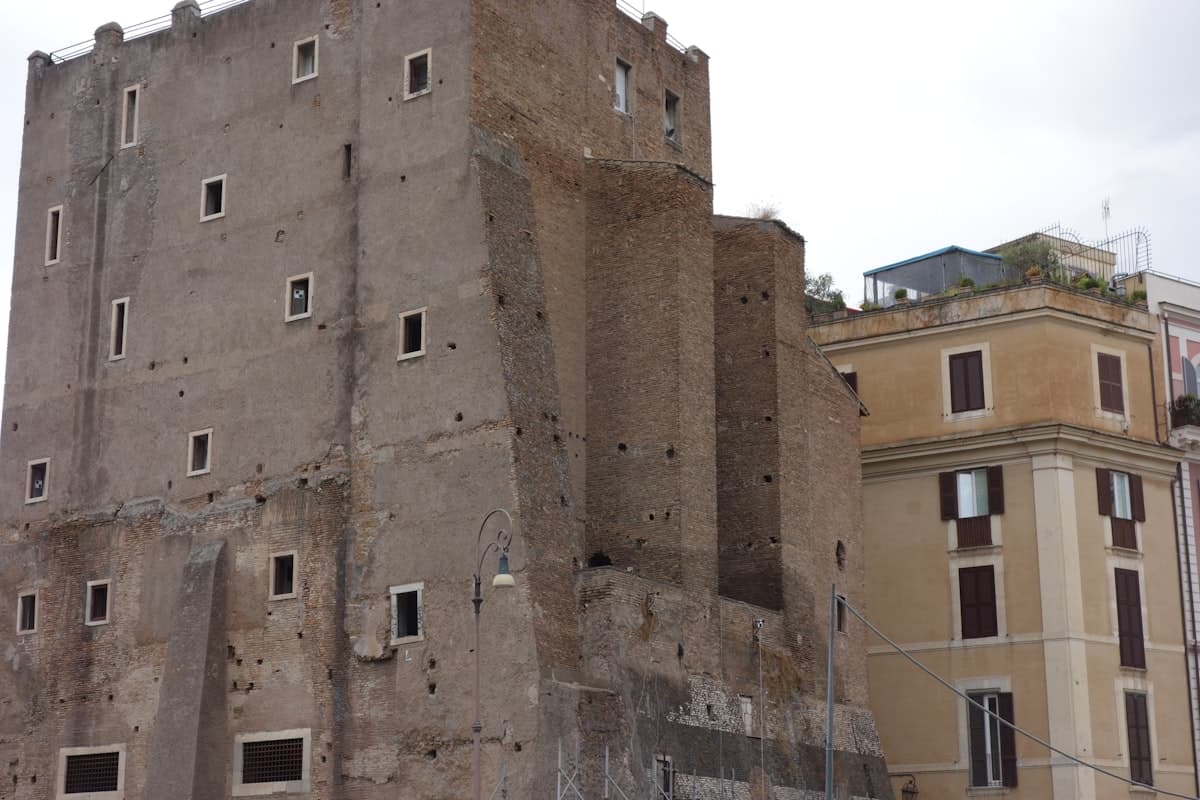
The quarter's geography is itself an argument against clean historical categories. Ben Ezra Synagogue sits less than 500 meters from the Church of Saint Sergius, one of the oldest Coptic churches in Egypt, built over a crypt where tradition says the Holy Family sheltered during the flight into Egypt. That church sits less than 200 meters from the Hanging Church, the Coptic cathedral built on top of the Roman Babylon fortress's southern gate towers. The Roman towers are still visible beneath it. The Amr Ibn al-As Mosque, the first mosque built on African soil, is a 5-minute walk from all of them. It was constructed in 642 CE and rebuilt so many times that nothing original remains, but the site has been continuously Islamic sacred ground for nearly 1,400 years.
This is not incidental. The neighborhood is a stratigraphic argument about time: Roman soldiers building a fortress, Coptic Christians building over it, a Jewish community forming nearby, a Muslim army arriving and founding a new city slightly north and eventually absorbing all of it. The Fatimid caliphs who formalized the Haret al-Yahud were themselves from North Africa. The Ayyubid sultan Saladin, who reorganized Cairo's administration in the 12th century, was Kurdish. The Mamluk sultans who ruled after him were mostly Circassian or Kipchak Turk. Egypt has always been built by people arriving from somewhere else and then becoming, eventually, Egyptian.
The Egyptian Jews who left in the 1950s and 1960s scattered to Paris, London, São Paulo, Tel Aviv, New York, and Sydney. Many of them, or their children, have spent decades writing about Cairo with a specific kind of homesickness that is not quite nostalgia for Israel or France but for a Cairo that no longer exists in the form they remember. That literature, from writers like Jacqueline Shohet Kahanoff and André Aciman, is worth reading before you come. It will change what you see when you stand in these streets.
---
Common Mistakes
Treating Ben Ezra as the whole story. The synagogue is one building. The quarter is a neighborhood, and walking it matters more than reading the plaques inside.
Coming with a tour group. The organized tours that include Ben Ezra give you about 25 minutes inside before herding you onto a bus. The geniza alcove and the street-level context both require time you will not have.
Assuming the caretakers know nothing. The Egyptian staff at Ben Ezra have worked there for years and know the building's history in detail. Ask them directly, in Arabic if you can manage it. You will get a different and more interesting account than the laminated English pamphlet.
Missing the surrounding street texture. The immediate area around the quarter contains workshops making traditional brass and copper goods, fabric merchants, and a produce market that has existed in some form for centuries. Do not leave without walking it.
Confusing restoration with preservation. The synagogue was restored, which means it looks cleaner and more coherent than it did. Real preservation would have kept the marks of use and time. What you see is partly a reconstruction of what the building should look like, not what it did look like.
Forgetting to request Sha'ar Hashamayim in advance. If you want access to the Adly Street synagogue, contact the Jewish Community of Cairo at least two weeks before your visit. Walk-up access is essentially never granted.
Expecting Egyptian staff or neighbors to have strong feelings about the Jewish community's departure. Some do, some don't, and the ones who do have varied feelings: regret, indifference, complicated politics. Do not arrive with a predetermined script for what you think the conversation should be.
---
Practical Tips
Dress conservatively for the neighborhood. The quarter sits inside a dense residential and religious area where both the Coptic and Muslim communities are active and present. Covered shoulders and long trousers or skirts are standard courtesy.
Hire a local guide who knows Islamic Cairo rather than one who specializes in Pharaonic sites. The context you need here is medieval and Ottoman, not Dynastic. Ask at your hotel for a licensed Egyptologist guide who covers Islamic and Coptic Cairo specifically. Expect to pay EGP 500 to 800 for a half-day.
Photography inside Ben Ezra is permitted but ask before pointing a camera at the caretakers or other visitors. Photography inside the neighborhood streets is generally fine, but photograph people only with permission.
Carry cash in small denominations. The EGP 150 entrance fee at Ben Ezra must be paid in Egyptian pounds. There are no ATMs immediately adjacent to the synagogue. The nearest reliable ATM is at the Mar Girgis Metro station.
If you combine this with Coptic Cairo, start at Mar Girgis station, work through the Coptic Museum (EGP 200, approximately $4 USD, open 9am to 5pm), then the churches, then walk north into the Jewish quarter for late morning. End with the Amr Ibn al-As Mosque before Friday prayers complicate access. That sequence covers 2,500 years of Egyptian religious history in about five hours.
Frequently Asked Questions
The Weekly Dispatch
More on Egypt, every Friday.
Cultural depth and places most guides never mention.
No spam. Unsubscribe anytime.