City of the Dead Cairo: A Guide to the Living Necropolis
Cairo's City of the Dead is home to half a million living residents, not just the dead. This necropolis guide reveals what lies beneath the marble and incense.
Quick Facts
- Best time to visit
- October to March, arriving before 11am. Spring and autumn mornings offer manageable temperatures and good light on the carved stonework. Avoid July and August midday entirely.
- Entrance fee
- No general admission. Qaitbay complex: EGP 100 (approx $2 USD), students EGP 50. Barsbay complex: free to EGP 30 informal fee. Local guide at gate: EGP 100-150.
- Opening hours
- Cemetery streets are open at all hours. Mausoleum interiors accessible approximately 8am to 4pm daily. Friday afternoons are busier near major tombs.
- How to get there
- Metro Line 2 to El-Khalifa, then 15-minute walk (EGP 8 metro fare). Microbus from Ataba Square toward El-Arafa: EGP 5-7. Taxi or Uber from downtown: EGP 60-100.
- Time needed
- 3 hours minimum for northern Qarafa and Qaitbay complex. Full day if combining with southern Qarafa, Imam al-Shafi'i mosque, and Al-Darb Al-Ahmar district.
- Cost range
- Budget EGP 200-400 for half-day including transport, entrance fees, and guide tip. Full day with southern section and lunch: EGP 400-700.
Quick Facts
Best time to visit: October to March, early morning
Entrance fee: No general admission fee to walk the necropolis. Access to the Qaitbay complex costs EGP 100 (approx $2 USD); students pay EGP 50. The Barsbay complex is sometimes free, sometimes EGP 30 depending on the custodian present.
Opening hours: The cemetery streets are open continuously, but individual mausoleum interiors tend to be accessible from around 8am to 4pm. Friday afternoons bring family visits and can be crowded near larger tombs.
How to get there: From downtown Cairo, take the metro to El-Khalifa station (Line 2) and walk roughly 15 minutes east, or take a microbus from Ataba Square toward El-Arafa for EGP 5-7. A taxi from central Cairo runs EGP 60-100 depending on traffic. Uber is reliable and usually cheaper than a haggled cab.
Time needed: 3 hours minimum for the main complexes. Allow a full day if you plan to visit the Imam al-Shafi'i mosque and explore the southern reaches.
Cost range: Budget EGP 200-400 for a half-day including transport and entrance to Qaitbay. Add EGP 100-150 if you hire a local guide at the gate.
---
About half a million people live in Cairo's City of the Dead right now. They cook in rooms built against tomb walls, hang laundry from mausoleum windows, and send their children to schools that occupy the same walled compounds where Mamluk sultans have lain for six hundred years. This is not poverty forcing people into improvised shelters. Some families have been here for generations, employed as tomb guardians, absorbing rent from the graves of strangers. Others arrived during the acute housing crises of the 1960s and 1970s and simply stayed.
When most visitors hear "City of the Dead," they picture something atmospheric but inert, a place organized around the absence of life. The Cairo City of the Dead necropolis guide they find online usually describes it as eerie or atmospheric and moves quickly to the monuments. That framing misses almost everything that matters about this place.
Why This Place Matters
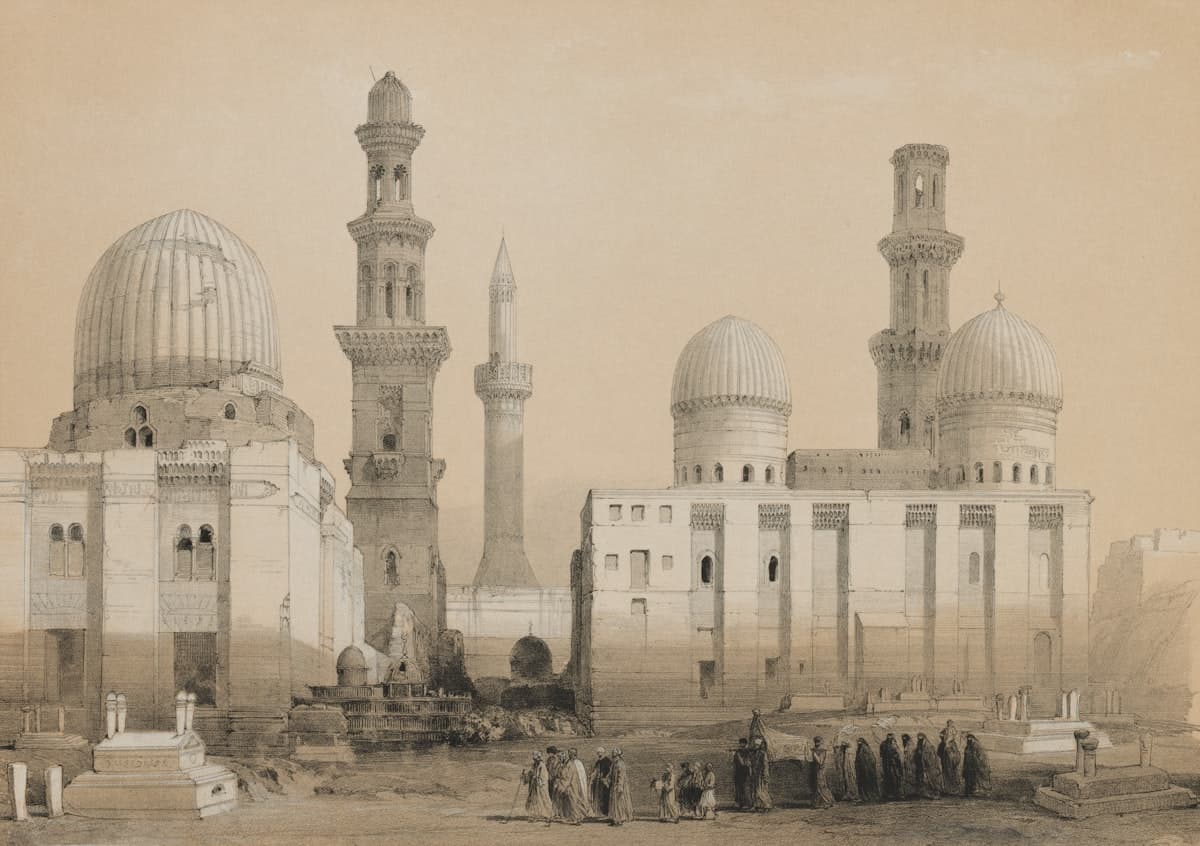
The Qarafa, as Cairenes call it, is not one cemetery. It is at least three overlapping ones: the Northern Cemetery stretching toward the Muqattam hills, the Southern Cemetery anchored by the great mosque of Imam al-Shafi'i, and a middle section containing some of the most accomplished funerary architecture ever built in the Islamic world. Together they cover roughly four square kilometers of the eastern edge of Cairo, bordered by the Muqattam escarpment and threaded with streets that are functionally indistinguishable from those of any working-class Cairo neighborhood.
The site's history begins before Islam. The earliest burials in this area date to the Fatimid period, roughly the tenth and eleventh centuries, when Cairo's founders established the first organized cemeteries outside the city's eastern gates. But the land itself was occupied long before that. Archaeological surveys have found Roman-era material beneath parts of the northern section, and the Fatimids were building on terrain that the ancient Egyptians used as a quarry route from the Muqattam hills into the Nile valley.
The critical shift came under the Mamluk sultanate, which ruled Egypt from 1250 to 1517. The Mamluks were military slaves, mostly of Circassian or Turkic origin, who had been purchased as boys, trained as warriors, and eventually seized power from their own masters. They built obsessively: mosques, madrasas, hospitals, and especially tombs, because a sultan without a visible monument had no claim on posterity. The Northern Cemetery became their chosen ground. They constructed not just individual tombs but entire funerary complexes with mosques, Quranic schools, and housing for Sufi orders who would pray continuously at the grave. Some of these complexes employed dozens of people. The line between a religious institution and a royal burial was deliberately blurred.
That tradition of inhabiting the cemetery rather than simply visiting it is what made the Qarafa a living community long before the modern housing crisis arrived.
What You Will Actually See
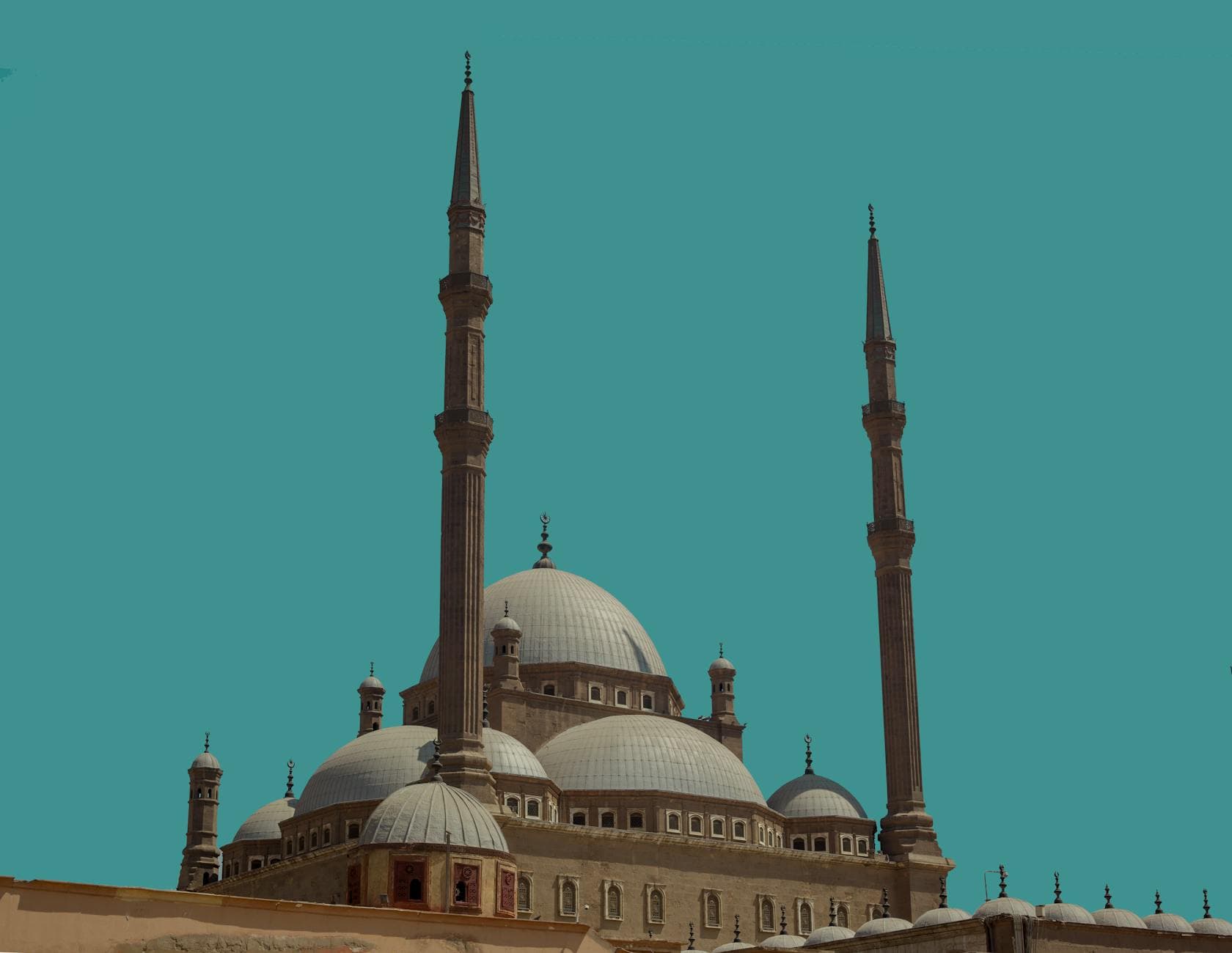
The piece of architecture that justifies any trip to the northern Qarafa is the Qaitbay complex, completed in 1474. Sultan Qaitbay was the longest-reigning Mamluk sultan (twenty-eight years) and perhaps the most accomplished builder of his dynasty. His mausoleum is the one that appears on Egypt's one-pound note, though almost nobody realizes it is a tomb and not a mosque. The stone dome above it carries carved arabesque and geometric patterns that shift as the light moves across them, a technique called muqarnas relief work that required craftsmen to solve complex three-dimensional geometry without modern tools.
The interior of Qaitbay's tomb chamber is worth sitting in for twenty minutes if the custodian will allow it. The light through the carved stone grilles changes the room entirely depending on the hour. At 9am in winter, a particular shaft hits the cenotaph directly. Qaitbay himself is buried here, though his actual body lies beneath the floor in an unmarked lower chamber, which is the standard Mamluk arrangement: the cenotaph above for show, the body below for eternity.
Worth noting: Qaitbay financed this complex partly through the revenues of properties he owned in Mecca. He also stripped stone from older Mamluk buildings to use as fill, a practice that drives architectural historians to frustration but tells you everything about how Cairo was actually built, always consuming itself to produce the next version.
The Barsbay Complex and What Most People Skip
Five minutes' walk from Qaitbay stands the Barsbay complex, built around 1432 for Sultan Barsbay, who is best remembered in economic history for nationalizing the spice trade through Egypt, which contributed to the Portuguese eventually seeking an alternative sea route around Africa. His tomb indirectly accelerated the decline of the very empire that built it.
The complex includes a khanqah, a residential space for Sufi mystics, built into the same structure as the tomb. The arrangement was intentional: the constant prayers and chanting of the Sufis were understood to benefit the sultan's soul. Prayer was the payment. When you walk through now, you may find a family living in what was once the Sufi dormitory. The current residents are neither mystical nor symbolic; they are simply people who needed housing. But the continuity of use across six centuries is something Cairo keeps doing, without ceremony or explanation.
Most visitors skip the southern section entirely. This is a mistake, though it requires 40 minutes of walking or a short taxi ride. The mosque of Imam al-Shafi'i, founder of one of Islam's four major legal schools, sits at the far southern end. He died in 820 CE, which makes this one of the oldest pilgrimage sites in Cairo, predating the Mamluks by four centuries. Women in black abayas come here on Thursdays to pray and leave petitions written on paper. The wooden cenotaph over his grave, inlaid with mother-of-pearl and ebony, was made in the Ayyubid period under Saladin, who also built the Cairo Citadel. When Saladin is discussed in Egypt, the focus is usually military. The fact that he was also the man who commissioned the most important funerary furnishing in this part of Africa is rarely mentioned.
The Connections
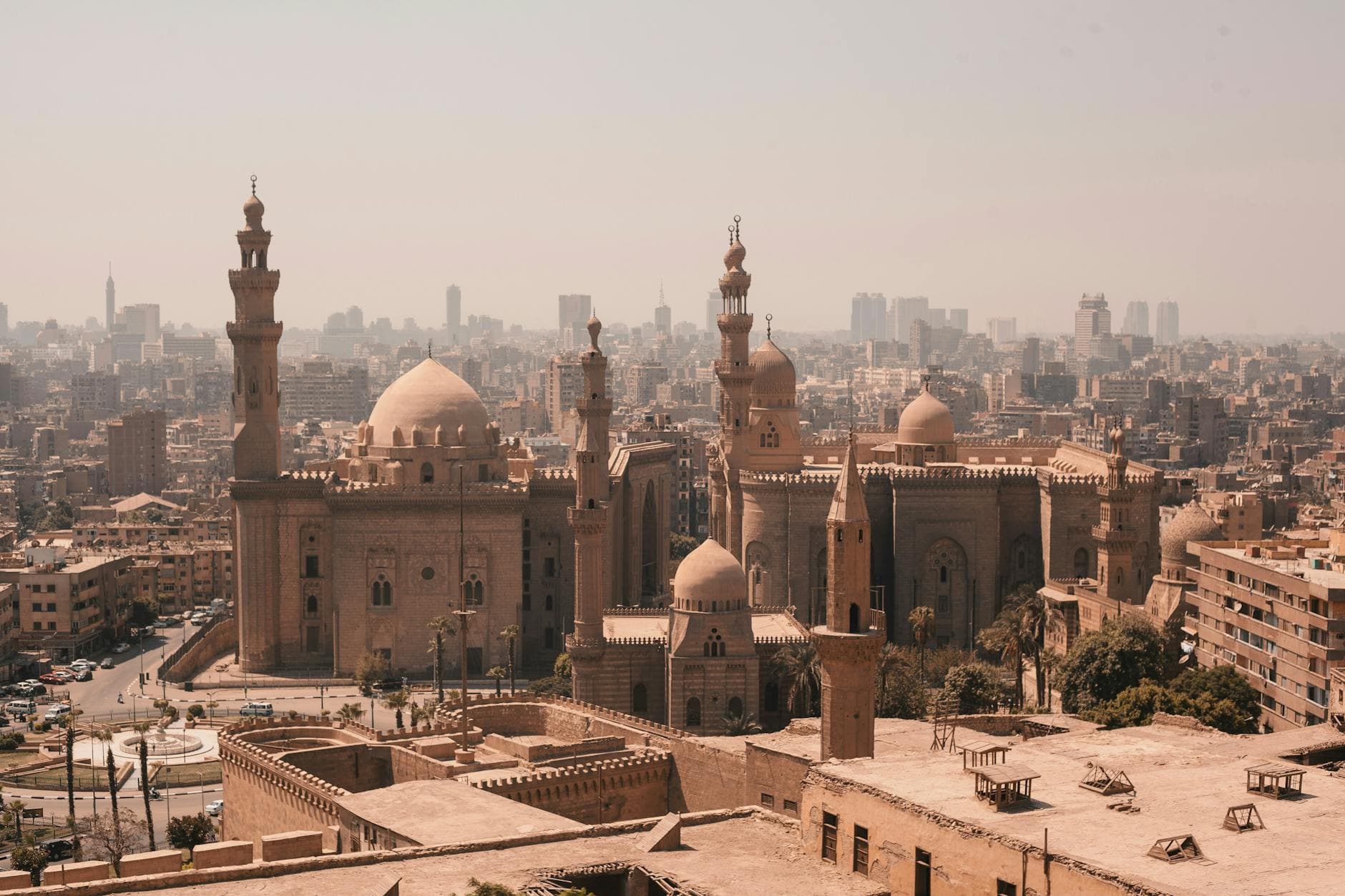
The City of the Dead does not exist in isolation from the rest of Cairo's layered geography, and one of the pleasures of spending time here is following the lines that connect it outward.
The Muqattam hills directly east of the cemetery are the source of the white limestone used to build the Great Pyramid's outer casing, most of which was later stripped to build medieval Cairo. When you look at the minarets of the Qaitbay mosque, you may be looking at stone that was shaped once for a pharaoh and quarried again for a Mamluk sultan. The hills also supplied the stone for Saladin's citadel walls. Material moved back and forth across these few kilometers for four thousand years.
The Islamic Cairo district of Al-Darb Al-Ahmar runs along the western edge of the cemetery zone. The craftspeople who built the Mamluk tombs lived there. Today it houses one of the most intact medieval residential streetscapes in the Arab world, currently being restored by the Aga Khan Trust for Culture. Walking from the Qaitbay complex into Al-Darb Al-Ahmar takes about fifteen minutes and takes you from the burial ground of the rulers into the neighborhood of the people who served them.
Finally: the Fatimid city of Al-Qahira, the original Cairo founded in 969 CE, lies directly to the north. Its main street, now called Al-Muizz li-Din Allah, is oriented to align with the eastern cemetery zone. The dead were supposed to be within sight and walking distance of the living. That relationship, which now strikes visitors as exotic, was simply the urban logic of a premodern city that did not separate the worlds as firmly as we do.
Common Mistakes
Arriving without a local contact or guide. The streets of the Qarafa are not labeled clearly, and the difference between a publicly accessible mausoleum and a private family tomb is not visually obvious. A local guide from the gate area charges EGP 100-150 and will open doors that are otherwise locked. More importantly, they will prevent you from walking into a family's living space without realizing it.
Treating residents as photo subjects without permission. People live here. Children play in the lanes between tombs. Photographing them without asking is the same lapse of judgment it would be in any residential neighborhood. It is also increasingly common and increasingly resented.
Only visiting Qaitbay. The Qaitbay complex appears in every guidebook. It is excellent. It is also the one place in the Qarafa that feels slightly performed for visitors. The Barsbay complex fifty meters away is quieter, less polished, and in many ways more honest about what this place is.
Coming at midday in summer. There is almost no shade in the open lanes between tomb compounds. The Muqattam hills reflect heat back into the cemetery. Midday in July is genuinely unpleasant and potentially dangerous. October through March, before 11am, is the only rational approach.
Expecting it to feel solemn. It doesn't. Children run through it. Vendors sell roasted corn near the main gate. A man may be welding something in the forecourt of a fourteenth-century mausoleum. If you arrive expecting the atmosphere of a European garden cemetery, you will be confused and possibly offended. Calibrate accordingly.
Skipping the southern Qarafa because it's far. The Imam al-Shafi'i mosque is a working pilgrimage site, not a tourist attraction, and it shows you a dimension of Egyptian religious life that the northern section, now partially organized around visitors, does not.
Not checking which mausoleums are currently under restoration. The Aga Khan Trust and Egypt's Supreme Council of Antiquities have active restoration programs in the area. Some interiors are closed for months at a time without much advance notice. Check recent visitor reports before you go.
Practical Tips
Dress conservatively. This is not a museum. Women should have shoulders and knees covered; a light scarf is useful for entering any mosque or tomb interior. Men in shorts will get through but will occasionally be turned away from mausoleum interiors by custodians who are not wrong to do so.
Bring cash in small denominations. The EGP 100 entrance fee to Qaitbay is paid at a small booth. Custodians who unlock additional spaces expect a tip of EGP 20-50. There are no ATMs in the cemetery itself.
Friday morning, around 10am, brings local families visiting relatives' graves in the residential sections. This is worth experiencing rather than avoiding: it is the city of the dead functioning as it was designed to function, as a place where the living maintain a relationship with the people who came before them. Thursday evenings near the Imam al-Shafi'i mosque can be intense with pilgrimage activity; arrive before sunset if you want to observe without the full crowd.
For the City of the Dead Cairo necropolis guide experience that goes beyond the monuments, ask your guide to take you through one of the residential lanes in the middle section, away from the main tourist path. You will walk past houses where the back wall is a Mamluk tomb. Satellite dishes stand on medieval stone. Cats sleep on carved Arabic inscriptions. Cairo's relationship with its own past is never tidy, never preserved in amber, and never less than completely itself.
Frequently Asked Questions
The Weekly Dispatch
More on Egypt, every Friday.
Cultural depth and places most guides never mention.
No spam. Unsubscribe anytime.