Coptic Cairo Guide: Egypt's Oldest Christian Quarter
Coptic Cairo isn't a relic. It's a living Christian quarter where 2,000 years of faith, marble, and incense smoke still press against each other. Here's how to see it honestly.
Quick Facts
- Best time to visit
- October to March. Cool enough to walk the stone lanes comfortably. Arrive by 8am on any day to avoid tour groups.
- Entrance fee
- Coptic Museum: EGP 450 (approx $9 USD), students EGP 225. Individual churches: free entry, donation expected.
- Opening hours
- Churches daily 8am to 4pm. Coptic Museum daily 9am to 5pm, closed on national holidays. Ben Ezra Synagogue 9am to 4pm.
- How to get there
- Metro Line 1 to Mar Girgis station, EGP 10 from Tahrir. Taxi from central Cairo EGP 80 to 150. River bus from Maspero Terminal EGP 5 (irregular schedule).
- Time needed
- 3 hours minimum for museum plus two churches. 5 to 6 hours for a complete visit. Full day if combining with Fustat ruins and Amr ibn al-As Mosque.
- Cost range
- Budget EGP 600 to 900 per person including museum, transport, and lunch. Mid-range EGP 1,500 to 2,500 with a licensed guide and sit-down meal.
The Holy Family, according to Coptic tradition, did not simply pass through Egypt. They lived here, specifically in the neighborhood you are about to walk through. The Church of Abu Serga (Saints Sergius and Bacchus) marks the spot where Mary, Joseph, and the infant Jesus are said to have sheltered in a cave crypt. Whether you hold that belief or not, you are standing inside a church that has stood continuously since the fourth century, built over a crypt that was already ancient when the first Crusaders were born. That is not a metaphor. That is the floor plan.
Coptic Cairo, known in Arabic as Masr al-Qadima or Old Cairo, is the part of the city that most visitors treat as a morning errand: arrive, photograph the Hanging Church, wonder briefly where to eat, leave by noon. That approach misses almost everything. This is a district where Roman fortress walls became the foundations of Christian churches, where the world's oldest street-plan synagogue stands inside a compound that was once a Roman guardhouse, and where the Coptic Museum holds papyri that rewrote what scholars understood about early Christianity. You do not race through this. You slow down enough to notice the incense.
Quick Facts
Best time to visit: October through March. Cairo's summer heat (regularly above 38°C/100°F) makes the narrow stone lanes of Old Cairo genuinely unpleasant between June and September. Mornings are essential: arrive by 8am to have the churches to yourself before tour groups arrive around 9:30am.
Entrance fees: The Coptic Museum charges EGP 450 for foreigners (approximately $9 USD) and EGP 20 for Egyptian nationals. Students with international ID pay EGP 225. The Hanging Church, Church of Abu Serga, Church of St. Barbara, and the Ben Ezra Synagogue charge no admission but expect a small donation box near the entrance. The Babylon Fortress Roman towers are included in the outdoor area access at no cost.
Opening hours: Most churches open daily from 8am to 4pm. The Coptic Museum opens daily 9am to 5pm and is closed on national holidays. Ben Ezra Synagogue: 9am to 4pm. Plan for closures during major Coptic religious feasts, particularly Christmas (January 7) and Easter.
Getting there: The Metro is the correct answer. Take Line 1 (the old line, red) to Mar Girgis station. Exit the station and you are standing in front of the Roman towers of Babylon Fortress. The ride from Tahrir Square costs EGP 10. A taxi from central Cairo should cost EGP 80 to 150 depending on traffic and your negotiation. The river bus from Maspero Terminal is a romantic option at EGP 5 but runs on irregular schedules.
Time needed: Three hours minimum for the Museum plus three main churches. A full, honest visit, including the Museum, all open churches, the synagogue, and the outdoor lanes, takes five to six hours. Combine it with a walk through the adjacent Fustat archaeological park if you have energy left.
Cost range: Budget EGP 600 to 900 per person including museum entry, donations, a lunch of kushari or ful near the metro, and transport. Mid-range EGP 1,500 to 2,500 if you add a licensed guide (worth it for the Museum) and lunch at a sit-down restaurant.
Why This Place Matters
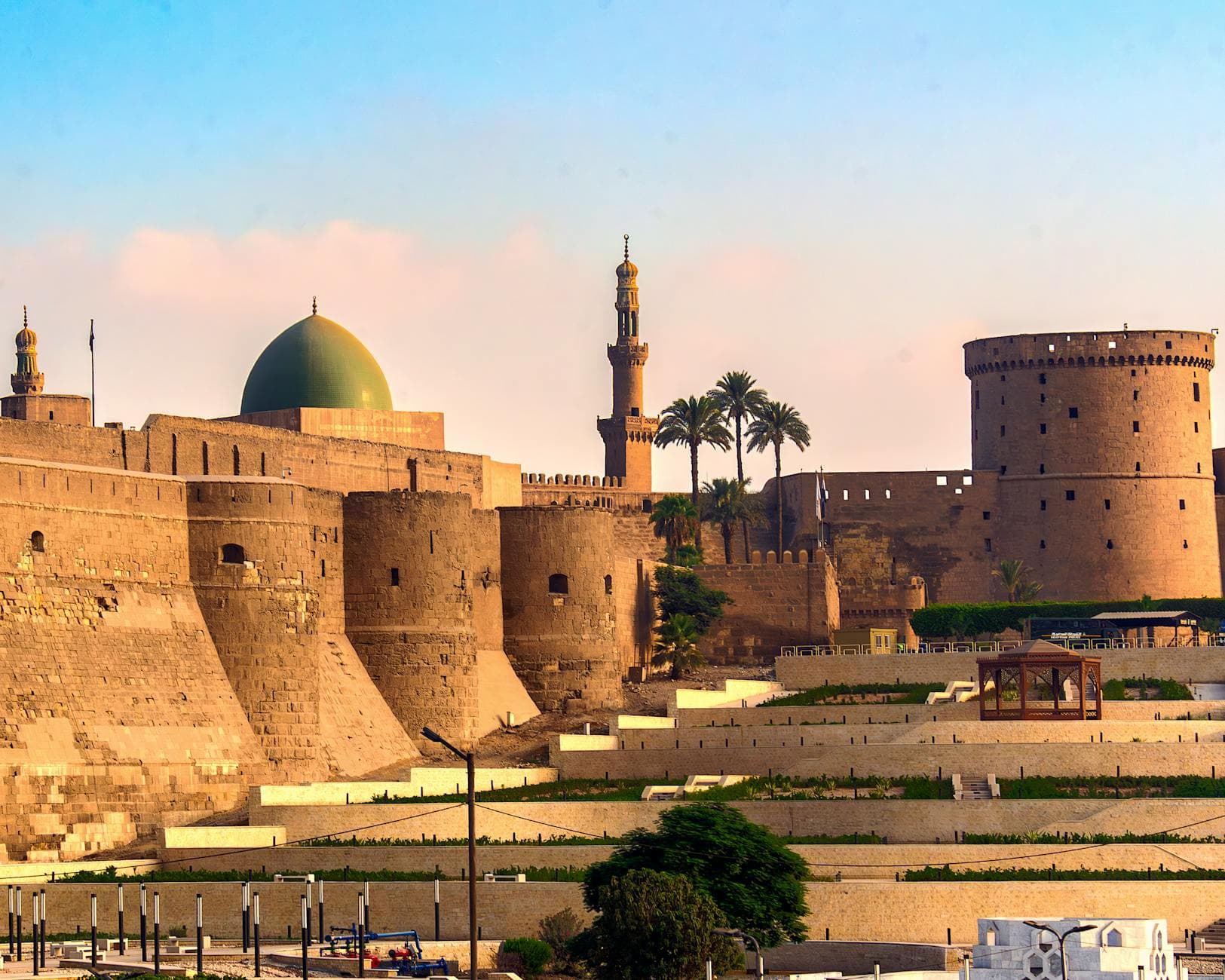
The Babylon Fortress, whose Roman towers still flank the entrance to the compound, was built by Emperor Trajan around 130 CE to control traffic on the Nile and protect a canal that connected the river to the Red Sea. Christians were already living here before Constantine legalized Christianity in 313 CE. This matters because it means Coptic Cairo is not a medieval creation or a colonial artifact. It is one of the oldest continuously inhabited Christian communities on earth, predating every church in Europe by a significant margin.
The word Coptic comes from the Greek Aigyptos, which is itself derived from the Ancient Egyptian Hwt-Ka-Ptah, meaning "House of the Soul of Ptah," the name for Memphis, the first capital of unified Egypt. When Arab armies arrived in 641 CE, they called the local Christian population the Qibt, their rendering of the Greek word for Egyptian. The Copts are, in the most literal sense, the direct descendants of the pharaonic population. Their liturgical language, Coptic, is the last surviving form of the Ancient Egyptian language, written in Greek letters with a few additional characters borrowed from Demotic script. When a Coptic priest chants in church today, he is using sounds that would have been recognizable, if not fully understood, by a scribe in the temple at Karnak.
What You Will Actually See
The Hanging Church
The official name is the Church of the Virgin Mary, but everyone calls it Al-Muallaqah, the Hanging Church, because its nave is suspended over the gatehouse of the old Roman fortress. Stand at the base of the white stone staircase leading up to the entrance and look at the brickwork on either side: you are looking at the original Roman gateway of the Babylon Fortress, integrated so completely into the church structure that the two are inseparable. The church dates to the third or fourth century in its earliest form, though most of what you see was rebuilt and expanded between the seventh and thirteenth centuries.
Inside, pay attention to the ivory and ebony inlaid iconostasis screening the sanctuary. It dates to the thirteenth century and depicts Christ flanked by the Virgin and John the Baptist, with the twelve apostles below. The panels are so precisely fitted that no glue was used, only the pressure of the wood itself. The church holds 110 icons, many of them painted in a style that blends Byzantine gold-background technique with distinctly Egyptian facial features. These are not European Madonnas. These are dark-eyed, long-faced, Egyptian women.
Church of Abu Serga and the Crypt
Three minutes south of the Hanging Church is Abu Serga, which is smaller, darker, and considerably older in atmosphere. The church was built in the fourth or fifth century over the cave where Coptic tradition places the Holy Family's shelter during the Flight into Egypt. You can descend into the crypt, a low stone room with a small altar and the particular smell of cold stone and old incense that defines the oldest parts of this district. Whether the crypt is genuinely the site is a matter of faith and scholarship. What is not disputed is that Christians have been worshipping in this specific crypt since late antiquity. The physical continuity of devotion in a single spot for sixteen centuries is its own kind of evidence.
The Coptic Museum
Do not skip this. The Coptic Museum, founded in 1908, holds the world's largest collection of Coptic art and artifacts, including the Nag Hammadi Codices. Those are the thirteen leather-bound books discovered by a farmer near Luxor in 1945, containing fifty-two texts including the Gospel of Thomas, a collection of sayings attributed to Jesus that was unknown to modern scholarship until that moment. The original codices are here, behind glass, in a building most visitors walk past in twenty minutes.
The museum's garden contains architectural fragments from Roman, pharaonic, and early Christian periods arranged without particular hierarchy: a column capital carved with ankh symbols sits next to a frieze of grapes and crosses, a reminder that the early Egyptian church did not see a sharp break between the old religion and the new. The ankh, the ancient symbol of life, became so associated with the cross in early Christian Egypt that the two forms are essentially interchangeable in fifth and sixth century Coptic carvings.
Ben Ezra Synagogue
Inside the same walled compound is the Ben Ezra Synagogue, which most visitors treat as an afterthought. It should not be. This synagogue, rebuilt in its current form in 882 CE by Abraham Ben Ezra of Jerusalem on the site of a much older structure, was the location of the Cairo Geniza. A geniza is a storage room where Jews preserve any document containing the name of God rather than destroying it. In 1896, a Cambridge scholar named Solomon Schechter discovered that the Ben Ezra Geniza had been sealed for centuries, containing approximately 400,000 manuscript fragments dating from the ninth to the nineteenth century. These documents, now mostly held at Cambridge, transformed the study of medieval Mediterranean commerce, Jewish life, and even Islamic social history. The synagogue looks modest. Its archive rewrote entire fields of scholarship.
The Connections
The ground beneath Coptic Cairo does not belong only to Christians. The Babylon Fortress was built on or near the site of an older Egyptian settlement sometimes identified with the city of Per-Hapi-en-Iunu, a staging post on the route to Heliopolis. The Romans built their fortress. The Copts built inside the Roman walls. When the Arab general Amr ibn al-As arrived in 641 CE, he made his camp just north of the fortress at a place called Fustat, which became the first Islamic capital of Egypt and the direct ancestor of modern Cairo. You can walk from the Roman towers of Babylon to the ruins of Fustat in under ten minutes.
The neighborhood also connects to the Jewish history of Egypt in ways that most visitors do not expect. The Ben Ezra Synagogue was purchased from the Coptic community, who had been using it as a church dedicated to St. Michael. The sale price, according to tradition, paid for restoration work on the Hanging Church. The same stones have been passed between communities, each finding in them something worth preserving.
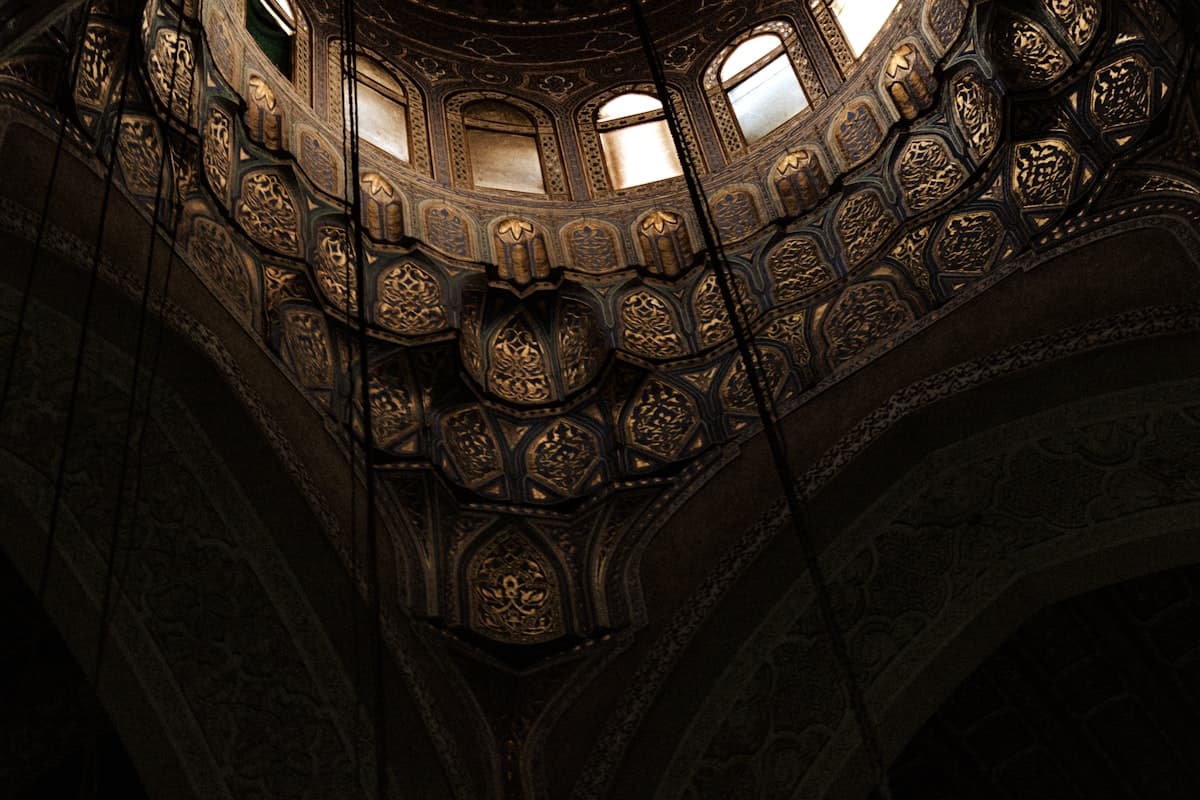
Five kilometers north, in the neighborhood of Khan al-Khalili and the old Fatimid city, you find the Islamic layers of the same story: Saladin built the Citadel partly to house troops returning from the Crusades, and he demolished part of the old Fatimid palace walls to do it. The entire city is a palimpsest. Coptic Cairo is simply the layer where the writing is most legible.
Common Mistakes
Arriving after 10am on a weekend. Tour groups from Nile cruise ships and Cairo hotels converge on the Hanging Church between 9:30am and 11:30am on Fridays and Saturdays. The narrow staircase becomes a bottleneck and the church interior, which is not large, holds noise badly. If you cannot arrive by 8:30am, come back after 1pm when most groups have left.
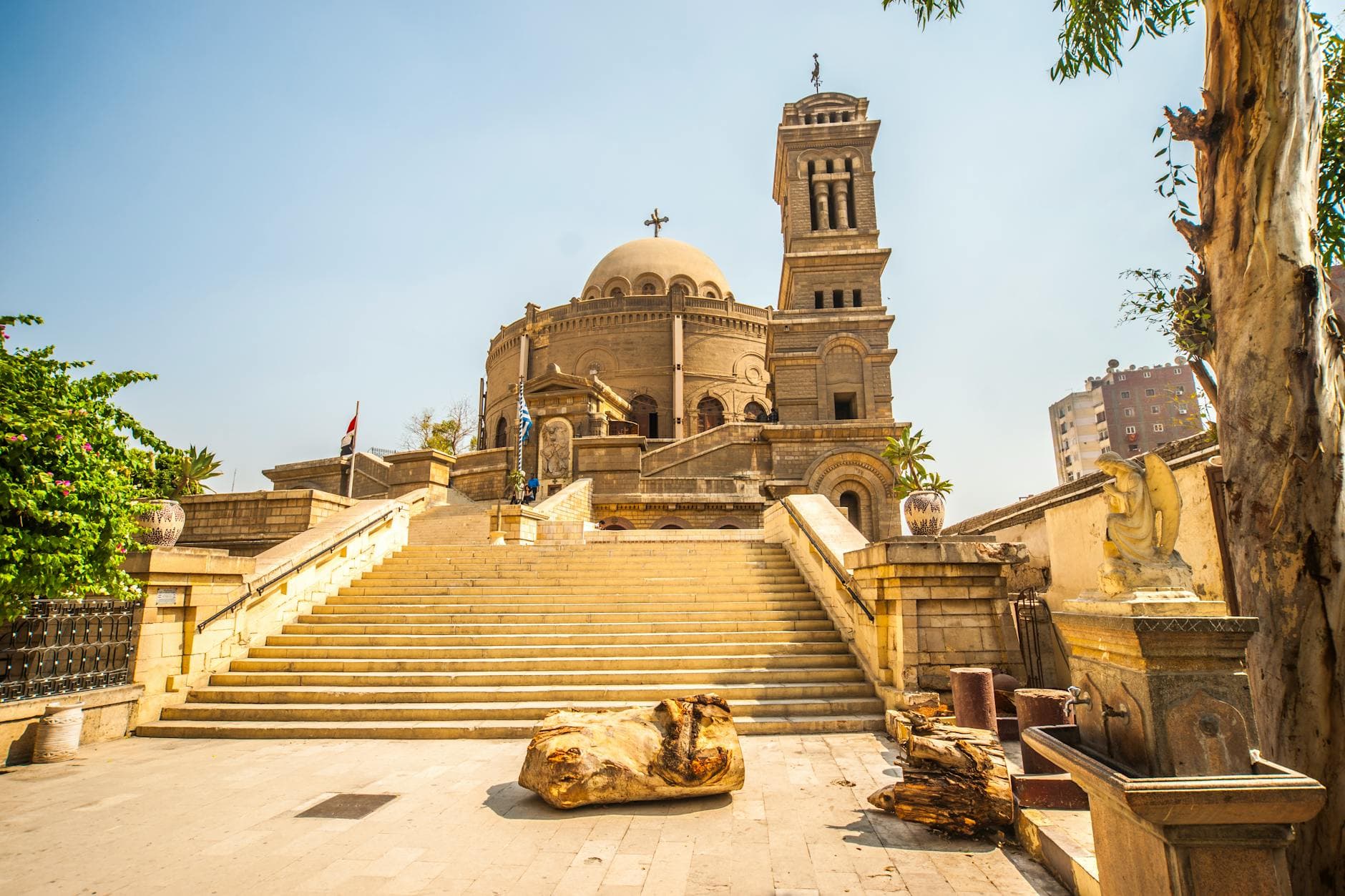
Ignoring the churches beyond the Hanging Church. Most visitors see the Hanging Church and consider the job done. The Church of St. Barbara, dedicated to a martyr who was killed by her own father for converting to Christianity, holds one of the finest collections of medieval Coptic icons in the district. It is usually empty. The Church of St. George (Mari Girgis), set inside a circular Roman tower just outside the main compound, is rarely visited and genuinely unusual in its architecture.
Rushing the Coptic Museum. Budget ninety minutes minimum. The upstairs galleries contain textile fragments, carved wooden panels, and illuminated manuscripts that deserve time. The Nag Hammadi section is easy to walk past without recognizing what you are looking at. Ask a guide or read the labels carefully.
Dressing insufficiently. All active churches require covered shoulders and knees, for all genders. The dress code is enforced at the Hanging Church entrance. Carrying a light scarf takes thirty seconds of planning and avoids a genuine inconvenience.
Eating near the tourist entrance. The cluster of cafes immediately adjacent to the Mar Girgis metro exit serves mediocre food at elevated prices to a captive audience. Walk ten minutes north toward Fustat or take the metro one stop to find better kushari and ful at a third of the cost.
Missing the outdoor lanes. Between and behind the churches is a network of narrow stone lanes lined with workshops selling Coptic icons, crosses, and textiles. Some of these icon painters are serious craftspeople working in a tradition that has been continuous for more than a millennium. The mass-produced tourist versions are obvious. The real work is worth finding.
Visiting on a Coptic feast day without planning. On major feast days, particularly Coptic Christmas (January 7) and the Sunday of the Resurrection, the churches are crowded with worshippers and some areas are inaccessible to visitors. This is not a reason to avoid these days entirely. Watching a Coptic liturgy in a fourth-century church is a genuinely rare experience. But adjust your expectations: you are a guest at a living religious event, not a visitor to a museum.
Practical Tips
The Metro to Mar Girgis is faster and more reliable than any road transport. Cairo traffic around Old Cairo on weekday mornings can add forty-five minutes to a taxi journey for no reason.
A licensed Egyptologist guide for this district costs approximately EGP 600 to 1,000 for a half-day and is worthwhile specifically for the Coptic Museum, where the contextual explanations transform the artifacts from interesting objects into a comprehensible story. Arrange one through your hotel or through a registered guide association rather than accepting offers from individuals at the gate.
Photography is permitted in most of the churches but not during active services. Ask before raising a camera. In the Coptic Museum, photography in the galleries is permitted without flash. The Nag Hammadi Codices case is somewhat dim: a phone camera with a good low-light mode handles it adequately.
The water in the crypt of Abu Serga periodically rises during Nile flood season or after heavy rains. If you visit between October and December, check in advance whether the crypt is accessible. It floods relatively rarely but it does happen.
The compound is entirely walkable and the distances are short, but the stone surfaces are uneven and sometimes slippery. Shoes with grip matter, particularly in the crypt and in the older sections of the museum garden.
If you have a second day, the Fustat archaeological park and the adjacent Amr ibn al-As Mosque (the oldest mosque in Africa, founded in 642 CE and rebuilt multiple times since) sit within walking distance and provide the Islamic counterpart to everything you saw in the Coptic compound. The two halves of the story belong together.
Frequently Asked Questions
The Weekly Dispatch
More on Egypt, every Friday.
Cultural depth and places most guides never mention.
No spam. Unsubscribe anytime.