Coptic Museum Cairo Guide: Egypt's Christian Soul in Stone
The Coptic Museum Cairo holds the world's largest collection of Christian Egyptian art, built on ground where Rome, Pharaoh, and Christ intersect. Here's how to read it.
Quick Facts
- Best time to visit
- October to March for cooler temperatures; Wednesday and Thursday mornings for lightest crowds
- Entrance fee
- EGP 450 (approx $9 USD); students with valid ID EGP 225
- Opening hours
- Daily 9am to 5pm; closed for Friday prayers 11:30am to 1pm
- How to get there
- Metro Line 1 to Mar Girgis station, 2-minute walk, EGP 10-15. Taxi from Downtown EGP 80-120. Uber/Careem EGP 60-90
- Time needed
- 2-3 hours for museum alone; 4-5 hours if combining with Hanging Church, Ben Ezra Synagogue, and Church of Saints Sergius and Bacchus
- Cost range
- Budget EGP 600-900 for museum and complex with snacks; mid-range EGP 1,200-1,800 including lunch nearby
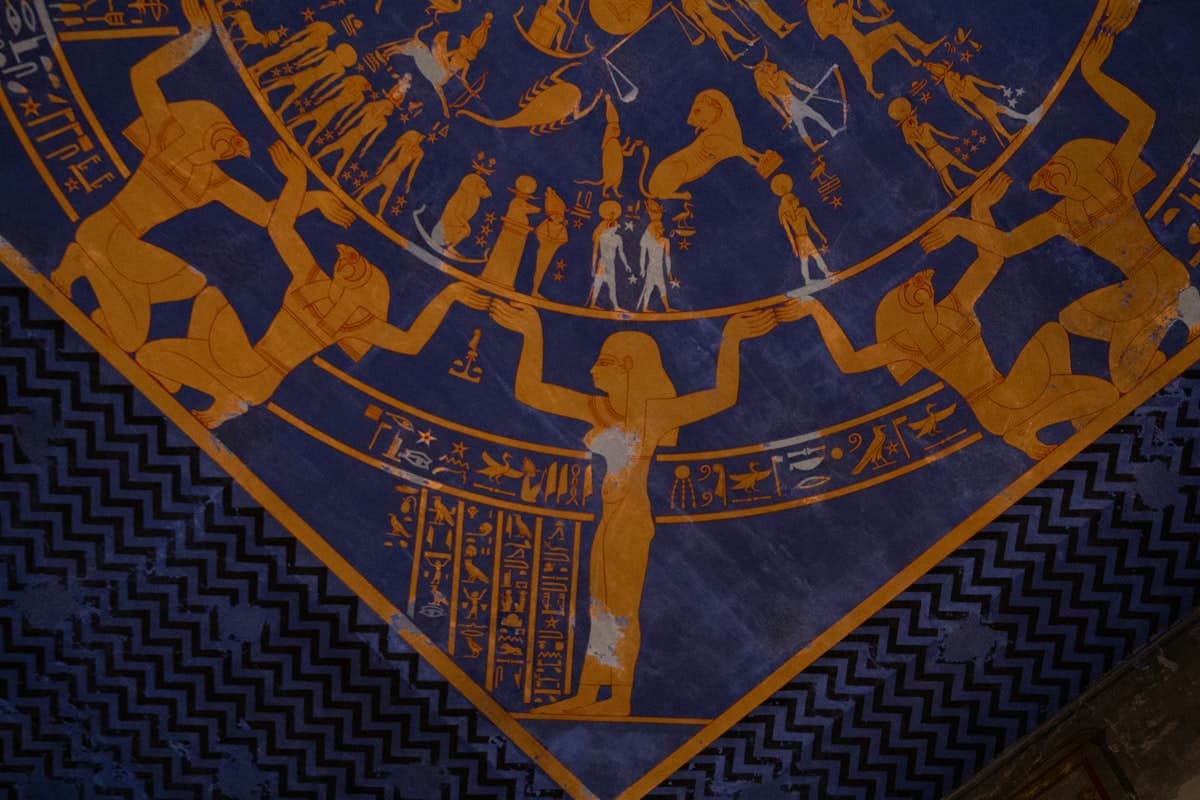
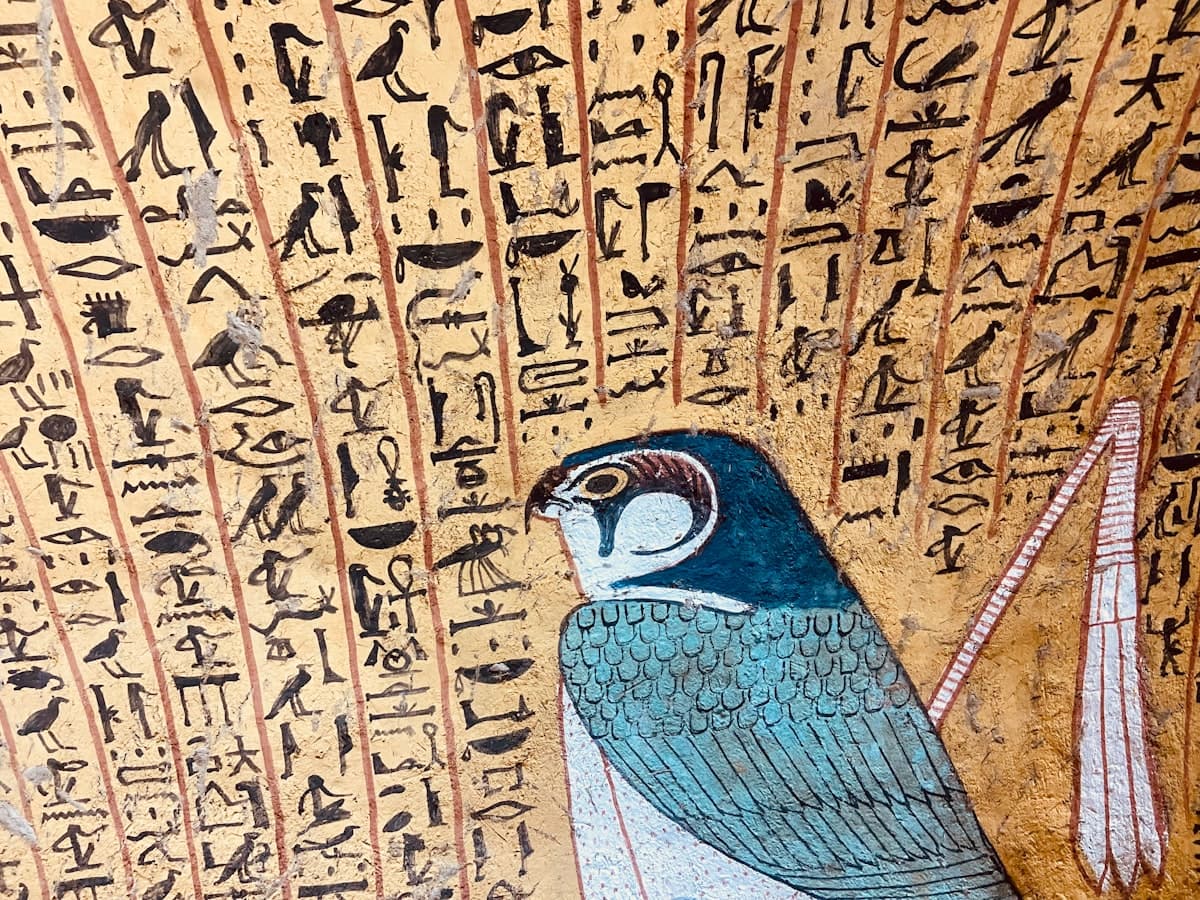
The oldest object in the Coptic Museum is not a cross. It is a carved limestone relief of the god Horus as a falcon, dating to the Ptolemaic period, displayed here because the early Coptic Christians looked at Horus cradling the infant Horus-child and saw something they already believed. That theological borrowing, that layered inheritance, is what this museum is actually about.
Most visitors arrive expecting a collection of icons and relics. What they find, if they slow down enough, is a 2,000-year argument about what it means to be Egyptian, Christian, and human, conducted in ivory, wood, papyrus, and stone.
Quick Facts
Entrance fee: EGP 450 (approx $9 USD); students with valid ID pay EGP 225. Combined ticket with the Hanging Church next door is sold separately at the church itself.
Opening hours: Daily 9am to 5pm. The museum closes for Friday prayers between 11:30am and 1pm, which is easy to miss in the planning stage and genuinely disruptive if you arrive mid-morning.
Best time to visit: October through March, when Cairo's heat drops to something manageable. Wednesday and Thursday mornings see the lightest crowds. Avoid Saturday afternoons entirely: tour groups from Nile cruises tend to stop here in bulk.
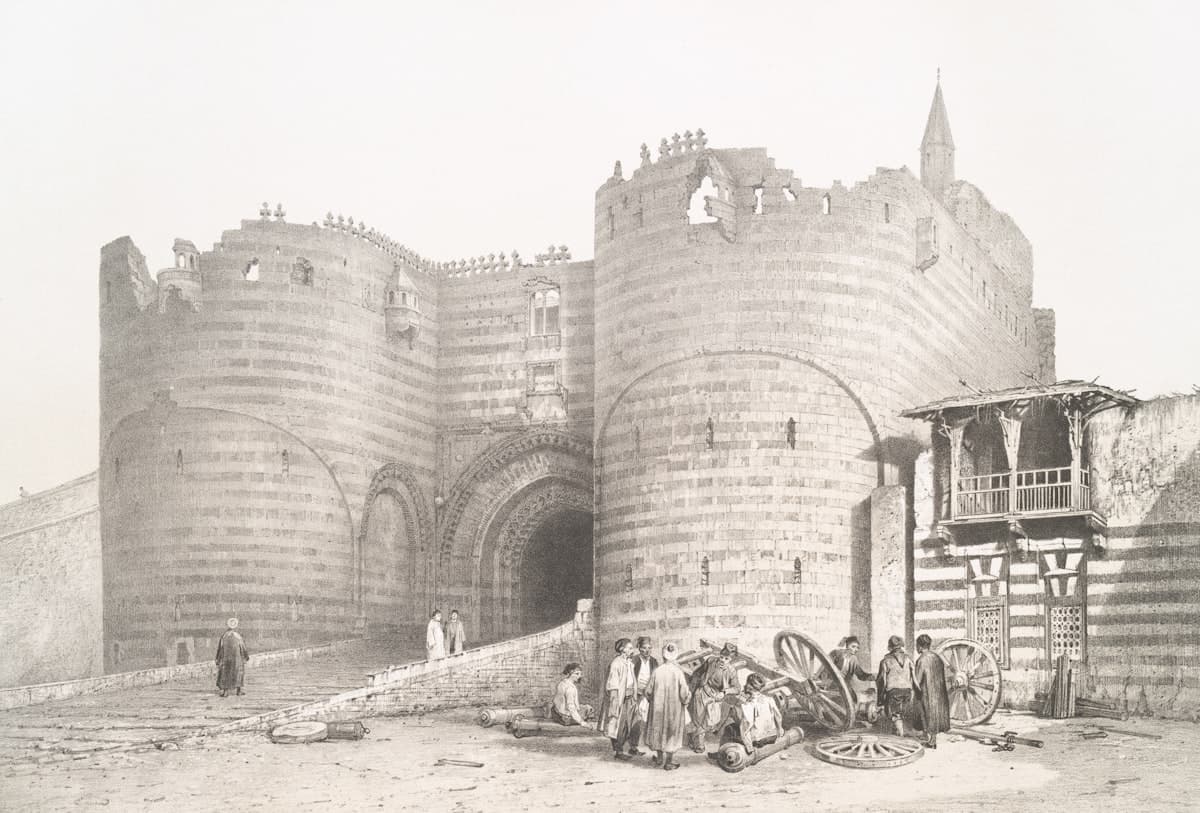
Getting there: The Metro is the correct answer. Take Line 1 (the red line) to Mar Girgis station. The museum entrance is a two-minute walk from the exit, directly inside the walls of the Roman fortress of Babylon. A taxi from Downtown Cairo runs EGP 80 to 120 depending on traffic. Uber and Careem typically quote EGP 60 to 90. Do not take the tourist minibuses that route through Khan el-Khalili: they add an unnecessary hour.
Time needed: Two hours at an absolute minimum to avoid feeling rushed. Three hours is more honest. If you plan to combine this with the Hanging Church, the Ben Ezra Synagogue, and the Church of Saints Sergius and Bacchus, build in a half day.
Cost range: The museum itself is low-cost, but the surrounding Old Cairo complex rewards a longer stay. Budget EGP 600 to 900 for the full complex with snacks; mid-range visitors adding lunch at a nearby restaurant should expect EGP 1,200 to 1,800.
Why This Place Matters
The building that houses the Coptic Museum sits inside the Roman fortress of Babylon, which was itself built over a Pharaonic settlement that predates the Roman occupation by more than a millennium. When the Arabs arrived in 641 CE under Amr ibn al-As, they made their first capital, Fustat, directly adjacent to this fortress. The museum, in other words, is not beside history: it is inside it, at a point where four major civilizations left physical layers on top of each other.
The Coptic Museum was founded in 1908 by Marcus Simaika Pasha, a Coptic lawyer and politician who understood something that most of his contemporaries did not: the Christian Egyptian heritage was being quietly sold to European collectors and institutions, piece by piece, and if no one intervened, it would leave Egypt entirely. He spent a decade lobbying the Egyptian government to create a dedicated institution, using his own considerable wealth to acquire pieces before they crossed the Mediterranean. The building that eventually opened was designed to incorporate genuine Fatimid and Coptic architectural elements, including a ceiling from a medieval Cairo house and mashrabiya screens from a Coptic church in Upper Egypt.
What Simaika assembled here represents the period roughly from the first century CE to the eleventh century, when Egypt's population was predominantly Christian before the gradual conversion to Islam that followed the Arab conquest. The word "Coptic" itself derives from the Greek "Aigyptos," which was the Greek rendering of "Hwt-Ka-Ptah," one of the ancient names for Memphis. Copts are, linguistically and historically, the Egyptians, which is a fact the museum makes no effort to obscure.
What You'll Actually See: The Ground Floor
The museum divides into two buildings connected by a garden. Begin in the Old Wing, because the New Wing's organization is more thematic and benefits from having some visual context first.
The ground floor of the Old Wing opens with stonework: architectural fragments from early churches, decorative friezes, and column capitals that show exactly where Pharaonic symbolism and Christian iconography fused rather than competed. Look for the ankh cross displayed in the first hall. The ankh, the ancient Egyptian symbol for life, was adopted almost immediately by early Egyptian Christians as a form of the cross, because it already carried the meaning they needed. This was not coincidence or carelessness. It was theology.
The textile collection is one of the museum's genuine treasures and consistently undervisited because it occupies a side hall that feels easy to skip. These are Coptic tapestries and woven panels, some from the fourth and fifth centuries, with a color saturation that should not exist after sixteen hundred years. The dyes used, particularly the indigo and madder reds, were fixed with techniques that modern textile conservators still study. Many of these pieces were found in burial sites across Upper Egypt, preserved by the same dry desert conditions that preserved the Pharaonic mummies a few miles away.
One panel in particular, approximately 40 by 60 centimeters, shows Dionysus surrounded by grapevines alongside clearly Christian iconography. That coexistence was not unusual in 4th-century Egypt. Christianity was still sorting out what it would and would not absorb from the Greco-Roman world, and in Egypt that negotiation was especially complex because the Greco-Roman world had been physically present for three centuries before Christianity arrived.
The Upper Floor and What Most Visitors Miss
The icon collection on the upper floor is the section that draws the most attention, and deserves it, but the manuscripts room next to it draws almost none, which is a genuine loss.
The Coptic Museum holds one of the most significant collections of early Christian manuscripts in the world. This includes several leaves from codices that predate the standardization of the New Testament canon, documents that were not selected for inclusion in the Bible and were subsequently suppressed or lost everywhere except Egypt's dry climate. The Nag Hammadi Library, discovered in 1945 by a farmer near Luxor, is the most famous example of this category: thirteen leather-bound codices from the 4th century containing Gnostic Gospels, including the Gospel of Thomas. Several original leaves are displayed here. Most visitors walk past them without pausing.
The Gospel of Thomas, for context, contains 114 sayings attributed to Jesus, with no narrative, no crucifixion story, and no resurrection. Some of its sayings overlap with the canonical Gospels. Others do not appear anywhere else. The early church authorities who compiled the Bible knew about this text and decided it did not belong. You can look at a piece of it on a Tuesday afternoon in Old Cairo if you want to.
The icon collection itself rewards close attention rather than a sweeping walk-through. Coptic icons follow a different visual logic than Byzantine or Russian icons: the faces are more frontal, the colors more saturated, the gold work more restrained. The oldest icons in the collection date to the 6th and 7th centuries. Look at the eyes specifically. The direct gaze in Coptic sacred painting is deliberate, a theological statement about the relationship between the divine figure and the person looking at them. It is not decorative.
The Connections: Old Cairo as a Palimpsest
The Coptic Museum does not exist in isolation, and treating it as a single destination misses the larger argument the neighborhood is making.
Step outside and you are inside the walls of Babylon, the Roman fortress. Walk north along the inside of the wall and you reach the Hanging Church, the Church of the Virgin Mary, which sits suspended over two Roman towers on foundations that are genuinely Roman. The church was first built in the 4th century, rebuilt several times, and contains a pulpit from the 11th century that is among the finest examples of Coptic woodwork surviving anywhere. The pulpit rests on fifteen columns representing Christ and his apostles, with the dark column symbolizing Judas.
Five minutes further is the Ben Ezra Synagogue, which occupies the site where, according to tradition, the infant Moses was found in the reeds. The current building dates to the 9th century, built on the ruins of a Coptic church that the Jewish community purchased from the Coptic patriarch. In the 19th century, workers repairing the synagogue discovered a genizah, a storage room for worn-out religious texts that cannot be discarded, containing approximately 300,000 manuscript fragments spanning a thousand years of Jewish life in Egypt, North Africa, and the broader medieval world. The Cambridge Genizah Collection, which houses most of them, is one of the most important archives in medieval scholarship. The room itself is now empty and unmarked.
The Church of Saints Sergius and Bacchus, another ten-minute walk, is built directly over a crypt where the Holy Family is said to have sheltered during the flight into Egypt. Whether or not you accept that tradition, the crypt itself floods slightly in winter because it sits at the level of the ancient water table, below the Nile flood plain. Standing in it, you are at Roman-era ground level, roughly four meters below the modern street.
All of this sits in the neighborhood that, after the Arab conquest, became the launching point for the Islamic city that would eventually become Cairo.
Common Mistakes
Arriving without checking Friday hours. The midday closure for prayers is not prominently advertised and will cut your visit in half if you time it badly. Go Thursday instead.
Rushing through the manuscript room. It is easy to skim this section because the labels are text-heavy and the objects look small behind glass. Slow down here more than anywhere else.
Skipping the garden between the two buildings. The garden contains architectural fragments displayed outdoors, including column bases and decorative stonework, and it connects the two wings physically. Walking through it also gives you a rare moment of quiet in central Cairo.
Using the audio guide as a substitute for looking. The official audio guide is adequate but generic. The objects reward direct attention: the weave structure of a 5th-century tapestry is not something a recording can communicate.
Leaving before seeing the neighboring sites. The museum alone is worth visiting, but the surrounding complex of Old Cairo amplifies everything you've seen inside. Visitors who only do the museum are missing the argument the whole neighborhood is making.
Bringing large bags. Security requires bag storage, and the storage area is small and sometimes backed up. A small daypack or nothing is correct.
Assuming the gift shop has quality reproductions. It does not. The postcards are acceptable. The larger items are not worth the space in your luggage.
Practical Tips
Wear shoes you can move quietly in: the floors in the Old Wing are partly original stone and echo considerably. The museum is not air-conditioned throughout, so in summer the textile and manuscript rooms, which require climate control, are the coolest spaces. Plan to spend more time there in July and August for purely physical reasons.
Photography is permitted without flash in most sections. The manuscript room has a no-photography policy that is enforced. Respect it: the documents are light-sensitive and the policy exists for preservation reasons, not bureaucratic ones.
If you read Arabic, request the Arabic-language gallery notes rather than the English ones: they contain more detail and occasionally reference sources the English translations omit.
Combine this visit with the Egyptian Museum only if you have strong legs and a full day. The two sites are 20 minutes apart by Metro, and together they cover roughly 5,000 years of Egyptian material culture. That is a lot to absorb in a single day. Most people do better choosing one and going deep rather than skimming both.
The neighborhood around Mar Girgis has two or three simple restaurants and several coffee shops within five minutes of the museum entrance. Lunch here is significantly cheaper and more interesting than lunch near the Egyptian Museum or in the tourist areas of Khan el-Khalili.
Frequently Asked Questions
The Weekly Dispatch
More on Egypt, every Friday.
Cultural depth and places most guides never mention.
No spam. Unsubscribe anytime.