Egyptian Museum Cairo Guide: What to See and Skip
Plan your Egyptian Museum Cairo visit with real prices, insider routes, and the rooms most tourists miss. Skip the queues and see what actually matters.
Quick Facts
- Best time to visit
- October to February, weekday mornings from 9am. Avoid Fridays and public holidays.
- Entrance fee
- EGP 450 general (approx. $9 USD). Tutankhamun galleries: EGP 100 extra. Royal Mummies Room: EGP 500 extra. Students (ISIC): 50% off general admission.
- Opening hours
- Daily 9am to 5pm, last entry 4:30pm. Confirm closures around Eid.
- How to get there
- Metro Line 1 or 2 to Sadat Station, Tahrir Square (EGP 10-15). Taxi from Downtown EGP 50-80. Uber or Careem from Zamalek EGP 80-120.
- Time needed
- 3 hours minimum for focused highlights. Full day if combining Tutankhamun, Royal Mummies, and ground floor in depth.
- Cost range
- Budget EGP 700-900/day (metro, street food, museum entry). Mid-range with Egyptologist guide and restaurant lunch EGP 2,000-3,500.
The smell hits you before you even get through the door. Dust, old wood, and something harder to name, a mineral dryness that belongs to rooms where things have sat undisturbed for a very long time. The Egyptian Museum on Tahrir Square is not a sleek, climate-controlled experience. The lighting in half the galleries would embarrass a provincial library. Labels peel. Display cases fog at the edges. And somewhere in the upper floor, tucked into a room with a single guard half-asleep in the corner, sits a gilded wooden bed that Tutankhamun actually slept on before he died at nineteen. That is the bargain the Egyptian Museum offers you: in exchange for tolerating the chaos, you get access to objects that no amount of digital rendering or replica can approximate.
This guide covers exactly where to go, in what order, what to skip, what things cost right now, and the errors that cost other visitors hours of their day.
---
Quick Facts
Best time to visit: October through February, weekday mornings opening at 9am. Avoid Fridays entirely. Entrance fees: General admission EGP 450 (approx. $9 USD). Tutankhamun galleries: additional EGP 100 (approx. $2 USD). Royal Mummies Room: additional EGP 500 (approx. $10 USD). Students with ISIC card pay 50% less on general admission. Opening hours: Daily 9am to 5pm. Last entry at 4:30pm. Closed on certain public holidays; confirm before visiting during Eid. How to get there: The Metro is your best option. Take Line 1 or Line 2 to Sadat Station on Tahrir Square, a two-minute walk from the museum entrance. A taxi from Downtown Cairo runs EGP 50 to 80. From Zamalek, expect EGP 80 to 120. Ride-hailing apps (Uber, Careem) are more reliable than street taxis for fare accuracy. Time needed: 3 hours minimum for a focused visit covering the Tutankhamun galleries and the highlights. Budget a full day if you want to work through the upper floor systematically. Cost range: Budget day (museum only, metro transport, street food lunch) around EGP 700 to 900. Mid-range day with licensed guide and sit-down lunch near Tahrir: EGP 2,000 to 3,500.
---
Getting Oriented: The Layout You Actually Need
The museum is two floors arranged around a large atrium. Most visitors walk in through the main entrance on the north side of the building, buy their tickets at the booth inside the courtyard, then wander with no plan and end up spending forty-five minutes in the ground floor gift shop or staring at unlabeled Middle Kingdom pottery while Tutankhamun's treasures sit upstairs.
Here is how to avoid that. When you enter the atrium, resist turning right immediately. The big dramatic pieces, the colossal statues, the Narmer Palette case, the Rosetta Stone facsimile, are positioned to pull you in different directions at once. Before you move anywhere, orient yourself with the printed floor plan available free at the ticket booth. Ask for it specifically; they do not always hand it out.
The ground floor runs roughly chronologically from the Old Kingdom (left side of the atrium when facing the entrance) through to the Late Period and Graeco-Roman material on the right. The upper floor is where the Tutankhamun collection lives, occupying the northeast corner and spilling into adjacent rooms.
My own system, developed over a dozen visits, is to spend the first twenty minutes on the ground floor hitting four specific rooms: the Narmer Palette (Room 43, center atrium), the Old Kingdom statuary in Room 42, the Amarna Room (Room 3, upper ground floor, though labeling varies), and then heading straight upstairs to the Tutankhamun galleries before the group tours arrive.
---
The Tutankhamun Galleries: What Is Actually Worth Your Time
The additional EGP 100 ticket is not optional. Without it, you cannot enter the rooms that hold the innermost gold coffin, the canopic shrine, the royal throne, and the funerary beds. These are the objects that justify the entire visit.
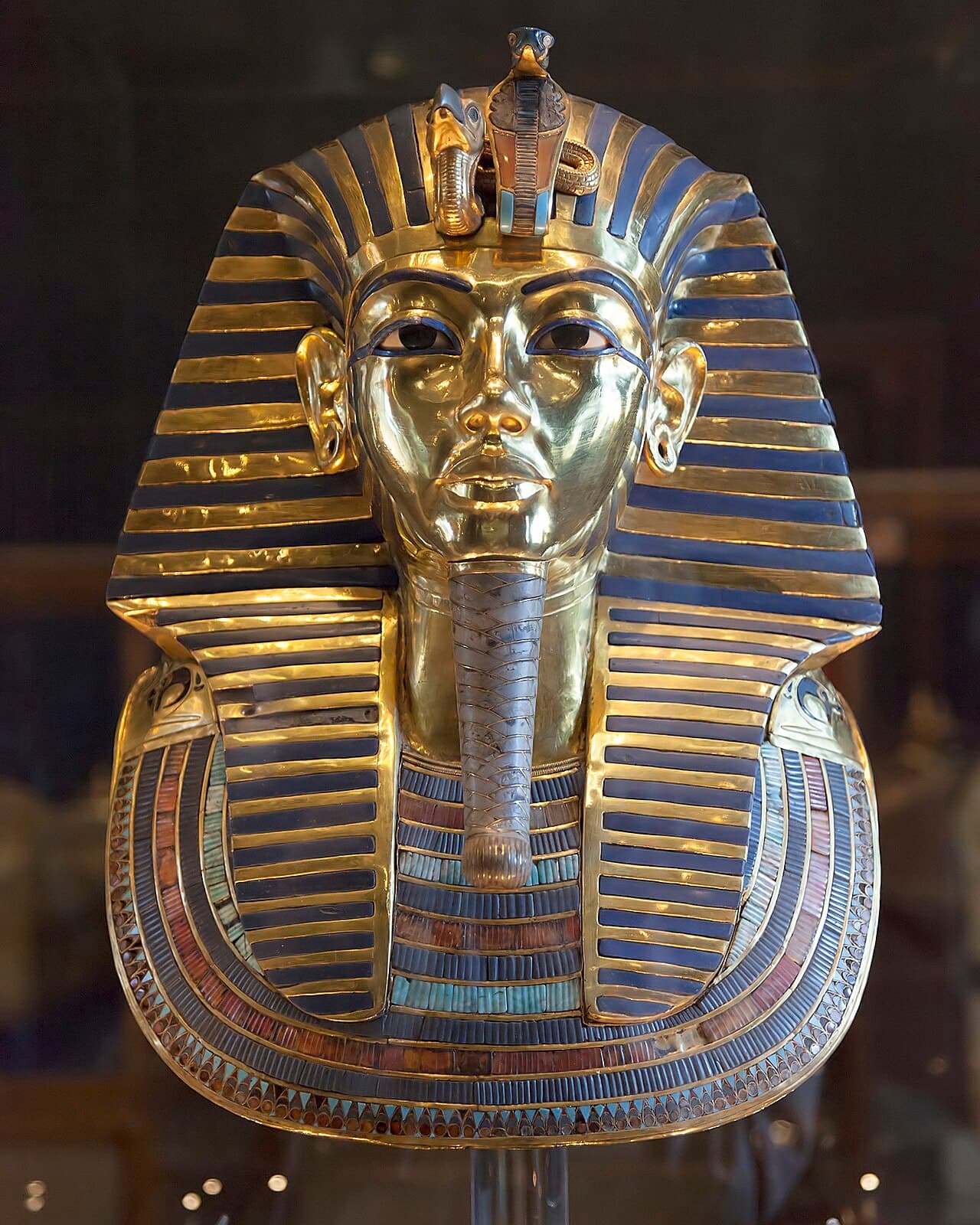
Room 3 on the upper floor (the main Tutankhamun hall) tends to be the most crowded. Groups cluster around the golden death mask display case, which is understandable but means you often cannot get close. Come here first, before 10am, and you will have perhaps fifteen minutes of relatively clear sightlines before the tour groups stack up.
The piece most people overlook is the gilded ceremonial throne in the adjacent room. It is covered in sheet gold and colored glass inlay showing Tutankhamun and his wife Ankhesenamun, and it is displayed at eye level behind glass that is actually clean enough to see through clearly. Spend time here. The craftsmanship is extraordinarily precise for objects made over 3,000 years ago, and unlike the death mask, you can actually get close without elbowing anyone.
The Royal Mummies Room requires a separate ticket (EGP 500, roughly $10 USD) and is on the upper floor. Photography is prohibited inside, and that rule is enforced. The room contains eleven royal mummies including Ramesses II, Seti I, and Thutmose III. The lighting is deliberately dim and the cases are well-sealed. It is not ghoulish; it is unexpectedly moving. Ramesses II's hands are crossed over his chest and his fingernails are still visible. That alone is worth the extra ticket.
---
Ground Floor Highlights Beyond the Obvious
The Amarna Room holds the material from Akhenaten's reign, including the distinctive elongated statues of the pharaoh himself and fragments showing his queen Nefertiti. These are in Room 3 on the upper ground floor (signage is inconsistent, so ask a guard to point you to "Amarna"). The aesthetic break from every other room in the museum is immediate: longer skulls, softer bodies, a completely different idea of how a ruler should look.
Room 32 on the ground floor holds the Fayum portraits, painted wooden panels that were placed over mummies during the Roman period in Egypt. They are painted in encaustic (hot wax mixed with pigment) and show individual faces with a directness that feels modern in a way that most ancient Egyptian art does not. Dark eyes, specific faces, people rather than types. This room is usually quiet.
The models in Room 27 are worth ten minutes of your time: small painted wooden dioramas from Middle Kingdom tombs showing bakeries, breweries, cattle counts, and boats, all in meticulous detail. They tell you more about daily life in ancient Egypt than most of the official "art" in the building.
---
Common Mistakes Tourists Make
Arriving without cash in the right denominations. The ticket booths do not reliably give change for large notes. Bring exact or near-exact change in Egyptian pounds for your tickets, including the separate Tutankhamun and mummies surcharges.
Assuming the museum opens at 9am sharp. Guards sometimes do not unlock the interior galleries until 9:20 or 9:30. If you are waiting on the steps at 9am, you are not alone, but factor in the delay rather than arriving late to compensate.
Hiring a guide at the gate. Unofficial guides cluster at the entrance and will approach you immediately. Some are knowledgeable; many are not. The consequence is paying EGP 200 to 400 for someone who repeats the same three facts in every room. If you want a licensed Egyptologist guide, arrange one through your hotel or through a licensed agency (Cairo-based tour operators like Nile Trips or Egypt Tours Portal) before you arrive. Expect to pay EGP 600 to 1,200 for a half-day private Egyptologist.
Skipping the upstairs rooms beyond Tutankhamun. The northeast corner of the upper floor holds rooms most visitors never reach, including the collection of Nubian antiquities and the Late Period coffin assemblages. These are not as famous but the rooms are quiet, the objects are significant, and you can actually think in them.
Photographing in the Royal Mummies Room. The prohibition is real and enforced. Phones are taken and you are escorted out. It has happened to visitors who thought they were being subtle.
Leaving bags in the cloakroom without checking contents. The cloakroom is not staffed consistently. Do not leave anything of value. Large backpacks must go through security at the entrance; keep valuables in a small bag you carry into the galleries.
Spending the whole morning on the ground floor. The layout encourages this because the dramatic atrium pieces are visually dominant. Set a timer if you need to. The upper floor is where the density of extraordinary objects is highest.
---
Practical Tips
Timing. Sunday through Thursday, arriving at 9am, gives you the quietest experience. Friday is the busiest day of the week due to domestic tourism after prayer. Saturday is also heavy with group tours. If you can only visit on a weekend, arrive before the museum opens and queue outside.
What to bring. Water, bought outside (EGP 10 to 15 from a cart near the entrance, not from inside where it costs three times as much). Comfortable shoes with non-slip soles because the tiled floors are slippery in places. A light layer, the rooms are warm but the ventilation is unpredictable.
Photography. A general photography permit is included in your admission. No tripods, no flash. The dim lighting in many rooms means your phone camera will struggle; a camera with good low-light performance makes a real difference.
Restrooms. Located on the ground floor near the gift shop. Bring tissue.
Eating nearby. There is a cafe in the museum courtyard that is functional but overpriced and slow. Better options are a five-minute walk: Felfela on Hoda Shaarawy Street has been feeding visitors since 1959 and serves reliable Egyptian staples (kushari, ful, grilled meats) for EGP 80 to 200 per person. For something faster, the koshary shops around Tahrir are EGP 25 to 40 for a full portion.
The NMEC question. The new Grand Egyptian Museum near Giza is now partially open and eventually will house the Tutankhamun collection. As of late 2024, the core Tutankhamun treasures remain at the Egyptian Museum Cairo. Confirm current status before your visit if you are making the trip specifically for those objects.
Combine with. The museum pairs well with a visit to Coptic Cairo (a 20-minute metro ride south on Line 1 to Mar Girgis station) or Islamic Cairo and the Khan el-Khalili market, about 3km east by taxi.
Frequently Asked Questions
The Weekly Dispatch
More on Egypt, every Friday.
Cultural depth and places most guides never mention.
No spam. Unsubscribe anytime.