Ibn Tulun Mosque Cairo Guide: Egypt's Oldest Survivor
The Ibn Tulun Mosque Cairo guide you actually need: a 9th-century Abbasid survivor older than Al-Azhar, built by a slave-soldier who ruled Egypt for 11 years.
Quick Facts
- Best time to visit
- October to February. Cool temperatures make the exposed courtyard comfortable and the oblique light in the arcades is best for seeing the stucco carvings. Avoid July and August when courtyard stone temperatures exceed 50C at midday.
- Entrance fee
- EGP 100 (approx $2 USD) for foreign visitors, EGP 50 for students with valid ID. Gayer-Anderson Museum: EGP 100 additional (approx $2 USD), purchased separately inside the mosque.
- Opening hours
- Daily 8am to 5pm. Active Friday prayers occur around midday, during which tourist access to the prayer hall may be restricted for 30 to 45 minutes. Arrive before 11am or after 1:30pm on Fridays.
- How to get there
- Metro Line 1 to Sayyida Zeinab station (EGP 10), then 15-minute walk south or tuk-tuk for EGP 15 to 20. Taxi from Tahrir Square runs EGP 40 to 60. Ride-hail apps (Uber, Careem) typically quote EGP 35 to 55 from Downtown Cairo. No direct bus service from tourist areas.
- Time needed
- 90 minutes for the mosque alone, 2.5 to 3 hours including the Gayer-Anderson Museum, half-day if combining with a walk south to the Imam al-Shafi'i Mausoleum.
- Cost range
- Budget EGP 200 to 400 for mosque plus museum plus transport. Mid-range half-day including a licensed guide and lunch in Sayyida Zeinab runs EGP 800 to 1,400.
Ahmad ibn Tulun arrived in Egypt in 868 AD as a governor on behalf of the Abbasid caliph in Samarra. Within three years, he had stopped sending tax revenue to Baghdad entirely. Within eleven, he controlled Egypt, Syria, and part of the Jazira. The mosque he built in 876 to anchor his new capital city, Al-Qata'i, is the only major structure from that city still standing. Everything else, including the palaces, the racetracks, and the garrison districts his 24,000 troops occupied, was demolished by the next dynasty as an act of deliberate erasure. The mosque survived because mosques are sanctified ground. You do not tear down a house of God, not even your enemy's.
That is the first thing to understand about the Ibn Tulun Mosque Cairo guide that actually serves you: this is not a monument. It is a survivor.
Quick Facts
Best time to visit: October through March, when the light is oblique and the heat is manageable. Arrive before 9am to have the courtyard nearly to yourself.
Entrance fee: EGP 100 for foreign visitors (approximately $2 USD at current rates), one of the most underpriced tickets in Cairo. Students with valid ID pay EGP 50.
Opening hours: Daily 8am to 5pm. The mosque is active, meaning Friday prayers draw local worshippers and the interior may be briefly inaccessible around midday on Fridays.
How to get there: From Downtown Cairo, take the Metro Line 1 to Sayyida Zeinab station (EGP 10), then a 15-minute walk south through the backstreets of the old city, or a tuk-tuk for EGP 15 to 20. A taxi from Tahrir Square runs EGP 40 to 60 depending on traffic. The mosque sits in the Sayyida Zeinab and Al-Khalifa neighborhood, not in Islamic Cairo's main tourist corridor, which is exactly why the crowds are thinner.
Time needed: 1.5 to 2 hours for the mosque and the Gayer-Anderson Museum attached to it. Add another hour if you walk south to the Ibn Khaldun neighborhood or the Cemetery of the Imams.
Cost range: The mosque itself is inexpensive. Budget EGP 200 to 400 for the visit including transport and the Gayer-Anderson Museum (EGP 100 additional). A half-day combining this with the Citadel runs EGP 600 to 900 mid-range including lunch.
Why This Place Matters
Ibn Tulun is the oldest mosque in Cairo that survives in its original form. Al-Azhar, which most people assume is older, was founded in 970 AD, nearly a century later. The Amr ibn al-As Mosque in Old Cairo is technically older in name, founded in 642 AD, but it has been rebuilt and expanded so many times that almost nothing original remains. Ibn Tulun is what you visit when you want to understand what Islamic architecture looked like before the Fatimids arrived and changed everything.
The mosque was built by craftsmen brought from Samarra, the Abbasid capital in what is now Iraq, and that origin is written into every detail. The spiral minaret, the only one of its kind in Egypt, is a direct echo of the famous Malwiya minaret at the Great Mosque of Samarra. Walk around the outside of Ibn Tulun and look at it: a square base, then a cylindrical shaft with an external ramp winding around it. It looks like nothing else in the country. It is a piece of Iraq planted in Egyptian soil, built by a man who grew up near Samarra but chose to stop serving the city that raised him.
The construction material is also unusual. Most early Islamic monuments in Egypt used brick faced with stone, borrowing from Byzantine and Roman traditions already present in the country. Ibn Tulun is built primarily from red brick with stucco ornament, again following Samarra practice. The stucco friezes that run along the interior arcade walls are among the finest surviving examples of Abbasid decorative carving anywhere in the world. They were here before the Fatimid caliphate existed, before the Crusaders arrived in the Holy Land, before Saladin built the Citadel two kilometers away.
The Geometry of Power
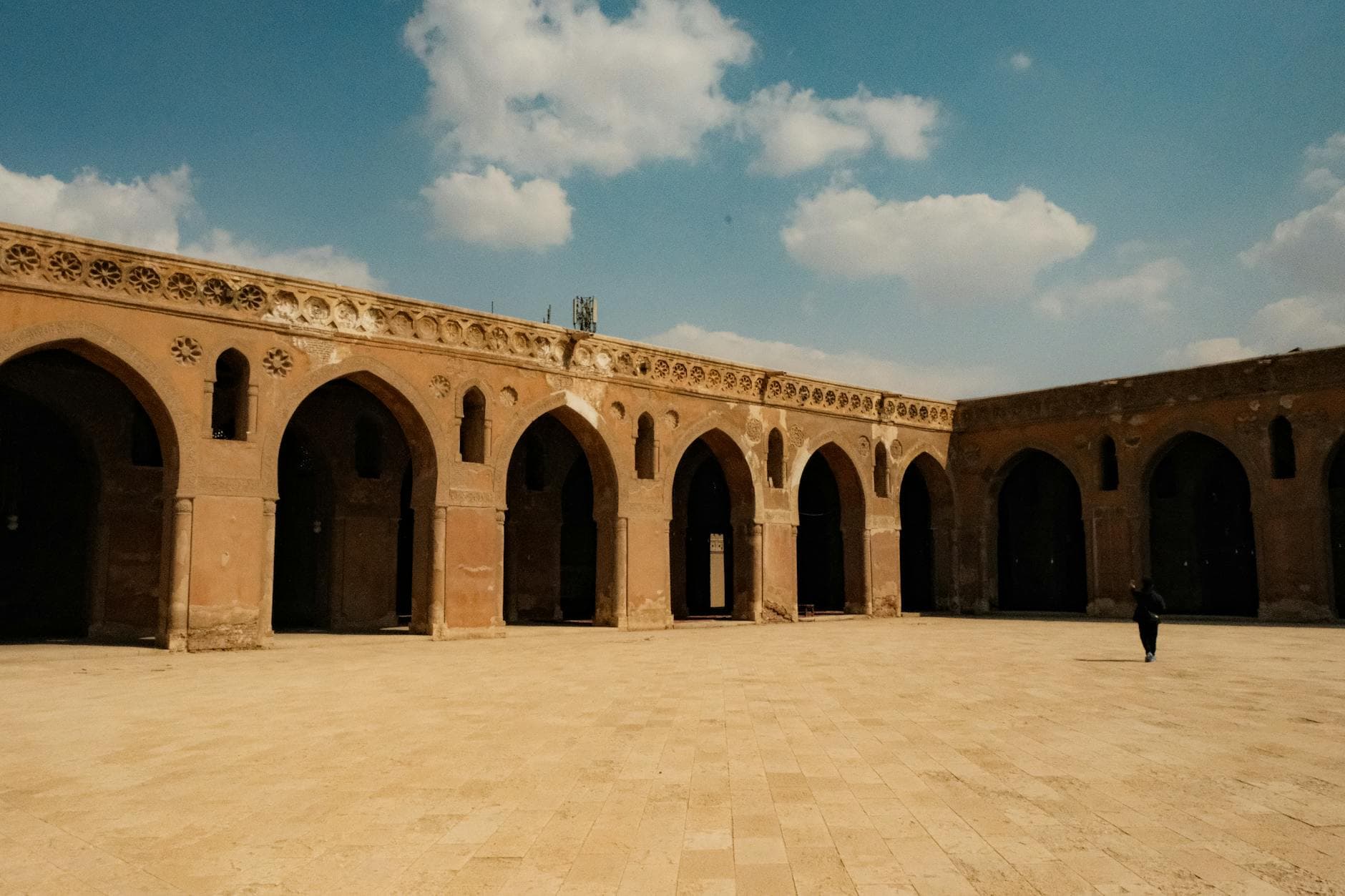
Ahmad ibn Tulun designed Al-Qata'i as a garrison city on the Roman model, with distinct districts for each ethnic contingent of his army: Turks, Greeks, Nubians, Rum soldiers, North Africans. The mosque sat at the center. Its dimensions are staggering even now: the outer enclosure covers roughly 2.5 hectares. The courtyard alone, a vast open square of bare stone, is 92 meters on each side. When full for Friday prayer it could hold tens of thousands. Ibn Tulun reportedly said that he wanted a mosque where the entire population of Egypt could pray at once without touching each other.
That ambition shows in the structure. Walk the covered arcades around the courtyard's perimeter and count the piers: 128 of them, each carved from a single piece of brick-formed stone, each separated by columns that were not, contrary to popular belief, plundered from churches or Roman buildings. Ibn Tulun reportedly refused to use spoliated columns because he considered it a sign of poverty of imagination. His architect, a Christian named Ibn Katib al-Farghani according to some sources, designed the piers specifically for this building.
What You Will Actually See
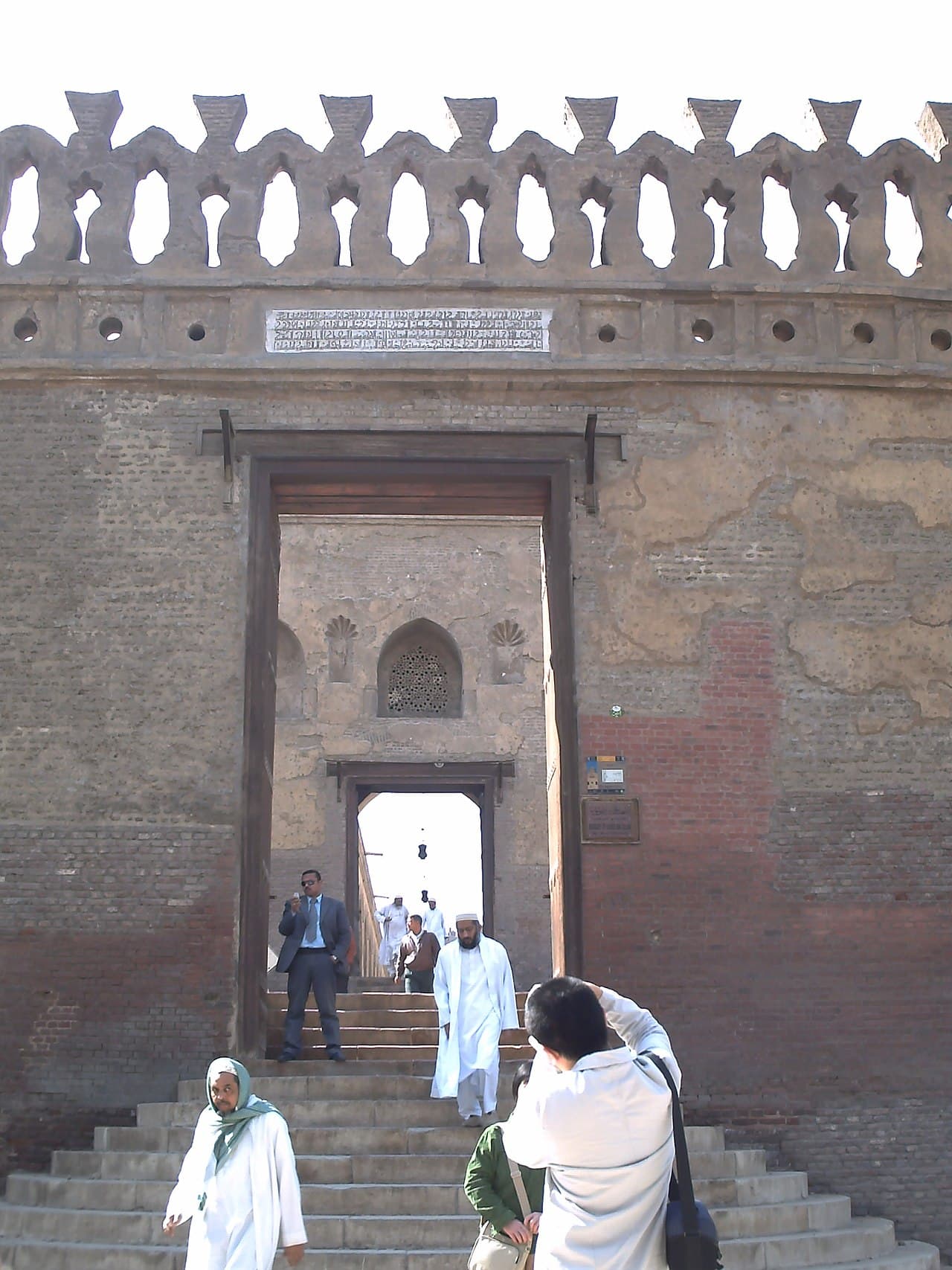
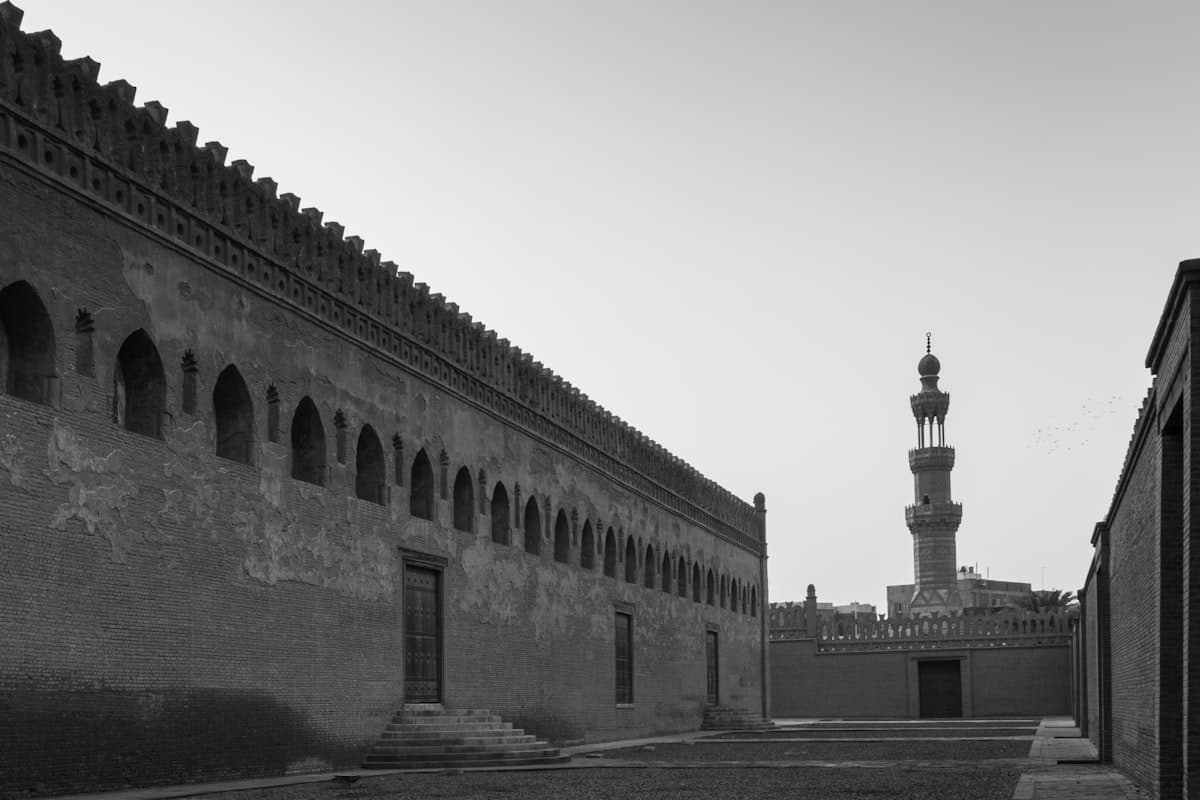
The approach matters. Come from the south, through the narrow streets of Al-Khalifa, rather than from the main road. You will round a corner and suddenly the outer ziyada wall, the buffer enclosure that separates the sacred space from the street, rises in front of you: plain, severe, crenellated with a distinctive repeating motif of human-silhouette-shaped merlons that appear nowhere else in Egyptian Islamic architecture. Scholars have debated for a century whether those merlons are Abbasid, Fatimid additions, or later still. The consensus leans toward Abbasid, which would make them the oldest surviving decorative feature on the exterior.
Inside the outer enclosure, before you reach the mosque itself, there is a sense of compression and then release. The courtyard opens ahead of you like an exhale. The fountain pavilion at the center, a domed structure on a raised platform, is a Fatimid replacement of the original ablutions fountain, added in 1296 AD. It is beautiful but technically anachronistic, a later civilization's attempt to maintain someone else's building.
Look up at the arcade ceilings. The carved stucco friezes that run continuously around the interior walls are exceptional. The geometric and vegetal patterns contain no figural imagery, consistent with Abbasid theological preference, and the carving depth gives them a shadow-play quality that changes completely depending on time of day. At 8am, with eastern light cutting low under the arcades, the friezes look like lacework. At noon, in flat overhead light, they flatten into abstraction.
The Minaret and What Most People Miss
Climb the minaret if it is accessible on the day of your visit. The external ramp is steep and the stone is worn smooth. From the top, you see something that no photograph has ever adequately conveyed: the relationship between the mosque, the Citadel on the Muqattam cliffs to the east, and the cemetery districts spreading south. Cairo is a city that processes its dead at enormous scale, and the view from Ibn Tulun's minaret makes that visible. The City of the Dead, the vast necropolis where both medieval sultans and contemporary poor families live among graves, begins almost at the mosque's edge.
Most visitors spend fifteen minutes in the courtyard and leave. What they miss: the wooden Quranic inscription band that runs around the interior arcade just below the roof, one of the longest Quranic friezes in situ in any mosque in the world, covering nearly two kilometers of carved teak imported at enormous expense. They also miss the small mihrab niche in the qibla wall, which retains traces of its original Abbasid marble revetment under later repairs. And they miss the door in the southwestern corner of the courtyard that leads directly into the Gayer-Anderson Museum, which is arguably the most interesting thing attached to this site.
The Gayer-Anderson Museum: The House That Swallowed Two Houses
Attached to the southern wall of the mosque are two 16th and 17th century Mamluk-era courtyard houses that were purchased, connected, and obsessively restored by Major R.G. Gayer-Anderson, a British officer who lived here from 1935 to 1942. He filled the rooms with antiques from across the Islamic world, creating a fantasy of Islamic domesticity that is part authentic preservation and part Orientalist fiction.
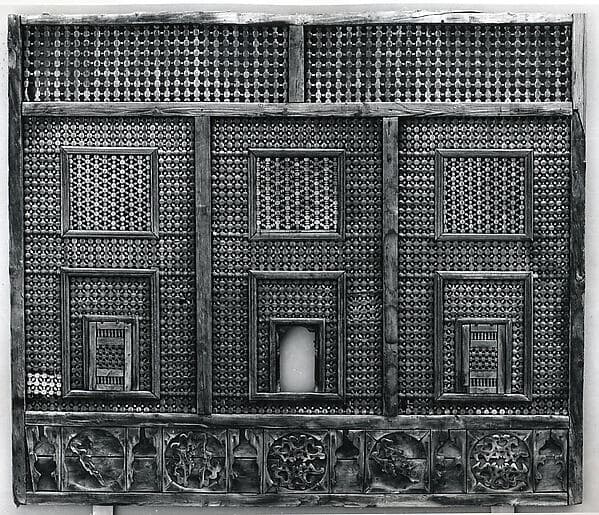
The museum is worth the EGP 100 separate ticket for three reasons. First, the architecture: the mashrabiya screens, the qa'a reception halls with their sunken central floors and high clerestory windows, the roof terrace with direct sight lines into the mosque's courtyard. Second, the actual objects, which include a genuine Pharaonic collection alongside Islamic metalwork and Syrian tiles, a reminder that 19th and early 20th century collectors operated without the legal constraints that govern museums today. Third, the view from the upper rooms: you are looking directly into the mosque from the level of its roof, an angle that reveals the geometric logic of the courtyard in a way that standing inside it does not.
Gayer-Anderson's house also appeared in the 1977 James Bond film The Spy Who Loved Me as the villain's lair. That fact is either charming or irritating depending on your relationship to cinema tourism.
The Connections
The Ibn Tulun Mosque Cairo guide cannot make sense without tracing what happened here after Ahmad ibn Tulun died in 884. His son Khumarawayh, who had the courtyard's columns covered in gold and built a pleasure garden with a mercury-filled pool in which he slept on an air mattress, was assassinated in Damascus in 896. The Tulunid dynasty collapsed in 905 when Abbasid forces retook Egypt and demolished Al-Qata'i systematically. The mosque was spared.
The Fatimids arrived in 969 and founded Cairo, called Al-Qahira, just north of the ruins of Al-Qata'i. They repaired the mosque, added the fountain, and treated it as a monument to an older legitimacy. The Ayyubids under Saladin, who built the Citadel in 1176 on the Muqattam cliffs you can see from the minaret, used the mosque's outer enclosure as a caravanserai. The Mamluks repaired it significantly in 1296. The Ottomans repaired it again. Every dynasty that controlled Egypt maintained this building rather than replacing it, which tells you something about the authority that age accumulates.
Two kilometers northeast, Al-Azhar Mosque was the Fatimid university-mosque that eventually became the center of Sunni Islamic scholarship globally. The relationship between these two buildings, one Abbasid and one Fatimid, separated by a century and a theological gulf, structures Islamic Cairo's geography in ways that most visitors never register.
Common Mistakes
Visiting only the courtyard. The interior arcades, the carved friezes, and the minaret are the building's substance. The courtyard is just the frame.
Skipping the Gayer-Anderson Museum. It requires a separate ticket and a separate decision, which is why most people skip it. Do not. The ticket booth is inside the mosque near the southwestern corner.
Coming on a Friday midday. The mosque closes to tourists during Friday prayers. Arrive before 11am or after 1:30pm on Fridays, or avoid Fridays entirely if you want uninterrupted access.
Arriving by tourist bus from Islamic Cairo's main corridor. The tour groups that hit Khan el-Khalili, Al-Azhar, and the Citadel rarely include Ibn Tulun, which is precisely its advantage. But if you try to string all of those sites into a single day, Ibn Tulun becomes a rushed afterthought. Give it a dedicated morning.
Wearing inappropriate clothing and being surprised. This is an active mosque. Shoulders and knees covered. Women should bring a scarf. The mosque has coverings available at the entrance, but they are shared, which some visitors find uncomfortable.
Ignoring the exterior walls before entering. The outer ziyada enclosure with its unusual merlons is architecturally significant and almost always empty of other visitors. Walk the full perimeter before going inside.
Expecting a guide on site. There are no official guides stationed at Ibn Tulun the way there are at the Pyramids or the Egyptian Museum. Hire a guide in advance through a reputable operator, or download the audio guide through the Ministry of Tourism's app before you arrive.
Practical Tips
October through February is the right window. The courtyard stone reflects heat viciously in summer and there is no shade in the central open space. Bring water regardless of season.
The surrounding neighborhood, Al-Khalifa, rewards walking. The street between the mosque and the Imam al-Shafi'i Mausoleum, about 600 meters south, passes through one of Cairo's quieter residential zones, with a covered market selling fabric and household goods that operates on Cairo time rather than tourist time. The Imam al-Shafi'i Mausoleum itself, the burial site of the founder of the Shafi'i school of Islamic jurisprudence, is one of the most important religious sites in the city and receives almost no foreign visitors.
Photography is permitted inside the mosque without a tripod. The carved friezes photograph best in early morning light. The minaret exterior photographs best from the southeastern corner of the outer enclosure.
Do not hire the unofficial guides who approach you outside the entrance gate. Their information is inconsistent and their fee requests escalate. If you want context, arrange a licensed guide in advance through a company like Cairo Urban Adventures or Egypt Tours Portal, where guides carry government certification.
The closest good lunch is a 10-minute walk north in the Sayyida Zeinab neighborhood proper, where Koshary el-Tahrir has a reliable branch and several ful and ta'meya shops open from early morning. Do not eat at the single tourist-facing café visible from the mosque entrance. It exists to capture the captive audience, not to feed them well.
Frequently Asked Questions
The Weekly Dispatch
More on Egypt, every Friday.
Cultural depth and places most guides never mention.
No spam. Unsubscribe anytime.