Islamic Cairo Walking Tour: The City Beneath the City
An Islamic Cairo walking tour covers 1,000 years of empire, faith, and commerce. Here is what most visitors miss, and why it matters.
Quick Facts
- Best time to visit
- October to March. Temperatures below 25°C make the walking manageable, and the low winter light works with the carved Mamluk stone rather than bleaching it flat.
- Entrance fee
- Al-Azhar: free. Ibn Tulun: EGP 100 (approx $2 USD). Bab Zuweila minarets: EGP 80 (approx $1.60 USD). Sultan Hassan Mosque-Madrasa: EGP 180 (approx $3.60 USD). Citadel complex: EGP 450 (approx $9 USD). Students with valid ID receive 50% reduction at state-ticketed sites.
- Opening hours
- Most mosques open to non-Muslim visitors 9am-4pm daily, closed Friday 12pm-2pm for prayer. Citadel: 8am-5pm winter, 8am-6pm summer. Al-Muizz Street is an open thoroughfare accessible at all hours.
- How to get there
- Metro Line 2 to Al-Attaba (EGP 9, under $0.20 USD), then 10 min walk to Bab Zuweila. Uber or Careem from Downtown Cairo EGP 60-100. Microbus to Al-Azhar from Tahrir area EGP 5-7.
- Time needed
- 3-4 hours for Al-Muizz Street plus Khan el-Khalili. Full day (6-7 hours) if adding Ibn Tulun, Sultan Hassan, and the Citadel. Consider splitting into two separate visits.
- Cost range
- Budget EGP 400-700 per person (entrance fees plus street food lunch). Mid-range EGP 1,200-2,000 with a licensed guide, sit-down meal, and market purchases.
[Islamic Cairo Walking Tour](https://feluccas.com/attractions/khan-el-khalili-bazaar-guide-cairos-living-medieval-city): The City Beneath the City
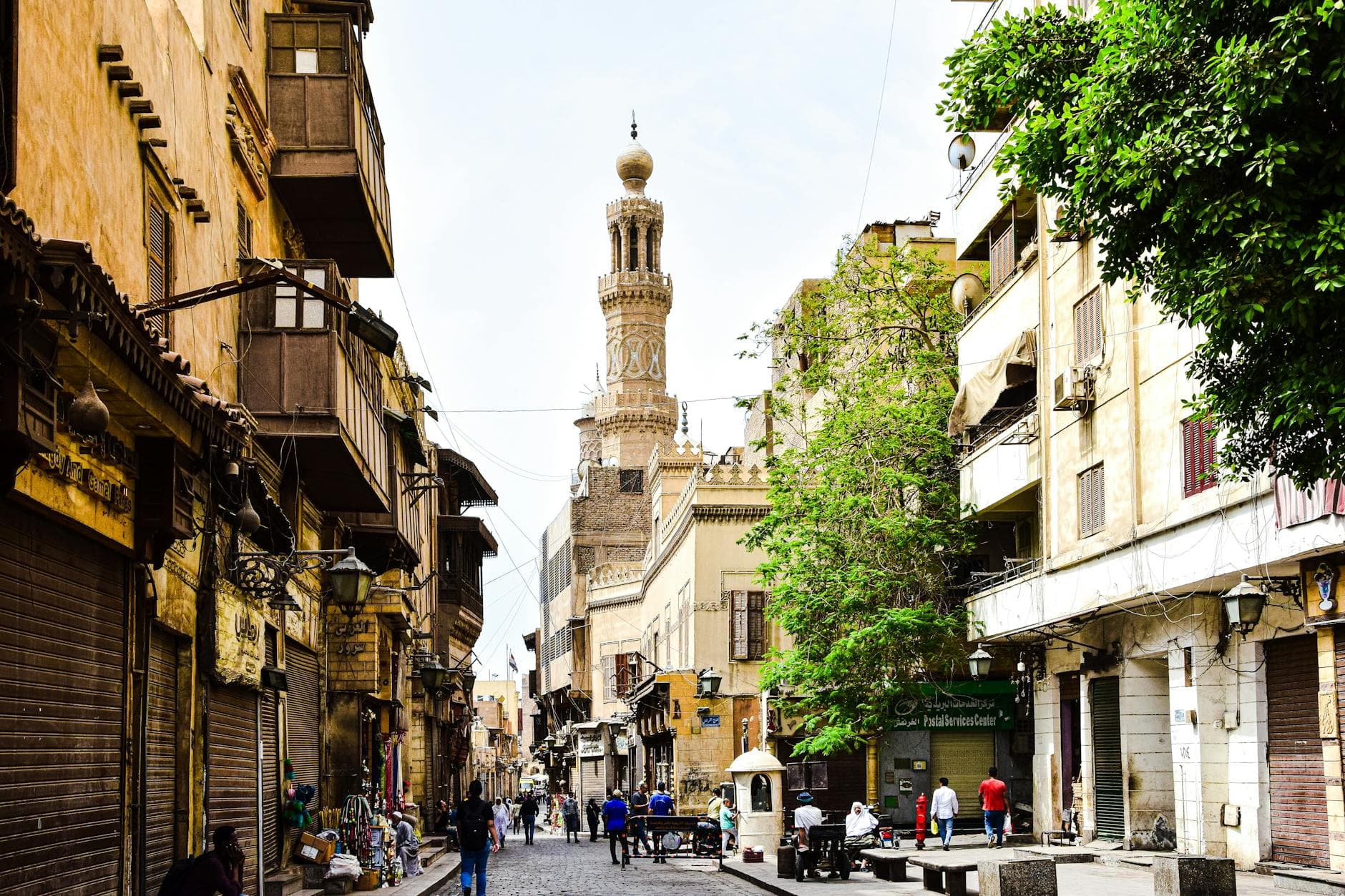
The minarets you see above Al-Muizz Street are not standing on empty ground. Beneath the Fatimid foundations lie Roman walls. Beneath the Roman walls, the silted memory of a Pharaonic canal called the Canal of Amun, which once carried floodwater from the Nile into the desert. When the Fatimid caliph Al-Muizz li-Din Allah rode into his new city in 973 CE, torches lining the street so it appeared to burn, he was not founding a civilization. He was layering onto one that had never stopped.
That is what an Islamic Cairo walking tour actually is: not a tour of mosques, but a tour of accumulation. Every minaret has a Roman column inside it. Every Mamluk sabil was built to outlast its patron. Every khan was a node in a trade network that touched Timbuktu, Venice, and Hormuz simultaneously. The difficulty is not finding things to look at. The difficulty is understanding what you are looking at before the heat and the crowd make you stop caring.
This guide is an attempt to solve that problem.
---
Quick Facts
Best time to visit: October through March, when temperatures stay below 25°C and the low winter light makes the stone facades of Mamluk architecture look as they were meant to look: carved, not bleached.
Entrance fees: Many mosques are free or request a small voluntary donation of EGP 20-50 (under $1 USD). The major ticketed sites charge individually. Al-Azhar Mosque: free. The Mosque-Madrasa of Sultan Hassan: EGP 180 (approx $3.60 USD). Ibn Tulun Mosque: EGP 100 (approx $2 USD). The Gayer-Anderson Museum attached to Ibn Tulun: EGP 200 (approx $4 USD). The Citadel complex, which anchors the southern end of the district: EGP 450 (approx $9 USD) for foreigners. Students with valid ID receive 50% reductions at most state-ticketed sites.
Opening hours: Most mosques open daily from roughly 9am to 4pm for non-Muslim visitors, with closures during Friday noon prayer (12pm-2pm). The Citadel runs 8am-5pm in winter, 8am-6pm in summer. Al-Muizz Street itself is an open thoroughfare and accessible at any hour.
How to get there: The most useful metro stop is Al-Attaba (Line 2, about EGP 9 per journey, under $0.20 USD), a ten-minute walk from Bab Zuweila. Taxis from Downtown Cairo will cost EGP 60-100. Ride-hailing apps (Uber, Careem) are more reliable on price. From Tahrir Square, a microbus to Al-Azhar runs EGP 5-7 if you ask drivers heading east.
Time needed: A focused three-hour walk covers Al-Muizz Street from Bab al-Futuh to Bab Zuweila plus Khan el-Khalili. A full-day route, meaning Ibn Tulun, the Citadel, Sultan Hassan, and Al-Rifa'i Mosque, requires six to seven hours and real commitment to shoes.
Cost range: Budget EGP 400-700 per person for entrance fees and a lunch of koshary or ful near the Khan. Mid-range EGP 1,200-2,000 if you add a guide, a sit-down meal, and copperwork from the market.
---
Why This Place Matters
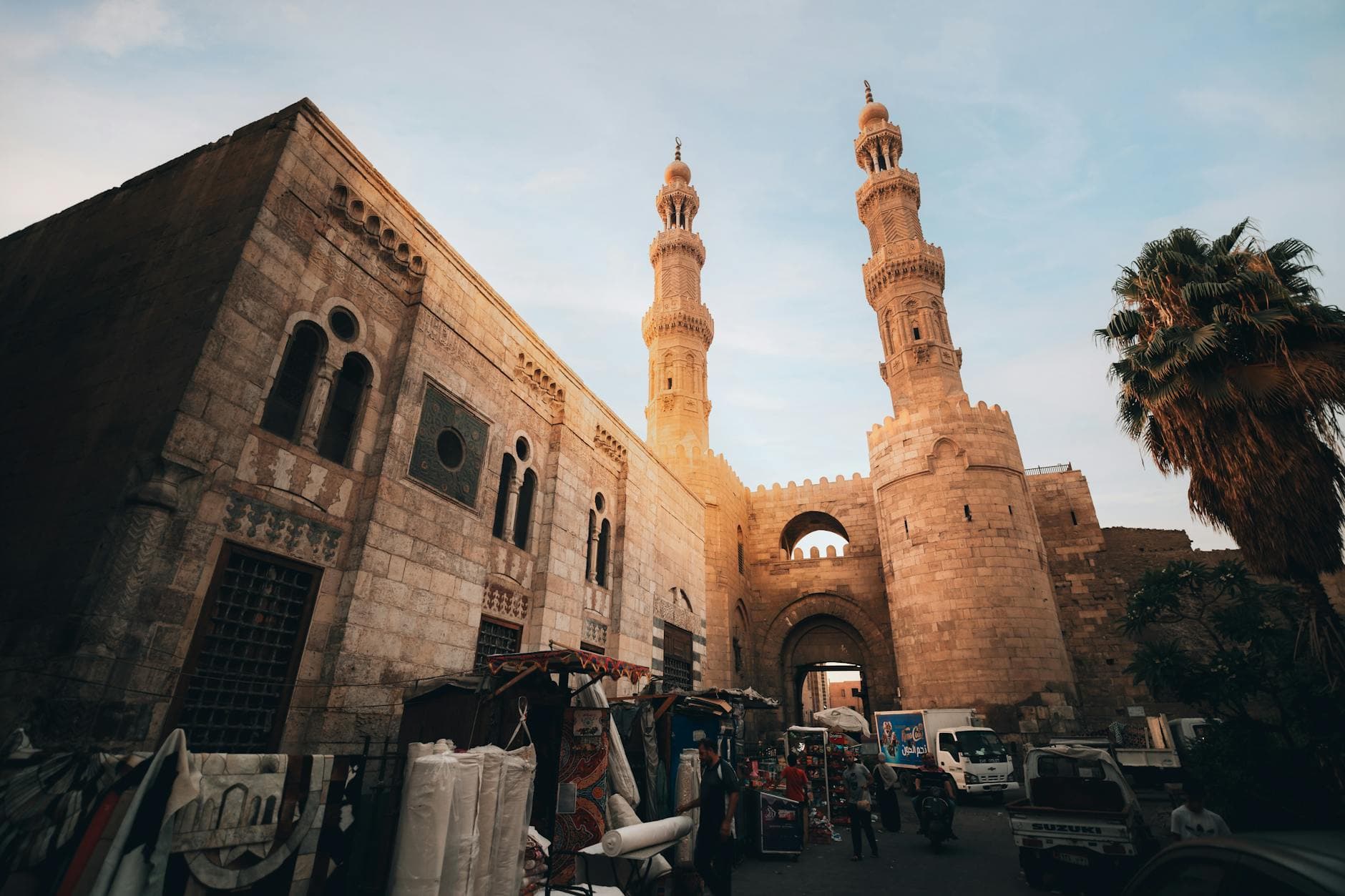
Islamic Cairo is not a district in the civic sense. It is a designation applied to roughly five square kilometers that contain more medieval Islamic monuments than any other city on earth, according to UNESCO, which gave it World Heritage status in 1979. That figure becomes meaningful only when you realize that medieval here spans from the 9th century to the 19th, that Abbasid, Fatimid, Ayyubid, Mamluk, and Ottoman layers sit on top of each other without ever fully replacing what came before.
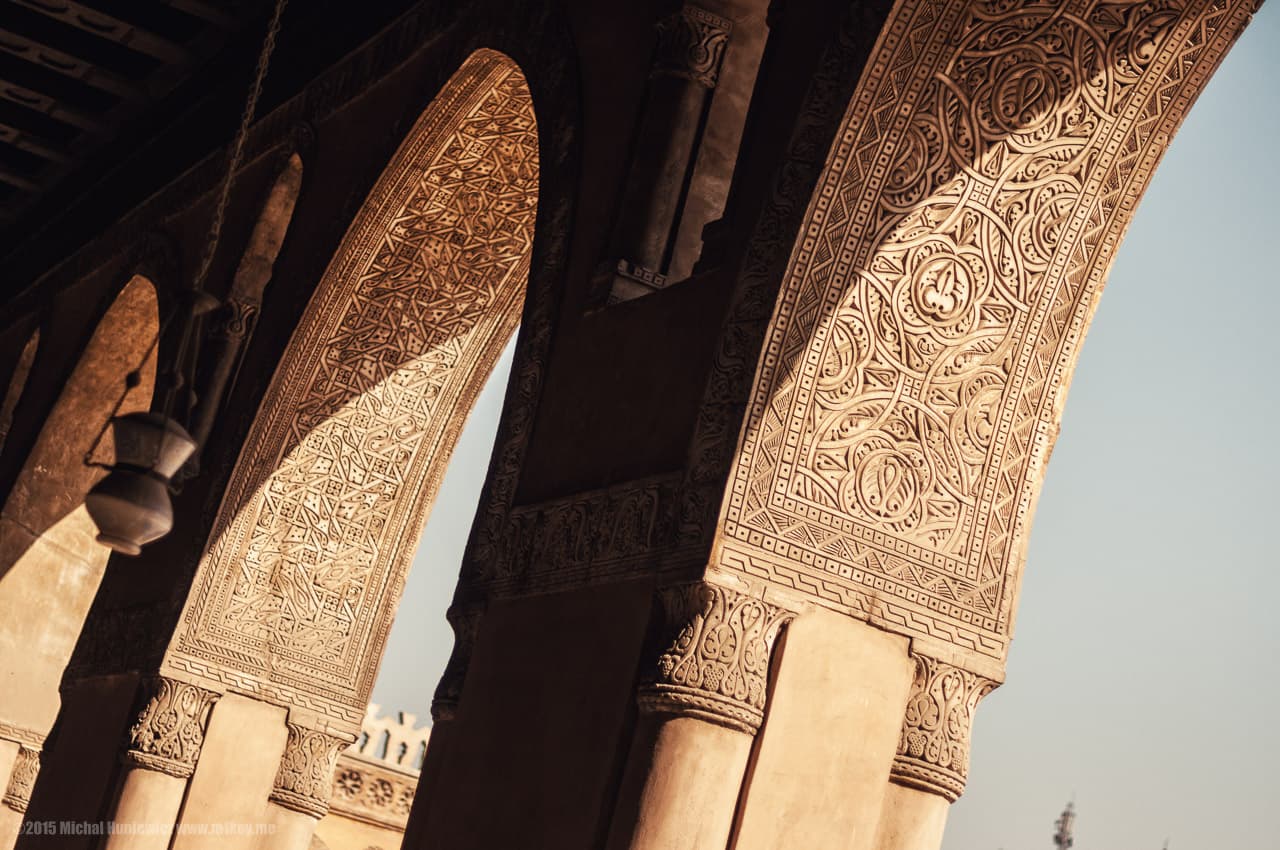
The Tulunid mosque, built by Ahmad ibn Tulun in 879 CE, was constructed when the Abbasid caliph in Baghdad was still nominally Egypt's ruler. Ibn Tulun was a Turkish governor who chose to build his mosque not with marble columns stripped from older buildings, as was common, but with fired brick and stucco, a Mesopotamian technique that had no Egyptian precedent. The result is the only mosque in Cairo that still looks approximately as it did in the 9th century, because its unusual construction method needed no later repairs.
Three centuries after Ibn Tulun, the Fatimids arrived from the west, a Shia dynasty that had conquered their way across North Africa from Tunisia. They built Cairo, meaning Al-Qahira, the Vanquisher, as a royal city deliberately walled off from the older settlement of Fustat to the south. Their Al-Muizz Street was a processional spine, not a market. The commerce came later, when the Ayyubids arrived, and after them the Mamluks, who turned Cairo into the most powerful city in the medieval Arab world after the Mongols destroyed Baghdad in 1258.
That last point is essential. The Mongol destruction of Baghdad sent scholars, craftsmen, and capital flooding into Cairo. The explosion of Mamluk building you see today, the ornate facades of Sultan Qalaun's complex, the sheer audacity of Sultan Hassan's mosque-madrasa, was partly funded by Cairo's sudden status as the last great Islamic capital standing.
---
What You Will Actually See: The Northern Gates to Bab Zuweila
Start at Bab al-Futuh, the northern gate, built in 1087 by the Armenian general Badr al-Gamali, who served the Fatimid caliph. Stand inside the gate tower, which you can enter for free if you walk around to the side door. The stonework technique here is Crusader-influenced, which sounds paradoxical until you learn that Badr al-Gamali imported his craftsmen from Syria and Anatolia, regions that had been absorbing Byzantine and later Crusader construction methods for decades. The Fatimid gate of Cairo contains the architectural DNA of Constantinople.
Al-Muizz Street runs south from here. On a weekday morning, before 10am, it carries school kids in uniform, vegetable carts, men carrying steel rods on their shoulders, and occasionally a goat. The Mamluk facades on either side are being restored in sections, which means some are covered in scaffolding and some have just emerged from it, their carved stone so clean they look like forgeries.
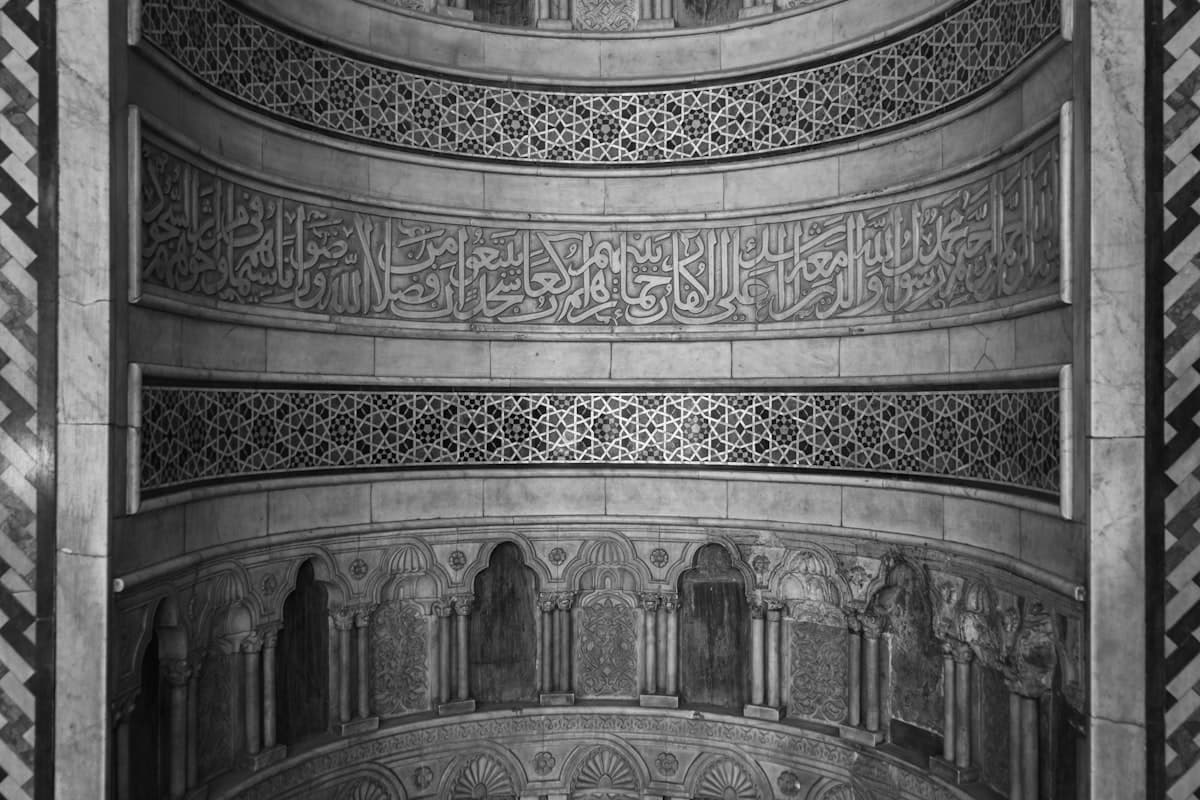
The Qalaun complex, about 400 meters south of Bab al-Futuh, is where most visitors slow down and some stop entirely. Sultan Qalaun built his madrasa, mausoleum, and hospital here between 1284 and 1285, in a single year, using the facade of a Crusader hospital in Acre as his architectural reference. The stained glass in the mausoleum dome is original Mamluk work. The hospital, called a maristan, treated mental illness with music therapy. This was not unusual for the medieval Islamic world, which had a more sophisticated approach to psychiatric care than contemporary Europe would achieve for another five centuries.
Bab Zuweila, the southern gate built the same year as the northern gates by the same Armenian general, is where the Mamluks executed criminals and where, in 1517, they hung the last Mamluk sultan, Tumanbay, after the Ottoman conquest. You can climb to the top of the minarets, which belong to the mosque of Al-Muayyad Sheikh built directly above the gate's towers. The view south takes in the minarets of Sultan Hassan and, on a clear day, the faint line of the Mokattam hills. The entrance fee is EGP 80 (approx $1.60 USD).
---
What Most Visitors Miss: The Human Scale of the Khan
Khan el-Khalili is usually described as a market, which makes it sound simpler than it is. A khan was a specific institution: a fortified inn for long-distance merchants, with ground-floor warehouses and upper-floor lodgings arranged around a central courtyard. The original Khan el-Khalili was built in 1382 by Emir Jarkas el-Khalili, the master of horses under Sultan Barquq, on land that had been the Fatimid royal cemetery. He literally built his commercial complex over the tombs of the Fatimid caliphs, an act of sectarian rewriting that the sources treat as entirely routine.
What survives today is largely an Ottoman-era reconstruction from the 16th century, though the bones of the Mamluk layout remain. Most tourists go directly to the silver and papyrus stalls on the main tourist corridor and leave believing they have seen the Khan. The actual market is the network of specialized streets behind it: the copper-beaters' alley, where you can still hear the hammering; the spice market that spills into Muski Street; the tentmakers' bazaar near Bab Zuweila, called Khayamiyya, where artisans sew appliqued cotton panels that follow designs unchanged since the Fatimid period.
Sit down at El-Fishawy cafe, which claims continuous operation since 1797, and order a hibiscus tea. The claim is probably exaggerated, but the interior, with its aging mirrors and brass fixtures, is genuine 19th-century commercial Cairo. Naguib Mahfouz drank here. That is not tourism copy; it is the reason the cafe has survived economic logic.
---
The Connections: How This District Ties Egypt Together
The Mosque-Madrasa of Sultan Hassan, just outside the Citadel walls, was begun in 1356 and took eighteen years and multiple architects to complete, partly because the original architect was executed mid-project under circumstances the chronicles decline to explain. Its four iwans, the vaulted halls facing a central courtyard, represent the four schools of Sunni Islamic law, a political statement as much as an architectural one: Sultan Hassan was asserting orthodox Sunni legitimacy against Shia rivals and internal Mamluk factions simultaneously.
The Citadel itself, begun by Saladin in 1176, sits on a spur of the Mokattam hills where, according to medieval Arab geographers, meat hung in the air did not spoil. Saladin's engineers discovered that a constant breeze rose from the Nile valley along that particular ridge. He built his fortress there not only for the defensive height but for the air quality. Inside the Citadel, the Mosque of Muhammad Ali, built between 1830 and 1848 by Egypt's Albanian-Ottoman ruler, is modeled on the Blue Mosque in Istanbul and is the building most Egyptians identify with Cairo's skyline. Its alabaster exterior, sourced from the quarries at Hatnub near Amarna in Upper Egypt, the same quarries used by the Pharaohs, connects the Citadel visually and materially to dynastic Egypt 3,000 years earlier.
None of this is coincidence. Egypt's rulers have always understood that building on the right ground, and using the right stone, confers legitimacy that declarations cannot.
---
Common Mistakes
Starting too late. Arriving at Al-Muizz Street after 11am in any season means sharing narrow lanes with tour buses, school groups, and the full weight of the day's heat. The light before 9am is also better for photography and the mosques are quieter for reflection.
Skipping interiors to photograph facades. The exterior of the Qalaun complex is interesting. The interior of the mausoleum, with its Gothic-influenced stained glass and geometric stone floor, is what you will actually remember. Many visitors photograph the street and move on without going inside.
Wearing shoes that cannot be removed and replaced quickly. You will remove your shoes at every mosque. Sandals with buckles that take ninety seconds each are not your friend. Slip-ons are.
Assuming the Ibn Tulun Mosque is too far. It is a fifteen-minute walk west of Al-Muizz, which is enough to make most visitors skip it. Do not skip it. It is the oldest functioning mosque in Cairo, the least touristed of the major sites, and the courtyard, with its unusual fountain pavilion, is one of the genuinely quiet places left in this city.
Hiring guides outside the major gates without vetting them first. Unlicensed guides near Bab Zuweila and the Khan will quote EGP 100 and present a bill for EGP 1,500 at the end. The Egyptian Tourist Authority licenses guides who carry official cards. Ask to see one. A licensed guide for a half-day tour should cost EGP 600-900 agreed in advance.
Missing the tentmakers' bazaar. Khayamiyya Street, just inside Bab Zuweila, is where artisans produce appliqued fabric panels using the same geometric patterns that decorated Fatimid ceremonial tents. The craft is on UNESCO's intangible cultural heritage list. Most visitors to the Khan never find it.
Treating the Citadel as a finale when it deserves a separate day. Combining a full Al-Muizz walk with the Citadel in a single day means doing both badly. The Citadel complex has three distinct museums, the views over Cairo are best in early morning or late afternoon, and Sultan Hassan Mosque next door closes for prayer at times that will catch you if you arrive at the Citadel already tired at 3pm.
---
Practical Tips
Dress conservatively regardless of the heat. For women, this means covered shoulders and knees as a baseline; carrying a light scarf to cover hair inside mosques is practical and respectful. For men, shorts are technically acceptable in the street but will draw disapproval inside mosques.
Bring cash in small denominations. Most entrance booths struggle to change EGP 200 notes. Having EGP 20 and EGP 50 notes ready moves you through doors faster.
The tourist police presence on Al-Muizz Street is high, which makes the area safe. Petty hassling near the Khan is real but rarely aggressive; a flat "la shukran" (no thank you) and continued walking works in nearly all cases.
Water is sold from small carts throughout the district for EGP 10-15 per bottle. Do not wait until you are thirsty. The combination of sun, stone, and shoe-removal exertion is dehydrating faster than it feels.
For an Islamic Cairo walking tour that covers the full north-to-south axis plus Ibn Tulun, budget a full day and eat lunch at one of the small fuul restaurants on the side streets off Al-Muizz rather than the tourist-facing cafes. A plate of fuul and ta'meya with bread costs EGP 40-60 and is better than anything marketed toward foreigners in the area.
Frequently Asked Questions
The Weekly Dispatch
More on Egypt, every Friday.
Cultural depth and places most guides never mention.
No spam. Unsubscribe anytime.