Jewish Heritage Sites in Egypt: A Traveler's Cultural Guide
Egypt's Jewish heritage sites span 2,500 years, from ancient synagogues to Nile Delta cemeteries. Use this traveler guide to explore what most visitors never find.
Quick Facts
- Best time to visit
- October to March. Lower humidity in Cairo, pleasant temperatures in Alexandria, and fewer tour groups at Coptic Cairo in the early morning.
- Entrance fee
- Ben Ezra Synagogue: EGP 100 (approx $2 USD) included within Coptic Cairo ticket of EGP 200 (approx $4 USD). Sha'ar Hashamayim and Eliyahu Hanavi: free, by appointment. Bassatine Cemetery: free, by appointment only.
- Opening hours
- Ben Ezra: daily 9am to 4pm. Sha'ar Hashamayim: by appointment only. Eliyahu Hanavi Alexandria: Friday mornings roughly 9am to noon plus arranged visits.
- How to get there
- Ben Ezra: Metro Line 1 to Mar Girgis, EGP 7. Sha'ar Hashamayim: walk from Tahrir or taxi EGP 30. Alexandria by train from Cairo: EGP 80 to 200 depending on class; taxi within Alexandria EGP 40 to 60.
- Time needed
- Ben Ezra plus Coptic Cairo compound: half-day. Sha'ar Hashamayim plus Downtown Cairo context: 2 to 3 hours. Alexandria Eliyahu Hanavi plus Chatby Cemetery: full day including travel from Cairo.
- Cost range
- Budget EGP 400 to 700 per day covering transport, entry fees, and street food. Mid-range EGP 1,500 to 2,500 per day including a specialist licensed guide (strongly recommended) and restaurant meals.
Quick Facts
Sites covered: Ben Ezra Synagogue (Cairo), Sha'ar Hashamayim Synagogue (Cairo), Eliyahu Hanavi Synagogue (Alexandria), Jewish cemeteries in Cairo and Alexandria
Best time to visit: October through March. The Cairo sites sit in Coptic Cairo, where summer humidity and crowds peak between June and August. Alexandria's synagogue, the grandest of the lot, benefits from the city's cooler Mediterranean air, but winter gives you the light and the near-solitude this building deserves.
Entrance fees: Ben Ezra Synagogue: EGP 100 (approx $2 USD), included in the Coptic Cairo area ticket of EGP 200 (approx $4 USD) for non-Egyptians Sha'ar Hashamayim (Adly Street): Free entry with prior coordination through the Jewish Community of Cairo; bring your passport Eliyahu Hanavi, Alexandria: Free; coordinate visits through the Alexandria Jewish Community or arrive Friday morning when it sometimes opens for informal visits Cairo Jewish Cemetery (Bassatine): Contact the Egyptian Jewish Community Association in advance; no walk-in access
Opening hours: Ben Ezra: Daily 9am to 4pm Sha'ar Hashamayim: Not regular public hours; visits arranged by appointment Eliyahu Hanavi: Friday mornings, roughly 9am to noon; otherwise by arrangement
How to get there: Ben Ezra and Coptic Cairo: Metro Line 1 to Mar Girgis station, free exit directly into the compound. Alternatively, taxi from Downtown Cairo costs EGP 50 to 80. Sha'ar Hashamayim: Downtown Cairo, Adly Street near Talaat Harb. Walk from Tahrir Square in 12 minutes or taxi for EGP 30. Alexandria's Eliyahu Hanavi: From Cairo, take the Egyptian National Railways train (EGP 80 to 200 depending on class) or a GoBus coach (EGP 120 to 180). From Alexandria's Sidi Gaber or Masr station, taxi to the synagogue costs EGP 40 to 60.
Time needed: Ben Ezra alone, one hour. Coptic Cairo including three churches, the crypt, and the synagogue, a full half-day. Alexandria's Eliyahu Hanavi plus the Jewish cemetery on Nabi Daniel Street, two to three hours. The Bassatine Cemetery in Cairo, a separate half-day trip.
Cost range: Budget EGP 400 to 700 per day covering transport, entry, and street food. Mid-range EGP 1,500 to 2,500 per day if you add a licensed guide (strongly recommended for context) and a sit-down lunch.
---
Why This Place Matters
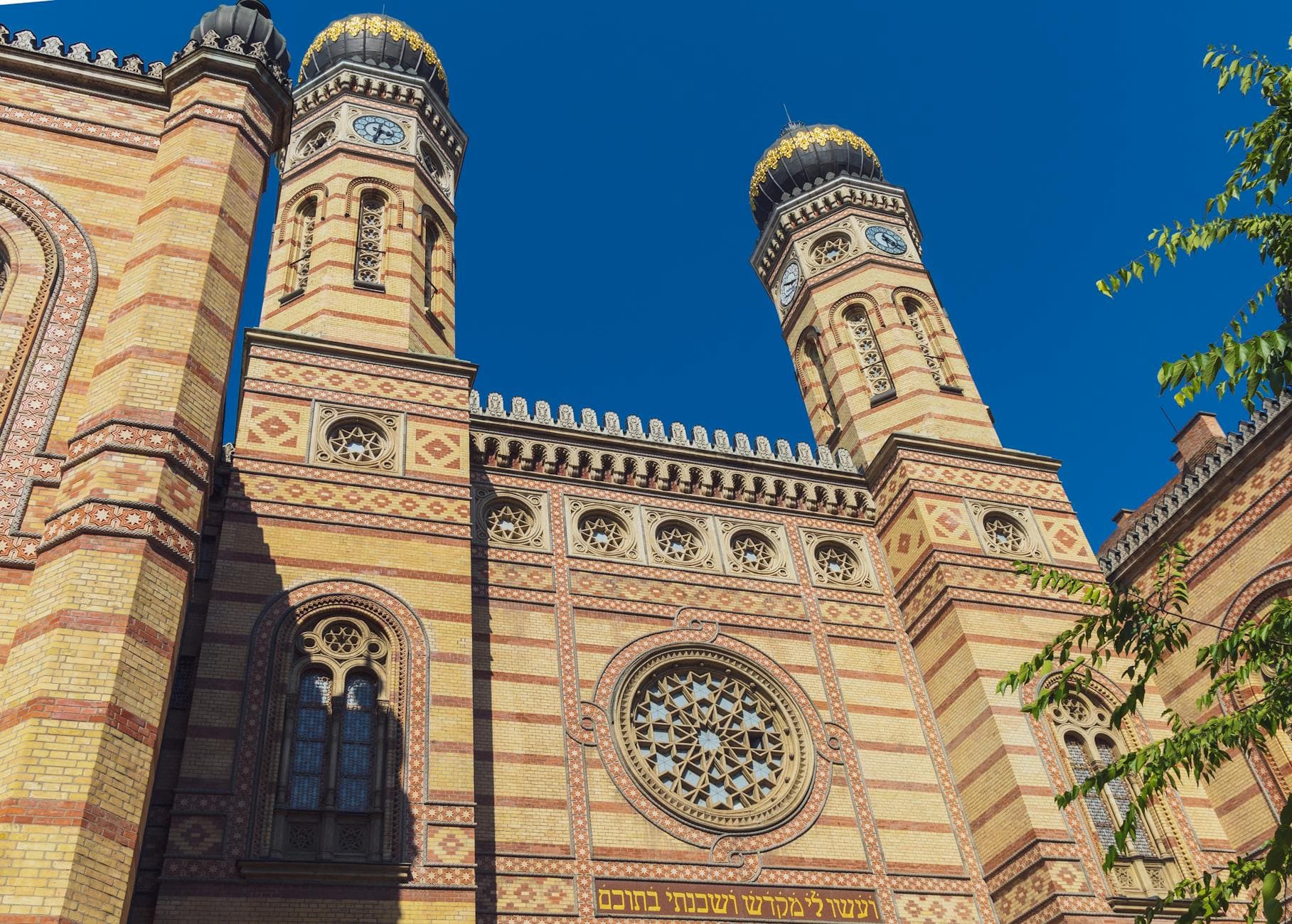
Most travelers who visit Ben Ezra Synagogue in Coptic Cairo think they are looking at a very old Jewish building. They are, but they are also standing inside one of the most consequential archival sites in the history of human writing. In 1896, a Cambridge scholar named Solomon Schechter descended into a storage room here called the geniza, a repository where worn-out sacred texts are kept rather than destroyed, and found approximately 400,000 manuscript fragments dating from the 10th to the 19th centuries. The Cairo Geniza, as it became known, contained letters, contracts, marriage documents, shopping lists, and medical prescriptions that documented an entire medieval Mediterranean world in extraordinary detail. The texts revealed that medieval Jewish traders operated networks stretching from Cordoba to Malabar, with Cairo at the center. They also revealed, incidentally, the price of pepper in Fustat in 1080 AD.
The synagogue itself, according to tradition, marks the spot where Pharaoh's daughter found the infant Moses in the Nile. That is almost certainly legend. What is documented is that a 9th-century Coptic church stood here first, that it was sold to the Jewish community in 882 CE, and that the building was reconstructed in the 12th century into the form you see today. The Nile, which once flowed close enough that Moses's basket story made physical sense here, has since shifted east. The land between the synagogue and the river is now the working-class district of Old Cairo.
Egypt's Jewish community was never a monolith. It contained communities as culturally distinct from each other as they were from their Egyptian neighbors: Rabbanites and Karaites who disagreed on religious law for centuries while living within walking distance in Fustat; Sephardi Jews expelled from Spain in 1492 who arrived in Alexandria speaking Ladino; Ashkenazi refugees fleeing 20th-century European violence; and communities of Mizrahi Jews whose families had been in Egypt since the time of the Ptolemies. At its peak in the 1940s, Egypt's Jewish population was roughly 80,000. Today, fewer than a dozen elderly Jewish women remain in Cairo, the community's last custodians.
---
Ben Ezra Synagogue: What You Actually See
The approach through Coptic Cairo already conditions you. You pass the Hanging Church, its nave suspended above the gate towers of the Roman Babylon fortress, and the Church of Saints Sergius and Bacchus, built over the crypt where Joseph, Mary, and Jesus are said to have sheltered during the Flight into Egypt. By the time you reach Ben Ezra, the layering of civilizations is already in your bones.
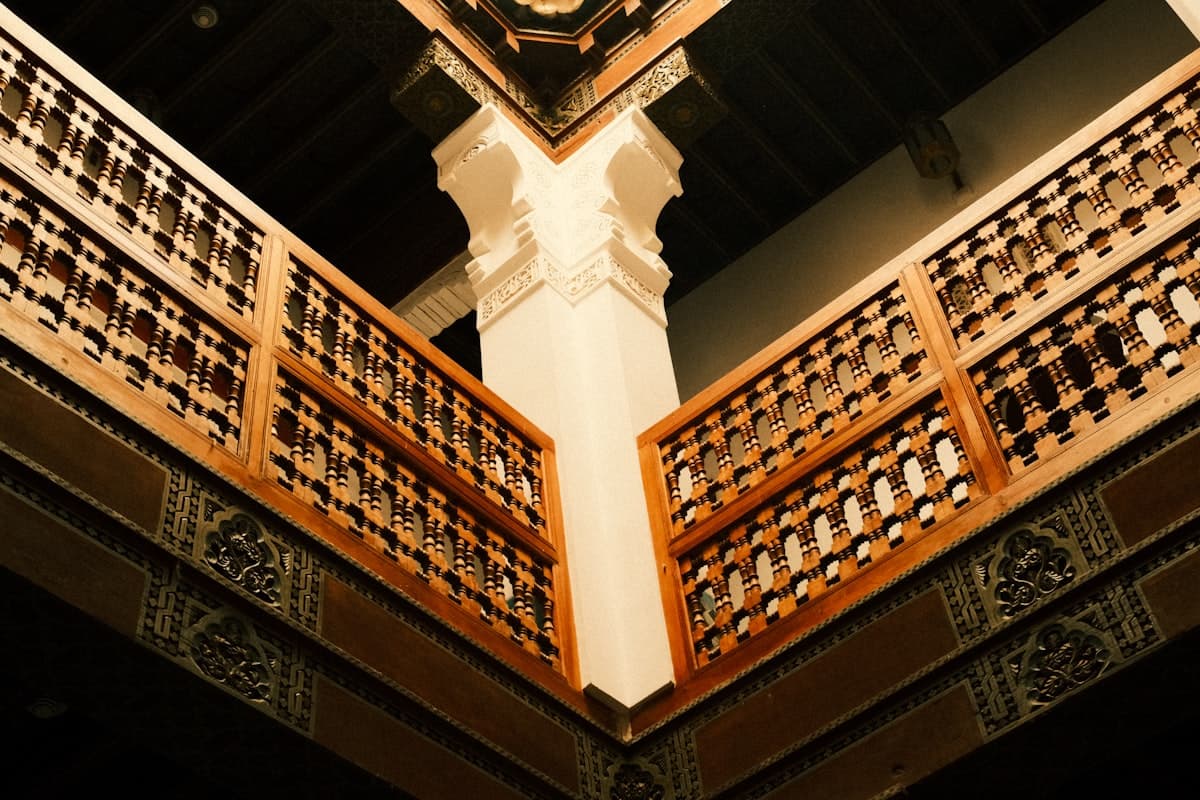
The building is elegant but not showy. A central nave flanked by two side aisles, the floor raised so that the marble columns rest on pedestals, the bimah, the raised platform from which the Torah is read, positioned in the center rather than at the front as in later European practice. The wooden screens separating the women's gallery are carved with geometric patterns that look, at certain angles, like Islamic mashrabiyya work. That is not coincidence. Jewish craftsmen and Muslim craftsmen worked with the same regional vocabulary of form.
What most visitors miss entirely: the small room to the left of the entrance where photographs document the geniza discovery, and the niche in the southern wall that marks, according to tradition, the exact spot where the geniza chamber was located before Schechter emptied it. The fragments themselves are now scattered between Cambridge, New York, and several other institutions. Egypt negotiated to have some returned, without success so far.
The synagogue is maintained by the Egyptian government's Supreme Council of Antiquities, since the Jewish community is too small to do so itself. This is not a minor detail. It means that the Egyptian state, which has complicated and sometimes hostile relationships with Israel, is actively preserving a Jewish house of worship and considers it part of Egypt's national heritage. That tension, and that pragmatic generosity, is itself a story worth understanding.
---
Sha'ar Hashamayim and the Downtown Cairo That Was
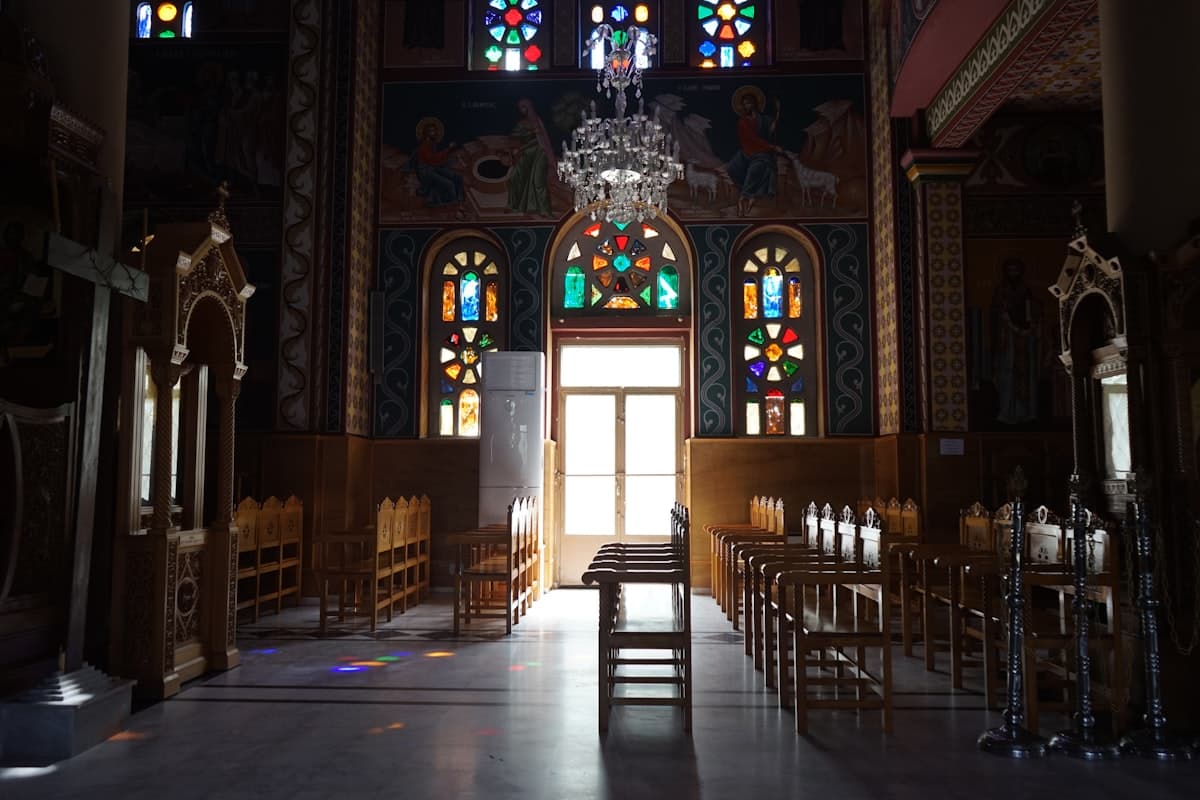
Ten kilometers north of Coptic Cairo, on Adly Street in the commercial heart of Downtown, stands the largest synagogue in Egypt. Sha'ar Hashamayim, the Gate of Heaven, was built in 1905 in a Moorish Revival style that would look equally at home in Vienna or Budapest. Its two towers rise above a street lined with art deco apartment buildings from the 1930s and 1940s, the architectural residue of a Cairo that was, for a brief period, genuinely cosmopolitan in the strictest sense. Greek merchants, Italian architects, Levantine Jewish bankers, Syrian Christian textile traders, and Armenian jewelers all built Downtown Cairo together.
The synagogue seats 700 and still contains its original pews, its iron chandeliers, and its ark housing the Torah scrolls. Visits require advance coordination, usually through the Egyptian Jewish Community or through a licensed guide with the right contacts. The extra effort is rewarded. When the doors open onto that interior, you understand what the community once was: prosperous, rooted, integrated enough into Egyptian commercial life that they built this prominently on a main street rather than tucked into a courtyard.
One block away, at 12 Adly Street, was once the Cairo headquarters of B'nai B'rith, the Jewish mutual aid organization. The building now houses something else. The neighborhood's Jewish past is visible if you know what you're reading, but it requires a kind of double vision, seeing the city that is and the city that was simultaneously.
---
Alexandria: Eliyahu Hanavi and a Different Story
Alexandria's Jewish story is both older and, in some ways, more melancholy than Cairo's. The city once had the largest Jewish diaspora community in the ancient world. Philo of Alexandria, who tried to reconcile Jewish theology with Greek philosophy in the 1st century CE, was Alexandrian. The Septuagint, the Greek translation of the Hebrew Bible that became the scripture of early Christianity, was produced here, according to tradition, by 72 Jewish scholars working on the island of Pharos. Without Alexandria's Jewish intellectuals, the theological architecture of both Christianity and Rabbinic Judaism would look different.
Eliyahu Hanavi synagogue, built in 1881, reflects this legacy in its scale and confidence. The interior is vast, domed, and filled with light from windows set high in the walls. It can seat over 700 people. The Italian-style ark is intact. The women's gallery runs around three sides. When you sit in the pews on a Friday morning, if you are lucky enough to have arranged access, the silence is total except for the Mediterranean traffic outside. The community that filled this space, predominantly Sephardi, with deep roots in the cotton trade and the legal profession, left in waves between 1948 and 1967, most of them holding Greek, Italian, or French passports rather than Egyptian ones, which tells you something about the nature of even a very settled diaspora community.
The Egyptian government restored the synagogue in 2020, a restoration that was both genuinely careful and politically complicated. It was completed without significant input from diaspora Jewish communities, some of whom objected to specific decisions. That argument, about who owns the memory of a place and who has the authority to restore it, is the most honest conversation you can have about what these sites are now.
---
The Connections
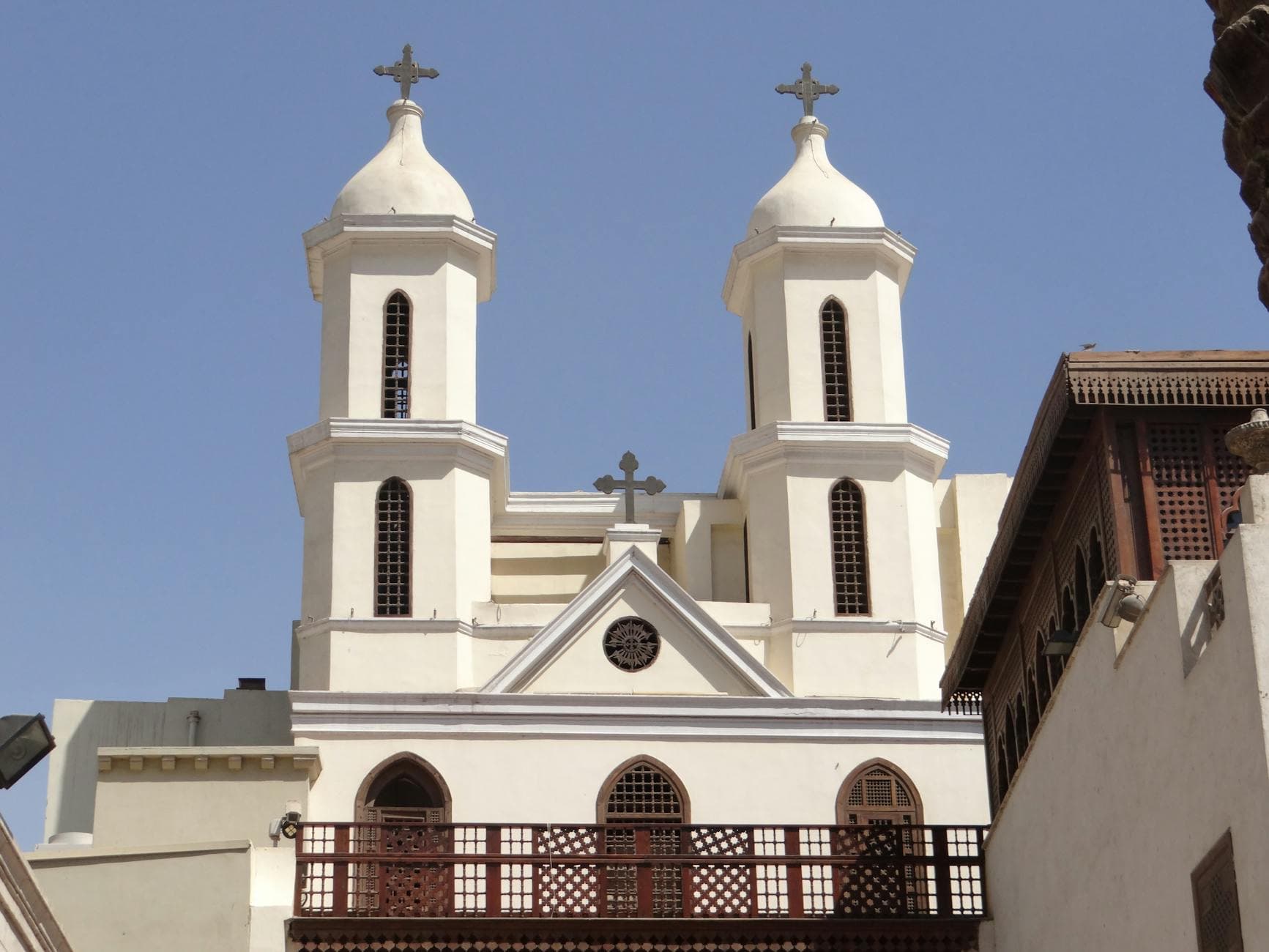
Nothing in Cairo exists in isolation, and the Jewish heritage sites are a perfect case study. Ben Ezra Synagogue sits 200 meters from the Church of Abu Serga, which sits on Roman foundations, which sit atop the remains of the capital of Roman Egypt, Babylon, which was built partly using labor drawn from the Jewish community that had been in Egypt since the 6th century BCE. The Ben Ezra geniza fragments were written in Judeo-Arabic, a form of Arabic written in Hebrew script, which means that to read them you need to know both languages, and that the medieval Jewish community of Fustat was so thoroughly embedded in Arabic-speaking culture that it thought in that language even for religious purposes.
The Bassatine Cemetery in southeast Cairo, one of the oldest Jewish cemeteries in the world, contains graves dating from the 9th century. It sits adjacent to a Coptic cemetery and close to several Islamic cemeteries. The dead of different faiths have been burying each other in overlapping ground here for over a thousand years. That is the Egypt that tends to get lost when the story becomes one of departure and loss.
The 19th-century Jewish community of Alexandria was also the community that helped finance the modernization of Egyptian cotton infrastructure. The Mosseri and Cattaui families built institutions in Cairo, including schools and hospitals, that are still functioning today, though not under Jewish governance. The thread runs forward into the present.
---
Common Mistakes
Assuming Ben Ezra is always open and accessible without planning. It is open daily, but larger tour groups pass through between 10am and noon, and the space is small enough that 40 people destroy any chance of reflection. Arrive at 9am or after 2pm.
Treating Sha'ar Hashamayim as a drop-in visit. It is not. Show up without an appointment and you will stand outside an ornate locked gate. Contact the Egyptian Jewish Community Association or a Cairo-based licensed guide at least a week in advance.
Not hiring a guide and thinking you can substitute a guidebook. The physical sites are shells without context. A good licensed guide who knows this specific subject costs EGP 800 to 1,500 for a half-day. It is the highest-return expenditure you can make here.
Visiting Alexandria's synagogue without verifying the Friday arrangement in advance. The Friday morning opening is informal and depends on community availability. Weeks can pass without an accessible visit. Email the Alexandria Jewish Community and confirm before booking your train.
Photographing without asking. Both Cairo and Alexandria synagogues are working heritage sites under protective oversight. Ask before photographing interior details, especially the ark and Torah scrolls. The request is almost always granted, but the asking matters.
Combining too many sites in one day. Coptic Cairo plus Sha'ar Hashamayim plus the Islamic Cairo synagogue sites is not a day trip; it's an endurance test that leaves you retaining nothing. Do Coptic Cairo and Ben Ezra one morning. Do Sha'ar Hashamayim and Downtown Cairo's architectural Jewish layer on a separate afternoon.
Arriving at Bassatine without pre-arranged access. The cemetery is guarded and not open to individual visitors without prior contact. The Egyptian Jewish Community Association handles access. The cemetery is also in a state of partial disrepair, and some sections require careful footing. Bring closed shoes and water.
---
Practical Tips
The best single resource for planning these visits is Phyllis Ghim-Lian Chew's academic work on Egyptian Jewry, not for tourism planning but for context that will make everything you see more legible. For logistics, Bassam Nagib at Hod Hod Soliman travel agency in Cairo has guided Jewish heritage tours for two decades and knows every gatekeeper.
Dress conservatively at all sites: covered shoulders and knees for both men and women. This is both respectful and practically useful since some sites are also visited by observant Jewish visitors from abroad who will notice and appreciate the consideration.
The Coptic Cairo Metro stop (Mar Girgis, Line 1) puts you at the entrance to the compound at no logistical cost. Do not take a taxi to Coptic Cairo from Downtown; the traffic adds 20 minutes and the Metro costs EGP 7.
For Alexandria, the Spanish-era Sephardi Jewish graves in the Chatby cemetery (also known as the Latin Cemetery) are accessible during regular cemetery hours and require no advance arrangement. This is the oldest section of Alexandria's Jewish burial ground and is visually and historically significant. Almost nobody goes there.
The Egyptian Museum in Tahrir Square holds artifacts from Jewish communities in Egypt, including objects from excavations at Tell el-Yahudiyya, the City of the Jews, a settlement in the eastern Nile Delta founded by a Jewish military colony in the 2nd century BCE. These are integrated into the general Ptolemaic and Greco-Roman collections and are not labeled as a Jewish heritage trail, so you need to know what you're looking for.
Frequently Asked Questions
The Weekly Dispatch
More on Egypt, every Friday.
Cultural depth and places most guides never mention.
No spam. Unsubscribe anytime.