Karnak Temple Luxor Guide: An Insider's Complete Visit
Plan your visit to Karnak Temple in Luxor with real prices, opening hours, insider routes, and the mistakes most tourists make. Your complete Karnak guide.
Audio Guide: Karnak Temple Luxor Guide: An Insider's Complete Visit
Quick Facts
- Best time to visit
- October to February for cooler temperatures. Arrive at 6:00 AM any time of year to avoid cruise-ship crowds.
- Entrance fee
- EGP 450 (approx $9 USD) adults. EGP 225 students with ISIC card. Open Air Museum inside costs extra EGP 100.
- Opening hours
- Daily 6:00 AM to 5:30 PM (April to September). Daily 6:00 AM to 6:00 PM (October to March). Ticket booths close 30 minutes before site closing.
- How to get there
- Taxi from central Luxor EGP 50 to 80 one way. Calèche EGP 40 to 60 (negotiate first). Walkable from Luxor Temple along the Avenue of Sphinxes in 20 minutes.
- Time needed
- 3 hours minimum for the Amun precinct. 4.5 hours if including the Open Air Museum and requesting access to the Mut precinct.
- Cost range
- Budget EGP 600 to 1,000 per day including entry. Mid-range EGP 2,000 to 3,500 per day with guide and meals.
Karnak Temple Luxor Guide: An Insider's Complete Visit
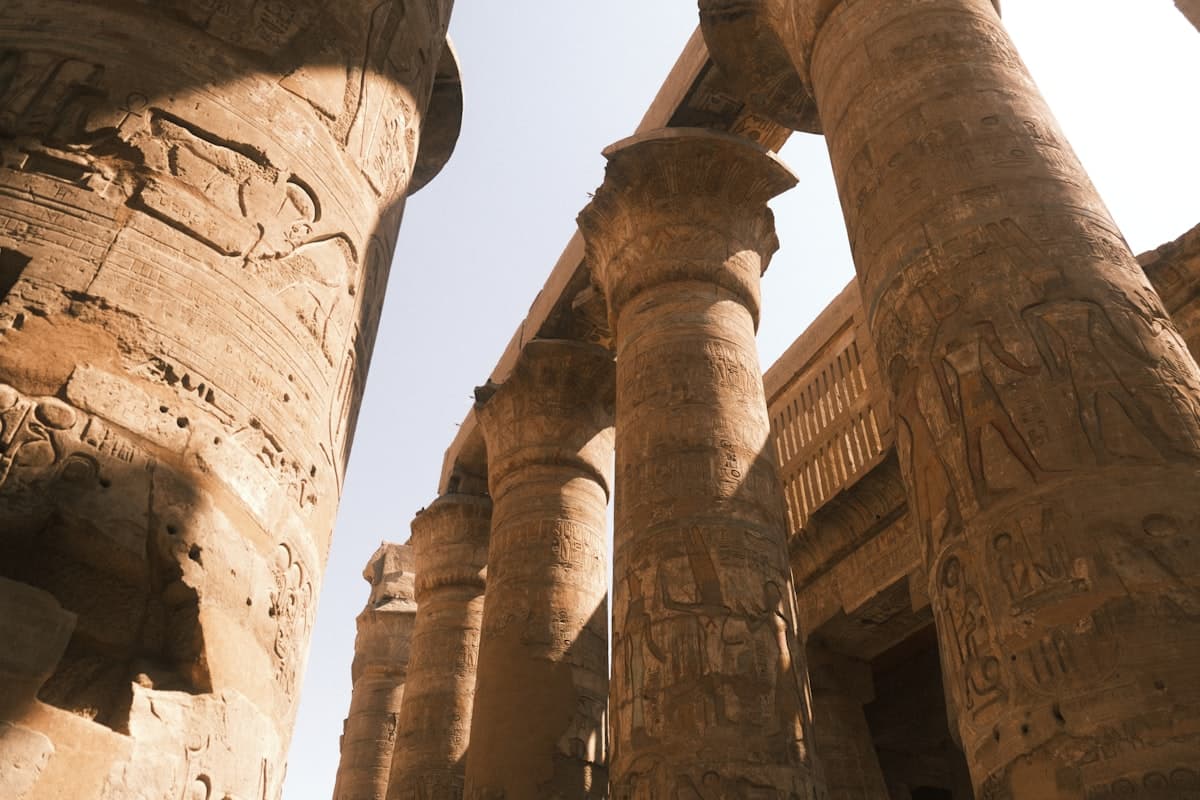
At 5:30 in the morning, before the cruise-ship groups arrive and before the sun turns the sandstone floors into a griddle, the Great Hypostyle Hall at Karnak belongs almost entirely to you. The 134 columns rise so close together that the light falls in thin, angled slices between them, catching the carved hieroglyphs in sharp relief. You can press your palm flat against a column that measures nearly ten metres in circumference and feel the faint grit of four thousand years of Nile dust. The silence is not peaceful exactly. It is heavy, expectant, like a held breath.
Karnak is not one temple. That is the first thing most visitors get wrong. It is a complex of temples, chapels, pylons, obelisks, and sacred lakes built, expanded, dismantled, and rebuilt across roughly two thousand years by successive pharaohs who each wanted to leave their mark on Egypt's most important religious site. The main precinct, dedicated to the god Amun-Ra, is the largest religious building ever constructed. The site covers more than 100 hectares. The phrase "overwhelming" is not hyperbole here. It is a logistical description.
This Karnak Temple Luxor guide will tell you exactly how to manage it.
---
Quick Facts
Best time to visit: October to February for tolerable heat. Arrive at opening time (6:00 AM) regardless of season. Entrance fee: EGP 450 (approx $9 USD) for adults. EGP 225 for students with valid ISIC card. The Sound and Light Show tickets are sold separately at EGP 400 per person (approx $8 USD). Opening hours: Daily 6:00 AM to 5:30 PM (summer, April to September). Daily 6:00 AM to 6:00 PM (winter, October to March). Ticket booths close 30 minutes before site closing. How to get there: Taxi from central Luxor, roughly EGP 50 to 80 one way. Calèche (horse-drawn carriage) from Luxor Temple along the Corniche, roughly EGP 40 to 60 but negotiate before you get in. The Corniche is walkable from central Luxor in about 20 minutes if the heat allows. No reliable public bus serves the site directly. Time needed: 3 hours minimum for the main Amun precinct. Add 90 minutes if you also want the Mut and Montu precincts, which are rarely visited and require a separate entrance request at the ticket office. Cost range: Budget EGP 600 to 1,000 per day in Luxor including entry. Mid-range EGP 2,000 to 3,500 per day.
---
Getting Your Bearings: What Karnak Actually Is
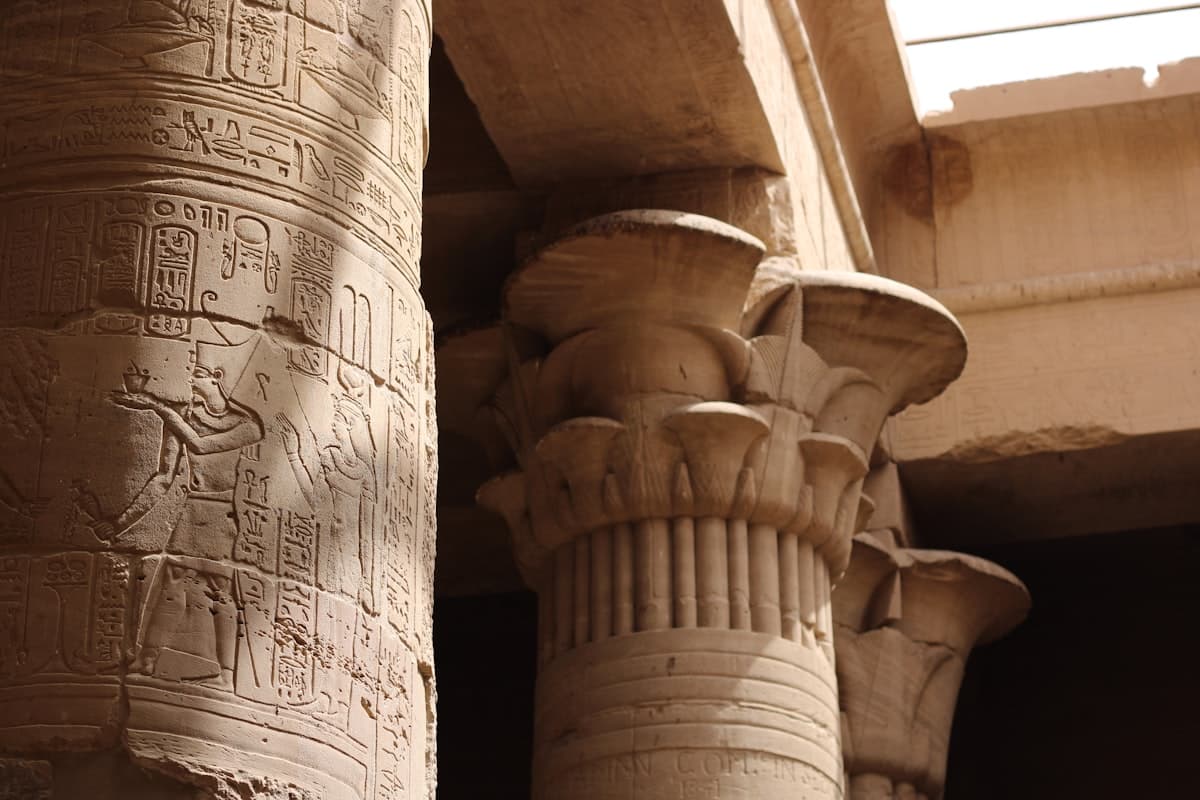
The complex is divided into three main enclosures. Almost everyone visits only the Precinct of Amun-Ra, which contains the Hypostyle Hall, the Sacred Lake, the obelisks of Hatshepsut and Thutmose I, and the Festival Hall of Thutmose III. This is the correct priority.
The Precinct of Mut, to the south, is connected by an avenue of ram-headed sphinxes. It is rarely open to independent visitors without prior arrangement at the ticket office, but worth asking about if you have extra time. The Precinct of Montu, to the north, is largely unrestored and not accessible to the general public.
You enter the main precinct through the First Pylon, which was ironically the last major structure added to the complex, commissioned by the pharaoh Nectanebo I around 380 BCE. It was never fully inscribed. The ramps and mudbrick workers' scaffolding are still partially visible on the interior face of the south tower, untouched since ancient construction stopped. Run your eye along the top of the pylon's inner wall and you will see the original mudbrick construction ramp still lodged against it. That detail alone tells you something about the ambition and the incompleteness of the project.
---
The Hypostyle Hall: How to Actually See It
The Great Hypostyle Hall was built primarily under Seti I and completed by Ramesses II. It covers 5,000 square metres and contains 134 columns arranged in 16 rows. The central 12 columns are taller, reaching 21 metres, with open papyrus capitals. The outer columns have closed-bud capitals and top out at around 15 metres.
Most visitors walk in, crane their necks, take photographs of the columns from the central aisle, and leave within fifteen minutes. This is a waste. The colour on the upper registers of the central columns, where tour groups rarely look, is among the best-preserved paint in all of Egypt. Blues, reds, and yellows applied over three thousand years ago are still legible in the upper shadows. Bring a small pair of binoculars if ancient pigment interests you.
Walk the outer aisles, not just the central avenue. The northern wall of the hall, completed primarily by Seti I, is generally considered superior in artistic quality to the southern wall completed by Ramesses II. The figures on Seti's section have a refined delicacy that the Ramesside work, larger and more propagandistic, does not quite match. This is the kind of comparison your standard group tour will never have time to make.
One personal observation: the smell inside the Hypostyle Hall on a warm morning is distinct. It is stone, dust, and a faint mineral dampness that seems impossible given the desert surroundings. Some of it comes from tourist breath and the slow exhale of ancient rock. Some of it comes from the bats that roost in the darker corners. You will hear them before your eyes adjust.
---
The Sacred Lake, the Obelisks, and What Else to Prioritise
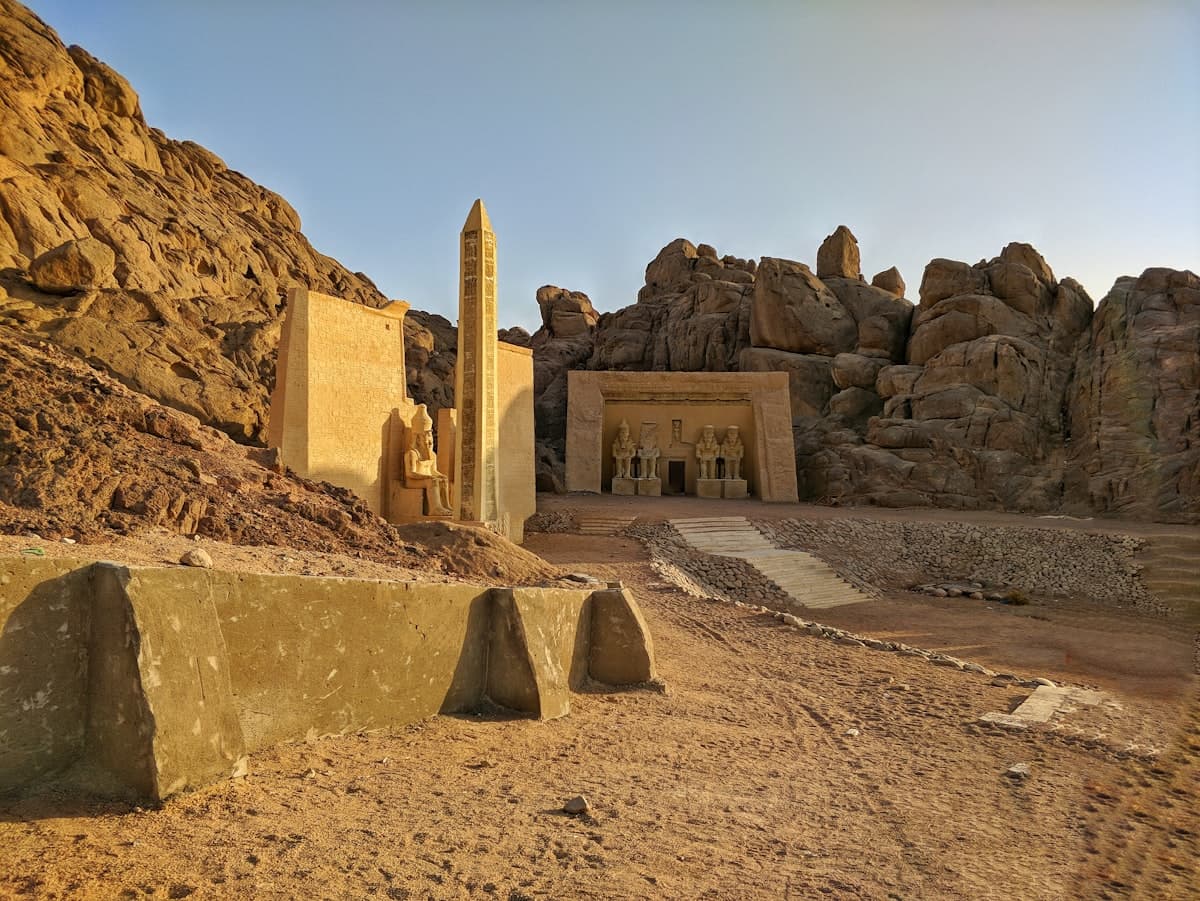
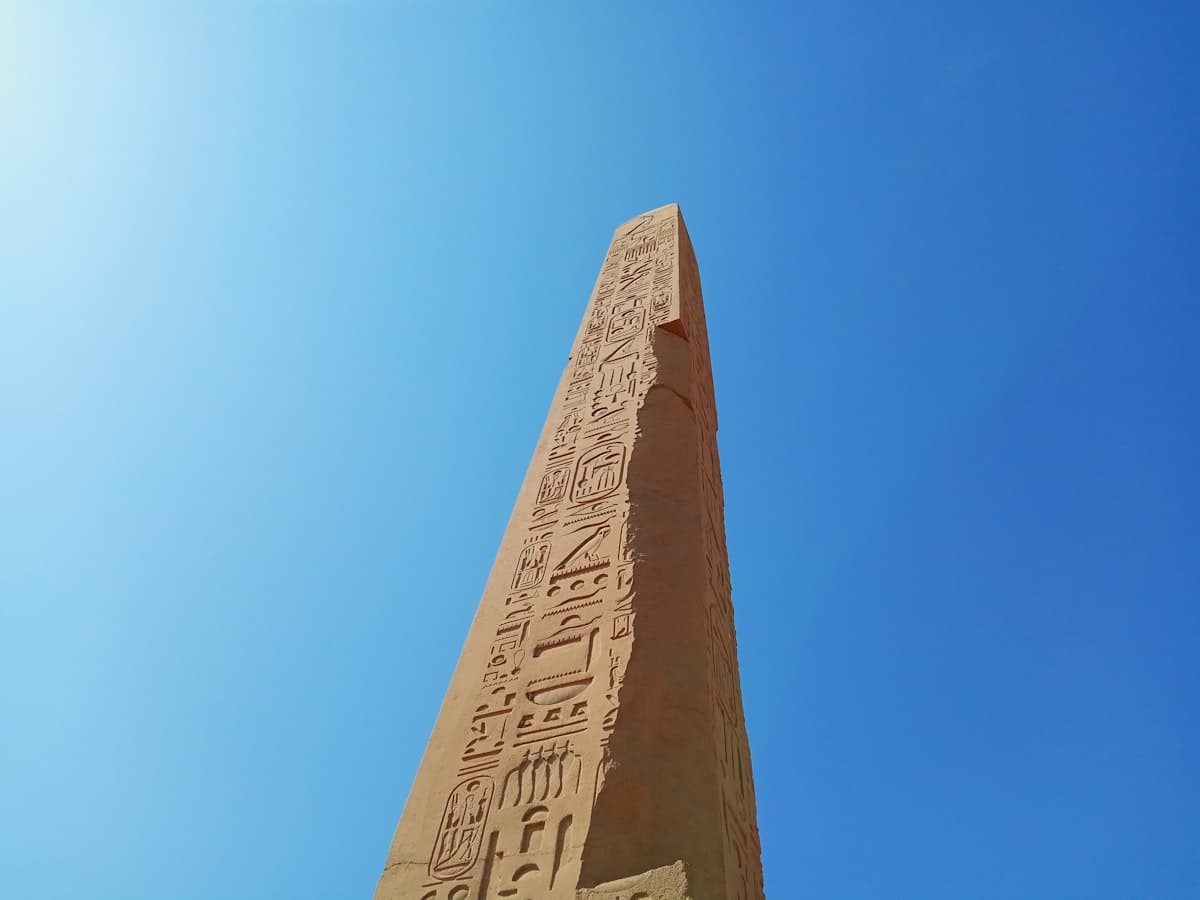
Beyond the Hypostyle Hall, moving east along the main axis, you pass through several more pylons before reaching the area of the obelisks. Hatshepsut's obelisk, at 29.5 metres, is the tallest surviving ancient obelisk in Egypt. She ordered it sheathed in electrum, a gold-silver alloy, from base to tip. Her successor and stepson Thutmose III later walled it in with sandstone masonry, which inadvertently protected the lower inscriptions. You can still read the texts describing the gilding. The other obelisk from her pair fell in antiquity and lies on its side in the eastern section of the complex, where almost no one walks.
The Sacred Lake is rectangular, approximately 120 by 77 metres, and was used for ritual purification by the temple priests. Today it is mostly of interest for the giant stone scarab beetle on its northwest corner, dedicated by Amenhotep III. Local guides encourage tourists to walk around it three times for good luck. This is entirely a modern invention with no ancient basis, but it has become its own ritual. I have done it twice, for professional reasons.
The Festival Hall of Thutmose III in the eastern section of the complex is chronically under-visited because it requires a bit of persistence to reach through the middle pylons. It is worth the walk. The columns there are unique in Egyptian architecture, shaped to mimic tent poles, reflecting Thutmose's campaigns abroad. The so-called Botanical Garden room behind it contains carved reliefs of foreign plants and animals brought back from Syria and Palestine, a private record of a pharaoh's curiosity about the wider world.
---
Common Mistakes Tourists Make
Arriving at 9:00 AM or later. Cruise ships dock between 8:00 and 10:00 AM and the groups move directly to Karnak. By 9:30 the Hypostyle Hall is almost impassable. Arriving at 6:00 AM gives you two hours of relative quiet and cooler stone underfoot.
Buying a guide at the entrance gate. The men offering guiding services at the main entrance are not licensed. Licensed Egyptologist guides are booked in advance, often through your hotel or a reputable agency. An unlicensed guide at the gate will give you a fast, incorrect tour focused on tips and selling you something at the far end.
Skipping the eastern section of the complex. Virtually every group tour turns around after the main obelisks and the Sacred Lake. The eastern section, including the Festival Hall and the small open-air museum in the northwest corner of the precinct, contains some of the site's most interesting material and almost no crowds.
Assuming the ticket price covers everything. The main entry fee covers the Amun precinct. The Sound and Light Show requires a separate ticket. The Open Air Museum inside the complex costs an additional EGP 100. This is not advertised clearly at the ticket booth, and the surprise aggravates people who have already budgeted carefully.
Wearing sandals or soft-soled shoes. The paving stones in shaded sections are uneven and sometimes slick with bat guano or irrigation runoff. The exposed sections become hot enough by mid-morning to be felt through thin soles. Closed shoes with grip make a material difference to your experience.
Ignoring the northern side of the First Pylon. Before you enter the complex, look at the northern tower of the First Pylon from outside. The unfinished surface, still showing the original construction technique, the mudbrick supply ramp, and the absence of carved decoration tell you more about how these monuments were actually built than almost any finished surface inside.
Leaving before sunset on a second visit. If you are in Luxor for more than two nights, returning to Karnak in the late afternoon is worthwhile. The western-facing pylons catch the last light differently from the morning stone. The tourist density drops by around 4:00 PM and the site takes on a different quality entirely.
---
The Sound and Light Show: Honest Assessment
Karnak's Sound and Light Show runs most evenings at 6:30 PM and 7:45 PM, with some nights running a third showing at 9:15 PM. It involves walking through the main precinct along a lit path while a recorded narration plays over a speaker system. The narration is old-fashioned and occasionally inaccurate by current Egyptological standards. The lighting is theatrical rather than informative.
That said, the Hypostyle Hall lit at night with coloured uplighting and very few other visitors present is an entirely different encounter with the space than the daylight version. The show is not high art. It is worth doing once if you have a second evening in Luxor and your expectations are calibrated correctly. Book tickets at the site or through your hotel in advance during high season, November to January, when it sells out.
---
Practical Tips
Water: Bring at least one litre per person, more in summer. There are vendors inside the complex but they charge tourist prices and the supply is inconsistent in the outer sections.
Shade: The main Amun precinct has almost no shade between the third and seventh pylons, and none at all around the Sacred Lake. The Hypostyle Hall provides shade but collects heat. Plan your route so you are in the outer, more exposed sections early and work back toward the Hypostyle Hall as it warms up.
Photography: No tripods allowed without prior permission from the Supreme Council of Antiquities office at the site. The light inside the Hypostyle Hall is genuinely challenging for cameras. A wide-angle lens helps but cannot solve the problem of columns too large and close together to capture in a single frame. Phones work better than you expect in the shade columns.
Bags: Keep bags zipped and in front of you near the entrance area. Pickpocketing is not common but is not unknown in the crowded entry corridor during peak hours.
Guides: For a genuine Egyptologist guide, expect to pay EGP 600 to 1,500 for a half-day depending on qualifications and language. Ask to see their Ministry of Tourism and Antiquities license card before agreeing. A licensed guide can access certain areas and explanations that self-guided visits cannot.
Combining with other sites: Karnak and Luxor Temple together make a full day. The Avenue of Sphinxes connecting them was excavated and restored to a walkable state and takes about 20 minutes to walk at a pace that lets you look at the sphinxes properly. Starting at Karnak at 6:00 AM and walking to Luxor Temple by mid-morning works well. Luxor Temple is better in late afternoon light anyway, so the timing aligns naturally.
This Karnak Temple Luxor guide covers what a genuine visit requires. The complex does not reward rushing and it does not reward following the crowd. Give it a real morning and it will give you something back.
Frequently Asked Questions
The Weekly Dispatch
More on Egypt, every Friday.
Cultural depth and places most guides never mention.
No spam. Unsubscribe anytime.