Khan el-Khalili Bazaar Guide: Cairo's Living Medieval City
Khan el-Khalili isn't a market that happens to be old. It's a 14th-century Mamluk city that never stopped functioning. Here's how to read it.
Quick Facts
- Best time to visit
- October to April for comfortable temperatures. Early morning or evening visits year-round. Ramadan evenings offer an exceptional and distinct atmosphere.
- Entrance fee
- Market entry is free. Al-Muizz Street monuments cost EGP 100 each (approx $2 USD). Combo tickets for multiple monuments are sometimes available at the Qalawun complex entrance.
- Opening hours
- Most shops open 9am, close between 9pm and midnight. Gold shops closed Sundays. Fishawi's coffeehouse is open 24 hours. Wikala of Al-Ghouri Sufi performances: Tuesdays and Saturdays at 8:30pm, free entry.
- How to get there
- Metro Line 1 to Ataba (EGP 8, approx $0.16), then 12-minute walk east. Uber or Careem from Downtown Cairo: EGP 60-100 (approx $1.20-$2 USD). Microbus along Al-Azhar from Ramses: EGP 5.
- Time needed
- Minimum 2 hours for the market alone. Half a day to include Al-Muizz Street monuments seriously. Full day if combining with Citadel or Coptic Cairo.
- Cost range
- Budget EGP 200-400 for coffee, snacks, and a few small purchases. Monument entry EGP 100-300 depending on sites visited. Lunch at a local restaurant near Al-Hussein: EGP 150-300 per person.
The perfume sellers in Khan el-Khalili don't measure their oils in milliliters. They measure them in fingers, pressing a stopper to the back of your wrist and telling you the name of the flower with the confidence of someone reciting scripture. This has been happening here, in some form, since 1382, when a Mamluk emir named Jarkas el-Khalili tore down the royal Fatimid mausoleums to build a caravanserai on their foundations. He was using the tombs of caliphs as construction rubble. That tells you something essential about how Cairo has always worked: nothing is ever entirely gone, and nothing is ever entirely sacred.
This Khan el-Khalili bazaar guide is not going to tell you to bargain hard and watch your pockets. It's going to tell you what you're actually walking through, because the market makes more sense, and becomes considerably more interesting, when you know whose city it was before it was yours for an afternoon.
Quick Facts
Best time to visit: October through April, early mornings (before 10am) or evenings (after 6pm) to avoid the worst heat and crowds. Ramadan evenings are extraordinary and unlike anything else in the calendar.
Entrance fee: The market itself is free to enter. The adjacent Al-Hussein Mosque is free for Muslims; non-Muslims may enter the courtyard but not the interior during prayer times. The Madrasa and Mausoleum of Sultan Qalawun nearby costs EGP 100 (approx $2 USD). The Al-Ghouri Complex is EGP 100.
Opening hours: Most shops open around 9am and close between 9pm and midnight. Gold and silver shops tend to close Sundays. The market never fully shuts, but Friday mornings are quiet as many shopkeepers attend midday prayers.
How to get there: Metro Line 1 to Ataba station (EGP 8, approx $0.16), then a 12-minute walk east along Al-Azhar Street. Alternatively, Uber or Careem from Downtown Cairo costs EGP 60-100 (approx $1.20-$2 USD) depending on traffic. Microbuses from Ramses run along Al-Azhar for EGP 5. Taxis negotiate; agree on a price before you get in.
Time needed: Two hours if you're only browsing. Half a day if you're exploring the surrounding Fatimid city seriously. A full day if you combine it with the Citadel, the Mosque of Ibn Tulun, or the Coptic quarter.
Cost range: Coffee at Fishawi's runs EGP 80-150 (approx $1.60-$3 USD). Spices are genuinely cheaper here than in supermarkets. Gold is sold by weight at the international gold price plus a craftsmanship premium, so prices are real and not inflated for tourists.
Why This Place Matters
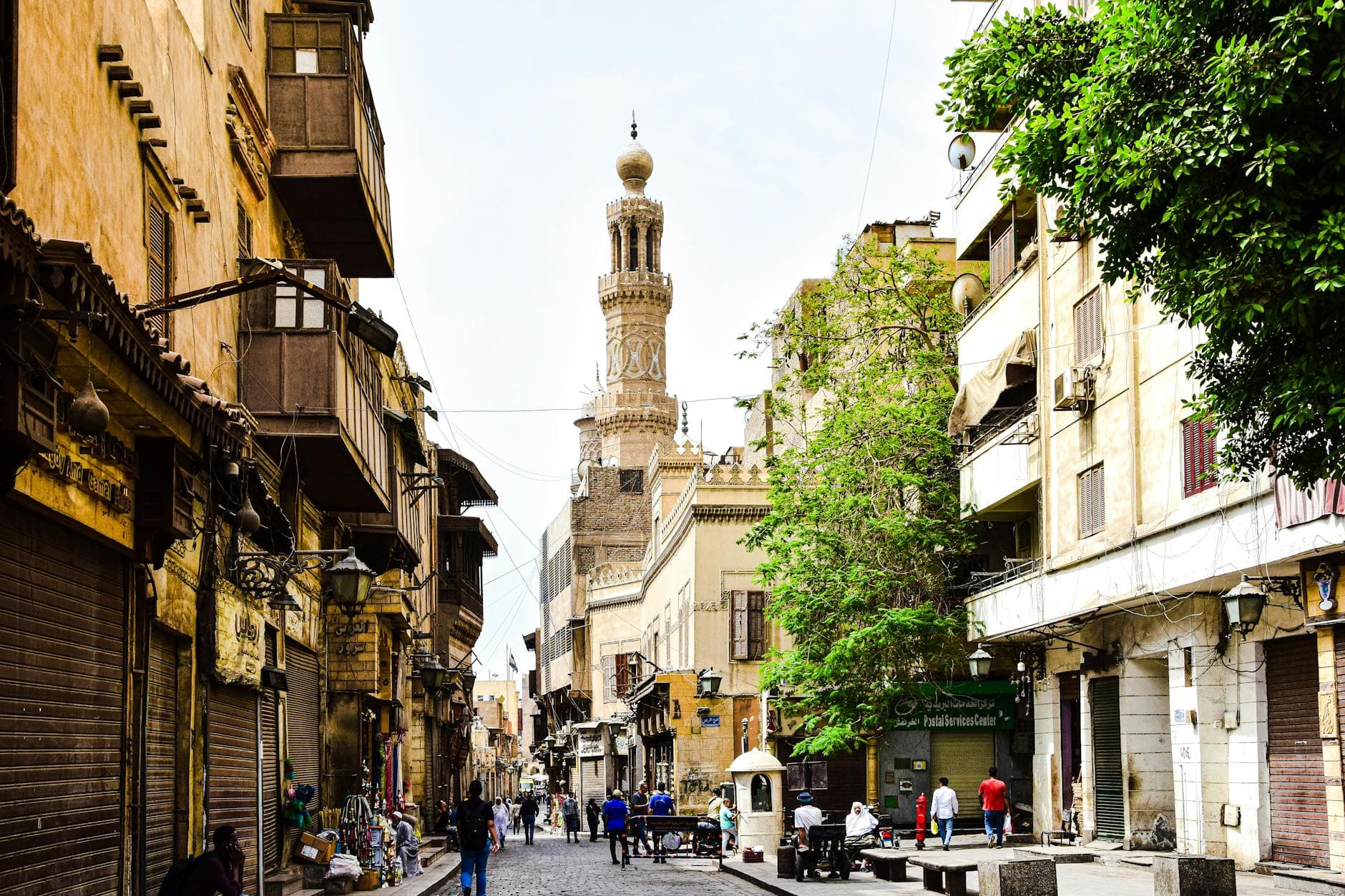
Khan el-Khalili sits at the center of what Egyptians call al-Qahira al-Fatimiyya, Fatimid Cairo, the walled medieval city founded in 969 CE by the general Jawhar al-Siqilli on behalf of the Fatimid caliph al-Mu'izz. That city was designed as a royal enclosure, forbidden to ordinary people, its streets following the alignment of a Pharaonic canal that had been silted over for centuries. The canal alignment is still visible in the curve of certain alleyways today if you know to look for it.
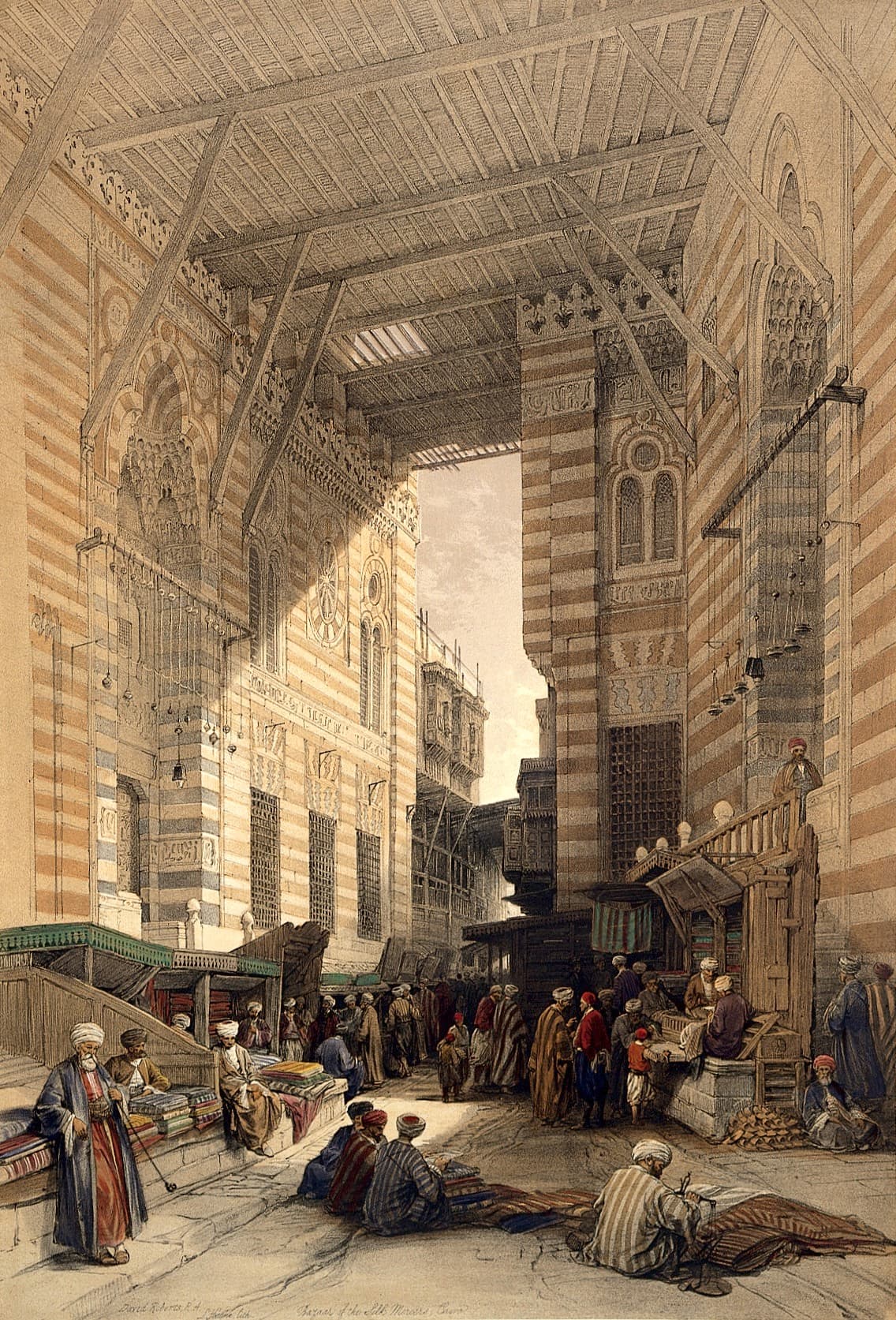
When the Mamluks replaced the Ayyubids in the 13th century, they inherited the Fatimid urban skeleton and rebuilt obsessively over it. The Mamluk sultans were not Egyptian. They were enslaved soldiers, mostly Circassian and Turkic, purchased as children, trained as warriors, and converted to Islam. Several of the greatest builders in Islamic architectural history were men who had been bought and sold before they were adults. Sultan Qalawun, whose mausoleum-madrasa-hospital complex stands three minutes' walk from the Khan entrance on Al-Muizz Street, was purchased as a slave for a thousand dinars. His complex, built in 1285, contains a window grille copied directly from the Church of the Holy Sepulchre in Jerusalem, which he had studied during a campaign and admired enough to replicate in an Islamic building. That kind of cross-civilizational borrowing is not an anomaly in this neighborhood. It is the neighborhood's entire logic.
Jarkas el-Khalili, the emir who built the original khan in 1382, was himself replaced when Sultan al-Ghouri renovated the market in the early 16th century. Al-Ghouri is one of the more tragic figures attached to this place. He poured enormous resources into rebuilding the market and the streets around it, commissioning the complex on Al-Azhar Street that still bears his name, only to be killed at the Battle of Marj Dabiq in 1516 by the Ottoman sultan Selim I. The Ottomans captured Cairo the following year and the Mamluk sultanate ended. Al-Ghouri's body was never found. His complex stands. The market he rebuilt is the one you're walking through.
What You're Actually Looking At
The Khan el-Khalili bazaar as it exists today is a network of khans, wikalahs, and covered passages built and rebuilt over six centuries. A khan was a merchants' inn: goods stored below, traders sleeping above, a caravanserai model brought from the Central Asian Silk Road. A wikalah served a similar function but was more specifically for wholesale trade. Several wikalahs survive nearby in varying states of preservation, the most impressive being the Wikala of Al-Ghouri on Al-Azhar Street, which now hosts weekly Sufi whirling performances on Tuesdays and Saturdays (free entry, arrive by 8pm).
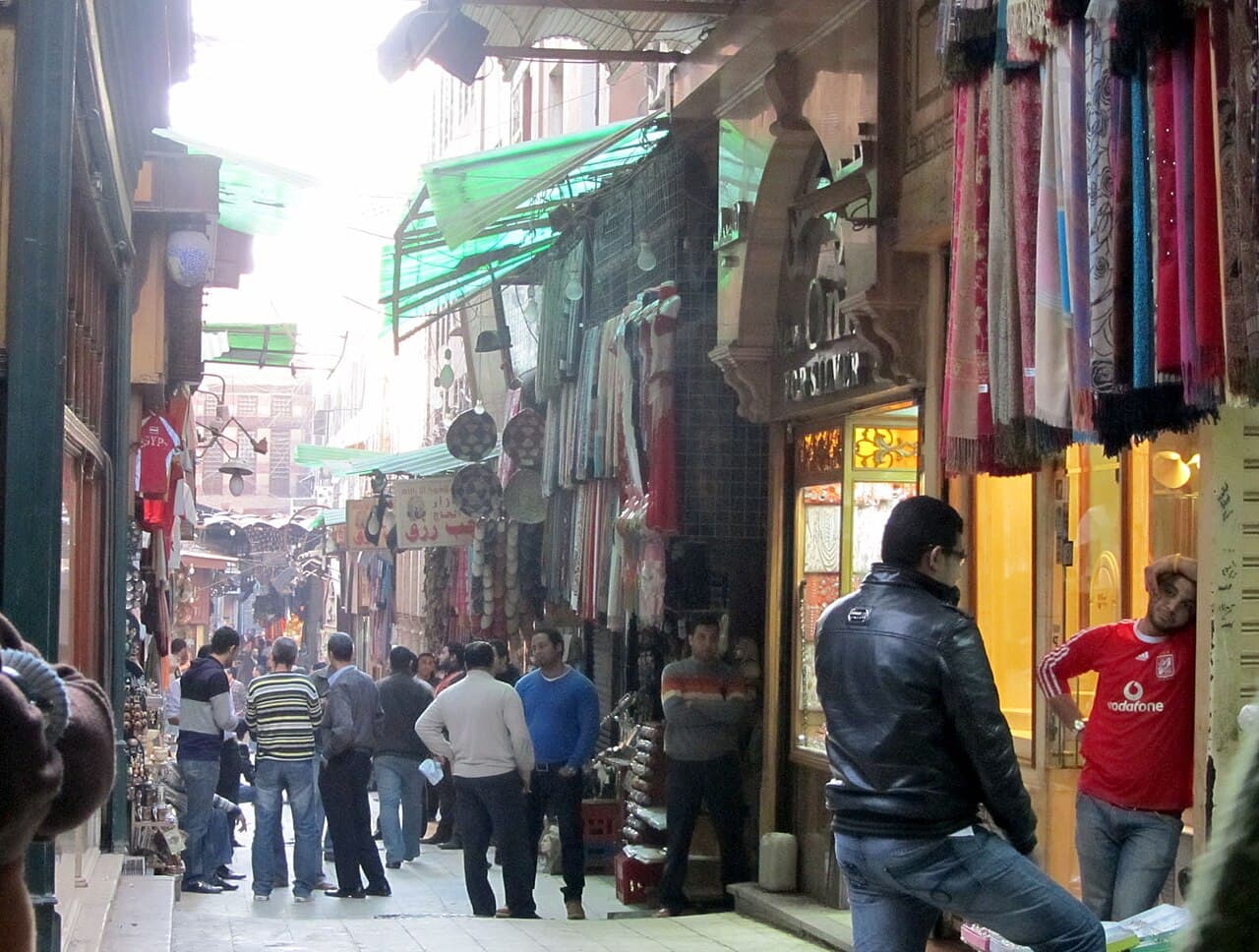
The market divides loosely by trade, though less rigidly than it once did. The gold and silver quarter concentrates around Al-Muizz Street near the Khan entrance. Spice sellers cluster toward the Al-Hussein side. Papyrus and tourist goods fill the central passages. Copperwork, lanterns, and inlaid furniture appear deeper in. The tent-makers' bazaar, the Khayamiya, sits five minutes south toward Bab Zuweila and is where you'll find the applique textile work that once decorated Hajj procession tents and now decorates every surface willing to hold it.
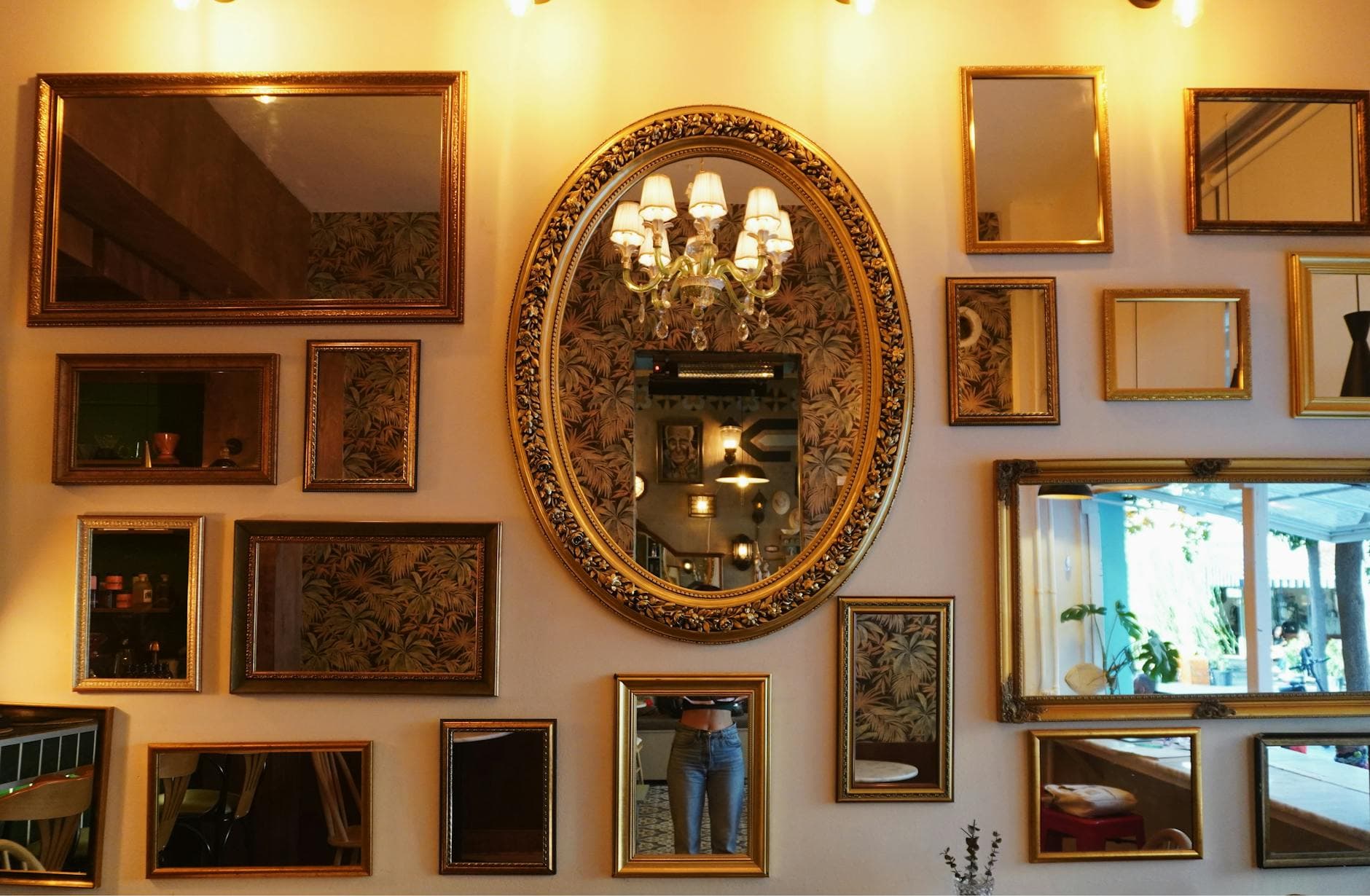
Fishawi's Coffeehouse, open continuously since 1773 according to its own accounting, occupies a sliver of covered alley near the Al-Hussein Mosque. Naguib Mahfouz drank tea here for decades. The mirrors are old enough to be interesting. The tea is sugared unless you specify otherwise. Sit facing the alley, not the wall, and you'll see the full social range of the market pass within arm's reach: schoolgirls in uniforms, Gulf tourists in abayas, German backpackers with guidebooks, and old men playing tawla with the focused silence of people who have been playing together for thirty years.
What Most Visitors Miss
The street that bisects the neighborhood, Al-Muizz li-Din Allah Street, is the spine of the entire Fatimid city and contains the highest concentration of medieval Islamic monuments of any street in the world, a designation that sounds like marketing but is accurate. Most visitors to the Khan treat it as a boundary rather than a destination. Walk north from the Khan entrance past the Qalawun complex, the Madrasa of Al-Nasir Muhammad, and the Madrasa of Barquq, and you'll enter a pedestrianized stretch that the Cairo governorate restored in the early 2000s. The restoration is imperfect and occasionally garish, but the buildings behind the new paving are real and largely unvisited.
The Madrasa of Barquq, completed in 1386, was the first building in Cairo to include a sultan's tomb inside a madrasa. Barquq was buried here before his son Faraj moved his remains to the Northern Cemetery, where the Desert of the Mamluks spreads out in a city of domed mausoleums that most tourists never visit at all. That cemetery, visible from the Citadel's ramparts, contains some of the most extraordinary funerary architecture in the Islamic world and regularly has a population of thousands, because Cairo's housing shortage has meant people have been living in the tombs alongside the dead for generations.
The Connections
If you're standing in Khan el-Khalili and you look toward the minaret of the Al-Hussein Mosque, you're looking at a 19th-century Ottoman structure built over a Fatimid mosque built over the tomb of the head of Hussein ibn Ali, grandson of the Prophet Muhammad. The head is said to have been brought here from Ashkelon in 1153 when the Crusaders threatened the Palestinian coast. Whether the relic is genuine is a theological question that Cairenes have been discussing for nine centuries. What's not disputed is that Al-Hussein remains the most emotionally significant mosque in Egypt, and on Mawlid al-Nabi, the Prophet's birthday, the square outside fills with hundreds of thousands of people and the city becomes something that no amount of preparation quite readies you for.
The Fatimids who founded the city were Ismaili Shia Muslims, a minority tradition in Islam, and Cairo was their Shia capital in a mostly Sunni world. The Ayyubids who replaced them were rigidly Sunni and systematically converted the Fatimid religious institutions. The Mamluks who followed were Sunni but ecumenically pragmatic. The Ottomans who came after were Sunni Hanafi rather than the Shafi'i tradition dominant in Egypt. Each transfer of power left a geological layer in the architecture and the urban fabric, and Khan el-Khalili sits precisely at the intersection of all of them.
A fifteen-minute walk south takes you to the Mosque of Amr ibn al-As in Old Cairo, the first mosque built on African soil, dating to 642 CE. Ten minutes west of that is the Coptic quarter, where the Church of St. Sergius and Bacchus sits in a crypt that Coptic tradition identifies as the resting place of the Holy Family during the flight into Egypt. The Romans built a fortress around the site. The Copts built churches inside the fortress. The Muslims built a mosque at the fortress gate. Cairo's center of gravity has always been this layered simultaneity of civilizations, and the Khan is simply where it becomes most commercially visible.
Common Mistakes
Arriving in the middle of the day in summer. Between June and September, the Khan between 11am and 4pm is genuinely unpleasant in a way that goes beyond discomfort. Heat accumulates in the covered passages. Tempers shorten. The most experienced shopkeepers often go home for the afternoon. Come at 9am or come at 7pm.
Assuming papyrus sold near the Khan is real papyrus. Most of it is banana leaf paper, which is a legitimate craft product but not the same thing. Real papyrus is stiffer, slightly translucent when held to the light, and costs considerably more. The Dr. Ragab Papyrus Institute on the Nile Corniche is the most reliable place to buy authenticated papyrus if that matters to you.
Ignoring the price of gold. The gold quarter operates on a different logic from the souvenir market. Prices are based on that day's international gold spot price, which you can check on your phone before entering. Add 20-40% for craftsmanship on simpler pieces, more for complex work. If a seller's price is dramatically below the math, something is wrong with the gold.
Treating Al-Muizz Street as a through-route rather than a destination. People walk the length of it in fifteen minutes and miss six or seven significant buildings they will not see elsewhere. Budget an hour minimum to walk it properly, and pay the EGP 100 entry fees for the interiors worth entering.
Skipping the neighborhood east of the Khan. The streets between Khan el-Khalili and the Northern Cemetery contain functioning workshops, residential alleys, and small mosques that see essentially no foreign visitors. They also contain the occasional excellent fuul cart and the particular Cairo smell of bread baking and diesel and something floral you can never quite identify.
Carrying large bills. Shopkeepers in the market frequently have no change for EGP 200 notes, let alone EGP 500. Bring small denomination notes and coins if you're planning to buy anything under EGP 100.
Expecting air conditioning. It does not exist in the historic passages. This is a physical reality, not a design flaw. Dress in light, loose layers, carry water, and accept that you will be warm.
Practical Tips
The metro is the fastest and most reliable way to arrive. Ataba station puts you on the edge of the old city and the walk east along Al-Azhar Street, while noisy, gives you a sense of the scale of the Islamic city before you enter it. If you have mobility concerns, the terrain inside the Khan is uneven stone and compressed earth; it's manageable but not smooth.
Photography is generally tolerated in the market, but ask before pointing a camera at individuals, especially in the gold quarter, where some sellers prefer not to be photographed for security reasons. The Al-Hussein Mosque and most working mosques request that you remove shoes and dress modestly. A scarf is worth carrying regardless of your gender.
Ramadan in the Khan is a distinct experience that deserves its own visit if your timing allows. After iftar, around 7pm, the market fills in a way it doesn't during the rest of the year, with families, street food sellers, and an atmosphere of collective relief and pleasure that is specific to that month. Prices on some items drop because business has been slow all day and sellers want to move stock.
Bargaining is real but has limits. In the spice market, asking prices are closer to real prices than in the souvenir shops. A 10-15% reduction is reasonable without confrontation. Walking away works more often than it should. Do not bargain for something you have no intention of buying; this wastes the seller's time in a working day that is already compressed.
Fishawi's is open around the clock. If you visit the Khan late at night after the shops close, the coffeehouse, the square outside Al-Hussein Mosque, and the handful of restaurants on the surrounding streets are still animated. Cairo's night is longer than most cities' days.
Frequently Asked Questions
The Weekly Dispatch
More on Egypt, every Friday.
Cultural depth and places most guides never mention.
No spam. Unsubscribe anytime.