Luxor Temple Complete Guide: Insider Tips for 2024
Your complete guide to Luxor Temple: real ticket prices, the best time to visit, which sections to prioritize, and the insider details no guidebook tells you.

Audio Guide: Luxor Temple Complete Guide: Insider Tips for 2024
Quick Facts
- Best time to visit
- November to February for temperatures between 20 and 28C. October and March are also reasonable. Avoid July and August midday heat entirely.
- Entrance fee
- EGP 450 (approx $9 USD) adults. EGP 225 (approx $4.50 USD) students with ISIC card. Sound and Light Show: EGP 300 (approx $6 USD) separate.
- Opening hours
- Daily 6am to 10pm (winter, October to April). Daily 6am to 9pm (summer, May to September). Hours occasionally shift during Ramadan.
- How to get there
- Walkable from most East Bank hotels. Tuk-tuk from train station EGP 20 to 40. Taxi within Luxor city EGP 50 to 60. West Bank visitors: local ferry EGP 5 to 7 then taxi or microbus.
- Time needed
- 2 to 3 hours for focused visit. Add 45 minutes for Sound and Light Show or a walk on the Avenue of Sphinxes. Visit separately from Karnak.
- Cost range
- Budget EGP 600 to 900 per day including entry, street food, and local transport. Mid-range EGP 1,800 to 3,000 per day with licensed guide and restaurant meals.
Luxor Temple Complete Guide: Insider Tips for 2024
At 9pm on a Thursday in January, the avenue of ram-headed sphinxes outside Luxor Temple smells of cigarette smoke from the ahwa across the road and something older underneath it, a mineral dryness baked into the sandstone over three thousand years. The floodlights have just come on, turning the first pylon a deep amber, and a group of Cairene families is picnicking on the corniche wall fifty metres away. This is not the Egypt of the brochures. It is considerably better.
Luxor Temple sits at the centre of the modern city in a way that no other pharaonic monument does. Karnak is at the edge of town. The Valley of the Kings is across the river. But Luxor Temple is in Luxor, wedged between a corniche road, a functioning mosque, and a row of papyrus shops. That proximity to ordinary life is either its greatest asset or its greatest distraction, depending on how you approach it.
This guide will help you approach it correctly.
---
Quick Facts
Best time to visit: October to February for tolerable temperatures. November and December offer the best balance of cool mornings and manageable crowds. Entrance fee: EGP 450 (approx $9 USD) for adults. EGP 225 (approx $4.50 USD) for students with valid ISIC card. The Sound and Light Show is a separate ticket: EGP 300 (approx $6 USD). Opening hours: Daily 6am to 10pm in winter (October to April). Daily 6am to 9pm in summer (May to September). The site stays open later than almost any other major monument in Egypt, which matters enormously for how you plan your visit. How to get there: From central Luxor, the temple is walkable from most hotels on the East Bank. A tuk-tuk from Luxor train station costs EGP 20 to 40. A taxi should cost no more than EGP 50 to 60 from anywhere within Luxor city. The Corniche el-Nil bus runs along the waterfront and stops nearby. From the West Bank, cross by the local ferry (EGP 5 to 7 for foreigners) then take a microbus or taxi. Time needed: 2 to 3 hours for a focused visit. Add 45 minutes if you plan to attend the Sound and Light Show. Do not combine this with Karnak on the same morning unless you are a seasoned Egypt traveller with genuine stamina. Cost range: Budget EGP 600 to 900 per day covering entry, food, and local transport. Mid-range EGP 1,800 to 3,000 per day including a licensed guide and a sit-down lunch.
---
What You Are Actually Looking At
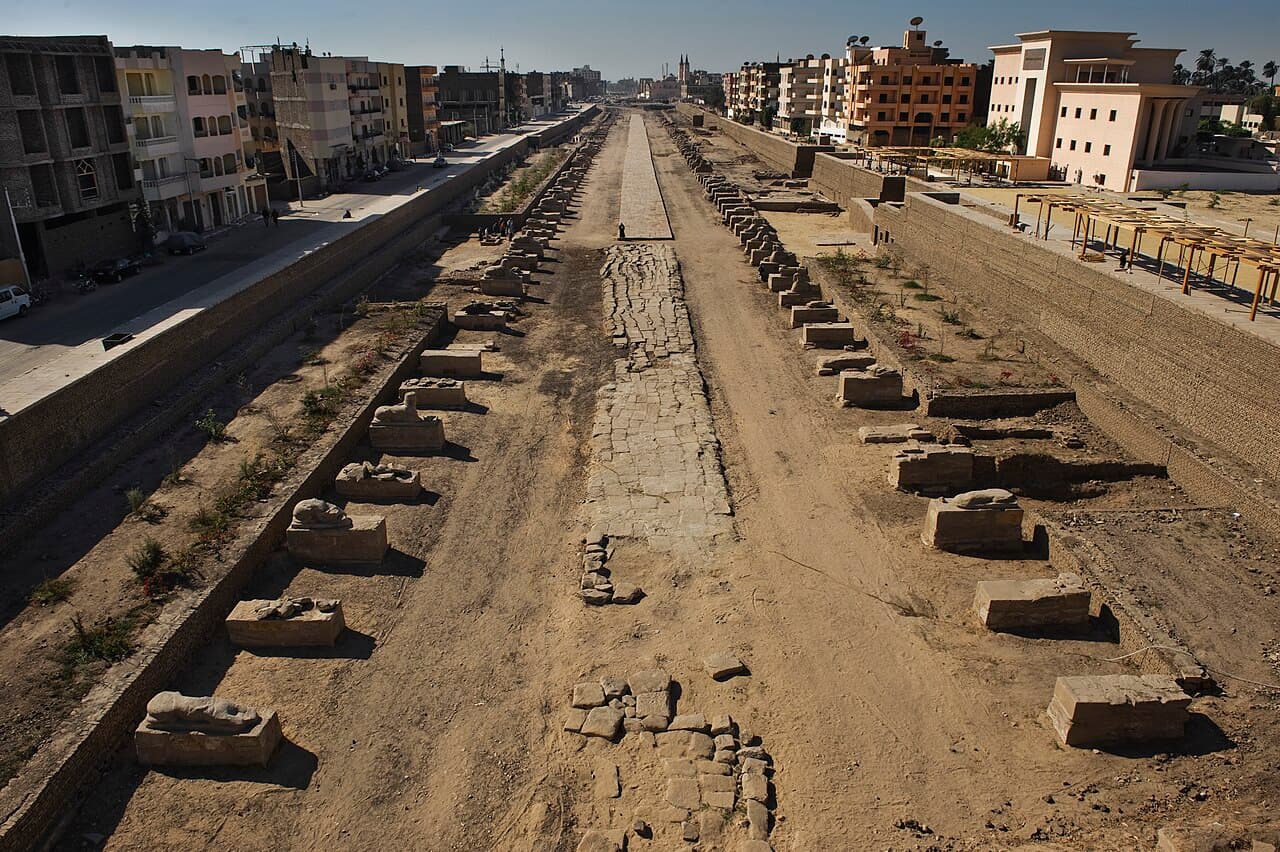
Luxor Temple was built primarily by Amenhotep III around 1390 BCE and substantially expanded by Ramesses II roughly 150 years later. It was not a mortuary temple. It was not dedicated to a single deity in the conventional sense. Its main function was the annual Opet Festival, during which the statues of Amun, Mut, and Khonsu were carried in procession from Karnak, two kilometres north, down the Avenue of Sphinxes to this temple, where the pharaoh's divine legitimacy was ritually renewed.
That processional avenue, the Dromos, was excavated and restored between 2005 and 2021. You can now walk the full 2.7 kilometres from Luxor Temple to the Karnak precinct along a path flanked by over 1,000 sphinxes, most of them human-headed (replacing the ram-headed ones that line the Karnak end). Walking it at dusk, when the lights come on sequentially from south to north, is one of the more quietly remarkable things you can do in Luxor.
Inside the temple itself, look for the layering of history that most visitors miss entirely. The mosque of Abu Haggag sits inside the ancient precinct, its floor level corresponding to the centuries of sand and debris that buried the temple before Muhammad Ali's era. When the Nile silt was cleared in the nineteenth and twentieth centuries, the mosque stayed. It is still active. On Fridays you will hear the call to prayer echoing off walls carved with hieroglyphs of Amun's barque procession.
Rome also left its mark here. In the inner hypostyle hall, you will find the ghosts of Roman frescoes painted over the hieroglyphs when this space was converted into a legionary chapel around 300 CE. The pigment is faded to a terracotta smear in most places, but in the northwest corner a few figural outlines survive. Almost nobody stops to look.
---
The Best Route Through the Temple
Enter from the north, facing the first pylon of Ramesses II. The two colossal seated statues flanking the entrance are original. The obelisk on the left is also original. Its pair has been in the Place de la Concorde in Paris since 1833, which the French government acknowledges with a small plaque visible if you look up at the base of the Paris obelisk. Egypt's government finds this arrangement less amusing than the French do.
The First Court
Push through the entrance and stop before you get swept into the crowd moving straight ahead. Turn right and walk to the eastern colonnade wall. Here, on the inner face of the pylon's eastern tower, Ramesses II had his version of the Battle of Kadesh carved in a scale of detail that rewards close inspection. You can trace the Egyptian and Hittite camps, the river, the chariots. The propaganda value was presumably enormous. The historical accuracy was more questionable.
The Abu Haggag Mosque occupies the northeast corner of this court. Its doorway, at what is now ground level, was once a high window in the ancient wall. This single architectural detail conveys the depth of occupation and abandonment that Egypt's monuments have lived through more viscerally than any museum label.
The Colonnade of Amenhotep III
Beyond the first court you pass through into the older part of the temple. The colonnade of Amenhotep III, fourteen massive papyrus-bud columns in two rows, was originally roofed and enclosed. Walking between these columns in the morning, when the light comes in obliquely from the east, you get a sense of what the space felt like when it was darker and more contained. The Opet Festival reliefs running along the lower walls of this corridor are some of the best-preserved narrative carvings in Egypt and get approximately one-tenth of the attention they deserve.
The Inner Sanctuaries
The hypostyle hall, the antechamber, and the sanctuary of Amun's barque are where the Roman interventions are most visible. The sanctuary at the very rear contains a reconstruction of the original barque shrine of Amenhotep III. Directly behind it is the so-called Birth Room, where the walls show Amenhotep III's divine conception and birth, establishing his legitimacy as a son of Amun. The scenes are damaged but legible.
Do not skip the western lateral rooms. They are often unmanned and therefore quiet, and the ceiling height drops significantly, creating an intimacy that the grand public spaces cannot offer.
---
The Night Visit: Why It Changes Everything
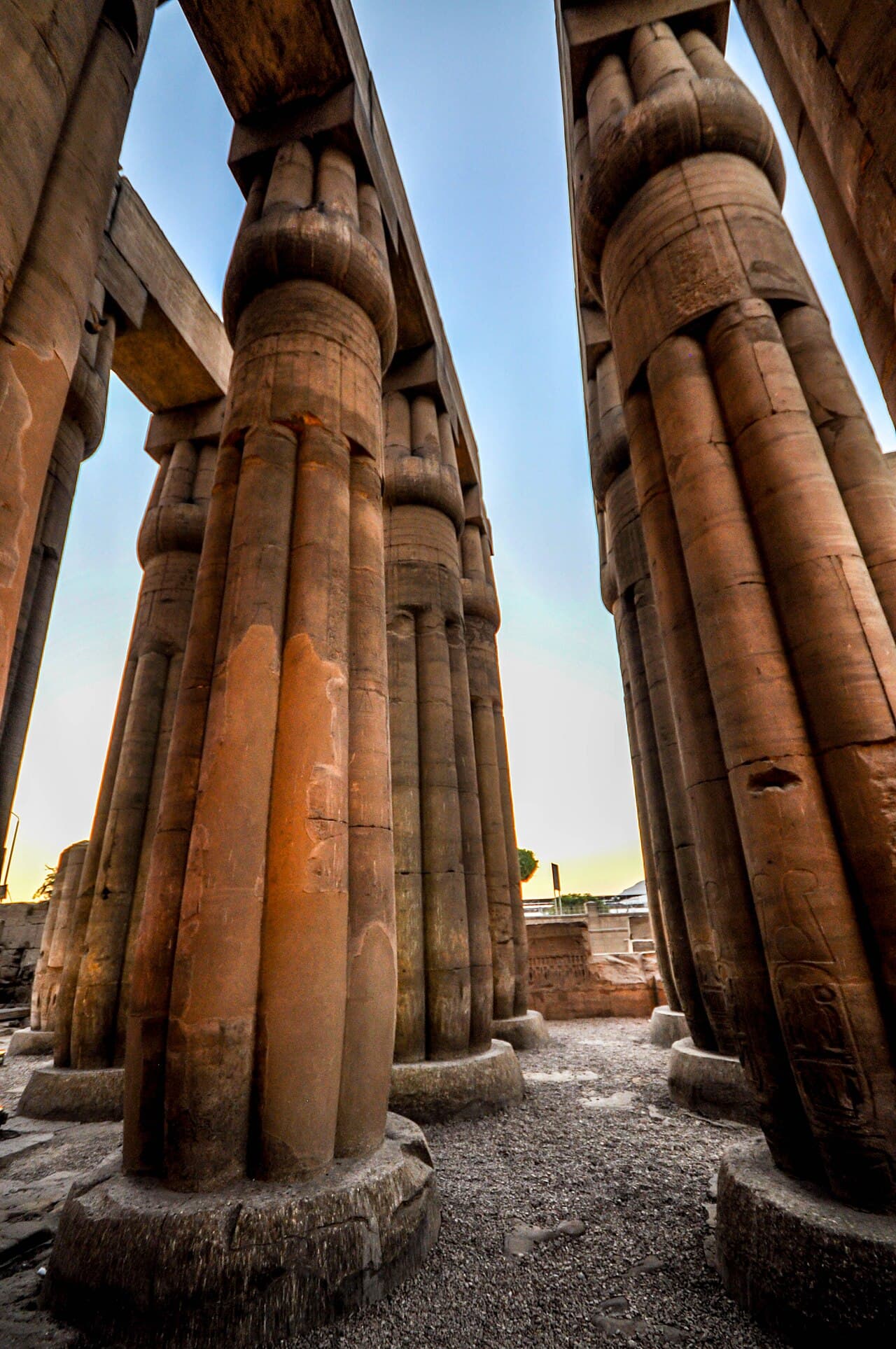
This is the single most underused option at Luxor Temple. The site stays open until 9pm or 10pm, the floodlights are well-positioned, and by 7pm the tour groups are at dinner. The temperature has dropped. The light on the sandstone becomes the colour of old copper. The Sound and Light Show runs on a separate ticket from the bleacher seating north of the first pylon, but you do not need to attend it to visit the temple at night. Simply enter on your standard ticket.
I have visited Luxor Temple at every hour of the day over eight years of living in Egypt. Night visits, specifically between 7:30pm and 9pm, are the version I recommend to every serious traveller who asks. The proportions of the columns look different in artificial light. The carved reliefs catch shadow in a way that afternoon sun flattens entirely. And you can stand in the colonnade of Amenhotep III with, occasionally, no other foreigners in sight.
---
Common Mistakes Tourists Make
1. Visiting at midday in summer. Temperatures in Luxor between June and August regularly exceed 40°C (104°F). The site has almost no shade. Tourists who arrive at 11am for a two-hour visit are genuinely risking heat exhaustion. If you must visit in summer, be there when the gates open at 6am and leave by 9am.
2. Skipping the Avenue of Sphinxes. Most visitors enter the temple, walk through it, exit the same way, and leave. The restored Dromos running north from the first pylon toward Karnak can be walked for free. You do not need to go all the way to Karnak. Even walking the first 400 metres gives you a perspective on the temple's relationship to its ritual landscape that the interior cannot provide.
3. Hiring a guide at the gate. The unofficial guides who congregate at the entrance range from occasionally knowledgeable to actively misleading. A licensed Egyptologist guide hired through your hotel or a reputable agency will cost EGP 400 to 700 for a two-hour session. It is worth paying. The Battle of Kadesh reliefs alone justify having someone who can read the cartouches explain what you are looking at.
4. Confusing Luxor Temple with Karnak and underallocating time. Karnak is three times larger and considerably more complex. Visitors who book a single morning for both sites and arrive at Luxor Temple first typically run out of time and energy before Karnak's Hypostyle Hall. Visit them on separate days or visit Luxor Temple at night and Karnak in the early morning.
5. Missing the Opet Festival reliefs. These are on the lower walls of the colonnade corridor between the first court and the great sun court of Amenhotep III. They show the procession, the boats, the musicians, the crowds. Most tourists walk past looking upward at the columns. Look down and sideways instead.
6. Paying tourist prices for water inside. Vendors inside and immediately outside the temple sell 600ml water bottles for EGP 25 to 40. The kiosk on the corniche road 100 metres south sells the same bottle for EGP 10. Bring water in before you enter, or stock up before you arrive.
7. Assuming the site is always open until the listed closing time. During Ramadan, Egyptian national holidays, and occasionally for reasons that are never made entirely clear, closing times shift without advance notice. If an evening visit is central to your plan, confirm locally at your hotel on the day.
---
Practical Tips

Tickets: Buy at the main ticket window on the northern approach, not from any individual who approaches you offering to "get your ticket." Payment is cash only in Egyptian pounds. ATMs are available on the Corniche el-Nil within 300 metres of the entrance.
Photography: No tripods are permitted without a separate media permit obtained through the Ministry of Antiquities. A standard camera or smartphone is fine. The light inside the temple is genuinely difficult for photography in the middle of the day. Early morning or evening produces far better results without any additional effort.
Dress code: Shoulders and knees should be covered out of respect, particularly near the Abu Haggag Mosque. This is not officially enforced at the ticketing level but is practically enforced by the mosque's community on Fridays. Carry a light scarf.
Accessibility: The main processional route through the temple is on flat stone paving and is broadly manageable for wheelchairs, though some lateral rooms have raised stone thresholds. The ticket office staff are accustomed to accommodating visitors with mobility limitations.
Combining with other sites: The Luxor Museum, 500 metres north on the Corniche, shares no combined ticket with Luxor Temple but is the single best museum context for what you will see inside the temple. Its collection of New Kingdom statuary, including the intact Amenhotep III quartzite head, belongs on any serious itinerary. Allow 90 minutes there.