Medinat Habu Temple Luxor: The Complete Cultural Guide
Medinat Habu temple in Luxor outlasted every pharaoh who built there. This guide explains what to see, what it means, and what most visitors walk past.
Quick Facts
- Best time to visit
- October to February for comfortable temperatures. Early morning visits from 6am give the best light and smallest crowds before cruise ship groups arrive around 9am.
- Entrance fee
- EGP 450 adults (approx $9 USD), EGP 225 students with valid ID. Separate from Valley of the Kings and other West Bank tickets.
- Opening hours
- Daily 6am to 5pm (summer, April to September), 6am to 4pm (winter, October to March). Confirm seasonally as hours shift.
- How to get there
- Local ferry from Luxor East Bank near Luxor Temple (EGP 5) then bicycle hire on West Bank (EGP 30-50/day) for the 3km ride, or tuk-tuk/taxi (EGP 50-80 return). Organized hotel tours EGP 300-600 per person including transport.
- Time needed
- 2-3 hours minimum. Half day if combining with Ramesseum (15 min by bicycle) or Deir el-Medina (10 min walk).
- Cost range
- Budget EGP 800-1,200 per day including ferry, bicycle, entry, and local food. Mid-range with private guide EGP 2,500-4,000.
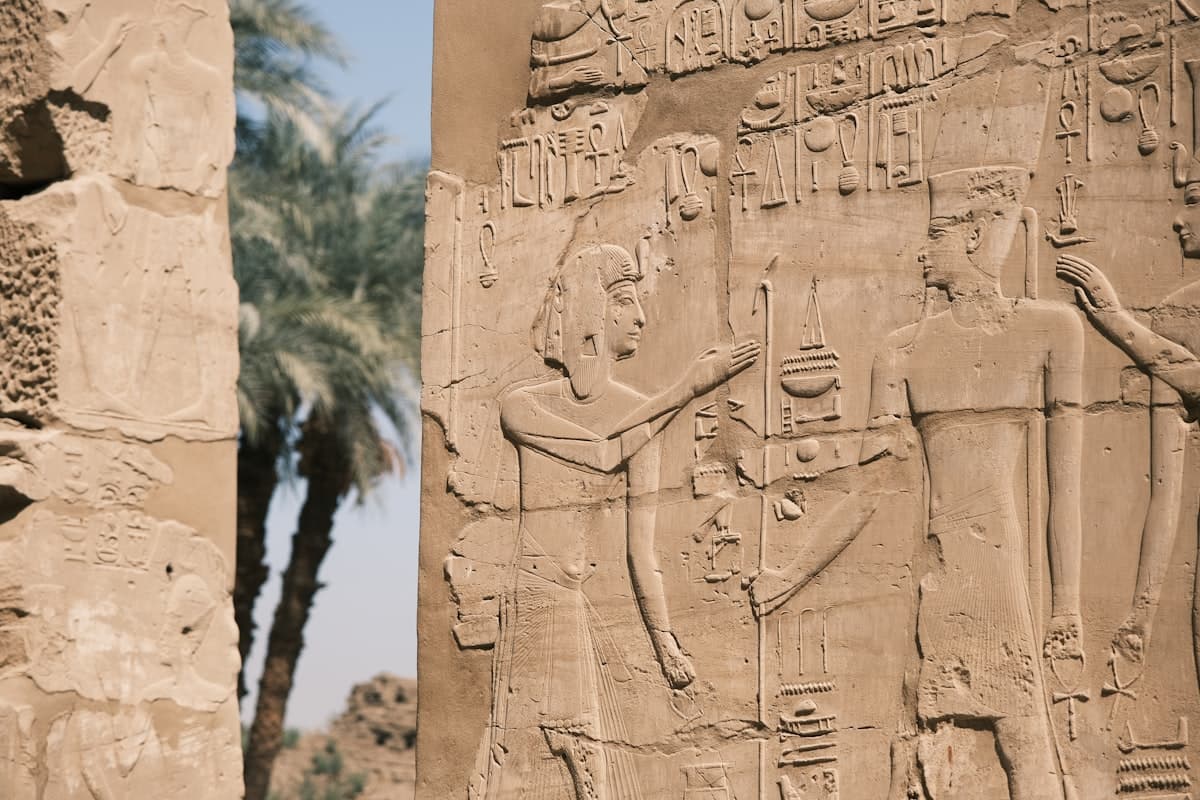
The walls of Medinat Habu temple are covered in what looks, at first glance, like standard battle propaganda. Ramesses III carved himself enormous, triumphant, smiting his enemies in the usual way. But look at the specific enemy he's defeating in the northern exterior wall reliefs. These are the Sea Peoples, a coalition of migrants and raiders whose assault on Egypt around 1177 BCE helped collapse the Bronze Age civilizations of Greece, Anatolia, and the Levant almost simultaneously. Egypt survived. Barely. And the man who held that line built this temple to say so.
Medinat Habu is not the most famous temple on the West Bank at Luxor. That distinction belongs to Karnak across the river, or to Abu Simbel further south. But serious Egyptologists will tell you quietly that Medinat Habu contains some of the most historically significant carved reliefs in Egypt, and that most of the tourists who visit Luxor never make it here at all. The ones who do often rush through in forty minutes. Neither outcome is acceptable.
Quick Facts
Best time to visit: October through February, when Luxor temperatures are manageable. Early morning visits (the temple opens at 6am) give you the best light for photography and the place mostly to yourself.
Entrance fees: EGP 450 for adults (approximately $9 USD at current rates), EGP 225 for students with valid ID. The site is operated by the Ministry of Tourism and Antiquities.
Opening hours: Daily 6am to 5pm in summer (April through September), 6am to 4pm in winter (October through March). Hours shift by season, so confirm before you go.
How to get there: From Luxor's East Bank, take the local ferry from the dock near Luxor Temple (EGP 5 per person, runs continuously) then hire a bicycle on the West Bank (EGP 30-50 per day) or negotiate a taxi or tuk-tuk for EGP 50-80 return. Organized tours from Luxor hotels typically charge EGP 300-600 per person including transport. The temple is about 3km from the ferry landing.
Time needed: Two hours minimum to do it justice. Three hours if you read inscriptions and explore the secondary chapels. Combine it with the Ramesseum (15 minutes by bicycle) for a half-day focused on Ramesside architecture.
Cost range: Budget travelers can do the West Bank, including Medinat Habu, for EGP 800-1,200 per day including transport, food from local stalls, and a second site. Mid-range with a private guide runs EGP 2,500-4,000.
Why This Place Matters
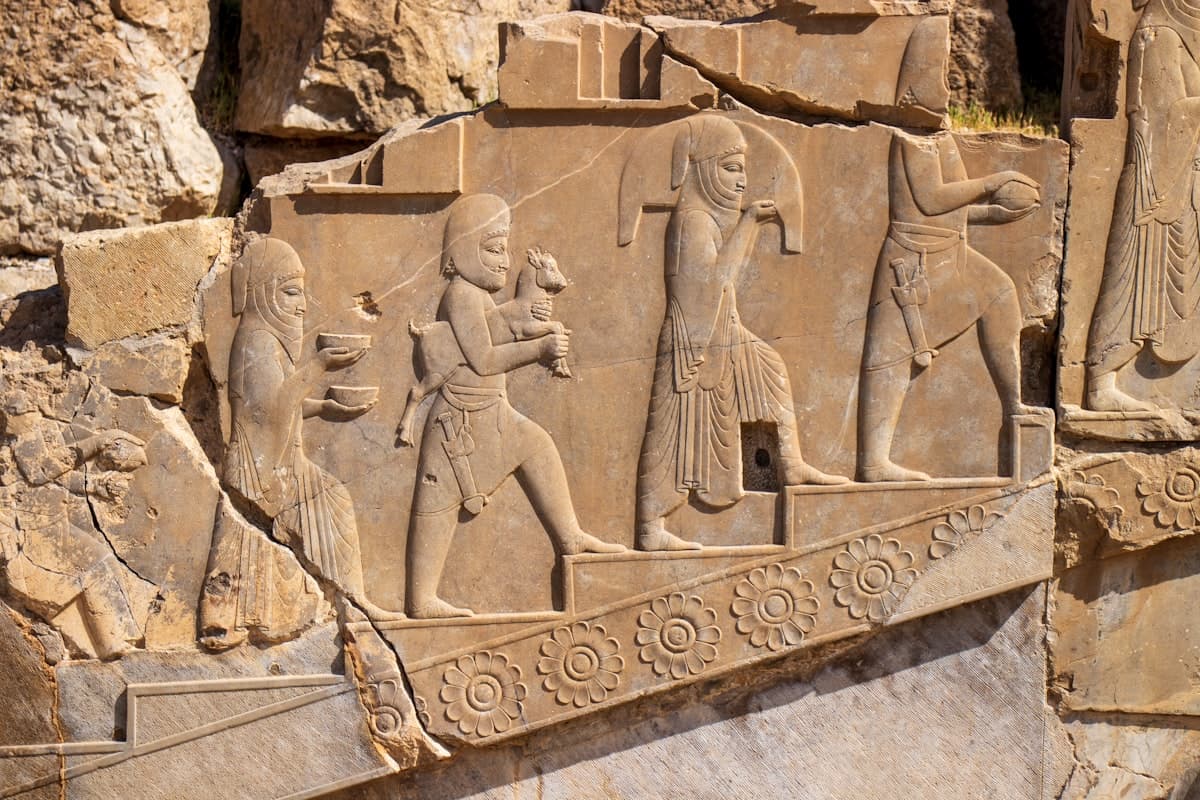
Ramesses III built the main temple complex at Medinat Habu between approximately 1186 and 1155 BCE, making it one of the last great New Kingdom construction projects. He modeled it consciously on the Ramesseum, the mortuary temple of Ramesses II a kilometer to the north, which tells you something about the anxiety of legacy that ran through the Ramesside pharaohs. But the site itself is far older.
Beneath the main temple lies a small chapel dedicated to Amun that dates to the early 18th Dynasty, built by Hatshepsut and Thutmose III. This is not a footnote. It means the site was already ancient and sacred when Ramesses III arrived. He built around it rather than over it. That chapel still stands inside the complex today, considerably smaller than everything around it, and almost entirely overlooked by visitors who don't know to look.
The Egyptians believed that Medinat Habu was the site of the primordial mound where Amun first rested at the moment of creation. This is the same theological geography that made Karnak sacred. The two sites are connected not just by the sphinx-lined processional road that once ran between them (much of it destroyed, but partially excavated) but by cosmological logic. Luxor's West Bank was the land of the dead. Medinat Habu was the place where death and creation touched.
After the New Kingdom collapsed, the temple compound became a fortified town. Coptic Christians built a church inside the first courtyard, almost certainly in the 5th or 6th century CE. You can still see the column bases. The Copts called the surrounding settlement Djeme, a name that itself derives from the ancient Egyptian word for the primordial mound. The name survived a transition from pharaonic religion to Christianity, which is the kind of continuity that Egypt specializes in.
What You Will Actually See
Enter through the Migdol gate, a fortified gatehouse that Ramesses III designed to look like a Syrian fortress tower. This is unusual in Egyptian temple architecture, and Egyptologists still argue about what it means: was it symbolic, a nod to military victories in the Levant, or was the king genuinely fortifying his mortuary temple against the instability he must have sensed closing in? Both can be true.
The outer walls are where you should slow down first. The northern exterior carries the Sea Peoples battle reliefs, which show a naval engagement, one of the earliest documented sea battles in history, with enough detail to identify different ethnic groups by their distinctive helmets and equipment. Ramesses claims a total victory. Modern historians think the reality was more complicated: Egypt repelled the invasion but never fully recovered its former reach. The reliefs, in other words, are partly propaganda. But they are propaganda that survived when the civilizations the Sea Peoples destroyed did not leave even that.
Inside the first pylon, the first courtyard has a portico on the south side decorated with figures of female musicians and dancers, associated with the royal harem. Ramesses III was eventually murdered in what became known as the Harem Conspiracy, documented in the Turin Judicial Papyrus, one of the oldest surviving trial records in human history. His son Pentawer and a group of court officials were convicted of the plot. The king's mummy, discovered in the Deir el-Bahari royal cache, shows evidence of a cut throat. The courtyard where those women are carved is charged with that history whether the carvings say so or not.
The Color That Survived
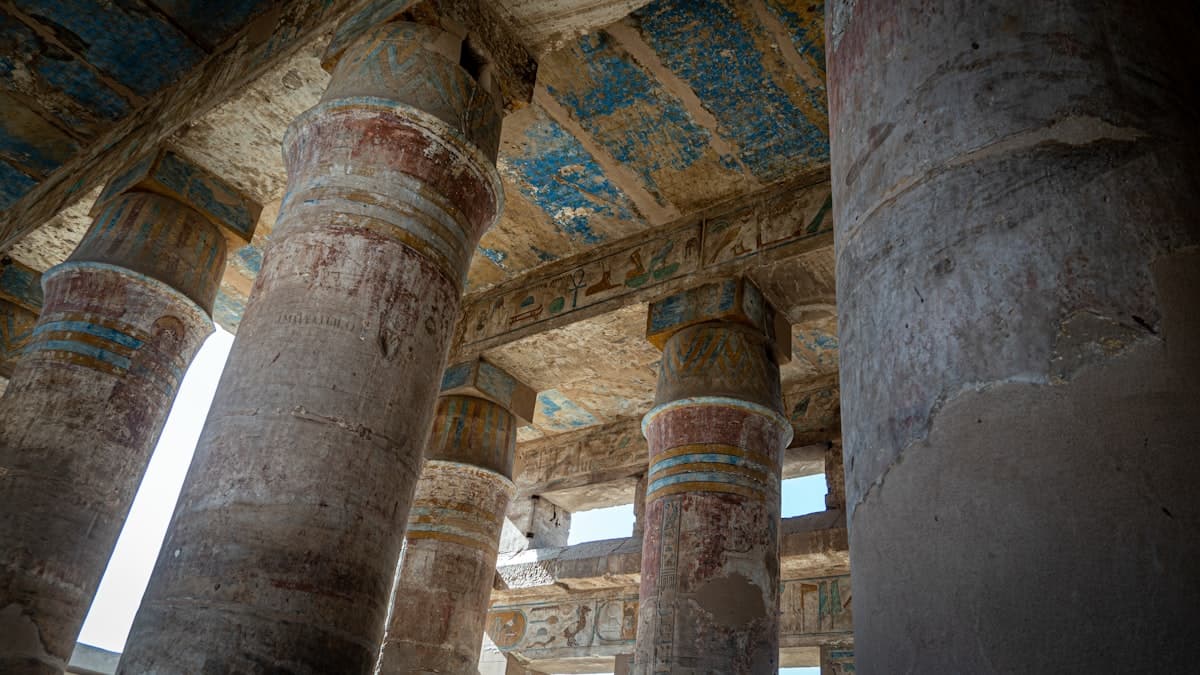
Move into the second courtyard and look up at the ceiling of the hypostyle hall. Traces of the original painted plaster survive in sheltered corners, enough red ochre and blue Egyptian faience pigment to give you a real sense of what this temple looked like when it was in use. Most visitors to ancient Egyptian temples see bare stone and imagine the monuments were always this pale and stripped. They were not. Every surface was painted. Medinat Habu, more than almost any other site on the West Bank, lets you partially correct that assumption.
The inner sanctuary complex includes chapels dedicated to various deities, with Amun at the center. The walls here carry some of the most detailed ritual texts in the temple, including the calendar of religious festivals, which tells us exactly which ceremonies were performed here and on what dates. The Egyptians ran approximately sixty major festivals per year from this complex. Priests, musicians, butchers, bakers, and administrative staff lived in the mudbrick town that surrounded the stone temple. The remains of that town, largely unexcavated, extend considerably beyond the current site boundaries.
The Connections
Medinat Habu does not exist in isolation, and the West Bank at Luxor rewards visitors who treat it as a connected landscape rather than a series of separate ticketed sites.
The Ramesseum, Ramesses II's mortuary temple, sits about fifteen minutes by bicycle to the north. The two temples were built in deliberate dialogue with each other, and understanding Ramesses III's slightly diminished version of his predecessor's template tells you something about how Egyptian kings competed with the past rather than simply inheriting it. The Ramesseum is in worse condition but has more atmosphere, partly because fewer tourists go there.
Deir el-Medina, the village of the workmen who built the royal tombs in the Valley of the Kings, is a ten-minute walk from Medinat Habu. The workers who constructed Ramesses III's temple likely came from this same community. Their own tombs, small but elaborately decorated, contain some of the most personal religious imagery in Egyptian art. The community also produced the Deir el-Medina ostraca, limestone flakes used as notepads, which record work stoppages, wage complaints, and personal disputes. The world's first recorded labor strike took place here, when Ramesses III's workers stopped work because their grain wages were late. You can hold that fact against the triumphalist carvings on the Medinat Habu temple walls and get a more honest picture of his reign.
The Coptic presence at Medinat Habu connects to the broader Christian history of the West Bank. The White Monastery near Sohag, four hours north, was founded in the same general period that Djeme was thriving as a Coptic town. Christianity in Upper Egypt was not a peripheral phenomenon. It was the majority religion for centuries, and Medinat Habu is one of the places where that history is physically layered on top of the pharaonic one, which is exactly how Egyptian history actually works.
Common Mistakes
Arriving after 9am in winter. Tour groups from Luxor hotels and Nile cruise ships tend to arrive between 9 and 11am. If you arrive at opening time, you may have the outer courtyards to yourself for the first hour. That silence is worth more than an extra hour of sleep.
Skipping the outer walls entirely. The Sea Peoples reliefs and the hunting scenes on the northern and eastern exterior walls are some of the most important carvings on the site. Many visitors walk straight through the Migdol gate toward the inner temple and never turn around. Walk the perimeter of the exterior walls first.
Ignoring the Hatshepsut chapel. The small 18th Dynasty structure in the northwest corner of the complex is older than everything around it and receives almost no attention. It is the theological reason the whole site exists.
Not bringing a torch. Some of the inner chambers are genuinely dark. The ceiling paintings and upper register wall carvings are invisible without supplementary light. A small flashlight or phone torch changes what you can see entirely.
Hiring a guide at the gate without vetting them first. Unlicensed guides at West Bank sites are common and range from genuinely knowledgeable to actively misleading. If you want a guide, arrange one through your hotel or through a licensed Egyptologist-led tour company the night before.
Treating the mudbrick town as irrelevant. The remains of the ancient settlement around the stone temple are visible if you look. The transition from pharaonic sacred site to living Coptic town happened in this mudbrick, not in the stone. Look at it.
Leaving before the light changes. If you arrive at 6am, stay until at least 8am. The low-angle morning light hits the carved reliefs at an angle that reveals detail invisible under the flat light of midday. The difference is not subtle.
Practical Tips
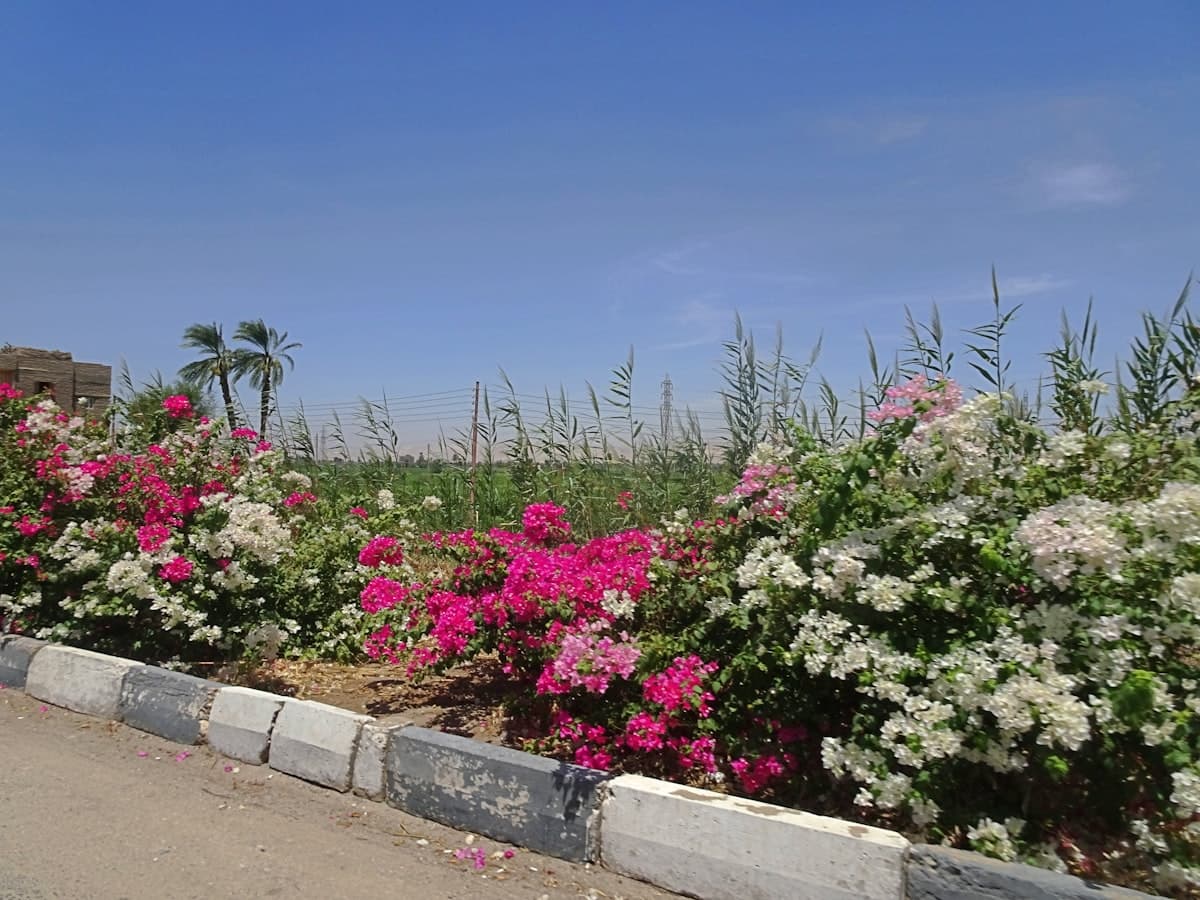
The West Bank is better navigated by bicycle than by any other means, partly because the distances between sites are genuinely pleasant to cycle and partly because you see the agricultural landscape, which has not changed its essential character in three thousand years. Bicycle hire near the ferry landing runs EGP 30-50 per day. The roads are flat.
Water is sold at the site entrance and by vendors inside for EGP 10-20 per bottle. In summer, bring more than you think you need. The stone reflects heat.
The ticket for Medinat Habu does not include the Valley of the Kings, the Valley of the Queens, or the Tombs of the Nobles. Each requires a separate ticket. If you are combining sites, plan the Valley of the Kings for a separate half-day since it requires more time and more walking.
Photography inside the temple is permitted with the standard site ticket. No tripods without advance permission. The light in the inner hypostyle hall is low, so a phone with a decent night mode will outperform a basic camera.
Local food stalls near the ferry landing on the West Bank sell ful, ta'ameya, and egg sandwiches from early morning. This is genuinely better breakfast than most Luxor hotels provide, and it costs EGP 15-30. Eat there.
Frequently Asked Questions
The Weekly Dispatch
More on Egypt, every Friday.
Cultural depth and places most guides never mention.
No spam. Unsubscribe anytime.