Nabi Daniel Synagogue Alexandria: A Complete Cultural Guide
The Nabi Daniel Synagogue in Alexandria sits above layers of Roman, Jewish, and Islamic history. Here is what to know before you visit.
Quick Facts
- Best time to visit
- October to March: cooler temperatures, comfortable walking, better interior light than summer months
- Entrance fee
- Free to small donation of EGP 50-100 per person (approx $1-2 USD). Confirm current arrangements when booking.
- Opening hours
- Saturday to Thursday approximately 9am to 4pm. Closed Fridays and Jewish holidays. Irregular staffing: always confirm ahead by phone.
- How to get there
- 10-minute walk from Raml Station tram stop along Sharia Nabi Daniel. Uber or Careem from Sidi Gaber Station runs EGP 30-50. Tuk-tuk from downtown corniche hotels costs EGP 25-40.
- Time needed
- 45 minutes to 1.5 hours inside. Half day if combining with Cavafy Museum and Attarine market.
- Cost range
- Near-free entry. Full morning with transport, Cavafy Museum, and coffee under EGP 300 per person (approx $6 USD).
The chief rabbi of Alexandria in the 1930s used to say that the city's Jewish community didn't live beside history, they lived inside it. He wasn't speaking metaphorically. Under the floor of the Nabi Daniel Synagogue, according to a tradition persistent enough to have obsessed archaeologists for two centuries, lies the tomb of Alexander the Great. No one has ever been permitted to excavate far enough to prove or disprove it. The synagogue sits on its secrets the way Alexandria has always sat on its secrets: quietly, without apology, waiting for someone to ask the right question.
The Nabi Daniel Synagogue guide most visitors encounter is a pamphlet handed out near the entrance, listing dates and denominations. It misses almost everything worth knowing.
Quick Facts
Best time to visit: October through March, when Alexandria's Mediterranean humidity drops and the light over the corniche turns the color of pale gold. Summer in Alexandria is not the suffocating heat of Cairo or Luxor, but the synagogue itself has no air conditioning and the walk from central Raml Station is uncomfortable in July.
Entrance fee: The synagogue is managed by the Egyptian Jewish Community organization. Entry is generally free or by small donation (budget EGP 50-100 per person, roughly $1-2 USD) though this can change when the building is used for occasional ceremonies. Photography permissions may require a separate informal arrangement with staff on site.
Opening hours: Saturday to Thursday, approximately 9am to 4pm. The building is often closed Friday and on Jewish holidays. Hours are irregular and the synagogue is not always staffed. Call ahead through the Egyptian Jewish Community in Cairo (+202 2575 1266) or arrange through your hotel concierge. Walking up without advance contact risks a closed gate.
How to get there: From Raml Station tram stop, the synagogue is a 10-minute walk south along Nabi Daniel Street. Taxis from Sidi Gaber station cost roughly EGP 30-50. From downtown Alexandria hotels near the corniche, a tuk-tuk or rideshare app (Uber and Careem operate in Alexandria) runs EGP 25-40. The street itself, Sharia Nabi Daniel, is one of the oldest named roads in Alexandria.
Time needed: 45 minutes to 1.5 hours inside. Allow additional time to walk the surrounding Attarine district, which rewards slow attention.
Cost range: The synagogue itself costs almost nothing. A morning combining it with the Attarine Mosque and the Cavafy Museum runs under EGP 300 in transport and entry fees, roughly $6 USD.
Why This Place Matters
Alexandria was, for most of its early history, a majority Jewish city. Not Jewish-influenced, not Jewish-adjacent. At its Hellenistic peak, roughly half the population of Alexandria was Jewish. The Septuagint, the Greek translation of the Hebrew Bible that shaped both Christianity and Western philosophical thought, was produced here around the 3rd century BCE, supposedly by seventy-two scholars working in parallel on Pharos Island. The translation was commissioned not for the Jewish community but for the Library of Alexandria, because the Ptolemaic kings collected every text that existed.
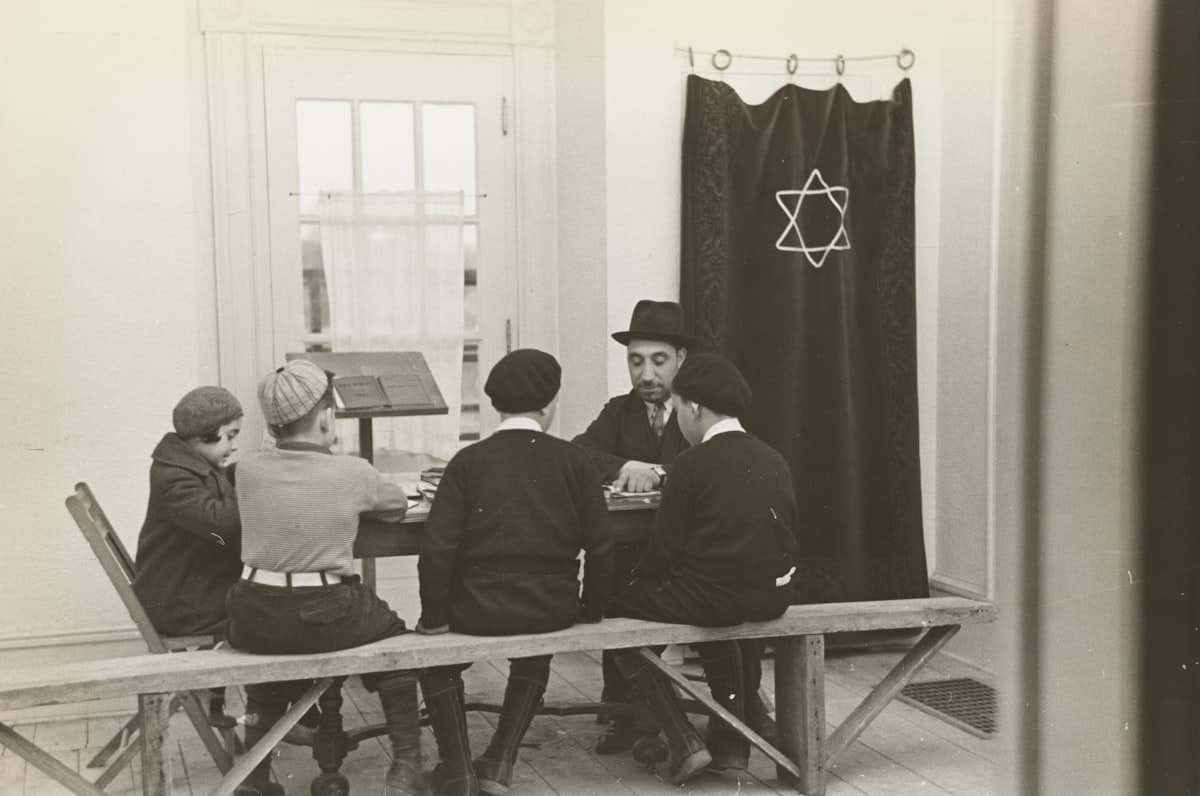
By the late 19th century, Alexandria's Jewish community numbered around 25,000 people. By the 1950s, following the Suez Crisis and the nationalizations under Nasser, that number had collapsed to a few thousand. By 2000, fewer than 100 Jews remained in Alexandria. Today the number is estimated in the single digits, mostly elderly women.
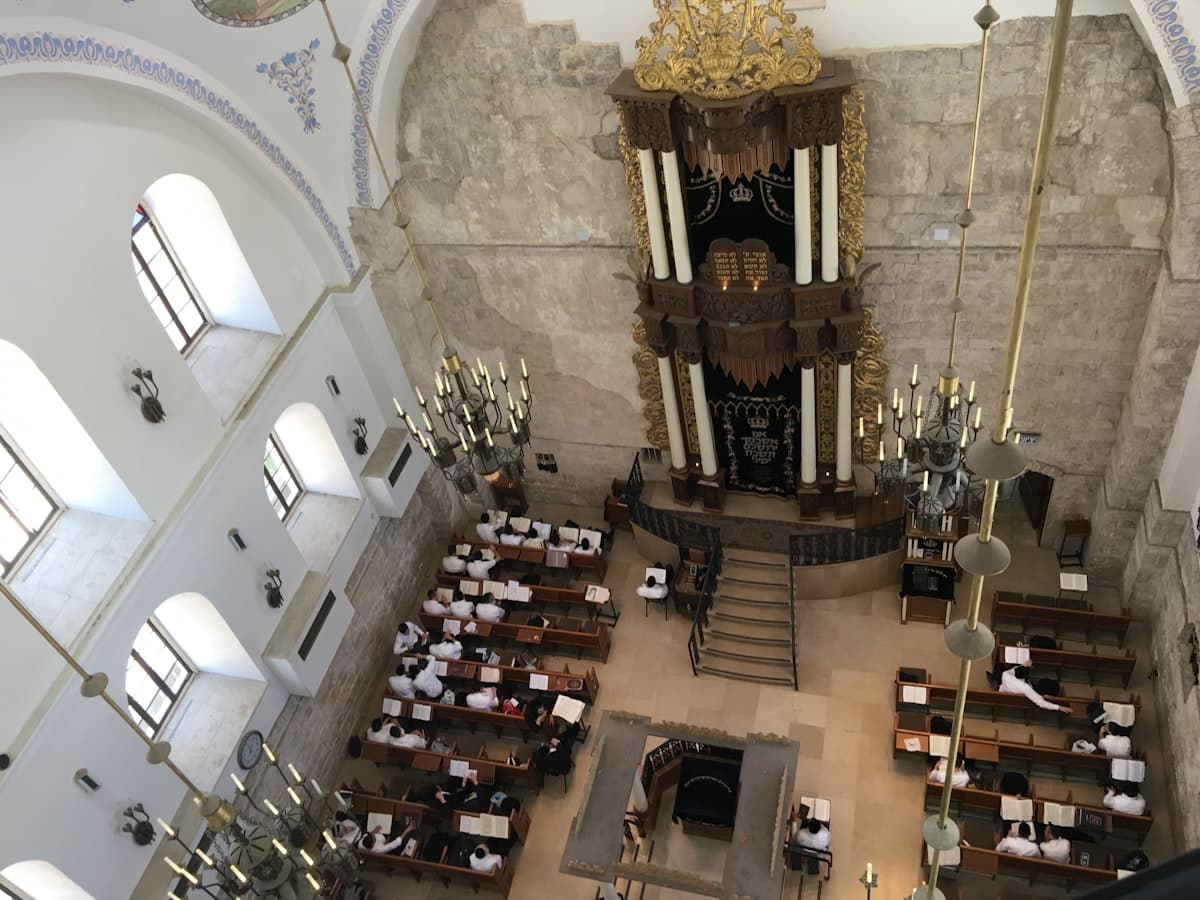
The Nabi Daniel Synagogue, built in its current form in 1354 CE on the site of earlier structures, holds this entire arc inside its walls. It was renovated multiple times, most significantly in the 19th century, and the interior shows those layers: Moorish arched windows, a wooden ark of the Torah that dates to the 19th century, stone floors worn smooth by centuries of congregation. The building is named for the prophet Daniel, though the Islamic tradition also venerates the same prophet, which is partly why the street outside carries the name and why a mosque a short walk north also shares the association.
That overlap is not coincidence. It is Alexandria.
What You Will Actually See
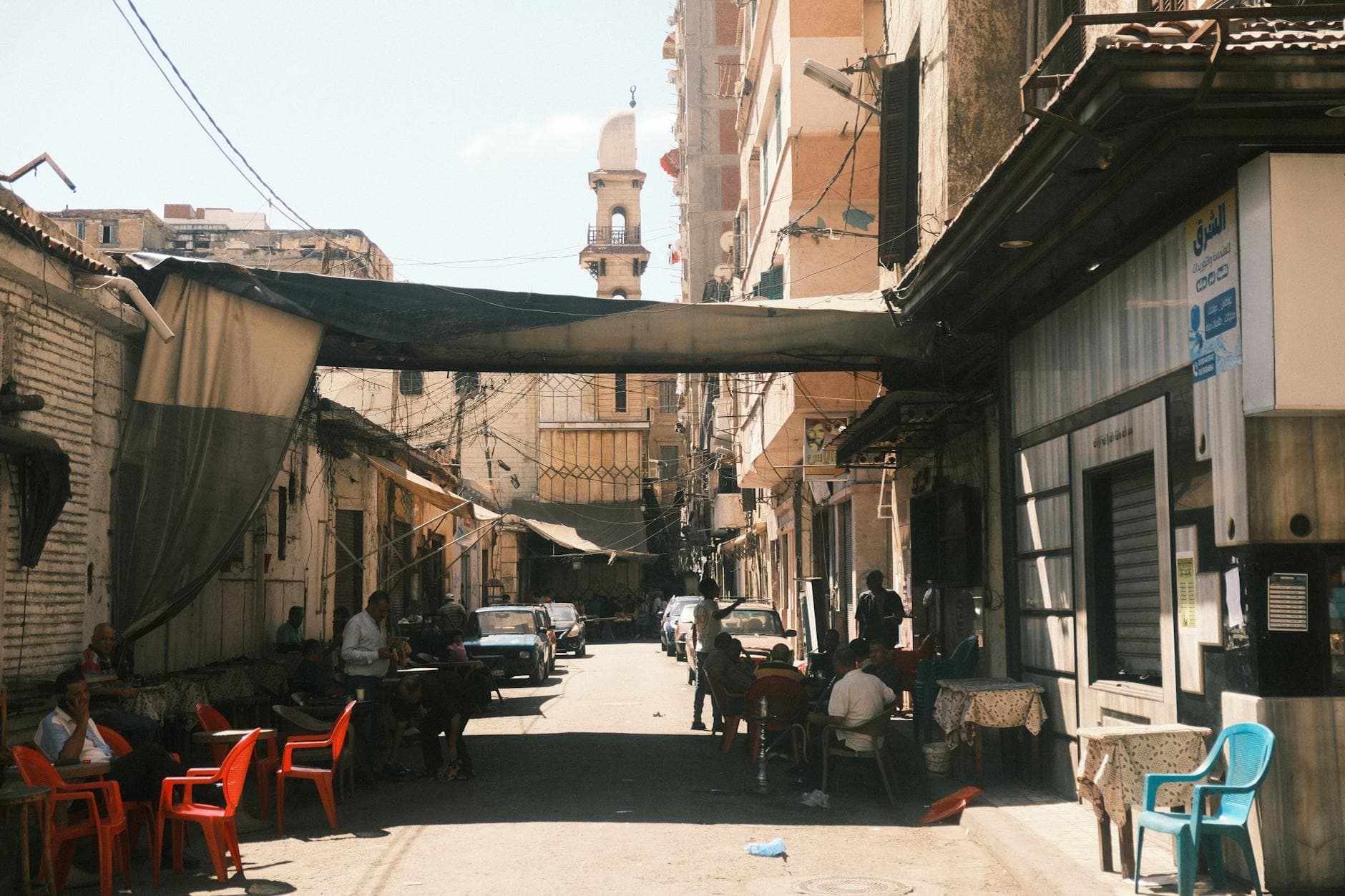
The building stands on a residential street that has no particular drama from the outside. You will find a wooden door, often unremarkable, set into a wall. Ring the bell or knock. If someone answers, you are likely to be greeted by one of the Egyptian caretakers, Muslim men who have dedicated considerable energy to preserving a community that is almost entirely gone.
This fact stops most visitors cold once they understand it. The synagogue is maintained almost entirely by non-Jewish Egyptians, some of them descendants of men who held the same caretaking role for generations. Ibrahim, a caretaker who has worked at Nabi Daniel for decades, once told a journalist that he considers it his family's responsibility. His grandfather worked here. He expects his son will work here. The continuity of care has outlasted the community it serves.
Inside, the main sanctuary is smaller than you expect and more affecting for it. The bimah, the raised central platform from which the Torah is read, is intact. The women's gallery upstairs is accessible. The Hebrew inscriptions on the walls and the ark are in good condition. There are photographs along one wall documenting the community in its mid-20th century fullness: weddings, bar mitzvahs, community events. Look at these closely. The clothing, the faces, the street scenes in the backgrounds show you an Alexandria that vanished within living memory.
The caretakers will often point to the floor and mention Alexander. This is where the tradition becomes genuinely strange. Several ancient sources, including the geographer Strabo, describe Alexander's tomb as being located in the Soma, the royal quarter of Ptolemaic Alexandria. Others describe it on a street that ancient maps align roughly with modern Nabi Daniel Street. A 19th century Greek nun named Eudoxia reportedly descended into a crypt beneath the synagogue and saw a body in Macedonian armor inside a glass sarcophagus. She told no one for years. By the time scholars investigated, the crypt was inaccessible. Whether this is true, apocryphal, or a story that accumulated around the place because Alexandria needed it to, no one can say with certainty.
The Attarine District Around It
Don't rush back to the corniche. The streets around Nabi Daniel are part of what was once the Jewish quarter, and traces remain if you know where to look. The Attarine market to the north, one of the oldest antique markets in North Africa, was historically the point where Jewish, Greek, and Arab merchants overlapped. You can still find Judaica in these stalls occasionally, menorahs and Passover plates that surfaced from departed households, priced by dealers who often don't know precisely what they have.
The Attarine Mosque, a five-minute walk away, was built inside a Crusader church that was itself built inside a late Roman temple precinct. The mosque's columns are Roman, removed from older structures. This is standard practice in Alexandria: the city builds on itself, borrows from itself, never starts from zero.
The Connections
The Nabi Daniel Synagogue guide rarely mentions that the street it sits on may be the oldest continuously used road in Alexandria, possibly following the line of the ancient Canopic Way, the main east-west axis of the Ptolemaic city. If that alignment is accurate, you are walking a route that Cleopatra walked, that Julius Caesar walked, that the scholars who created the Septuagint walked carrying their scrolls to the Library.
The Jewish community that built and rebuilt this synagogue over centuries was not separate from Islamic Alexandria. Jewish merchants financed Mamluk construction projects. Jewish physicians served in Egyptian royal courts. The great medieval Jewish philosopher Maimonides spent time in Alexandria before settling in Cairo, where his tomb in the old Jewish quarter of Fustat still draws visitors. The Nabi Daniel community and the Ben Ezra Synagogue in Cairo's Coptic quarter, where the famous Cairo Geniza was discovered in 1896 (a cache of 300,000 Jewish manuscript fragments stored in a storage room for a millennium), were part of the same social and religious network.
The forced departure of Alexandria's Jews in the 1950s and 1960s scattered families to France, Brazil, Israel, Italy, and the United States. Their descendants are sometimes the only visitors who come to Nabi Daniel with specific knowledge of whose names are on the memorial plaques inside. If you visit and find a family group speaking French-inflected Hebrew or a mix of Judeo-Spanish and Arabic, you are witnessing a kind of homecoming that has no political valence, only grief and memory.
Common Mistakes
Arriving without confirming hours. The synagogue is not a museum with predictable staffing. It is an active religious and cultural site managed by a tiny organization. Show up unannounced on a Thursday afternoon and you may find it locked. A single phone call or WhatsApp message the day before resolves this entirely.
Treating the caretakers as tour guides you didn't hire. They are not on duty to narrate your visit. They are maintaining a place they care about. Engage them as you would engage someone at their workplace: with courtesy, genuine curiosity, and patience. If you speak any Arabic, use it. The conversations that result are worth more than any guidebook entry.
Skipping the photographs on the wall. Every visitor walks past them. Stop and read the captions. The community documented in those images lived through the 1952 revolution, the Suez Crisis, the 1967 war. Understanding that sequence makes the empty benches in the sanctuary comprehensible in a way that historical summaries cannot.
Expecting the Alexander connection to be resolved. Come curious, leave with the question intact. People who arrive demanding proof and leave disappointed have misunderstood what Alexandria offers. The unproven possibility is part of the meaning of the place.
Not walking Nabi Daniel Street itself. The synagogue is one node in a street that also contains the southern end of the Attarine market, several 19th century apartment facades in various states of survival, and a small Greek Orthodox presence. The street is the context. The building makes more sense after you've walked it.
Combining this with too many major sites in one day. Alexandria is not Cairo. It does not reward the checklist approach. Nabi Daniel and the Cavafy Museum (ten minutes away on foot) and a slow lunch in Attarine is a complete and satisfying day. Adding the Catacombs of Kom el-Shoqafa and Pompey's Pillar means you arrive at each place too tired to look properly.
Photographing without asking. Some of what is inside the synagogue, particularly items related to active religious observance and some of the personal memorial plaques, deserves a question before a camera appears. The caretakers will generally say yes. The asking matters.
Practical Tips
Dress modestly. This means covered shoulders and knees for both men and women. The same standard applies in every religious site in Alexandria regardless of denomination, and locals notice when visitors ignore it.
The best time to visit within the day is mid-morning, around 10 to 11am, before the light on the interior begins to flatten and before the surrounding streets fill with lunchtime noise. The synagogue's high windows catch northern Mediterranean light in a way that changes considerably by 2pm.
If you speak French, you have an advantage. The older Jewish community of Alexandria was largely Francophone, and some of the documentation and correspondence held by the building's administrators is in French. Several caretakers also have more comfort in French than in English.
Combine the visit with the Constantine Cavafy Museum, seven minutes away on foot, for a morning that covers both Jewish and Greek Alexandria in the same neighborhood. Cavafy's apartment has been preserved almost exactly as it was when the Greek-Egyptian poet lived there in the early 20th century. His poems about the decay of Ptolemaic Alexandria and the loss of beautiful, irretrievable things read differently after you've stood inside Nabi Daniel.
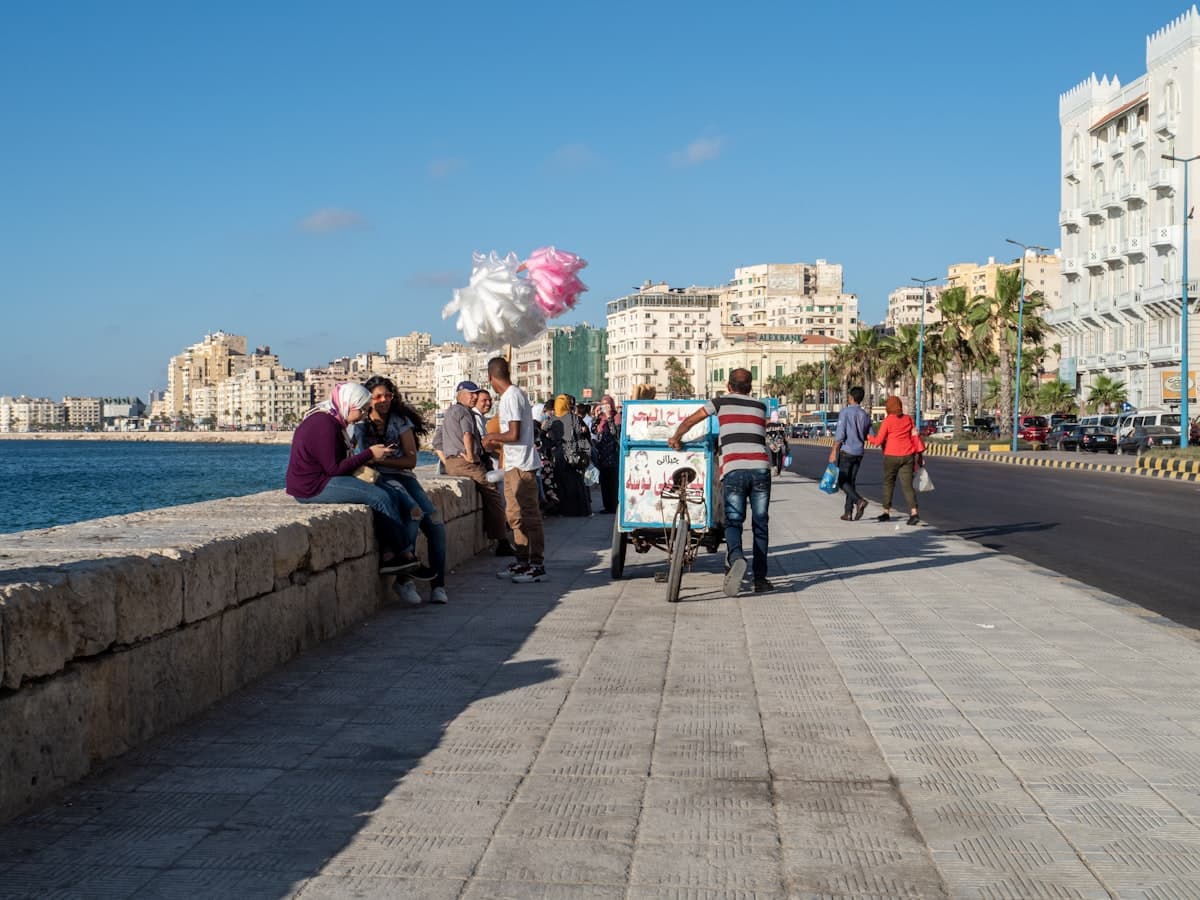
For the walk back toward the corniche, take Sharia Fouad rather than retracing your steps. The 19th century European facades along that street, built during the Cotton Boom when Alexandria was one of the most cosmopolitan trading cities on the Mediterranean, give you the physical skeleton of the world that the synagogue community inhabited at its height.
Frequently Asked Questions
The Weekly Dispatch
More on Egypt, every Friday.
Cultural depth and places most guides never mention.
No spam. Unsubscribe anytime.