Philae Temple Aswan Guide: What to Know Before You Go
Plan your visit to Philae Temple in Aswan with real prices, transport costs, insider tips, and what most tourists get completely wrong about this island site.
Audio Guide: Philae Temple Aswan Guide: What to Know Before You Go
Quick Facts
- Best time to visit
- October to February, arriving at 7am opening to avoid cruise ship groups that arrive from 9am onward
- Entrance fee
- EGP 450 per person (approx. $9 USD), students EGP 225. Return boat from Shellal dock: EGP 150 per person (approx. $3 USD). Sound and light show: EGP 350 per person.
- Opening hours
- Daily 7am to 4pm (October to April), 7am to 5pm (May to September). Sound and light show runs three sessions nightly, confirm current language schedule at dock.
- How to get there
- Taxi from central Aswan to Shellal dock: EGP 100 to 150 by agreed fare, roughly 20 minutes. Licensed motorboat from Shellal to Agilkia Island: 5 minutes, included in the boat fare. No private vehicles or walk-up access to the island.
- Time needed
- 2 to 3 hours for temple alone, 4 to 5 hours if combining daytime visit with the evening sound and light show
- Cost range
- Budget EGP 800 to 1,200 per day including transport, tickets, and dock-area food. Mid-range EGP 2,000 to 3,500 per day with private licensed guide and lunch.
The boat engine cuts out and, for about four seconds, there is total silence on the water. Then the temple comes into view across the reservoir: pale sandstone columns rising from Agilkia Island, their reflection breaking apart in the wake of a passing felucca. It is not the postcard moment that catches you. It is the realization that this entire complex was dismantled block by block and rebuilt on higher ground to save it from the rising waters of Lake Nasser. Every column you walk between was once submerged. Every carving you trace with your eye was catalogued, numbered, and moved by UNESCO engineers between 1972 and 1980. Philae is a temple that was rescued from the bottom of a lake, and that fact changes how you see everything here.
This Philae Temple Aswan guide covers what actually matters for a real visit: which boat landing to use, how long you need, what the sound-and-light show is genuinely like, and the mistakes that turn a good morning into a frustrating one.
Quick Facts
Best time to visit: October through February, arriving before 8am to avoid tour groups Entrance fees: EGP 450 per person (approx. $9 USD at current rates), students with valid ID pay EGP 225. The mandatory boat from Shellal dock costs an additional EGP 150 per person return (approx. $3 USD), negotiated as a group fare. Opening hours: Daily 7am to 4pm (winter, October to April), 7am to 5pm (summer (May to September). The site closes earlier than many visitors expect. How to get there: Take a taxi from central Aswan to Shellal dock, roughly 12km south, for EGP 100 to 150 by negotiated fare. From there, licensed motorboats take you to the island. The boat is non-negotiable since the temple sits on an island in the Aswan reservoir. Time needed: 2 to 3 hours for the temple alone, 4 to 5 hours if you are combining with the sound-and-light show in the evening Cost range: Budget EGP 800 to 1,200 per day including transport, tickets, and meals near the dock. Mid-range EGP 2,000 to 3,500 per day if adding a Nile cruise lunch or private guide.
Getting to Shellal Dock Without Getting Overcharged
Most visitors arrive at Shellal dock by taxi from Aswan city center or from their hotel. The metered fare does not apply here in practice, so agree on a price before you get in. EGP 100 to 150 is fair for the one-way ride from the city center. From the corniche near the Sofitel Legend Old Cataract, the drive takes roughly 20 minutes.
At the dock, you will encounter a group of boat operators who work under a fixed-rate cooperative system. The posted rate as of late 2024 is EGP 150 per person for the return boat journey, though this can flex slightly depending on how many people share the boat. Do not pay anyone who approaches you before you reach the official ticket window at the dock entrance. Buy your temple admission ticket from the kiosk on shore, then proceed to the boats. Some operators will try to sell you a combined ticket themselves and pocket the difference.
The boat ride itself takes about five minutes each way. You disembark at a stone quay on the southwest side of the island. There is no other landing point, so ignore any suggestion that there is a "better" private dock that requires a different fare.
The Layout of the Temple Complex
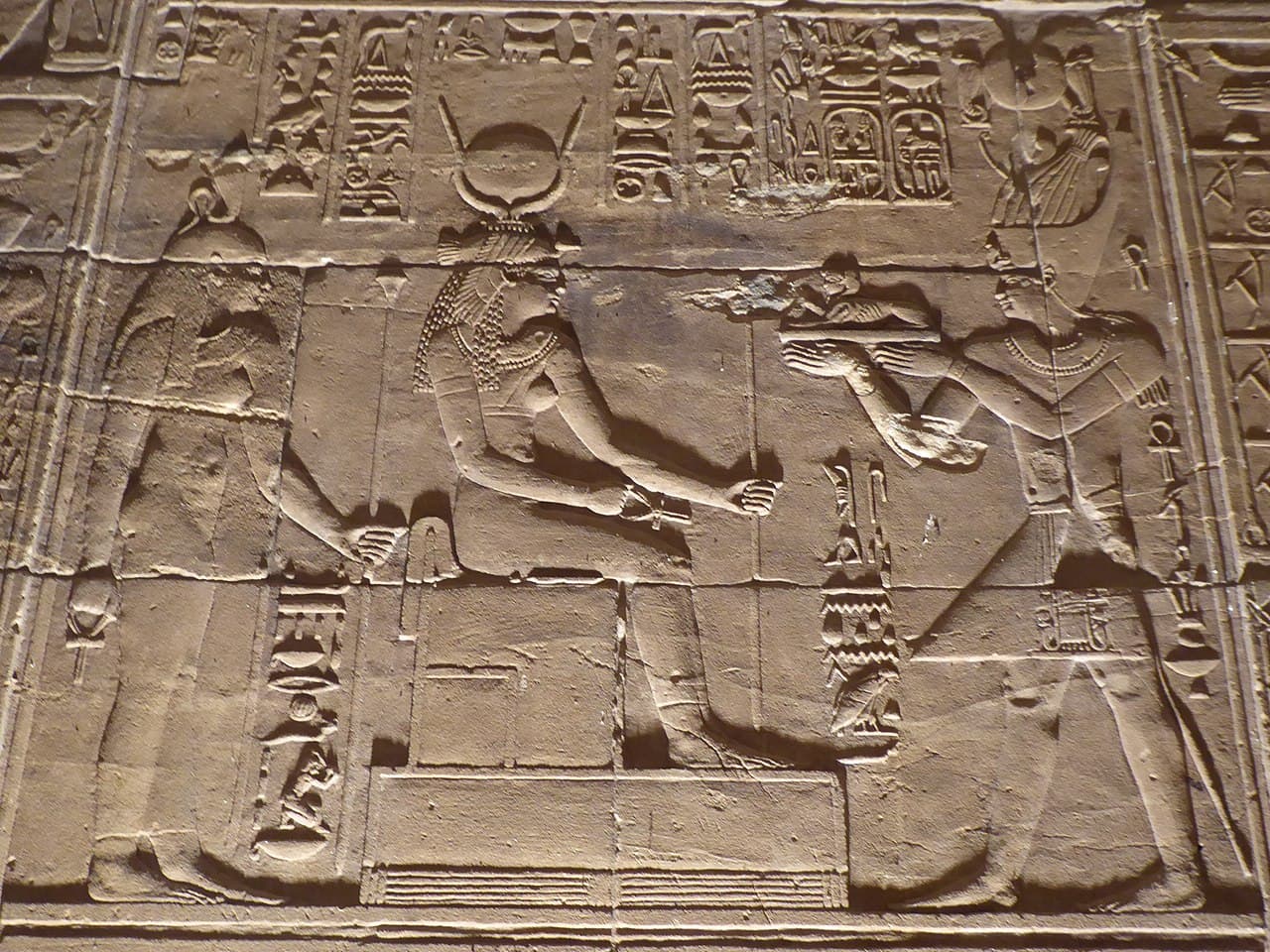
Philae was dedicated primarily to Isis, and the complex you walk through today was built mostly during the Ptolemaic and Roman periods, from roughly the 4th century BC through the 3rd century AD. This is not a New Kingdom site. The carvings are later, the proportions more elongated, and the atmosphere noticeably different from Luxor's temples.
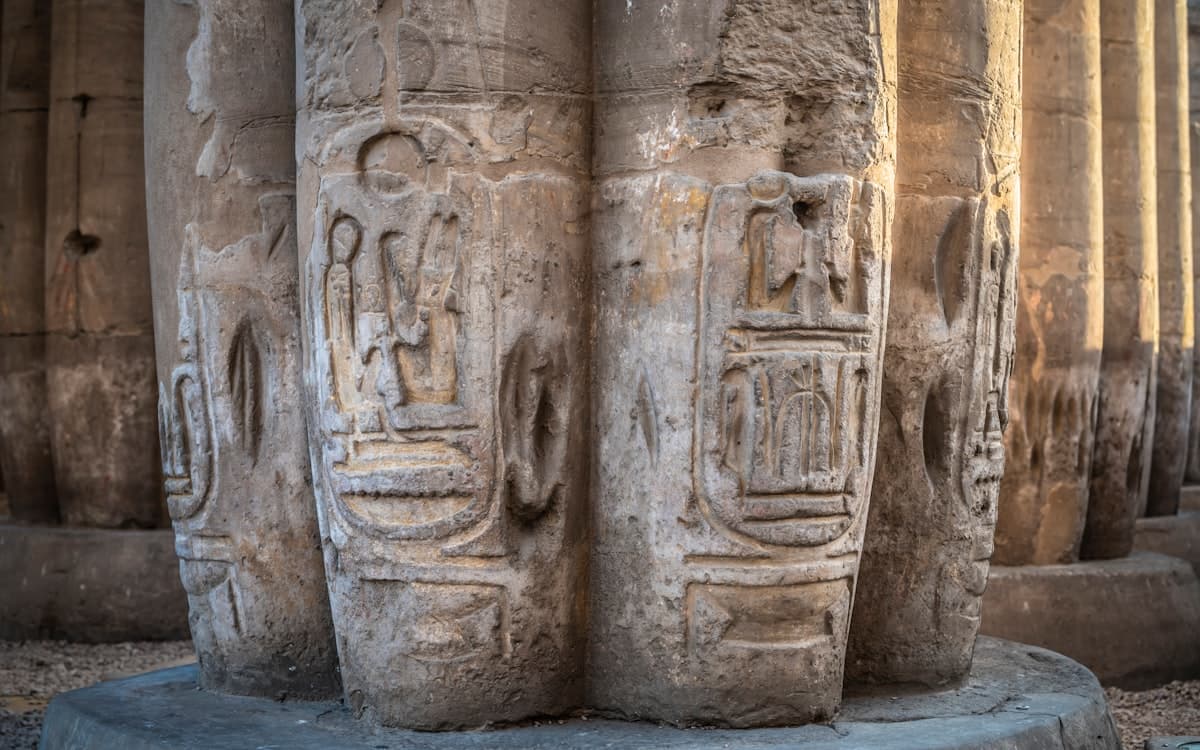
You enter through the outer pylon, a broad gateway decorated with relief carvings of Ptolemy XII smiting enemies in the standard pose that Egyptian kings had been using for two thousand years by that point. Walk through it and pause. The first courtyard leads you toward the inner pylon and then into the hypostyle hall. The columns here still hold traces of paint, faint ochre and red in the recessed lines of the carvings if you look in low-angle morning light.
The Sanctuary of Isis sits at the far end of the main axis. This is the heart of the complex, and in certain morning hours, the light entering from the roof openings creates a specific stillness that the outer courts do not have. Spend time here rather than rushing through.
To the west of the main temple, the Kiosk of Trajan is the structure that appears in most photographs: fourteen columns with elaborate floral capitals, open to the sky, built during the reign of the Roman emperor Trajan around 100 AD. The kiosk served as a landing place for the sacred barque of Isis. It photographs well at almost any time of day, but the shadows inside the colonnade are most interesting in mid-morning when the sun is at an angle.
What the Relocation Actually Changed
The UNESCO salvage operation moved Philae from its original island, also called Philae, to the nearby Agilkia Island, which was reshaped to mimic the original topography. The orientation of some structures shifted slightly during reconstruction, and if you read the academic literature on the project, you find that not every block ended up perfectly in its original position. None of this is visible to the naked eye during a visit, but it does mean that the site you see is, technically, a reconstruction. That context matters. The temple is extraordinary because of its survival, not despite the fact of its relocation.
The Sound and Light Show: Honest Assessment
The evening sound-and-light show at Philae runs three times nightly, in different languages. English performances typically run at 6:30pm and 8pm, though the schedule shifts seasonally, so confirm at the dock or with your hotel the day before. The ticket price is EGP 350 per person (approx. $7 USD).
You reach the island by the same boats as the daytime visit, running a dedicated evening service from Shellal dock.
The show projects colored lights onto the temple pylons while a pre-recorded narration tells the myth of Isis and Osiris. The production values are not sophisticated. The narration moves slowly, and the color choices, deep purple on pale sandstone, are more theatrical than illuminating. What the show does do is give you the island at night with no other tourists present, and the sight of the Kiosk of Trajan lit against the black reservoir is genuinely worth the ticket price on its own terms. Go with accurate expectations and you will not be disappointed.
Common Mistakes Tourists Make
Arriving at 10am or later. Tour groups from Nile cruise ships dock between 9am and 11am. By 10am, the main courtyard can hold two hundred people at once. The temple corridors are narrow. Arriving at 7am when the site opens means you may have the hypostyle hall entirely to yourself for thirty to forty minutes.
Not accounting for boat wait times. On busy days, the boat cooperative can have a queue. Allow an extra twenty to thirty minutes at Shellal on the return journey, particularly if you have a train or flight to catch from Aswan.
Skipping the western colonnade. Most visitors move straight down the main axis toward the sanctuary and miss the long western colonnade that runs parallel to the river. The carved reliefs along that wall, depicting Isis nursing Horus in the marshes, are some of the most detailed on the island and are almost always uncrowded.
Paying for a guide at the dock rather than pre-arranging one. Guides who approach you at Shellal dock are rarely licensed Egyptologists. A licensed guide from Aswan, arranged through your hotel or a reputable Aswan agency the evening before, costs EGP 400 to 600 for the morning and will know which inscriptions are worth stopping at and which are standard dynastic boilerplate.
Assuming the site has shade. Agilkia Island is a thin strip of reconstructed stone. There are almost no trees. In summer (May through September), by 10am the heat on the open courtyards is severe. Bring more water than you think you need and wear a hat that provides real coverage, not a baseball cap.
Confusing the ticket kiosk locations. There are two windows at Shellal: one for daytime visits and one specifically for the sound-and-light show. Buying the wrong ticket creates a delay and requires queuing again. Look at the signage carefully before you approach.
Missing the Coptic inscriptions. Early Christian communities used parts of Philae as a church in the 5th and 6th centuries AD, and they left crosses carved into some of the relief panels in the hypostyle hall. Some of the original Isis imagery was deliberately defaced at that time. These layers of history are not highlighted on any sign, but they tell a more complete story of the site than the pharaonic narrative alone.
Practical Tips for Your Visit
Wear shoes with grip. The stone quay at the boat landing is uneven and can be slippery if any water has splashed up. Sandals with flat soles are genuinely risky here.
Bring EGP in cash. The boat operators, the kiosk, and the few small vendors near the dock all operate on cash only. The nearest ATM to Shellal is back in central Aswan, so withdraw before you leave your hotel.
If you are visiting as part of a Nile cruise itinerary, your cruise director will organize the boat transfer collectively. This is generally more efficient than arranging it independently, though the timing means you will arrive mid-morning with the other groups. Ask whether an early independent visit is possible before your cruise departs and whether your temple admission is included in the cruise package or payable separately.
Photography inside the temple is permitted without an additional fee as of 2024. Tripods technically require a separate permit, which is rarely enforced but technically exists. Leave the tripod at the hotel and use a fast lens or stabilization instead.
For the Philae Temple Aswan experience at its quietest and most atmospheric, aim for early January or early February. The winter light is soft until about 9am, the temperatures are comfortable rather than cold, and the tourist volume is lower than the peak December holiday period. That window, the first two weeks of either month, is when I have consistently found the site least crowded and most worth the journey.
Frequently Asked Questions
The Weekly Dispatch
More on Egypt, every Friday.
Cultural depth and places most guides never mention.
No spam. Unsubscribe anytime.