Ra Sun God Temples Egypt Guide: Where Light Was a Theology
Egypt's Ra sun god temples aren't ruins. They're arguments about power, light, and the divine. This guide tells you what they meant and where to find them.
Quick Facts
- Best time to visit
- October through March for bearable temperatures at outdoor sites; specifically February 22 or October 22 for the Abu Simbel solar alignment. Avoid July and August when Aswan and Luxor regularly exceed 40 degrees Celsius.
- Entrance fee
- Abu Simbel: EGP 600 (approx $12 USD), students EGP 300. Karnak: EGP 450 (approx $9 USD), students EGP 225. Abydos (Seti I Temple): EGP 360 (approx $7 USD), students EGP 180. Heliopolis open-air museum: EGP 100 (approx $2 USD).
- Opening hours
- Most sites daily 6am to 5pm (winter, October to April), 6am to 6pm (summer). Abu Simbel opens from 5am on solar alignment dates (February 22 and October 22).
- How to get there
- Cairo to Luxor: overnight train from Ramses Station EGP 400-900, or fly EGP 1,500-3,000. Aswan to Abu Simbel: convoy minibus EGP 250-400 round trip or flight EGP 800-1,500. Luxor to Abydos: private car hire EGP 700-1,000 for a full day combining with Dendera.
- Time needed
- Abu Simbel alone: 3-4 hours. Karnak focused on solar structures: 4-5 hours minimum. Abydos: 2-3 hours. Heliopolis obelisk and open-air museum: 1-2 hours. Full solar Egypt circuit across multiple sites: 4-6 days.
- Cost range
- Budget traveler in Luxor or Aswan: EGP 600-900 per day including accommodation, local transport, and one major site. Mid-range with private car hire and guided access: EGP 2,000-3,500 per day.
The priests of Ra at Heliopolis did not describe their god as a ball of fire in the sky. They described him as the first sound, the first vibration, the creative act itself. The sun was just the most visible evidence of something much larger. When Akhenaten later collapsed all of Egyptian religion into pure solar worship, he wasn't being radical in the way most textbook accounts suggest. He was taking one existing current in Egyptian theology and drowning everything else in it.
Understanding Ra's temples in Egypt means understanding that the Egyptian relationship with the sun was never simple solar veneration. It was a philosophical argument sustained across three thousand years, in stone, in gold, in the geometry of obelisks, and in the precise orientation of doorways that allowed sunlight to illuminate a god's face on exactly one morning per year.
Quick Facts
Sites covered in this guide: Heliopolis (Cairo), Abu Simbel (near Aswan), Karnak Temple complex (Luxor), Abydos (Sohag Governorate), and the open-air museum at Memphis.
Entrance fees: Heliopolis obelisk area (Matariya, Cairo): Free access to the obelisk itself; the surrounding archaeological zone is managed by the Ministry of Antiquities. The nearby open-air museum costs approximately EGP 100 (around $2 USD). Abu Simbel temples: EGP 600 (approx $12 USD), students EGP 300. The sound-and-light show is a separate ticket at EGP 200 (approx $4 USD). Karnak Temple complex: EGP 450 (approx $9 USD), students EGP 225. The open-air museum within Karnak costs an additional EGP 100. Abydos (Temple of Seti I): EGP 360 (approx $7 USD), students EGP 180.
Opening hours: Most sites open daily from 6am to 5pm in winter (October through April) and 6am to 6pm in summer. Abu Simbel has early access from 5am on the solar alignment days in February and October.
Getting there: Heliopolis/Matariya from central Cairo: Metro Line 1 to Ain Shams, then microbus or taxi (EGP 20-40 total). Luxor (Karnak): Fly from Cairo, roughly EGP 1,500-3,000 one way; or overnight train from Ramses Station, EGP 400-900 depending on class. Aswan/Abu Simbel: Fly from Cairo or Luxor; or take the high-speed train to Aswan then a shared minibus convoy to Abu Simbel (EGP 250-400 round trip from Aswan). Abydos: Hire a private car from Luxor (EGP 400-600 for the day) or join a group tour.
Time needed: Heliopolis, 2 hours. Karnak focused on solar symbolism, a full half-day minimum. Abu Simbel, 3-4 hours if you linger. Abydos, 2-3 hours and worth every minute of the journey.
Cost range: Budget traveler EGP 600-900 per day in Luxor or Aswan; mid-range EGP 1,800-3,000 per day including accommodation and guided transport.
---
Why the Ra Sun God Temples Demand a Different Kind of Attention
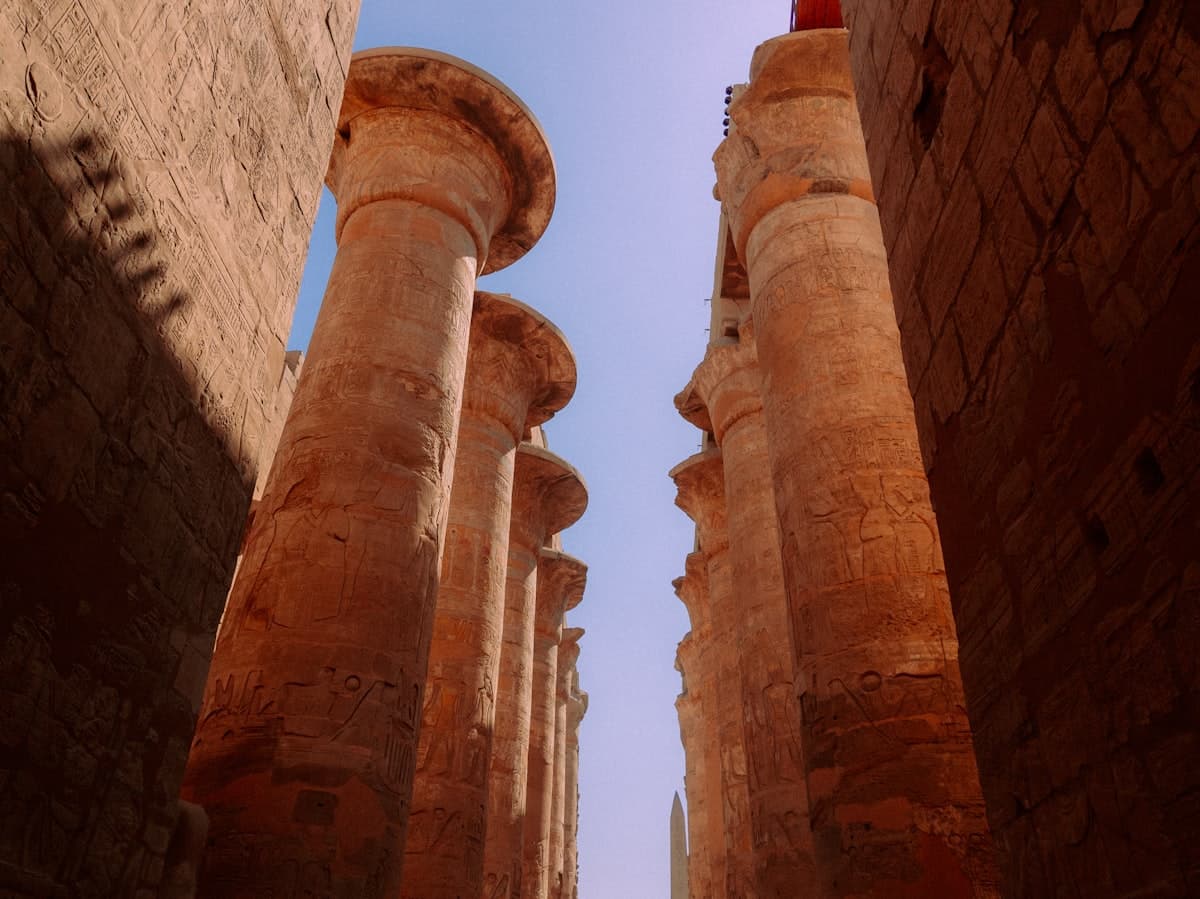
Most visitors to these sites are looking for the visual payoff: the giant statues, the carved reliefs, the dramatic setting at sunrise. That is not wrong. But if you arrive knowing only that Ra was the sun god, you will miss most of what these places are actually saying.
Ra was not a single deity. He was a principle that absorbed others. By the New Kingdom, Ra had merged with Amun, the hidden god of Thebes, to become Amun-Ra, a figure whose power derived partly from visibility and partly from hiddenness. He had earlier merged with Horus to become Ra-Horakhty, the horizon-Horus, depicted as a falcon-headed figure with a sun disk. He merged with Osiris in the underworld, becoming the ram-headed god who traveled through the twelve hours of the night to be reborn at dawn. Every dawn in Egypt was not just sunrise. It was a resurrection narrative playing out in real time.
This matters architecturally. The temples of Ra were oriented with extraordinary precision. At Abu Simbel, the inner sanctuary, carved 60 meters into a cliff of Nubian sandstone, is aligned so that twice a year, on February 22 and October 22, sunlight penetrates all the way to the back wall and illuminates three of the four seated statues. The fourth figure, Ptah, the god of darkness and the underworld, remains permanently in shadow. This is not an accident of engineering. It is a theological statement about what light can reach and what it cannot.
The ancient Egyptians had a word for this: the temple was not a building housing a god. It was the body of the god. The orientation of the axis was the direction of the god's gaze.
---
Heliopolis: The City That Was Egypt's First Observatory
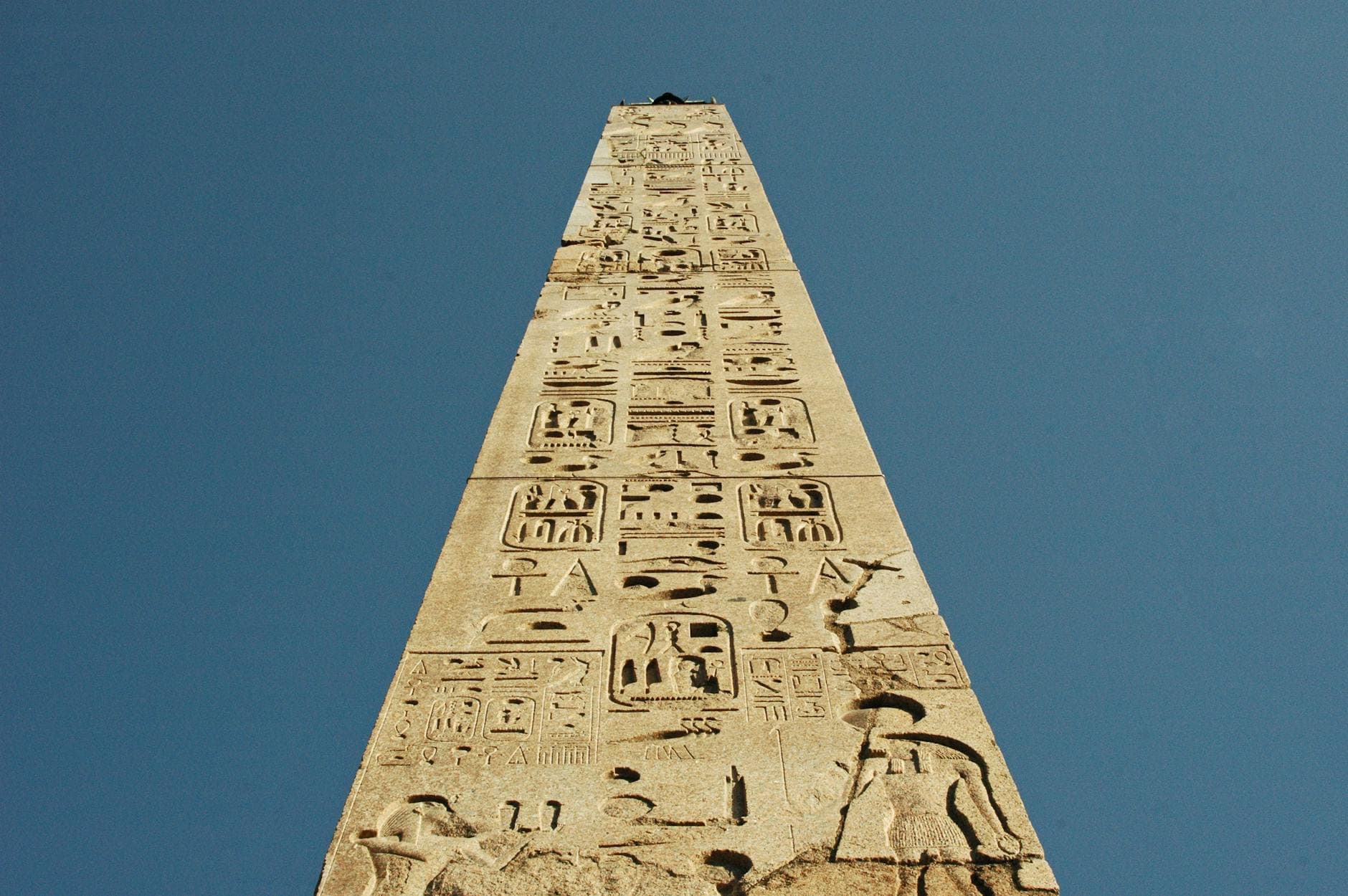
If you want the origin point of Ra's theology, you go to Heliopolis, now swallowed by the Cairo neighborhood of Matariya. Almost nothing survives above ground. There is a single obelisk, the oldest standing obelisk in Egypt at roughly 4,000 years old, erected by Senusret I of the Twelfth Dynasty. It stands in a scrubby park surrounded by apartment blocks, pigeons circling its limestone tip, and locals who mostly use the surrounding area as a shortcut.
This is genuinely not a site for people who need visual grandeur to feel something. But for those who can read absence as eloquently as presence, it is arresting. Heliopolis was once the largest temple complex in Egypt, possibly larger than Karnak at its peak. The Greeks called it Heliopolis, City of the Sun, and visited it as a center of learning. Plato reportedly studied here, though Egyptian sources do not confirm this. What is confirmed is that the Benben stone, the original sacred mound from which Ra was said to have created the world, was housed at Heliopolis. The pyramidal capstone of an obelisk, the pyramidion, is a direct descendant of the Benben stone's shape. Every obelisk in Egypt is therefore a theological argument referring back to this one site.
The open-air museum nearby houses carved blocks and fragments recovered from the site. Entrance is minimal. You will likely be the only foreign visitor there. A groundskeeper will probably follow you around offering to photograph you with the obelisk, which you should agree to because it funds the people who look after a site that most tour groups skip entirely.
---
Karnak and Abu Simbel: Ra's Power at Its Most Explicit
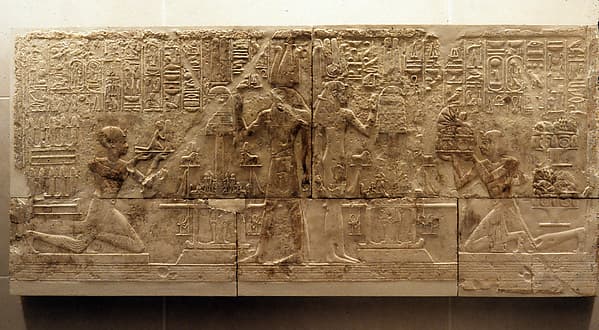
Karnak Temple in Luxor is the obvious place to understand Ra's integration into state power. The Hypostyle Hall alone, with its 134 columns, some of them 21 meters tall and wide enough to park a truck around, is an engineering argument about the scale of divine authority. But the solar symbolism is most concentrated in a smaller structure most visitors walk past: the Red Chapel of Hatshepsut, reconstructed inside the open-air museum from 315 dismantled blocks.
Hatshepsut, one of Egypt's most effective rulers, commissioned this barque shrine in the name of Amun-Ra. The painted reliefs inside are among the best-preserved in Karnak and show the integration of solar theology with political legitimacy in extraordinary detail. Hatshepsut presented herself as the daughter of Amun-Ra, conceived when the god took the form of her father Thutmose I to visit her mother. This was not mythology for mythology's sake. It was a legal argument for a woman's right to rule, made in stone and paint.
Abu Simbel is where Ra's sun god temples reach their most theatrical. Ramesses II built the Great Temple here around 1264 BCE, and the scale is personal in a way Karnak is not. Four statues of Ramesses, each around 20 meters tall, guard the entrance. Inside, Ramesses is depicted worshipping Ra-Horakhty alongside Amun and Ptah, which looks like piety but is actually something more complicated. By placing himself among the gods in the inner sanctuary, Ramesses was arguing for his own divinity. He was not worshipping Ra. He was joining him.
The smaller temple next door, built for Nefertari and the goddess Hathor, is often rushed through by visitors anxious to get back to Aswan. Do not do this. The proportions are more human, the colors are more vivid, and Nefertari's face on the entrance facade is one of the most carefully rendered portraits of a woman to survive from the ancient world.
---
The Connections: Ra, Roman Emperors, and the Coptic Church
The theological current that produced the Ra sun god temples did not stop when Egyptian pharaonic religion ended. It continued in forms that would be unrecognizable to Thutmose III but are historically traceable.
The Roman emperor Augustus, after his conquest of Egypt in 30 BCE, did not dismantle the temple system. He inserted himself into it. At the Temple of Kalabsha, now relocated to a site near the Aswan High Dam, Augustus is depicted in full pharaonic regalia making offerings to Mandolis, a Nubian solar deity closely aligned with Ra. The Roman state understood that in Egypt, legitimacy came from the solar theology, not from military conquest alone.
When Christianity spread through Egypt in the second and third centuries CE, the solar symbolism did not disappear. The Coptic Church placed enormous emphasis on Christ as the light of the world, on the orientation of churches toward the east, on the idea of resurrection at dawn. The word for Sunday in the Coptic language derives from the same root as the concept of the first day of creation. The incense that fills Coptic churches to this day carries a theology of purification that predates Christianity in Egypt by two thousand years. In the Church of the Virgin Mary at Zeitoun in Cairo, built in a neighborhood that archaeologists believe overlaps with the outer precinct of a Heliopolis temple annex, the theological continuity between solar worship and solar Christianity is not symbolic. It is geographical.
Even the Islamic architecture of medieval Cairo carries this lineage obliquely. The great minarets of Mamluk mosques in Islamic Cairo were built by architects who had, consciously or not, inherited the Egyptian preference for vertical structures that punctuate the sky, that mark time by their shadows, that assert the presence of the divine through height. The Mamluks knew nothing of Ra. But the stonecutters who built their mosques were the inheritors of a civilization that had spent three thousand years insisting that height was theological.
---
Common Mistakes at Egypt's Solar Sites
Arriving at Abu Simbel on the wrong day if you want the solar alignment. The light-on-the-statues phenomenon happens on February 22 and October 22. These dates draw large crowds and book out nearby accommodation months in advance. If you arrive on any other day expecting this specific effect, you will be disappointed. However, the temple at any time of morning, when the low angle of light reaches the first chambers, is extraordinary.
Skipping Abydos because it's harder to reach. The Temple of Seti I at Abydos contains the most complete painted reliefs in Egypt, better preserved than anything in the Valley of the Kings. The King List at Abydos, a carved list of 76 pharaohs, is where archaeologists reconstructed the chronology of Egyptian history. Seti I also built a cenotaph here, the Osireion, a strange subterranean structure that predates the main temple in architectural style by centuries. Nobody has fully explained why.
Using a group tour for Karnak that only covers the Hypostyle Hall. Most half-day Karnak tours spend 90 percent of their time in the Hypostyle Hall and rush through everything else. The solar temples of Amenhotep IV (before he became Akhenaten) once stood on the east side of Karnak and are now largely reconstructed in the open-air museum from thousands of talatats, small sandstone blocks he used for speed of construction. This is some of the most radical religious art Egypt produced and most visitors never see it.
Hiring unauthorized guides at Heliopolis/Matariya. The area around the Senusret obelisk attracts informal guides who will tell you confident misinformation. The trained Egyptologists associated with the Ministry of Antiquities site can be requested through the on-site office. The difference in quality of information is significant.
Photographing inside Abu Simbel without paying the camera fee. Photography inside the Great Temple requires a separate permit, purchased at the ticket window. Guards enforce this and the fine for violating it is not the mild inconvenience some blog posts suggest.
Assuming the solar orientation is visible year-round. The alignment effect at Abu Simbel is only visible near the equinox dates. But the broader orientation of the temple, facing east to greet the rising sun, means that any early morning visit in winter, when the Nubian sun comes up slowly and the sandstone glows a particular amber that has no name in English, is worth experiencing on its own terms.
Reading Akhenaten's Aten worship as a break from Ra tradition. Akhenaten did not reject Ra. He rejected the priestly establishment of Amun-Ra at Karnak, which had accumulated enormous political and financial power. The Aten, the solar disk he elevated, was understood as Ra's visible form. His new capital at Amarna was oriented on solar axes identical in principle to the older Ra temples. The theology was a purification, not a revolution.
---
Practical Tips for Visiting Egypt's Solar Sites
The best light for all of these sites, without exception, is within the first two hours after sunrise. At Abu Simbel in winter, this means being inside the temple by 6:30am, which requires staying in Abu Simbel village or taking the 3am convoy from Aswan. The convoy arrangement exists for security reasons and is arranged through your hotel or directly at the Aswan tourist police office. It costs nothing extra beyond the transport you have already arranged.
At Karnak, the site officially opens at 6am. Being at the first pylon when it opens puts you ahead of the cruise ship groups, which arrive from roughly 8am onward and significantly increase crowd density in the Hypostyle Hall.
For Abydos, the most efficient approach is to hire a private car from Luxor for the full day and combine it with the nearby Temple of Dendera, which is Ptolemaic but contains one of the most complete zodiac ceilings in Egypt, itself a cosmological map indebted to solar theology. A full-day car hire for this circuit costs roughly EGP 700-1,000 from Luxor, split between two to four people.
Water and sunscreen are not optional at any of these sites. Abu Simbel in summer reaches temperatures where the stone radiates heat after 9am and the walk from the ticket office to the temple entrance, though short, becomes genuinely unpleasant. Carry at least one liter of water per person per site, more in summer.
The most honest thing I can tell you about these sites collectively is that they reward slowness. The tourists who spend four days in Egypt and hit Abu Simbel as a checkbox leave having seen the shapes but not the argument. Come back to one wall, one frieze, one shaft of morning light hitting a god's carved eye. That is where the three thousand years are stored.
Frequently Asked Questions
The Weekly Dispatch
More on Egypt, every Friday.
Cultural depth and places most guides never mention.
No spam. Unsubscribe anytime.