Ras Mohammed National Park Guide: Egypt's Underwater Frontier
Ras Mohammed National Park isn't a beach resort. It's a geologically violent collision of two seas, protected since 1983, and one of the most biodiverse marine ecosystems on earth.
Quick Facts
- Best time to visit
- October to April: water temperatures 22 to 26°C, visibility up to 30 meters, comfortable land temperatures. Avoid July to August for the 42°C heat, though diving remains good year-round.
- Entrance fee
- EGP 750 per person (approx $15 USD) for foreigners. Egyptian nationals EGP 50. Camping permit EGP 400 extra per night. Diving arranged separately through licensed operators.
- Opening hours
- Daily 8am to 5pm. Gates close promptly at 5pm with no exceptions.
- How to get there
- Taxi from Naama Bay: EGP 150 to 250 one way (20 to 30 min). Car rental in Sharm from EGP 600 per day. Dive operators typically include transport. No public bus service.
- Time needed
- 5 hours minimum for beaches, observatory, and mangroves. Full day for snorkeling plus inland walking. Two days for serious divers wanting multiple sites.
- Cost range
- Budget EGP 1,200 to 1,800 per day (entry, taxi, water, packed lunch). Midrange EGP 3,000 to 5,000 with guided snorkeling. Diving packages EGP 1,500 to 2,800 for two dives including equipment and transport.
The reef wall at Shark Observatory drops 800 meters straight down. You are standing at the edge of the African and Asian tectonic plates, where the Gulf of Suez and the Gulf of Aqaba collide in a geological argument that has been ongoing for 20 million years. The mangroves behind you are feeding juvenile fish that will, in three years, patrol that wall. The coral below your feet has been growing since before the pyramids at Giza had their limestone casing stripped for building projects in medieval Cairo. This is not a beach. This is a consequence of deep time, and it is still alive.
Quick Facts
Best time to visit: October through April, when water temperatures sit between 22 and 26 degrees Celsius and visibility can reach 30 meters. July and August bring extreme heat above water (often 42°C on land) and slightly reduced visibility from summer plankton blooms, though the diving remains excellent.
Entrance fees: EGP 750 per person (approximately $15 USD) for foreigners. Egyptian nationals pay EGP 50. Snorkeling and beach access is included in the entry fee. Diving requires a separate arrangement with a licensed dive operator and is not covered by park admission. Camping permits cost an additional EGP 400 per night.
Opening hours: Daily from 8am to 5pm. The gates close promptly. If you are inside after closing, you will be asked to leave by rangers who are not interested in negotiation.
Getting there: The park entrance is 12 kilometers south of Sharm el-Sheikh's Naama Bay. A taxi from Naama Bay runs EGP 150 to 250 one way depending on your bargaining and the driver's mood. Most dive operators include transport in their package prices. There is no public bus service into the park. Car rental in Sharm starts at EGP 600 per day if you want independent access, though the road is straightforward and well-paved.
Time needed: A minimum of five hours to see the main sites without diving. A full day if you are snorkeling Shark Bay, walking the mangrove channels, and driving to Magic Bay. Two days if you are a serious diver.
Cost range: Budget EGP 1,200 to 1,800 per day including entry, taxi, water, and a packed lunch. Midrange EGP 3,000 to 5,000 if you add a guided snorkeling trip. Diving packages through Sharm operators typically run EGP 1,500 to 2,800 for two dives including equipment, guide, and transport.
Why This Place Matters
Egypt established Ras Mohammed as its first national park in 1983, partly because the 1967 and 1973 wars had temporarily removed the Sinai from tourist traffic, which gave the reef an involuntary rest. When Israeli and Egyptian scientists began surveying the area in the late 1970s after the Camp David Accords, they found coral coverage and fish density that were largely unrecorded anywhere else in the Red Sea. The park's creation was a direct product of the peace treaty between Egypt and Israel, which is an institutional history that almost nobody visiting the place knows.
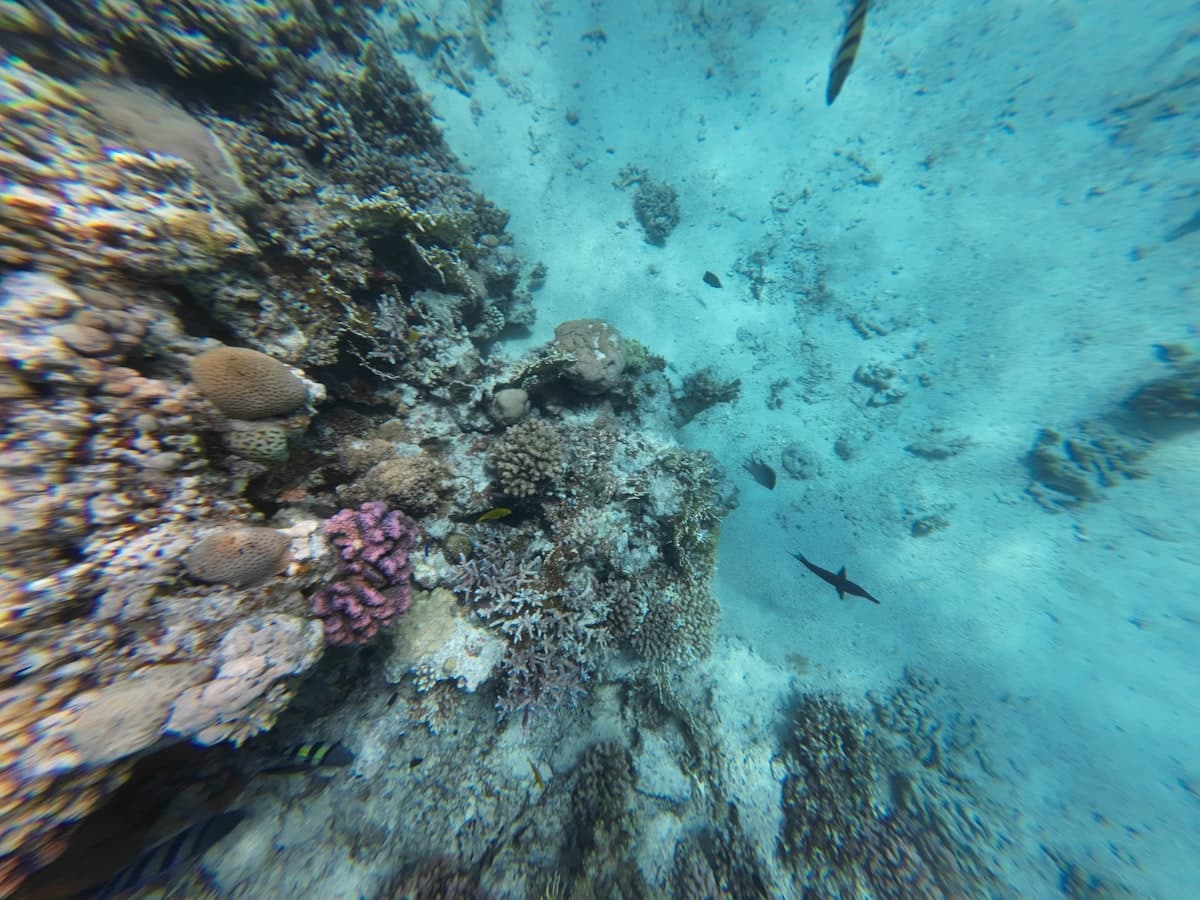
The Sinai Peninsula itself is not simply a beach destination appended to Egypt's map. The granite mountains of South Sinai are among the oldest exposed rock formations on earth, Precambrian basement that pre-dates complex life. The coastal strip at Ras Mohammed sits at the intersection of three ecosystems: mangrove forest, coral reef, and open sea. Each feeds the others in a nutrient cycle so efficient that the reef supports over a thousand species of fish and 200 species of coral despite being surrounded by water of extremely low nutrient content.
The mangroves at Ras Mohammed are particularly worth understanding. Avicennia marina, the grey mangrove, grows here at its northernmost natural range in the world. These trees filter salt through their root systems, excrete it through their leaves, and create a sheltered lagoon environment where juvenile fish spend their early lives. The mangrove channels at Ras Mohammed are a nursery for species that will later colonize the reef. Without the mangroves, the reef degrades. Without the reef, the mangroves lose the nutrient cycling they depend on. This is not a postcard. It is a functioning system.
What You Will Actually See
At Shark Bay and the Snorkeling Beaches
The name misleads. The whitetip reef sharks here are small, between one and two meters, and profoundly uninterested in snorkelers. They rest in sandy channels between coral heads and will move away from you, not toward you. What you will actually encounter at Shark Bay is an overwhelming density of reef fish: Napoleonfish (the humphead wrasse, which can live 30 years and reach two meters), schools of yellowfin goatfish, lionfish hovering motionless near coral overhangs, and the occasional octopus moving across the sand in a color display that looks implausible until you see it.
The coral here at the shallow end is genuinely mixed in quality. Sections near the entry ladder show bleaching and damage from careless fin kicks and decades of tourist contact. The further you swim from the entry point, the more intact the coral becomes. Most snorkelers cluster near the ladder, which means 20 meters of effort in any direction will take you to reef that most visitors never see.
Bring your own mask and snorkel if at all possible. Rental equipment from the beach is functional but the mask seals are often degraded and the snorkels are short. A flooded mask at depth is not dangerous, but it is relentlessly annoying.
The Shark Observatory
This is the place to walk to before you do anything else. A wooden boardwalk extends to a platform at the tip of the headland, where the cliff drops vertically into the junction of the two gulfs. In winter, the water below is deep blue verging on black. In morning light, it shifts to a green-blue that has no accurate color name in English. There are no sharks visible from the platform, despite the name. The point of the observatory is the geology: you are standing on the edge of a rift system that, given another 20 million years, will be a new ocean basin. The Red Sea itself is a young ocean, only 30 million years old, and still widening at roughly the same rate your fingernails grow.
The view northeast on a clear day shows the mountains of Saudi Arabia. The view northwest shows the Gulf of Suez narrowing toward the Suez Canal, where tankers move in a line that looks, from here, like toys.
The Mangrove Channels
Most visitors skip these entirely because they look, at first glance, like a muddy swamp. This is a significant error. The mangrove channels are accessible by a wooden walkway and can also be explored by kayak, which several operators in the park arrange for EGP 200 to 300 per hour. The light inside the channels in the late afternoon is filtered green-gold through the canopy. The mud at low tide reveals the breathing roots, pneumatophores, projecting vertically from the sediment like a field of small grey spears. Fiddler crabs move across the mud. Herons stand absolutely still in the shallows.
The salt crystals that form on mangrove leaves when the trees excrete excess salt are visible if you look closely. This is the mechanism that allows a plant to live in seawater: extrusion of the problem through the leaf surface, where it crystallizes in the sun and blows away. It is an elegant solution arrived at over millions of years of selective pressure, and it is right there to see if you know to look.
The Connections
The Sinai has never been simply Egyptian in the way that, say, the Nile Valley is Egyptian. It has been a transit zone for three thousand years of migration, trade, invasion, and religious movement. The Children of Israel, in whatever historical form the Exodus actually took, crossed the Sinai's northern coastal strip, not the mountains of the south. Byzantine monks at St. Catherine's Monastery, 150 kilometers north of Ras Mohammed, were receiving pilgrims from Constantinople and Rome while the Prophet Muhammad was still alive in Mecca.
The coral trade routes of the ancient Red Sea passed through these waters. Punt, the trading destination of Queen Hatshepsut's famous expedition depicted at Deir el-Bahari in Luxor, was accessible via the Red Sea, and the Sinai coast would have been familiar to Egyptian sailors. The frankincense, ebony, gold, and live trees that Hatshepsut's sailors brought back from Punt traveled through water that now carries dive boats from Sharm el-Sheikh's marina.
The British controlled the Sinai as a buffer zone between Egypt and the Ottoman Empire after 1906, and the 1906 Aqaba Crisis, in which Britain forced the Ottomans to withdraw from the peninsula, established the boundary that still separates Egypt and Israel at Taba. The park you are standing in is, in part, a consequence of a diplomatic incident between two empires that no longer exist.
Common Mistakes
Arriving without sun protection adequate for coastal desert. The reflection off water doubles the UV exposure. Visitors who have been fine on Cairo's urban streets spend four hours at Ras Mohammed and achieve sunburn severe enough to ruin the rest of their trip. Wear a long-sleeved rashguard in the water, hat on land, and sunscreen rated SPF 50 applied before you leave the hotel.
Touching the coral. This is not a courtesy note. Coral polyps die from skin contact. The oils and bacteria on human hands cause tissue necrosis in coral that has spent decades growing at roughly one centimeter per year. Some formations you pass while snorkeling are centuries old. A single moment of contact by a tourist who wanted a closer look causes damage that will not repair in their lifetime.
Underestimating the entry gate wait. On weekday mornings between October and April, the entry queue can take 40 minutes. On Fridays and during Egyptian school holidays, it can reach two hours. Arrive at opening, 8am, or plan your schedule around the wait.
Booking a dive through a hotel lobby desk. The commission markup is substantial, often 40 percent above what the dive operator charges directly. Contact dive operators in Naama Bay directly. Established operators with good safety records include Camel Dive Club and Sinai Divers, both operating for decades and both transparent about certification requirements.
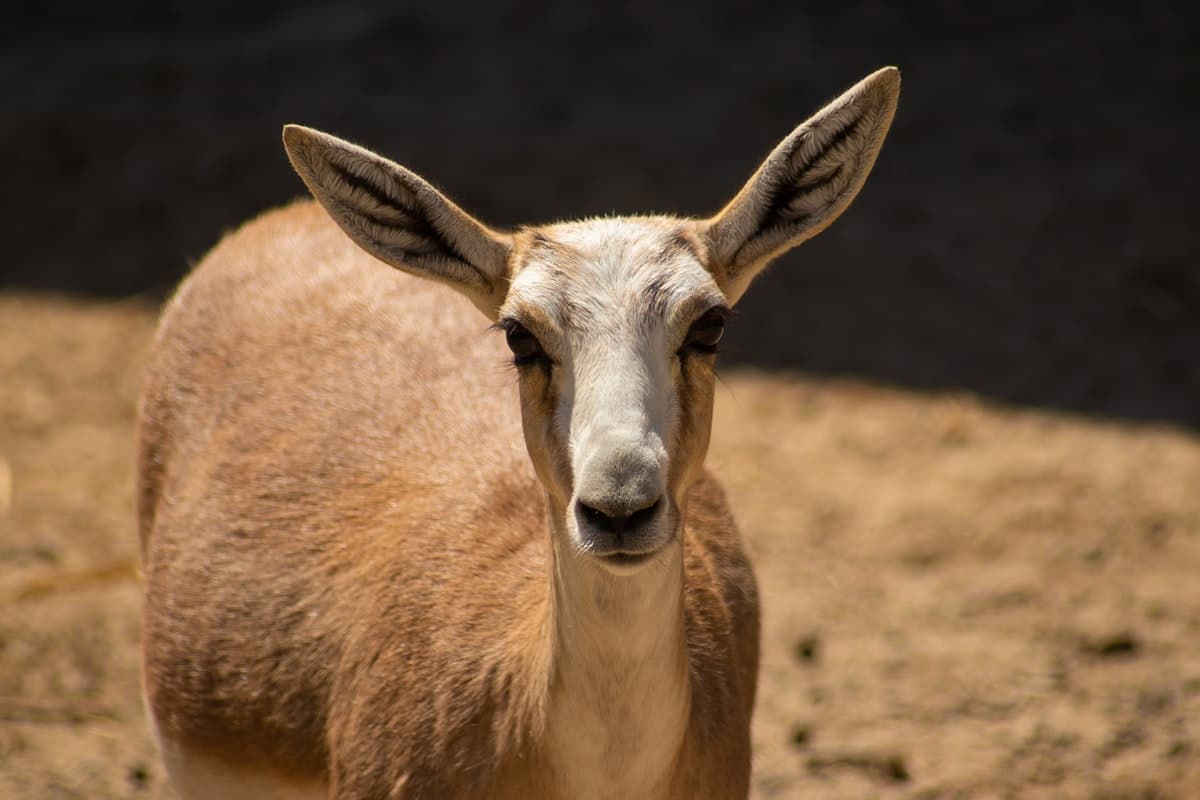
Ignoring the inland walking trails. The acacia and saltbush scrubland between the beach areas contains Dorcas gazelles, which are small, desert-adapted antelopes that have been in the Sinai since the Pleistocene. Early morning, between 8am and 9am, is when you are most likely to see them. Almost every visitor heads straight to the water and misses this entirely.
Forgetting that the park closes at 5pm and means it. Rangers will drive you out. If you are snorkeling at 4:45pm and have not factored in the walk back to the gate and the drive to the exit, you will have a frustrating ending to your day.
Bringing single-use plastic into the park. The park technically bans single-use plastic bags. Bring a reusable bag, a refillable water bottle, and food in non-plastic containers. This is enforced sporadically, but the environmental logic is straightforward.
Practical Tips
Book your diving at least 48 hours in advance during the peak season of November through February, when dive boats in Sharm operate at or near capacity. Last-minute diving arrangements are possible but you will have less choice of operator and site.
The Ras Mohammed national park guide most dive operators hand you at the gate is accurate but brief. If you want to understand what you are looking at underwater, spend one evening before your visit looking at a Red Sea fish identification resource. The difference between recognizing a Napoleon wrasse and just seeing a large fish is not trivial: knowing what something is changes how you see it.
If you are driving yourself, note that the park has no fuel station. Fill up in Sharm el-Sheikh before you enter. The road inside the park is asphalted but narrow in places, and the speed limits are low and enforced by rangers.
Water inside the park is sold at a small kiosk near the main beach area at EGP 30 to 50 per bottle. Bring more water than you think you need. Dehydration in the Sinai is genuinely fast. Half a liter per hour minimum when you are active in summer heat, less in winter but still more than your instincts will suggest.
The park accommodates camping with advance permits. This is worth the effort if you can arrange it. Watching the sunrise over the Gulf of Aqaba from inside the park, before any tourist transport arrives, is an experience that the day-tripper version of Ras Mohammed cannot replicate.
Frequently Asked Questions
The Weekly Dispatch
More on Egypt, every Friday.
Cultural depth and places most guides never mention.
No spam. Unsubscribe anytime.