Saint Catherine Monastery: A Complete History Guide to Sinai
The oldest continuously inhabited monastery on earth holds a library second only to the Vatican. This Saint Catherine Monastery history guide tells you what that means.
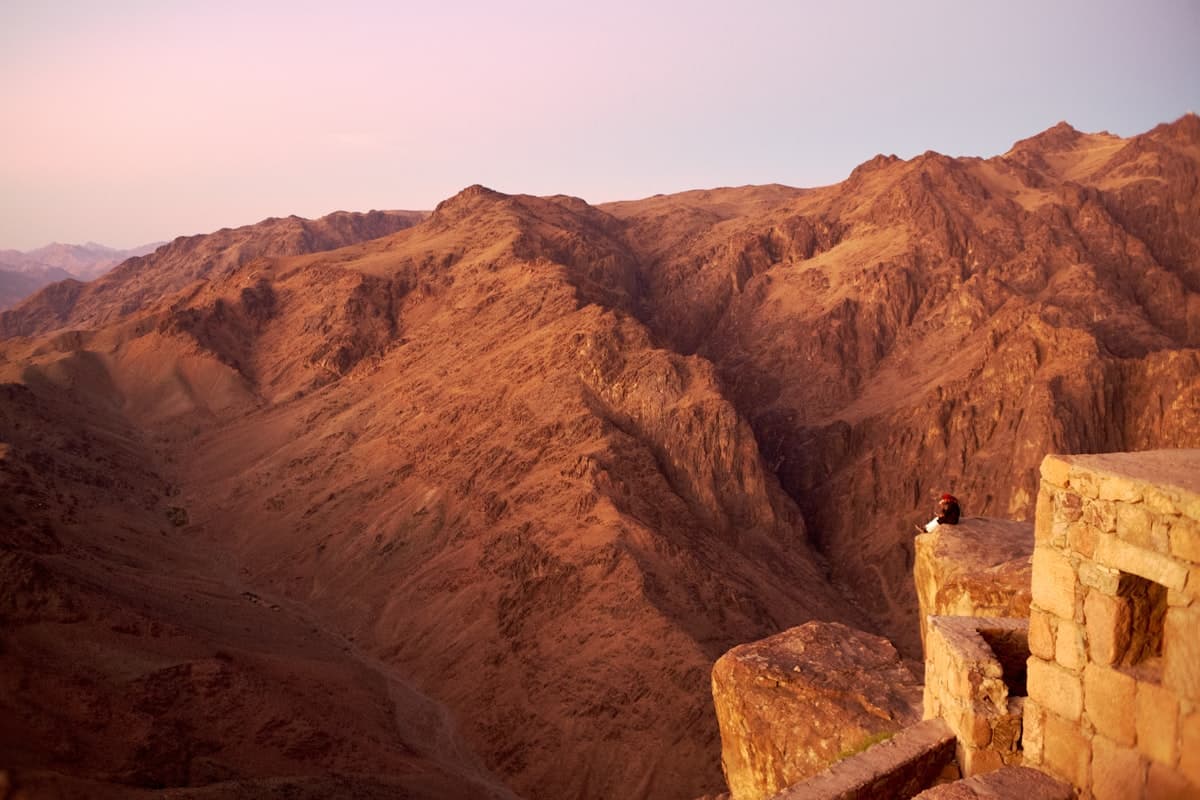
Quick Facts
- Best time to visit
- October to April. Temperatures on the Sinai plateau are mild, crowds are smaller than summer, and the mountain trails are not dangerously cold before dawn. March and November are ideal.
- Entrance fee
- Monastery entry free (donation expected). Museum exhibits approximately EGP 200 (approx $4 USD). No student discount currently confirmed.
- Opening hours
- Saturday to Thursday, 9am to 12pm only. Closed Fridays, Sundays on Orthodox feast days, and all Greek Orthodox holidays. No afternoon opening.
- How to get there
- From Dahab: shared taxi EGP 150 to 200 per person (90 min), private taxi EGP 600 to 900 return. From Sharm el-Sheikh: organized day tour EGP 800 to 1,400, private car EGP 1,200 to 1,800 return. No direct public bus service.
- Time needed
- 2 to 3 hours for monastery alone. Full day (12 hours) if combining with Mount Sinai night climb and sunrise.
- Cost range
- Budget EGP 800 to 1,200 per day (shared transport, simple meals in village). Mid-range EGP 2,000 to 3,500 per day (private car, guesthouse accommodation, guided tour).
The monks at Saint Catherine Monastery have been praying the same hours, in the same chapel, at roughly the same altitude in the Sinai mountains, since the sixth century. Not as a reenactment. Not as a heritage project. As a living monastic community that never stopped, even when plague killed most of them, even when Bedouin tribes pressed against the walls, even when Napoleon wrote them a letter of protection that still hangs inside.
Most visitors come here after climbing Mount Sinai at 2am for the sunrise and arrive at the monastery gates at 9am, exhausted and slightly delirious, unsure what they're looking at. That's a waste of one of the most layered places in Egypt. This Saint Catherine Monastery history guide exists to fix that.
Quick Facts
Best time to visit: October to April. Summer temperatures in the high Sinai plateau are manageable (rarely above 30°C), but the roads from Sharm el-Sheikh or Dahab fill with tour buses in July and August. Spring and autumn give you cooler mornings, cleaner light, and smaller crowds.
Entrance fee: The monastery itself is free to enter, but a donation is expected and respected. The on-site museum (the Chapel of the Burning Bush area and select library exhibits when open) charges approximately EGP 200 (around $4 USD). Separate photography permits have been inconsistently enforced; ask at the gate.
Opening hours: Saturday to Thursday, 9am to 12pm. The monastery is closed on Fridays, Sundays that fall on Orthodox feast days, and Greek Orthodox holidays. Arrive at 8:45am. The gates close promptly.
How to get there: From Dahab (90km north), shared taxis leave from the main strip and cost roughly EGP 150 to 200 per person. Private taxis run EGP 600 to 900 return. From Sharm el-Sheikh (220km), organized day tours cost EGP 800 to 1,400 per person including transport, or you hire a private car for EGP 1,200 to 1,800 round trip. There is no public bus service that reaches the monastery directly. The road from the coast climbs into granite mountains; the last 15km are dramatic and sometimes cold.
Time needed: Two hours minimum for the monastery alone, three if the museum annexe is open. Combine with the Mount Sinai climb (2 to 3 hours up, 2 hours down) for a full 12-hour day. Most people who do both are glad they did. Most people who skip the monastery after the climb regret it.
Cost range: Budget EGP 800 to 1,200 per day (shared transport, simple food in the village). Mid-range EGP 2,000 to 3,500 per day (private car, monastery-adjacent guesthouse, one guided tour).
Why This Place Matters
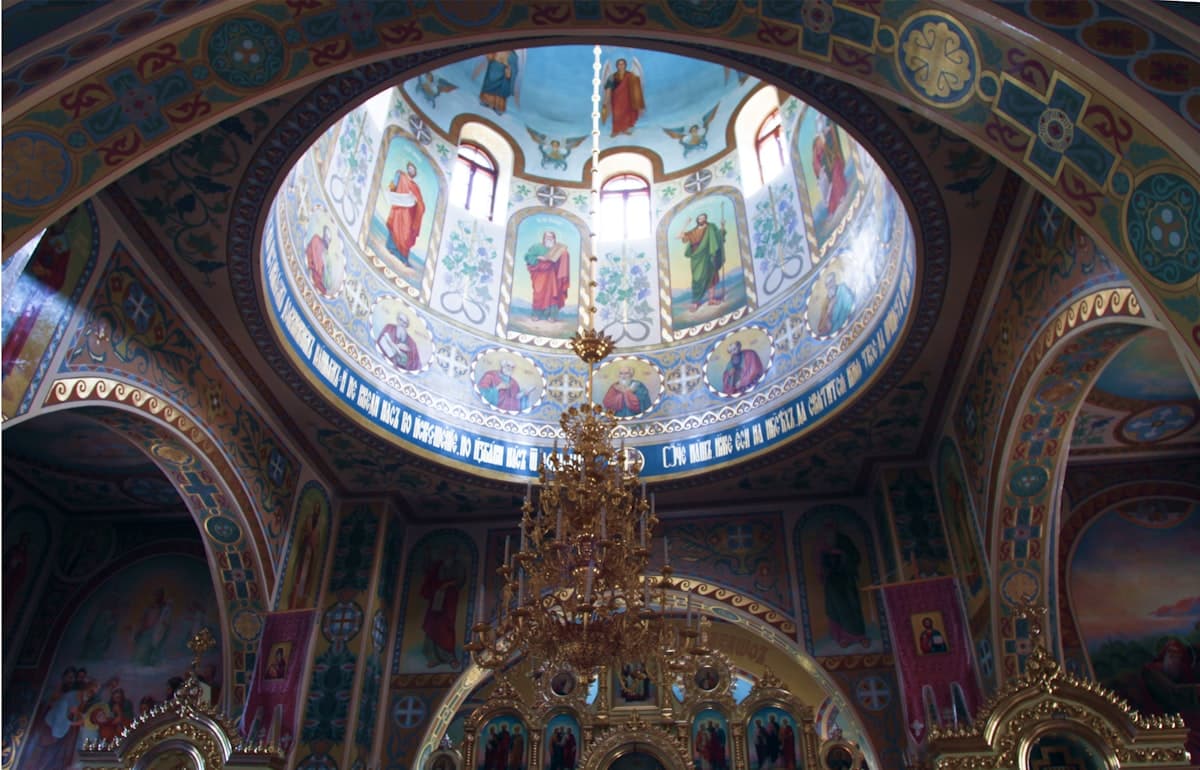
The monastery was built between 548 and 565 CE on the orders of the Byzantine Emperor Justinian I, over a site that the fourth-century desert hermit Egeria had already identified as the location of the Burning Bush described in Exodus. Christians had been gathering at this spot for at least two centuries before Justinian sent his architects.
This is the fact most visitors don't absorb: Saint Catherine is not where Christianity discovered Sinai. It is where an empire decided to institutionalize a site that was already, by then, ancient.
The walls Justinian built, nearly 2 meters thick and up to 10 meters high in places, are still standing. They are some of the oldest complete fortification walls in the world. Inside them, nothing about the architectural sequence is accidental. A mosque was added inside the compound walls in the 11th century, not as an intrusion but as a calculated act of mutual survival: the monks allowed it so that Muslim rulers would see the site as worth protecting. That mosque is still there, oriented toward Mecca, approximately 40 meters from the altar of the main basilica.
The monastery's formal name, the Sacred Monastery of the God-Trodden Mount Sinai, was only linked to Saint Catherine of Alexandria in the 9th or 10th century, when monks claimed to have found her remains on the nearby peak now called Jebel Katrina. Catherine was a third-century Alexandrian Christian martyr, tortured on a spiked wheel, beheaded under Maxentius. Her cult was massive in medieval Europe. The pilgrimage traffic that followed the attribution of her relics here helped fund the monastery for centuries.
The Library and What It Contains
The library at Saint Catherine holds approximately 3,300 manuscripts. Only the Vatican Library holds more early Christian manuscripts in a single collection. The majority are in Greek, but there are also texts in Arabic, Syriac, Georgian, Armenian, Coptic, Slavonic, and Ethiopic. Several predate the monastery itself.
In 1844, a German scholar named Constantin von Tischendorf visited the monastery and found sheets of a fourth-century Greek Bible being used to light fires. He eventually convinced the monks to let him take a portion for study, then later removed 347 leaves under disputed circumstances, presenting them to Tsar Alexander II of Russia. That manuscript, the Codex Sinaiticus, is now split between the British Library, Leipzig University, the National Library of Russia, and Saint Catherine. The monastery and the British Library have been in a quiet institutional argument about this for most of the last century.
The monks have been less naive since. In 1975, during restoration work on a walled-up room, they found an additional 1,100 manuscript leaves that had been unknown to Western scholarship. Some dated to the fifth century. The monastery quietly catalogued them, informed no one for several years, and eventually allowed scholars access on their own terms. That room is not on the public tour.
What you can see, in the small museum adjacent to the main church, includes rotating displays of icons. Saint Catherine holds the oldest dated icon in the world: a 6th-century encaustic image of Christ Pantocrator painted in the same technique used for Greco-Roman Egyptian mummy portraits from the Fayum. The same hand that taught artists to paint the faces of the dead in Fayum taught artists to paint the face of Christ. That line is direct and documented.
Inside the Walls: What You Are Actually Looking At
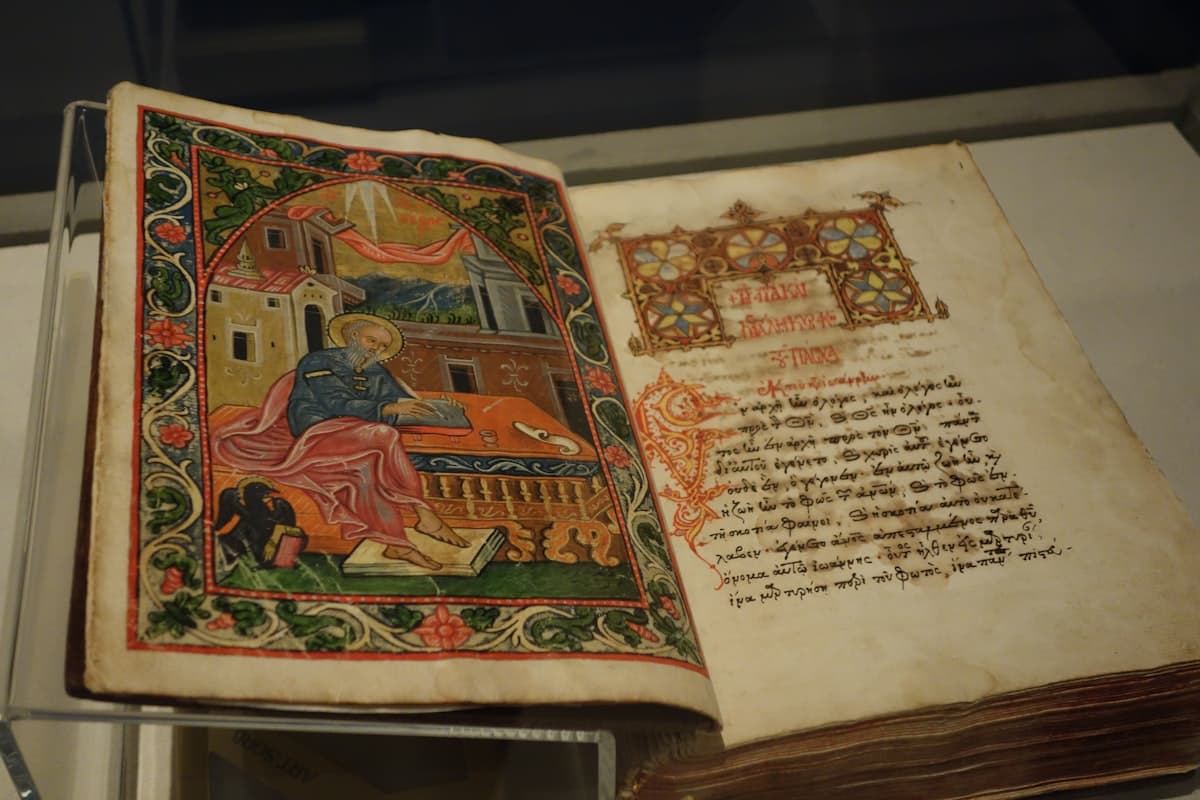
The Basilica of the Transfiguration is the central structure, built by Justinian's architects under the supervision of a Constantinopolitan builder named Stephanos. The cedar ceiling is the original sixth-century wood. The granite columns separating the nave from the aisles came from quarries in the surrounding mountains. The mosaic in the apse, the Transfiguration of Christ, is also original sixth-century Byzantine work, contemporary with the mosaics in Ravenna and predating almost everything you will see in Istanbul.
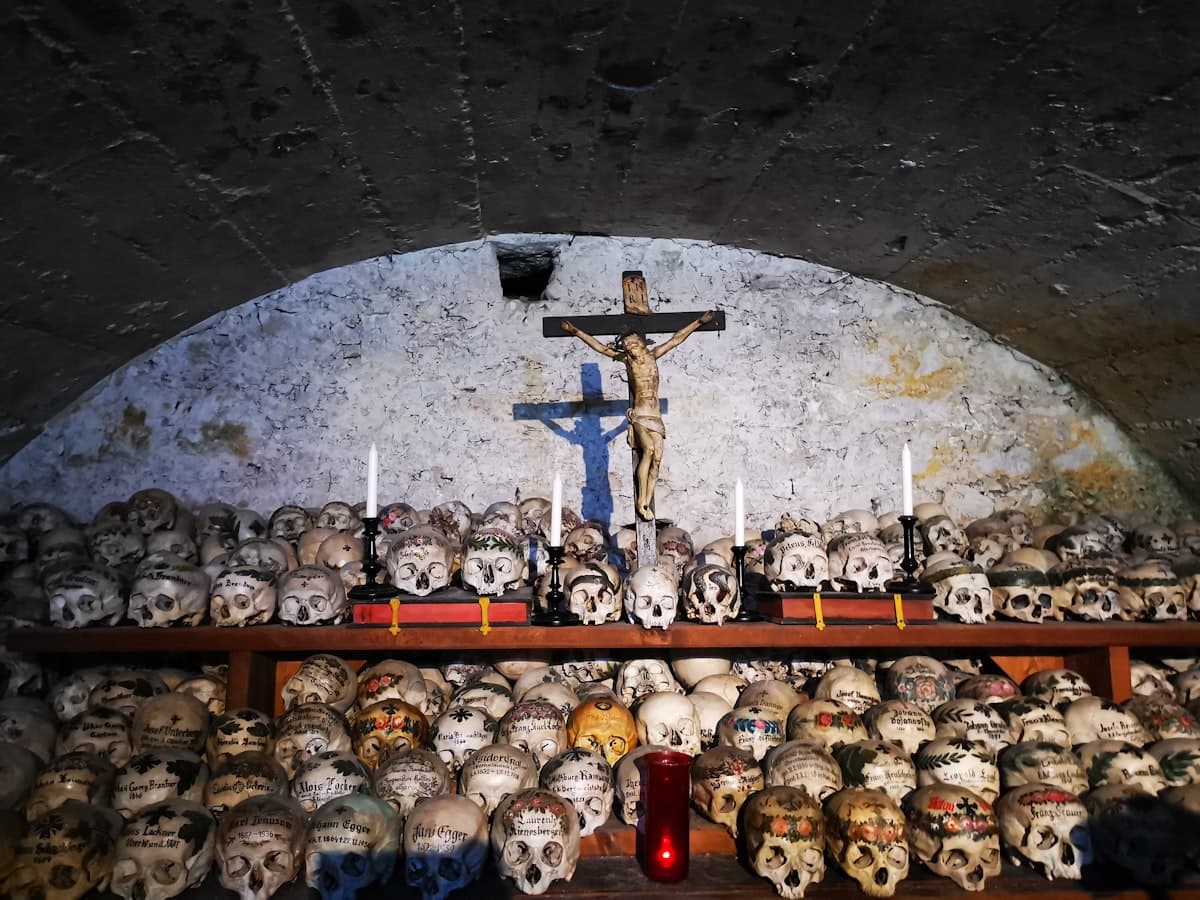
The bones of deceased monks are stored in the ossuary, a separate building that is visible but not always open. Skulls are stacked on shelves. The skeleton of a sixth-century monk named Stephanos sits in the corner dressed in a monk's habit. This is not macabre theater. It is an Orthodox Christian practice that treats the remains of the dead as continuously present members of the community. The monks sleep near these bones deliberately.
The Well of Moses, in the courtyard, is the site where tradition holds that Moses met Jethro's daughters. The well is real. It still produces water. The current stone surround is Ottoman-era reconstruction, but the shaft below it cuts into a water table that Nabataean traders relied on centuries before Justinian's walls went up.
The Connections: Sinai as a Crossroads
Saint Catherine does not exist in isolation from the rest of Egyptian history, even though the mountains make it feel like it does.
The turquoise mines at Serabit el-Khadim, 150km northwest of the monastery, were worked by Pharaonic Egyptians from the Middle Kingdom onward. The proto-Sinaitic script discovered there in the early 20th century is the earliest known alphabetic writing, the ancestor of Phoenician, Hebrew, Arabic, and eventually every alphabet you have ever read. The Sinai was not a blank wilderness before monotheism arrived. It was a resource zone with Egyptian administrative installations, temples to Hathor, and workers who may have been Semitic slaves. The connection between the Exodus narrative and that labor history is a subject Egyptologists still argue about.
The Nabataean traders who built Petra also built water cisterns and caravan stations throughout the Sinai, including near the monastery's location. Their infrastructure is why a small settlement was viable here at all. When Islam arrived in the 7th century and the Nabataean networks were absorbed into the new Islamic trade routes, the monastery sat at a junction of paths used by pilgrims traveling to Mecca from North Africa and the Levant. The monks provided water. The caliphs issued protection documents. The oldest of these, attributed to the Prophet Muhammad himself (though most historians date the surviving copy to a later period), is in the monastery's collection.
Napoleon passed through the Sinai in 1798 during his Egyptian campaign. His letter to the monks, pledging French protection, is displayed in the museum. He also had his engineers repair the monastery's minaret, which had been damaged. This was pragmatic: he needed water sources in the Sinai and the monks controlled the wells.
Common Mistakes
Arriving on the wrong day. The monastery is closed Fridays, Sundays (often), and all Greek Orthodox feast days. These dates are not always published in advance by international tourism sites. Check with your accommodation the night before. More than a few travelers have arrived after a five-hour drive to find locked gates.
Combining the mountain climb and monastery visit badly. The standard itinerary is to climb Mount Sinai at 2am, reach the summit for sunrise, descend to the monastery by 9am. This is physically demanding and logistically tight. If you are not a reasonably fit person, climb down by the shorter camel path and give yourself an extra 30 minutes. Arriving sweaty, cold, and barely functional at the monastery gate means you absorb almost nothing.
Photographing inside the basilica. Photography inside the church is not permitted. Many visitors ignore this. The monks have started closing certain areas to tour groups specifically because of repeated violations. Respect the rule and you may be quietly shown things that groups don't see.
Skipping the ossuary. Most tour guides walk past it. Ask specifically to see the bone chapel. It is one of the strangest and most honest places in Egypt, and it takes ten minutes.
Treating the monks as tour guides. The community at Saint Catherine is small, around 20 monks at present. They have office hours and liturgical obligations. They are not employees of the tourism industry. If a monk speaks to you, listen. Don't initiate by asking about visiting hours or photography rules.
Underpacking for cold. The monastery sits at 1,570 meters. Even in spring, mornings can be 5 to 8°C. If you are combining with the mountain climb, the summit is routinely below zero before dawn. People show up in shorts from Sharm el-Sheikh beach. Bring layers.
Ignoring the village. The small Bedouin town of Saint Catherine (also called Al-Milga) a few kilometers from the monastery has a market, guesthouses, and a Bedouin culture that has coexisted with the monastery for 1,500 years. The Jebeliya tribe were specifically settled here by Justinian to provide labor and protection to the monastery. Their descendants still live here. That relationship is worth at least one conversation and one cup of tea.
Practical Tips
Book accommodation in the Saint Catherine village or at the monastery guesthouse (which takes a small number of pilgrims, not tourists, on application) if you want to do the mountain at night and the monastery in the morning without a pre-dawn drive. The guesthouse requires advance written request to the monastery administration; it is not a hotel booking.
Guided tours from Dahab typically include transport, a local guide for the mountain climb, and a brief walk through the monastery. Quality varies significantly. Ask specifically whether your guide is licensed by the Egyptian Tourism Authority and whether they have knowledge of the monastery's history or simply logistics. Many don't.
Bring cash. There are no ATMs at the monastery. The nearest reliable ATM is in the town of Saint Catherine. Card payments are not accepted.
Dress conservatively. Shoulders and knees covered for both men and women. Scarves are available at the gate but bringing your own is more comfortable.
The best light for photography of the exterior walls is between 7 and 9am, when the granite mountains behind the monastery catch the early sun and the walls glow orange-pink. By 10am, the light is flat and the tour buses are arriving.
Frequently Asked Questions
The Weekly Dispatch
More on Egypt, every Friday.
Cultural depth and places most guides never mention.
No spam. Unsubscribe anytime.