Saint Catherine's Monastery Guide: Where Three Faiths Collide
The oldest continuously inhabited Christian monastery holds a library second only to the Vatican. Your Saint Catherine's Monastery guide starts here.
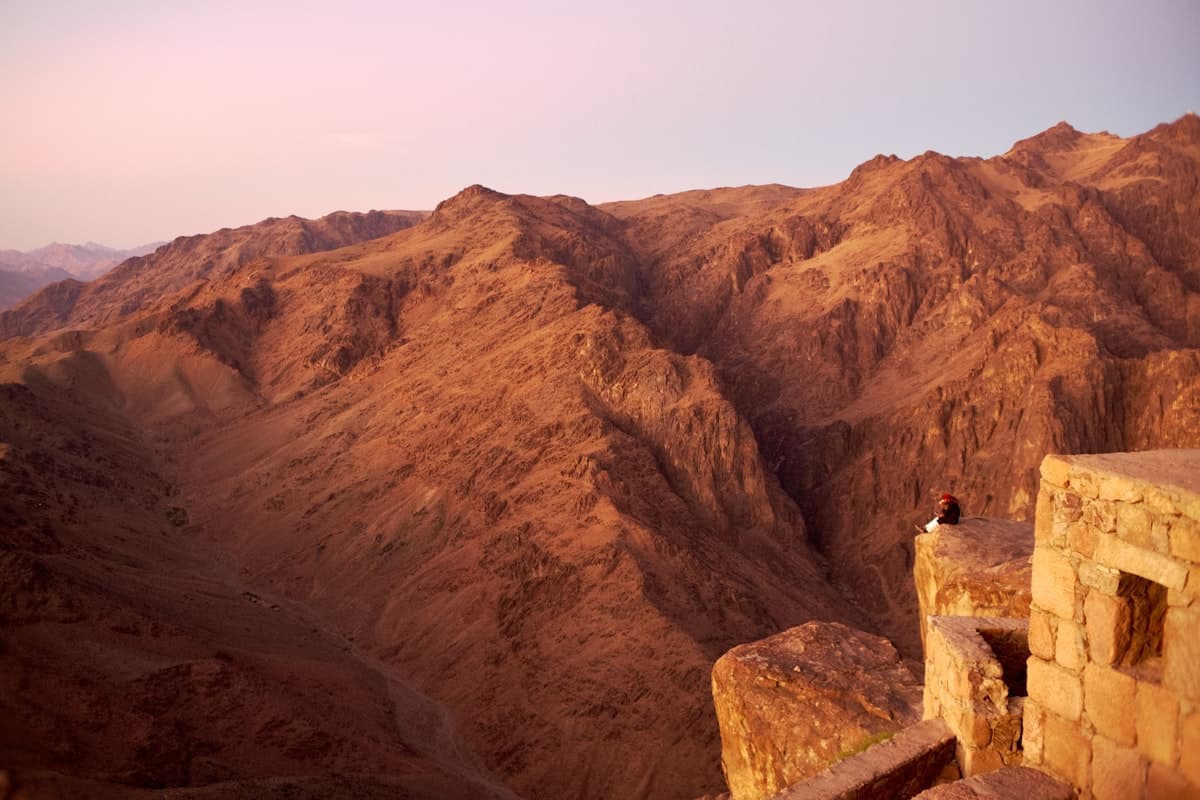
Quick Facts
- Best time to visit
- October through April. Spring and autumn offer mild daytime temperatures around 18-22°C. Summer is very hot in the valleys and cold at night year-round; January and February bring genuine freezing temperatures at the summit.
- Entrance fee
- Monastery entry is free with donations welcomed. Church of the Transfiguration: EGP 300 (approx $6 USD), students EGP 150. Mount Sinai hike: no entry fee, Jabaliya guide EGP 300-400 ($6-8 USD) recommended.
- Opening hours
- Sunday through Friday, 9am to 12pm only. Closed Saturdays and all Greek Orthodox holidays. No exceptions to the noon closing time.
- How to get there
- East Delta bus from Cairo Turgoman station: EGP 300-400 ($6-8 USD), 10-12 hours. Private transfer from Sharm el-Sheikh: EGP 1,500-2,500 ($30-50 USD), 2.5 hours. Shared minibus from Dahab: EGP 200-350 ($4-7 USD), 90 minutes.
- Time needed
- 2-3 hours for the monastery alone. A full experience requires at least one overnight in Saint Catherine's town to combine the monastery visit with a Mount Sinai sunrise hike (3-4 hours up, 2-3 hours down).
- Cost range
- Budget EGP 800-1,200 per day ($16-24 USD) covering guesthouse, food, and entry fees. Mid-range with private transport and comfortable hotel EGP 3,000-5,000 ($60-100 USD) per day.
The monks never left. While empires rose and collapsed around them, while the Byzantine world that built their walls dissolved, while the Crusades came and went and the Ottomans took Egypt, the monks of Saint Catherine's kept their hours. Vigils at midnight, Orthros at dawn, Liturgy after sunrise. They have been doing this without interruption since the sixth century. The monastery is not a relic. It is a living institution that happens to be older than most countries on earth.
Quick Facts
Best time to visit: October through April, when Sinai temperatures are bearable (summer heat in the mountains can exceed 38°C, though nights stay cold year-round).
Entrance fee: The monastery itself is free to enter, though donations are welcomed. The separate Burning Bush garden and chapel require no additional fee. The Church of the Transfiguration charges EGP 300 (approx $6 USD) for entry; students pay EGP 150. Climbing Mount Sinai has no official entry fee, but hiring a local Bedouin guide costs between EGP 200-400 ($4-8 USD) and is strongly recommended.
Opening hours: The monastery is open Sunday through Friday, 9am to 12pm only. It is closed Saturdays, all Greek Orthodox holidays, and during religious festivals. That three-hour window is real and it is strict.
How to get there: East Delta buses run from Cairo's Turgoman station to Saint Catherine's town (10-12 hours, approximately EGP 300-400 / $6-8 USD). Private transfers from Sharm el-Sheikh run around EGP 1,500-2,500 ($30-50 USD) and take about 2.5 hours. From Dahab, shared taxis or minibuses cost EGP 200-350 ($4-7 USD) and take roughly 90 minutes. There are no direct flights to the monastery, but Saint Catherine's International Airport handles small charter and domestic flights from Cairo.
Time needed: The monastery itself requires 2-3 hours. Combining it with a Mount Sinai sunrise hike means arriving the night before and sleeping in Saint Catherine's town, then beginning the 3-4 hour climb around 2am.
Cost range: Budget travelers spending EGP 800-1,200 per day ($16-24 USD) can cover accommodation in Saint Catherine's town, food, and entry fees. Mid-range with a private car from Sharm and a proper hotel runs EGP 3,000-5,000 ($60-100 USD) per day.
Why This Place Matters
The Emperor Justinian ordered this monastery built around 548 CE, not primarily as a place of worship, but as a fortress. He stationed soldiers here. His logic was practical: the Christian monks who had been living at the base of the mountain since at least the third century were repeatedly attacked by nomadic raiders. The walls Justinian built, thick granite blocks rising twelve to fifteen meters, were military architecture. The monastery survived because it was designed to withstand sieges.
But here is what most visitors do not register: the monastery predates Islam by nearly a century, and when Islam arrived, it did not destroy this place. The Prophet Muhammad is said to have issued a letter of protection to the monks of Sinai, a document the monastery claims to hold, granting them safety and the right to practice their faith. Whether the surviving copy is authentic or a later forgery is disputed by historians, but the political reality was unambiguous. Muslim rulers, including the Fatimids and later the Ottomans, built a mosque inside the monastery walls. It still stands, directly adjacent to the main church, a minaret rising beside a bell tower. Both are operational. This is not a museum exhibit about coexistence. It is coexistence, maintained for over a millennium through genuine interdependence with local Bedouin tribes and successive Islamic dynasties.
The site is also sacred in three traditions simultaneously. For Christians, it marks the location of the Burning Bush and the giving of the Ten Commandments to Moses. For Jews, this is the Sinai of the Torah. For Muslims, Moses, known as Musa, is among the most frequently mentioned prophets in the Quran, and the area carries deep spiritual weight. The mountain itself, Jebel Musa, is called "the mountain of Moses" in Arabic.
The Library and What Survives Inside
The library of Saint Catherine's is the reason scholars come here, and it is the reason you should understand what you are looking at when you walk through the gates. The collection holds roughly 3,300 manuscripts, making it the second largest repository of early Christian manuscripts in the world after the Vatican. These texts survived because of the monastery's isolation. They were not burned in wars, not dispersed by reformers, not sold off during periods of financial crisis.
The most famous manuscript connected to this library is the Codex Sinaiticus, a fourth-century handwritten copy of the Christian Bible, one of the oldest in existence. A German scholar named Constantin von Tischendorf visited in the nineteenth century and, depending on your source, either rescued or stole a significant portion of it. The surviving leaves ended up in Leipzig, Saint Petersburg, and London. The British Library holds most of what Tischendorf took. The monastery has never stopped requesting their return.
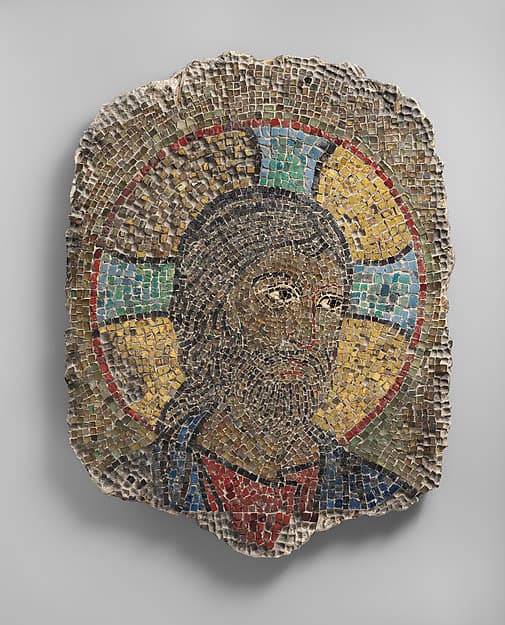
Visitors cannot access the manuscript collection directly. The library is not open to the public. What you can see is the Church of the Transfiguration, which holds a mosaic of the Transfiguration in its apse dating to the sixth century. It is one of the best-preserved early Byzantine mosaics anywhere in the world, predating the iconoclasm controversy that destroyed so much early Christian art elsewhere. The monastery's location in Egypt, outside the reach of Byzantine emperors who later ordered icons destroyed, is the reason it survived.
The Chapel of the Burning Bush sits behind the main altar. You remove your shoes to enter, the same gesture made in mosques and in the Biblical instruction to Moses: "remove your sandals, for the place where you are standing is holy ground." The bush itself, a living Rubus sanctus, grows in a courtyard just outside. Cuttings from it have been planted in other monasteries around the world; none have survived except this one.
The Bedouin Who Keep This Place Running
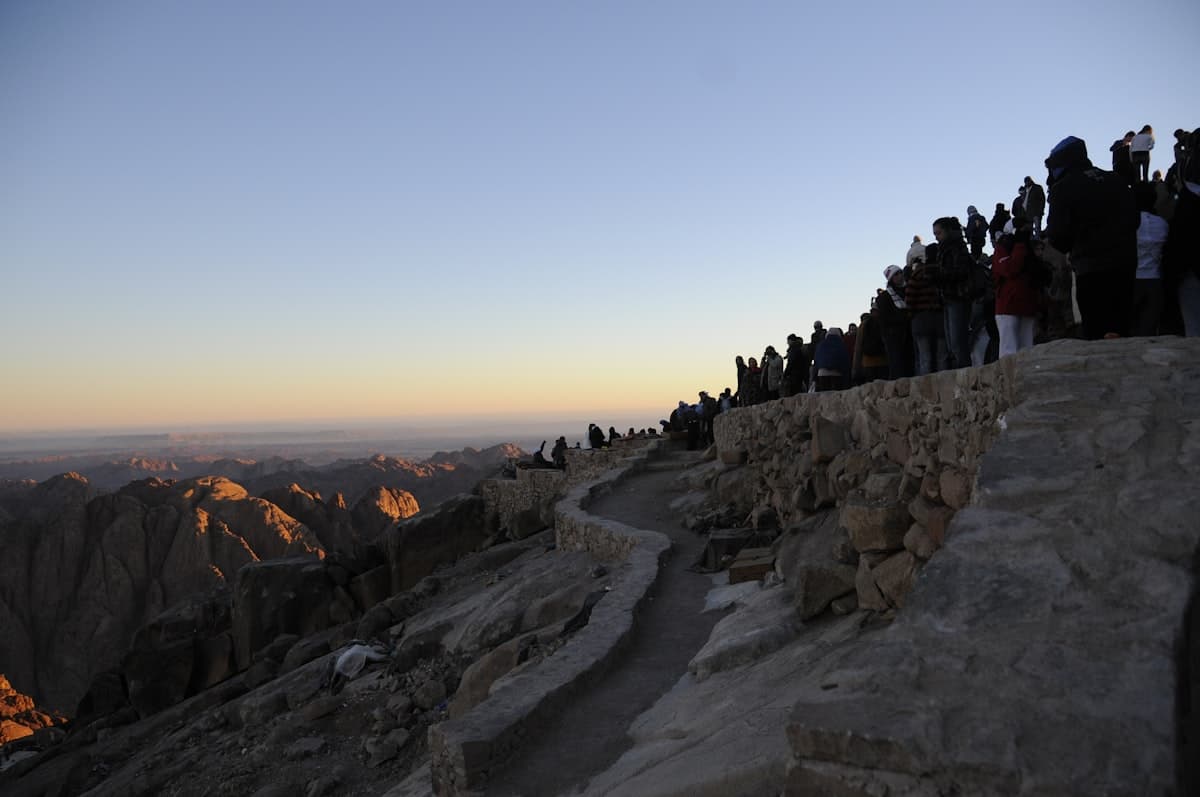
The Jabaliya tribe, whose name means "people of the mountain," have lived in the Saint Catherine's region since the sixth century, when Justinian brought several hundred families, some from the Balkans and some from Egypt, to serve the monks as laborers. Over generations they converted to Islam while maintaining their role as the monastery's protectors and support community. Today the Jabaliya work as guides up Mount Sinai, run the teahouses along the trail, manage the camel operations, and staff many of the hotels in the town. Their relationship with the monastery is not a recent tourism phenomenon. It is 1,500 years old.
This matters when you climb the mountain. The broad "camel path" that switchbacks up the southern face was built by the monks in the nineteenth century and is wide enough for loaded animals. The "Steps of Repentance," the direct route of approximately 3,750 stone steps cut into the rock, is older and steeper, and Jabaliya elders say a monk cut every step as an act of penance. Both routes converge near the summit, where a small Greek Orthodox chapel and a mosque stand within meters of each other.
At the summit at dawn, if the sky is clear and the Sinai plateau spreads out below you in every direction, you are standing at roughly 2,285 meters above sea level, looking over a landscape that has been considered sacred by three major world religions for over three thousand years. That is not a small thing to be inside of.
The Connections
Saint Catherine's does not exist in isolation, geographically or historically. The trade routes that passed through Sinai connected pharaonic Egypt to the Levant and to Arabia. The turquoise mines at Serabit el-Khadim, two hours northwest of the monastery, were worked by Egyptian laborers as early as 3,000 BCE and yielded one of the earliest alphabetic inscriptions ever discovered, the Proto-Sinaitic script, the likely ancestor of the Phoenician alphabet from which Arabic, Hebrew, Greek, and Latin all ultimately derive. The writing on those rocks at Serabit is a direct ancestor of the letter you are reading right now.
The road the monastery sits on was also the road that connected Egypt to Jerusalem during the Byzantine period, the Crusader period, and beyond. Pilgrims walking from Cairo to Jerusalem passed through here. The monastery operated as a waystation. Its guest quarters, which still exist, once housed travelers from across the Mediterranean and the Arab world.
In Islamic architectural terms, the mosque inside the walls is a small but significant example of Fatimid patronage, built in the eleventh century using materials consistent with Fatimid construction techniques found in Cairo. The juxtaposition of a Fatimid mosque and a sixth-century Byzantine church sharing the same courtyard is visible nowhere else in Egypt.
Common Mistakes
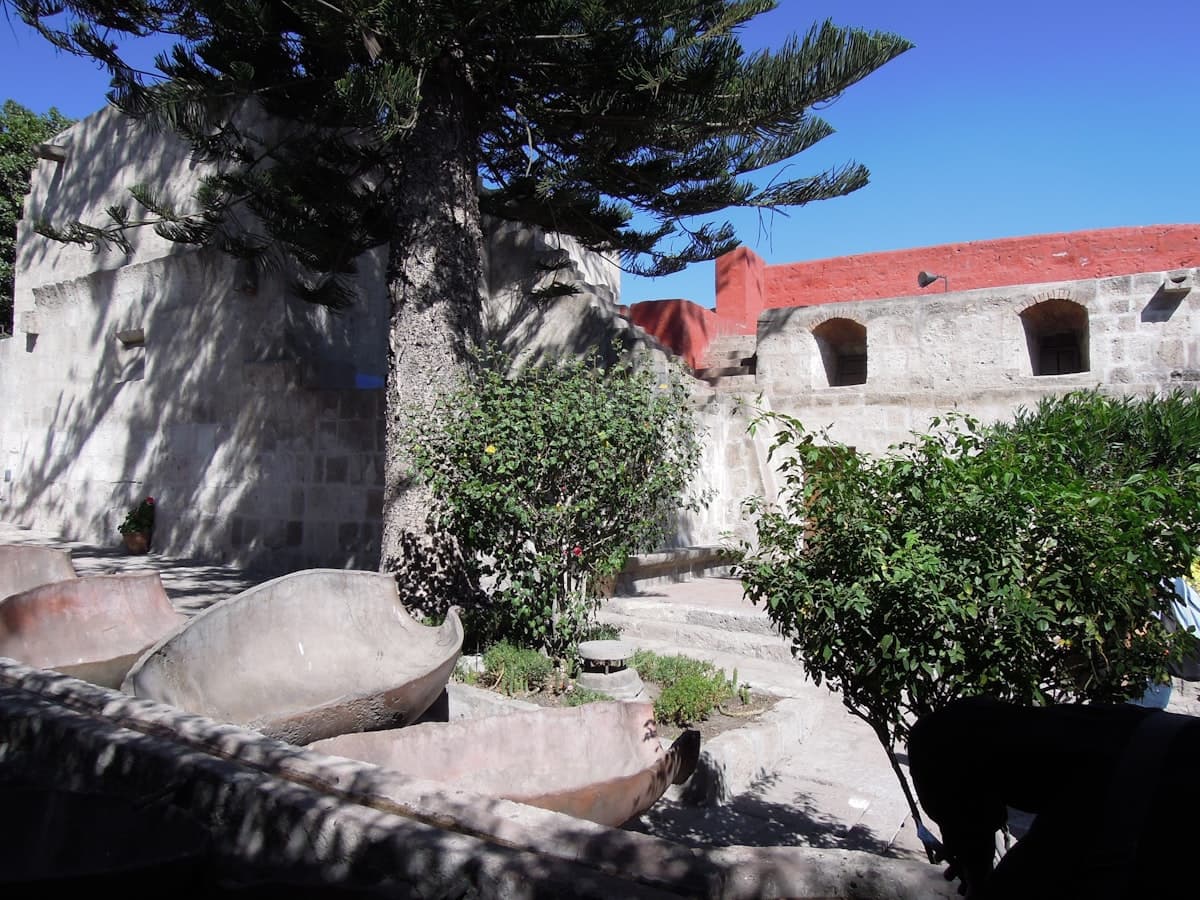
Arriving outside the three-hour window. The monastery opens at 9am and closes at noon, Sunday through Friday. Visitors who arrive at 12:05pm will not be admitted. This happens constantly, particularly to groups coming from Sharm el-Sheikh who underestimate the drive time.
Climbing Mount Sinai without checking the weather. Sinai winters are cold enough to kill. People have died of hypothermia on the mountain in January and February, starting the climb underprepared. Temperatures at the summit can drop to minus 10°C before wind chill. Bring real layers.
Treating the monastery as a quick add-on to a Sharm beach trip. The drive from Sharm is 2.5 hours each way. Doing both the monastery and a sunrise hike in a single day trip from Sharm is genuinely exhausting and means you experience neither properly. Stay at least one night in Saint Catherine's town.
Ignoring the closed days. The monastery is closed on Saturdays and on all Greek Orthodox religious holidays. The Greek Orthodox calendar does not match the Gregorian calendar, so Christmas falls in January and Easter on a different date than Western Easter. Check the specific dates before you book.
Bringing only water for the mountain hike. The trail has tea stops run by Jabaliya vendors selling hot drinks, snacks, and, somewhat surreally, instant noodles. But these stops do not sell enough food to sustain a cold four-hour climb followed by a descent. Carry real food and more water than you think you need.
Missing the ossuary. The monks do not bury their dead; they store the bones in an ossuary near the garden, arranged in a manner that is arresting and not for everyone but is also one of the most quietly honest things you will encounter at the site. Most visitors walk past it. Ask a monk or guard where it is.
Photographing monks without permission. The monks who still live here are not attractions. Some will engage warmly. Others find the steady stream of visitors genuinely intrusive. Do not photograph them without asking.
Practical Tips
Stay in Saint Catherine's town rather than commuting from Sharm or Dahab. The town has several small hotels ranging from basic guesthouses at EGP 400-600 ($8-12 USD) per night to the more comfortable Al-Karm Ecolodge at EGP 2,500-3,500 ($50-70 USD). Sleeping here also makes the Mount Sinai predawn start manageable instead of punishing.
Dress conservatively. This is an active monastery. Arms and legs should be covered. Scarves for women are expected. The monks enforce this and will turn you away if you are not dressed appropriately.
The best light for photography in the courtyard hits around 10am when the sun is above the walls. The mosaic in the church is difficult to photograph well because the interior is dim, so adjust your expectations.
If you read any Greek, or even if you do not, the icon collection displayed in the museum room off the main courtyard is one of the finest collections of Byzantine icons outside of Istanbul. This is not hyperbole. Icons that would anchor entire exhibitions in European museums hang here in modest frames. Spend time with them.
For the Mount Sinai climb, hiring a Jabaliya guide is not just practical but directly supports the community that has maintained this landscape for fifteen centuries. Rates are negotiable but EGP 300-400 for a summit climb is fair. Your guide will know which path is safer in the dark, where to stop for tea, and will likely know the mountain's history better than any guidebook.
Frequently Asked Questions
The Weekly Dispatch
More on Egypt, every Friday.
Cultural depth and places most guides never mention.
No spam. Unsubscribe anytime.