Saint Sergius Church Cairo: Inside Egypt's Oldest Church
Saint Sergius Church Cairo is where the Holy Family allegedly sheltered. Here's what most visitors miss about Egypt's oldest church, hidden in Coptic Cairo.
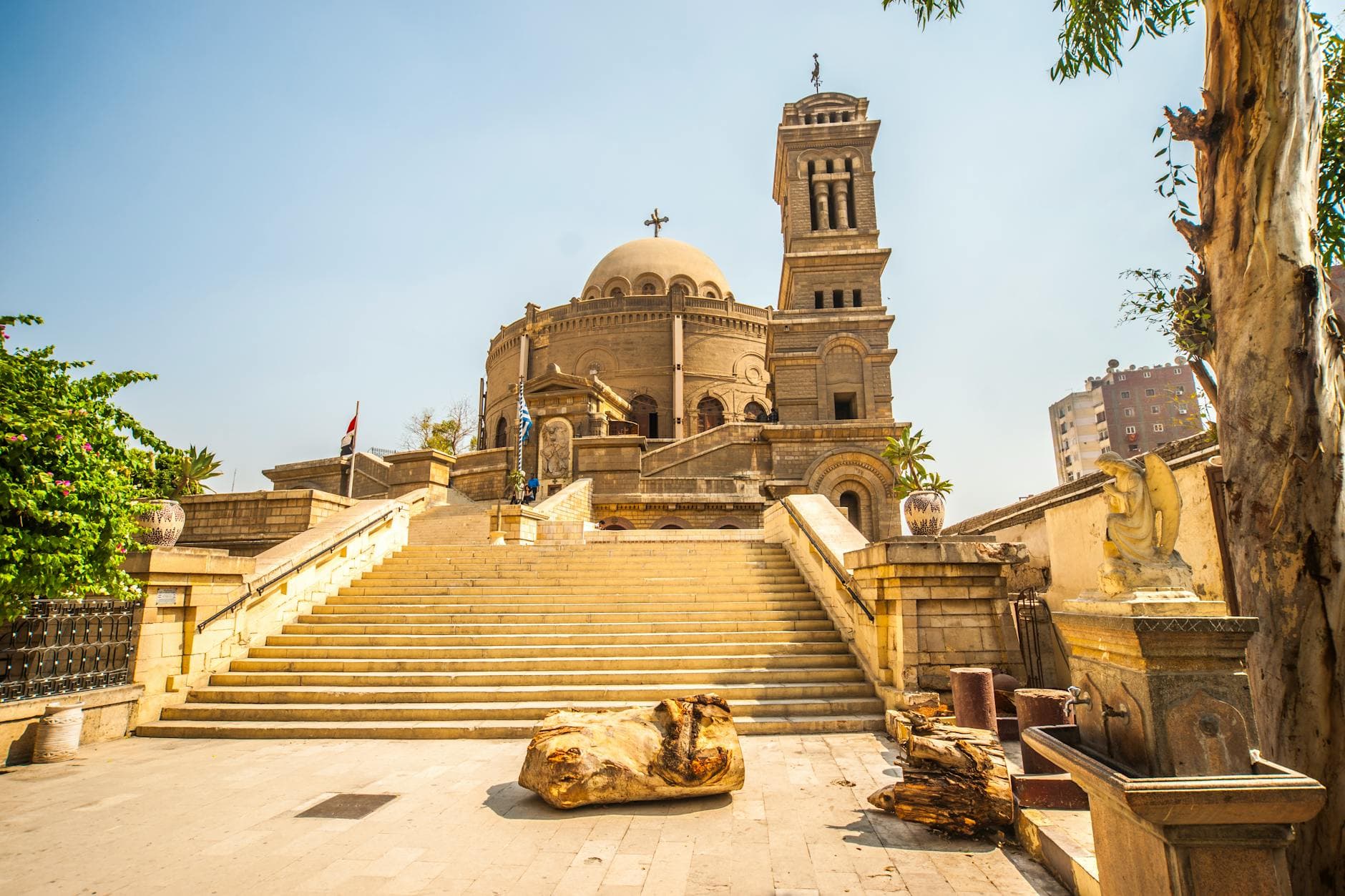
Quick Facts
- Best time to visit
- October to March. The crypt is more likely to be accessible, temperatures are comfortable for walking the Coptic quarter, and natural light in the church interior is slightly better in winter months.
- Entrance fee
- EGP 100 per person (approx $2 USD) individually, or EGP 300 (approx $6 USD) for the combined Coptic Cairo ticket covering multiple churches and the Coptic Museum. Student discounts available with valid ID.
- Opening hours
- Daily 9am to 5pm. Friday mass runs 8am to approx 10am with restricted independent access. Sunday services draw larger congregations; arrive before or after for quieter access.
- How to get there
- Metro Line 1 to Mar Girgis station (EGP 8 to EGP 15 from central Cairo), five-minute walk to church. Taxi or Uber from Downtown Cairo costs EGP 50 to EGP 100. No dedicated parking inside the Coptic quarter.
- Time needed
- 1 hour for Abu Serga alone. 2.5 to 3 hours for the full Coptic Cairo complex including Hanging Church, Ben Ezra Synagogue, and Coptic Museum. Half day if you want to explore without rushing.
- Cost range
- Budget EGP 400 to EGP 600 including transport, tickets, and a simple lunch nearby. Mid-range EGP 800 to EGP 1,200 adding a local guide and sit-down meal.
The crypt beneath Abu Serga is flooded for roughly three months every year. Not metaphorically. Literally flooded, the Nile water seeping up through the foundations the same way it has for over a thousand years, and the priests work around it the way Cairenes work around everything: with patience, some improvised pumping equipment, and a deep conviction that the place will endure regardless.
This is the first thing to understand about the Saint Sergius Church Cairo, known locally as Abu Serga. It is not a preserved relic behind glass. It is a functioning church in a working neighborhood, sitting on a water table that has been rising and falling with the Nile since the Roman period, attended by Coptic Christian families who have been coming here for generations, and it holds a theological and architectural history that most visitors walk straight past on their way to the Ben Ezra Synagogue next door.
Quick Facts
Best time to visit: October to March, when Cairo temperatures are reasonable and the crypt is more likely to be accessible. Avoid July and August, when Nile-fed groundwater is highest and the lower crypt is often inaccessible.
Entrance fee: EGP 100 per person (approximately $2 USD) for non-Egyptians, included in the general Coptic Cairo ticket. The combined ticket covering the Hanging Church, Coptic Museum, and surrounding churches costs EGP 300 (approximately $6 USD). Prices have been rising steadily; confirm at the gate.
Opening hours: Daily 9am to 5pm. Friday masses run from approximately 8am to 10am, during which independent access is restricted. Sunday services draw larger congregations. Arrive before 11am on weekdays for the quietest experience.
How to get there: The Metro is your best option. Take Line 1 to Mar Girgis station (the station is named for Saint George), exit directly into Coptic Cairo. Fare is EGP 8 to EGP 15 depending on distance traveled. From Downtown Cairo, a taxi or Uber costs EGP 50 to EGP 100 depending on traffic. Abu Serga is a five-minute walk from the station, inside the Roman towers.
Time needed: One hour minimum for Abu Serga alone. Two to three hours if you're combining with the Coptic Museum, the Hanging Church, and Ben Ezra Synagogue, which you should.
Cost range: Budget EGP 400 to 600 for the area including tickets and transport. Mid-range EGP 800 to 1,200 if you add lunch at one of the nearby Coptic-run restaurants.
Why This Place Matters
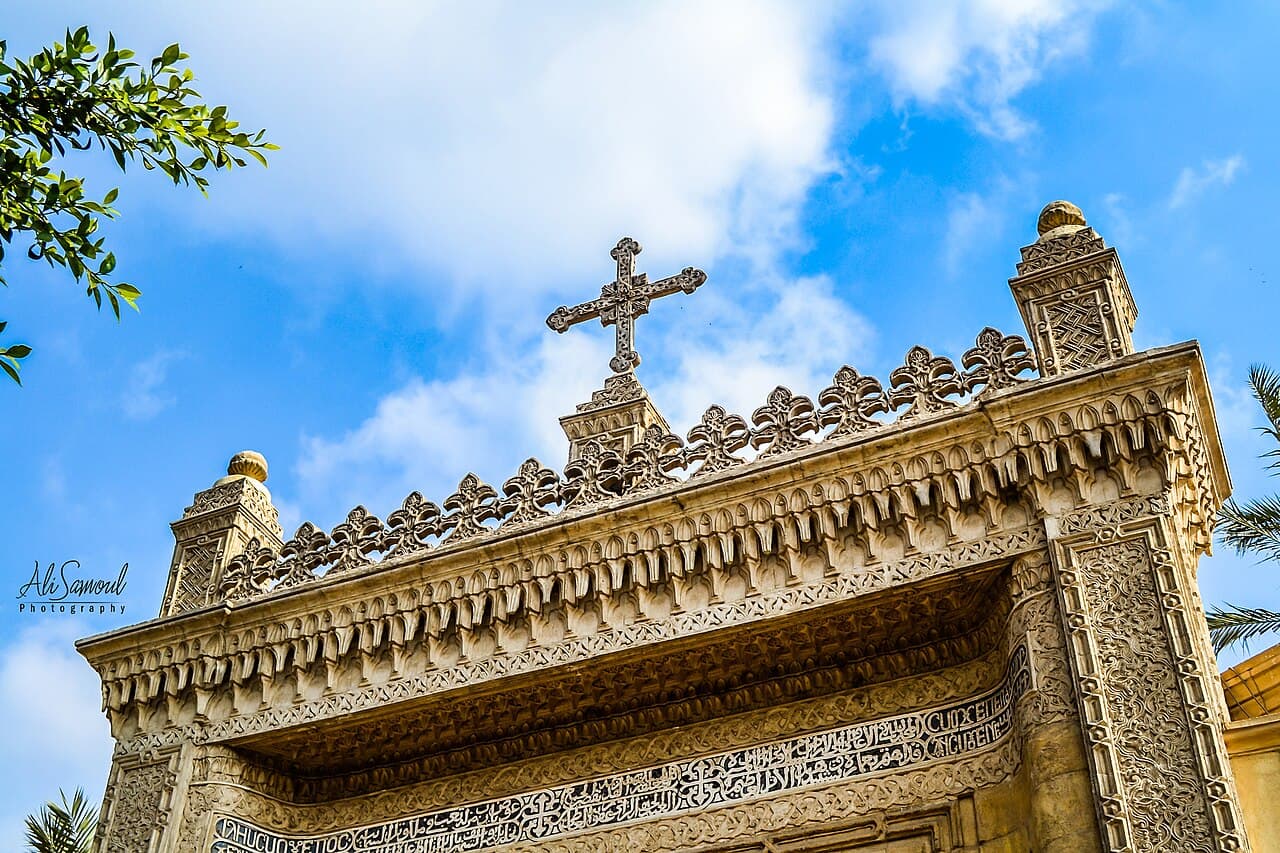
The Saint Sergius Church Cairo is generally accepted as the oldest church in Egypt that remains in active use. Scholars date the current structure to the fourth or fifth century CE, though the site itself is older: it was built within what had been a Roman fortress called Babylon, whose towers still stand at the entrance to the Coptic quarter. When the Romans built that fortress, they built it on the eastern bank of what was then a functioning Nile branch. The canal has been dry for centuries. The fortress walls are still here.
The church is dedicated to Saints Sergius and Bacchus, two Roman soldiers martyred around 303 CE during the Diocletianic Persecution, the last and most brutal wave of Roman anti-Christian violence before Constantine changed everything. They were executed in Syria, which makes their commemoration in Egypt a reminder of how interconnected the early Christian world was: Egyptian, Syrian, and eventually Ethiopian Christianity all grew from the same root, and the martyrs of one region were honored in the churches of another.
But the reason most people know Abu Serga is not the martyrs. It is the crypt. According to Coptic tradition, the Holy Family, meaning Mary, Joseph, and the infant Jesus, rested in this spot during their flight into Egypt, an event described in the Gospel of Matthew and elaborated in Coptic apocryphal texts into a detailed itinerary through Egypt. The crypt beneath the church marks the claimed resting place. Whether or not you hold this tradition literally, it shaped everything: this church has been a pilgrimage site for at least fifteen centuries, attracting visitors from Ethiopia, Syria, Armenia, and eventually Europe long before the modern tourist economy existed.
What You Actually See Inside
The church is small. That surprises almost everyone. You come expecting something cathedral-scaled and find instead a basilica about the size of a generous living room, divided into three aisles by two rows of columns. There are twelve columns total, representing the apostles, which is standard for Coptic basilica design. One of the columns is made from a different material than the rest, darker and slightly larger. The guide, if you have one, may tell you it is made from a different type of granite. What they may not tell you is that columns in Coptic churches were routinely salvaged from earlier Roman or Pharaonic structures. The stone in that church is older than the church itself.
The wooden iconostasis, the carved screen separating the nave from the sanctuary, dates to the 11th century and is one of the finest surviving examples of Coptic woodwork in Cairo. It is inlaid with ivory, and the carvings show geometric interlace patterns that closely resemble what you will find in Fatimid-era Islamic woodwork from the same period. This is not coincidence. Coptic craftsmen worked on Islamic monuments, Islamic craftsmen worked on Christian ones, and the geometric visual language of Cairo in the 10th through 13th centuries crossed religious boundaries constantly.
The frescoes on the walls are damaged and faded, but look carefully at the apse. What remains shows the characteristic Coptic depiction of Christ enthroned, with saints arrayed on either side, faces more elongated and formal than Byzantine equivalents, reflecting a distinct Egyptian visual tradition that predates Islamic Egypt by centuries.
The Crypt
A narrow stone staircase at the back of the church descends to the crypt, roughly three meters below the main floor. When the water table is low, you can stand on the stone floor and look at the small altar and the niche where, according to tradition, the Holy Family rested. When the water is high, which happens for weeks at a stretch, the crypt is cordoned off and you peer down from the top of the stairs into dark water.
The flooding has been a problem and a symbol simultaneously for the church's entire history. Medieval Coptic texts describe the flooding as miraculous, a sign of blessing, the Nile honoring the Holy Family's presence. Modern church administrators describe it as a structural engineering challenge. Both things are true, and the coexistence of those two attitudes is very Egyptian.
The Connections
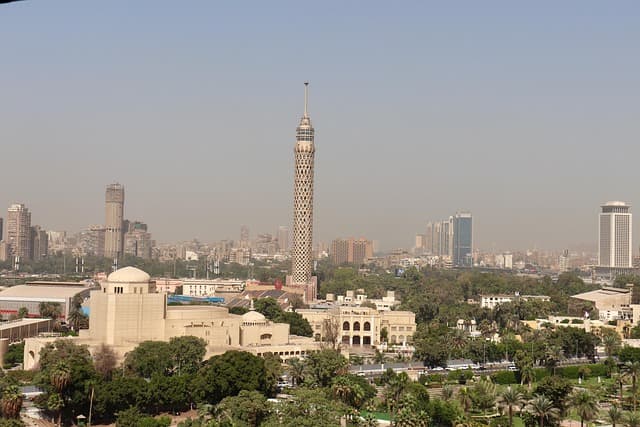
Coptic Cairo is a layered site in the most literal sense. The Roman fortress of Babylon, inside which Abu Serga sits, was built in the first or second century CE on the site of an earlier settlement. Some Egyptologists connect the name Babylon to a much older Egyptian toponym, though this remains debated. When the Arab general Amr ibn al-As conquered Egypt in 641 CE, he camped his forces outside these same Roman walls before negotiating the surrender of the Byzantine garrison inside. He then built the first mosque in Africa, the Mosque of Amr ibn al-As, roughly 400 meters from where you are now standing in Abu Serga. You can walk there in five minutes.
The Ben Ezra Synagogue, immediately adjacent to Abu Serga, adds another layer. It was converted from a Coptic church in the ninth century when the Coptic community sold it to the Jewish community to raise funds to pay a tax imposed by the Abbasid governor of Egypt. The synagogue became famous in the 19th century when a cache of documents called the Cairo Geniza was discovered in its walls: over 300,000 manuscript fragments in Hebrew, Arabic, and Aramaic, dating back a thousand years, representing the most significant archive of medieval Jewish and Islamic daily life ever found.
The Coptic Museum, 200 meters from Abu Serga, houses the world's largest collection of Coptic art and artifacts, including textiles, manuscripts, and architectural elements removed from churches across Egypt. One section of the museum is built around a Nilometer, a calibrated stone shaft used to measure the Nile's annual flood level. The same water table that floods the crypt of Abu Serga was being measured in that shaft long before the church was built.
Common Mistakes
Going only to the Hanging Church and skipping Abu Serga. The Hanging Church, al-Muallaqah, gets most of the visitor attention because it is more architecturally dramatic. But Abu Serga is the older site with the deeper theological significance for Coptic tradition. If you have time for one Coptic Cairo church, Abu Serga is the more important choice historically.
Visiting on Friday morning without checking. The Friday mass runs until roughly 10am and the church is closed to independent visitors during this period. Arriving at 9am on a Friday and expecting to walk in freely is a common and preventable frustration.
Assuming the crypt will be accessible. This is genuinely unpredictable. The crypt floods on a seasonal schedule roughly tied to the Nile, but the exact timing varies. There is no online resource that tells you the current crypt status. If accessing the crypt is important to you, call the Coptic Cultural Center or simply accept the uncertainty as part of the experience.
Not hiring a local guide for Coptic Cairo. The standard admission ticket gets you inside the buildings. A knowledgeable guide, ideally Coptic Christian with deep familiarity with the theology and history, transforms the visit completely. Expect to pay EGP 300 to EGP 500 for a two-hour guided walk of the quarter. Ask your hotel or the Coptic Museum information desk for recommendations.
Missing the woodwork. Most visitors look up at the ceilings and frescoes and look down at the crypt stairs. The 11th-century iconostasis screen gets photographed but rarely examined closely. Stand in front of it for five minutes and look at the ivory inlay. It is the finest thing in the building.
Conflating Abu Serga with the general label 'oldest church in Egypt'. Several churches in Egypt make variants of this claim, including churches in Upper Egypt with equally ancient foundations. Abu Serga's specific claim is to be the oldest continuously active church in Cairo, on a site with documented pilgrimage use dating to at least the seventh century. The distinction matters if you are going to repeat it.
Underestimating the full Coptic Cairo complex. Abu Serga, Ben Ezra, the Hanging Church, the Coptic Museum, the Church of Saint Barbara, and the Church of Saints Sergius and Bacchus together constitute one of the most significant concentrations of late antique and medieval Christian heritage anywhere in Africa. Treating it as a one-hour stop before the Egyptian Museum is a genuine loss.
Practical Tips
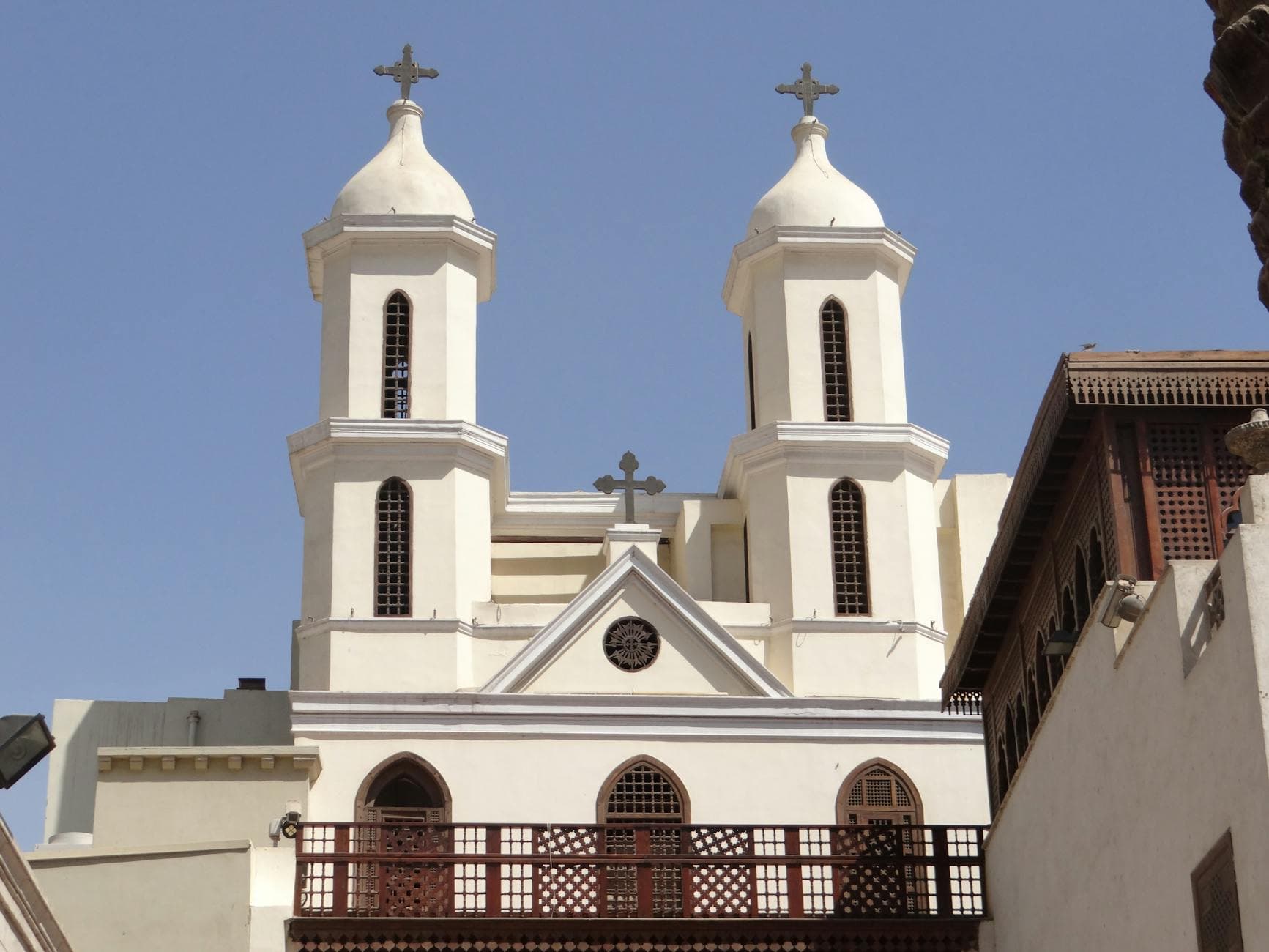
Dress conservatively: covered shoulders and knees for all visitors, regardless of gender. A light scarf is useful. The churches provide nothing at the entrance, unlike some mosques.
The light inside Abu Serga is low and uneven. If photography matters to you, bring a camera that handles dim interiors well. Phone cameras struggle, especially near the crypt staircase. Photography is generally permitted in the common areas but not during services, and some priests will ask you to stop even outside service times. Read the room.
Weekday mornings between 9am and 11am are the quietest period. Tour groups from cruise ships and Nile boats tend to arrive between 10:30am and 1pm. If you arrive at 9am, you may have the church almost to yourself for forty-five minutes.
The neighborhood outside the Coptic quarter, specifically the area around Mar Girgis Metro station, has several small Coptic-run cafes and shops. The neighborhood has been Coptic since the Roman period. Buying something from the small shops inside the complex supports the community that maintains these buildings.
The Coptic Museum next door is essential context and criminally undervisited. Its collection of early Christian manuscripts includes pages that predate the current structure of Abu Serga. Allow ninety minutes minimum. The museum opens at 9am and closes at 5pm. The combined ticket covering museum and churches is the better value.
If you are visiting Egypt in January, the Coptic Christmas falls on the 7th. Abu Serga holds services that draw significant congregations from across Cairo. It is one of the rare occasions when the church's living religious identity becomes fully visible to outsiders. Attend respectfully, stay out of the way, and you will see something no tour itinerary can arrange for you.
Frequently Asked Questions
The Weekly Dispatch
More on Egypt, every Friday.
Cultural depth and places most guides never mention.
No spam. Unsubscribe anytime.