Sidi Ibrahim al-Dessuqi Shrine: Egypt's Living Mawlid Capital
Four million pilgrims descend on a Delta town of 80,000 people each spring. The saint buried here is one of Egypt's four 'poles of the universe.' Most travelers have never heard his name.

Audio Guide: Sidi Ibrahim al-Dessuqi Shrine: Egypt's Living Mawlid Capital
Quick Facts
- Best time to visit
- Mid-Sha'ban (Islamic lunar calendar) for the mawlid: late winter to early spring in most years. October to March for a quieter visit with comfortable Delta temperatures.
- Entrance fee
- Free. Donations of EGP 20 to 50 (under $2 USD) are customary in the inner tomb area.
- Opening hours
- Daily from Fajr prayer (approximately 5am) to after Isha prayer (approximately 10pm). Inner tomb chamber may restrict access during Friday prayers and peak prayer times.
- How to get there
- Coach from Cairo Torgoman station to Kafr el-Sheikh city (EGP 40 to 60, 2 to 3 hours), then microbus or tuk-tuk to Dessouk (EGP 5 to 15). Service taxi from Tanta (EGP 20 to 30). No direct train to Dessouk.
- Time needed
- 2 to 3 hours for a thorough visit on a normal day. A full day or overnight stay during mawlid season.
- Cost range
- Full day from Cairo including transport and food: EGP 300 to 500 (approximately $10 to $16 USD). Accommodation in Kafr el-Sheikh city: EGP 400 to 800 per night for a basic hotel.
Quick Facts
Best time to visit: The Mawlid of Sidi Ibrahim al-Dessuqi falls in the Islamic month of Sha'ban, roughly late winter to early spring depending on the lunar calendar. Outside the mawlid, the shrine is quieter but still active daily.
Entrance fee: Free. The shrine complex, like most active Sufi shrines in Egypt, charges no admission. Donations to the attendant caretakers (fuqaha) are customary and appreciated. Budget EGP 20 to 50 (under $2 USD) as an offering if you visit the inner sanctum.
Opening hours: The mosque and outer shrine areas are open daily from Fajr prayer (roughly 5am) until after Isha prayer (around 10pm). The inner tomb chamber keeps similar hours but may restrict non-Muslim visitors to outer courtyards during peak prayer times. Ask at the entrance.
How to get there: Dessouk (also spelled Disuq) is in Kafr el-Sheikh Governorate, approximately 130 km north of Cairo and 60 km from Tanta. From Cairo's Torgoman bus station, microbuses and coaches run to Kafr el-Sheikh city (EGP 40 to 60, about $1.30 to $2 USD), then a local microbus or tuk-tuk from Kafr el-Sheikh to Dessouk costs EGP 5 to 15. From Tanta, service taxis run directly to Dessouk for around EGP 20 to 30. There is no convenient train station in Dessouk itself; the nearest rail connection is Kafr el-Sheikh or Damanhur.
Time needed: Two to three hours for a considered visit. A full day during the mawlid period, if you intend to witness the Sufi ceremonies at night.
Cost range: The town is inexpensive. A full day including transport from Cairo, food, and a street-side meal runs EGP 300 to 500 (approximately $10 to $16 USD).
---
Why This Place Matters
Four million people. That is the estimated attendance at the annual Mawlid of Sidi Ibrahim al-Dessuqi, held each year in the small Delta city of Dessouk in Kafr el-Sheikh Governorate. To put that in context: four million is roughly the population of Los Angeles, converging on a city of 80,000 people, for a religious festival that most Western travelers, and even many urban Egyptians, have never witnessed.
Sidi Ibrahim ibn Abi al-Majd al-Dessuqi was born in Dessouk in 1235 CE and died there in 1288. He was a contemporary of Rumi, who died in 1273, and of Ibn Arabi, who died in 1240. These were the decades when Sufi thought crystallized into formal orders, when the Mamluk sultanate was consolidating its grip on Egypt after repelling the Crusaders and the Mongols, and when the Delta was still a landscape of dense agricultural wealth feeding an Islamic empire. Al-Dessuqi founded the Burhaniyya Sufi order, which still has active chapters from Egypt to Sudan, Germany to Brazil.
In the formal cosmology of Egyptian popular Islam, Ibrahim al-Dessuqi is recognized as one of the Arba'a Aqtab, the Four Poles of the Universe: the four saints who, at any given moment in history, bear the spiritual weight of the world. The other three poles recognized in Egypt are Ahmad al-Badawi of Tanta, Abd al-Qadir al-Jilani of Baghdad, and Ahmad ibn Idris. This is not folk superstition grafted onto orthodox practice. It is a structured theological concept that runs through centuries of Sufi literature, and Dessuqi's position within it is why this otherwise unremarkable Delta city draws pilgrims from across the Arab world, East Africa, and the Sudanese diaspora.
---
What You Will Actually See
The shrine complex anchors the center of Dessouk with a confidence that suggests it has never considered being anywhere else. The current mosque structure is Ottoman in its bones, heavily renovated in the nineteenth and twentieth centuries, and the result is a building that architectural purists find uncomfortable and pilgrims find irrelevant: what matters is what is inside.
The outer courtyard is where the social life of the shrine happens. At any hour of the day you will find men sitting in circles reciting dhikr, the rhythmic repetition of divine names that is the central practice of Sufi worship. The sound is not what outsiders expect: it is not melodic in a conventional sense, but percussive and breathing-based, the syllables of 'Allah' and 'Hu' used as physical anchors for a meditative state. During the mawlid, these circles expand until the entire plaza and surrounding streets become one continuous field of sound.
The inner tomb chamber holds the maqam, the cenotaph, of al-Dessuqi, covered in the green and gold cloth typical of Egyptian saint tombs. The chamber walls are covered in tilework and calligraphy, much of it restored clumsily in the 1970s and again in the 1990s, which is an honest thing to say about what you are looking at. The spiritual power the space holds for its believers is independent of the quality of the tilework. Pilgrims press their hands against the maqam's wooden lattice screen, whisper prayers, and leave written petitions tucked into the woodwork. Some have traveled from Khartoum, from Lagos, from Cairo apartment blocks where they have been trying to have children for seven years.
The minarets are the most visually coherent element of the complex. The primary minaret shows traces of Mamluk-era proportions beneath its later surface, and if you circle the building you will notice that the qibla wall, the wall facing Mecca, sits at a slight angle to the street grid. This is common in Delta cities where mosques were built over or adjacent to earlier structures whose footprints determined the available land. Dessouk itself sits on terrain that was, in the Pharaonic period, part of the eastern branch of the Nile Delta network, a landscape of seasonal flooding and rich silt deposits that made this region one of the agricultural engines of ancient Egypt long before any saint is recorded as having been born here.
---
The Mawlid: What Happens and When
The mawlid of Sidi Ibrahim al-Dessuqi is officially dated to the middle of Sha'ban, the eighth month of the Islamic lunar calendar, which means it migrates approximately eleven days earlier each solar year. In practice, the celebration builds for two weeks before the official date, with the final three nights being the most intense.
What you will witness if you time your visit correctly is not a tourist spectacle. It is a functioning religious event that has been running, in some form, since the thirteenth century, with foreign observers being a minor and mostly tolerated presence. The hadra, the Sufi ceremony of collective dhikr, takes place in large tents erected in the streets around the shrine. Different Sufi brotherhoods, called turuq, each hold their own hadra in their own tent, which means that on the main nights you can walk within a single block from one order's practice to another's: the Rifai, the Shadhili, the Burhaniyya itself.
The Rifai hadra is the one most likely to disturb visitors who are not prepared for it. The Rifaiyya order has historically incorporated practices involving fire, piercing, and physical endurance as demonstrations of spiritual surrender. What you see in Egyptian mawlid contexts is generally a restrained version of this, but it is still not performative: the participants are not putting on a show for you. Stand to the side, do not point cameras at faces without permission, and do not intervene in anything you find alarming. You are a witness, not a referee.
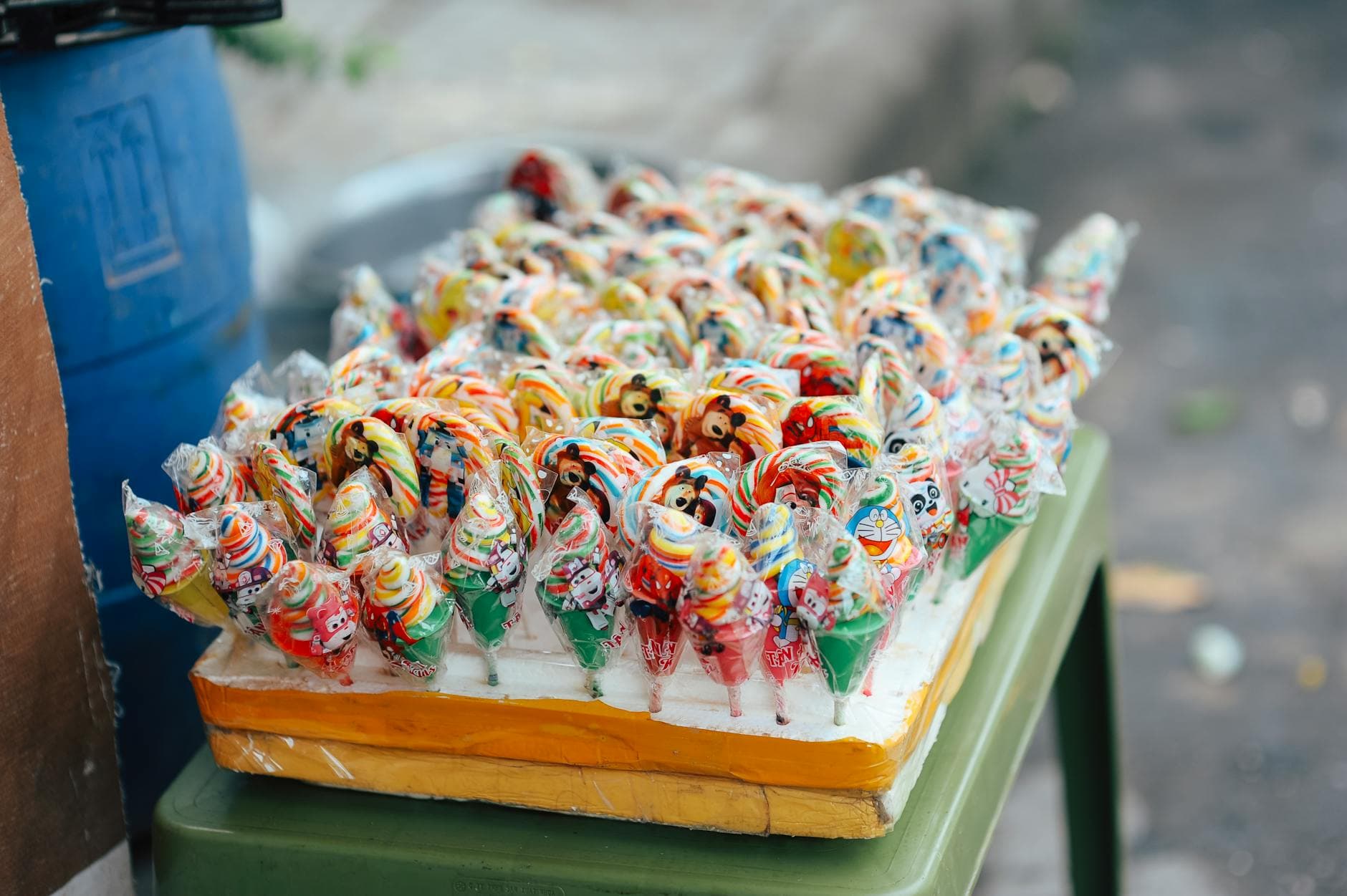
The food economy of the mawlid is worth a separate article. Street stalls selling ful, ta'miya, grilled corn, and the specific sweets associated with mawlids (particularly the sugar figurines called 'arous al-mawlid, the bride of the mawlid) line every approach road. The candy bride has pre-Islamic antecedents that scholars have traced to fertility rituals connected to Nile flood celebrations, though she has been thoroughly absorbed into Islamic popular practice for at least eight centuries.
---
The Connections
The Burhaniyya order that al-Dessuqi founded has a specific and consequential modern history that most visitors to the shrine do not know. In the twentieth century, a Sudanese Sheikh named Muhammad Uthman Abdu al-Burhani revived and massively expanded the order, establishing lodges across Sudan, Egypt, and eventually Europe. The German branch of the Burhaniyya has over a thousand members. The order's global reach means that the shrine in Dessouk receives pilgrims from communities that have been Burhani Sufis for three and four generations without ever having lived in Egypt, which creates a particular emotional quality to the visits: people encountering the physical origin point of a practice they grew up with as a family inheritance.
The Delta context matters for connecting this site to the longer Egyptian story. Kafr el-Sheikh Governorate sits in the heart of what was, in the ancient period, the region of Buto and Sais, cities of considerable religious importance in the Late Period of Pharaonic Egypt. The Twenty-Sixth Dynasty, the Saite dynasty that ruled from 664 to 525 BCE, made the nearby city of Sais its capital. The goddess Neith, whose cult was centered in Sais, was a deity of weaving and warfare who was later syncretized by Greek visitors with Athena. The land under the mawlid tents has absorbed more layers of sacred practice than most ground on earth.
Tanta, 60 km to the south and accessible in under two hours by microbus, holds the shrine of Ahmad al-Badawi, another of the Four Poles, whose mawlid is the largest religious gathering in Egypt and one of the largest on the African continent. Visiting both shrines on a Delta circuit, perhaps with a stop at the archaeological site of Buto (Tell el-Fara'in) between them, turns a single shrine visit into a journey through two thousand years of how Egyptians have organized sacred space.
---
Common Mistakes
Visiting only during the mawlid without understanding what you are entering. The mawlid is not a festival in the European sense, where the primary function is entertainment of attendees. It is a devotional event with its own social protocols. Arriving without basic Arabic phrases, without modest dress, and without the patience to stand quietly at the margin will make your presence an imposition.
Wearing shorts or short sleeves. This applies to all genders. The shrine is an active mosque and the surrounding streets during mawlid season are extensions of devotional space. Long sleeves and covered legs are not optional courtesies here; they are the minimum required for respectful entry.
Photographing inside the tomb chamber. Technically, some visitors do this and are not immediately stopped. Do it anyway and you will become the foreigner who violated a space that is genuinely sacred to millions of people, for a photograph that will look like every other tomb chamber photograph. Leave the camera outside the inner room.
Taking a tour from Cairo that positions this as an 'exotic' experience. Several Cairo-based operators now offer mawlid tourism packages. These are, without exception, extractive framing that positions Egyptian religious practice as spectacle for outside consumption. The shrine is not a performance venue. If you go, go on your own terms, by public transport, and with genuine curiosity rather than a checklist.
Expecting the shrine building itself to be architecturally remarkable. It is not. The current structure is a heavily renovated Ottoman mosque with twentieth-century additions that range from undistinguished to actively ugly. If what you want is great Islamic architecture, Tanta's al-Ahmadi mosque is more coherent and Cairo has the Mamluk canon within walking distance of itself. Come to Dessouk for the living practice, not the building.
Underestimating the logistics during mawlid season. Hotels in Dessouk are limited and fully booked weeks before the main nights. Most pilgrims sleep in the tents, in their cars, or in the homes of local families who rent rooms informally. Plan accommodation in Kafr el-Sheikh city if you intend to stay overnight during the peak period, and expect the microbus rides to be extremely crowded.
Skipping the outer town. Dessouk has a functioning Delta market economy that is entirely unoriented toward tourism. The fish market near the canal sells Delta species, including the Nile perch and bolti (tilapia) that have been eaten in this region since the time of the Pharaohs. Eating a grilled fish lunch on the canal bank for EGP 80 to 120 is a better use of two hours than any formal 'cultural experience' anyone could sell you.
---
Practical Tips
Arrive by mid-morning on non-mawlid days. The shrine is calmest between 9am and noon, and the light in the Delta at that hour is clean and flat in a way that is specific to the region: no mountains or desert dust to filter it, just open sky over flat agricultural land.
Dress code is conservative throughout: long trousers or skirts, covered shoulders, women covering hair before entering the mosque proper. This is not negotiable and not worth testing.
Women visiting alone should expect to be directed to the women's section of the mosque, which is often a separate entrance on the side or rear of the building. The women's sections of Egyptian shrines are frequently more emotionally intense than the main halls: this is where many of the petitionary prayers and weeping happen, in a space that is not being observed by men or cameras.
Bring cash only. Dessouk has ATMs but they are not always stocked, particularly during the mawlid when the town's population multiplies fifty-fold. Withdraw in Kafr el-Sheikh or Cairo before you go.
For the mawlid visit specifically, arrive by late afternoon to observe the market activity and early dhikr circles before the main hadra ceremonies begin after Isha prayer. The most intense ceremonies run from approximately 10pm to 2am. Plan transport back to your base city accordingly, or arrange your overnight accommodation in advance.
If you speak any Arabic, use it. The welcome you receive in Dessouk from locals when you make any effort in the language is disproportionate to your actual proficiency and entirely genuine.
Frequently Asked Questions
The Weekly Dispatch
More on Egypt, every Friday.
Cultural depth and places most guides never mention.
No spam. Unsubscribe anytime.