Sidi Ibrahim al-Dessuqi Shrine Guide: Egypt's Living Sufi Heart
Four million pilgrims come to Dessuqi each year. Most Egyptologists have never heard of him. Here is why that gap says everything about how Egypt is misread.
Quick Facts
- Best time to visit
- October to March for comfortable weather and manageable crowds. The Sha'ban moulid for the full ritual experience, though accommodation must be arranged months ahead.
- Entrance fee
- Free. No tickets, no foreign visitor surcharge. Donations to the shrine attendants are customary (EGP 20 to 50 is appropriate).
- Opening hours
- Daily from approximately 5am until 10:30pm. During the moulid the complex is effectively open around the clock.
- How to get there
- Train Cairo to Tanta EGP 45 to 90 (1 hour), then microbus Tanta to Dessuqi EGP 15 to 20 (45 minutes). Taxi from Tanta EGP 150 to 250. Direct bus from Cairo EGP 60 to 90 (3 hours).
- Time needed
- 4 hours minimum for shrine, market, and riverbank. Full day and night during the moulid.
- Cost range
- Budget EGP 300 to 500 per day including transport, street food, and donations. Accommodation in Dessuqi EGP 400 to 700 per night, better options in Tanta.
Four million pilgrims visit Dessuqi every year. The town sits on the western bank of the Nile in the Delta, roughly 160 kilometers north of Cairo, and on the nights of the moulid it holds more people than it has beds, streets, or any reasonable infrastructure for. People sleep on the mosque steps, on feluccas moored along the bank, in the road. And yet almost no Western travel guide covers it in any depth. That absence is not an oversight. It is a symptom of how Egypt gets sold: pyramids and pharaohs, nothing in between, nothing that breathes.
Ibrahim al-Dessuqi was born in 1235 CE and died in 1288. He is one of the four great poles, the al-Aqtab al-Arba'a, of Sunni Sufi Islam: the four saints considered to be the spiritual pillars of the world in their era, alongside Ahmad al-Badawi of Tanta, Abd al-Qadir al-Jilani of Baghdad, and Ahmad ibn Idris al-Fasi of Morocco. Egyptians know this the way they know their own names. Most foreign visitors do not know it at all.
Quick Facts
Best time to visit: October to March for general visits. The moulid, which follows the Islamic lunar calendar and falls in the month of Sha'ban, draws the largest crowds and the most intense ritual experience, though accommodation becomes nearly impossible without planning months ahead.
Entrance fee: The shrine and mosque complex are free to enter. Donations are customary and appreciated. There is no ticket booth, no foreign-visitor surcharge, no timed entry.
Opening hours: The mosque is open daily from before the Fajr prayer (approximately 5am) until well past Isha (approximately 10:30pm). During the moulid, it effectively does not close.
How to get there: From Cairo's Turgoman or Cairo Gateway bus terminals, buses to Dessuqi run regularly and cost approximately EGP 60 to 90 (under $2 USD). The journey takes roughly three hours depending on Delta traffic. Microbuses from Tanta (a major Delta hub) run to Dessuqi for EGP 15 to 20 and take about 45 minutes. Taxis from Tanta cost EGP 150 to 250 depending on your negotiation.
Time needed: A minimum of four hours to absorb the shrine, the surrounding market, and the riverbank. During the moulid, a full day and night is the only honest answer.
Cost range: Budget EGP 300 to 500 per day including transport, food from local stalls, and small donations. There are modest hotels in Dessuqi costing EGP 400 to 700 per night, and better options in Tanta if you prefer a base with more infrastructure.
Why This Place Matters
The shrine of Sidi Ibrahim al-Dessuqi is not a monument to a dead man. It is an active institution, a theological center, and a social welfare network that has functioned continuously for over seven centuries. This is the distinction that most travel writing about Egypt fails to make: the difference between a site that commemorates something and a site that is still doing the thing it was built to do.
Ibrahim al-Dessuqi founded the Burhaniyya Sufi order, also called the Dessuqiyya, which today has branches across Sudan, Syria, Libya, Morocco, and among Egyptian diaspora communities in Europe and North America. The order runs schools, arbitrates local disputes, and provides a parallel social structure in the Delta that operates alongside, and sometimes more effectively than, formal government institutions. When you visit the shrine, you are walking into a living organization, not a ruin.
The theological weight of his status is specific and worth understanding before you arrive. In Sufi cosmology, the concept of the Qutb, the spiritual pole or axis, describes a saint whose inner state sustains the spiritual order of the world. Al-Dessuqi is considered the Qutb al-Aktam, the greatest pole, during his era. This is not a local folk belief. It is a position recognized across mainstream Sufi scholarship from Cairo to Khartoum. The Azhar, Egypt's thousand-year-old center of Sunni Islamic learning, has historically validated the moulid celebrations at Dessuqi, which distinguishes this tradition from the Wahhabi-influenced critiques of saint veneration that have grown louder in Egypt since the 1970s.
The shrine also sits in a part of Egypt that archaeologists and Egyptologists have largely deprioritized because the Delta's waterlogged soil dissolves papyrus and degrades organic material far faster than Upper Egypt's dry air. But the town of Dessuqi itself sits near the ancient branch of the Nile called the Rosetta branch, which was a major trade artery in Ptolemaic and Roman times. There are unexcavated tells, mounds of accumulated settlement debris, within a few kilometers of the mosque. The pilgrims walking to a thirteenth-century shrine are walking over two thousand years of earlier occupation that no one has yet properly mapped.
What You Will Actually See: The Mosque and Its Interior
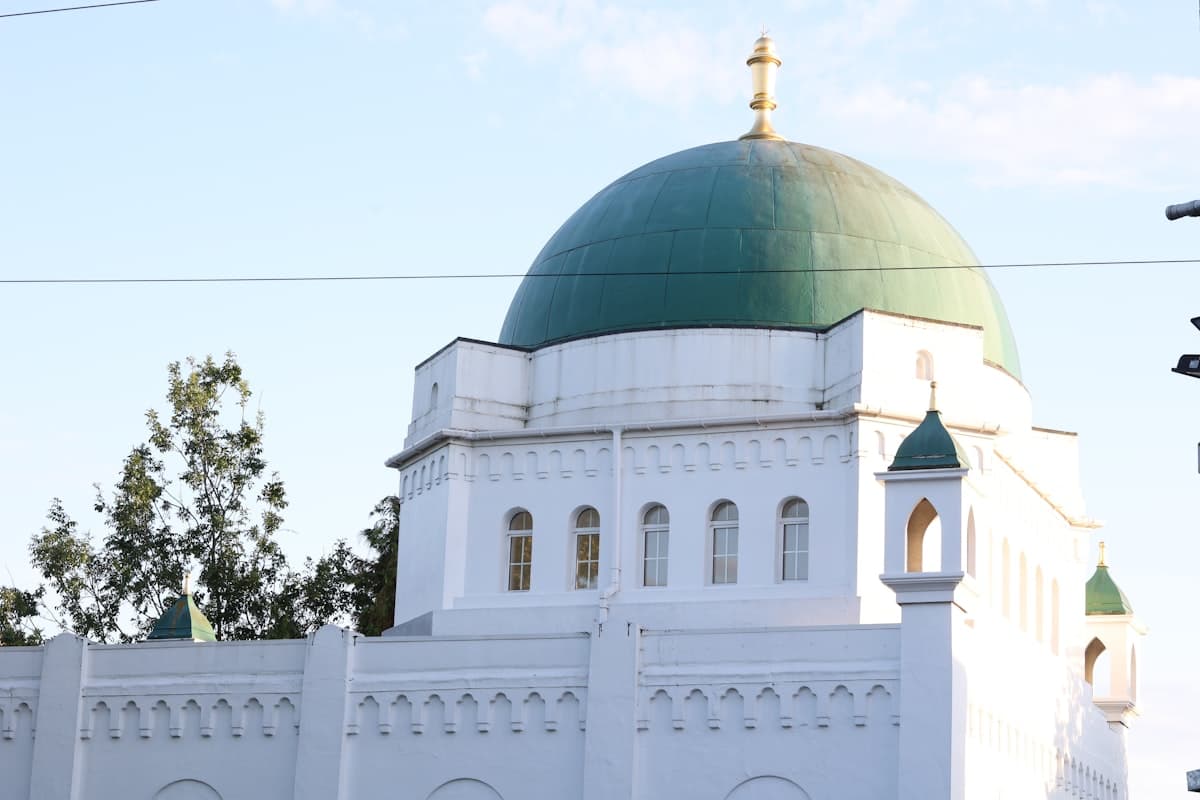
The mosque complex is large, green-domed, and visible from the river. The current structure is not medieval. It has been rebuilt and expanded multiple times, most significantly in the twentieth century under Egyptian government patronage. Do not come expecting a Fatimid interior or Mamluk tilework. What you will find instead is something rarer in the context of Egyptian tourism: a building that is unambiguously, uncomplicatedly in use.
The inner sanctuary containing the tomb is separated from the main prayer hall. Non-Muslim visitors are generally permitted to enter the outer areas and observe, though entering the tomb chamber during active prayer times requires sensitivity and ideally an introduction through a local contact or a guide from the order itself. If you arrive outside prayer times and approach respectfully, you will almost certainly find someone willing to explain what you are seeing.
The smell inside is specific: rose water, which is poured over the tomb enclosure by attendants, mixed with the warm press of bodies and the particular flatness of air that accumulates inside a space that never fully empties. Strips of green cloth are sometimes tied to the grillwork around the tomb by petitioners. People arrive with requests: a sick child, a stalled court case, a daughter who needs a husband. This is not medieval superstition persisting despite modernity. These are contemporary Egyptians, many of them urban, educated, and entirely aware of the theological debates around intercession, making a choice about where to bring their grief.
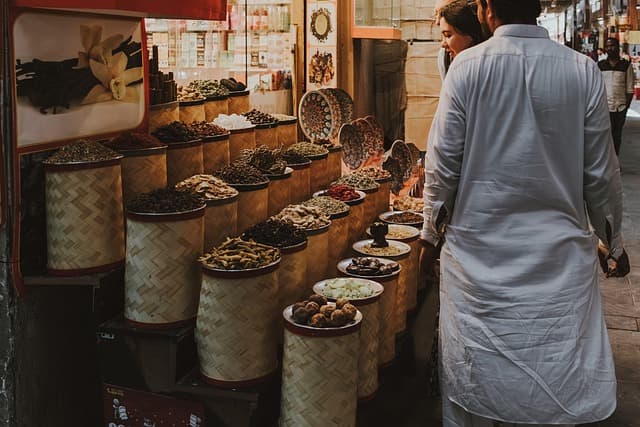
The market outside the mosque runs along the streets leading to the Nile. During the moulid it expands into something that resembles a small city that materialized overnight: sweets vendors, sellers of prayer beads and green banners, men with caged birds, women with henna trays, children with nothing to sell running alongside everyone anyway.
The Moulid: What It Is and What It Costs You Not to Understand It
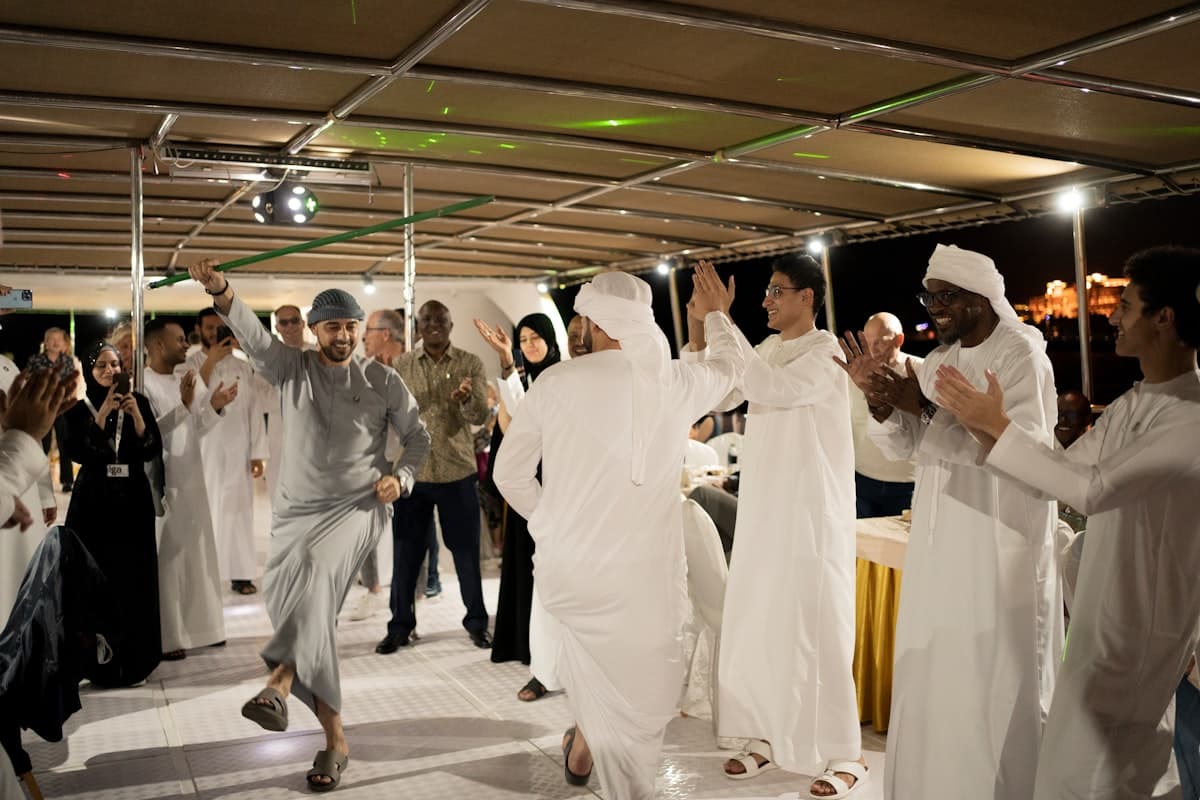
The moulid of Sidi Ibrahim al-Dessuqi is one of the largest moulid celebrations in Egypt, ranking behind only the moulids of Sayyida Zeinab in Cairo and Ahmad al-Badawi in Tanta in terms of attendance. The moulid is not a fair with religious overtones. It is a ritual event with commercial accommodations. The distinction matters for how you experience it.
The central practice is the hadra, a collective Sufi remembrance ceremony involving synchronized chanting, breath, and movement. Different orders perform different styles. The Dessuqiyya hadra involves a specific rhythmic breathing practice, the dhikr, that can continue for hours. To witness it properly, you sit. You do not photograph for the first hour. You let the sound reorganize your expectations about what you came to see.
The Alexandrian scholar Mahmoud Said al-Kurdi documented in 1987 that the Dessuqi moulid had, in certain years of the mid-twentieth century, drawn over five million participants over the full celebration period, which spans several days and peaks on the Prophet's birthday in the Sha'ban calendar. That number makes it one of the largest regular religious gatherings on the African continent, a fact that is almost never cited in any Egyptian tourism material.
Non-Muslims attend. This is not unusual. Coptic Christians from nearby Delta villages have attended moulid celebrations for generations, a fact that makes both secular Egyptian nationalists and strict religious conservatives uncomfortable for opposite reasons, and which reflects something true and old about how religion actually moves through Egyptian daily life.
The Connections: Tanta, the Delta Saints, and the Longer Thread
The Sidi Ibrahim al-Dessuqi shrine belongs to a network that stretches across the Nile Delta and that most visitors treat as separate attractions rather than as a coherent religious geography. Tanta, 45 kilometers to the southeast, holds the shrine of Ahmad al-Badawi, who died in 1276, just twelve years before al-Dessuqi. Al-Badawi's moulid is the largest in Egypt by most estimates. The two saints were contemporaries, both active in the Delta during the Mamluk period, and their orders have maintained a relationship of mutual recognition ever since.
The Mamluk period, roughly 1250 to 1517, was when Sufi orders became institutionalized across Egypt as parallel networks of authority, charity, and education alongside the formal state. The Mamluks, who were themselves imported military slaves primarily of Turkic and Circassian origin, governed Egypt for 267 years and patronized Sufi shrines partly for political legitimacy and partly out of genuine belief. The shrine culture you see in Dessuqi today was structured and formalized in that period, even if the buildings themselves have been rebuilt.
Go further back and the thread continues. The Delta branch of the Nile near Dessuqi was a site of Coptic Christian monasticism in the fifth and sixth centuries. Before that, the broader region was the eastern edge of the ancient nome of Khem, a district name that some scholars have connected etymologically to the Arabic word for Egypt itself, Misr, through layers of Coptic phonological shift. The saint's tomb sits in a geography that has been considered sacred, by different people for different reasons, for at least fifteen centuries.
Common Mistakes
Arriving without understanding the etiquette around the tomb. The attendants at the inner sanctuary are patient but not endlessly so. Cover your shoulders and knees regardless of gender. Remove your shoes before the inner threshold. Do not raise your camera before reading the room.
Treating the moulid as a photo opportunity. The moulid draws photographers who come specifically for the visual intensity of the dhikr circles, the green banners, the night crowds. Participants notice when someone is circling them with a lens rather than engaging with the space. Ask before you photograph anyone in a state of active ritual. Most people will say yes. A few will say no. Respect both.
Skipping Dessuqi in favor of Tanta. This is the most common error, driven by the fact that Tanta is on the Cairo to Alexandria train line and Dessuqi is not. The al-Badawi shrine in Tanta is larger and more frequently visited, which also makes it more curated, more managed, and in some ways less raw. Dessuqi is smaller and harder to reach, and it rewards the effort.
Coming only during the moulid without a place to sleep. Accommodation in Dessuqi is limited under normal circumstances. During the moulid it is effectively impossible without booking months in advance or arranging to stay with a local family through a contact within the order. Tanta as a base is the practical fallback, but the last microbus back leaves before the most intense nighttime ceremonies.
Paying the inflated tourist rate for transport without knowing local prices. Taxis will quote EGP 400 to 600 for the Tanta to Dessuqi run. The microbus costs EGP 15. Both arrive at the same place. Know this before you get in a car.
Expecting the mosque to look ancient. The current building is a twentieth-century construction with modern renovation. If you arrive wanting Mamluk stonework, you will leave disappointed. The significance here is not architectural. It is living and social. Calibrate accordingly.
The sound and light concept applied to Sufi shrines by certain tour operators in Cairo. Several Cairo-based operators sell packaged moulid tours that involve arriving by air-conditioned bus, watching the dhikr for forty minutes from a designated area, and leaving before midnight. This costs upward of EGP 800 per person and strips out everything that makes the experience worth having. Book your own transport, arrive on your own terms, stay longer than is comfortable, and you will understand something real.
Practical Tips
The best logistical base for visiting the Sidi Ibrahim al-Dessuqi shrine is Tanta, which has more hotel options, reliable train connections to Cairo, and regular microbus links to Dessuqi. From Cairo, the train to Tanta takes approximately one hour on an express service and costs EGP 45 to 90 depending on class.
Dress conservatively regardless of your religious background. For women, a headscarf is not required in the outer areas of the mosque but is deeply appreciated in the inner sanctuary and during the moulid. For men, shorts are inappropriate.
There are no official tourist information offices in Dessuqi. Your best resources are the Burhaniyya order's own local contacts, which you can find through Egypt's Sufi Supreme Council, a government body that coordinates moulid calendars and can sometimes connect visitors with order representatives willing to serve as guides.
The lunar calendar means the moulid date shifts by roughly eleven days each year relative to the Gregorian calendar. Check the current year's Sha'ban dates before planning any trip timed around the moulid.
Food around the shrine is cheap, abundant, and good. Ful medames, ta'amiyya, liver sandwiches, and karkade, the hibiscus drink that is cold in summer and warm in winter, are all available from street vendors for EGP 15 to 40 per item. Do not eat at the one restaurant near the bus station that posts prices in English. It charges triple and delivers nothing different.
Frequently Asked Questions
The Weekly Dispatch
More on Egypt, every Friday.
Cultural depth and places most guides never mention.
No spam. Unsubscribe anytime.