Sidi Ibrahim Dessuqi Shrine: A Complete Cultural Guide
Four million pilgrims visit a single shrine in a Delta town most Egyptians can't place on a map. Here's what draws them, and what the average traveler completely misses.

Quick Facts
- Best time to visit
- October to March for comfortable Delta weather. The moulid in Sha'ban (shifting Gregorian date, usually January to March) is when the site is fully alive.
- Entrance fee
- Free. No ticket required for the shrine, mosque, or surrounding complex.
- Opening hours
- Daily approximately 5am to midnight. During moulid, open continuously around the clock.
- How to get there
- Microbus from Cairo Turgoman Station to Kafr el-Sheikh (EGP 35 to 50, approx $1.10 to $1.60 USD), then shared taxi to Dessuq (EGP 10 to 15). Total journey two to three hours.
- Time needed
- Three to five hours outside moulid. Full day minimum during moulid season.
- Cost range
- Budget EGP 200 to 400 per day including food and local transport. No paid entry anywhere in the complex.
Quick Facts
Location: Dessuq, Kafr el-Sheikh Governorate, Nile Delta
Best time to visit: October to March for comfortable temperatures. The moulid (annual festival) falls in the month of Sha'ban on the Islamic calendar, typically late winter or early spring. This is when the shrine reaches peak energy, but also peak crowds.
Entrance fee: Free. The shrine complex, mosque, and surrounding souq are open to all. There is no ticket counter, no queue for entry, no barrier between you and the place.
Opening hours: The mosque and shrine are open daily from around 5am through midnight. During the moulid period, they operate around the clock.
How to get there: From Cairo, take a microbus or shared taxi from the Cairo Bus Station (Turgoman) toward Dessuq, roughly 140km north. Journey time is two to three hours depending on Delta traffic. Cost: EGP 40 to 60 (approximately $1.25 to $2 USD). From Kafr el-Sheikh city, shared taxis to Dessuq run every thirty minutes; cost is EGP 10 to 15. Do not book a private tour for this. Arriving by shared transport is part of understanding who comes here and why.
Time needed: Three to five hours for the shrine complex, surrounding market, and a walk through central Dessuq. If you arrive during the moulid, plan a full day and accept that your schedule will dissolve.
Cost range: Budget EGP 200 to 400 per day. The shrine itself is free. You will spend money on food, tea, and whatever pulls you into the souq stalls.
---
Why This Place Matters
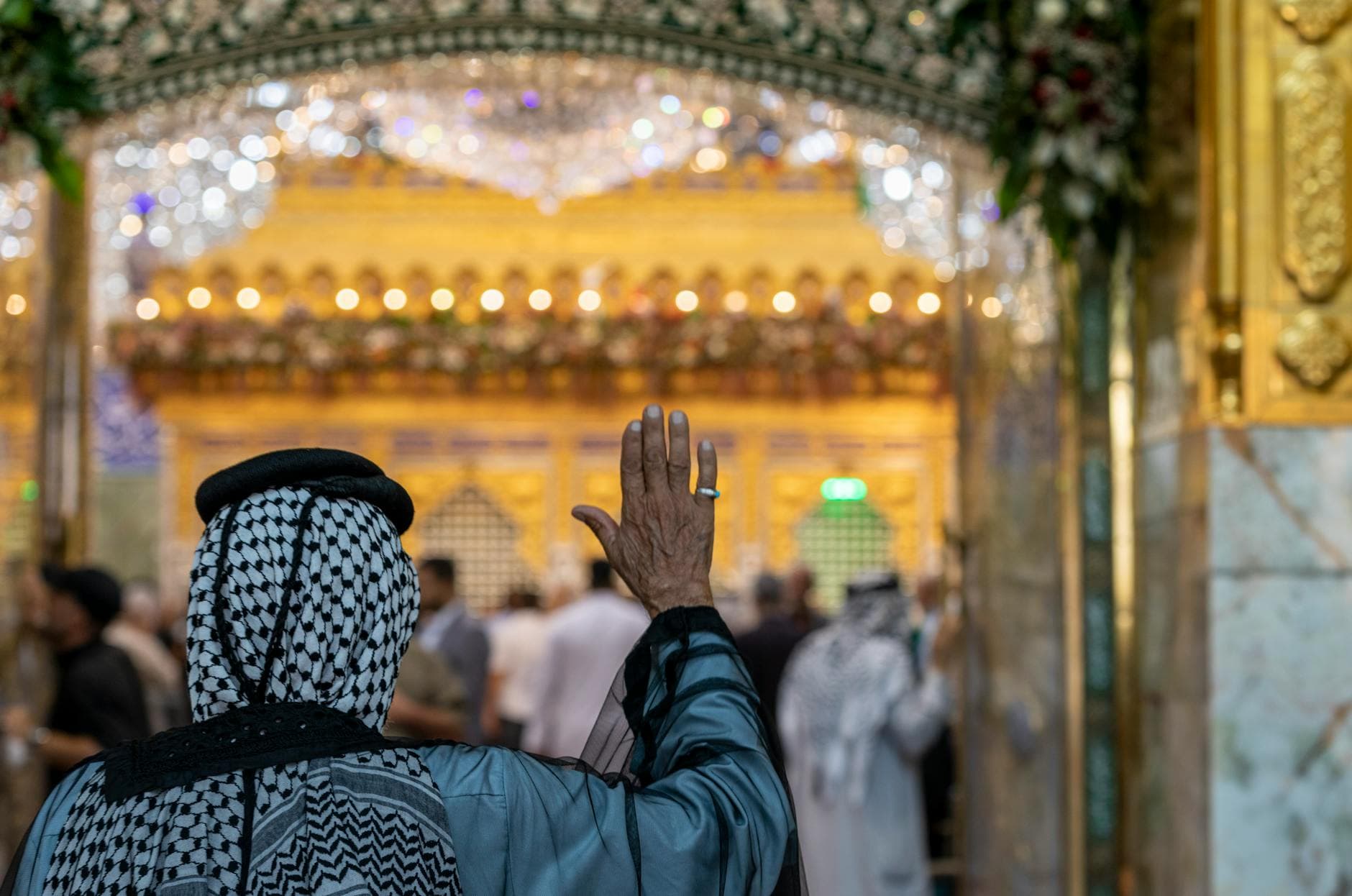
Most Western travel writing about Egyptian Islam focuses on Cairo's medieval mosques or the grand mosque complexes of Alexandria. The Delta's spiritual landscape rarely gets a chapter. This is a significant omission, because the Nile Delta contains a density of Sufi saint shrines that makes it, in terms of living Islamic folk practice, one of the most active religious territories in the Arab world.
Ibrahim al-Dessuqi was born in Dessuq around 1255 CE, during one of the most destabilizing periods in Islamic history. The Mongols had sacked Baghdad just three years earlier, destroying the Abbasid Caliphate that had centered Sunni Islam for five centuries. Egypt, under the Bahri Mamluks, had become the de facto capital of Sunni civilization. In this atmosphere of trauma and reconstruction, Sufi orders expanded dramatically across Egypt, offering spiritual coherence when political structures had collapsed. Al-Dessuqi founded the Burhaniyya Dessuqiyya order in this context, making him not a peripheral holy man but a foundational architect of Egyptian Islamic spiritual life.
He is considered one of the four Sufi qutbs, or cosmic poles, meaning that within the Sufi hierarchy of saints, his rank is among the highest possible. The other three qutbs are Ahmad al-Badawi of Tanta, Abd al-Qadir al-Jilani of Baghdad, and Ahmad ibn Idris of Morocco. That Egypt holds two of the four is not a coincidence. It reflects the country's centrality in Islamic civilization from the thirteenth century onward.
The Sidi Ibrahim Dessuqi shrine draws an estimated four million visitors annually during moulid season alone, placing it among the largest religious gatherings in Africa. Tanta's Moulid of al-Badawi draws slightly more, but Dessuq is smaller, more concentrated, and in some ways rawer.
---
What You Will Actually See
Dessuq is a working Delta city with a population of around 100,000. It is not prepared for international tourism, and this is precisely its value. The shrine sits near the center of town, identifiable from several blocks away by the green dome and the constant low hum of activity around its perimeter.
The mosque enclosing the shrine is a layered structure. The current building dates primarily from nineteenth and early twentieth century renovations under Khedive Abbas II, who invested significantly in Delta saint shrines as a way of consolidating popular loyalty during a period of British occupation. But the site of veneration itself is far older. Al-Dessuqi died around 1288 CE, and the original structure over his tomb was built shortly after. You are standing in a place that has been continuously visited, continuously prayed at, and continuously maintained for more than seven hundred years.
Inside, the shrine chamber holds the maqam (cenotaph) draped in green and gold fabric, surrounded by latticed wooden screens. The smell is incense and rose water and the particular human warmth of a space that is never empty. People sit on the floor around the maqam, some in silent prayer, some moving their lips in dhikr, some simply resting. There is no separation between the performatively devout and the quietly exhausted pilgrim who traveled six hours by bus from Upper Egypt. Both are here. Both are welcomed.
The women's entrance and section are clearly marked. Non-Muslim visitors are generally welcome but should dress conservatively, move quietly, and not photograph people without permission. The shrine's guardians, the khuddaam, are not hostile to outsiders, but they will notice if you treat the space as a spectacle.
---
The Moulid: What It Is and What It Costs You to Miss It
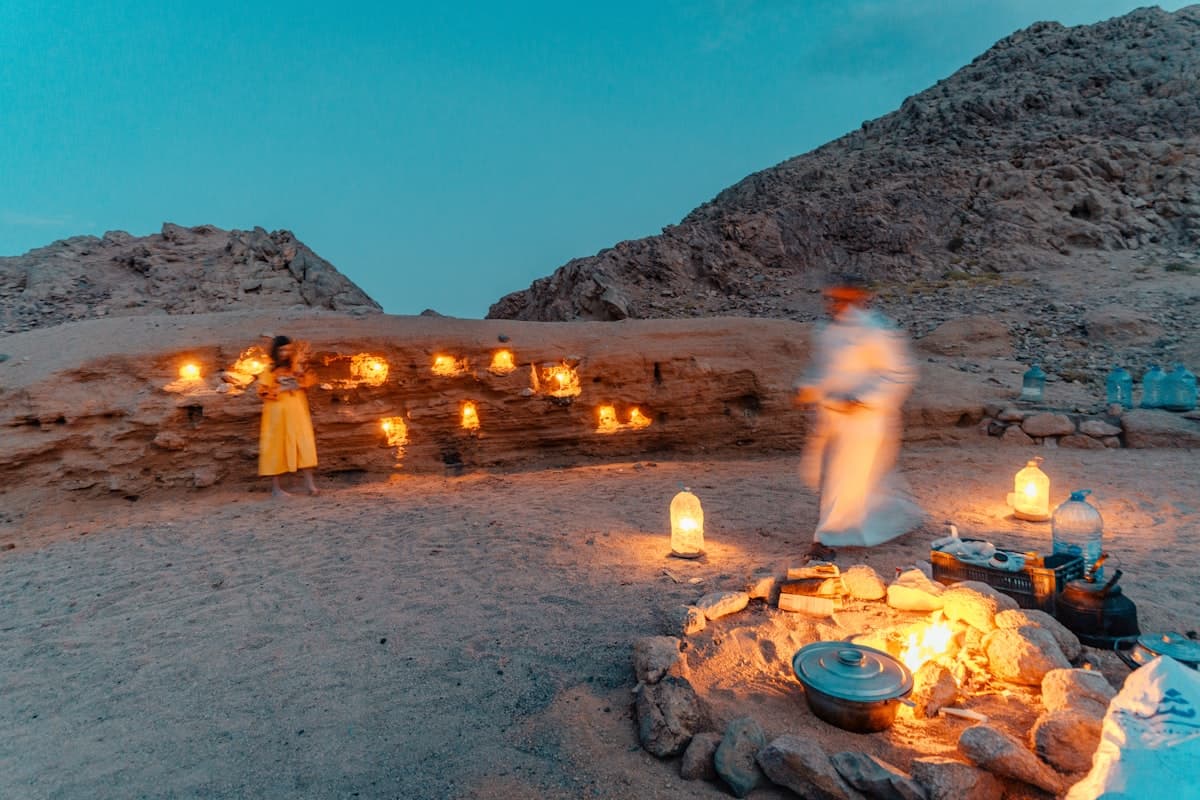
The word moulid comes from the Arabic for birth. It refers to the celebration of a saint's birth anniversary, blending Islamic commemoration with practices that Egyptologists recognize as continuous with ancient Egyptian festivals honoring local gods at their cult centers. The structural parallel is not coincidental. The Delta in particular was thick with goddess cults before Christianization and then Islamization. The feasts moved, the names changed, the underlying human need to gather at a sacred location and mark sacred time did not.
The Moulid of Sidi Ibrahim Dessuqi in Sha'ban is the largest religious festival in Kafr el-Sheikh Governorate. The city's population effectively doubles or triples. Streets around the mosque fill with canvas stalls selling amulets, sweets, plastic prayer beads, printed images of the saint, and the enormous sugar dolls called arouset el-moulid that are specific to Egyptian moulid culture. These sugar figures are directly descended from the Fatimid sugar sculptures documented in medieval Cairo, a candy tradition now 1,000 years old.
Sufi groups arrive from across Egypt and from Sudan, Libya, and sometimes as far as Senegal and West Africa, where the Burhaniyya order has significant presence. They perform the hadra, the communal dhikr ceremony involving rhythmic chanting, percussion, and sometimes ecstatic movement. This is not a performance for visitors. It is a collective spiritual practice that can run through the night. If you are there for it, sit at the edge and observe. The energy is cumulative, not immediate. Stay for an hour before you decide whether it moves you.
Honest warning: if crowds without organized flow make you physically anxious, do not attend the moulid peak days. The lanes around the shrine hold more people than any fire code would permit, and the concept of personal space dissolves entirely. This is part of the experience for those who seek it and a genuine problem for those who do not.
---
The Connections
The Burhaniyya Dessuqiyya order founded here now has branches in more than fifty countries. In Sudan, it is one of the dominant Sufi orders and has been politically significant since the nineteenth century. In Germany, France, and the United Kingdom, it has European followers, mostly converts. A shrine in a small Delta city is the origin point of a spiritual network spanning continents. This is worth sitting with.
Al-Dessuqi was a contemporary of Ibn Arabi, the Andalusian Sufi philosopher whose metaphysical system underpins most of classical Sufi thought. He was also a contemporary of the Mamluk sultan Baybars, who defeated the Mongols at Ain Jalut in 1260, the first significant Mongol military defeat, and who actively patronized Sufi institutions across Egypt as part of his state-building program. The shrines of the Delta were not marginal to Mamluk politics. They were instruments of it.
The Delta itself sits on the ancient site of several Pharaonic cult centers. Buto, the cult center of the cobra goddess Wadjet, is roughly 50km from Dessuq. The ancient city of Sapi-Res, later known as Xois, was within the same general territory. The Delta's sacred geography predates Islam by four millennia, and each layer of belief has been built over, or folded into, the one before.
If you are traveling the Delta's religious circuit, pair Dessuq with Tanta (Moulid of Ahmad al-Badawi, the largest moulid in Egypt) and Damietta, which holds the Mosque of Abu al-Maati, another Sufi saint whose following overlaps significantly with Dessuqi's.
---
Common Mistakes

Visiting only during non-moulid months and concluding you've seen the place. The shrine outside moulid season is peaceful and accessible. But you are seeing the stage, not the performance. If you can time your visit to Sha'ban, do so.
Hiring a Cairo-based tour operator to take you here. Every operator that runs Delta shrine tours adds a commentary layer designed to manage your expectations and protect their review scores. You end up hearing about the shrine rather than experiencing it. Take the microbus. Eat at the tea house by the mosque entrance. The access is direct.
Taking photographs inside the shrine chamber without reading the room first. Technically not prohibited, practically a sign of profound disrespect if done without awareness of who is praying and why. Leave the camera down for the first twenty minutes. Let your eyes adjust. You will leave with better pictures and better memories.
Spending the majority of your time inside the mosque and none in the surrounding market. The souq around the shrine sells goods that have been specific to moulid culture for centuries. The sugar sweets, the printed saint iconography, the particular blue prayer beads made in Delta workshops. This is material culture, not tourist kitsch. Pay attention to it.
Attending a hadra ceremony and leaving after ten minutes. The hadra is not structured for outsiders' attention spans. It builds over hours. Leaving early is fine. But the travelers who report that it was boring left in the first quarter. Those who stayed longer do not describe it that way.
The contrarian take: skip the official moulid schedule pamphlets circulated by local tourism offices. These documents list events by time and suggest an itinerary. Dessuq during moulid does not run on schedule. Following the pamphlet will leave you at the right place at the wrong moment. Follow the sound instead.
Assuming the shrine is primarily for Egyptians. The Burhaniyya order's Sudanese following means that during the moulid you will encounter Sudanese pilgrims in significant numbers, often dressed in white jallabiyas with the distinctive Sudanese turban style. These are not tourists. They have come, in some cases, across a thousand kilometers. Acknowledging this adjusts your understanding of what the place is.
---
Practical Tips
Dessuq has no international-standard hotels. The best accommodation is in Kafr el-Sheikh city, 20km away, where mid-range options run EGP 400 to 700 per night (approximately $13 to $23 USD). During moulid, book weeks in advance. Local families sometimes rent rooms informally. If you speak Arabic, asking at the tea houses near the mosque will occasionally yield results.
Dress conservatively regardless of your religion or gender. For women, a headscarf is not required but is considered respectful inside the mosque and will reduce unwanted attention in the surrounding streets. For men, shorts are a bad idea anywhere in the shrine precinct.
The water in Dessuq is Delta tap water. Drink bottled. The food situation around the shrine is excellent in a specific way: the grilled corn, ful, and ta'amiyya stalls that cluster during moulid are among the best street food in any Egyptian city during festival season. Eat freely from stalls with high turnover.
Speak Arabic if you have any. Even a few sentences will transform interactions. The people who staff the shrine, the khuddaam families who have maintained the complex for generations, are proud of their role and interested in visitors who show genuine curiosity rather than anthropological distance.
Mobile signal in Dessuq is generally adequate for maps but can drop in the densest moulid crowds. Download offline maps before you travel.
Frequently Asked Questions
The Weekly Dispatch
More on Egypt, every Friday.
Cultural depth and places most guides never mention.
No spam. Unsubscribe anytime.