Sidi Ibrahim Dessuqi Shrine: A Complete Visitor's Guide
Four million pilgrims arrive each year for a moulid most tourists have never heard of. The saint inside is one of Islam's four living poles. Here is what that means.

Quick Facts
- Best time to visit
- October to March for comfortable temperatures. Sha'ban (two months before Ramadan) for the moulid, which draws four million pilgrims but requires advance accommodation booking.
- Entrance fee
- Free. Donations to the shrine are customary but not required. No ticket infrastructure exists.
- Opening hours
- Daily approximately 5am to 10pm. Around the clock during moulid week.
- How to get there
- Bus from Cairo Torgoman station to Kafr el-Sheikh (EGP 80 to 120, approx $2.50 to $4 USD), then microbus to Dessuqi (EGP 10 to 15). Train from Alexandria to Dessuqi station (EGP 40 to 70 second class). Taxi from Kafr el-Sheikh EGP 60 to 100.
- Time needed
- 2 hours minimum for the shrine. Full day recommended to include the riverbank, market, and surrounding Delta context.
- Cost range
- Budget EGP 300 to 600 per day including transport, food, and market. No mid-range or luxury accommodation exists in the city.
Quick Facts
Best time to visit: The moulid of Sidi Ibrahim Dessuqi falls in the Islamic month of Sha'ban, roughly two months before Ramadan. Dates shift annually with the lunar calendar. If you are not coming for the moulid, October through March offers cooler temperatures and fewer crowds.
Entrance fee: The shrine complex itself is free to enter. Donations are customary but never demanded. The surrounding market stalls will cost you whatever your self-control allows.
Opening hours: The mosque and shrine are open daily from approximately 5am to 10pm. During the moulid week, the complex operates around the clock.
How to get there: Dessuqi (also spelled Desouk) is a city of roughly 250,000 people in Kafr el-Sheikh Governorate in the Nile Delta, about 175 kilometers northwest of Cairo. From Cairo's Torgoman bus station, go-bus and other operators run services to Kafr el-Sheikh city for around EGP 80 to 120 (approximately $2.50 to $4 USD), then a local microbus to Dessuqi costs EGP 10 to 15. By train from Alexandria, services run to Dessuqi station directly for around EGP 40 to 70 in second class. Taxis from Kafr el-Sheikh run EGP 60 to 100 for the 30-kilometer journey.
Time needed: Two hours for the shrine and mosque alone. A full day if you want to understand the surrounding Sufi lodge network, the Delta context, and the market culture that has grown up around the saint's memory.
Cost range: Budget EGP 300 to 600 per day including transport, food, and any market purchases. There is no luxury accommodation in Dessuqi, which is part of its honesty.
---
Why This Place Matters
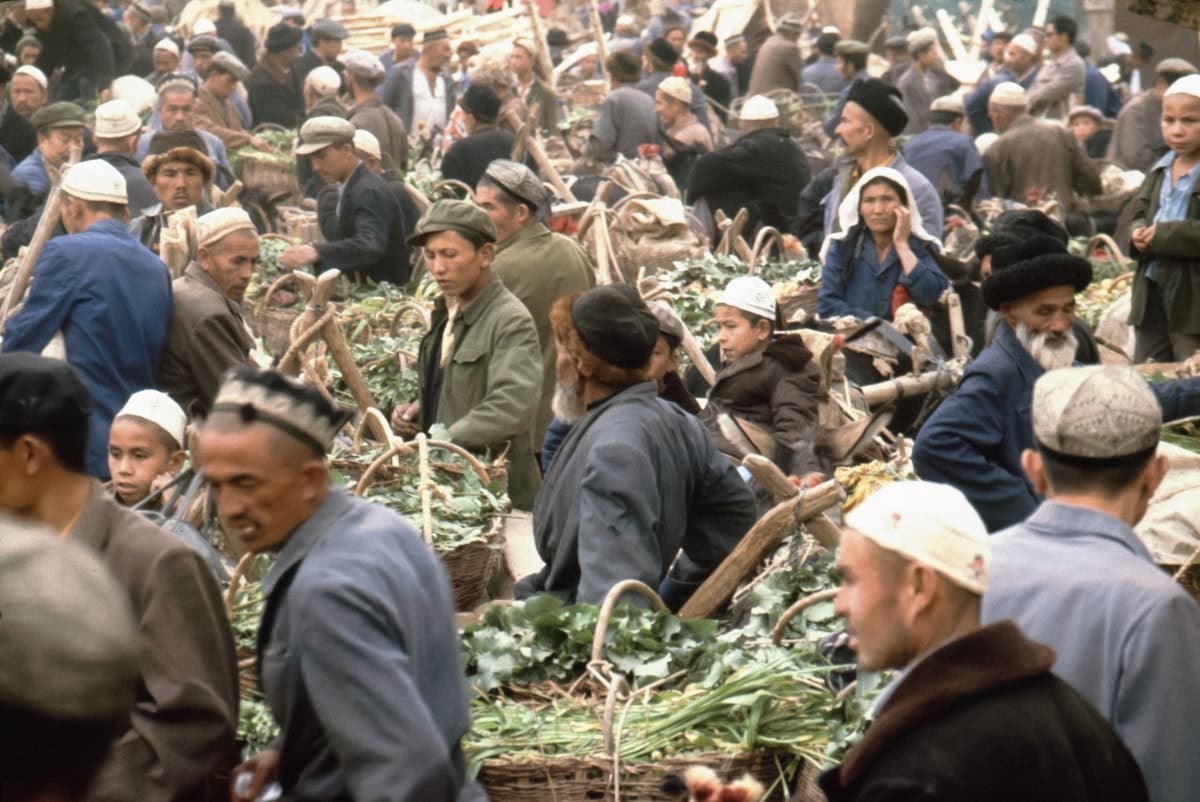
Most Westerners who know anything about Islamic mysticism have heard of the Qadiriyya order, founded by Abd al-Qadir al-Jilani in Baghdad in the twelfth century. Fewer know that Egypt has its own axis of saints, a cosmological framework called the Aqtab, the poles, and that Ibrahim Dessuqi is considered by millions of Sufi Muslims to be one of only four Aqtab who have ever existed simultaneously. The other three are Ahmad al-Badawi in Tanta, Ahmad ibn Idris in Morocco, and Abd al-Qadir himself in Baghdad. Dessuqi's moulid, his annual commemoration, draws an estimated four million visitors across a single week, making it one of the largest religious gatherings on the African continent that most travel publications have never once covered.
Ibrahim ibn Abi al-Majd al-Dessuqi was born in Dessuqi in 1255 CE and died there in 1296 CE. He founded the Burhaniyya Sufi order, which today has lodges in Egypt, Sudan, Germany, Switzerland, and the United States. He lived his entire life within a few kilometers of where his shrine now stands, which is unusual for a saint of his caliber. Most of Egypt's great saints were travelers. Dessuqi stayed, and the world came to him.
The shrine sits on the western bank of the Rosetta branch of the Nile, the same waterway that produced the Rosetta Stone and carried commerce between Alexandria and the Delta for millennia. The land beneath Dessuqi has been continuously inhabited since at least the Ptolemaic period. The city's ancient name was Tjeku or variations thereof, and excavations in the surrounding governorate have produced Late Period and Ptolemaic material suggesting a settlement of commercial significance long before Islam arrived in Egypt in 641 CE.
---
What You Will Actually See
The approach to the shrine complex on foot from the main street tells you immediately that this is not a tourist site. There are no ticket windows, no numbered audio guides, no laminated maps in six languages. There are vendors selling green Burhaniyya flags, strings of prayer beads, incense bundles, and small framed portraits of the saint rendered in a folk-art style that would not look out of place in a Coptic icon workshop. The visual vocabulary of Egyptian saint veneration does not divide neatly into Islamic and Christian. It draws from both.
The mosque itself was substantially rebuilt and expanded in the twentieth century, so do not arrive expecting medieval architecture. What you will find instead is a working sacred space of genuine intensity. The prayer hall is large enough to hold several thousand people and typically contains several dozen at any given hour outside of prayer times, most of them engaged in private dhikr, the repetitive chanting of divine names that forms the core Sufi practice. The sound is low, continuous, and unlike anything you will hear at a conventional mosque. It is closer in feeling, though not in theology, to what you experience in the Coptic monasteries of Wadi Natrun: the sense that the building is being used for its purpose every hour of the day, not only on Fridays.
The saint's tomb chamber is behind a carved wooden screen. Non-Muslims are sometimes permitted to stand at the entrance to the chamber at the discretion of the attendants, but entry into the tomb area itself is typically reserved for those who have come to pray. If you stand at the threshold and observe rather than photograph, you will likely be left in peace. If you produce a camera immediately, you will be asked to leave and you will have deserved it.
The Moulid: What Actually Happens
The Dessuqi moulid is not a performance staged for outsiders. It is a week-long ritual gathering that has been held continuously since shortly after the saint's death in the thirteenth century, with the exception of periods of plague and political disruption. The centerpiece is the hadra, a communal dhikr session in which participants stand in rows and move in coordinated rhythmic patterns while reciting. At peak moulid nights, the hadra circles outside the shrine can stretch for two city blocks.
The Burhaniyya order's distinctive practice during the moulid includes the laylat al-khatm, the night of the seal, when the order's initiates recite a full cycle of prayers that can last six to eight hours without interruption. Observers are welcome. Participation requires initiation. The distinction is respected without hostility.
The moulid also has an economic dimension that is inseparable from its spiritual one. Vendors travel from across Egypt and from Sudan to sell at the surrounding market. The stall selling cheap plastic sandals next to the stall selling handwritten Quranic manuscripts next to the children's carousel is not a sign of degradation. It is what Egyptian moulids have always looked like. Ahmad al-Badawi's moulid in Tanta, the largest in the country at an estimated eight million attendees, operates on exactly the same principle. Sacred and commercial have never been separate categories in Egyptian popular religion.
---
The Connections
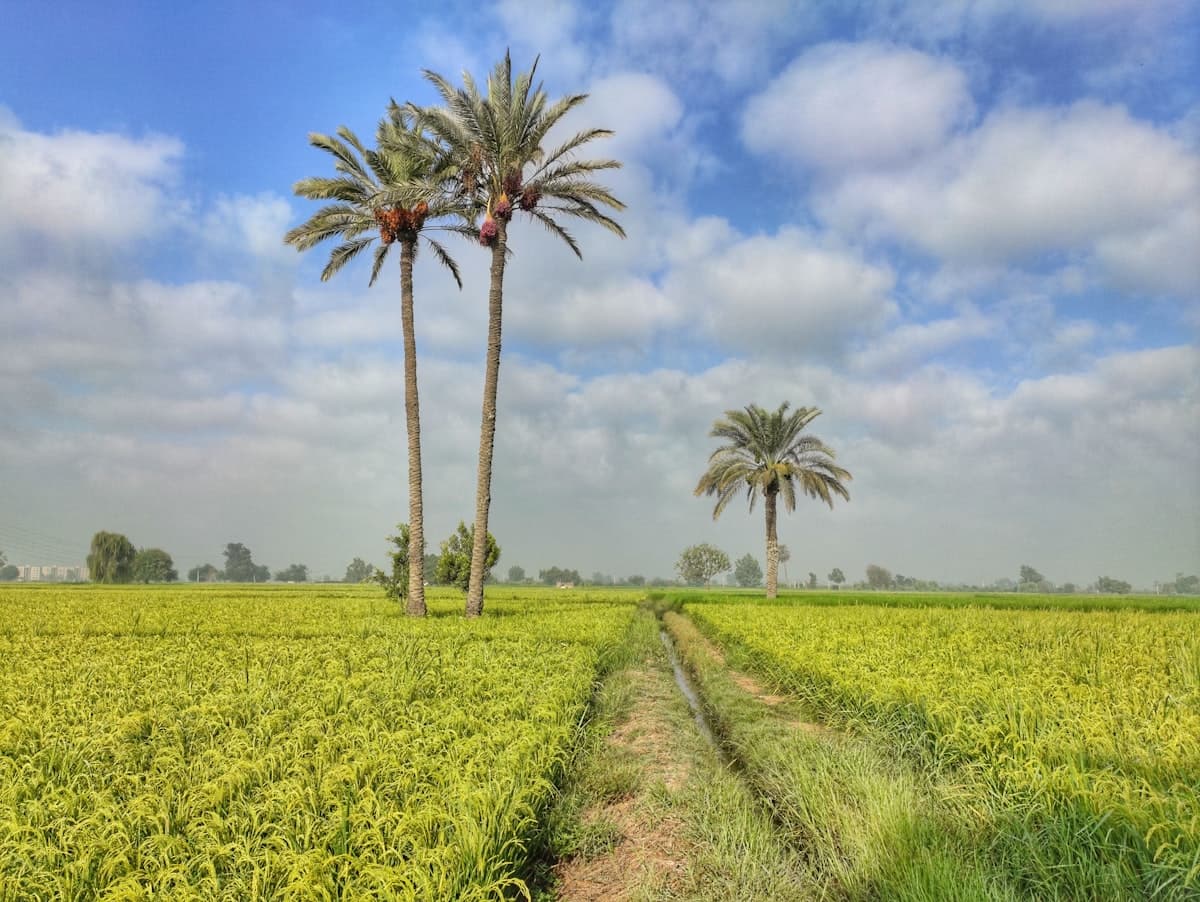
To understand Sidi Ibrahim Dessuqi, you have to understand the Nile Delta as a religious geography rather than as an agricultural plain that happens to have some mosques in it.
The Delta's three great saint shrines form a triangle that has structured Egyptian Sufi practice for seven centuries. Ahmad al-Badawi in Tanta died in 1276 CE, overlapping with Dessuqi's lifetime. There is a tradition that the two saints met, though the historical evidence is thin. What is not thin is the organizational reality: the Ahmadiyya order centered on al-Badawi and the Burhaniyya order centered on Dessuqi competed and cooperated for Delta followers across the Mamluk and Ottoman periods, shaping the regional landscape of Sufi affiliation in ways that still operate today.
The Mamluk sultanate that ruled Egypt from 1250 to 1517 CE was Dessuqi's political context. The Mamluks were, at the state level, Sunni Orthodox and often suspicious of Sufi popular religion. At the personal level, many Mamluk sultans and amirs were Sufi initiates or patrons of Sufi lodges. Sultan Baybars I, who established Mamluk power in Egypt in 1260, the same year as Dessuqi's early childhood, is buried in Damascus in a madrasa he built. His successors funded shrine expansions across the Delta as a form of political legitimacy-building among Egyptian populations who trusted saints more than sultans.
The Ottoman conquest of Egypt in 1517 CE changed the political structure but did not dismantle the saint network. The Ottomans in Egypt largely co-opted the existing Sufi infrastructure, and the Naqshbandi and Khalwati orders that arrived with Ottoman administrators found the Delta already organized around Egyptian saints whose popularity they could not and did not try to suppress.
The modern Burhaniyya order's expansion into Germany and Switzerland in the 1970s is a story that runs in the opposite direction from the usual colonial narrative: an Egyptian Sufi order from a Delta city of modest means establishing lodges in Hamburg and Basel, initiating European members, and sending delegations back to Dessuqi for the moulid. Currently the German branch has been active long enough to have second-generation European initiates making the pilgrimage to a city most Germans have never heard of.
---
Common Mistakes
Arriving only for the architecture. The mosque building will not satisfy someone looking for medieval Islamic architecture. Dessuqi's physical fabric has been updated repeatedly and lacks the visual drama of Cairo's Mamluk monuments. If the living practice of the place does not interest you, you are in the wrong city. Sultan Hassan Mosque in Cairo is ninety minutes away and will give you the architectural experience. Come to Dessuqi for what cannot be photographed.
Treating the moulid as a spectacle. Four million people do not travel to Dessuqi to be observed by curious outsiders. They come because they believe the saint's presence is concentrated and accessible during the moulid week, and that prayers made here at this time carry particular weight. If you attend the hadra circles, stand back, keep your phone away, and follow the lead of the people around you regarding when to sit and when to stand. Visitors who treat the dhikr as a photo opportunity are noticed and resented.
Skipping the surrounding Delta entirely. Dessuqi sits within striking distance of Rosetta, where the Rosetta Stone was discovered in 1799 by French soldiers digging fortifications. The stone itself is in the British Museum, which is a subject Egyptians have opinions about. The Fort of Qaitbay in Rosetta and the Ottoman merchant houses along the Nile bank are genuinely worth an afternoon and are visited by almost no one.
The organized Cairo day trip. Several operators advertise Delta saint shrine day trips from Cairo. These trips typically involve four hours of driving for ninety minutes at the shrine, a meal at a highway restaurant, and a guide whose knowledge of Sufi practice is superficial at best. If you are going to Dessuqi, stay overnight. The morning atmosphere at the shrine, around 6am, when the light comes off the Rosetta branch at a low angle and the first hadra of the day begins, is the reason to come.
Confusing tolerance with invitation. The shrine community is, in the author's experience across multiple visits, genuinely hospitable to respectful non-Muslim visitors. This hospitality is not the same as an invitation to ask intrusive questions about theology, to request posed photographs of worshippers, or to treat the attendants as informal tour guides. The hospitality is extended freely; do not convert it into a transaction.
Paying for a guide at the shrine entrance. Unofficial guides will approach you outside the complex and offer to explain the saint's significance for a fee. Most of them will tell you a version of Dessuqi's biography that omits the parts that require actual knowledge of Sufi cosmology. Read before you go. The Burhaniyya order's own published materials, available in English, are a better preparation than any fifteen-minute paid briefing.
The sound and light presentation at the moulid market. A semi-permanent installation near the main market area runs a video presentation about the shrine's history on a loop for a small fee. It contains no information that is not on the order's website and several details that are either simplified to the point of inaccuracy or simply wrong. Skip it entirely.
---
Practical Tips
Dessuqi is a working Delta city, not a tourist infrastructure. This means the food is good and cheap because it is priced for locals: a full ful and ta'amiyya breakfast at a market stall runs EGP 20 to 35. It also means accommodation is limited to a small number of local hotels with basic facilities. Book ahead during moulid week, when every room within fifteen kilometers is occupied.
Dress conservatively. This is not a place where Western casualness reads as sophisticated. Long trousers, covered shoulders, and for women a headscarf at minimum within the shrine precinct. Bring a scarf you can pull up quickly; the temperature inside the shrine is often higher than outside due to the density of bodies and lit candles.
If you have any connection to a Burhaniyya lodge in your home country, mention it when you arrive. The order maintains communication between its global branches, and a letter of introduction or a contact name will open doors that general visitor status will not.
The Rosetta branch of the Nile is visible and accessible from the city. A short walk to the riverbank in the early morning, before the city fully wakes, gives you the water-light-palm combination that is the Delta's specific visual register, quieter and greener than Upper Egypt, less theatrical but in its own way more intimate. This is the landscape Ibrahim Dessuqi walked every day of his forty-one years. It is worth fifteen minutes of your time.
Frequently Asked Questions
The Weekly Dispatch
More on Egypt, every Friday.
Cultural depth and places most guides never mention.
No spam. Unsubscribe anytime.