Sidi Ibrahim Dessuqi Shrine: A Guide to Egypt's Living Sufi Heart
Four million pilgrims descend on a Delta town most Egyptians have never visited. The saint buried here founded one of Islam's four great Sufi orders. Most tourists have never heard his name.

Quick Facts
- Best time to visit
- October through March for manageable Delta weather. The Moulid in Sha'ban (3-4 weeks before Ramadan) is the most intense pilgrimage period. Thursdays year-round bring the largest weekly devotional gatherings.
- Entrance fee
- Free. No admission charge. Donations inside the mausoleum are customary but not required. EGP 50 to 100 is appropriate if a local guide assists you.
- Opening hours
- Mosque open daily from dawn prayer (approximately 5am) until around 10pm. Mausoleum chamber accessible between prayer times throughout the day. No formal closure on any day of the week.
- How to get there
- West Delta bus from Cairo Turgoman station: EGP 70-90, approx 2.5 hours. Microbus from Alexandria Moharem Bey to Kafr el-Sheikh then taxi to Dessouk: EGP 30-45 plus EGP 50-80 taxi, total approx 2 hours. No direct train service to Dessouk.
- Time needed
- 2 to 3 hours for the shrine and mausoleum complex. Full day recommended to include market streets, town observation, and a meal locally.
- Cost range
- Very low cost destination. Day trip from Cairo including return bus, food, and donations: EGP 300 to 500 total (under $10 USD). No tourist pricing exists here.
Quick Facts
Best time to visit: October through March, when Delta heat is manageable. The Moulid of Sidi Ibrahim Dessuqi draws the largest crowds in Ramadan and the Islamic month of Sha'ban.
Entrance fee: Free. The shrine and mosque complex charge no admission. Donations are customary inside the mausoleum.
Opening hours: The mosque is open daily for all five prayers and generally accessible from dawn until 10pm. The inner mausoleum room is open to visitors between prayer times. Women may enter the mausoleum but should expect a separate entrance on some days during major Moulid gatherings.
How to get there: From Cairo's Turgoman bus station, West Delta buses run to Dessouk for approximately EGP 70 to 90 (under $2 USD). Journey time is roughly 2.5 hours. From Alexandria's Moharem Bey station, microbuses to Dessouk run frequently for EGP 30 to 45, about 1.5 hours. Dessouk has no train station. Taxis from Kafr el-Sheikh city (the nearest governorate capital) cost EGP 50 to 80 for the 20-minute ride.
Time needed: 2 to 3 hours for the shrine complex itself. Budget a full day if you want to walk the town and observe daily life around the shrine, which is genuinely interesting.
Cost range: Dessouk is not a tourist economy. A full meal in the town costs EGP 60 to 120 ($2 to $4 USD). Budget EGP 300 to 500 for a day trip from Cairo including transport, food, and optional charitable donations at the shrine.
---
Why This Place Matters
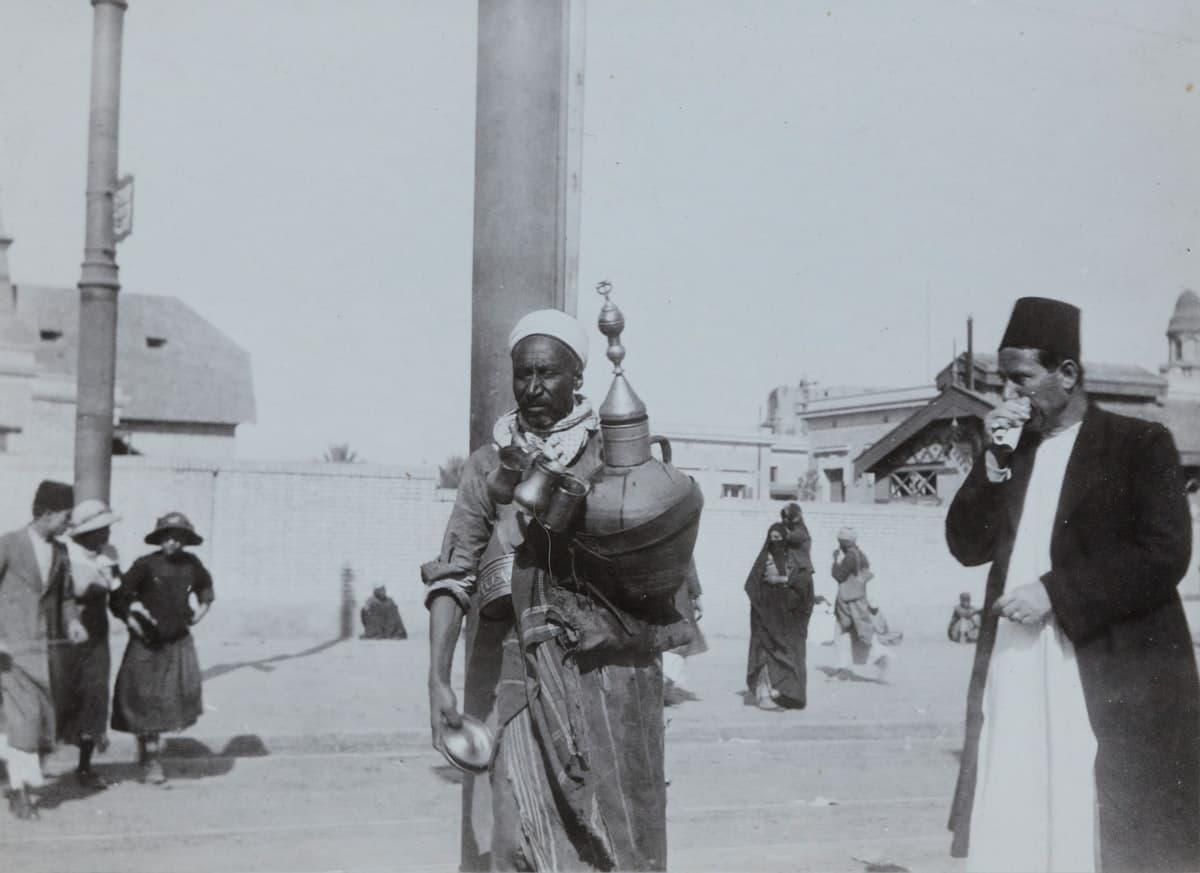
Four million people travel to Dessouk every year. Almost none of them are foreign tourists. They are Egyptian, Sudanese, Libyan, and Moroccan Muslims who know exactly who Ibrahim ibn Abi al-Majd al-Dessuqi was and what it means to stand beside his tomb. The rest of the world, including most Western-educated Egyptians, has largely never heard of him. That gap tells you something important about whose religion gets written about and whose does not.
Ibrahim al-Dessuqi was born in Dessouk in 1255 AD, in the same generation as Rumi and Ibn Arabi, during one of the most intellectually fertile periods in Islamic history. He died in 1296 and is considered the founder of the Dessuqiyya Sufi order, one of the four major Sufi brotherhoods in Sunni Islam alongside the Qadiriyya, the Shadhiliyya, and the Rifaiyya. The other three founders, Abd al-Qadir al-Jilani, Ahmad al-Rifai, and Ahmad ibn Idris al-Fasi, are household names in the Islamic world. Dessuqi is their equal in Sufi theology and their near-equal in the number of followers his order produced across North and West Africa. He is simply less exported to Western audiences.
His shrine has stood on this site for over seven centuries. The current mosque and mausoleum complex was substantially rebuilt during the Ottoman period and again under the Egyptian state in the twentieth century. What you see today is not medieval architecture. The spiritual weight, however, is entirely real and entirely continuous.
---
What You Will Actually See
Dessouk is a working Delta agricultural town. There is no souvenir strip. There is no English signage. The road from the main bus drop-off to the shrine takes you past a fresh produce market, a row of shops selling prayer beads and green cloth printed with Quranic verses, and, if you arrive on a Thursday, crowds of men in white galabiyas carrying hand-painted banners of the Dessuqiyya order.
The mosque complex is large by Delta standards, with a pale stone facade and a single prominent minaret. The interior is covered in green carpet and lit with chandeliers of modest ambition. What arrests you is not the architecture but the behavior inside. People pray, weep, whisper, and sit in the specific quality of stillness that you only find in places where a very large number of people have been doing the same thing for a very long time. The walls have absorbed it.
The mausoleum chamber sits behind a mashrabiyya screen beside the main prayer hall. The tomb itself is covered in green and gold cloth, surrounded by silver latticework, and almost always surrounded by visitors pressing close, some in silence, some in audible prayer. Non-Muslim visitors are generally tolerated if they are quiet and appropriately dressed. This is not a rule posted anywhere. It is an unspoken social contract. Honor it.
A detail most visitors miss entirely: the calligraphy panels along the upper walls of the mausoleum chamber include verses specific to the Dessuqiyya order's founding texts, not standard Quranic inscription. They are a theological statement, not decoration.
---
The Moulid: What Changes When Four Million People Arrive
The Moulid of Sidi Ibrahim Dessuqi is held annually in the Islamic month of Sha'ban, roughly three to four weeks before Ramadan. The exact Gregorian dates shift each year according to the lunar calendar. At its peak, the population of Dessouk increases by a factor of roughly twelve. This is not a metaphor. It is a logistical fact with real consequences for the town's water supply, its roads, and its residents, who have been managing this annual event for seven centuries and are very good at it.
The Moulid includes hadra ceremonies, which are collective Sufi devotional rituals involving rhythmic chanting, percussion, and in some orders, controlled physical movement. The Dessuqiyya hadra is specific in its structure: particular drum patterns, particular sequences of divine names, particular postures. Academic scholars of Islamic mysticism have studied this Moulid in depth. Earle Waugh documented Sufi sound practices across Egypt in research that specifically referenced the Dessuqiyya tradition. Attending even one hadra session is among the most sonically and emotionally dense experiences available to a visitor in Egypt today.
If you have no experience with Sufi practice, attend as an observer, not a participant. Sit at the edge, watch, listen. The men leading the hadra have trained for years. The uninitiated joining the inner circle is the equivalent of wandering into the sanctuary during a High Mass and sitting in the priest's chair. The principle is the same.
The honest caveat: the Moulid is extraordinary but physically demanding. Dessouk has almost no accommodation for visitors. Most pilgrims sleep in shared tents, in mosques, or in the open. If you are not prepared for this, visit during a normal week. The shrine on a quiet Tuesday morning has its own particular power.
---
The Connections
Dessouk sits in the Nile Delta, in Kafr el-Sheikh Governorate, on a branch of the Nile that was significantly more navigable in medieval times than today. The town's location was not accidental. Delta towns at river junctions were trade and communication nodes, and religious authority historically concentrated at trade nodes. The same logic explains why Alexandria became a center of Christian theology, why Damietta was worth three separate Crusader attacks, and why the Fatimid caliphs built Cairo where they did.
Ibrahim al-Dessuqi was a contemporary of the Mamluk Sultan Qalawun, who ruled Egypt from 1279 to 1290. Qalawun built the extraordinary funerary complex in Cairo's al-Muizz Street that now houses a hospital, a madrassa, and a mausoleum, all still standing. Dessuqi and Qalawun operated in the same political and spiritual world, with Sufi sheikhs providing the kind of popular legitimacy that military sultans needed. The relationship between political power and Sufi authority in medieval Egypt is not incidental. It is structural. The Khanqahs, which were state-funded Sufi lodges, that Qalawun and his successors built across Cairo were partly patronage and partly political insurance.
The Dessuqiyya order spread south through Sudan and west through Libya and Tunisia, eventually reaching West Africa, where today there are Dessuqiyya communities in Senegal, Mali, and Nigeria. The shrine in Dessouk is therefore the geographical and spiritual origin point for a tradition practiced on a continent-spanning scale. Standing in the mausoleum, you are at the center of a network that extends from the Egyptian Delta to the Sahel. That is a long reach for a man born in a small river town in 1255.
---
Common Mistakes
Visiting only during the Moulid without preparation. The Moulid is worth seeing but Dessouk has almost no tourist infrastructure. Book a night in Kafr el-Sheikh city, 20 minutes away, not in Dessouk itself, where accommodation options are extremely limited and in high demand during the festival.
Treating the shrine as a monument rather than an active place of worship. This is not a ruin. People are praying, grieving, and conducting specific religious practices throughout the day. Entering with a camera raised is wrong in a way that transcends local custom. It is wrong in the general human sense. Observe first. Photograph nothing inside the mausoleum chamber without explicit permission, which you should not ask for during prayer or hadra.
Arriving without cash. Dessouk has limited ATM access and no card payment infrastructure in the market or food stalls around the shrine. Bring EGP in small denominations.
Skipping the town and going straight back. The streets around the shrine on a normal day contain one of the most coherent surviving examples of a medieval Egyptian religious marketplace economy: sellers of votive candles, blessed oils, prayer beads, Sufi texts, and green cloth. This is not a tourist market. These goods are sold to pilgrims for devotional use. The distinction matters and the experience is worth an hour of wandering.
Booking a commercial Nile cruise tour that includes Dessouk as a stop. These tours exist and they are essentially useless for understanding this place. You arrive with thirty other tourists, spend twenty minutes at the shrine with a guide reading from a printed card, and leave. The shrine guide you need is this one, not a laminated sheet.
Bringing food or drink into the mosque or mausoleum area. This applies everywhere in Egypt but is worth stating specifically here because the area around the shrine is so densely packed with food vendors that it is easy to arrive at the entrance eating something. Finish it outside.
Arriving at midday in summer. The Delta in July and August is genuinely punishing. The humidity is higher than Upper Egypt, the shade is less reliable, and the crowds around the shrine do not thin out at noon the way they might at an archaeological site. October through March is not a vague seasonal preference. It is the difference between a meaningful visit and a miserable one.
---
Practical Tips
Dress conservatively regardless of your gender or religion. For women, this means a headscarf inside the mosque and mausoleum, and covered arms and legs throughout the visit. For men, long trousers and a shirt with sleeves. This is baseline respect and also basic practical advice: the crowds inside the mausoleum are close, and dressed modestly you will move through them without friction.
Learn three Arabic phrases before you go: as-salamu alaykum (greeting), law samaht (excuse me), and ana ziyara (I am visiting, a shorthand that signals respectful intent). Your Egyptian Arabic does not need to be good. The attempt is what matters.
The West Delta buses from Cairo's Turgoman station to Dessouk are reliable and air-conditioned. The microbus option from Alexandria is cheaper but involves a change at Kafr el-Sheikh city. If you take the microbus route, confirm your destination clearly as "Dessouk" rather than just "Kafr el-Sheikh" to avoid being dropped at the governorate capital and needing a second taxi.
There is no formal entrance to the shrine and no ticket desk. Walk in through the main mosque gate. If you are visibly foreign, someone will almost certainly offer to show you around. This person may want a small payment afterward. EGP 50 to 100 is appropriate if the guidance was useful. Decline politely if the arrangement feels coercive.
Photograph the exterior, the market streets, and the town with discretion. Inside the mosque and mausoleum, put the camera away entirely.
Frequently Asked Questions
The Weekly Dispatch
More on Egypt, every Friday.
Cultural depth and places most guides never mention.
No spam. Unsubscribe anytime.