Sidi Ibrahim Dessuqi Shrine: Egypt's Living Saint City Guide
Four million pilgrims descend on a Delta city of 300,000 each year. The shrine they come for belongs to a 13th-century saint Egypt never stopped arguing about.

Quick Facts
- Best time to visit
- October to March for comfortable Delta weather. The annual moulid (Sha'ban in the Islamic calendar, usually spring) for maximum immersion, though crowds are extreme.
- Entrance fee
- Free. No ticket required for the shrine or mosque.
- Opening hours
- Daily approximately 5am to 10pm. Inner sanctum closed during prayer times. Moulid period: effectively 24 hours during peak days.
- How to get there
- Train from Cairo Ramses Station to Dessuq, second class EGP 30-50 (approx $1-1.60 USD), about 3 hours. Microbus Cairo to Tanta EGP 25-40, then Tanta to Dessuq EGP 10-15. From Alexandria, microbuses toward Kafr el-Sheikh governorate.
- Time needed
- 2 hours minimum for the shrine and market. Half-day to explore the older quarters. Full day or overnight during the moulid.
- Cost range
- Near zero for the visit itself. Budget EGP 50-150 for food and transport within the city. Main cost is getting there: EGP 60-100 round trip from Cairo by train.
Quick Facts
Best time to visit: October to March for comfortable temperatures. The Moulid of Sidi Ibrahim Dessuqi (usually late spring, date shifts with the Islamic lunar calendar) draws the largest crowds but offers the most immersive experience.
Entrance fee: Free. The shrine and mosque are open to all visitors at no charge.
Opening hours: The mosque and outer shrine areas are accessible daily from approximately 5am to 10pm. The inner sanctum is open except during private prayer times. During the moulid, the complex operates around the clock for days at a stretch.
How to get there: From Cairo, take a service taxi or microbus from Midan Tahrir or Cairo's main bus terminals toward Tanta (roughly EGP 25-40, about $0.80-1.30 USD), then connect to Dessuq by local microbus (EGP 10-15). Alternatively, take a train from Cairo Ramses Station to Dessuq directly via the Delta line (second class EGP 30-50). From Alexandria, buses and microbuses run regularly toward the Kafr el-Sheikh governorate. The journey from Cairo takes roughly 3 hours by road.
Time needed: 2 hours minimum for the shrine and surrounding market. A full half-day if you intend to walk the city's older quarters and understand how the saint's presence has shaped the urban fabric. During the moulid, plan for a full day or overnight.
Cost range: Almost nothing if you come as a visitor. EGP 50-150 covers tea, food from street vendors, and a candle or incense offering if you choose to participate. Transport is the main expense.
---
Why This Place Matters
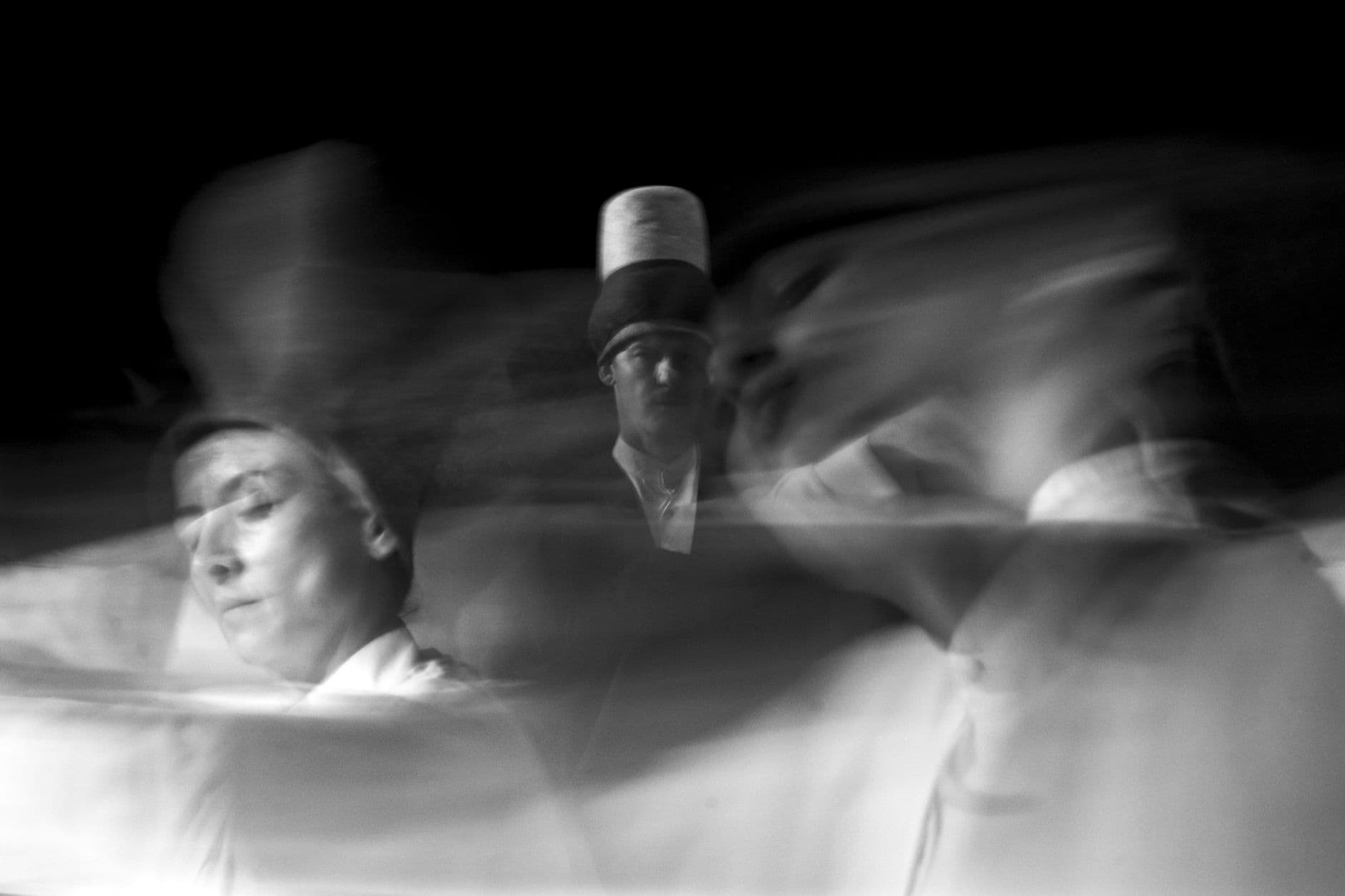
Egypt has four saints considered the Aqtab al-Arba'a, the four spiritual poles of Sufi Islam. The logic of the poles is architectural: the universe, in Sufi cosmology, requires four anchoring saints alive at any given moment to maintain its spiritual order. Sidi Ibrahim Dessuqi is one of them, alongside Ahmed el-Badawi in Tanta, Ahmed ibn Idris in Aswan, and Abdul Qadir al-Jilani in Baghdad. That Egypt claims three of the four poles tells you something about how Egyptians understand their own spiritual weight in the world.
Ibrahim Dessuqi was born in Dessuq in 1235 CE, during the Ayyubid period, and died in 1288 CE, already into the Mamluk era. His life spans one of the most violent and creative transitions in Egyptian history: the moment the Crusader threat in the Levant was being met by a new military slave class, the Mamluks, who would go on to build some of the finest architecture Cairo has ever seen. Dessuqi was not a political figure, but his spiritual authority was recognized by the Mamluk establishment, which understood that controlling saints meant controlling populations.
He founded one of the four major Sufi orders still active in Egypt today, the Dessuqiyya order, which now claims lodges across Egypt, Sudan, Libya, and the wider Arab world. The order's initiation practices draw on a theology of divine love that predates formal Islamic Sufism by centuries and carries unmistakable echoes of earlier Egyptian mystical traditions.
The city of Dessuq itself sits in the western Nile Delta, in Kafr el-Sheikh governorate, a region that has been continuously inhabited since at least the Late Period of Pharaonic Egypt. The Delta was never a desert of antiquity: it was the most densely farmed, most politically contested, most culturally layered part of Egypt. That a major Sufi saint emerged here, rather than in Cairo or Alexandria, is historically significant. It meant his authority grew from the rural agricultural base of Egyptian society, not from the urban court.
---
What You Will Actually See
The approach to the shrine from Dessuq's main street does not prepare you for what is inside. The exterior is a late Ottoman renovation layered over Mamluk foundations: green-tiled minarets, a facade that has been repainted so many times the original stonework is memory. What strikes you first is not the architecture but the commerce. The lanes around the shrine are dense with vendors selling prayer beads, bottles of rosewater, printed portraits of the saint on fabric, green silk banners, and small amulets whose design would have been recognizable to traders in the medieval spice markets of Cairo.
Green is the operative color here. Green cloth draped over the cenotaph. Green flags hanging from every available point. Green is the color of the Prophet's family in Islamic tradition, and Dessuqi claimed descent from the Prophet through the Husseini line. That claim is not incidental: it is the theological foundation of his authority. A saint who is also a sharif, a descendant of the Prophet, occupies a different category of holiness than a saint who is merely pious.
The cenotaph itself is enclosed in a mashrabiyya screen, the carved wooden latticework that appears in Mamluk Cairo's finest mosques. Pilgrims press their hands and foreheads against the lattice. They speak quietly or not at all. Some weep. A small number enter a kind of visible trance. This is not performance: it is the specific emotional register of visitation (ziyara) in Egyptian Sufi practice, a form of devotion that has been continuous here for seven centuries despite periodic condemnation from reformist Islamic movements that consider shrine visitation a form of idolatry.
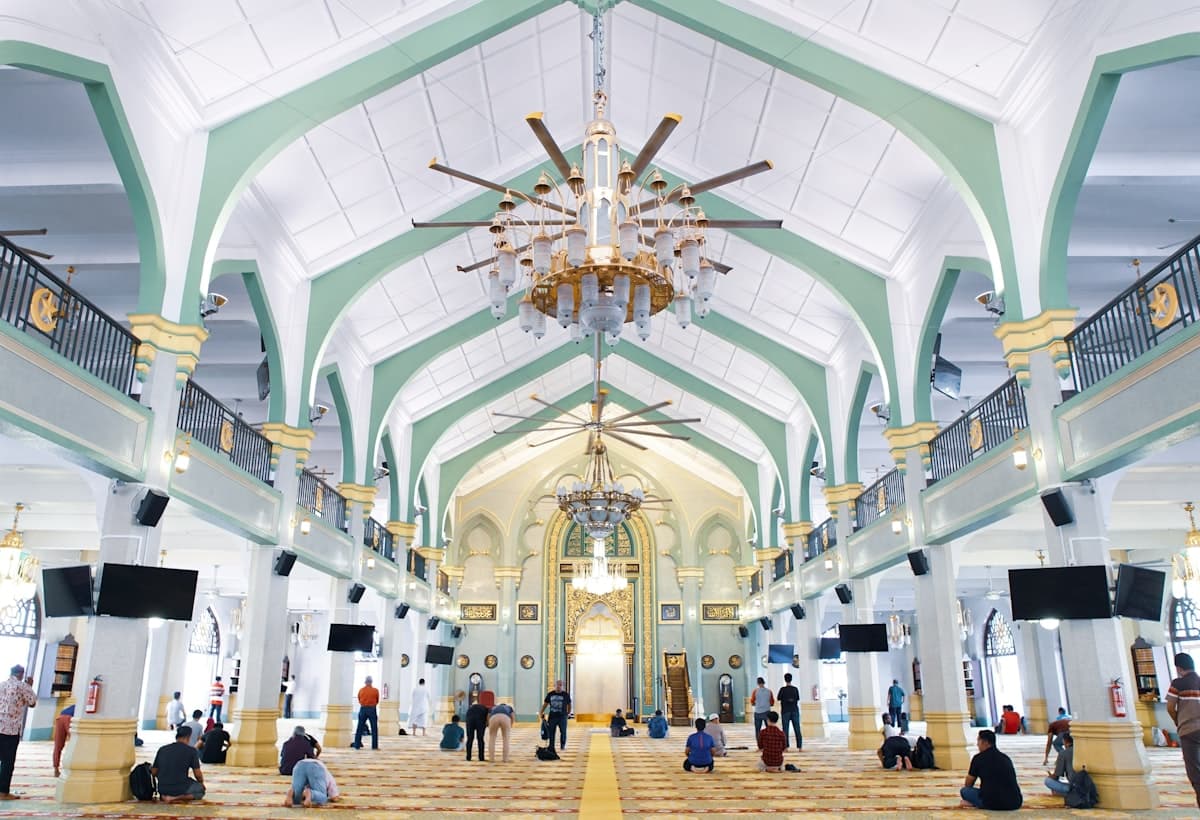
The mosque attached to the shrine is functional and used for all five daily prayers. It is not a museum. During prayer times, tourists are expected to wait outside or move to the edges of the prayer hall. Respect this without needing to be told.
The Moulid: What Nobody Explains Before You Arrive
The annual moulid of Sidi Ibrahim Dessuqi is not a festival in any sense you already understand. It is closer to a city temporarily remade. The population of Dessuq, around 300,000 in normal times, absorbs an estimated four million visitors across the moulid week, according to figures cited by the Egyptian Sufi Council. The infrastructure is not designed for this. Streets that accommodate a single car become rivers of people. Every flat surface becomes a sleeping space. Sufi orders arrive with their banners, their drums, their distinctive clothing, and their specific dhikr (rhythmic chanting) traditions, and they occupy different corners of the city like encampments.
The dhikr sessions are the core ritual. They begin after Isha prayer (around 9pm) and can continue until dawn. Different orders have different forms: some involve swaying, some involve percussive chanting, some involve reed flute. The Dessuqiyya order's own dhikr is among the most austere, focused on breath and repetition rather than movement. If you have never witnessed a full night dhikr session, the moulid of Sidi Ibrahim Dessuqi is one of the few places in Egypt where you can do so as a respectful observer without any formal introduction required.
The moulid date is not fixed. It moves with the Islamic lunar calendar. Cross-check with the Egyptian Sufi Council or local Dessuq contacts before planning travel specifically around it.
---
The Connections
The Sidi Ibrahim Dessuqi shrine sits inside a web of Egyptian religious geography that most visitors never map for themselves.
Sixty kilometers south, in Tanta, the shrine of Ahmed el-Badawi draws what is by some estimates the largest moulid in Africa, sometimes cited at three million attendees for its peak days. El-Badawi died in 1276 CE, twelve years before Dessuqi. The two saints were contemporaries in the same Delta landscape, and the theological relationship between the Ahmadiyya order (el-Badawi's) and the Dessuqiyya order has been debated by Sufi scholars for centuries. To visit both shrines in a single Delta journey is to understand how a region most tourists fly over between Cairo and Alexandria is actually Egypt's spiritual center of gravity.
The Dessuqiyya order spread southward along the Nile into Sudan, where it became one of the most influential Sufi orders in Sudanese Islam. The shrine in Dessuq is therefore not just an Egyptian site: it is the source point for a religious tradition that shaped the spiritual life of the entire Nile Valley from the Delta to Khartoum.
On a longer historical arc: the Delta in which Dessuqi lived had been, seven centuries earlier, the home of the ancient Egyptian city of Buto, one of the oldest cult centers in Pharaonic history. Buto's cobra goddess Wadjet was the protector of Lower Egypt. The sacred geography of the Delta, the sense that certain places in it hold concentrated spiritual power, did not begin with Islam. It was already ancient when the first mosques were built.
The Mamluk sultans who patronized the region during Dessuqi's lifetime were themselves largely Circassian and Kipchak Turks, purchased as children from the slave markets of the Black Sea coast and trained as soldiers in Cairo. One of them, Sultan Baybars, who defeated the Mongols at the Battle of Ain Jalut in 1260 CE, arguably saving the Islamic world from Mongol conquest, was a patron of saint shrines across the Delta precisely because he understood that legitimacy in Egypt required the blessing of its spiritual landscape. He could not have bought a more useful alliance.
---
Common Mistakes
Arriving during Friday midday prayer and expecting access. The mosque fills completely for Jumaa prayer and the surrounding streets become impassable. If you arrive between 12:30pm and 2:30pm on a Friday, you will not see the shrine interior. Plan around this specifically.
Treating the moulid as a spectacle rather than a ritual. Visitors who arrive with cameras raised and keep them raised throughout the dhikr sessions are not welcome. This is not hostility to outsiders: it is the reasonable expectation that a religious ceremony be treated as one. Photograph the markets, the banners, the city. Put the camera down during the dhikr.
Skipping the city itself. The shrine is the reason to come, but Dessuq's older quarters contain Ottoman-period domestic architecture that is disappearing faster than anyone is documenting it. The covered market near the shrine sells nothing you cannot buy in Cairo for three times the price, but the side streets have a spatial logic that belongs entirely to a Delta market town and nowhere else.
The sound and light show does not exist here, which is the point. Dessuq has no state-run tourist apparatus. There are no ticketing kiosks, no English-language interpretation boards, no guided tour infrastructure. This is entirely correct. Do not arrive expecting it and do not wish for it. The absence is the experience.
Relying on Google Maps for the moulid layout. During the moulid, the city's functional geography changes completely. Streets close, temporary structures appear, normal transit routes become impossible. Ask locally, on the day, repeatedly.
The contrarian take: do not buy the packaged ziyara tours from Cairo operators. Several Cairo-based tour operators sell day trips to Dessuq framed as "authentic Sufi experience" packages for EGP 800-1,500 per person. They will put you on an air-conditioned bus, give you forty-five minutes at the shrine, and return you to Cairo having seen exactly what you would have seen in forty-five minutes at any Egyptian mosque. The entire point of this place is the time you spend inside its rhythms. Take the local train. Budget the day.
Not checking the lunar calendar. The moulid is the most significant version of this visit, but it is also the most physically demanding. Crowds at peak moments are genuinely dangerous in the crush near the shrine entrance. If you have any difficulty with dense crowds, visit in the off-season. The shrine is fully operational and deeply affecting year-round.
---
Practical Tips
Dress conservatively: covered shoulders, covered knees for all genders. Women should carry a headscarf for the interior. This is not a suggestion from a tourist board. It is what the context requires.
Shoes come off before entering the inner shrine area. Wear sandals or slip-on shoes. The floor is often wet from ritual washing.
The area around the shrine is safe for solo travelers of any gender, but the density of crowds during the moulid means bags should be worn across the body, not on the shoulder.
Food near the shrine is predominantly street food: ful, ta'amiya, koshari, grilled corn. It is cheap (EGP 10-30 per item) and usually very good. The tea served in the small cafes adjacent to the market is the strong, sweet Delta variety. Accept it.
There are no hotels in Dessuq that cater specifically to foreign visitors. During the moulid, accommodation is nearly impossible to find unless arranged weeks in advance through local contacts. Most Egyptian pilgrims sleep in the streets or in Sufi lodge guesthouses that operate only for initiated members. If you intend to stay overnight during the moulid, contact the Kafr el-Sheikh governorate tourist office in advance, or plan a base in Kafr el-Sheikh city (15 km north) and travel in for evening sessions.
Do not come for the architecture if architecture is your primary interest in Egypt. The shrine's exterior is not architecturally distinguished. Come for what the shrine is still doing: anchoring the spiritual life of a civilization that has been at this business for seven thousand years.
Frequently Asked Questions
The Weekly Dispatch
More on Egypt, every Friday.
Cultural depth and places most guides never mention.
No spam. Unsubscribe anytime.