Sidi Ibrahim Dessuqi Shrine: Egypt's Living Saint of the Delta
Four million Egyptians visit this Delta shrine each year. Most Western guides don't list it. That gap tells you everything about what Egypt actually is.

Quick Facts
- Best time to visit
- October to April for tolerable Delta humidity. Sha'ban (lunar month) for the annual moulid festival.
- Entrance fee
- Free. No entrance charge to the shrine, mosque, or courtyard.
- Opening hours
- Daily from dawn to approximately 11pm. Inner tomb chamber most accessible during and between prayer times.
- How to get there
- Bus or service taxi from Cairo Turgoman Station to Kafr el-Sheikh (EGP 60-80, 3-4 hours), then microbus to Dessouk (EGP 10-15, 20 min). Direct buses from Alexandria cost EGP 40-55.
- Time needed
- 3 hours minimum for the shrine complex and market district. Full day during moulid, with the option to stay overnight.
- Cost range
- Budget EGP 200-400 for a full day including transport from Kafr el-Sheikh, food, and small purchases.
Every year, roughly four million Egyptians make their way to a mid-sized Delta city that does not appear in a single major Western Egypt guidebook. They come for Ibrahim al-Dessuqi, the only Egyptian-born member of Islam's four supreme poles of saints, a man who died in 1288 and has not stopped mattering since. If you have spent time in Egypt and this name is unfamiliar, that is not your fault. It is a structural failure of how Egypt gets packaged for outside consumption.
The Sidi Ibrahim Dessuqi shrine sits in Dessouk, Kafr el-Sheikh Governorate, in the heart of the Nile Delta. It is not ancient in the Pharaonic sense. It is not Islamic in the Ottoman sense. It is something harder to categorize and therefore more interesting: a living center of Sufi devotion that has been continuously drawing pilgrims for over seven centuries, funded by sultans, rebuilt after floods, and now attended by Egyptians who arrive by microbus and motorcycle from every corner of the country.
This is a guide to going there, understanding what you are seeing, and not getting in the way of something that was never designed with you in mind.
Quick Facts
Best time to visit: October to April for comfortable Delta weather. The Moulid (annual festival) falls in the Islamic month of Sha'ban, roughly ten months before Ramadan each year. Check the lunar calendar for the exact date.
Entrance fee: The shrine complex itself is free to enter. The moulid period draws vendors and some ticketed peripheral events, but the shrine and mosque are open to all without charge.
Opening hours: The mosque and outer shrine areas are accessible daily from approximately dawn to 11pm. The inner sanctum near the tomb is open during prayer times and festival periods. No strictly posted tourist hours exist because this is not a tourist site.
How to get there: From Cairo, take a service taxi or bus from Turgoman Station toward Kafr el-Sheikh city (approximately EGP 60-80, roughly $2 USD). From Kafr el-Sheikh, shared microbuses to Dessouk run constantly and cost EGP 10-15 (under $1). Total journey from Cairo is three to four hours. Direct buses from Alexandria to Dessouk also run and take about two hours, costing EGP 40-55.
Time needed: Three hours minimum to walk the complex, attend part of a prayer session, and absorb the surrounding market district. During moulid, plan a full day or arrive the evening before and stay overnight.
Cost range: Dessouk is not a tourist economy. Budget EGP 200-400 for a full day including transport, food, and any small purchases from shrine vendors.
Why This Place Matters
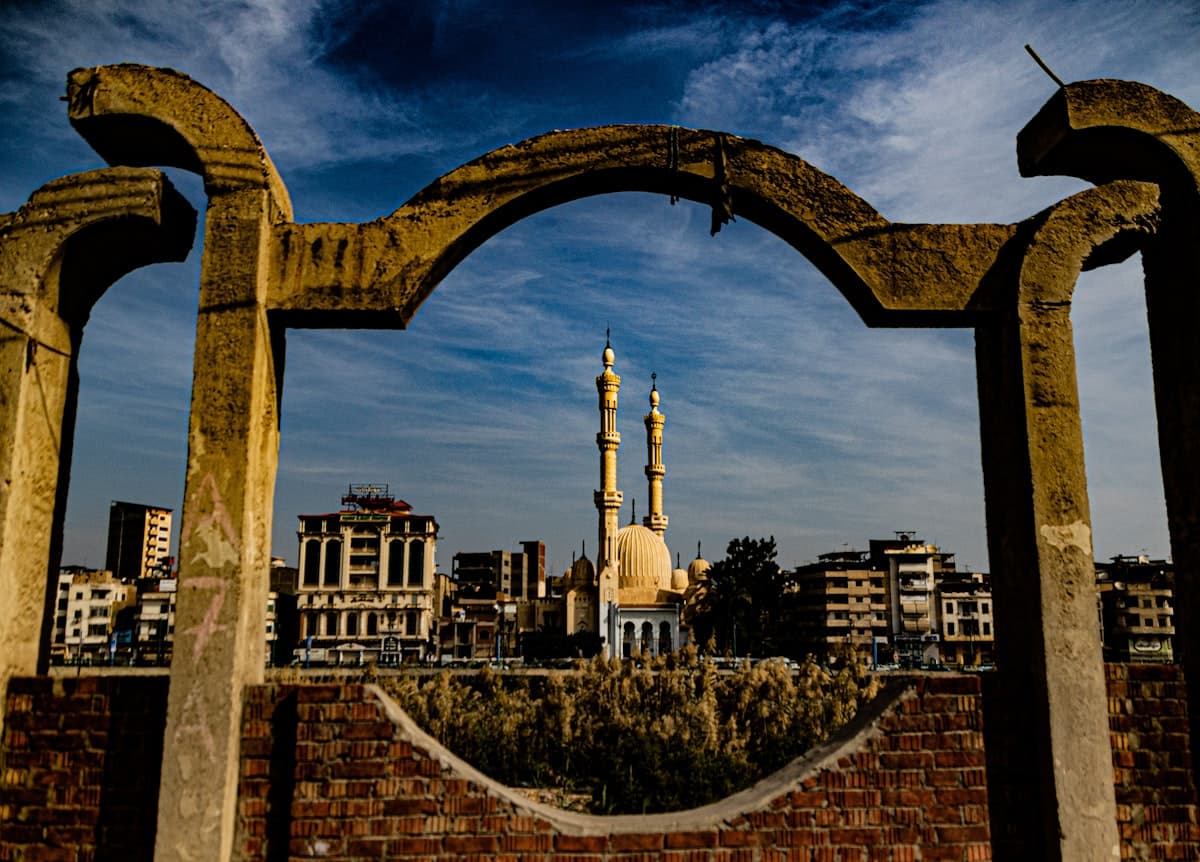
Ibrahim al-Dessuqi was born around 1255 CE in Dessouk, into a family already considered religiously distinguished. He became a Sufi sheikh within the Shadhili tradition, founded his own Dessuqiyya order, and was recognized by contemporaries and subsequent Islamic scholarship as one of the Arba'a Aqtab, the Four Poles or Pillars of Islamic sainthood. The other three recognized poles are Abd al-Qadir al-Jilani of Baghdad, Ahmad al-Badawi of Tanta, and Ahmad ibn Idris. This places Dessuqi in a theological category shared by almost no one in Islamic history, and it explains the scale of devotion his shrine commands.
What makes the Dessuqiyya order distinctive within Sufism is its particular emphasis on the concept of the wali as a living intercessory force after death. Pilgrims do not come to remember Dessuqi. They come to speak to him, through him, and near him. The theological argument for this practice occupies centuries of Islamic jurisprudence, and the debate is not resolved. What is not debated is the continuity: this site has drawn pilgrims without interruption since the thirteenth century, surviving Mamluk political upheaval, Ottoman administrative reorganization, and the general decline of Delta infrastructure under colonial neglect.
The current mosque structure dates largely from the nineteenth and twentieth centuries, funded partly by royal Egyptian patronage under Muhammad Ali's dynasty. However, the site's foundations and its cultural logic are medieval. The mosque's green dome, visible from considerable distance across the flat Delta landscape, was a deliberate act of visual theology: green is the color of the Prophet's family and of Islamic sainthood, and positioning it to dominate the skyline of Dessouk was a statement about whose authority mattered in this city.
What You Actually See Inside
The approach to the shrine from the main street runs through a market that sells exclusively religious goods: prayer beads, bottles of rose water, green silk banners printed with Quranic verses, small framed portraits of Dessuqi himself rendered in a style that sits somewhere between Byzantine icon and Egyptian folk painting. The portraits are worth pausing over. Dessuqi is almost always depicted with a green turban and an expression of complete calm. Some versions show him holding a sword, referencing a tradition that he intervened miraculously in military conflicts. These images are produced locally and sold for EGP 20-50 and they tell you more about living Egyptian folk religion than any academic text.
The mosque itself is large, multiple-domed, and covered inside with a combination of Ottoman-influenced tile work and later Egyptian marble. The tomb chamber is located within the mosque structure and marked by a substantial maqsura, an ornate wooden or metal screen that encloses the tomb and through which visitors press their hands and whisper prayers. During non-moulid periods, the chamber is quiet enough that you can hear individual prayers being murmured. During moulid, the density of people near the maqsura becomes physically overwhelming in a way that is not unpleasant if you are prepared for it.
The courtyard outside the main mosque holds smaller shrines to members of Dessuqi's family and disciples. These are visited far less by outsiders and far more by regular pilgrims who have specific intercessory requests. An elderly woman placing a handwritten note against a secondary tomb is not performing for anyone. Do not photograph her.
The Moulid: What It Is and Is Not
The annual Moulid of Sidi Dessuqi is the third largest moulid in Egypt, after those of the Prophet Muhammad in Cairo and Ahmad al-Badawi in Tanta. That ranking represents an event attended by somewhere between one and four million people over roughly a week. Sufi orders arrive in organized groups, identifiable by matching clothing and banners. Each order has a designated space in the grounds surrounding the shrine where they perform their zikr, rhythmic chanting and movement intended to bring practitioners into proximity with the divine.
The zikr sessions that happen during moulid nights are not performances. They are religious practice that outsiders are permitted to observe, not to film with bright phone screens or treat as entertainment. The Rifa'i order's zikr, which sometimes incorporates physical austerities, is particularly not for casual documentation. If you are invited to sit with a group, sit quietly. If you are offered tea, accept it. If you are not invited, watch from a respectful distance and leave when you feel you have absorbed rather than consumed.
Moulid also means a temporary city of vendors, food stalls, carnival rides, and regional crafts that surrounds the shrine for its duration. Grilled corn, fried fish from the nearby Delta waterways, and karkade (hibiscus tea) are sold from every corner. The economic activity generated by the moulid sustains entire family businesses for a significant portion of the year.
The Connections: Dessuqi in Egypt's Longer Story
Ibrahim al-Dessuqi died in 1288, which places his life and work squarely in the Bahri Mamluk period, the same decades that produced the great Mamluk architecture of Cairo including the complex of Sultan Qalawun, completed in 1285, and the Mosque of Sultan Hassan, begun in 1356. The Mamluks were not a dynasty neutral toward Sufism. Several Mamluk sultans actively patronized Sufi orders as a way of building popular legitimacy that their slave-soldier origins could not provide through bloodline. The shrine at Dessouk benefited from this political logic: state recognition of Sufi saints served the state as much as it served the saints.
The Dessouk region itself sits in a part of the Delta that was Coptic Christian before the Arab conquest of 641 CE. Excavations in and around Kafr el-Sheikh Governorate have found Pharaonic-era settlement layers beneath Byzantine Christian layers beneath the earliest Islamic period layers. The landscape that Ibrahim al-Dessuqi walked and preached in was already a palimpsest. The Delta's agricultural richness made it continuously inhabited and continuously fought over, which is why it is also continuously layered.
The Ahmad al-Badawi shrine in Tanta, roughly 80 kilometers south of Dessouk, represents a comparable phenomenon: another medieval Sufi saint, another massive moulid, another million-plus annual pilgrimage. Between the two sites, they define a geography of popular Egyptian Islam that predates the Salafi movements that have challenged shrine veneration since the 1970s. The tension between shrine Islam and mosque-only Islam is real in contemporary Egypt, occasionally political, and visible in Dessouk itself, where the relationship between the official ministry-appointed imam and the Dessuqiyya order has not always been frictionless.
Common Mistakes
Arriving during prayer time without a plan. The main prayer times, especially Friday noon prayer, make the shrine extremely crowded and the surrounding streets impassable by vehicle. Either arrive well before Friday prayer or treat Friday prayer itself as the main event you came to observe, from the courtyard exterior.
Treating the tomb chamber as a photo opportunity. The inner sanctum near Dessuqi's tomb is a place of active religious practice. Phones out and cameras raised will earn you justified hostility and undermine whatever understanding you came to gain. Leave the camera in your bag for this section entirely.
Booking a Nile cruise and calling that Egypt. This is the contrarian point that needs stating directly: a Nile cruise from Luxor to Aswan is a comfortable way to see temples while insulated from the country that built them. The Dessuqi shrine, attended by four million Egyptians annually, is Egypt in a way that a sunset felucca ride is not. If your itinerary has no room for something like Dessouk, your itinerary has been built around your comfort, not around understanding.
Visiting without any knowledge of Sufi practice. You do not need to be Muslim or a Sufi scholar, but arriving with zero context means you will misread everything you see. Thirty minutes reading about the concept of tawassul (intercession through saints) and the history of the Dessuqiyya order will transform your experience from confusion to recognition.
Going during summer. The Delta in July and August is extremely humid and the heat is a different quality than Upper Egypt's dry heat. It is physically harder, and moulid does not fall in summer, so there is little reason to choose those months.
Negotiating aggressively with shrine vendors. This is not a bazaar where aggressive bargaining is part of the social contract. The religious goods sellers near the shrine operate within a devotional economy. A small portrait of Dessuqi costs EGP 30. Pay it.
Skipping the surrounding medina streets. The old commercial streets of Dessouk that surround the shrine complex contain Delta architecture, old coffee houses, and workshops producing the metalwork and textile items used in shrine decoration. These are not marked, not restored for visitors, and are considerably more interesting than the newer commercial strips.
Practical Tips
Dessouk has limited formal accommodation. For overnight visits, Kafr el-Sheikh city, 20 minutes away by microbus, has several mid-range hotels in the EGP 400-800 per night range. During moulid, book weeks in advance or plan to travel same-day from Alexandria or Cairo, which is feasible.
Dress conservatively regardless of your religion or gender. Women should bring a headscarf. Men in shorts will be comfortable physically but conspicuous in a way that creates unnecessary friction.
The shrine complex and mosque are accessible to non-Muslims in the outer areas and courtyard. The innermost tomb chamber access during peak prayer times is, in practice, primarily for Muslim visitors. Use judgment. If a door is standing open and people are moving freely, you are probably welcome to observe respectfully. If attendants are directing traffic or there is a crowd pressing toward the maqsura, step back.
Speak to the Dessuqiyya order members who maintain a presence near the shrine if you want any real explanation of what you are seeing. Several speak enough English to hold a basic conversation, and they are genuinely interested in respectful outsider curiosity. They are not guides for hire. They are custodians of a seven-century tradition. The distinction matters.
Food in Dessouk is mostly small Delta restaurants serving fried fish, rice, and local vegetables. The fish, sourced from the nearby Delta waterways, is genuinely good. Avoid anything that has been sitting in the sun near the moulid vendor rows for an indeterminate period.
Frequently Asked Questions
The Weekly Dispatch
More on Egypt, every Friday.
Cultural depth and places most guides never mention.
No spam. Unsubscribe anytime.