Sidi Ibrahim Dessuqi Shrine: Egypt's Living Saint Tradition
Four million pilgrims visit Dessuq every year. Most Egyptologists have never heard of it. The shrine of Ibrahim Dessuqi rewrites what you think Egyptian faith looks like.
Quick Facts
- Best time to visit
- October to March for comfortable Delta temperatures. Sha'ban (Islamic lunar month) for the moulid festival. Regular Thursdays year-round for dhikr sessions without crowds.
- Entrance fee
- Free. No ticket required. Donations to the zawiya are customary (EGP 20 to 50 is appropriate).
- Opening hours
- Daily approximately 8am to 10pm. Most active after Friday prayers and Thursday evenings. Quietest weekday mornings 8 to 9am.
- How to get there
- Bus from Cairo Turgoman station to Kafr el-Sheikh city: EGP 80 to 120 (approx $2 to 3 USD), roughly 2 hours. Microbus from Kafr el-Sheikh to Dessuq: EGP 10 to 20, about 20 minutes. Total journey from Cairo: under 3 hours.
- Time needed
- 2 to 3 hours for the shrine complex and surrounding market streets. Full day if combining with the Tanta shrine of Ahmad al-Badawi (50 km south).
- Cost range
- Very budget: EGP 300 to 500 per person for a full day from Cairo including transport, meals, and incidentals (approx $6 to 10 USD).
Quick Facts
Best time to visit: October to March for comfortable temperatures; the Moulid of Ibrahim Dessuqi (typically held in the Islamic month of Sha'ban) draws the largest crowds and is worth planning around if you want the full experience, or avoiding if you don't.
Entrance fee: Free. The shrine complex is open to all visitors at no charge. Donations to the zawiya (the Sufi lodge attached to the shrine) are customary and appreciated.
Opening hours: The shrine itself is accessible daily from approximately 8am to 10pm. The inner sanctum near the tomb is most crowded after Friday prayers and during moulid season. Early morning, around 8 to 9am, is the quietest window.
How to get there: Dessuq is a city in Kafr el-Sheikh Governorate in the Nile Delta, roughly 130 km north of Cairo. From Cairo's Turgoman bus station, direct buses to Kafr el-Sheikh city take approximately two hours and cost EGP 80 to 120 (under $3 USD). From Kafr el-Sheikh, a microbus or taxi to Dessuq costs EGP 10 to 20. Alternatively, trains from Cairo's Ramses Station reach Tanta (the regional hub), from which you can connect onward; budget around three to four hours total by rail.
Time needed: Two to three hours covers the shrine complex, the surrounding market streets, and a sit-down tea. Stay longer during moulid season; the city transforms entirely after sunset.
Cost range: Extremely budget-friendly. A full day in Dessuq, including transport from Cairo, meals at local fuul and ta'meya spots, and incidentals, runs EGP 300 to 500 per person (roughly $6 to $10 USD).
---
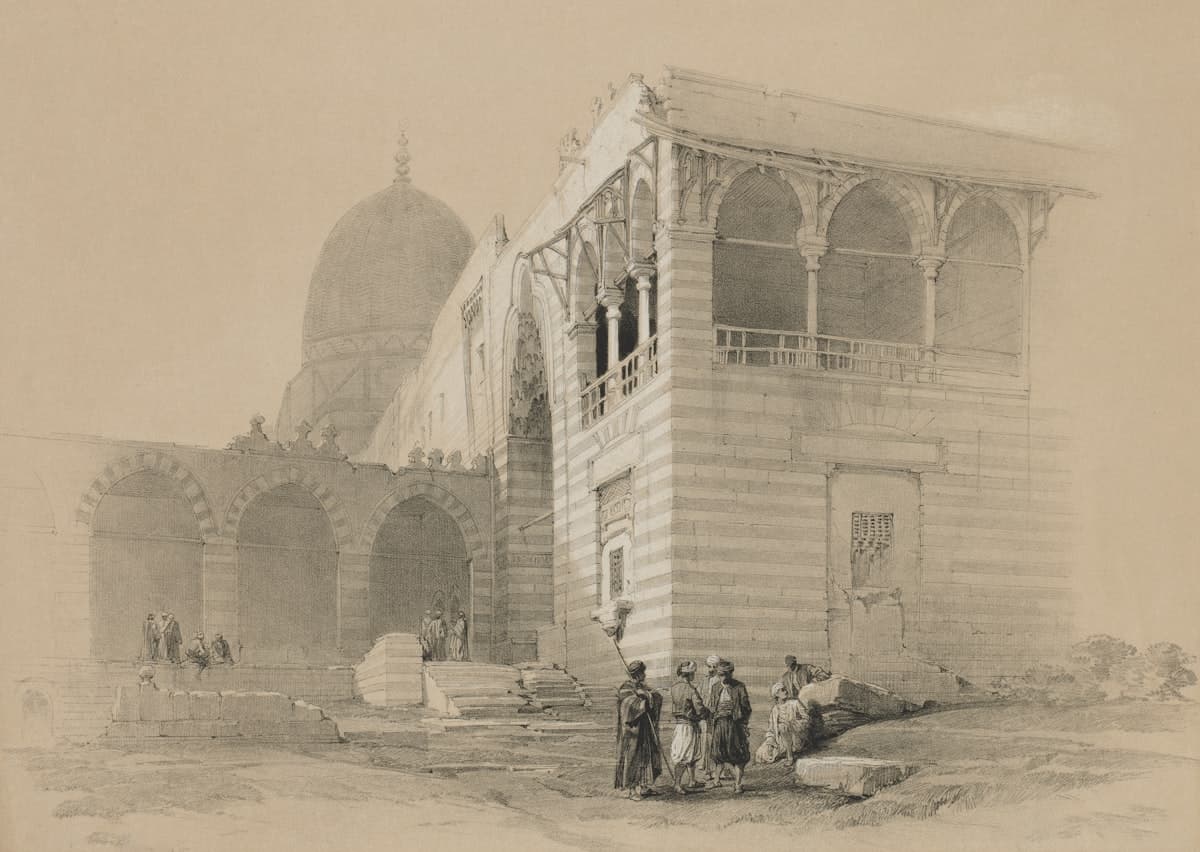
Four million people visit Dessuq every year. The city does not appear in most Egypt itineraries. It has no Pharaonic ruins, no Nile cruise stop, no hotel with a rooftop bar. What it has is the tomb of Ibrahim ibn Abi al-Majd al-Dessuqi, one of the four poles of Sufi Islam, a man whose theological lineage runs so deep that Sufi orders across Egypt, Sudan, and Libya still trace their spiritual authority back to him. The Sidi Ibrahim Dessuqi shrine is not a relic of Egyptian faith. It is Egyptian faith, still breathing, still filling the streets with incense smoke and recited dhikr every single week.
If your mental image of Egyptian religion involves only hieroglyphs or mosque minarets, Dessuq corrects that immediately.
---
Why This Place Matters
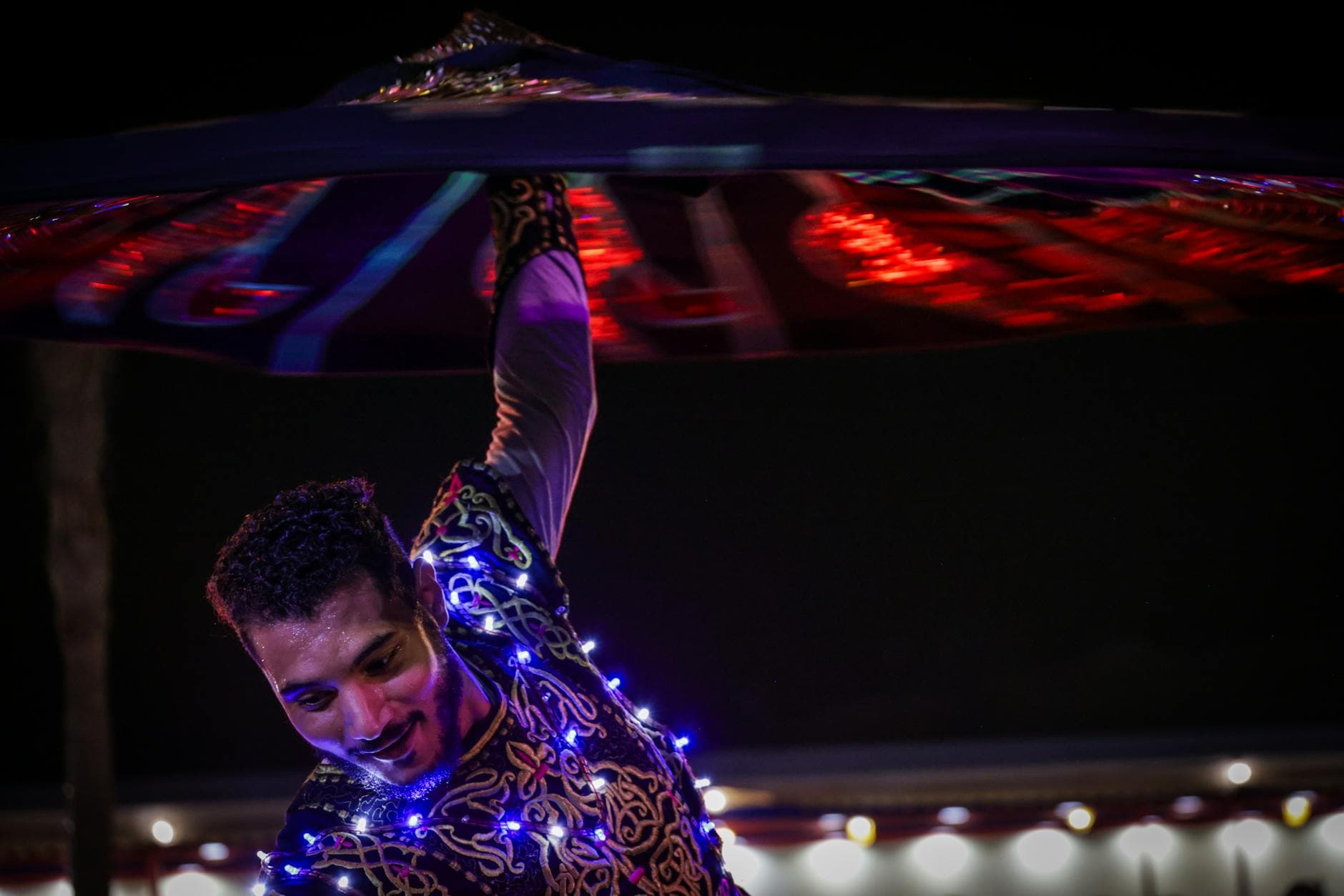
Ibrahim al-Dessuqi was born in the city of Dessuq in 1235 CE and died there in 1288. His birth year is significant: he was a contemporary of Rumi, of Ibn Arabi's intellectual legacy spreading westward from Andalusia, of the Mamluk sultanate consolidating its power after defeating the Mongols at Ain Jalut in 1260. Egyptian Sufism was not a peripheral mystical hobby during this era. It was a central organizing force of social, political, and spiritual life, and al-Dessuqi became one of its defining figures.
He founded the Burhaniyya Dessuqiyya order, which remains active today with lodges (zawiyas) operating in Egypt, Sudan, Germany, and the United Kingdom. That last detail is not incidental: the order's contemporary international presence means the shrine in Dessuq functions as a headquarters for a living global institution, not a memorial to a finished one.
What most visitors to Egypt don't know is that al-Dessuqi is recognized in Islamic tradition as one of the Arba'a Aqtab, the Four Poles of Sufism. The other three are Ahmad al-Badawi (whose shrine is in Tanta, 50 km south), Abd al-Qadir al-Gilani (Baghdad), and Ahmad ibn Idris (Morocco and Sudan). That Egypt holds two of the four poles explains why the Nile Delta, overlooked on most tourist maps, is one of the most spiritually significant geographic corridors in the Islamic world.
The shrine was built and rebuilt over centuries. The current mosque and mausoleum complex bears significant Ottoman-era architectural features from the sixteenth and seventeenth centuries, including tilework and carved wooden screens, layered over foundations that date to the Mamluk period. This is characteristic of Egypt: nothing is built on empty ground.
---
What You Will Actually See and Experience
The shrine complex sits at the heart of Dessuq's old city, and the streets approaching it tell you something before you arrive. Stalls selling prayer beads, bottles of rose water, green cloth for the tomb, and small printed portraits of al-Dessuqi line the route. The smell shifts before you see the dome: incense, frying dough from a cart, and something harder to name, the particular warmth of a space where many people have spent a long time feeling something.
The mosque itself is a working place of worship, not a monument. You enter through a courtyard where men sit reading Quran on stone benches worn smooth by generations of the same action. The call to prayer from this mosque has a particular quality because the acoustic space is tight and old, the sound bounces rather than disperses, and for a few seconds after the final phrase it seems to come from inside the walls.
The mausoleum chamber contains the tomb of al-Dessuqi beneath a green-draped catafalque. Non-Muslims are generally welcomed as respectful visitors, but the protocol matters: remove shoes, keep voices low, do not photograph mourners or people in prayer without explicit permission. During ordinary weekdays, you will find small groups of devotees, some from Cairo, some from Upper Egypt, a few from Sudan, seated near the tomb in quiet recitation. During the moulid, this chamber becomes almost inaccessible through density.
The zawiya adjacent to the mosque is where the Sufi order conducts its formal practices. If you are present on a Thursday evening, you may hear or see a dhikr session, the rhythmic communal chanting that is the core practice of many Sufi orders. This is not performance. It is liturgy. The distinction matters and shapes how you should behave as an observer.
---
The Moulid: What Actually Happens
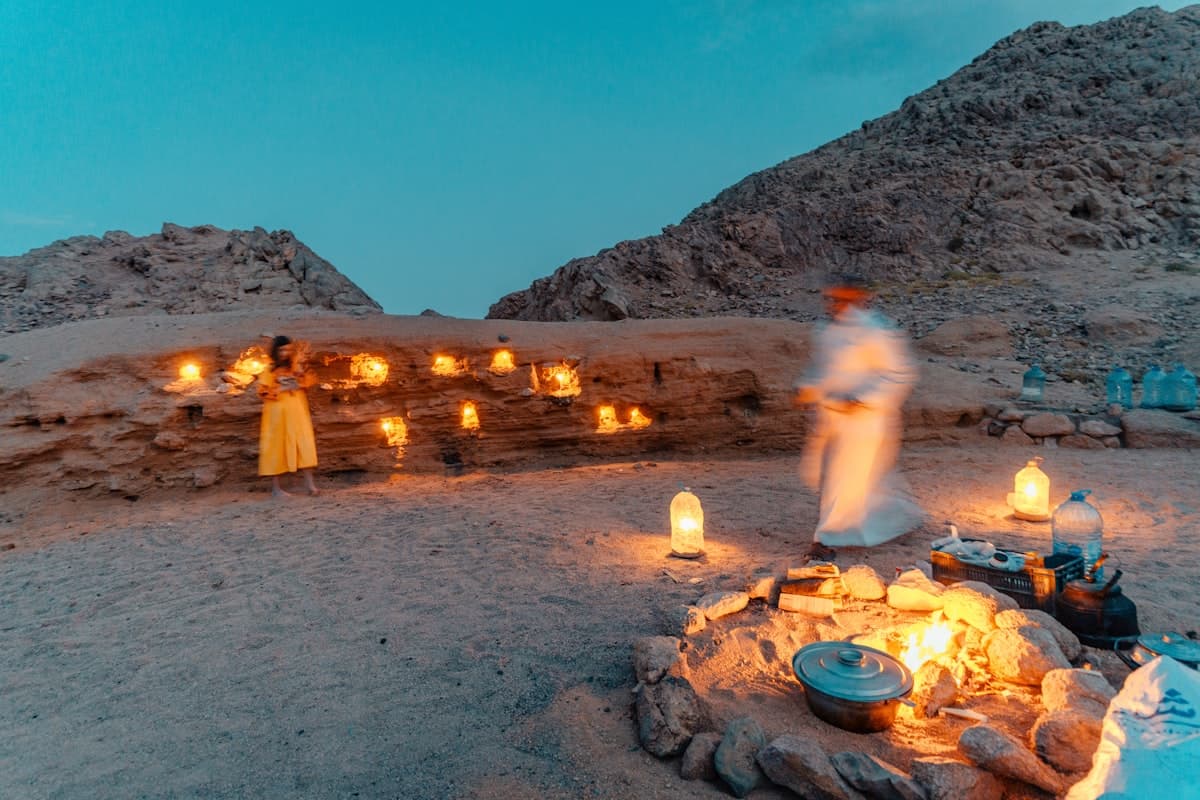
The Moulid of Ibrahim Dessuqi is one of the largest religious festivals in Egypt, drawing between one and four million attendees depending on the year and the source you consult. This scale places it alongside the Moulid of Ahmad al-Badawi in Tanta as one of the two biggest Sufi festivals in the country, events that rival global pilgrimage gatherings in attendance while remaining almost entirely unknown outside Egypt.
The moulid runs for approximately a week, culminating in Laylat al-Kabira, the Great Night, when the city essentially stops sleeping. Sufi orders arrive in organized groups, each with their own banners, musical instruments, and patterns of dhikr. The specific sound of the Dessuqiyya order's dhikr, a particular rhythmic structure using the names of God, is audible from several streets away and distinguishable to anyone who has heard it before.
Food stalls operate through the night. Families from villages across the Delta arrive by microbus and tractor-trailer. Children ride wooden carousels that have not changed design in a hundred years. The economy of the moulid is its own ecosystem: vendors of sweet cotton candy, roasted corn, grilled kofta, and religious paraphernalia operate on routes that are understood by the entire city and entirely opaque to any first-time visitor.
One thing the moulid is not: dangerous. It is crowded to a degree that can feel overwhelming, particularly around the shrine entrance on Laylat al-Kabira, but the social architecture of these events is self-regulating in ways that decades of attendance have refined. Older women, in particular, move through the densest crowds with an authority that parts the crowd in front of them.
---
The Connections
Dessuq sits in Kafr el-Sheikh Governorate, the heart of the Nile Delta, a region that is geologically young by Egyptian standards. The Delta as it exists today was formed over thousands of years by Nile sediment deposition. The land beneath Dessuq was underwater, or marsh, during the Pharaonic Old Kingdom. This is why there are no Pharaonic temples here: the ground didn't exist yet in a form that could hold them.
By the Byzantine period, the Delta was one of the most densely populated and agriculturally productive regions of the Eastern Mediterranean. The Coptic Christian communities that developed here from the second century CE onward left behind monasteries and churches that still operate in the Kafr el-Sheikh region, some within 40 km of Dessuq. The Monastery of Saint Menas (Abu Mena), a UNESCO World Heritage Site now partially collapsed due to agricultural groundwater damage, is roughly 120 km west toward Alexandria. The Delta's sacred geography is layered: Coptic, Islamic, and within Islam, both Sunni orthodox and Sufi traditions coexist in close geographic proximity.
The connection to Tanta is particularly important. Ahmad al-Badawi, the other Nile Delta pole of Sufism, died in 1276, just twelve years before al-Dessuqi. The two men were near-contemporaries and the proximity of their shrines (50 km apart) is not coincidence: the Delta in the thirteenth century was a center of Sufi intellectual and spiritual activity, drawing figures from across the Islamic world. Visiting both shrines in a single day is logistically straightforward and culturally illuminating in a way that no amount of reading replicates.
---
Common Mistakes
Visiting only during moulid season without preparation. The moulid is worth seeing, but arriving without knowing the neighborhood layout, without a local contact, and without having arranged where to sleep means you will spend the night of Laylat al-Kabira on a bus back to Cairo, having seen the crowds from the edge. Find accommodation in Kafr el-Sheikh city (more options) or Dessuq itself at least two months in advance if you want to stay.
Treating the shrine like a museum. The Sidi Ibrahim Dessuqi shrine is an active place of worship with millions of pilgrims annually. Pointing cameras at people in prayer, speaking loudly in tour-group English near the tomb, or entering the zawiya during formal Sufi practice without being invited generates real offense. The shrine is welcoming to respectful visitors. It is not welcoming to observers who behave like they are at an exhibit.
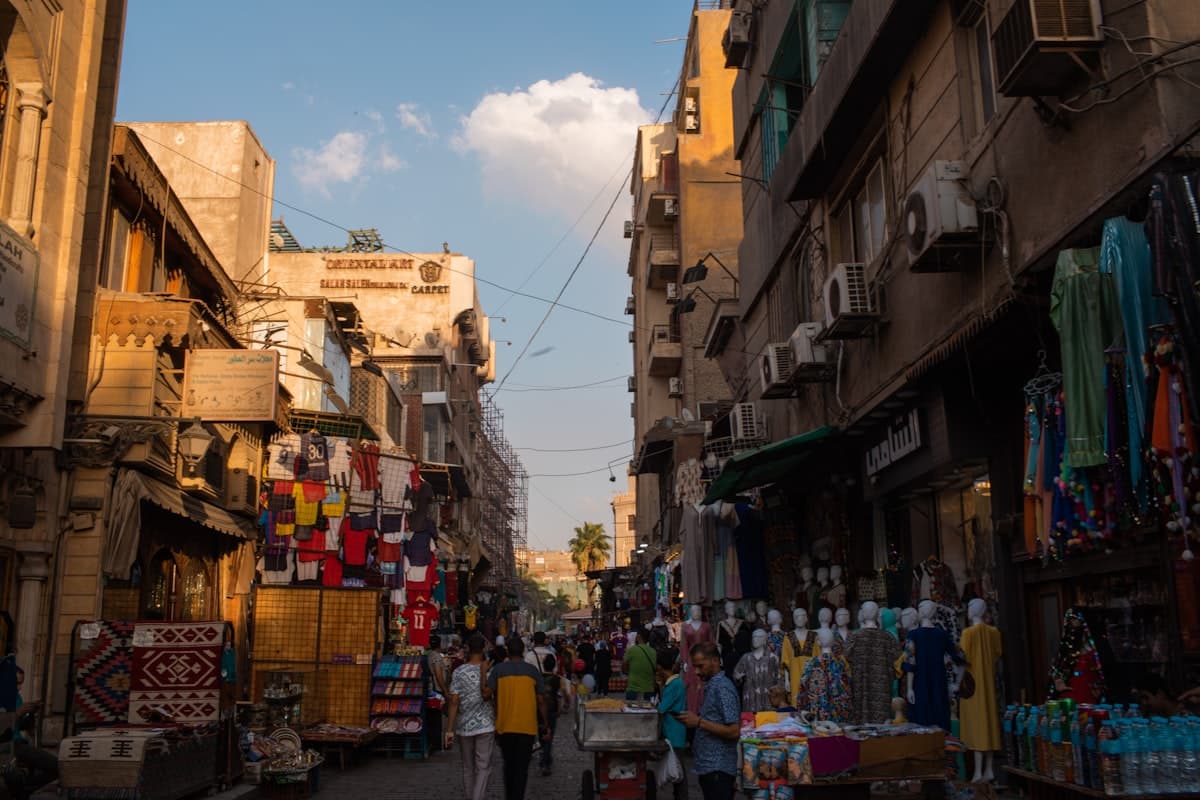
Skipping the surrounding city. The old market streets around the shrine sell goods that have no equivalent in Cairo's Khan el-Khalili: specific styles of religious amulets, hand-sewn green cloth for tomb covering, and a particular kind of molasses-drenched dessert sold only during moulid season. These streets are the context for the shrine. Walk them.
Taking a day trip without eating locally. Dessuq's street food is Delta cooking, which is distinct from Cairo cooking in ways that matter. The fish here is Nile Delta fish, the bread is different, the fuul is prepared with a level of cumin that Cairo versions rarely match. Eat before you visit the shrine, not after.
The contrarian take: do not visit only for the spectacle of the moulid. Most travel coverage of Dessuq, to the extent that it exists, frames the moulid as the reason to go. This is wrong. An ordinary Thursday in Dessuq, with a morning at the shrine and an evening listening to dhikr in the zawiya, tells you more about Egyptian Sufi life than a moulid visit where you are one of four million people and can barely reach the courtyard. Go during moulid season if you want the scale. Go on a regular Thursday if you want the substance.
Confusing Dessuq with Dasuq on different maps. Transliteration inconsistency is a real navigation problem. The city appears as Dessuq, Dasuq, Dasouk, and Desouk on different maps and bus schedules. When asking for directions or buying a bus ticket, pronounce it with a hard 's' sound: Da-SOOK. Locals will understand immediately.
Ignoring the Kafr el-Sheikh regional context. If you are making the trip from Cairo, combining Dessuq with a visit to the Tanta shrine of Ahmad al-Badawi on the same day costs little additional time or money and gives you both poles of Delta Sufism in a single journey. A microbus between Tanta and Kafr el-Sheikh city costs under EGP 30.
---
Practical Tips
Dress conservatively regardless of gender. For women, a headscarf is not legally required but is practically important inside the shrine and the surrounding religious district. For men, shorts are inappropriate near the tomb.
The shrine is free to enter, but if a caretaker (a khadim) shows you around the complex or explains features of the mausoleum, a tip of EGP 20 to 50 is appropriate and appreciated.
Photography: the exterior and courtyard are generally fine to photograph. Inside the mausoleum chamber, read the room before raising a camera. During dhikr sessions in the zawiya, do not photograph at all unless explicitly invited.
Friday afternoon is simultaneously the most atmospheric time to visit (post-prayer, crowds are high, the energy is concentrated) and the most difficult for independent movement. If you want space to look around calmly, Saturday morning is significantly quieter.
There is no large tourist infrastructure in Dessuq: no English-language signage inside the shrine, no official audio guide, no gift shop selling postcards. This is not a problem. It is the nature of a place that exists for its community rather than for observers of its community. Adjust your expectations accordingly and you will have a genuinely interesting day. Arrive expecting the Karnak model of tourism and you will be confused and underprepared.
Frequently Asked Questions
The Weekly Dispatch
More on Egypt, every Friday.
Cultural depth and places most guides never mention.
No spam. Unsubscribe anytime.