Sidi Ibrahim Dessuqi Shrine: Egypt's Living Sufi Center
Four million pilgrims visit Dessuqi each year. Most Egyptologists have never heard of him. This is the shrine that tells you more about living Egypt than any pyramid.

Quick Facts
- Best time to visit
- October to March for comfortable Delta weather. During the moulid in Sha'ban for the full festival experience, though this requires advance planning as the Islamic date shifts annually.
- Entrance fee
- Free. No tickets, no entry fees. This is an active mosque and shrine, not a heritage site.
- Opening hours
- The mosque is continuously open. The shrine chamber is most accessible between morning and sunset prayers. Thursdays and Fridays draw the largest regular (non-moulid) crowds.
- How to get there
- Bus or servee from Cairo (Torgoman or El Marg) to Kafr el-Sheikh: EGP 60-80. Microbus from Kafr el-Sheikh to Dessuq: EGP 5-10. Private car from Cairo approximately 2.5 hours via Ahmed Orabi Road. Train from Ramses Station to Kafr el-Sheikh: EGP 30-55.
- Time needed
- 1-2 hours for the shrine and surrounding area on a normal day. Full day minimum during the moulid.
- Cost range
- Budget EGP 150-300 for a full day including return transport from Kafr el-Sheikh, street food, and incidentals. Overnight accommodation in Dessuq: EGP 200-400 per night.
Sidi Ibrahim Dessuqi Shrine: Egypt's Living Sufi Center
Four million people a year travel to a Delta city that almost no foreign tourist has ever set foot in. They come for a man who died in 1288, who is considered one of the four poles of the Sufi world, and whose mosque complex in Dessuq anchors the spiritual geography of Egypt more firmly than almost any Pharaonic monument. Ibrahim al-Dessuqi was not a sultan. He built no army and held no court. He was a scholar and a mystic, born in the Delta city that still carries his name, and he founded one of the four major Sufi orders of Egypt: the Burhaniyya. The other three founding poles of global Sufism, Abdel Qadir al-Jilani in Baghdad, Ahmed al-Badawi in Tanta, and Ibrahim ibn Adham in what is now Turkey, are better known outside Egypt. Al-Dessuqi, the youngest of the four, is the one most fully embedded in Egyptian daily life. His moulid, the annual festival of his birth and death, draws more participants than the entire annual tourist count of Luxor.
Quick Facts
Best time to visit: The moulid of Sidi Ibrahim Dessuqi falls in the Islamic month of Sha'ban and shifts annually with the lunar calendar. Outside the moulid, October through March offers cooler Delta weather and manageable crowds. Avoid July and August unless you are specifically attending the festival.
Entrance fee: The mosque and shrine complex are free to enter. There is no ticket office, no timed entry, no queue management system. This is a working religious site, not a heritage attraction.
Opening hours: The mosque is open continuously, with the shrine accessible during prayer times and most daylight hours. The most active visiting times are after Fajr (dawn prayer) and after Maghrib (sunset prayer).
How to get there: Dessuq is in Kafr el-Sheikh Governorate in the Nile Delta, approximately 160 km north of Cairo. From Cairo's El Marg or Torgoman bus stations, servees (shared minibuses) run to Kafr el-Sheikh city for around EGP 60-80. From Kafr el-Sheikh, local microbuses cover the 25 km to Dessuq for EGP 5-10. By private car, the Ahmed Orabi Road north from Cairo takes roughly two and a half hours. Train service runs from Ramses Station to Kafr el-Sheikh for approximately EGP 30-55 depending on class.
Time needed: The shrine itself takes one to two hours to experience properly. If you arrive during the moulid, budget a full day and accept that your schedule no longer belongs to you.
Cost range: Dessuq is one of the cheapest full cultural days in Egypt. A return bus journey, lunch at a local Delta restaurant, and a coffee at a street cart near the shrine will cost EGP 150-300 total. There is nothing to buy that you are obligated to buy.
Why This Place Matters
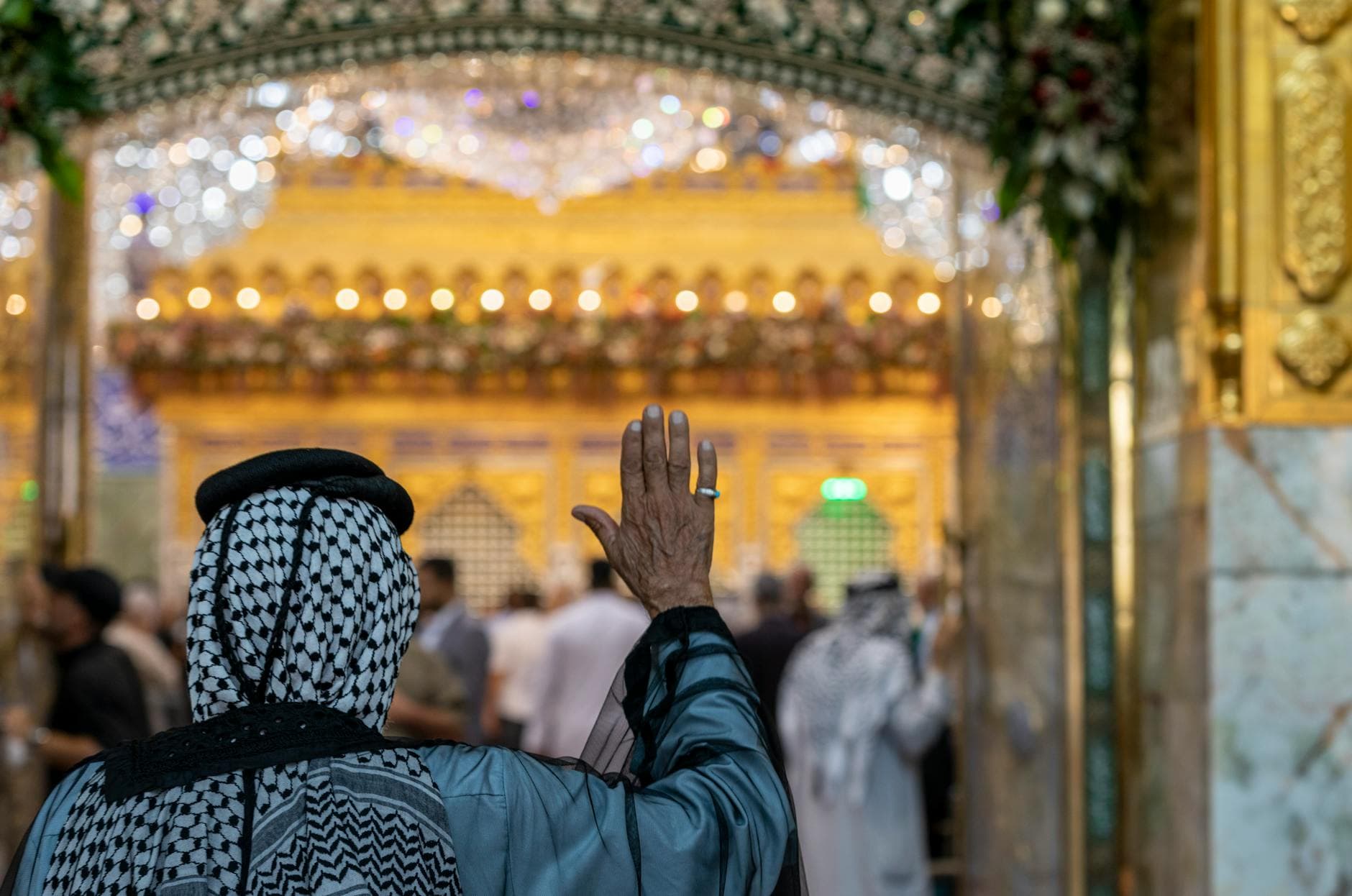
The city of Dessuq sits on a branch of the Nile that no longer exists as it once did. The Rosetta Branch of the Delta, the westernmost of the Nile's two surviving distributaries, passes near here, but in the medieval period the whole Delta was a different hydrological creature: seven major branches, dozens of tributaries, a landscape of water and marsh that made the Delta cities as important as any city in Egypt proper. Dessuq was a significant town in the Ayyubid and early Mamluk periods, which is the world Ibrahim al-Dessuqi was born into in 1235 CE.
The Sufism that al-Dessuqi practiced and systematized was not peripheral to Egyptian Islam. It was Egyptian Islam. The great Sufi orders, the Burhaniyya, the Ahmadiyya founded by Ahmed al-Badawi, the Shadhiliyya, and the Rifaiyya, organized Egyptian Muslim life for centuries in ways that the state never managed: networks of lodges called zawiyas that provided food, education, dispute resolution, and spiritual community from Alexandria to Aswan. At its peak, the Burhaniyya order ran zawiyas in Egypt, Sudan, the Hijaz, and across North Africa. They were also prominent in West Africa through their connections with the Tijaniyya and other orders.
What makes the Sidi Ibrahim Dessuqi shrine significant as a travel destination is not the architecture, which is substantial but not exceptional by Egyptian standards. It is the fact that the shrine is genuinely alive. The zikr ceremonies, the rhythmic chanting and movement that form the core of Sufi practice, still happen here every week. Pilgrims still sleep in the mosque complex. Petitions for healing and intercession are still left at the tomb. The relationship between ordinary Egyptians and their saints is one of the least understood and most important dimensions of Egyptian culture, and Dessuq is one of the clearest places in the country to witness it.
What You Will Actually See and Experience
The mosque complex dominates the center of Dessuq. The current structure is mostly Ottoman and later, built and rebuilt over the site of the original zawiya that al-Dessuqi founded. The minarets are the architectural feature most worth examining: they show the transition between Mamluk and Ottoman styles that defines so much of Delta mosque architecture, a period that most Cairo-focused visitors completely miss because they never leave the capital.
Inside, the shrine chamber containing the tomb of al-Dessuqi is set within the mosque and enclosed by a maqsura, an ornate screen of worked wood and metal. The maqsura at Dessuq is elaborate and old, and pilgrims press against it to offer prayers and touch the screen as a point of contact with the saint. This practice, called tawassul, is the intercessory relationship at the heart of Egyptian folk Islam, and watching it here is more instructive than any academic description.
The smell is layered. Incense burns almost continuously, a combination of frankincense and oud that has soaked into the walls over centuries. During the moulid, vendors outside sell paper cones of incense specifically for pilgrims to burn inside. The sound on a busy visiting day is not quiet contemplation: it is voices, children, the scrape of shoes on marble, and if you arrive at the right hour on a Thursday evening, the structured rhythmic breathing and chanting of a zikr circle that fills the courtyard.
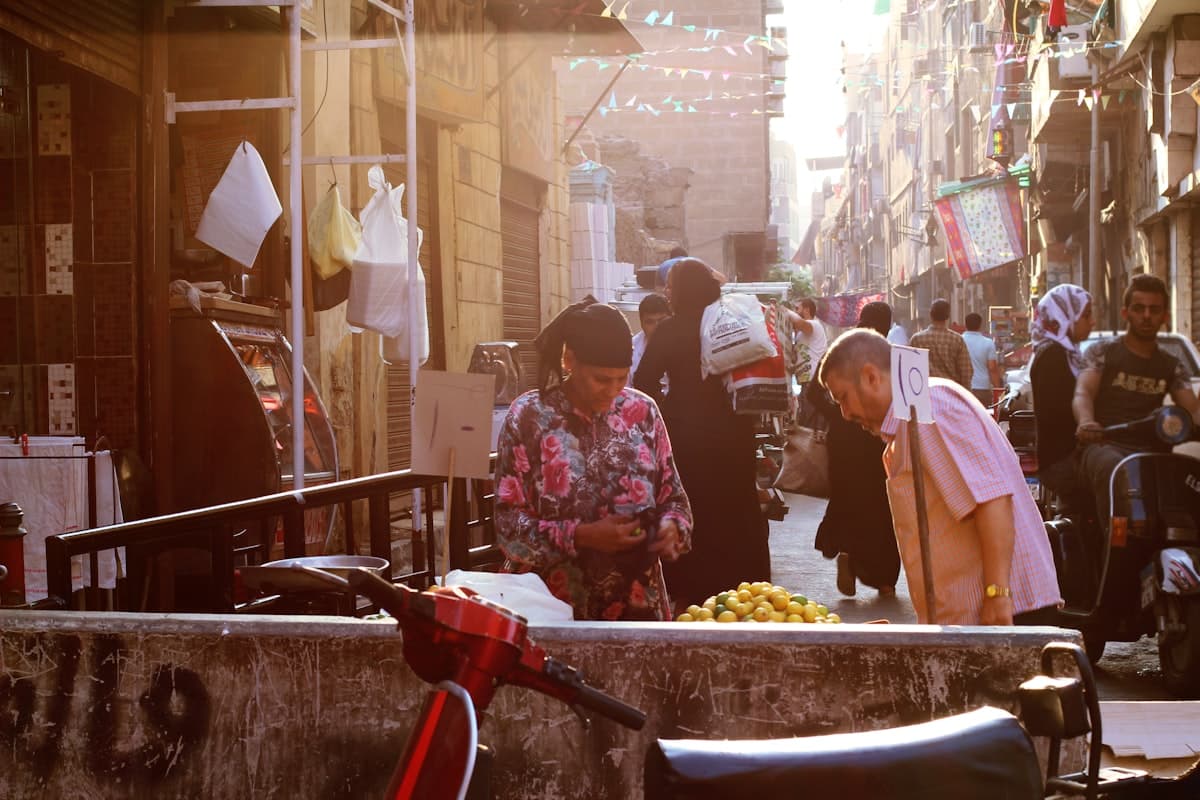
The area around the mosque is a complete social world. The streets within two blocks of the shrine are lined with stalls selling religious items: beads, small printed booklets of prayers attributed to al-Dessuqi, recordings of his poetry and litanies, green banners bearing his name. There are also food vendors, tea sellers, and the particular Delta street food that you will not find in Cairo: samak mashwi grilled at the waterside, crisp ta'amiyya made with fava beans rather than chickpeas, and the fresh white cheese that the Delta makes better than anywhere else in Egypt.
The Moulid: What Nobody Tells You Before You Go
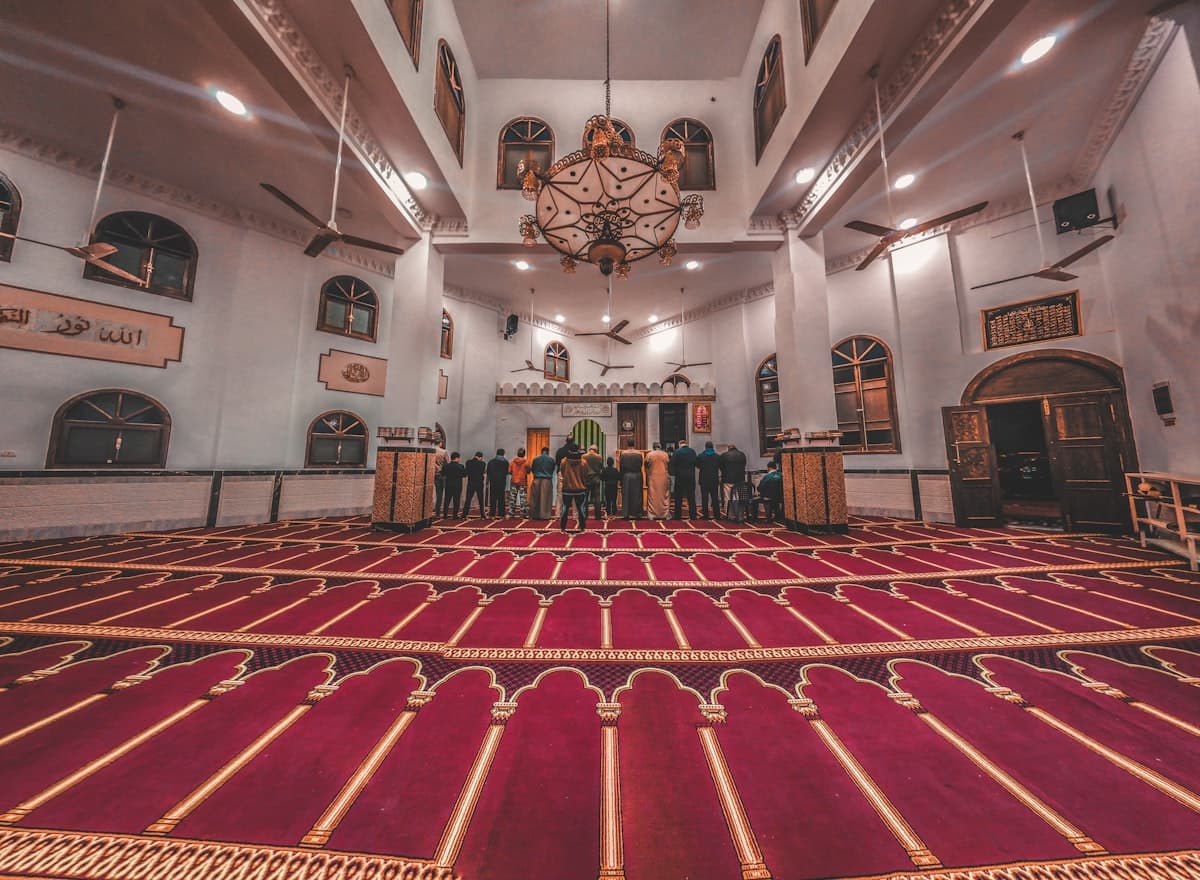
The moulid of Sidi Ibrahim Dessuqi is one of the five largest moulids in Egypt, after the Prophet's birthday celebrations in Cairo and the moulids of Ahmed al-Badawi in Tanta, Hussein in Cairo, and Sayyida Zeinab. The number of attendees reported for Dessuqi's moulid ranges from one to four million across its duration, which typically runs for a week culminating in the Leila al-Kabira, the Great Night.
Egyptian moulids are not solemnly devotional events. They are simultaneously religious festival, family reunion, carnival, and market. Traveling performers, troupes of Sufi orders in their distinctive colored robes, food vendors with cauldrons of ful and rice, children on carnival rides that look like they have not been safety-inspected since the 1970s, and pilgrims in continuous zikr: all of this coexists in the streets around the shrine for seven days. The electricity in the air during the Leila al-Kabira is not mystical language. It is literal: the city strings thousands of colored lights across every street and the power grid struggles.
For a traveler who wants to understand how Islam functions as lived culture rather than text, there is no substitute for this experience. It is also the only context in which you will see Sufi orders from Sudan, Libya, and sometimes further afield, traveling to pay homage at one of the four poles of their spiritual world. The Sudanese contingent at Dessuqi's moulid is particularly significant: the Burhaniyya order has deep roots in Sudan, where it operates as a major social and religious institution.
One thing nobody tells you before you go: the moulid is not organized for tourists. There is no viewing platform, no English signage, no guide service, no official program in any language. You simply enter and navigate. This is not a problem. It is the point.
The Connections
Al-Dessuqi's Egypt was the Egypt of the Bahri Mamluk sultans, the slave-soldiers of Turkic and Circassian origin who had broken the Mongol advance at the Battle of Ain Jalut in 1260, just 25 years before al-Dessuqi's death. That battle, fought in what is now northern Israel, was the first decisive defeat the Mongol armies ever suffered, and it was won by an Egyptian army. The Mamluk sultans who patronized the Sufi orders during this period saw the orders as instruments of social cohesion in a country that they, as recent converts and outsiders, needed to govern legitimately.
The Burhaniyya order that al-Dessuqi founded sent roots into Upper Egypt that connected to pre-Islamic Coptic Christian sacred sites. This is not coincidence. Several of the locations where Sufi zawiyas were established in Upper Egypt correspond to former Coptic monasteries or to sites with even older sacred associations. The vertical layer of Egyptian sacred geography, Pharaonic site becoming Coptic church becoming Muslim shrine, is visible across the country, and the Sufi orders were often the mechanism of that transition.
In contemporary Egypt, the Sufi orders are regulated by the Supreme Council of Sufi Orders, established in 1905 under the British administration, which currently recognizes 79 orders with an estimated 15 million members. The Dessuqi shrine sits under this umbrella but operates with considerable autonomy. The sheikh of the Burhaniyya who administers the shrine is a descendant of al-Dessuqi, and the hereditary transmission of shrine leadership is another continuity that connects Mamluk-era Islamic practice to the present day.
Common Mistakes
Visiting without knowing when the moulid is. The moulid shifts annually with the Islamic lunar calendar. Some years it falls in summer, some years in spring. Arriving during the moulid when you wanted a quiet visit is a completely different experience from arriving during the moulid intentionally. Check the Islamic calendar before you go and decide which version of Dessuq you want.
Treating the shrine like a museum. Photography inside the shrine chamber, particularly of pilgrims at the maqsura, is unwelcome and often actively resisted. The ethical rule here is the same one that applies in any active place of worship: you are a guest in someone else's spiritual practice. Observe, do not document without explicit permission, and put the camera away when the situation clearly calls for it.
Taking a guided tour from Cairo. The few tour operators who offer Dessuq as a destination typically package it as a one-day excursion with a guide who will give you a basic historical rundown and then stand near the exit looking at his watch. The shrine requires slowness. The microbus from Kafr el-Sheikh, the street food, the unhurried hour in the courtyard watching who comes and why, is the actual experience. The guided tour is a facsimile.
Skipping Dessuq in favor of the better-known Tanta moulid. Ahmed al-Badawi's moulid in Tanta is larger and easier to reach. It is also considerably more commercialized and receives more Egyptian domestic tourists, which means it has adapted slightly to being observed. Dessuq has not. This is precisely its value.
Arriving by private car without knowing where to park. The streets around the shrine are narrow and fill completely during busy periods. Arrive by microbus or be prepared to park far outside the center and walk.
The contrarian take: do not buy the official Burhaniyya prayer booklets sold near the shrine entrance. They are printed on cheap paper, the Arabic is dense and assumes familiarity with Sufi technical vocabulary, and they will sit in your bag unread. If you want to take something home that connects you to the tradition, buy a recording of Sufi inshad, devotional singing, from one of the cassette and USB vendors outside. It will actually stay in your life.
Going to the visitor information office in Kafr el-Sheikh city before heading to Dessuq. There is one, nominally. It has no specific information about the shrine, the moulid calendar, or the Burhaniyya order. The receptionist will direct you to a hotel brochure. Skip it entirely.
Practical Tips
Dress conservatively regardless of your gender. Long sleeves and covered legs are non-negotiable for the shrine interior. Women traveling alone are not uncommon among the pilgrims but a headscarf is respectful and practical. Men in shorts will be asked to change or given a wrap at the entrance.
The Delta in summer is humid in a way that Cairo is not. If you visit between May and September, carry water and accept that you will sweat through whatever you are wearing within the first hour. The winter months, November through February, bring cool evenings that make the outdoor areas of the moulid comfortable and the zikr circles inside the mosque intimate and warm.
The best local guide to the shrine and its traditions is not a licensed tour guide but the functionaries of the Burhaniyya order itself. If you speak Arabic, or have a friend who does, introducing yourself respectfully and asking about the order's history will often result in a conversation that teaches you more in twenty minutes than a formal tour does in two hours.
There are small hotels in Dessuq city, basic but clean, for EGP 200-400 per night. Staying overnight rather than day-tripping from Cairo gives you the evening zikr and the early morning hours when the shrine is most atmospheric: the dawn light on Delta tile, the sound of the Fajr call layered across a flat landscape, the first pilgrims of the day pressing their foreheads against the maqsura screen while the rest of the city sleeps.
Frequently Asked Questions
The Weekly Dispatch
More on Egypt, every Friday.
Cultural depth and places most guides never mention.
No spam. Unsubscribe anytime.