Sidi Ibrahim Dessuqi Shrine: Egypt's Living Sufi Epicenter
Four million pilgrims visit Dessuqi each year, yet most Egypt guidebooks give it half a sentence. The mawlid here is the third-largest religious gathering on the continent.

Quick Facts
- Best time to visit
- October to March for comfortable temperatures. Second week of Sha'ban for the mawlid (book accommodation 6-8 weeks in advance). Thursday evenings year-round for the weekly dhikr gathering.
- Entrance fee
- Free. No ticket required for the mosque or shrine. Donations to the mosque box are customary.
- Opening hours
- Daily from Fajr prayer (approximately 5am) to after Isha prayer (approximately 10pm). The shrine is most accessible and least crowded in the early morning before 8am.
- How to get there
- From Cairo: bus from Turgoman Station to Kafr el-Sheikh, EGP 60-80 (approx $1.25-$1.65 USD), 2.5 hours, then microbus to Dessuqi for EGP 15-25. From Alexandria: microbus from Midan el-Gumhuriya, EGP 40-55 (under $1.20 USD), 90 minutes.
- Time needed
- Minimum 2 hours for the mosque and shrine complex. Overnight stay strongly recommended to experience Thursday dhikr or early morning prayers. Full mawlid experience requires 2-3 days.
- Cost range
- Budget EGP 200-400 per day including food and local transport. Accommodation EGP 350-600 per night in modest hotels. The shrine itself is free.
Quick Facts
Best time to visit: The mawlid of Sidi Ibrahim Dessuqi falls on the second week of Sha'ban (the Islamic lunar month before Ramadan), roughly eight to ten weeks before Ramadan begins. Outside mawlid season, visit between October and March when the Nile Delta heat is manageable.
Entrance fee: Free. The shrine complex, the mosque, and the surrounding zawiya spaces charge nothing. Donations are customary and welcomed.
Opening hours: The mosque is open daily from Fajr prayer (approximately 5am) until after Isha prayer (approximately 10pm). The inner shrine chamber is accessible most of this time, though it is most crowded after Friday midday prayer.
How to get there: Dessuqi is a city, not just a shrine. From Cairo: take a bus from Turgoman Bus Station toward Kafr el-Sheikh governorate (approximately EGP 60-80, around $1.25-$1.65 USD, roughly 2.5 hours). From Alexandria: a microbus from Midan el-Gumhuriya to Dessuqi runs approximately EGP 40-55 (under $1.20 USD, about 90 minutes). The shrine sits in the center of town; any local will point you directly to it.
Time needed: Two hours minimum for the mosque and shrine complex alone. Add another half-day if you want to understand the zawiya system and the surrounding suq that exists entirely because of the saint.
Cost range: The shrine itself is free. Budget EGP 200-400 per day including food, transport, and tea. The city has modest hotels starting at EGP 350-600 per night.
---
Ibrahim ibn Abi al-Majd al-Dessuqi was born in 1255 CE, the same decade the Mongols sacked Baghdad and ended the Abbasid Caliphate. He died in 1288. In thirty-three years, he founded one of Islam's four major Sufi orders, the Burhaniyya Dessuqiyya, which today has active lodges across Egypt, Sudan, Syria, Turkey, and Germany. The shrine built over his tomb in the Egyptian Delta city of Dessuqi is now one of the most visited religious sites in Africa. Most Western Egypt itineraries do not mention it once.
This is the guide for the Sidi Ibrahim Dessuqi shrine, written for people who understand that Egyptian civilization did not stop in 30 BCE.
---
Why This Place Matters
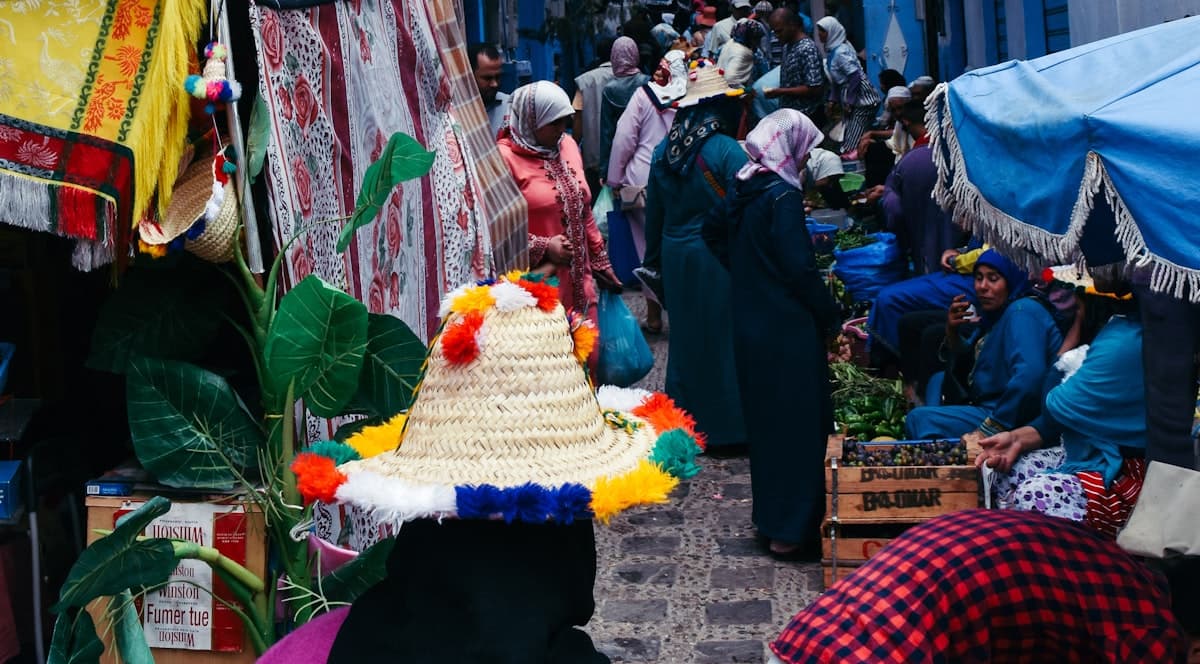
The Nile Delta is the part of Egypt that travel writing forgets. Tourists fly into Cairo, take the overnight train to Luxor, possibly visit Alexandria, and fly home convinced they have seen Egypt. The Delta, which constitutes nearly one third of Egypt's agricultural land and has been continuously inhabited for over five thousand years, barely registers.
Dessuqi sits in Kafr el-Sheikh governorate, on the Rosetta branch of the Nile. The city grew around the saint. That is not a metaphor. The urban plan, the economy, the annual calendar, and the social geography of Dessuqi are all organized around the presence of Ibrahim al-Dessuqi's tomb. He is one of the four great poles of Islamic sanctity in Egypt, the others being Ahmad al-Badawi in Tanta, Sayyida Zeinab in Cairo, and al-Hussein in Cairo. These four form an informal spiritual geography that most practicing Egyptian Muslims navigate across their entire lives.
What makes Dessuqi exceptional in a specifically historical sense: Ibrahim al-Dessuqi is the only one of the four major Egyptian Sufi saints who was actually born in Egypt. Al-Badawi came from Morocco via Arabia. Hussein and Zeinab were members of the Prophet's family from the Hejaz. Dessuqi is Delta soil, born and buried where he taught. This matters to his followers, and it matters to understanding why his mawlid draws pilgrims from Upper Egypt who have never visited the Mediterranean coast, people who travel sixteen hours by train to touch a tomb in a city they will leave twenty-four hours later.
The shrine complex was substantially rebuilt during the Mamluk period, expanded under Ottoman patronage, and renovated most recently by the Egyptian Awqaf (religious endowments) ministry in the late twentieth century. Beneath the current mosque's foundations, archaeologists have identified Roman-era ceramic deposits, which is consistent with the Delta's pattern of continuous settlement across every political era Egypt has known.
---
What You Will Actually See
The mosque that houses the shrine is large, green-domed, and visible from most of the city center. The green is deliberate. Green is the color of the Prophet's family in Islamic visual tradition, and it signals to arriving pilgrims that they have reached a place of barakah (spiritual blessing) before they can read any signage.
The interior is divided between the prayer hall and the hujra, the chamber containing the tomb. Non-Muslim visitors are generally welcome in the outer prayer hall and often in the corridor approaching the tomb, though it is worth asking a mosque attendant rather than assuming. The hujra itself contains an elaborately draped maqsura, a wooden or metal screen around the tomb, covered in green and gold cloth renewed regularly by devotees. Dozens of pilgrims press against it at any given hour, some weeping, some reciting quietly, some simply resting a hand on the screen and standing still.
What most visitors miss: the ceiling of the prayer hall contains calligraphic medallions that spell out not Quranic verses but the ninety-nine names of God arranged in a specific Sufi meditational sequence associated with the Burhaniyya order's dhikr practice. This is functional religious art, not decoration. The sequence is a mnemonic for a particular breathing and recitation exercise still taught in Dessuqi zawiya lodges today.
Outside the mosque, the surrounding streets function as a permanent mawlid economy. Stalls sell framed images of the saint (a convention in Egyptian popular Islam that surprises visitors expecting strict aniconism), green cloth, prayer beads, incense, and bottles of water that have been brought near the tomb and are sold as blessed. The smell is specific: rose water, frankincense, and the fried dough of the kushary and ta'amiyya carts that feed pilgrims who have traveled overnight and arrived hungry.
---
The Mawlid: What Actually Happens
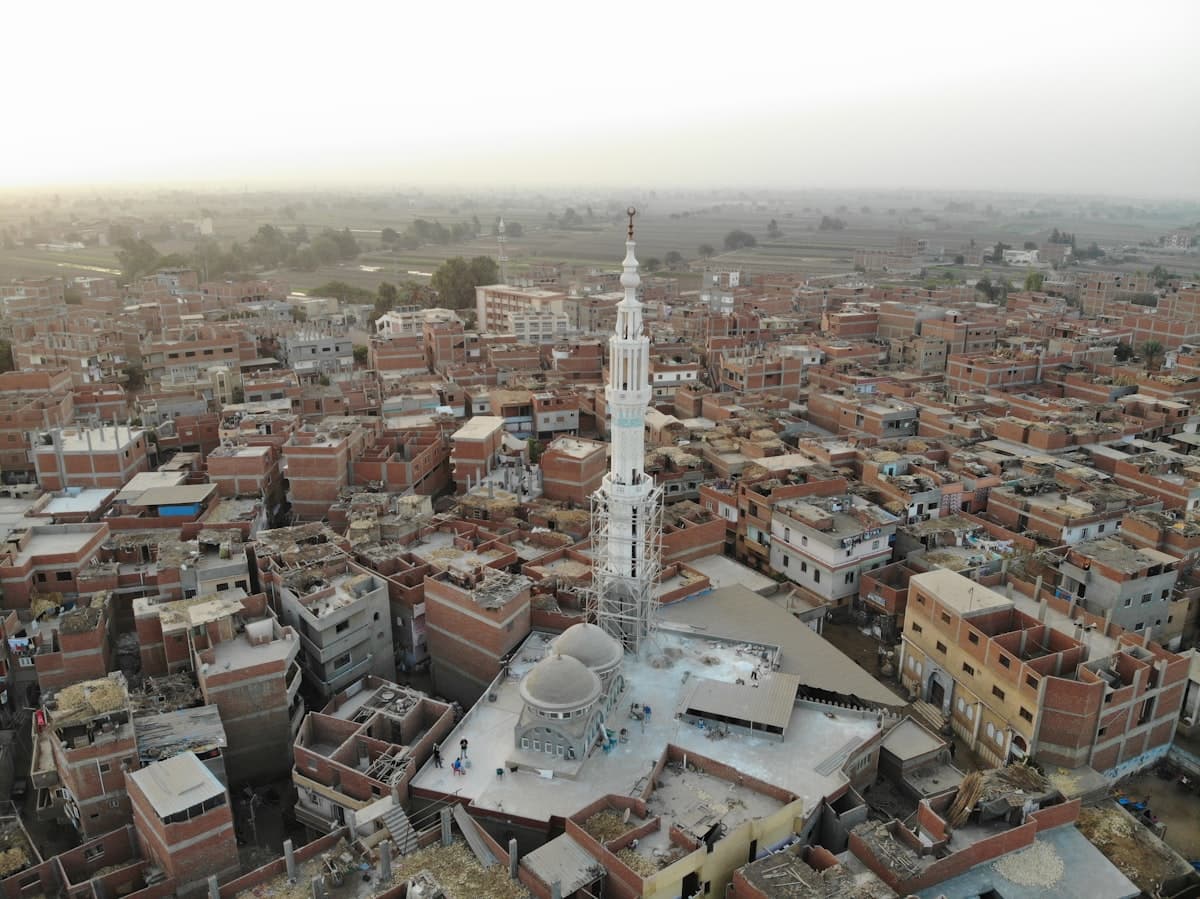
The annual mawlid of Sidi Ibrahim Dessuqi is not a festival in the way tourists understand festivals. It is a convergence. For approximately ten days in Sha'ban, the city's population multiplies. Estimates of attendance vary between three and four million people across the duration, which makes it comparable in scale to the Arba'een pilgrimage in Iraq and larger than any religious gathering in Western Europe.
The mawlid has a specific internal structure. Different nights belong to different Sufi turuq (orders), not only the Burhaniyya but also the Shadhiliyya, the Rifaiyya, the Qadiriyya, and others. Each order arrives with its own banners, its own musical instruments, its own style of dhikr. The Rifaiyya are the ones you may have read about as the order associated with fire-walking and skewer-piercing, practices that appear in mawlid contexts and are understood by practitioners as demonstrations of the saint's protective barakah, not as feats of endurance. Medical observation of these practices remains contested in the literature, but the practitioners themselves are uninterested in the debate.
The music matters. Sufi inshad (devotional singing) in the Delta tradition is different from what you hear in Cairo's khan el-khalili tourist performances. It is rawer, longer, built for altered states of consciousness through repetition rather than melodic showcase. A single phrase repeated for forty minutes in a tent packed with two thousand people swaying in unison is an experience that has no secular equivalent.
If you attend the mawlid: arrive with patience and without agenda. Dress conservatively. Accept tea if it is offered. Do not photograph people in trance states without explicit permission. The mawlid is not a spectacle for outsiders; it is a religious obligation for those who come. Your presence as an observer is tolerated and often welcomed if your posture is respectful rather than anthropological.
---
The Connections
The Burhaniyya Dessuqiyya order that Ibrahim al-Dessuqi founded in the thirteenth century spread south along the Nile into Sudan, where it became one of the major religious institutions of the Funj Sultanate (1504-1821). The Funj were the last indigenous ruling dynasty of what is now Sudan before the Turco-Egyptian conquest under Muhammad Ali's son Ismail in 1820. Which means that a saint born in the Egyptian Delta shaped the religious infrastructure of a Sudanese kingdom that resisted Egyptian political control for three centuries. His order outlasted every political entity that tried to contain it.
In Cairo, the Burhaniyya connection is visible at the Mosque of Sayyida Zeinab, where the order maintains a permanent presence and participates in that shrine's own mawlid. The spiritual geography connects: Cairo, Tanta, Dessuqi, and the Sudanese city of Omdurman all have active Burhaniyya lodges, and their calendars of gatherings are coordinated. This is a living transnational religious network, not a historical artifact.
The Coptic connection is less obvious but real. The Nile Delta in Dessuqi's time contained substantial Coptic Christian communities, and several hagiographies of the saint record his interactions with Christian monks and scholars. The pattern of saints absorbing and transforming older sacred geography is legible everywhere in Egypt: Coptic churches built on Pharaonic sites, mosques built adjacent to Coptic churches, Sufi shrines absorbing local healing traditions that predate Islam by two thousand years. At Dessuqi, the continuity is the point.
---
Common Mistakes
Visiting only during the mawlid without preparation. Four million pilgrims means accommodation books out months in advance, transport into the city becomes chaotic, and first-time visitors can feel overwhelmed to the point of missing everything they came to see. If you want the mawlid, plan six to eight weeks ahead and confirm your accommodation directly by phone, not online booking platforms, which often have outdated inventory for smaller Delta cities.
Treating the shrine as a tourist stop on the way to Alexandria. Dessuqi is not between Cairo and Alexandria in any practical routing sense. It requires a deliberate detour into the Delta. Visitors who give it two hours as part of a full travel day will leave having seen a mosque but understood nothing. The minimum meaningful visit is an overnight stay.
Photographing the dhikr circles without reading the room. Some groups welcome documentation. Others find it intrusive at best and offensive at worst. There is no universal rule. Watch for a few minutes before raising a camera. If people make eye contact with you and nod, that is permission. If they look away, it is not.
Skipping the suq around the shrine. This is a contrarian take, but only in the sense that most guides to Egyptian shrines treat the surrounding commerce as secondary. At Dessuqi, the suq is primary. The economy of blessing goods, the spatial organization of vendor families who have held the same pitch for four generations, the specific products that exist only for this shrine's particular saint, all of this is cultural documentation you cannot get anywhere else. Spend an hour here before entering the mosque.
Relying on the standard Egypt guidebooks for context. The major English-language Egypt guidebooks allocate Dessuqi between zero and four sentences. They are wrong to do so. Read instead any of the academic work on Egyptian Sufism by Michael Gilsenan or Catherine Mayeur-Jaouen before visiting. Thirty minutes of reading will transform what you see.
Assuming the shrine is only for Muslims. Non-Muslims visit Egyptian shrines regularly. The protocol is to dress appropriately, to be quiet and observant, and to understand that you are in a space of active religious practice, not a museum. No one at Dessuqi will demand your religion at the door.
Paying for a guided tour from Cairo. Day tour operators in Cairo occasionally offer "Delta shrines" packages that include Tanta and Dessuqi. They charge EGP 800-1,200 per person and give you forty-five minutes at each site. This is not enough time to understand either place, and the guides are usually calibrated for secular sightseeing rather than religious culture. Go independently, go slower, and spend the money on a night in the city instead.
---
Practical Tips
Dessuqi has no tourist infrastructure to speak of, which is accurate to its character. The city exists for its residents and its pilgrims, not for leisure travelers, and this is refreshing once you adjust expectations.
Food is excellent and cheap. The Delta diet is different from Upper Egypt: more fish (the Nile branch is minutes away), more dairy, more of the feathery bread specific to the north. Eat at the small fuul and ta'amiyya places near the shrine rather than any establishment trying to approximate a tourist restaurant.
The best time of day at the shrine is between Fajr and sunrise, roughly 5am to 6:30am, when the prayer hall is quiet, the light through the clerestory windows is low and specific, and the pilgrims who stayed overnight are performing their dawn prayers. This is when the place feels most itself.
Bring cash. Dessuqi does not have significant ATM coverage compared to Cairo or Alexandria. Withdraw before you travel.
If you read Arabic, even at a basic level, introduce yourself to one of the men sitting in the outer hall reading. The religious conversation that follows will be worth more than any tour.
Dress: for women, a headscarf inside the mosque is expected and respectful. For men, covered shoulders and long trousers. This applies year-round.
Frequently Asked Questions
The Weekly Dispatch
More on Egypt, every Friday.
Cultural depth and places most guides never mention.
No spam. Unsubscribe anytime.