Sidi Ibrahim Dessuqi Shrine: Egypt's Living Sufi Heartbeat
Four million pilgrims descend on a Delta town each year to visit a 13th-century saint who reportedly never left Egypt. The shrine is stranger and more alive than any pharaonic site.

Quick Facts
- Best time to visit
- October to March for comfortable Delta weather. The Moulid in Sha'ban (usually February or March) for the full experience. Quiet weekday mornings in winter for personal contemplation.
- Entrance fee
- Free. No admission charge. Voluntary donations to the mosque box are customary.
- Opening hours
- Daily approximately 5am to 10pm with brief closures around prayer times for non-worshippers. Continuous access during the Moulid festival.
- How to get there
- Bus from Cairo Turgoman station to Kafr el-Sheikh (EGP 60 to 80, approx $2 USD), then microbus or taxi to Dessuqi (EGP 10 to 20). From Alexandria, shared taxi approximately 2 hours, EGP 50 to 70.
- Time needed
- 2 to 3 hours for shrine and surrounding market. Full day if combining with Sa el-Hagar (ancient Sais) 30km southwest.
- Cost range
- Budget EGP 200 to 400 per day including transport from Kafr el-Sheikh, street food, and incidentals. Accommodation adds EGP 150 to 300 for basic guesthouses.
Quick Facts
Best time to visit: October to March for comfortable temperatures. The Moulid of Dessuqi (held in the Islamic month of Sha'ban) draws the largest crowds, usually February or March depending on the lunar calendar. If you want spectacle, come then. If you want quiet contemplation, come any other weekday morning.
Entrance fee: Free. The shrine complex charges nothing for entry. Donations to the mosque's upkeep box are voluntary and customary.
Opening hours: The mosque and shrine are open daily from approximately 5am to 10pm, with brief closures around prayer times for non-worshippers. During the Moulid, the complex operates continuously for several days.
How to get there: Dessuqi (also spelled Dasuq or Desouk) is a town in Kafr el-Sheikh Governorate in the Nile Delta, roughly 165 kilometers north of Cairo. From Cairo's Turgoman bus station, buses run to Kafr el-Sheikh city for approximately EGP 60 to 80 (under $2 USD), and from there a microbus or taxi covers the 25 kilometers to Dessuqi for EGP 10 to 20. Shared taxis from Alexandria take about two hours and cost EGP 50 to 70. There is no direct train to Dessuqi; the Kafr el-Sheikh rail connection is the closest useful stop.
Time needed: Two to three hours for the shrine and immediate surroundings. A full day if you combine it with the medieval market quarter and the Nile branch nearby.
Cost range: Budget EGP 200 to 400 per day including transport and food from the street stalls surrounding the complex.
---
Why This Place Matters
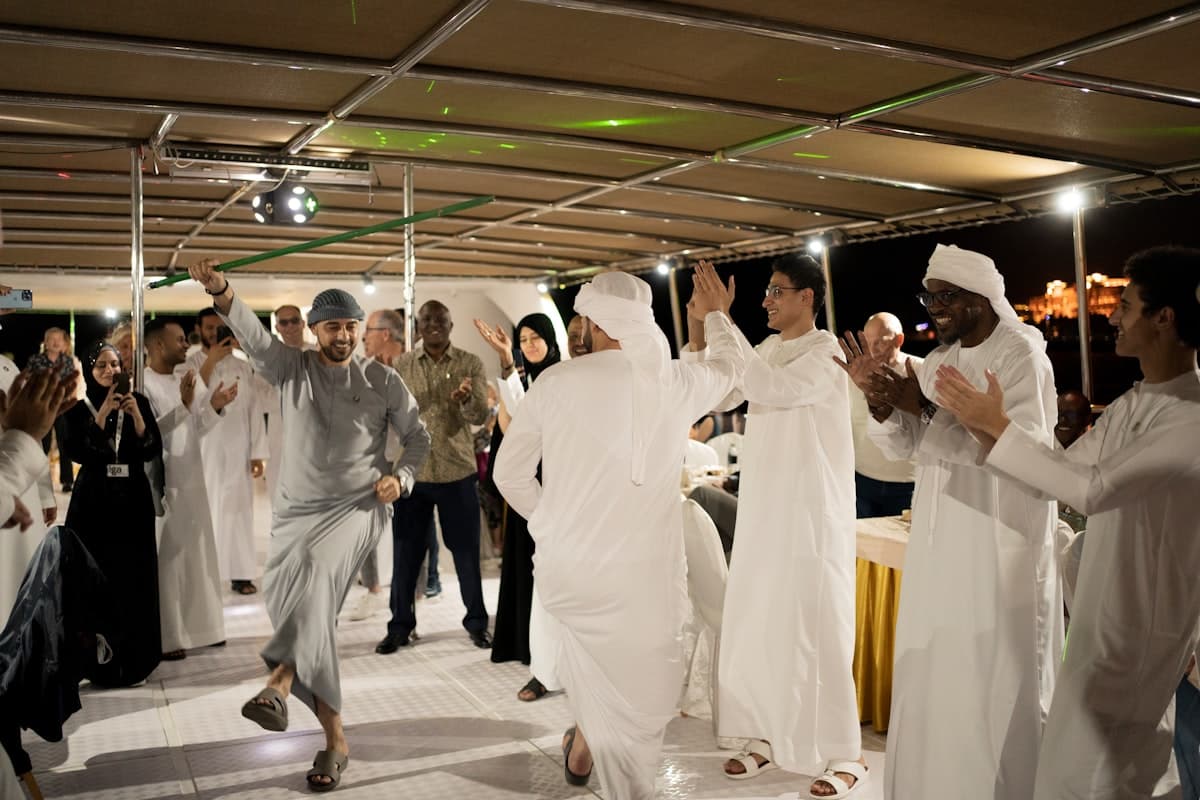
Most Western visitors to Egypt operate on a timeline that runs from 3000 BC to roughly 30 BC and then stops. The Sidi Ibrahim Dessuqi shrine exists entirely outside that frame, and that is precisely why it is worth your time.
Ibrahim ibn Abi al-Majd al-Dessuqi was born around 1255 AD in the town that now bears his name, into a family already known for religious scholarship. He died in 1296. In those four decades, he founded the Burhaniyya Dessuqqiyya Sufi order, which today has active lodges across Egypt, Sudan, Syria, Turkey, Germany, and the United States, with an estimated following of several million people. He is considered one of the four great poles (aqtab) of Sufi Islam, a rank that in the Sufi cosmological system means he holds a kind of spiritual axis around which divine mercy flows. The other three poles are Ahmad al-Badawi of Tanta, Abdul Qadir al-Jilani of Baghdad, and Ahmad ibn Idris. This is not folk belief held only by illiterate peasants. The Burhaniyya order has university-educated engineers and doctors among its adherents in Cairo, Berlin, and São Paulo.
The shrine sits in the center of Dessuqi, and the town has organized itself entirely around it for seven centuries. The streets radiating outward sell incense, prayer beads, green cloth, and cassettes of Sufi devotional music called inshad. The economy of approximately 100,000 people is meaningfully shaped by the annual Moulid, which the Egyptian government officially recognized as a national cultural heritage event in 2009.
---
What You Will Actually See
The exterior of the mosque is Mamluk in its bones, though it has been restored and expanded multiple times, most recently in the 1980s under state supervision. The minarets are Ottoman in style, built when the Ottoman governors of Egypt added their architectural signature to existing Sufi complexes as a way of asserting administrative legitimacy over the popular religious orders, a strategy the Ottomans used consistently from Cairo to Damascus.
Inside, the air is dense with sandalwood and something sweeter, oud resin most likely, which has been burning here continuously, in various configurations, since the shrine was first enclosed by a stone structure in the 14th century. The lighting shifts as you move from the main prayer hall toward the inner sanctuary where the tomb sits. Green cloth covers the tomb structure, green being the color associated with the Prophet Muhammad and with Sufi saints throughout the Islamic world.
What strikes visitors who are not Muslim, or not Sufi, is the behavior of the people here. This is not the silent, individual-facing-forward prayer of a typical mosque visit. People speak to the saint. Directly. Out loud and in whispers. Women press their hands against the tomb enclosure. Men sit on the floor reciting from laminated cards. Children run between the columns while their grandmothers negotiate, in what sounds very much like a personal conversation, with someone they are entirely certain can hear them.
This practice, called tawassul, the seeking of intercession through a saint, is theologically contested within Islam. Wahabi and Salafi interpretations reject it as bordering on shirk, the association of partners with God. The Egyptian Sufi tradition, codified through al-Azhar's more syncretic jurisprudence, considers it permissible. That theological argument has real political stakes: in 2011 and 2013, Salafi groups in Egypt called for the demolition of saint shrines. The Egyptian state, partly to maintain popular legitimacy, partly because al-Azhar pushed back hard, blocked those calls. The Dessuqi shrine is not just a tourist site. It is a living argument about what Egyptian Islam is and who gets to define it.
---
The Moulid: What Actually Happens
The Moulid of Dessuqi is the third largest Moulid in Egypt after those of Ahmad al-Badawi in Tanta and the Prophet's birthday celebration in Cairo. Attendance estimates range from two to four million people across the festival's full duration, which typically runs for a week with the climax on the Thursday night known as the Big Night (Layla al-Kabira).
On that night, the Sufi orders process through the streets in their distinct uniforms. The Burhaniyya wear white. Other orders wear green, black, or red according to their lineage. The dhikr, the rhythmic repetition of divine names, is performed in synchronized circles that can include hundreds of people swaying together. The sound is not gentle. It is a physical experience, the bass of massed voices repeating Allah, Allah, Allah merging with the percussion of drums and the high drone of a reed flute until the sound becomes something the body processes rather than the ear alone.
Street food stalls open around the clock. Grilled corn, koshari, liver sandwiches, sugarcane juice. Families camp on the streets with blankets. Children fall asleep under food carts. The whole thing looks chaotic and functions with a kind of crowd logic that has been rehearsed for 700 years.
If you are a non-Muslim visitor attending the Moulid, you are welcome, but dress conservatively, keep your camera respectful, do not photograph people in states of devotional trance without permission, and understand that you are a guest at a religious event, not an audience member at a spectacle.
---
The Connections
Dessuqi's shrine does not exist in historical isolation. The Nile Delta in the 13th century, when Ibrahim al-Dessuqi was alive, was recovering from the Crusades and absorbing the aftershock of the Mongol destruction of Baghdad in 1258, an event that sent thousands of scholars, Sufi masters, and poets westward into Egypt. Cairo and the Delta became the intellectual and spiritual center of the Sunni Islamic world almost by accident, because everywhere else had been burned.
Ibrahim al-Dessuqi's teacher, or one of his key influences, operated in a network that connected to Ibn Arabi, the Andalusian mystic who died in Damascus in 1240 and whose philosophical system of wahdat al-wujud (the unity of being) shaped Sufi thought for centuries afterward. The Burhaniyya order carries traces of that Andalusian-Syrian-Egyptian lineage in its rituals.
The physical site of the shrine sits near a branch of the Nile that was more navigable in medieval times than it is now. Dessuqi was a trading stop as well as a religious one, which partly explains how the order spread so efficiently. Merchants traveled with their spiritual affiliations. The Burhaniyya reached Sudan through Nile trade routes by the 15th century and from Sudan reached East Africa. That is why there are Burhaniyya lodges in Khartoum, Nairobi, and eventually Hamburg and Toronto, all traceable to a town in the Egyptian Delta that most international visitors have never heard of.
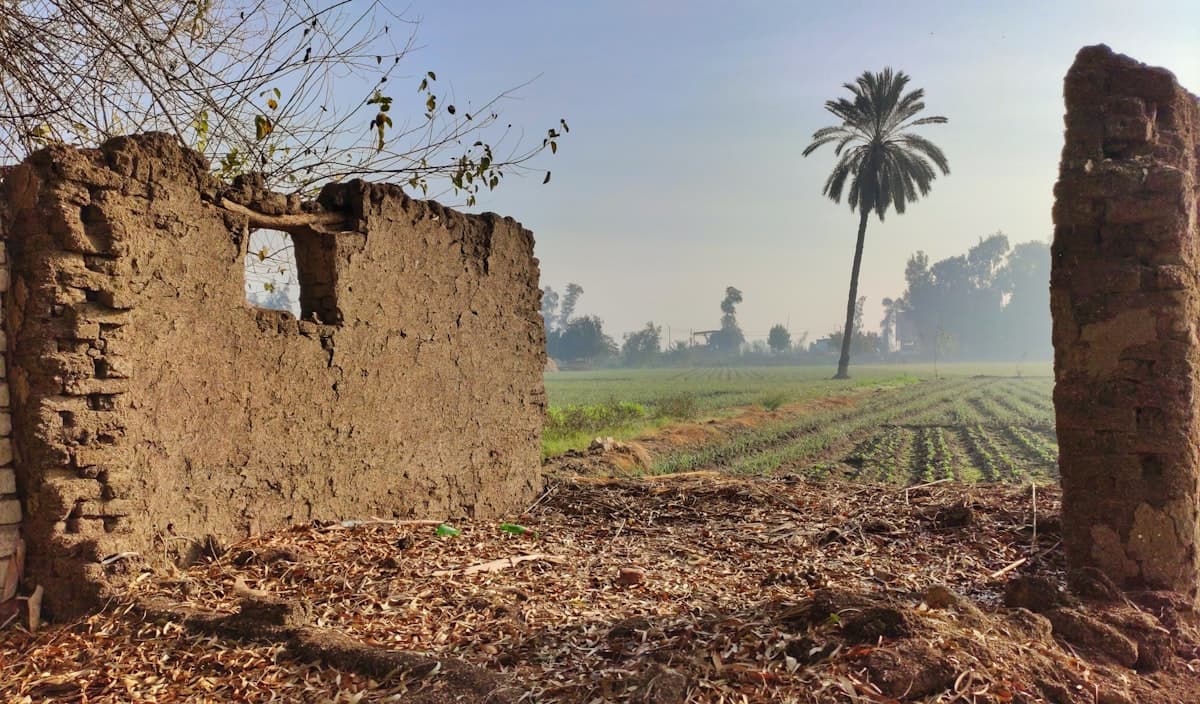
The nearest pharaonic site of significance is Sa el-Hagar, ancient Sais, roughly 30 kilometers southwest, once the capital of the 26th Dynasty and home to a temple of Neith so large that the Greek historian Herodotus described it at length in the 5th century BC. Sais is now almost nothing, largely robbed out for building material over two millennia. The Dessuqi shrine, by contrast, survived because living communities protected it. The lesson about what preservation actually requires is embedded in the comparison.
---
Common Mistakes
Treating the Moulid as a photo opportunity and nothing else. Visitors who arrive with cameras raised from the moment they step out of the taxi and spend their time framing shots rather than watching what is actually happening leave with images and miss the event. Put the camera away for the first hour. Understand what you are seeing. Then photograph.
Coming only during the Moulid. The Moulid is extraordinary, but the shrine on a quiet Tuesday in November, when only locals are present and a small circle of Sufi practitioners is doing dhikr in the corner, shows you something the Moulid crowds cannot: the everyday life of a living sacred space. Both visits are different experiences. One is not superior.
Skipping the surrounding market quarter. The streets around the shrine sell goods that have been sold there for centuries: amulets, Quranic calligraphy on paper and cloth, handmade prayer beads of amber and wood, green cloth by the meter for wrapping tomb structures, and cassettes and CDs of Sufi music that you genuinely cannot find in Cairo's mainstream music shops. This is a specific economy that exists nowhere else in the same form.
Taking the overnight bus from Cairo and expecting to be alert. The journey is two and a half to three hours minimum. If you are coming for the Moulid's Layla al-Kabira, which begins after the Isha prayer around 9pm and runs until dawn, plan to sleep in Dessuqi the night before, not to arrive by overnight transport and go straight in.
The Contrarian Take: Do not hire a guide from the tourist touts near the bus station. Several men position themselves near arriving buses from Cairo and Alexandria offering to explain the shrine's history and walk you through the complex. They are not trained guides. They are entrepreneurs. The information they offer is frequently a mix of accurate legend and invented detail, and their actual function is to bring you to specific shops. The shrine needs no explanation beyond a half-hour of sitting quietly and watching. If you want context, read before you arrive.
Assuming the shrine is only for Muslims. Non-Muslim visitors, including unveiled women, are welcome in the outer sections of the mosque and in the streets surrounding it during the Moulid. The inner tomb chamber has periods when it is crowded with active worshippers, and during those times a non-Muslim presence can be intrusive. Use judgment and follow the lead of the people around you.
Underestimating the heat of the Delta in summer. The Delta is humid in ways that Upper Egypt and Cairo are not. July and August in Dessuqi are genuinely unpleasant for outdoor walking. The Moulid's timing in Sha'ban means it sometimes falls in warmer months depending on the lunar year. Check the forecast.
---
Practical Tips
Dress conservatively regardless of gender. Women should cover their hair inside the mosque; a large scarf is sufficient. Men should avoid shorts. This is not a negotiable cultural courtesy; it is the minimum expected of any visitor to an active place of worship.
Bring cash. Dessuqi has ATMs but they are not always stocked during Moulid when the town's population multiplies. Withdraw cash in Kafr el-Sheikh city before the final leg of your journey.
The street food around the shrine is genuinely good and generally safe: look for stalls with high turnover and visible cooking heat. The liver sandwich vendors are local institutions.
If you have any connection to Sufi practice or Islamic scholarship, introducing yourself as such to the people at the shrine's administrative office can open conversations and sometimes access to parts of the complex that casual visitors do not see.
For photography inside the mosque, ask. Most people will agree if you ask directly and respectfully. Most people will be offended if you do not ask and shoot anyway.
Combine the visit with Sa el-Hagar (ancient Sais) if you have a vehicle. The sites are 30 kilometers apart and the contrast between a pharaonic capital reduced to rubble and a medieval shrine still alive with millions of visitors tells you something specific and important about how history actually works.
Frequently Asked Questions
The Weekly Dispatch
More on Egypt, every Friday.
Cultural depth and places most guides never mention.
No spam. Unsubscribe anytime.