Sidi Ibrahim Dessuqi Shrine: Egypt's Living Sufi Heartland
Four million pilgrims visit Dessouk each year, more than visit Luxor. Most Egyptians consider Ibrahim al-Dessuqi one of the four great poles of Sufi Islam. You have probably never heard of him.

Quick Facts
- Best time to visit
- Thursday evenings year-round for weekly hadra ritual. The annual Mawlid in the Islamic month of Sha'ban for the full pilgrimage atmosphere, though accommodation must be booked weeks ahead. Avoid the peak Mawlid Friday night unless you have confirmed lodging.
- Entrance fee
- Free. No admission charge for the shrine or mosque at any time.
- Opening hours
- Daily approximately 6am to 10pm. Shrine chamber closes for 20 to 30 minutes during each of the five daily prayers. No advance booking required or available.
- How to get there
- West Delta bus from Cairo Turgoman station: EGP 45 to 60 (approx $1.50 to $2 USD), 2 to 2.5 hours. Microbus from Alexandria Moa'f al-Gedid: EGP 30 to 40, approximately 90 minutes. Private car from Cairo: EGP 800 to 1,200 negotiated.
- Time needed
- 2 to 3 hours for the shrine and immediate surroundings. Half a day if combining with the old city market streets. Full day during the Mawlid period.
- Cost range
- Budget EGP 200 to 350 for a day trip including bus fare and food. Guesthouse accommodation in Dessouk EGP 250 to 400 per night. No mid-range or luxury hotel options exist in the city.
Four million pilgrims descend on the Nile Delta city of Dessouk every year. For comparison, Luxor receives roughly three million tourists annually. The crowds at the shrine of Ibrahim al-Dessuqi are not a tourism phenomenon. They are a faith phenomenon, and that distinction changes everything about how you should approach this place.
Ibrahim al-Dessuqi died in 1288 CE. He was thirty-eight years old. In the seven centuries since, he has become one of the four Aqtab, the four cosmic poles of Sufi Islam, the saints whose spiritual authority is considered so absolute that Sufi orders worldwide invoke their names in initiation rites. The other three poles are Abd al-Qadir al-Jilani of Baghdad, Ahmad al-Badawi of Tanta, and Ahmad ibn Idris. Al-Dessuqi is the only one buried in Egypt who was also born in Egypt. This is a point of considerable local pride.
Quick Facts
Best time to visit: The Mawlid of Ibrahim al-Dessuqi falls in the Islamic month of Sha'ban, typically in late winter or early spring by the Gregorian calendar. Outside the Mawlid, Friday mornings see the most devotional activity with the least chaos.
Entrance fee: The shrine itself is free to enter. There is no ticket booth, no queue system, and no timed entry. Donations to the mosque foundation are accepted but never solicited aggressively.
Opening hours: The mosque and shrine complex are open every day from approximately 6am to 10pm. The inner shrine room stays open for ziyara (visitation) outside of the five daily prayers. During prayers, non-Muslim visitors are asked to wait at the entrance.
How to get there: Dessouk sits in Kafr el-Sheikh Governorate in the Nile Delta, approximately 120 kilometers northwest of Cairo. From Cairo's Turgoman bus station, West Delta buses run directly to Dessouk for around EGP 45 to 60 (approximately $1.50 to $2 USD). Journey time is two to two and a half hours. From Alexandria, shared microbuses from the Moa'f al-Gedid terminal reach Dessouk in about ninety minutes for EGP 30 to 40. A private car from Cairo costs EGP 800 to 1,200 depending on negotiation.
Time needed: Two to three hours for the shrine complex and immediate surroundings. A full half-day if you intend to walk the market streets during the Mawlid season.
Cost range: Budget visitors can spend a full day in Dessouk on EGP 200 to 350 including transport from nearby cities, food from street stalls, and candles or incense purchased from vendors outside the shrine. There are no luxury hotels in Dessouk. Budget guesthouses run EGP 250 to 400 per night.
Why This Place Matters
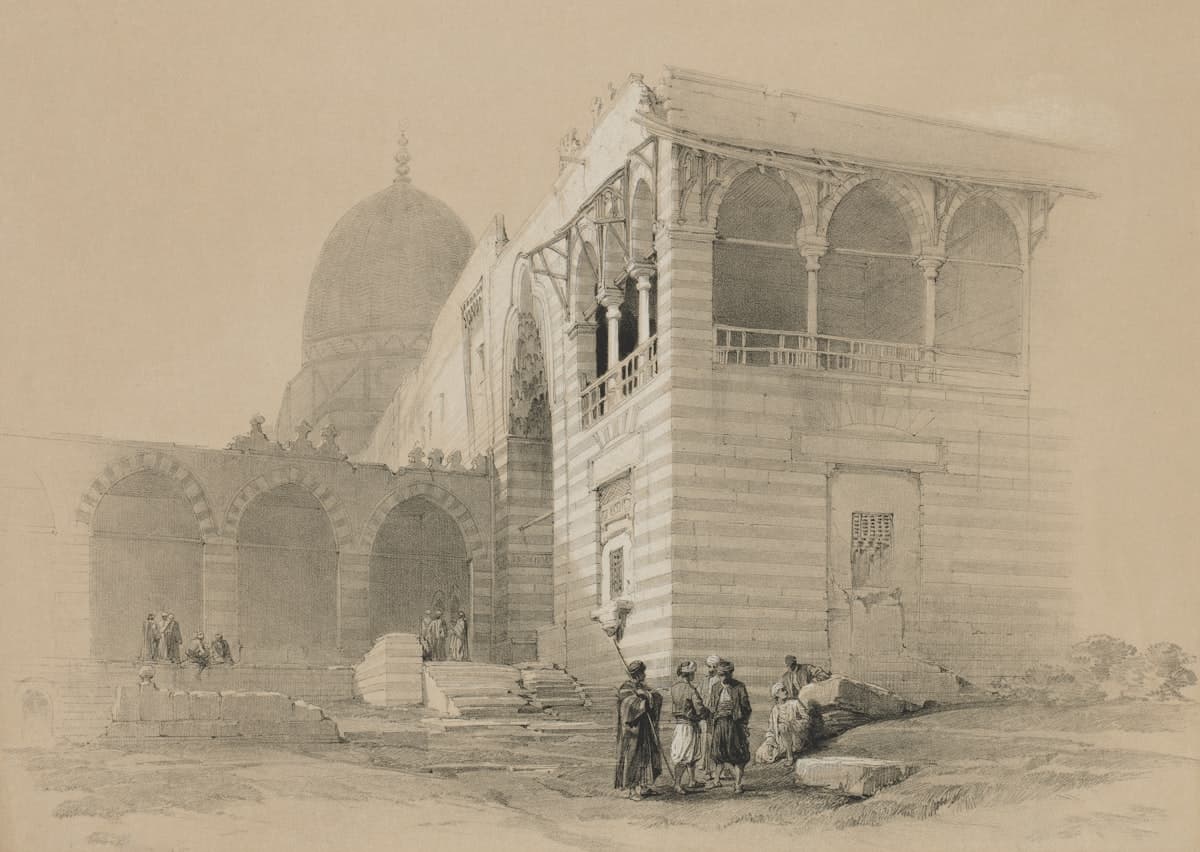
Ibrahim al-Dessuqi was born around 1255 CE into a family of scholars in the city then called Dessouk, on the western branch of the Nile Delta. This was a moment of extraordinary instability in the Islamic world. The Mongols had sacked Baghdad two years before his birth, in 1258, effectively ending the Abbasid Caliphate that had structured Sunni Islam for five centuries. Egypt under the Mamluks was one of the few places left where Islamic scholarship and Sufi practice could survive and flourish.
Sufism in this period was not a marginal or mystical fringe. It was the primary vehicle through which ordinary Egyptians experienced their faith. The Sufi orders, the turuq, organized social welfare, education, and communal identity in ways that formal religious institutions often could not. Ibrahim al-Dessuqi founded his own order, the Dessuqiyya, which still operates today with branches across Egypt, Sudan, Libya, and the Levant.
What makes the shrine significant beyond its religious function is its architectural continuity. The current mosque structure incorporates elements from at least three major building phases spanning the Mamluk, Ottoman, and Khedival periods. The green dome over the burial chamber was rebuilt under Khedive Abbas II in the late nineteenth century, but the chamber walls beneath it retain Mamluk-era stone carved with geometric patterns that closely resemble work found at the Sultan Hassan Mosque in Cairo. The same craftsmen, or at least the same school of craftsmen, moved between these commissions.
What You Will Actually See Inside
The approach to the shrine from the main square gives you almost no preparation for what is inside. The exterior is dominated by the green dome and two minarets, one clearly older than the other, and a broad marble forecourt where vendors sell candles, bottles of rose water, and small printed booklets of al-Dessuqi's poetry and prayers. Buy the rose water. It will make sense in a moment.
Inside the mosque the first thing you register is sound: the low collective murmur of dhikr, the Sufi practice of rhythmic remembrance, almost always happening somewhere in the building regardless of the time of day. On Thursdays and Fridays this becomes something altogether more intense, with organized circles of men performing hadra, the ecstatic movement ritual associated with the Dessuqiyya order, accompanied by hand drums and chanting that has been continuous in this building in some form for seven hundred years.
The shrine chamber itself, accessible through a separate door off the main prayer hall, holds the cenotaph of Ibrahim al-Dessuqi beneath a heavy silver-worked cover. The walls are dense with calligraphic tiles, some Ottoman, some modern replacements, and the air carries three simultaneous smells: frankincense, rose water from the dozens of visitors who splash it on the tomb cover as they pray, and the faint mineral dampness of very old stone underneath everything else. Women and men enter through separate doors and stand on opposite sides of a latticed screen. This is standard practice at Egyptian shrine mosques.
A detail most visitors walk past entirely: embedded in the eastern wall of the shrine chamber, at approximately knee height, are two stones with pre-Islamic geometric carvings that do not match anything else in the building. Local scholars at the Kafr el-Sheikh Antiquities office have dated these to the Late Period or early Ptolemaic era, suggesting the site has held religious significance for considerably longer than the Islamic tradition acknowledges. Nobody puts up a sign about this. You have to know to look.
The Mawlid: What Nobody Warns You About
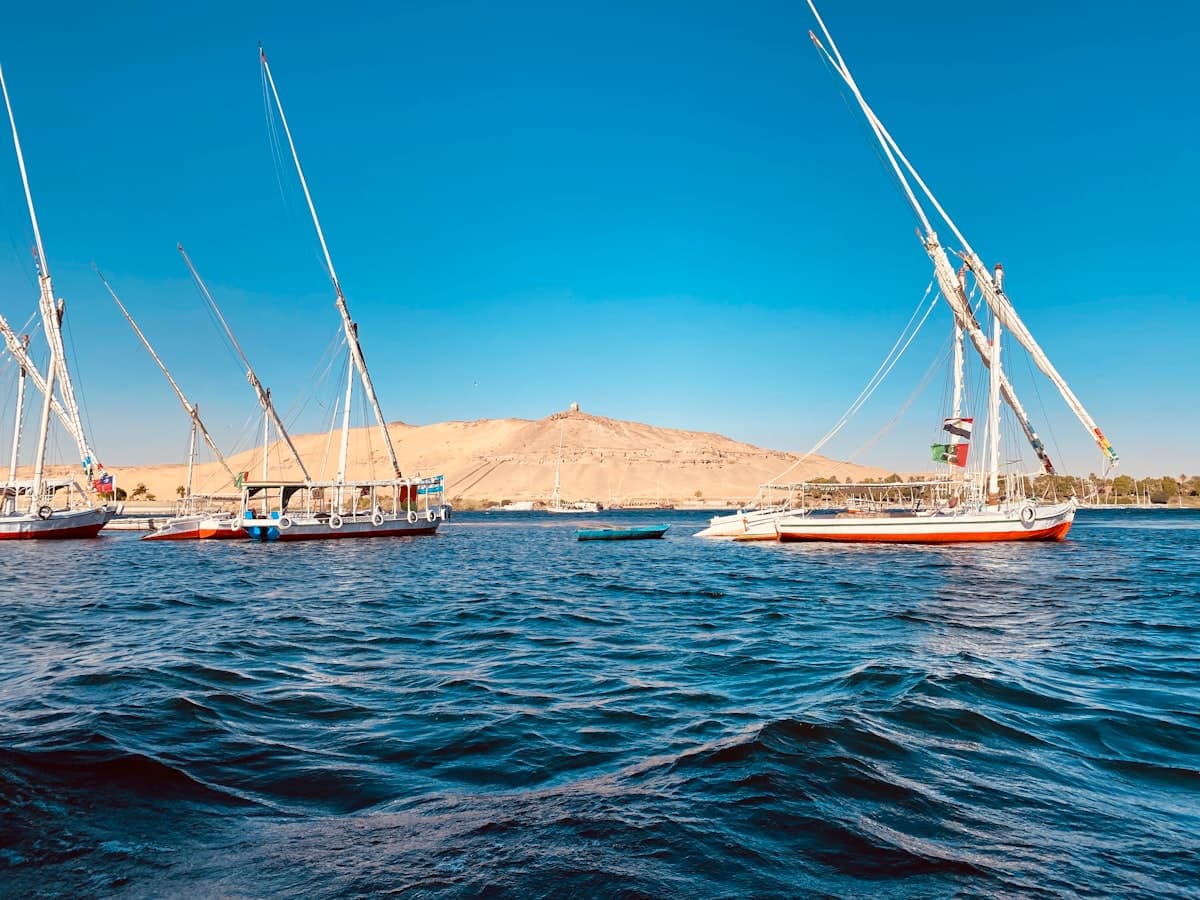
The annual Mawlid of Ibrahim al-Dessuqi is one of the largest religious festivals in Africa. The official count varies but independent estimates consistently place attendance above two million over the full two-week period, with the final Friday night drawing the largest single crowd.
This is not a festival designed for outside observers. It is a working spiritual event, and the distinction matters practically and ethically. During the Mawlid, every street within a kilometer of the shrine becomes a corridor of Sufi tents, each representing a different order that has traveled to pay respects. These tents, called siwan, serve as social centers: pilgrims eat, sleep, perform dhikr, and receive blessings there. The Dessuqiyya order's own central siwan operates directly adjacent to the mosque and is open to respectful visitors of any background.
The food culture around the Mawlid is worth the trip on its own terms. Vendors specialize in dishes you will not find concentrated like this anywhere else in the Delta: konafa stuffed with ashta cream and soaked in orange-blossom syrup, plates of mulukhiyya made with rabbit rather than chicken, and the particular Delta version of fattah using dried bread softened in lamb broth that bears little resemblance to the Cairo version. Eat from the vendors with the longest local queues.
If you attend the Mawlid, hire a guide from Dessouk itself, not from Cairo. The dynamics of the festival, which tents welcome visitors, when the hadra circles are open to observation, which moments require stepping back, are entirely local knowledge. A Cairo-based guide at a Sufi Mawlid is nearly as lost as you are.
The Connections
The Dessuqiyya order founded by Ibrahim al-Dessuqi has a direct historical relationship with two other major Egyptian shrine traditions you may already be considering. Ahmad al-Badawi of Tanta, whose shrine sits roughly sixty kilometers south of Dessouk in the Delta, died in 1276 CE, twelve years before al-Dessuqi. According to Sufi tradition, the two saints met and recognized each other's spiritual rank. Their respective orders developed in parallel, drawing on overlapping social networks across the Delta. Visiting both shrines, Tanta and Dessouk, in a single Delta journey is not only logistically feasible by bus in a single long day but gives you a comparative picture of how Egyptian Sufism organized itself geographically.
The Mamluk context of al-Dessuqi's life connects directly to Cairo monuments you may have already seen. The Sultan Baybars, who ruled Egypt from 1260 to 1277 and was the effective founder of Mamluk power, was the political patron who created conditions allowing figures like al-Dessuqi to operate. The mosque of Sultan Baybars in Cairo's Gamaleya district, now largely in ruin, was built in 1269, during al-Dessuqi's lifetime. Standing in either place, you are inside the same political and spiritual moment.
The green dome over al-Dessuqi's tomb, rebuilt under Khedive Abbas II around 1897, connects the shrine to the broader late-Ottoman project of refurbishing Egyptian saint shrines as a way of shoring up popular religious legitimacy during the British occupation. The same political logic drove renovations at Sayyida Zeinab, Sayyida Nafisa, and al-Hussein mosques in Cairo during the same decade. What looks like religious devotion often carries a political invoice.
Common Mistakes

Arriving during midday prayer without a plan. The shrine chamber closes for roughly thirty minutes at each of the five daily prayers. If you arrive just before Dhuhr without knowing this, you will wait outside with no shade and no explanation, because no one will explain it to you in English. Check prayer times for Dessouk on any Islamic prayer app before you visit and plan your arrival accordingly.
Treating the hadra circle as a performance to photograph. The ecstatic movement ritual is a devotional practice, not entertainment. Photographing it with a raised phone at close range will end your access to the inner spaces immediately and deservedly. If you want to document it, ask through your local guide, accept that the answer may be no, and put the phone away regardless.
Taking the Mawlid crowd estimates at face value and underestimating the logistics. The final Friday of the Mawlid brings Dessouk to a state of genuine gridlock. Every guesthouse within fifteen kilometers is full weeks in advance. Buses stop running to schedule. If you plan to attend the peak night and have not booked accommodation in advance, you will either sleep on a sidewalk or pay an enormous premium for a car back to Alexandria at 3am. Neither is pleasant.
Booking the dedicated "Sufi tour" from Cairo operators instead of going independently. Several Cairo-based operators sell full-day Sufi shrine tours to Dessouk at prices between EGP 1,200 and 2,000 per person. These tours rush you through in two hours, position the shrine as spectacle rather than place, and return you to Cairo before any of the evening's devotional activity begins. The bus from Turgoman costs EGP 50. Go independently.
Skipping the old city streets to the north of the shrine. The tourist gravity of the shrine pulls most visitors straight to the mosque entrance and back out again. The streets immediately north contain a continuous fabric of Mamluk and Ottoman-era merchant architecture, including two caravanserais that have been in commercial use without interruption for over four hundred years. The craft workshops along Sharia al-Sayed produce the embroidered banners and ceremonial standards used in the Mawlid processions, and a visit to one of these workshops teaches you more about living Egyptian craft traditions than any museum exhibit.
Wearing shoes inside the shrine that take more than five seconds to remove. The shrine floor requires bare feet. Lace-up boots in a crowded entry passage create a small social crisis. Wear slip-ons.
Practical Tips
Dress conservatively regardless of the season. Women will need to cover their hair inside the shrine complex; scarves are sold outside the entrance for about EGP 20 if you arrive without one. Men in shorts will be lent a wrap to tie around their waist, but it slows your entry significantly.
The Sidi Ibrahim Dessuqi shrine guide circuit, as described above, is manageable without a guide during non-Mawlid periods. During the Mawlid itself, local guidance is worth every pound. Ask at your accommodation in Dessouk for a neighborhood boy or young man to walk with you; pay EGP 150 to 200 for a few hours and you will see things no formal tour accesses.
Bring cash. Dessouk has ATMs but they are frequently out of service during the Mawlid period when the town's population triples overnight. Withdraw before you arrive.
The single best time to experience the shrine outside of the Mawlid is Thursday evening after Isha prayer, the night prayer at roughly 8 to 9pm depending on the season. The Dessuqiyya order holds its weekly hadra circle then, the atmosphere is serious and unhurried, and the number of visitors is manageable enough that you can actually absorb what you are witnessing.
If you have a respiratory condition, be aware that incense in the inner shrine chamber burns continuously and the ventilation is medieval in the most literal sense. Step out when you need to. There is no stigma attached to pausing in the forecourt.
Frequently Asked Questions
The Weekly Dispatch
More on Egypt, every Friday.
Cultural depth and places most guides never mention.
No spam. Unsubscribe anytime.