Sidi Ibrahim Dessuqi Shrine: Egypt's Most Misunderstood Mawlid
Four million pilgrims descend on one Delta city each year for a saint most foreign visitors have never heard of. The Dessuqi mawlid is Egypt's second-largest religious gathering.

Quick Facts
- Best time to visit
- During the annual mawlid in Sha'ban (dates shift yearly; verify in advance) for the full pilgrimage experience, or October through February for comfortable Delta weather with no crowds
- Entrance fee
- Free. No admission charge to the shrine or mosque complex. Voluntary donations to caretakers are customary.
- Opening hours
- Daily approximately 8am to 10pm. Continuous during mawlid week. Closed to non-worshippers during Friday midday prayer.
- How to get there
- From Cairo: microbus from Turgoman to Kafr el-Sheikh (EGP 60-80), then local transport to Dessuqi (EGP 15-25). From Alexandria: service taxi to Kafr el-Sheikh (EGP 50-70) then onward transport.
- Time needed
- 2-3 hours for the shrine and surrounding quarter; full day during mawlid season to include hadra ceremonies and street market
- Cost range
- Budget EGP 200-400 per day for transport, food, and incidentals. Accommodation in Dessuqi EGP 300-600 per night; Kafr el-Sheikh has wider options.
Quick Facts
Best time to visit: The mawlid of Sidi Ibrahim Dessuqi falls in the Islamic month of Sha'ban, roughly eight weeks before Ramadan. Dates shift annually with the lunar calendar. Outside of mawlid season, the shrine is open and far less crowded.
Entrance fee: Free. The shrine and mosque complex charge no admission. Modest voluntary donations to the caretakers are customary.
Opening hours: Daily from approximately 8am to 10pm. The inner sanctuary is open continuously except during Friday prayers. During mawlid week, the complex stays open through the night.
How to get there: Dessuqi (also spelled Desouk or Disouq) is a small city in Kafr el-Sheikh Governorate in the Nile Delta. From Cairo: shared microbus from Turgoman station to Kafr el-Sheikh (roughly EGP 60-80, about $2 USD), then a local tuk-tuk or taxi to the shrine (EGP 15-25). From Alexandria: direct service taxi to Kafr el-Sheikh from Mohamed Ali Square (EGP 50-70). The city is about 140km from Alexandria and 180km from Cairo.
Time needed: Two to three hours for the shrine and surrounding quarter. A full day if you arrive during mawlid season and want to absorb the Sufi ceremonies, street markets, and hadra rituals.
Cost range: Budget EGP 200-400 per day covering transport, food from street stalls, and incidentals. There are modest hotels in Dessuqi for EGP 300-600 per night.
---
Four million people descend on a mid-sized Delta city most Egyptians outside the north have visited exactly once, if at all. They come for a thirteenth-century saint who built his mosque on the bank of a Nile branch that no longer exists, who reportedly performed his first miracle at the age of four, and who is venerated by Sufi orders from Morocco to Indonesia. The annual mawlid of Sidi Ibrahim Dessuqi is, by most counts, the second-largest religious gathering in Egypt after the mawlid of Sidi Ahmed el-Badawi in Tanta. Foreign tourists almost never appear. This is partly ignorance and partly the fact that no glossy campaign has ever been built around it. That absence is the point. The Dessuqi shrine guide that follows is written for people who want to understand what Egypt actually practices, not what Egypt performs for cameras.
Why This Place Matters
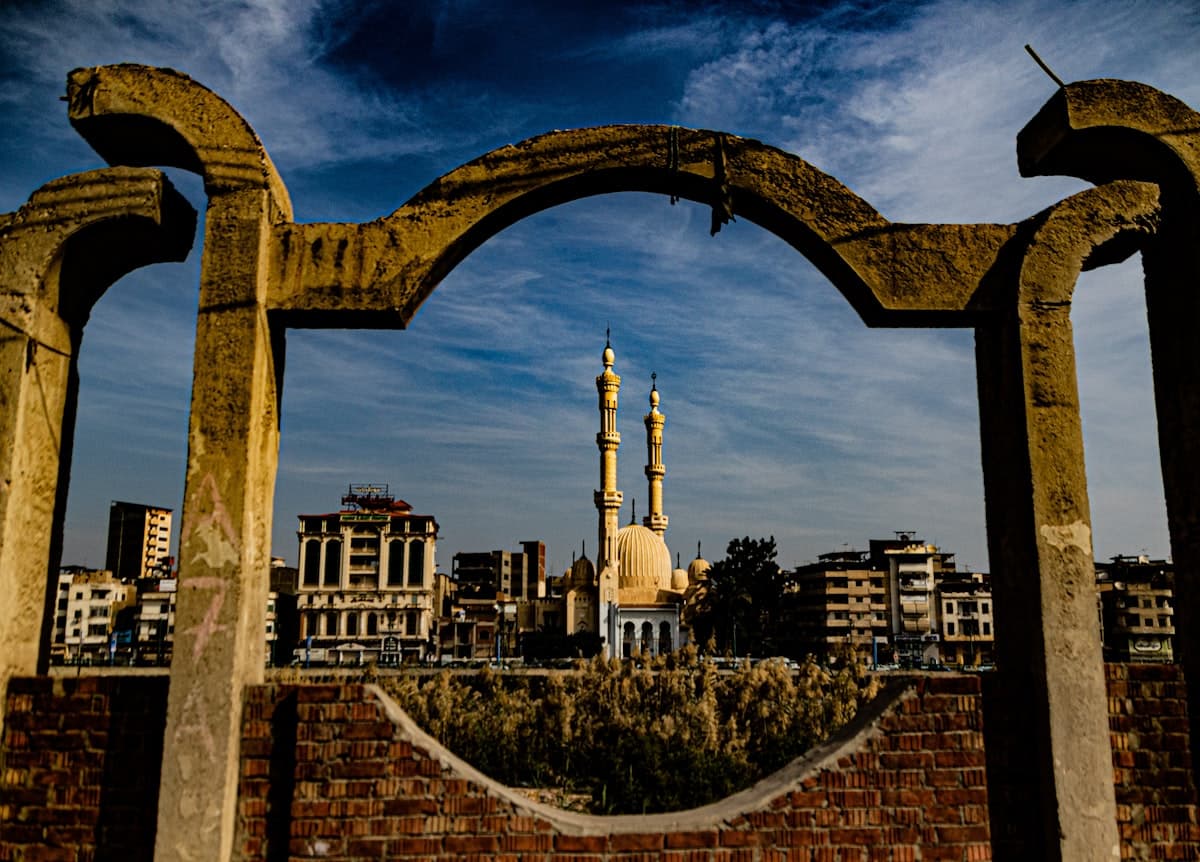
Ibrahim ibn Abi al-Majd al-Dessuqi was born in Dessuqi in 1255 CE, the same decade that the Mongols sacked Baghdad and ended the Abbasid Caliphate. He died in 1296 CE, leaving behind a Sufi order, the Dessuqiyya (also called the Burhaniyya), which today claims millions of adherents across the Arab world, East Africa, and parts of Southeast Asia. He is counted among the Four Poles of Sufi Islam, a concept that places him in a spiritual hierarchy alongside figures like Abd al-Qadir al-Jilani of Baghdad and Ahmed el-Badawi of Tanta. In Egyptian popular theology, the Four Poles form a kind of sacred geography, and pilgrims who wish to complete a full circuit of blessings visit all four shrines in sequence.
The city itself sits on the Rosetta branch of the Nile, but the mosque was originally oriented toward a channel called the Dessuqi Canal, which ran through the medieval city and has since dried or been redirected. The current mosque structure dates largely to Ottoman-era reconstructions and subsequent Khedival-period restorations, though the core of the saint's tomb is believed to occupy the original thirteenth-century site. What looks like a single building is therefore a palimpsest: Ayyubid-era sanctity, Ottoman masonry, nineteenth-century decorative tilework, and twenty-first-century electric lighting layered into something that resists easy dating.
The Dessuqiyya order that Ibrahim founded spread rapidly because it was unusually accessible. Unlike some Sufi paths that required years of formal study before initiation, the Dessuqiyya emphasized direct emotional connection to the divine through dhikr (repetitive chanting) and sama (sacred listening). This made it particularly popular among rural agricultural communities in the Delta, which is why the shrine's geography matters: this is not a Cairo institution transplanted to the provinces. It grew from the Delta itself.
What You Will Actually See
The Mosque and Tomb Complex
The shrine sits at the center of Dessuqi's old quarter, a few minutes' walk from the Nile branch. The exterior is relatively plain by the standards of great Egyptian religious architecture: a white-painted facade, a minaret of Ottoman proportions, a forecourt where women sell garlands of jasmine and vendors offer prayer beads in every material from plastic to amber. Do not form expectations based on the outside.
Inside, the tomb chamber is where the sensory logic of the place becomes clear. Green silk coverings drape the saint's cenotaph. The walls are tiled in geometric patterns that mix Iznik-influenced Ottoman work with locally produced Delta tilework that you will not find catalogued in any art history survey. The air smells of rose water and oud incense, the latter burned almost continuously by the caretakers. Natural light comes through high windows in a way that falls directly onto the tomb at certain times of morning, an effect that may or may not be intentional and that the caretakers treat as confirmation of the saint's ongoing presence.
The hadra, the Sufi ritual of chanting and collective swaying that takes place in an adjoining hall, occurs on specific days and during mawlid season almost hourly. If you are present for one, the protocol is to sit quietly at the perimeter. Photography during hadra is not appropriate and will be requested to stop immediately. The ritual involves synchronized breathing, increasingly rapid chanting of divine names, and in some cases, states of trance among senior members of the order. It is not theater.
The Mawlid Economy
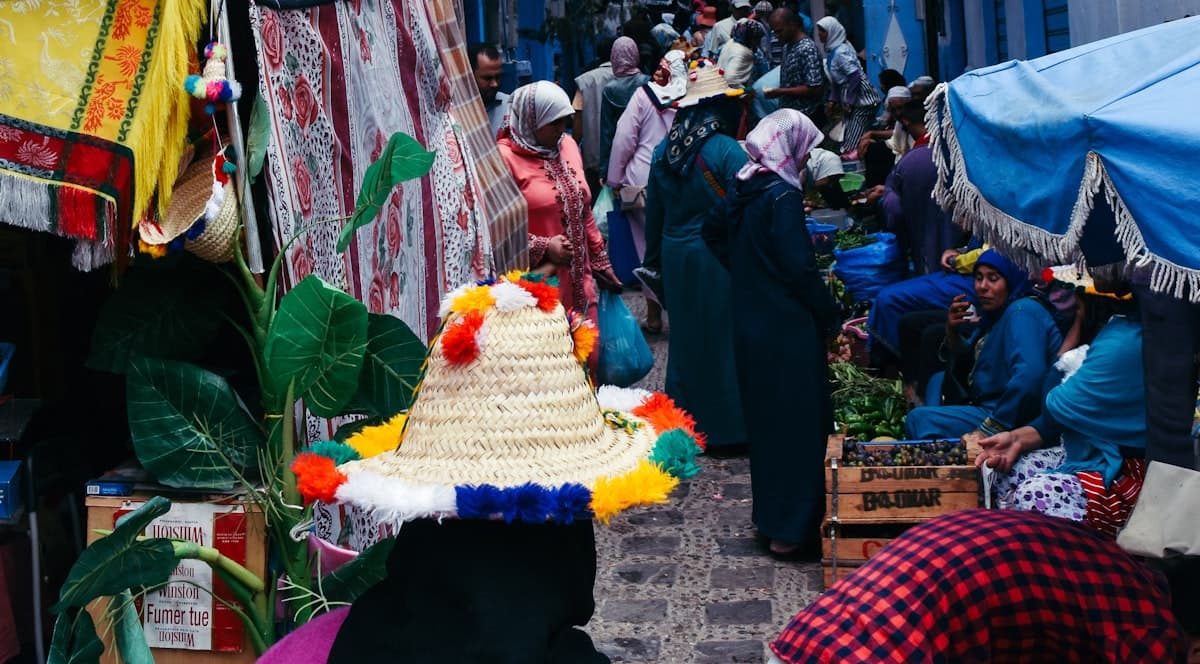
The week surrounding the mawlid of Sidi Ibrahim Dessuqi generates a micro-economy that has no equivalent in most Egyptian cities of Dessuqi's size, which is about 120,000 people in ordinary times. Pilgrims arrive from Upper Egypt, from the Delta villages, from Alexandria, from Cairo, and from abroad. The streets surrounding the shrine fill with a specific mawlid marketplace: sugar figures molded into horses and riders (a tradition connected to Sufi symbolism of the spiritual journey), stalls selling recorded dhikr cassettes and USB drives, herbalists offering what they describe as baraka-charged remedies blessed by proximity to the tomb, and food vendors whose lamb and rice dishes scale to feed tens of thousands per day.
The economic structure of Egyptian mawlids is more organized than it appears. Tent cities are negotiated weeks in advance between Sufi order hierarchies and municipal authorities. Specific Sufi brotherhoods own specific sections of the festival ground by long tradition, a territorial arrangement that functions like a trade fair floor plan. The Dessuqiyya order occupies the space immediately adjacent to the mosque. Other orders, including branches of the Shadhiliyya and Rifaiyya, set up their own areas, each with distinct musical and chanting styles.
The Saint's Library and the Overlooked Archive
Most visitors to the shrine, including most Egyptian pilgrims, do not know that the mosque complex houses a manuscript library containing medieval Sufi texts, some of which are attributed directly to Ibrahim Dessuqi. The collection is not open to casual visitors, but scholars with institutional affiliation can apply through the Egyptian Ministry of Awqaf (Religious Endowments) for supervised access. The existence of this library is significant because very few of the great Egyptian Sufi shrines retain primary textual archives. Most manuscripts from this period ended up in Cairo's Dar al-Kutub or were dispersed entirely. That Dessuqi retains any is a function of the continuity of the order itself: the Dessuqiyya has maintained an unbroken chain of local custodians since the fourteenth century.
Also overlooked: the small Coptic church of Mar Girgis (Saint George), located approximately 400 meters from the shrine. Its congregation has existed in Dessuqi since at least the medieval period, and the relationship between the Christian and Muslim communities during mawlid season is one of the more quietly remarkable things in the Delta. Coptic families sometimes attend the perimeter of the mawlid out of neighborhood solidarity. This is not an interfaith project. It is simply what has happened in this city for centuries.
The Connections
Ibrahim Dessuqi lived during the Bahri Mamluk Sultanate, a period when Egypt was ruled by an elite caste of slave-soldiers who had converted to Islam, primarily Kipchak Turks from the Eurasian steppe. The sultan during much of Dessuqi's life was Qalawun, who built the hospital-mosque-mausoleum complex in Cairo that still stands on al-Muizz Street. Qalawun's complex was completed in 1285 CE, eleven years before Dessuqi's death. The two institutions, the Cairene hospital of a Mamluk sultan and the Delta shrine of a Sufi saint, represent the two poles of thirteenth-century Egyptian religious and civic life: state power expressing itself through architectural patronage, and popular spirituality expressing itself through pilgrimage and devotion.
The Dessuqiyya order later spread into sub-Saharan Africa partly through the trade routes that ran along the Nile through Nubia into Sudan and beyond. The Sudanese branch of the order, called the Burhaniyya after one of Dessuqi's titles, became a significant religious force in the twentieth century and currently claims hundreds of thousands of adherents in Sudan, Ethiopia, and Germany, where a substantial Sudanese diaspora community maintains Burhaniyya practice. A shrine in a small Delta city is therefore connected, by an unbroken institutional thread, to Sufi gatherings in Frankfurt.
Common Mistakes
Arriving without understanding the lunar calendar. The mawlid date shifts by approximately eleven days each solar year. If you are planning to visit during the festival, verify the exact dates through the Egyptian Ministry of Awqaf website or through local Sufi order contacts at least two months in advance. Many visitors arrive a week early or late.
Attempting to photograph the hadra ritual. Cameras and phones directed at participants during the hadra are genuinely unwelcome, not merely frowned upon. The ritual is a form of private devotion conducted in a communal space. The correct posture is a phone in your pocket.
Treating the visit as a stop on a monuments tour. The shrine is not a monument. It is an active religious site that happens to be visitable. The mindset required is closer to attending a church service as a respectful outsider than to touring Karnak. Dress modestly. Women should bring a headscarf. Men in shorts will be asked to borrow a wrap from the caretakers.
The contrarian take: do not hire a guide for this site. Every guide who offers their services outside the shrine will present you with a folkloric version of the saint's biography that flattens what is actually interesting about him. The Dessuqiyya order's own published literature, available in Arabic at stalls near the mosque for about EGP 20-40, is more accurate and more illuminating. If you read Arabic at any level, buy the short hagiography. If not, the experience of the shrine speaks more plainly without a mediator.
Underestimating travel time from Cairo during mawlid week. The roads into Dessuqi congest dramatically in the final three days before the main ceremony. Add two hours to any journey estimate if you are arriving by road during peak mawlid days.
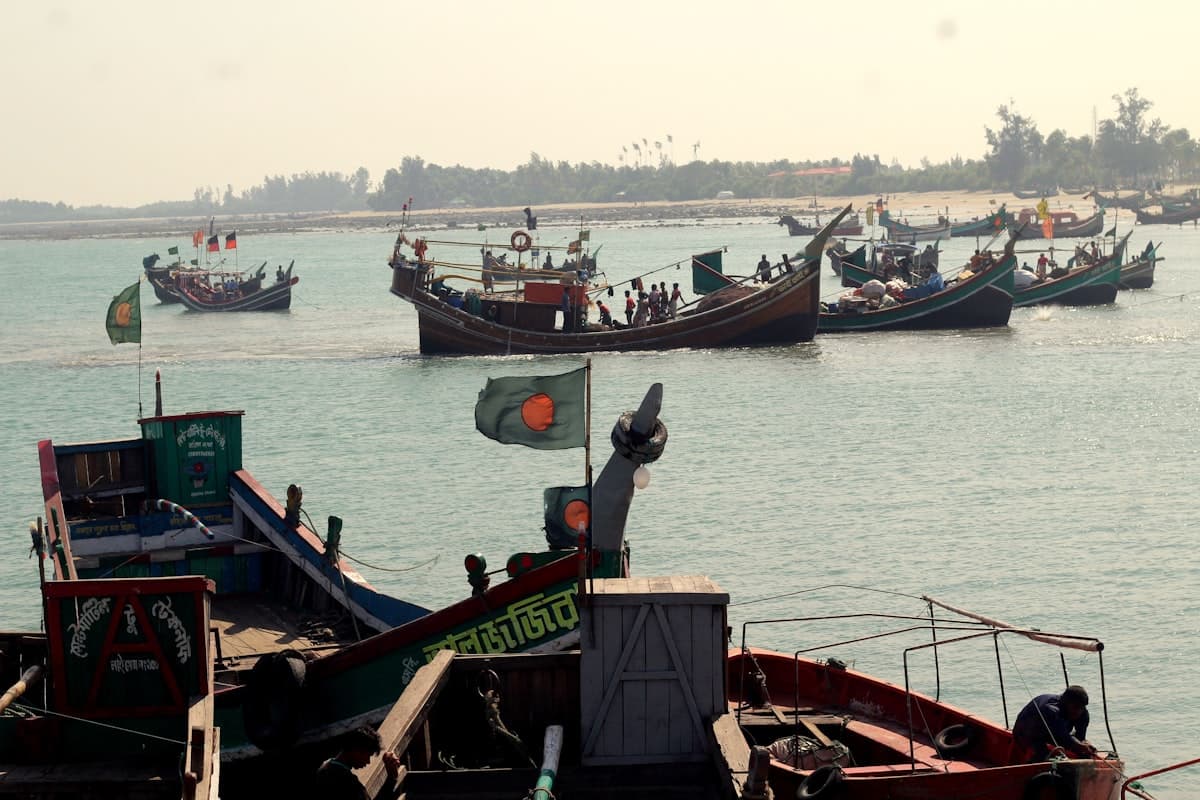
Ignoring the surrounding Delta town. The Corniche along the Nile branch has a quality of Delta light in late afternoon that is specific to this latitude and landscape: flat, wide, slightly silver, utterly unlike anything in Upper Egypt or Cairo. The fishing boats that work this section of the Rosetta branch are a working reality, not a scenic prop.
Skipping the surrounding streets in favor of the shrine interior alone. The quarter surrounding the mosque is where you understand the shrine's relationship to the city. The fabric shops, the small seminaries, the tea houses where older members of the order sit after morning prayers: these are the actual context of what you saw inside.
Practical Tips
Dessuqi has limited accommodation, and during mawlid week, whatever exists books out weeks in advance. Most Egyptian pilgrims sleep in the tent cities established by their Sufi orders. If you want a private room during mawlid, book accommodation in Kafr el-Sheikh city (15km away) and commute in by microbus or service taxi.
The food situation near the shrine during ordinary times is basic but good: ful medames, ta'ameyya, kofta grilled on street braziers, and Delta-style fish brought in from the Mediterranean coast an hour north. During mawlid, the food economy expands enormously and standards vary. The lamb dishes served from large communal pots by Sufi orders to pilgrims are typically excellent and often free, offered as an act of religious generosity.
Water: bring your own if you are sensitive to tap water. The Delta water supply is not consistently filtered to international tourist standards.
For non-Arabic speakers, the shrine caretakers (called khuddam) are accustomed to curious visitors and are generally patient. A few words of Arabic courtesy open significant goodwill. Learning to say "ziyara" (pilgrimage visit) rather than "siyaha" (tourism) frames your presence in a way that is received well.
Safety is not a concern in Dessuqi under ordinary circumstances. The city is a pilgrimage town with centuries of experience managing large, devout crowds. During mawlid, the sheer density of people requires standard urban caution around your valuables, nothing more.
Frequently Asked Questions
The Weekly Dispatch
More on Egypt, every Friday.
Cultural depth and places most guides never mention.
No spam. Unsubscribe anytime.