Sidi Ibrahim Dessuqi Shrine Guide: Egypt's Living Mawlid Capital
Four million pilgrims visit Dessuqi each year. Most Egyptians have cried there. Most foreign travelers have never heard of it. That gap is the whole story.

Quick Facts
- Best time to visit
- October to March for comfortable Delta weather. The annual mawlid in Sha'ban (six to eight weeks before Ramadan) for the full pilgrimage experience, but requires advance planning.
- Entrance fee
- Free. No tickets, no booking system.
- Opening hours
- Mosque open daily approximately 5am to 11pm. Tomb chamber accessible most of the day with brief disruptions around prayer times.
- How to get there
- East Delta bus from Cairo Turgoman station to Kafr el-Sheikh: EGP 60 to 80 (approx $1.50 to $2 USD). Microbus Kafr el-Sheikh to Dessuqi: EGP 10 to 15. Total journey: 3 to 4 hours from Cairo.
- Time needed
- 2 to 3 hours for the shrine complex. Full day if combining with city exploration and Delta street food.
- Cost range
- Budget EGP 150 to 300 for a day trip from Cairo including transport and food. Overnight stay in Dessuqi adds EGP 200 to 400 for basic accommodation.
Quick Facts
Best time to visit: The annual mawlid (Prophet's birthday celebration specific to the saint) falls in the month of Sha'ban on the Islamic calendar, roughly six to eight weeks before Ramadan. This is when Dessuqi becomes something else entirely. Outside the mawlid, the shrine is open year-round and far less overwhelming.
Entrance fee: Free. The shrine complex, the mosque, the courtyard, all of it. There is no ticket window because this is not a museum.
Opening hours: The mosque is open daily from approximately 5am to 11pm, with brief closures around prayer times for non-Muslims. The inner sanctuary around the tomb itself is accessible most of the day but expect crowds from mid-morning onward.
How to get there: Dessuqi (also spelled Desouk or Desouq) is a city in Kafr el-Sheikh Governorate in the Nile Delta, about 185 kilometers northwest of Cairo. From Cairo's Turgoman bus station, buses to Kafr el-Sheikh city depart regularly and cost roughly EGP 60 to 80 (under $2 USD). From Kafr el-Sheikh, a microbus or taxi to Dessuqi costs EGP 10 to 20. The journey from Cairo takes three to four hours depending on Delta traffic, which is never predictable.
Time needed: Two to three hours for the shrine complex itself. A full day if you want to absorb the surrounding market streets, speak to pilgrims, and eat at one of the kushary or ful stalls that exist in the orbit of every major Egyptian shrine.
Cost range: This is genuinely one of the cheapest significant cultural experiences in Egypt. Budget EGP 150 to 300 for transport from Cairo, food, and any charitable giving inside the shrine. There is nothing to buy except experience.
---
Why This Place Matters
Sidi Ibrahim Dessuqi was born in the city of Dessuqi in 1255 CE and died there in 1296. He was a Sufi sheikh who founded the Burhaniyya order, one of the four major Sufi brotherhoods recognized in Sunni Islam, alongside the Rifa'iyya, Ahmadiyya, and Badawiyya orders. The Burhaniyya is the only one of the four whose founder was Egyptian by birth, which is a fact that carries enormous weight among his followers. The other great saints, Ahmad al-Badawi in Tanta and Sayyid al-Mursi in Alexandria, came from elsewhere. Dessuqi is Egypt's own.
His full name was Ibrahim ibn Abi al-Majd Abd al-Aziz al-Dessuqi, and his lineage is traced, as with most major Islamic saints, back to the Prophet Muhammad through the Hussayni line. Whether you read this genealogy as spiritual or political or simply as an organizing principle for popular devotion, the effect in practice is the same: the shrine draws an estimated four million visitors annually, making it one of the most visited religious sites in Egypt that most international travel guides do not list at all.
The city of Dessuqi grew around the shrine. This is not metaphor. The medieval urban core of the city organized itself in concentric rings from the mosque, as was common in Islamic urban planning from Morocco to Iran. Shrines were not additions to cities. They were often the reason cities existed.
What Sufism Actually Is Here
The word Sufism gets flattened in Western contexts into something vaguely mystical and photogenic, whirling dervishes for Instagram. At the Sidi Ibrahim Dessuqi shrine, it is a working, daily practice with specific obligations and specific hierarchies. The Burhaniyya order has active branches in Sudan, Germany, and the United States. Followers (murids) undertake a formal initiation, recite specific litanies (wird) at set times, and report to a chain of teachers that terminates, symbolically, at the tomb in Dessuqi.
The annual mawlid here is not a carnival that happens to have a religious name. It is one of the largest Sufi gatherings in the Arab world, with dhikr circles (rhythmic group chanting of God's names) that run through the night, processions by different orders wearing their distinctive colors, and the specific, intense atmosphere of mass collective devotion that you will not find anywhere that charges an admission fee.
---
What You Will Actually See
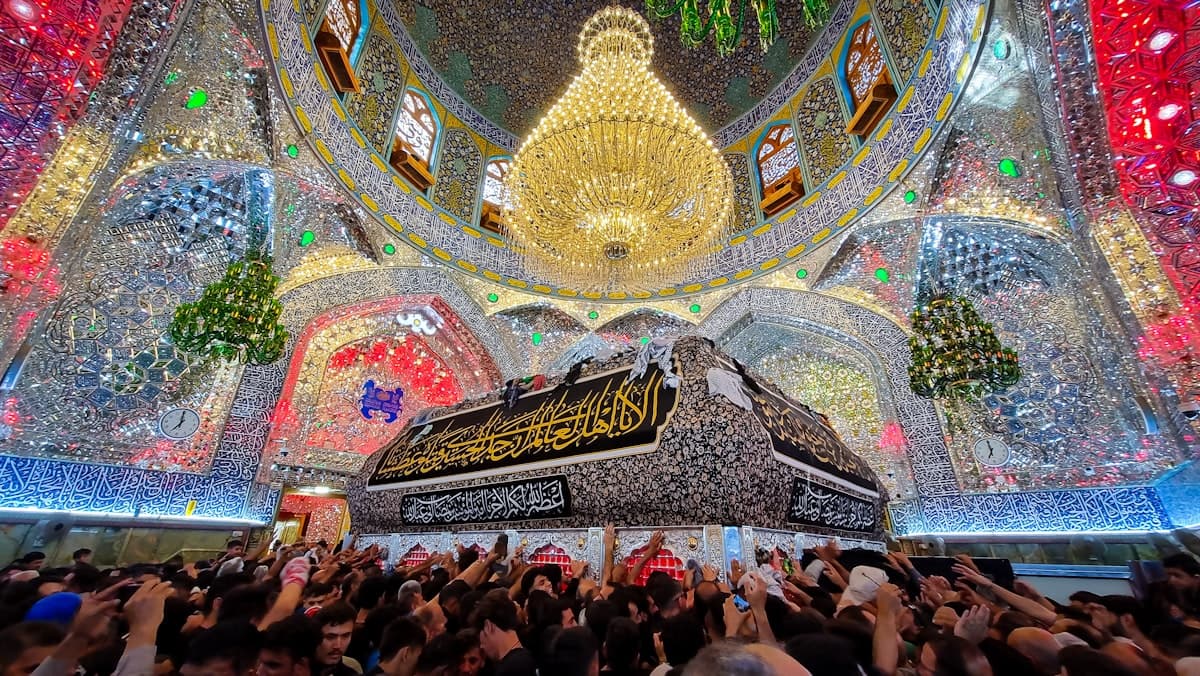
The shrine complex is anchored by a large mosque with a distinctive Ottoman-inflected mausoleum chamber. The current structure is not medieval. The original tomb was rebuilt and expanded multiple times, most significantly under Ottoman-era patronage and again during the twentieth century. What you are walking into is a living building, not a preserved one, which means the floors are clean marble, the lighting is fluorescent, and the walls are covered in the kind of green cloth and calligraphy that active Islamic shrines accumulate over centuries of gifting and renovation.
The tomb chamber itself sits at the qibla end of the mosque. Non-Muslim visitors are generally permitted to enter the outer areas and often the tomb precinct itself, though this depends on crowd levels and the mood of the day. The correct behavior is to enter quietly, do not photograph inside without explicit permission, and understand that the people around you are not performing for visitors. They are doing something private in a public space, which is its own kind of thing to witness.
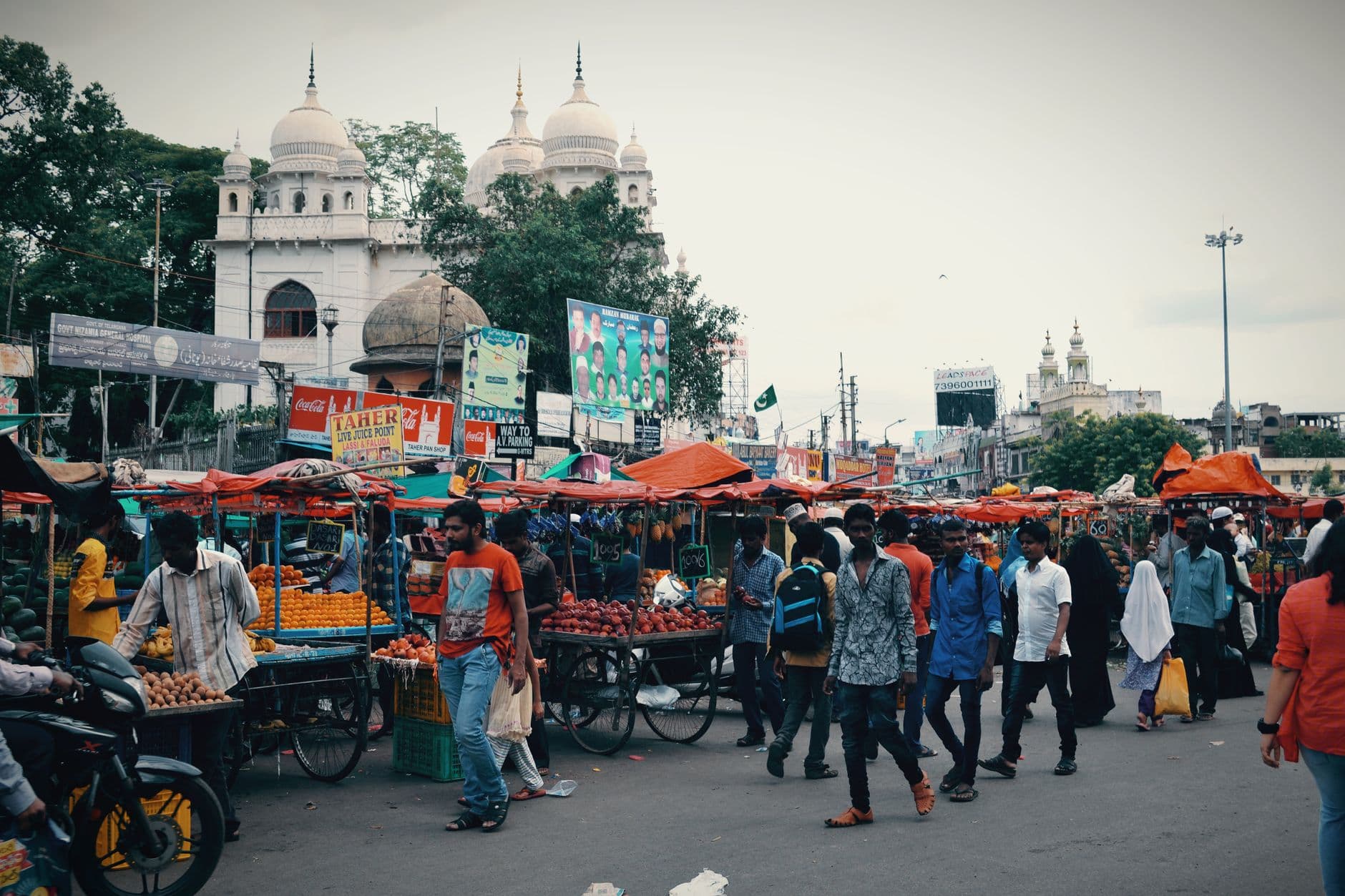
Outside the mosque, the courtyard and surrounding streets during the mawlid transform into a weeks-long gathering. Food stalls, sweet sellers, stalls selling beads and prayer items, families who have traveled from Upper Egypt and the Delta and Sudan, children asleep on blankets, men in the green robes of the Burhaniyya order. The sensory register is specific: frying oil, incense coming in waves from the mosque entrance, the particular percussion of the frame drums used in dhikr, and underneath all of it, the smell of the Nile, because Dessuqi sits on its western branch.
The People Who Come Here
The pilgrimage sociology of the Sidi Ibrahim Dessuqi shrine tells you something that no temple or museum in Egypt can. The visitors are overwhelmingly Egyptian, largely working class, and frequently arriving after long overnight journeys by microbus or third-class train from the Delta villages and Upper Egyptian towns. For many families, the annual mawlid visit is a multi-generational ritual that predates anyone alive today.
There is also a significant Sudanese presence, because the Burhaniyya order has deep roots in northern Sudan, where it was brought by followers of the order in the nineteenth century. You will hear Sudanese Arabic and see women in Sudanese dress, and this is a reminder that the religious geography of the Nile Valley does not follow modern national borders. Egypt's Islamic heritage was never contained within Egypt's political lines.
A specific detail that most visitors miss: along the walls near the tomb, you will see written petitions and votive offerings. These are not unlike the practice at Coptic saint shrines a hundred kilometers in any direction, or the practice at ancient Egyptian oracle temples three thousand years earlier. The human impulse to bring a problem to a holy place and leave it there is one of the longest continuous threads in Egyptian religious history.
---
The Connections
The Burhaniyya order that Sidi Ibrahim Dessuqi founded in the thirteenth century was contemporary with the Mamluk sultanate that ruled Egypt from Cairo. The Mamluks were military slaves, mostly Turkic and Circassian, who seized power from the Ayyubids in 1250. They were simultaneously the patrons of monumental Islamic architecture in Cairo and the political context in which Delta Sufism flourished. The sultans needed the legitimacy that popular saints provided. The saints needed the political stability that allowed their orders to grow. This was never a simple transaction, but it was always a transaction.
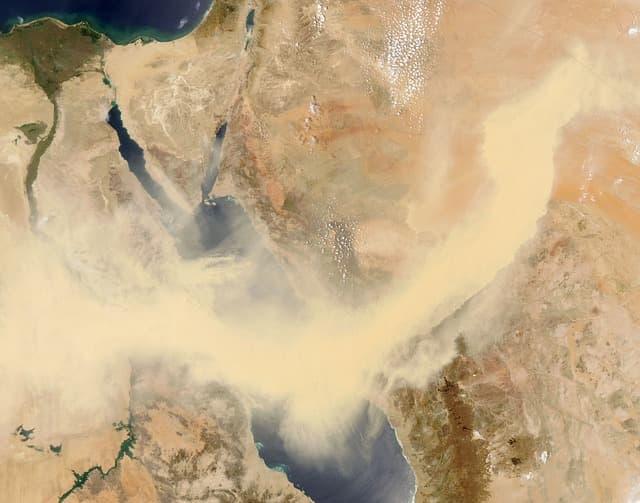
The city of Dessuqi itself sits in the Nile Delta, which in Pharaonic geography was the land of Lower Egypt, the place of papyrus and the north wind and the crown of red. The Delta was the breadbasket, the entry point for Mediterranean trade, and the region most frequently invaded and most frequently absorbed foreign populations. When Alexander arrived in 332 BCE, he entered through the Delta. When the Arab Muslim armies arrived in 641 CE, they entered through the Delta. The Sufi shrine city of Dessuqi is built in a landscape that has been absorbing and transforming outside influence for five thousand years. The shrine is one more layer.
A connection that almost nobody mentions: the Delta was also the heartland of Coptic Christianity before Islam. The monasteries of Wadi el-Natrun, still active today, are 80 kilometers southeast of Dessuqi. Saint Menas, whose pilgrimage city of Abu Mena once drew hundreds of thousands of Christian pilgrims from across the Mediterranean world in the fifth century, is buried 60 kilometers to the northwest. The Delta landscape of mass pilgrimage and saint veneration predates Islam in this specific geography by several centuries. Forms of devotion do not disappear when religions change. They migrate.
---
Common Mistakes
Coming only during the mawlid without preparation. The mawlid is the right time to come if you want the full experience, but it requires specific preparation: accommodation in Dessuqi or nearby Kafr el-Sheikh books out weeks in advance. Arriving without a reservation during mawlid season means sleeping on a bus or paying three times the normal rate for whatever is left.
Treating the shrine as a photo opportunity. The interior of the tomb chamber is not a backdrop. Photography inside the mosque, and especially near the tomb, is technically permitted in some areas but deeply inappropriate in others, and the line shifts depending on crowd density and the emotional temperature of the room. If you are visibly photographing someone in the middle of devotion, you have misread the situation. Put the camera away and watch with your eyes.
Skipping the surrounding city. The shrine market streets of Dessuqi contain some of the best Delta street food in Egypt, specifically the local variety of ful medames cooked with extra ghee and served with pickled vegetables that you will not find identically prepared anywhere else. Eating at the stalls around the shrine is not a tourist activity. It is what people do after visiting.
The sound and light show does not exist here, which is the point. The absence of any official tourism infrastructure at the Sidi Ibrahim Dessuqi shrine is not an oversight. It is what the place is. If you arrive expecting signage, audio guides, or English-language placards, you will be disappointed and you will have misunderstood what you came to see. Bring a willingness to ask questions and a working knowledge of basic Arabic greetings. Even a phonetic "as-salamu alaykum" opens more doors than any pamphlet.
Ignoring the outer courtyard gatherings. Most visitors go directly to the tomb chamber and leave. The dhikr circles that form in the courtyards and surrounding streets, especially in the evenings, are often more illuminating than anything inside the building. These are not performances. They are the practice. Stand at a respectful distance and listen.
Coming on a Friday afternoon. Friday prayers bring the largest regular weekly crowds, and the combination of sermon, prayers, and post-prayer visitation means the tomb area is essentially inaccessible for several hours. If you want relative quiet, Tuesday or Wednesday morning is your best option.
Assuming this is off the tourist circuit because it is obscure. It is not obscure. Four million people visit annually. It is off the international tourist circuit because international tourism in Egypt has been entirely colonized by the Pharaonic narrative. The shrine does not need your attention. But you are likely to find it more affecting than the Sound and Light show at Giza, which costs EGP 350 and tells you nothing that a good book would not.
---
Practical Tips
Dress conservatively regardless of gender. Women should cover hair inside the mosque; shoulders and knees should be covered for everyone. This is not a negotiable cultural preference. It is a condition of entry to an active house of worship.
The best Arabic phrase to know is "ziyara" (visit, pilgrimage), which signals your purpose and tends to generate goodwill. "Mumkin ashoof al-maqam?" (May I see the tomb?) is understood and usually answered with a gesture toward the entrance.
If you travel from Cairo, the most reliable option is the East Delta bus company from Turgoman station. Buy the ticket the day before during mawlid season. The train from Ramses to Kafr el-Sheikh exists but involves a change and adds an hour.
There are basic hotels in Dessuqi city center, priced between EGP 200 and 400 per night (approximately $4 to $8 USD), which reflects the local rather than tourist economy. They are clean, simple, and entirely functional. There is no hotel near the shrine that caters to international travelers, which is correct.
Bring water. The Delta in summer is humid in a way that Cairo is not, and the crowds inside the shrine complex generate their own heat. The vendors outside sell cold water and fresh sugarcane juice at prices that have not tracked inflation because competition is fierce and the clientele is local.
Frequently Asked Questions
The Weekly Dispatch
More on Egypt, every Friday.
Cultural depth and places most guides never mention.
No spam. Unsubscribe anytime.