Sidi Ibrahim Dessuqi Shrine Guide: Egypt's Living Moulid Capital
Four million Egyptians descend on Dessuqi each year for a moulid the government once tried to ban. The saint never left. Neither did the crowds.

Quick Facts
- Best time to visit
- October to March for comfortable weather. The moulid in Shaaban (varies annually, roughly January to April depending on the year) for the full pilgrimage experience.
- Entrance fee
- Free. No ticket required for the shrine, mosque, or maqam.
- Opening hours
- Daily approximately 5am to midnight. Tomb chamber may have restricted access during Friday prayers.
- How to get there
- Microbus from Cairo Turgoman station: EGP 60 to 80, approximately 2.5 hours. Shared taxi from Alexandria: EGP 50 to 70, approximately 1.5 hours. Tuk-tuk from city drop-off to shrine: EGP 10 to 15.
- Time needed
- 2 to 3 hours for the shrine and immediate surroundings. Full day if adding the Nile corniche, fish market, and surrounding old city neighborhoods.
- Cost range
- Budget EGP 300 to 500 per day in Dessuqi. Accommodation base in Kafr el-Sheikh: EGP 800 to 1,400 per night mid-range.
[Sidi Ibrahim Dessuqi Shrine Guide](https://feluccas.com/attractions/sidi-ibrahim-al-dessuqi-shrine-a-complete-cultural-guide): Egypt's Living Moulid Capital
Four million people travel to the small Delta city of Dessuqi every year to visit a man who died in 1288. The Egyptian government has, at various points in the past century, attempted to suppress the mass gathering around his tomb, calling it superstition, a public health hazard, a drain on the transport system. The gathering survives every objection. Ibrahim al-Dessuqi is one of the four qutbs of Sunni Islam, meaning the four spiritual poles around whom the entire mystical order of the world is understood to rotate. Telling Egyptians to stop visiting his shrine is roughly equivalent to telling them to stop breathing. This is not metaphor. This is theology, lived publicly, in a Delta city most foreign visitors have never heard of.
Quick Facts
Best time to visit: The annual moulid falls in the month of Shaaban, the month before Ramadan in the Islamic calendar. The specific dates shift each Gregorian year. Outside the moulid, visit between October and March to avoid Delta summer humidity.
Entrance fee: Free. The shrine complex is open to all, with no ticket system. The mosque itself is free of charge at all hours.
Opening hours: The mosque is open daily from approximately 5am to midnight. The inner sanctum near the maqam (tomb) keeps similar hours but may be more restricted during Friday prayers and peak moulid days.
How to get there: From Cairo, take a direct microbus from Turgoman station toward Kafr el-Sheikh governorate, asking for Dessuqi city. Journey time is roughly two to two and a half hours. Cost is approximately EGP 60 to 80. From Alexandria, shared taxis leave from Midan el-Gomhoreya toward Dessuqi; the trip takes about 90 minutes and costs EGP 50 to 70. Do not rent a car during the moulid period. Parking becomes effectively impossible within four kilometers of the shrine.
Time needed: Two to three hours for the shrine and immediate surrounding neighborhood. A full day if you intend to experience the market streets, the dhikr circles, and the tea houses along the Rosetta branch of the Nile, which runs directly through the city.
Cost range: Budget EGP 300 to 500 per day in Dessuqi, covering food, transport, and tea. There is no luxury accommodation in the city itself. Most visitors who want a comfortable base stay in Kafr el-Sheikh, 25 kilometers south, where mid-range hotels run EGP 800 to 1,400 per night.
Why This Place Matters
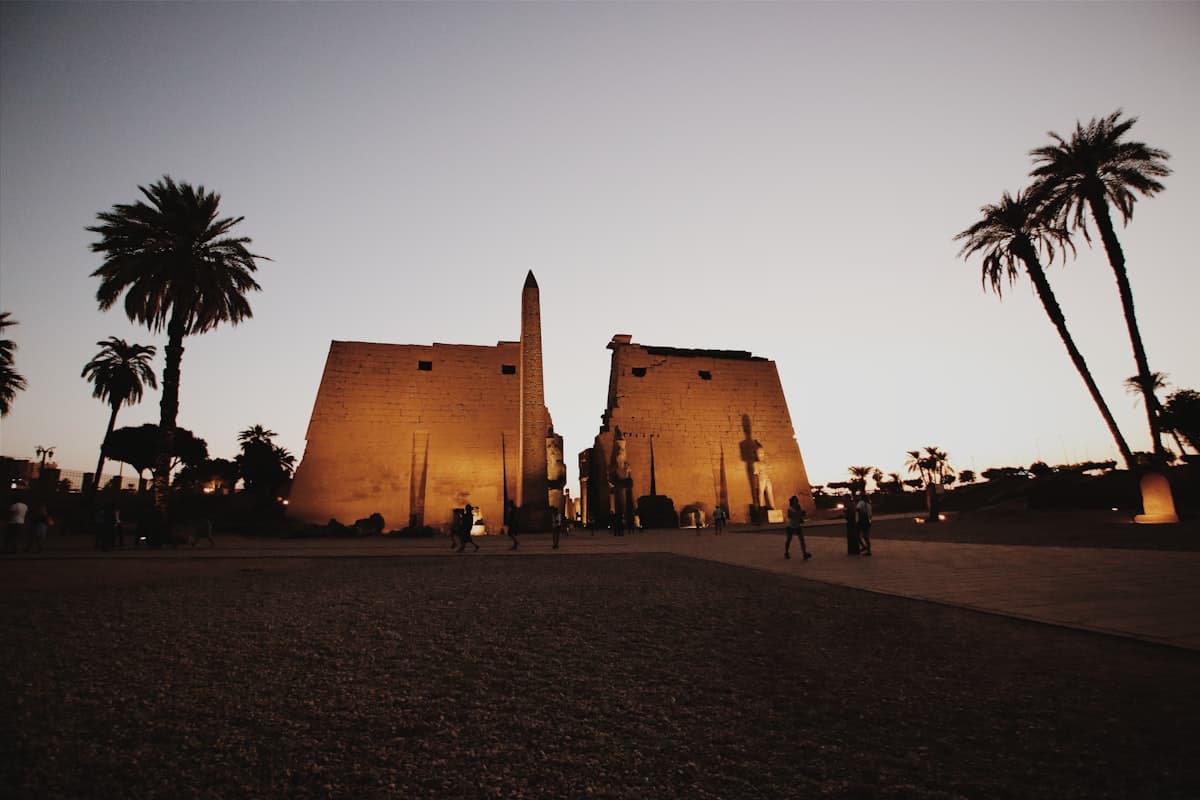
Ibrahim al-Dessuqi was born around 1255 in this same Delta city, then known simply as Dessuq, a market town on the Rosetta branch of the Nile. He died at approximately 33 years old, which makes the scale of his subsequent veneration even more extraordinary. He founded the Dessuqiyya Sufi order, also called the Burhaniyya, which spread across Egypt, Sudan, and eventually into parts of West Africa. Today the order claims initiates in more than forty countries, which means a saint who spent his entire short life in one Delta city now has followers in Berlin, Khartoum, and São Paulo.
The designation of four qutbs in Sufi cosmology is not a small claim. The four poles are understood to be the spiritual anchors of creation: the other three are Abd al-Qadir al-Jilani in Baghdad, Ahmad al-Badawi in Tanta, and Ahmad ibn Idris in Fez. Dessuqi is the only one of the four whose shrine sits in Egypt, which goes some distance toward explaining why his moulid rivals that of al-Badawi in Tanta in scale, though Tanta typically draws more international attention from travel writers.
What most visitors do not know is that the land beneath the shrine mosque has a stratigraphy going back well before Islamic settlement. The Rosetta branch of the Nile was a major commercial artery in Ptolemaic and Roman times, and Dessuq sat along trade routes that connected the Mediterranean coast to the interior Delta. The current mosque, rebuilt and expanded multiple times since the 13th century, incorporates foundation stonework that local historians date to a much earlier structure. This layering, Roman commercial geography underneath a medieval Islamic shrine, is characteristic of Delta cities generally, but Dessuqi makes it unusually legible in the urban fabric around the mosque.
What You Will Actually See
The shrine complex centers on a large mosque with a distinctive green dome visible from most approaches into the city center. The dome signals the maqam below it: the tomb chamber of Ibrahim al-Dessuqi himself, which sits beneath the mosque floor in the manner of many Egyptian saint shrines. You approach through a courtyard that on ordinary days feels calm and provincial, with pigeons on the minaret and old men drinking tea on stone benches. During the moulid, that same courtyard holds several thousand people at any given hour, the sound layered with dhikr chanting, vendors selling sugar-cane juice, and the particular percussion of Sufi tambourines called tar.
The interior of the mosque is older in feel than its renovated exterior suggests. The prayer hall contains carved wooden screens, called mashrabiyya, that date to Ottoman-era restorations in the 17th century. The tomb chamber proper is draped in green and gold cloth, and the silver grille around the maqam is touched continuously by visitors who press their palms against it and move their lips in private petition. This practice, called tawassul, asking a saint to intercede with God on your behalf, is the theological heart of the entire pilgrimage tradition and also the point that has made Egyptian Salafi movements deeply uncomfortable with moulid culture for decades.
The neighborhood immediately surrounding the mosque repays attention. The streets to the north and east contain workshops producing the specific religious goods used in moulid celebration: banners with the saint's name in calligraphy, small framed portraits of Ibrahim al-Dessuqi in the style that blends Ottoman miniature tradition with 20th-century Egyptian vernacular painting, strings of colored lights, and the hand-sewn Sufi banners in the colors of the Dessuqiyya order, which are green and white.
The Moulid Itself
The moulid of Sidi Ibrahim Dessuqi lasts for approximately two weeks, reaching its peak on the Thursday night known as the Leila el-Kebira, the Great Night. On this night, Sufi orders from across Egypt and Sudan process through the streets carrying their banners, following a route that circles the shrine before entering the courtyard for the climactic public dhikr. Egyptian state television covers the event, which has not always been the case: in the 1970s and again in the early 2000s, there were active efforts by religious authorities to reduce the television profile of moulid celebrations on grounds that they promoted practices inconsistent with orthodox Sunni teaching.
The dhikr circles that form in the streets around the shrine during moulid nights are not performances staged for visitors. They are functional religious practice, and the distinction matters. Sufis enter specific breath-and-movement patterns designed to induce a state called hal, a spiritual condition the tradition does not translate as ecstasy exactly, but something closer to absorption. Watching from the edge is entirely acceptable. Photographing without asking is not. This is not a rule anyone will enforce loudly. It is simply a matter of behaving like a person rather than a documentarian.
The Connections
The Dessuqiyya order founded here did not stay in Egypt. It spread into Sudan through 19th-century trade routes, and the Sudanese branch, sometimes called the Burhaniyya after one of Ibrahim's honorifics, became the dominant Sufi order in large parts of Khartoum and Omdurman. This means that if you have ever seen photographs of the famous Friday dhikr at the Hamed el-Nil tomb in Omdurman, one of the most photographed religious events in Africa, you are looking at a direct descendant tradition of what began in this Delta city in the 13th century.
The connection to Ahmad al-Badawi of Tanta is particularly significant for understanding Egyptian Sufi geography. Al-Badawi died in 1276, roughly a decade before Dessuqi. The two saints were contemporaries in the same country, and there is a tradition within Egyptian Sufi oral history that they knew of each other spiritually, meaning through visions and correspondence in the Sufi understanding of spiritual connection rather than physical meeting. The moulid calendar in the Delta runs the two celebrations in close succession in certain years, and families who attend both have been doing so for generations, treating the journey between Tanta and Dessuqi as a single spiritual itinerary.
The Ottoman layer of Dessuqi is also underexamined. The city's commercial importance during the Ottoman period, roughly 1517 through the early 19th century, is visible in the khan structures and market architecture that survive in the old city grid. Ottoman governors in Cairo recognized the shrine's drawing power and invested in the surrounding infrastructure because the moulid meant trade, which meant tax revenue, which meant that practical imperial administration and popular religious practice operated in alignment rather than opposition, a pattern repeated across Ottoman Egypt.
Common Mistakes
Visiting only during the moulid and assuming that is the whole story. The moulid is extraordinary, but the shrine on an ordinary Tuesday in November, with a dozen people in the courtyard and the Delta light low and silver over the river, tells you something about Egyptian religious life that the moulid's crowd cannot. The saint is not only present during the festival.
Skipping the surrounding city entirely. Most visitors treat the shrine as a single-stop destination and leave. The Rosetta branch of the Nile is a ten-minute walk from the mosque. The fish market along the river at dawn operates on a scale and energy that is entirely disconnected from the tourist circuit, and the grilled fish restaurants along the corniche serve Nile tilapia in a way that Cairo's Nile-adjacent restaurants, with their higher prices and tourist menus, cannot replicate. A meal here costs EGP 80 to 120 and is not a lesser version of anything.
Arriving without understanding the basic theology. Tawassul, the practice of seeking intercession through saints, is not the same as praying to the saint. Understanding this distinction before you arrive will help you observe what is actually happening rather than filtering it through assumptions about saint worship. Asking someone nearby to explain what they are doing is almost always welcomed, not resented.
The souvenir portrait photographs are not kitsch. Buy one. The framed portraits of Sidi Ibrahim Dessuqi sold in the streets around the shrine are produced by a vernacular printing and hand-coloring tradition that is genuinely old and rapidly contracting. They cost between EGP 30 and 80. They are among the most interesting religious art objects produced in contemporary Egypt, and they are not available in Khan el-Khalili.
Bringing a tight schedule during moulid week. Road closures, spontaneous processions, and crowd density mean that any plan involving specific arrival times at specific locations will fail. This is not a problem the Egyptian transport system has failed to solve. It is the nature of a four-million-person pilgrimage in a city built for perhaps 150,000.
The organized tours that package Dessuqi with Alexandria in a single day are not worth taking. They allocate roughly 45 minutes at the shrine, which is enough time to take photographs and nothing else. The journey from Alexandria to Dessuqi and back takes four hours minimum. The math does not work, and you will leave knowing less than you would from reading this article. Go independently or do not go.
Practical Tips
Dress conservatively regardless of the season. Women should cover their hair before entering the mosque; scarves are available from vendors outside the entrance if you arrive without one. Men in shorts will be lent a wrap at the door without ceremony, but the wrap is uncomfortable. Wear full-length trousers.
The best accommodation base for most visitors is Kafr el-Sheikh, the governorate capital, where hotel infrastructure is functional if not luxurious. Book well ahead for any dates within ten days of the moulid peak, as rooms fill across the entire governorate.
Bring cash. Dessuqi has ATMs but they are strained during moulid period. Withdraw before you arrive.
If you are traveling from Cairo specifically to experience the moulid, go midweek rather than on the Leila el-Kebira itself. The Great Night is the most intense experience but also the most crowded, with the density making meaningful observation difficult. The dhikr circles on the Tuesday and Wednesday nights before the peak are equally real and considerably more accessible.
The call to prayer from the shrine mosque echoes across the surrounding neighborhood in a way that is noticeably different from Cairo's amplified urban soundscape. Dessuqi's minarets project across open Delta landscape, and at Fajr, the pre-dawn prayer, the sound travels across the Nile surface in a way that is worth waking up for, even if you are not there for religious reasons.
Frequently Asked Questions
The Weekly Dispatch
More on Egypt, every Friday.
Cultural depth and places most guides never mention.
No spam. Unsubscribe anytime.