Sidi Ibrahim Dessuqi Shrine Guide: Egypt's Living Saint City
Four million pilgrims descend on a Delta city each year for a saint born in 1235 who reportedly never left Egypt but whose followers span three continents. Most tourists have never heard of him.

Audio Guide: Sidi Ibrahim Dessuqi Shrine Guide: Egypt's Living Saint City
Quick Facts
- Best time to visit
- October to March for comfortable Delta temperatures. Sha'ban (Islamic calendar) for the Moulid, but book accommodation far in advance.
- Entrance fee
- Free. No admission charge for the mosque or shrine complex.
- Opening hours
- Daily approximately 8am to 10pm. Inner sanctum access varies. Arrive before noon or after 2pm to avoid Friday prayer congestion.
- How to get there
- Bus from Cairo Turgoman station to Dessuq: EGP 80 to 120, approx 3.5 hours. From Alexandria by microbus: EGP 60 to 90, approx 2 hours. Local taxi from Kafr el-Sheikh city: EGP 50 to 80.
- Time needed
- 2 to 3 hours for shrine and market. Full day during Moulid season.
- Cost range
- Budget EGP 200 to 400 per day including transport and local meals. No tourist pricing in the city.
Quick Facts
Best time to visit: October to March for comfortable temperatures; the Moulid of Dessuqi draws the largest crowds in the Islamic month of Sha'ban, which shifts annually
Entrance fee: Free. The shrine complex charges no admission. Donations to the Sufi orders present are voluntary and appreciated.
Opening hours: The mosque and shrine are open daily, roughly 8am to 10pm, though the inner sanctum near the tomb has restricted hours for non-Muslims at many Sufi shrines. Arrive before noon to avoid midday heat and peak crowd density.
How to get there: From Cairo's Turgoman bus station, regular buses run to Dessuq city in Kafr el-Sheikh Governorate; journey time is approximately 3 hours, fare around EGP 80 to 120. From Alexandria, shared microbuses depart from Midan el-Gomhoreya heading toward Kafr el-Sheikh, around EGP 60 to 90 and 2 hours. Taxis from Kafr el-Sheikh city center to the shrine take 20 minutes and cost EGP 50 to 80.
Time needed: 2 to 3 hours for the shrine and surrounding market streets. A full day if you visit during Moulid season and want to witness the Sufi ceremonies properly.
Cost range: Budget EGP 200 to 400 per day including transport, food, and tea. The city itself is not a tourist economy, which means prices are honest.
---
The four poles of the Islamic world, in classical Sufi theology, are four living saints whose spiritual gravity holds creation in balance. Egypt claims one of those poles as its own. Ibrahim al-Dessuqi was born in 1235 in a Delta town most Egyptians have visited and most foreign travelers cannot find on a map. He died there in 1288. He is said to have performed his entire life's work without once leaving the city. Fifty-three years, one city, and a spiritual reputation so vast that his tomb draws more annual pilgrims than the entire visitor count of Luxor's Valley of the Kings.
This is the Sidi Ibrahim Dessuqi shrine, and it is unlike anything else Egypt puts in front of tourists.
Why This Place Matters
Dessuq sits in the Nile Delta, in Kafr el-Sheikh Governorate, on the western branch of the Nile that the ancient Egyptians called the Rosetta branch. The land here has been continuously inhabited since at least the Late Period of Pharaonic history. What is now a mid-sized provincial city was once within reach of Sais, capital of the 26th Dynasty, whose kings ruled Egypt from 664 to 525 BC and sponsored a cultural revival so deliberate it produced near-perfect copies of Old Kingdom art two thousand years after the originals. The Delta was not a backwater in ancient Egypt. It was where power lived.
Ibrahim al-Dessuqi was born into this layered place during the Mamluk Sultanate, when Egypt was governed by an extraordinary system: a military caste of men who had been enslaved as children, primarily from the Caucasus and Central Asia, converted to Islam, trained as warriors, and then freed upon reaching military adulthood. The Mamluks ruled Egypt from 1250 to 1517 and built more of Cairo's surviving medieval architecture than any other dynasty. Dessuqi lived through the foundational decades of that era, and his Sufi order, the Burhaniyya Dessuqiyya, became one of the four major Sufi orders recognized across the Sunni Islamic world, alongside the Qadiriyya, the Naqshbandiyya, and the Shadhiliyya.
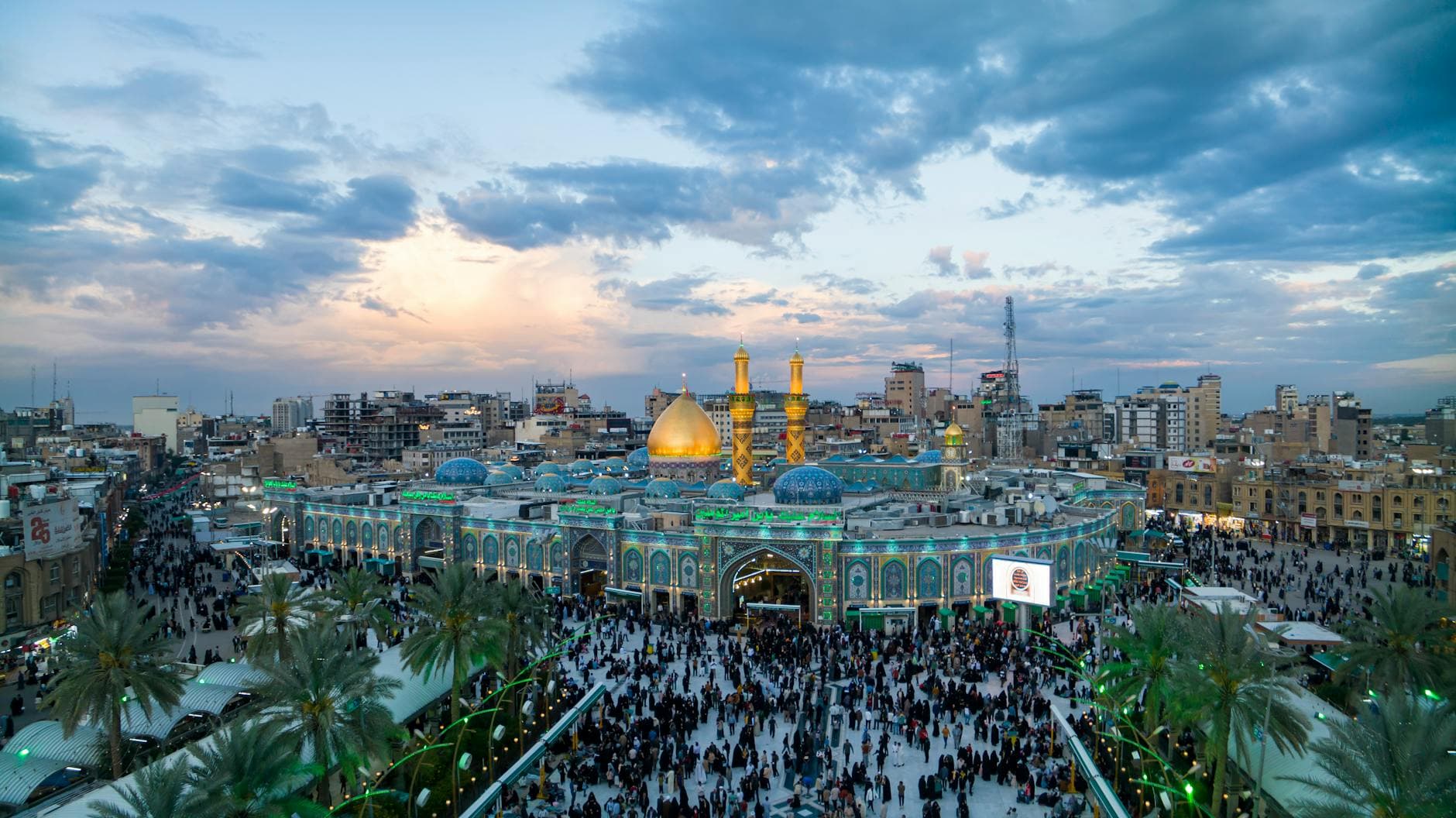
The shrine as it stands today is not 13th century. It has been rebuilt, expanded, and restored multiple times, most significantly during the Ottoman period and again in the 20th century. What you see architecturally is a palimpsest: green-domed Sufi shrine idiom layered over centuries of reconstruction, surrounded by a mosque complex that holds daily prayers for the city's population as well as the constant stream of pilgrims. The building is less important than what it generates.
What You Will Actually Experience
Walking toward the shrine from Dessuq's central market, you pass through a street economy that exists entirely because of Ibrahim al-Dessuqi. Sellers of religious texts, prayer beads made from amber-colored resin, printed portraits of the saint with his characteristic green turban, incense sold loose from cloth sacks. The smell shifts from diesel and fried bean oil to something denser and sweeter about fifty meters from the entrance: oud wood resin and frankincense, both of which have been burned in Egyptian religious spaces since the Pharaonic period. The continuity is not symbolic. Frankincense was among the goods traded along the Red Sea routes that Egyptian rulers controlled for three thousand years, and it never stopped being sacred here regardless of which faith was burning it.
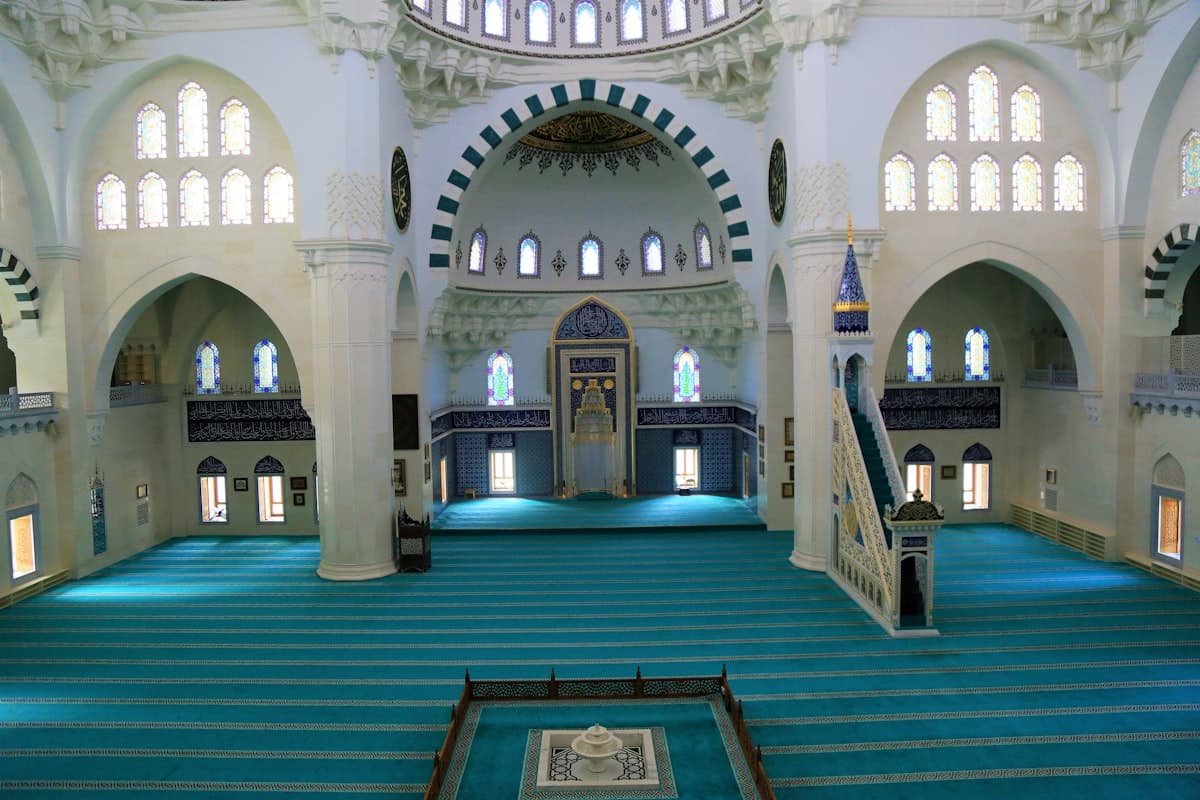
Inside the mosque, the scale surprises. The main prayer hall is large enough to absorb several hundred worshippers simultaneously, and during non-prayer hours it fills with a different kind of visitor: people who have come to sit near the saint. Women in black abayas with children. Old men fingering prayer beads in corners. Groups of young men from rural Upper Egypt who have made this journey as part of a tradition their grandfathers also kept. The atmosphere is not solemn in the way that European cathedrals are solemn. It is active and conversational, even at the tomb enclosure.
The tomb itself is enclosed in a structure with a green dome visible from a considerable distance. Access to the immediate area of the tomb is gender-separated during peak hours, with women directed to a separate entrance on the side. This is common across Egyptian Sufi shrines and worth knowing in advance. Non-Muslim visitors are generally permitted to observe from the outer areas of the mosque, though entering the tomb chamber directly depends on the day, the crowd, and the discretion of the shrine's custodians. If you are uncertain, ask. Shrine staff here are accustomed to respectful curiosity.
The Moulid: What It Actually Is
The annual Moulid of Dessuqi is one of the largest religious festivals in Egypt, a country that holds more moulids per year than any other in the Arab world. Egypt has documented over 3,000 active moulids annually, celebrations of saints' birthdays that blend Islamic devotion with practices far older than Islam, including communal feasting, music, and the kind of trance-inducing rhythmic chanting called dhikr that Sufi orders have refined over eight centuries.
During the Dessuqi Moulid, held in the Islamic month of Sha'ban, the city's permanent population of roughly 80,000 absorbs several times that number. Sufi orders from across Egypt, Sudan, Libya, and as far as Senegal and Nigeria set up tents around the shrine precincts. Each order wears its own distinctive colors and performs its own variant of dhikr. The Rifa'i order, known for performances involving fire and blade, is often present. The Burhaniyya, the order founded by Dessuqi himself, leads the central ceremonies.
Attending the Moulid as a non-Egyptian visitor requires preparation and genuine respect. This is not a performance staged for tourism. It is a living religious practice that happens to be open to observation. The correct posture is quiet, peripheral, and camera-restrained. Ask before photographing anyone.
The Connections
The Sidi Ibrahim Dessuqi shrine belongs to a chain of sacred geography that runs the length of Egypt and predates Islam by millennia. The ancient Egyptians organized their landscape around nodes of divine presence: temples where a god was believed to actually inhabit, not merely symbolize. Pilgrimage to those nodes was a regular feature of Egyptian religious life for three thousand years. When Christianity spread through Egypt in the first and second centuries CE, the same impulse transferred to martyrs' shrines. The cult of saints in Coptic Christianity in Egypt produced a tradition of moulid-like festivals around saints' days that Islamic Egypt then absorbed, adapted, and continued. The word moulid itself, meaning birthday or nativity festival, applies equally to Coptic Christian saint celebrations in Upper Egypt.
Dessuqi's own spiritual genealogy connects directly to Ahmad ibn Idris al-Fasi, a 19th century scholar whose reformist Sufi thought influenced movements that reached Sudan, Somalia, and West Africa. The Dessuqi order spread along trade and pilgrimage routes that followed the Nile south and then crossed the Sahel. Senegalese disciples today trace their order back to Dessuq, a Delta city few of them will ever visit. Pilgrimage sometimes flows away from the source and keeps the source alive from a distance.
Within Egypt, the shrine connects to a network of major Sufi sites: the shrine of Sayyid Ahmad al-Badawi in Tanta, the largest moulid in Egypt by attendance with an estimated two million visitors; the Hussein Mosque in Cairo, built over a box said to contain the head of the Prophet's grandson; and the shrine of Abu Haggag in Luxor, which sits directly on top of Karnak Temple's enclosure wall and whose annual moulid includes boat processions that Egyptologists believe echo Pharaonic rituals performed on the same site three thousand years earlier.
Common Mistakes
Arriving during Friday midday prayer without a plan. The mosque fills completely for Friday prayers, streets around it become impassable, and the atmosphere, while extraordinary, is disorienting if you are not expecting it. Either arrive by 10am and leave before 12:30pm, or arrive after 2pm.
Treating the shrine as a photo opportunity rather than an active place of worship. Cameras out at the wrong moment create genuine hostility. The custodians have seen this before and they will ask you to leave. Visit with the intention of understanding something, and the photography will take care of itself at the right moment.
Going during Moulid season without accommodation booked. The city has limited hotel stock under normal conditions. During Sha'ban, every bed within 30 kilometers is spoken for by pilgrims who plan months ahead. Book in Kafr el-Sheikh city instead and commute the 25 minutes.
Combining this with a full Delta day trip from Cairo without accounting for road conditions. The Delta's road network is improving but secondary roads between governorate towns can be slow. The Cairo to Dessuq journey by bus takes 3 to 3.5 hours on a good day. Allow buffer time or the return trip becomes anxious.
Buying the packaged "Delta religious sites tours" sold in Cairo. These typically spend 25 minutes at Dessuqi, 25 minutes at al-Badawi in Tanta, and charge EGP 800 to 1,200 for the privilege of seeing two of Egypt's most interesting places through a bus window. Come independently. Both cities are navigable on your own, the prices are honest, and the experience is incomparably deeper.
Skipping the street market outside the shrine. The commercial streets running north and east from the shrine entrance are where Dessuqi's economic ecosystem is most visible: religious goods, food stalls, the particular social texture of a pilgrimage city on an ordinary Tuesday. This is not a side note. It is the context.
Assuming non-Muslims are unwelcome. This is one of the most common reasons travelers skip Egyptian Sufi shrines entirely. Respectful non-Muslim visitors are received with curiosity and, often, genuine warmth at most Egyptian shrines including Dessuqi. The obligation is on the visitor: dress conservatively, remove shoes where indicated, do not enter prayer lines, and read the room. The welcome is usually there if you approach it correctly.
Practical Tips
Dress code is strict and non-negotiable. Women should wear long sleeves, long skirts or trousers, and a headscarf inside the mosque compound. Men should avoid shorts. Bringing a scarf in your bag as a backup takes 30 seconds and avoids being turned away at the door.
The city of Dessuq has a functional local restaurant scene near the market: ful and ta'amiyya for breakfast, koshari, grilled fish from the Nile branch, and the Delta's particularly good feteer, a layered pastry that can be filled with cheese, honey, or meat. Meals at local places run EGP 40 to 100 per person. There are no tourist restaurants and no tourist prices.
Photography of the exterior architecture, the market streets, and the general atmosphere is fine. Photography inside the mosque or shrine enclosure requires judgment and, ideally, permission. Never photograph women without explicit consent.
If your interest is in Sufi practice specifically rather than the shrine as architecture, contact the Burhaniyya order's offices in Cairo in advance. Weekly dhikr sessions are held at affiliated zawiyas (gathering houses) in Cairo and Alexandria, and attending one of those before traveling to Dessuqi gives you context that makes the shrine itself significantly more legible.
The city is safe for independent travelers. It is not accustomed to foreign tourists, which means you will attract curious attention, almost universally friendly. Basic Arabic greetings make a material difference to how interactions unfold.
Frequently Asked Questions
The Weekly Dispatch
More on Egypt, every Friday.
Cultural depth and places most guides never mention.
No spam. Unsubscribe anytime.