Sidi Ibrahim Dessuqi Shrine Guide: Egypt's Living Sufi Heart
Four million pilgrims a year come to Dessuqi. Most Egyptians consider him one of the four 'poles' holding up the Islamic world. Most tourists have never heard his name.

Quick Facts
- Best time to visit
- October to March for comfortable Delta weather; Sha'ban 15th for the Moulid festival, which draws millions of pilgrims and is the site at its most alive
- Entrance fee
- Free. No admission charge for the mosque, tomb area, or dhikr sessions. Voluntary donations to Sufi orders are welcome.
- Opening hours
- Daily approximately 5am to 10pm. Inner tomb chamber open outside of the five daily prayer times. Hours effectively unlimited during the Moulid.
- How to get there
- Microbus from Cairo's Turgoman station to Tanta (EGP 40-60, 90 min), then microbus to Dessouk (EGP 15-25, 45 min). Private taxi from Cairo: EGP 600-900 round trip.
- Time needed
- 1-2 hours for a standard visit. Full day if arriving during the Moulid or planning to attend an evening dhikr session.
- Cost range
- Budget: EGP 150-300 per day including transport and food. No entrance fees mean costs are almost entirely transport and meals.
Quick Facts
Best time to visit: October through March for cooler temperatures; the Moulid al-Dessuqi (the saint's annual festival) falls on the 15th of Sha'ban in the Islamic calendar, typically drawing the largest crowds of the year.
Entrance fee: The shrine itself is free to enter. The mosque complex charges no admission. Donations to the attached Sufi orders are voluntary but appreciated.
Opening hours: The mosque and outer shrine areas are open daily from approximately 5am to 10pm. The inner chamber housing the tomb is accessible to visitors outside of prayer times. Hours expand significantly during the Moulid.
How to get there: Dessuqi sits in the city of Dessouk in Kafr el-Sheikh Governorate, in the Delta. From Cairo, take a microbus or private taxi to Tanta (roughly 90 minutes, EGP 40-60), then a second microbus or service taxi to Dessouk (another 45 minutes, EGP 15-25). Total transport cost from Cairo: EGP 60-90 each way. There is no direct train to Dessouk, but trains to Kafr el-Sheikh run from Ramses Station; from there, microbuses to Dessouk are frequent and cost EGP 10-15.
Time needed: The shrine itself requires 1-2 hours. If you arrive during the Moulid, budget a full day and consider overnight accommodation, as the festival runs for days.
Cost range: Budget traveler EGP 150-300 per day including transport and food. Mid-range with a private driver from Cairo: EGP 800-1,200 for the round trip.
---
Every year, Egyptians argue about whether the country has four saints or five. The four poles of Islamic mysticism, al-aqtab al-arba'a, are the figures whose intercession is considered so powerful that God, in the Sufi cosmological view, sustains the world partly through their ongoing spiritual presence. Ibrahim al-Dessuqi is one of them. The other three are Ahmed al-Badawi of Tanta, Ahmed al-Rifa'i of Iraq, and Abd al-Qadir al-Jilani of Baghdad. Two of the four are buried in Egypt. The shrine to al-Dessuqi in the Delta city that carries his name is not a relic of medieval piety. It is an operating center of Egyptian spiritual life, pulling pilgrims from the Delta villages, from Upper Egypt, from Sudan, from as far as West Africa. The tourism industry has not found it yet, which means you can visit it as it actually is.
---
Why This Place Matters
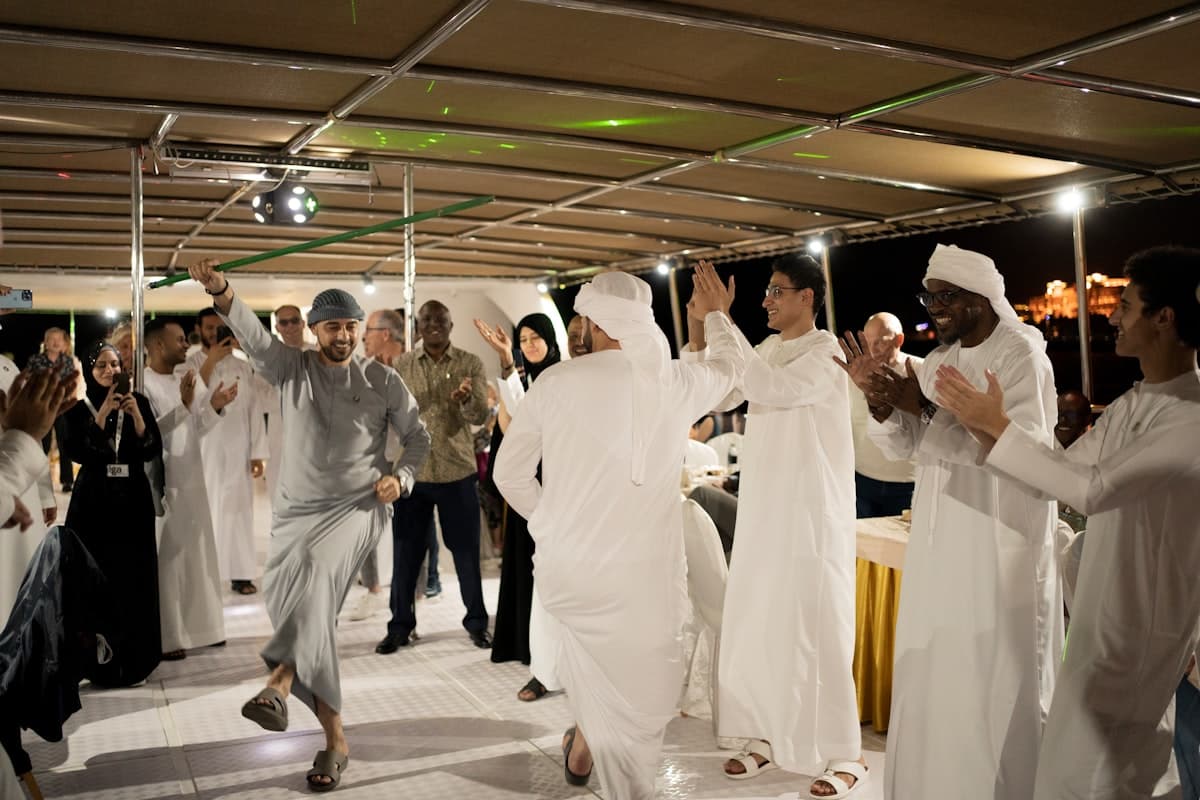
Ibrahim al-Dessuqi was born in 1255 CE in the Delta city of Dessouk, to a family that claimed descent from the Prophet Muhammad through the lineage of Husayn ibn Ali. He died in 1288 CE at the age of thirty-two or thirty-three, depending on which biographical tradition you follow. In less than four decades, he founded one of Egypt's four major Sufi orders, the Dessuqiyya (also spelled Burhaniyya), which today claims millions of followers across Egypt, Sudan, Libya, and sub-Saharan Africa. The order's current spiritual center operates out of this same shrine complex.
What makes the Dessuqi shrine different from, say, the Sayyida Zeinab mosque in Cairo or the mosque of Ahmad al-Badawi in Tanta, is its relative obscurity to outsiders combined with its enormous operational scale for insiders. The annual Moulid al-Dessuqi consistently draws between three and four million people over its peak days, making it one of the largest religious gatherings in Africa that Western media has almost entirely ignored. By comparison, the Tanta Moulid for Ahmed al-Badawi draws slightly more, around two million people for the main festival, and has received occasional coverage; Dessuqi gets almost none.
The city itself grew up around the shrine. Medieval Arab geographers referred to Dessouk as a small river settlement on the Rosetta branch of the Nile. The shrine transformed it into a pilgrimage city with a distinct economy: manuscript sellers, amulet makers, sellers of incense and rose water, vendors of the green banners associated with Sufi brotherhoods. That economy still functions. The streets around the mosque look, and smell, much as they would have in the fourteenth century, minus the mobile phone shops.
---
What You Will Actually See
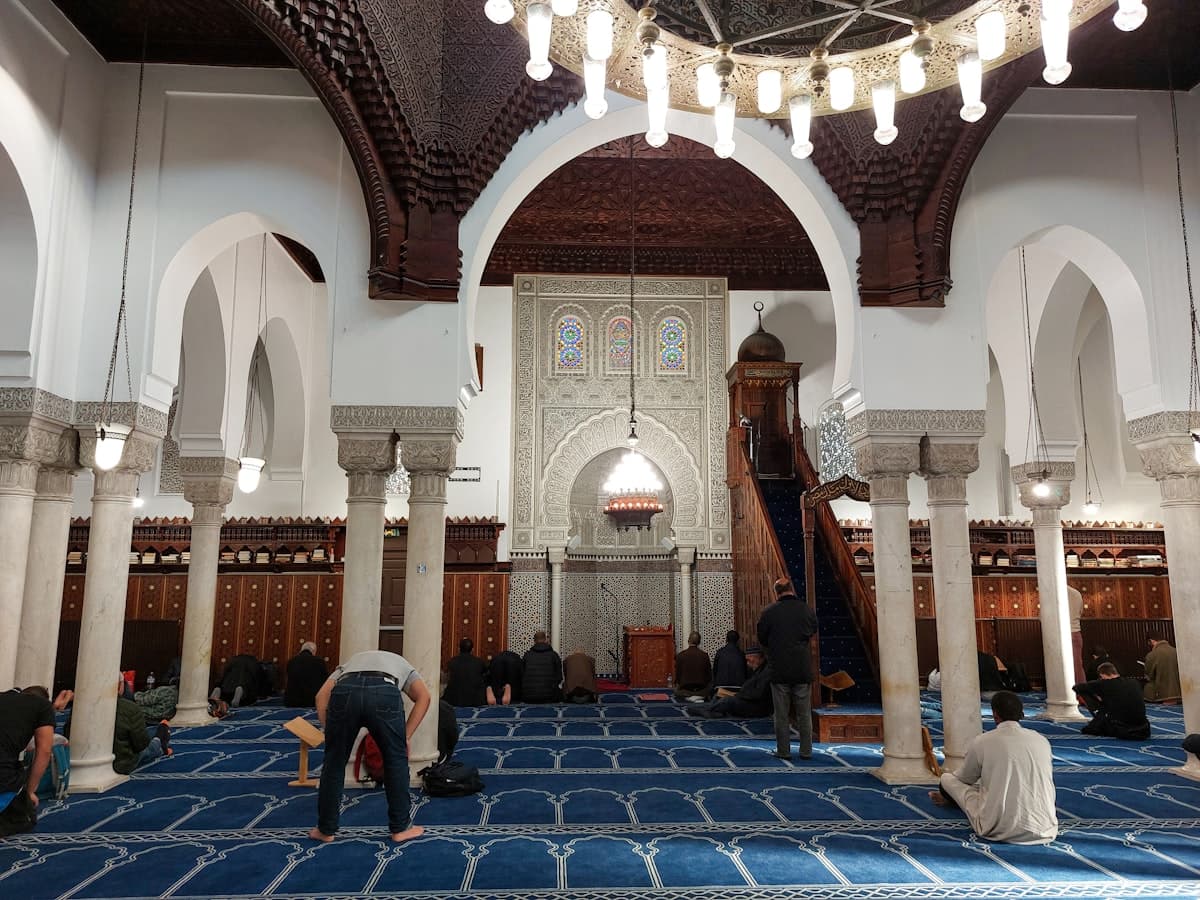
The mosque complex has been rebuilt and expanded repeatedly over the centuries, so the structure you enter is not medieval. The current building dates in its main form to renovations completed in the early twentieth century, with additional work in the 1980s and 2000s. Do not come expecting Mamluk-era stone. What you will find instead is a large, functioning mosque with a central dome over the tomb chamber, surrounded by smaller halls used by different affiliated Sufi orders for their dhikr sessions, the rhythmic chanting and movement rituals at the heart of Egyptian popular Sufism.
The tomb chamber itself is enclosed behind a carved wooden screen, the mashrabiyya, draped in green cloth embroidered with Quranic verse. Pilgrims press their hands against the screen, kiss it, whisper prayers. Women stand to one side, men to the other, though the separation is informal and the atmosphere is one of concentrated, personal devotion rather than formal religious observance. You will smell rose water and incense constantly; vendors sell small glass bottles of both outside the main entrance.
If you time your visit to coincide with a dhikr session, held most evenings and nearly continuously during the Moulid, you will hear something that has no equivalent in conventional mosque worship. The Dessuqiyya dhikr involves call-and-response chanting of divine names and Sufi poetry, accompanied by percussion. The senior shaykh leads; the circle of participants responds. Sessions can last two to four hours. Non-Muslim visitors are generally welcome to observe from the edge of the space, provided they are dressed modestly and behave with obvious respect. Nobody will hand you a pamphlet or ask where you're from. You are expected to already understand what you're watching.
The Manuscripts Nobody Talks About
Attached to the shrine complex is a small library holding a collection of manuscripts related to al-Dessuqi's own writings and the history of the Dessuqiyya order. The collection is not publicly accessible in the way a museum library would be, but the resident shaykhs are often willing to show serious visitors specific texts if approached respectfully and in Arabic. Al-Dessuqi himself wrote two major works: a collection of prayers called the Durud al-Imam and a longer theological text on the nature of the Sufi path. Both circulate widely in printed editions across the Arab world. The original manuscripts, or what are claimed to be copies close to the original, sit in this building, consulted by scholars from al-Azhar and Sufi orders across Africa.
---
The Festival: What the Moulid Actually Is
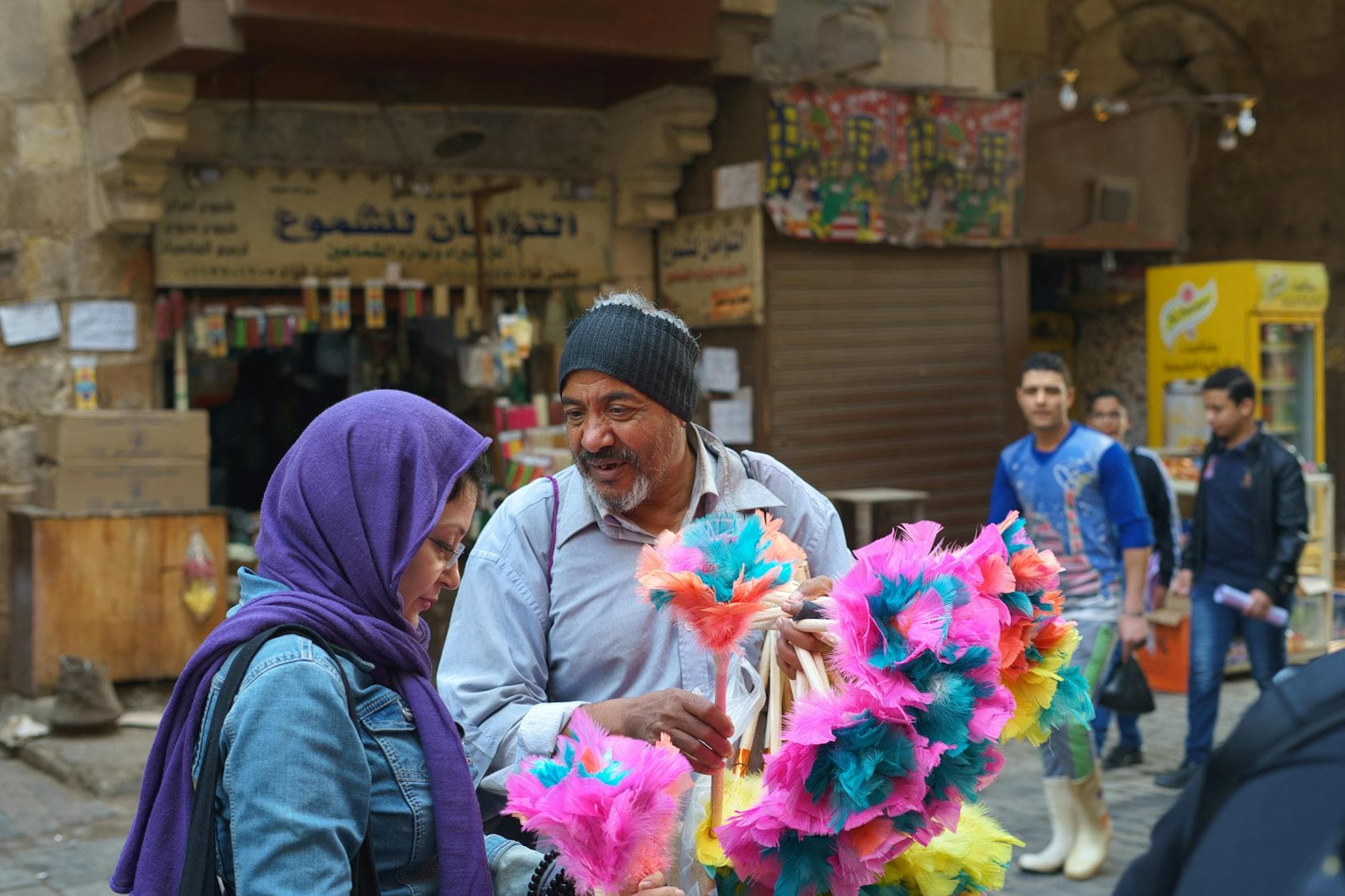
The Moulid al-Dessuqi is not a carnival, though it has carnival elements. It is not a purely religious observance, though it is deeply religious. It is an annual event that Egyptian Sufis treat the way some Christians treat Christmas: an obligatory return, a time of heightened spiritual access, a reunion with the saint's presence and with their own community.
The timing follows the Islamic lunar calendar, falling on the 15th of Sha'ban, the eighth month. This date is itself significant: in Islamic tradition, the 15th of Sha'ban is Laylat al-Bara'a, the Night of Forgiveness, when God is said to determine the fate of every soul for the coming year. Al-Dessuqi's birth, death, or both are associated with this night depending on which tradition you follow; the convergence of his date with a night already weighted with meaning is part of what gives the festival its particular charge.
During the Moulid, the streets around the mosque fill with tents belonging to different Sufi orders, each with its own banner color and its own style of dhikr. The Dessuqiyya themselves hold the central position, but you will see the Shadhiliyya, the Ahmadiyya, the Khalwatiyya, and dozens of smaller orders camped in concentric rings around the shrine. Food stalls serve kushari, ful, grilled fish from the Nile. There are travelling performers: stick fighters, storytellers, puppet shows of the kind that have been performed at Egyptian saints' festivals since at least the medieval period. The atmosphere is loud, close, and completely indifferent to tourism.
---
The Connections
The Dessuqiyya order's influence extends far beyond Egypt in ways that are not immediately obvious. The order spread through Sudan during the nineteenth century, partly via trade routes along the Nile, and established major centers in Khartoum and Omdurman. During the Mahdist uprising of the 1880s, the Dessuqiyya's networks in Sudan provided channels of communication and sometimes refuge that neither the Mahdists nor the British fully understood or controlled.
Closer to home: the Delta landscape around Dessouk was shaped by the same Nile branch system that made ancient sites like Sais, the capital of the 26th Dynasty, accessible and politically central. Sais is only about 25 kilometers southeast of Dessouk. The goddess Neith, whose main cult center was at Sais, was associated with weaving and protection, themes that echo in the protective function assigned to al-Dessuqi's shrine by his followers. This is not a coincidence that Sufi tradition acknowledges, but it is a continuity that Egypt keeps offering to anyone paying attention: the same Delta mud, the same instinct to locate the sacred at a particular point on the river, the same expectation that a holy figure's ongoing presence can shield a community from harm.
The Coptic monastery of Deir Abu Maqar, in Wadi el-Natrun roughly 80 kilometers southwest, serves a parallel function in Coptic Christian life: a destination for pilgrimage, a site of miraculous healing attributed to a saint's continued presence, a place where the distance between the living and the dead feels thinner than usual. Egypt built this template long before either Christianity or Islam arrived.
---
Common Mistakes
Arriving without basic Arabic. The Dessuqi shrine is not set up for international tourism. There are no English signs, no multilingual staff, no official guided tour. A few words of Arabic, or the company of an Arabic-speaking friend, will change your visit entirely. Without it, you will observe but not understand.
Coming during Ramadan expecting a regular atmosphere. The shrine is active year-round, but the specific Sufi dhikr sessions are less frequent during Ramadan as the orders redirect their energy toward Quran recitation and Tarawih prayers. If you want to witness an active dhikr, come outside of Ramadan, or come during the Moulid.
Treating the shrine as a photo opportunity. The tomb chamber and dhikr sessions are not performance spaces. Photographing pilgrims in prayer without permission is a genuine intrusion. Ask, and ask in Arabic if you can. Many people will say yes; some will say no. The refusal is not unfriendly, it is the correct answer.
Skipping the streets around the mosque. The commercial district immediately surrounding the shrine, with its manuscript sellers, incense merchants, and sellers of religious books and amulets, is as historically interesting as the interior. The trade in Sufi texts and devotional objects has operated on these streets for over seven hundred years.
The sound and light approach to Sufi Egypt. Several Cairo-based tour operators now offer "Sufi experience" packages in Khan el-Khalili or at the al-Hakim mosque, presenting staged dhikr performances for tourist audiences at EGP 200-400 per head. These are productions. The Dessuqi shrine is not. If you want to understand what Egyptian Sufism actually is, come here instead, spend nothing on the experience itself, and sit quietly at the edge of an evening dhikr session.
Arriving by car and trying to park during the Moulid. The roads around Dessouk are impassable by private vehicle during the festival's peak days. Come by microbus, walk in from the edge of the city, and accept that you are a participant in a crowd of millions rather than a visitor with a parking spot.
Assuming this is a marginal or fringe religious phenomenon. The Sufi orders of Egypt claim membership numbering in the tens of millions. The Supreme Council of Sufi Orders in Egypt, a government-recognized body, counts over seventy-three affiliated orders. Al-Dessuqi's order is among the largest. What you are visiting is not a minority tradition; it is one of the most widespread forms of Islamic practice in the country.
---
Practical Tips
Dress conservatively: covered arms, covered legs for both men and women. Women should bring a headscarf. This is not a suggestion made for tourist comfort; the pilgrims around you will be observing strict modesty, and anything less reads as disrespect.
The best day for an ordinary visit, outside of the Moulid, is Thursday evening. Thursday night is traditionally the night of dhikr across Egyptian Sufi orders, and the mosque and surrounding areas are livelier than on other evenings without being overcrowded.
For the Moulid itself, book accommodation in Dessouk or the nearby city of Kafr el-Sheikh several weeks in advance. Simple guesthouses in Dessouk fill quickly. Alternatively, some pilgrims sleep in the tents set up by their affiliated orders; if you have a contact within a Sufi order, this is worth asking about.
Bring cash. There are no card machines, no ATMs inside the shrine complex, and the vendors around the mosque operate in small denominations. Carry EGP 100-200 in small bills for food, incense, and any books or pamphlets you want to buy.
The best food near the shrine is the grilled Nile fish sold at the stalls on the street running north of the mosque. Bolti and bouri, tilapia and mullet pulled from the nearby Rosetta branch, grilled whole and served with bread and salad for EGP 50-80. Eat here rather than in the tourist-adjacent restaurants, which do not exist here anyway.
Frequently Asked Questions
The Weekly Dispatch
More on Egypt, every Friday.
Cultural depth and places most guides never mention.
No spam. Unsubscribe anytime.