Temple of Hatshepsut Guide: Egypt's Most Subversive Pharaoh
Hatshepsut ruled Egypt for 20 years, then was almost erased from history. This Temple of Hatshepsut guide tells you what her monument reveals, and what it hides.
Quick Facts
- Best time to visit
- October through February for manageable temperatures. Early morning (6am to 8am) year-round for light quality and smaller crowds. Avoid midday May through September when courtyard temperatures regularly exceed 40°C.
- Entrance fee
- EGP 450 per person (approx $9 USD). Students with valid international ID: EGP 225. Valley of the Kings requires a separate ticket (EGP 360 standard, EGP 1,200 for open tombs).
- Opening hours
- Daily 6am to 5pm (April through September). Daily 6am to 4pm (October through March). Confirm locally as hours adjust seasonally.
- How to get there
- Local Nile ferry from Luxor east bank: EGP 5 each way. Microbus or pickup from west bank dock to site: EGP 80 to 120 return with wait. Private taxi from Luxor: EGP 200 to 300 return. Hotel-organized minibus tour with guide: EGP 500 to 800.
- Time needed
- 2 to 3 hours for the temple alone. Full day (5 to 7 hours) combining with Valley of the Kings, Medinet Habu, and Colossi of Memnon.
- Cost range
- Self-guided west bank day: EGP 700 to 1,200 including transport and entrance fees. With licensed Egyptologist guide and private driver: EGP 2,000 to 3,500.
Her successor tried to erase her completely. He had her image chiseled off walls, her name removed from cartouches, her statues smashed and buried in a pit. For three thousand years it worked. Hatshepsut, who ruled Egypt as pharaoh for roughly two decades in the 15th century BCE, was so thoroughly excised from the record that 19th-century Egyptologists staring at her temple couldn't figure out who built it. They assumed it was a man.
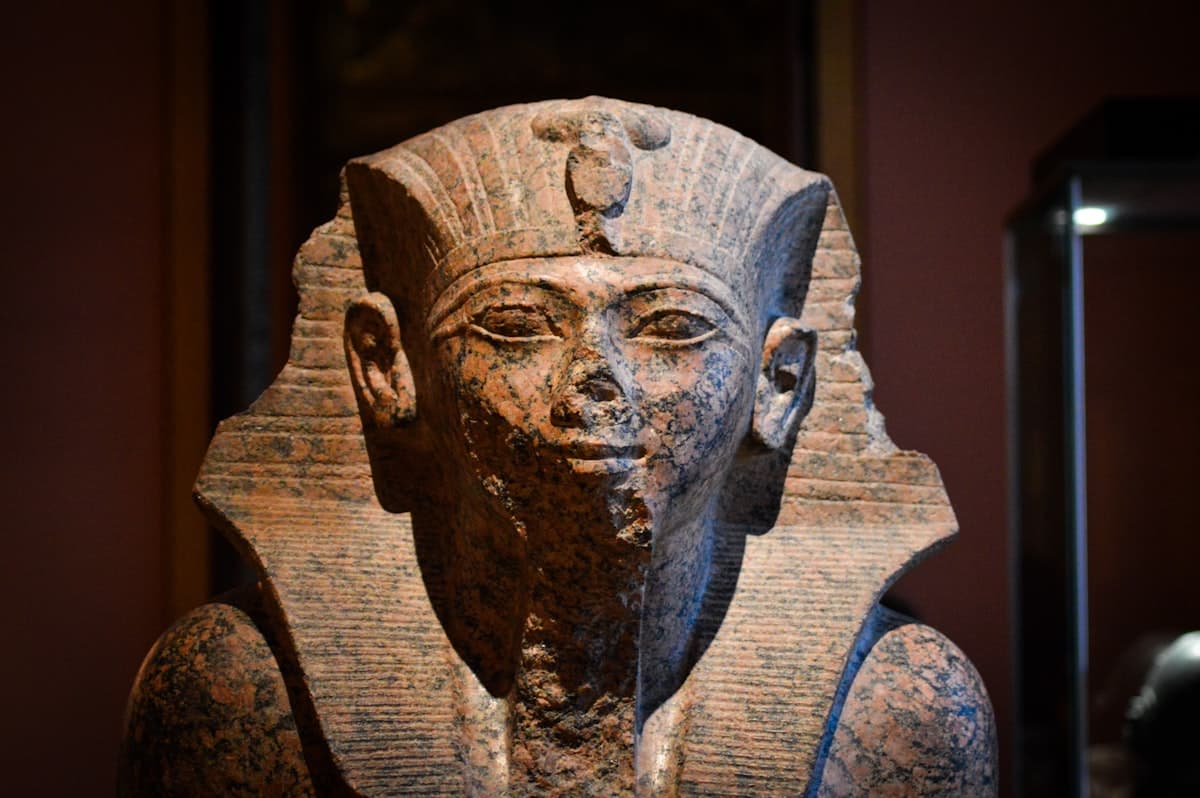
That pit of buried statues, excavated by the Metropolitan Museum of Art in the 1920s, turned out to contain over two hundred fragments of Hatshepsut's image. Archaeologists pieced them back together. She looks straight at you now from behind museum glass: serene, formal, wearing the false beard of a male pharaoh. The temple she built at Deir el-Bahari remains one of the most architecturally original structures in Egypt, which is a country not short on original structures.
This Temple of Hatshepsut guide is for people who want to understand what they're looking at, not just photograph it.
---
Quick Facts
Best time to visit: October through February. Deir el-Bahari faces east, which means morning light is extraordinary and afternoon heat is punishing. Arrive by 6am if you can. Entrance fee: EGP 450 per person (approximately $9 USD at current rates). Students with valid ID pay EGP 225. This covers the temple complex only; the Valley of the Kings requires a separate ticket. Opening hours: Daily 6am to 5pm (summer, April through September). Daily 6am to 4pm (winter, October through March). Hours shift, so confirm at your hotel the night before. How to get there: From Luxor's east bank, take a local ferry across the Nile (EGP 5, roughly $0.10) then a minibus or pickup truck from the west bank dock toward the Valley of the Kings. Negotiate a half-day microbus rate of EGP 80 to 120 for a driver who'll wait. A taxi from central Luxor runs EGP 200 to 300 return. Organized minibus tours from hotels typically include transport and a guide for EGP 500 to 800. Time needed: Two hours minimum for the temple alone. Half a day if you're reading the reliefs seriously. Most visitors combine it with the Valley of the Kings and Medinet Habu, which makes a full day on the west bank. Cost range: Budget EGP 700 to 1,200 for a self-guided west bank day including transport and entrance fees. Mid-range EGP 2,000 to 3,500 with a licensed guide and private driver.
---
Why This Place Matters
Hatshepsut's temple is called Djeser-Djeseru in ancient Egyptian. It means "Holy of Holies," which tells you something about how she regarded it. She didn't build it as a tomb: her tomb is cut into the cliffs above, connected by a secret corridor so her spirit could move between them. The temple was a mortuary complex, a place of cult worship, and a very deliberate political statement all at once.
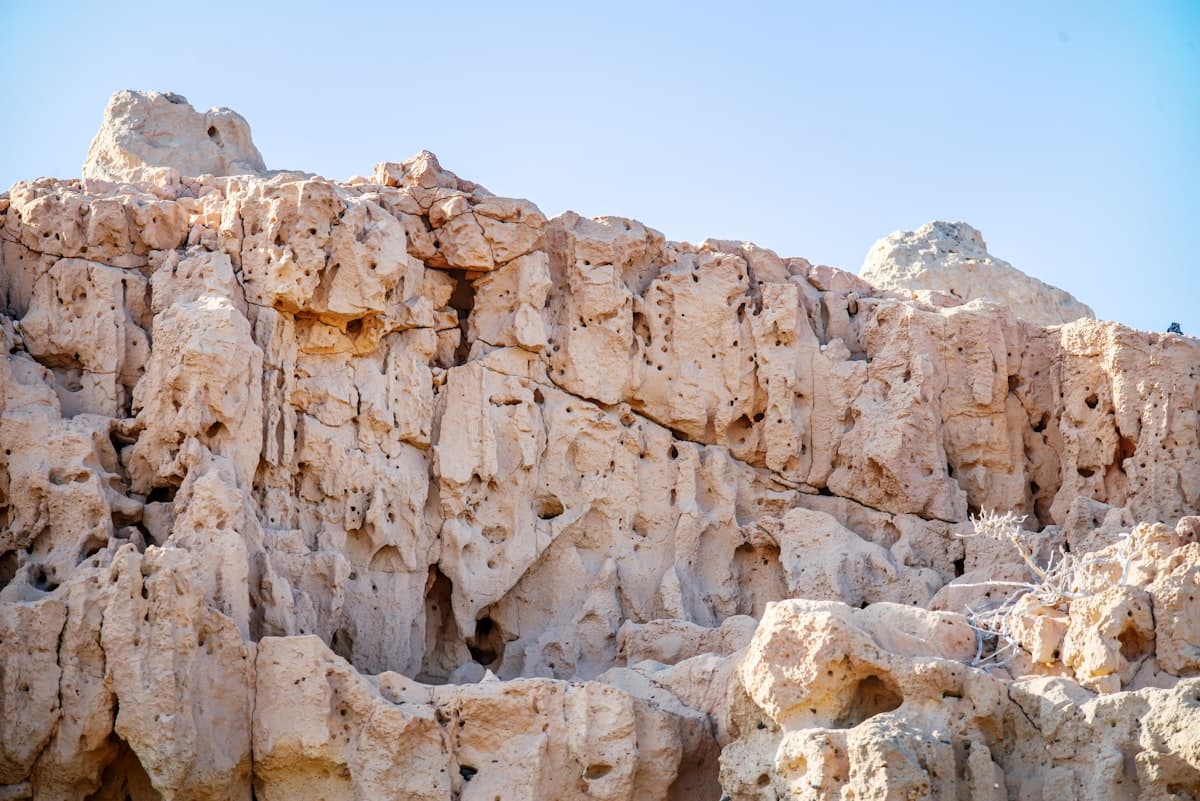
She chose this site, a natural amphitheater of pale limestone cliffs, because directly behind it sits the oldest sacred structure on the west bank: the 11th Dynasty mortuary temple of Mentuhotep II, the pharaoh who reunified Egypt around 2000 BCE. Hatshepsut built her temple immediately adjacent to his, borrowing his authority while simultaneously dwarfing his monument with three colonnaded terraces that rise in perfect geometric sequence toward the cliffs. Architecture as argument.
The man who tried to erase her was almost certainly Thutmose III, her stepson and eventual co-ruler. Historians spent decades assuming he acted out of rage or wounded pride, a spurned heir taking revenge on a usurper. The current scholarly consensus is more pragmatic: he probably ordered the erasure late in his reign, perhaps to secure succession for his own son, eliminating a precedent that a woman could rule as pharaoh. This was administrative politics, not personal vengeance. That revision matters because it changes how you read the temple. It wasn't built by someone who expected to be erased. It was built by someone who expected to last forever.
---
What You'll Actually See
The approach is deceptive. You walk across a broad causeway, the original path lined with sphinxes, most of which are gone, though their foundations are visible. The first terrace is planted with trees. Hatshepsut had myrrh trees brought from Punt, which her own reliefs identify as a land on the Horn of Africa coast, possibly modern Eritrea or Somalia. This was not a trading mission you'd read about in a general history: it was the most documented royal expedition in ancient Egyptian records, depicted in extraordinary detail on the temple's southern colonnade.
Those reliefs on the lower terrace show the Puntites arriving to meet the Egyptian delegation. The queen of Punt, called Ati, is depicted with a figure that Egyptologists describe as steatopygic, a medical term for an unusual accumulation of fat tissue around the hips and thighs. Some researchers think this represents a condition like lipedema. Whatever the reason for the depiction, the Egyptians clearly found her appearance remarkable enough to record precisely. She traveled with her husband to meet the Egyptian ships. The Egyptians loaded those ships with myrrh trees, ebony, ivory, gold, and living animals. The myrrh trees were replanted in the temple gardens. Their root pits are still there.
On the middle terrace, two chapels flank the central ramp. The northern one is dedicated to Anubis. Step inside. The original paint survives here better than almost anywhere else in the temple complex: deep ochre, turquoise, the particular Egyptian blue that takes a moment for your eyes to register correctly in the dimness. The southern chapel, dedicated to Hathor, has a famous column with a carved Hathor head, the bovine-eared goddess who was associated with music, love, and death. Hatshepsut had a particular devotion to Hathor. Some scholars interpret this as a political choice: Hathor was a goddess comfortable crossing gender categories in Egyptian theology, which may have given Hatshepsut useful symbolic cover for her own boundary-crossing reign.
The upper terrace is where the sanctuary was, carved directly into the cliff face. Access is restricted to parts of it. What you can enter is the sanctuary of Amun, dark and close, smelling of old stone and the particular mineral dampness that Luxor's sandstone seems to hold even in high summer.
What Most Visitors Miss
The tomb of Senenmut is cut into the bedrock beneath the outer courtyard, with a separate entrance that is rarely open to the public. Senenmut was Hatshepsut's chief steward and the architect of Djeser-Djeseru. He was probably the most powerful non-royal official in Egypt during her reign, and the nature of his relationship with Hatshepsut has been debated since antiquity: a New Kingdom graffito found nearby depicts the two of them in a sexually explicit scene. He hid his own image in small, discreet carvings on door jambs throughout the temple, tiny self-portraits tucked where they'd survive even if his name was removed. A kind of insurance policy.
Also frequently overlooked: the astronomical ceiling of the chapel of Anubis. Look up. It shows a lunar calendar and stellar decans, the 36 star groupings ancient Egyptians used to track the night sky. This is not decorative. It is a functional astronomical chart embedded in a sacred ceiling, and it dates the temple with more precision than almost any other internal evidence.
---
The Connections
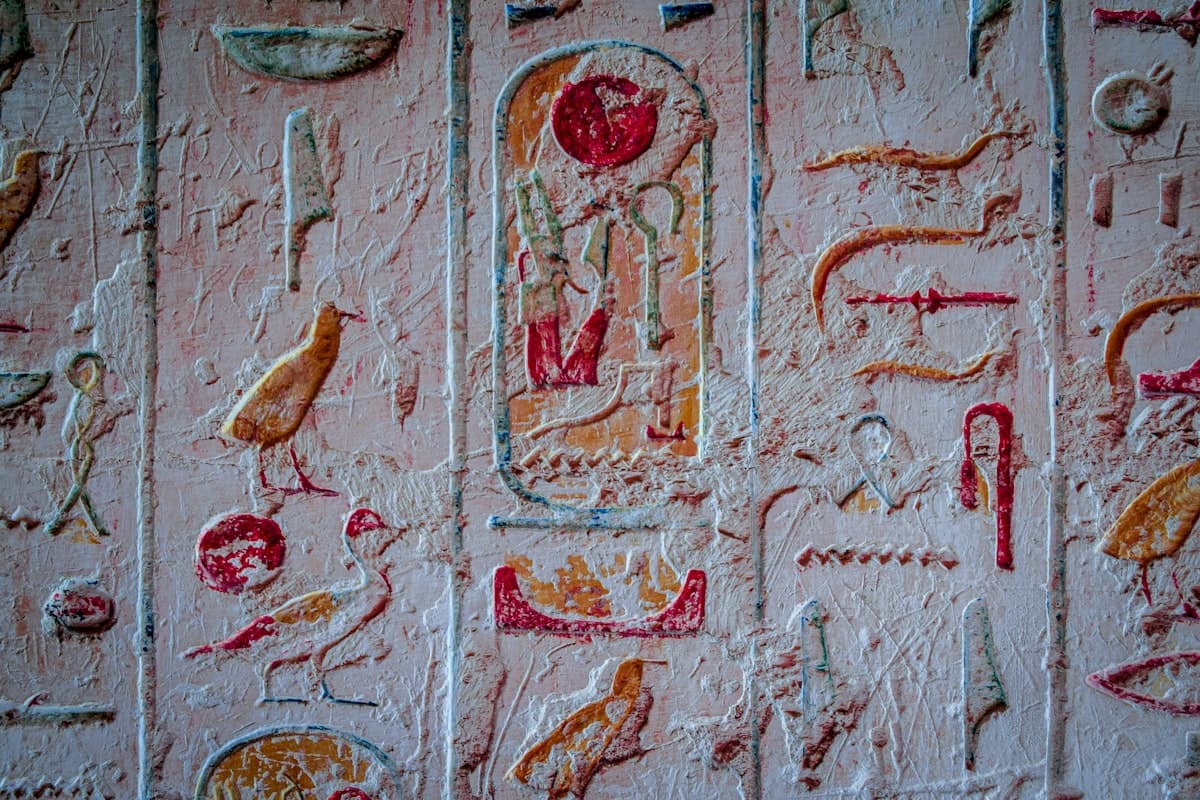
Deir el-Bahari didn't stop being sacred when the New Kingdom ended. Centuries later, Coptic monks recognized the same quality that Hatshepsut saw in those cliffs: the natural bowl shape creates acoustics unlike anywhere else on the west bank, and the sheltered position was defensible and cool. They built a monastery here, calling it the "northern monastery," which is what Deir el-Bahari means in Arabic. The monks cut their own chambers into the temple walls, painted Christian iconography over pharaonic reliefs, and lived inside a 3,500-year-old mortuary complex without apparent discomfort. You can still see the soot from their cooking fires on certain ceilings, and traces of their red-painted crosses on walls where the plaster wasn't later removed.
Five kilometers to the south, Ramesses III built Medinet Habu on the site where ancient Egyptians believed the primordial mound of creation first rose from the waters of chaos. That belief was held continuously across the pharaonic, Coptic, and early Islamic periods, each tradition adapting it rather than replacing it. Luxor's west bank is not a series of discrete historical layers; it is one long argument about the sacred, made in stone by people who knew exactly what had been there before them and built anyway.
The Valley of the Kings, fifteen minutes by road from Deir el-Bahari, was chosen partly because the peak above it, a natural pyramid-shaped mountain called al-Qurn, aligned symbolically with the pyramid tomb tradition even as the New Kingdom pharaohs abandoned actual pyramids. Hatshepsut's own tomb there, KV20, is the oldest in the valley. It descends more than 200 meters into the cliff in a spiral so long and steep that it was once used to test archaeological endurance. Most visitors skip it entirely. The signage is minimal and the descent is formidable. This is not a mistake if your knees are uncertain.
---
Common Mistakes
Arriving after 9am. By 9:30am in any month warmer than January, the courtyard fills with group tours and the light flattens. The 6am opening is real, and the guards are there. Those first ninety minutes are categorically different from everything that follows.
Ignoring the painted chapels for the colonnades. Most visitors photograph the famous three-tiered facade and move on. The chapels of Anubis and Hathor contain some of the best-preserved New Kingdom polychrome painting on the west bank. They take twenty minutes each and are worth more than any photograph of the exterior.
Trusting the reliefs uncritically. Hatshepsut's own inscriptions describe her as divinely conceived, her mother having been visited by Amun in the form of her father Thutmose I. This is political theology, not biography. Every pharaoh made similar claims. The reliefs are primary sources for how Hatshepsut wanted to be seen, which is not the same thing as how things were.
Combining too much in one day too fast. The Valley of the Kings, Deir el-Bahari, Medinet Habu, and the Colossi of Memnon is a logical circuit but a brutal one in heat above 30 degrees. If you're visiting between May and September, choose two sites and do them properly.
Skipping the site museum context before arrival. The Luxor Museum on the east bank has several statues recovered from the Hatshepsut pit, including a striking red granite kneeling figure. Seeing them before you visit the temple means you arrive with an image of her face already in mind. This is not a small thing.
Paying the first ticket price offered outside the official booth. There are individuals near the site entrance who will tell you that the ticket office is elsewhere, closed, or requires an additional fee. The official ticket booth is clearly marked. Use it.
Wearing sandals without back straps. The ramps between terraces are smooth limestone, polished by millions of feet. In sandals, a slow-motion slide is genuinely possible. This is a medical observation from someone who carries that particular embarrassment.
---
Practical Tips
Hire a licensed Egyptologist guide rather than a site guide. The difference in knowledge depth is significant. A good guide costs EGP 400 to 600 for a half-day and will read hieroglyphs, explain iconographic choices, and know which chapels are worth the squeeze. Ask your hotel to recommend someone they know, not someone who appears in the parking lot.
Water is sold at the site for EGP 20 to 30 per bottle, which is expensive by Egyptian standards. Bring two liters minimum. The site has no shade between the causeways except inside the chapels.
Photography inside the chapels is officially permitted with a general ticket but guards sometimes request an additional payment. This is informal and inconsistent. A polite refusal usually resolves it. Do not photograph guards or police.
If you're serious about the reliefs, bring a small LED torch. The lighting inside the Anubis and Hathor chapels is adequate but not good enough for detail work. The astronomical ceiling especially benefits from direct light.
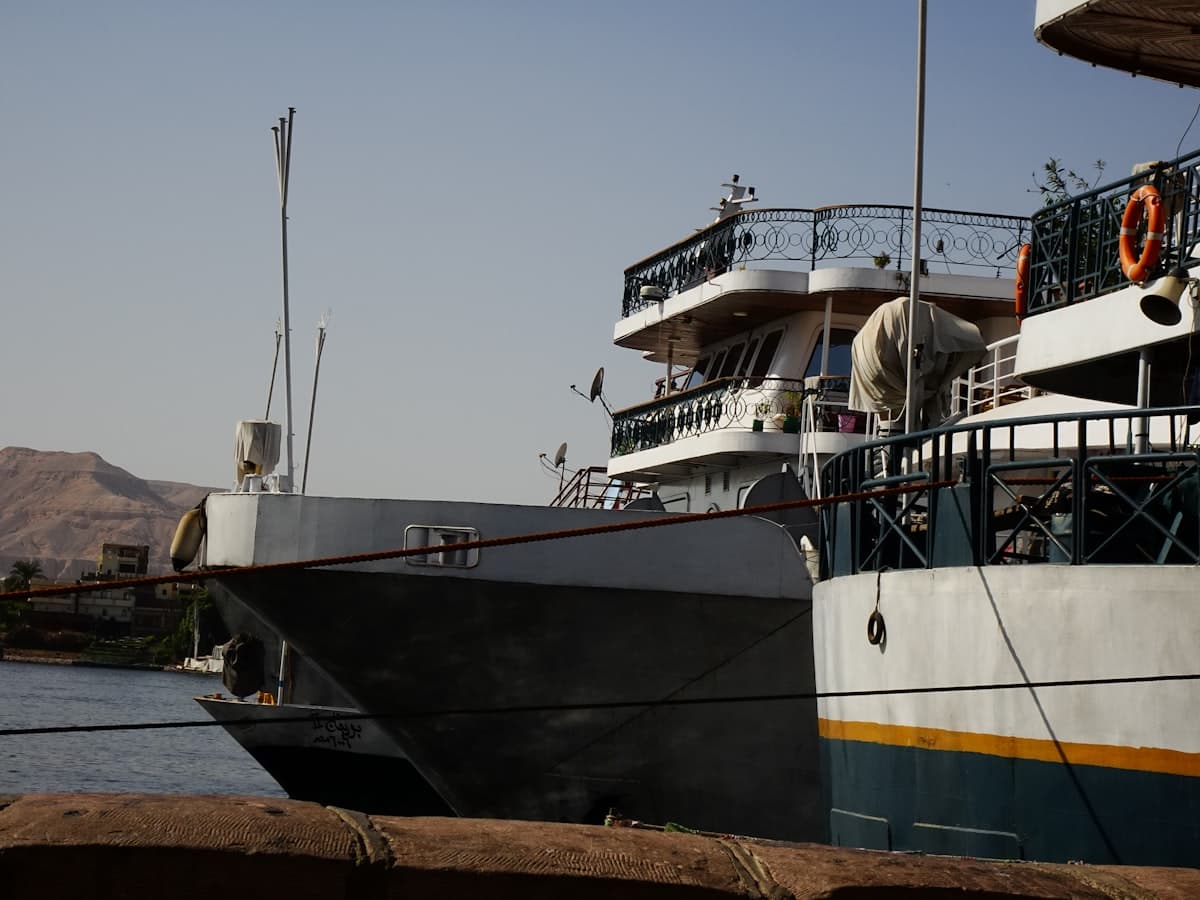
The site gets crowded on cruise ship days, which in Luxor means almost every day between October and March. Check with your hotel which ships are docked. Tuesday and Wednesday mornings are historically the least congested, though this shifts.
Deir el-Bahari is physically accessible only via the ramps; the terraces are not wheelchair accessible. The lower terrace and colonnade are reachable with effort.
Frequently Asked Questions
The Weekly Dispatch
More on Egypt, every Friday.
Cultural depth and places most guides never mention.
No spam. Unsubscribe anytime.