The Sphinx of Giza: Everything You Need to Know Before You Go
The Sphinx of Giza explained in full: real ticket prices, best viewing angles, what nobody tells you about crowds, and how to make the most of every minute on the plateau.
Audio Guide: The Sphinx of Giza: Everything You Need to Know Before You Go
Quick Facts
- Best time to visit
- October to February, arriving at 8am. Winter temperatures sit around 18 to 22 degrees Celsius and tour group density is lower before 9:30am.
- Entrance fee
- EGP 450 (approx. $9 USD) for the full Giza Plateau including Sphinx enclosure. Egyptian nationals pay EGP 30. Student discounts require a valid ISIC card: EGP 225.
- Opening hours
- Daily 8am to 5pm (October to April), 8am to 6pm (May to September). Ticket booths close 30 minutes before site closing.
- How to get there
- Uber or Careem from central Cairo: EGP 120 to 200 (approx. $2.50 to $4 USD), 25 to 45 minutes depending on traffic. CTA Bus 355 from Tahrir Square. Avoid unofficial taxis flagged at the gate.
- Time needed
- 45 minutes to 1 hour for the Sphinx enclosure and Valley Temple alone. 4 to 5 hours for the full plateau combined with the three pyramids.
- Cost range
- Budget day EGP 700 to 900 (entry, water, Uber both ways). Mid-range day with licensed guide and lunch: EGP 2,500 to 3,500.
The Sphinx of Giza: Everything You Need to Know Before You Go
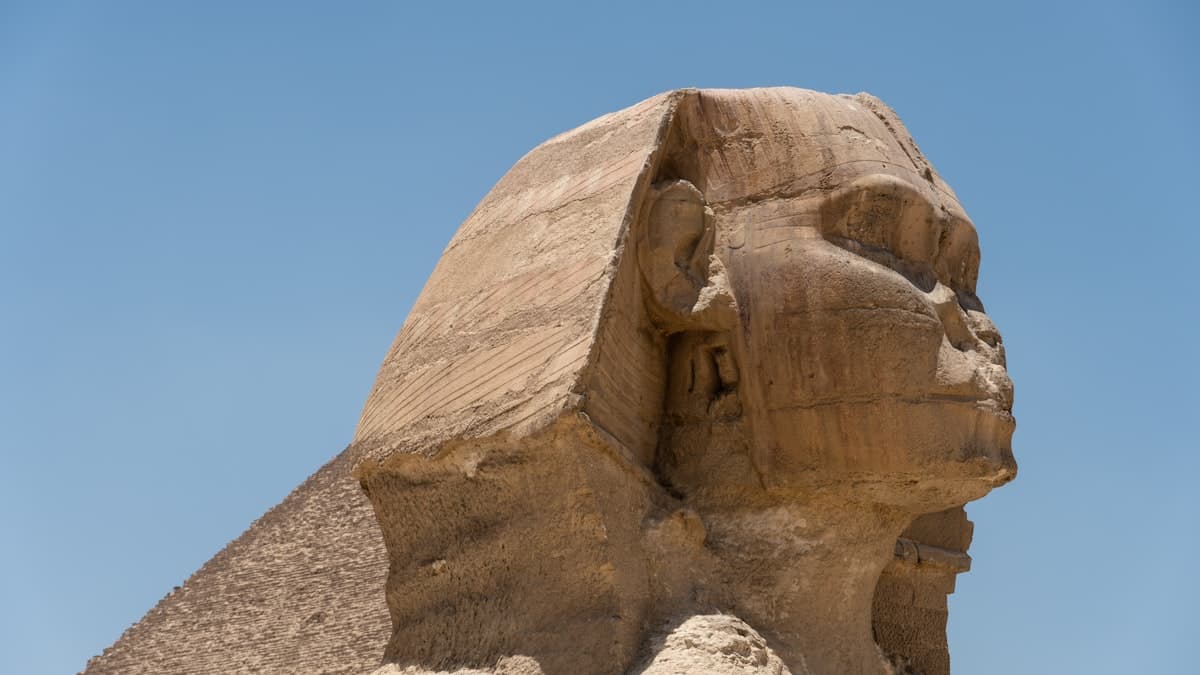
The Sphinx does not look the way you expect. In photographs, it appears enormous and isolated. In person, it sits in a hollow below the plateau, ringed by a low limestone wall, closer to the ground than your instincts tell you it should be. The first thing you notice is not its size but its face: chipped, eroded, stripped of its original painted limestone nose and ceremonial beard, yet still carrying an expression of absolute calm that no description quite captures. The second thing you notice is how many people are pressing in around you, and how little time most of them spend actually looking at it.
This guide covers the Sphinx of Giza with everything you need to know to visit intelligently: what it actually is, how to reach the best viewing positions, what the ticket system looks like in 2024, and which mistakes will cost you time, money, or both.
---
Quick Facts
Best time to visit: October to February, arriving at 8am before tour groups arrive at 9:30am Entrance fee: The Sphinx is accessed through the main Giza Plateau ticket. General admission is EGP 450 (approx. $9 USD). The Solar Boat Museum and individual pyramid interiors require separate tickets. Egyptian nationals pay EGP 30. Opening hours: Daily 8am to 5pm (October through April), 8am to 6pm (May through September). The ticket booths close 30 minutes before site closing. How to get there: Uber or Careem from central Cairo costs EGP 120 to 200 (roughly $2.50 to $4 USD) and is by far the easiest option. The CTA Bus 355 runs from Tahrir Square. Microbuses from Haram Street drop you near the Mena House entrance. Never accept a ride from a tuk-tuk driver at the gate. Time needed: 1 hour focused on the Sphinx enclosure alone, 4 to 5 hours for the full plateau including the three main pyramids Cost range: Budget day (entry only, street food, Uber): EGP 700 to 900. Mid-range day (entry, licensed guide for 3 hours, lunch near the site): EGP 2,500 to 3,500.
---
What the Sphinx Actually Is
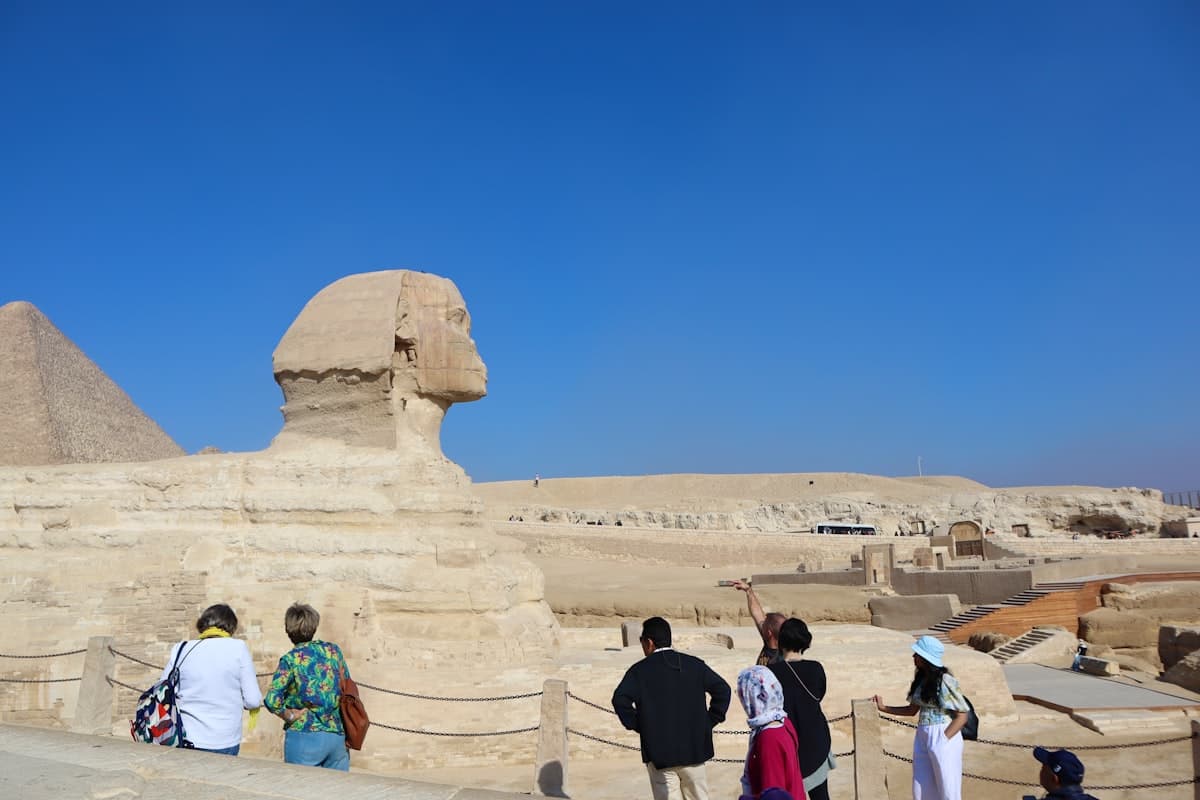
The Great Sphinx of Giza is a monolithic limestone statue carved directly from the bedrock of the Giza Plateau, most likely during the reign of Pharaoh Khafre around 2500 BCE, though that date remains genuinely contested among Egyptologists. It stretches 73 meters long, stands 20 meters tall, and depicts a recumbent lion with a human head believed to represent either Khafre himself or the sun god Ra-Horakhty. The body was carved in situ from a single mass of rock, while the paws were later reinforced with limestone blocks.
What most visitors miss entirely is the Sphinx Temple, which sits directly in front of the statue. Built from the same limestone excavated to free the Sphinx's body, it is one of the oldest temples in Egypt. By the time the New Kingdom pharaohs came along roughly a thousand years later, the Sphinx was already ancient to them. Thutmose IV installed the Dream Stele between the paws after supposedly being promised the throne in a dream if he cleared the sand that had buried the statue to its neck.
The nose was not destroyed by Napoleon's cannons. That story is false and has been thoroughly debunked. Medieval Arab writers documented its absence centuries before Napoleon was born.
---
How to Reach the Sphinx Enclosure
The Sphinx sits in the eastern part of the Giza Plateau, below and in front of the Khafre Pyramid. If you enter through the main tourist entrance on the eastern side of the plateau (the one most Ubers will drop you at, near the Sphinx Sound and Light show grandstands), you will reach the Sphinx enclosure in a 5-minute walk. This eastern entrance gives you the frontal view that most photographs show.
The more interesting approach is from the west, entering through the main pyramid entrance on the north side of the plateau and walking south past Khufu and Khafre. You descend toward the Sphinx from above and behind, seeing it from the south flank first before rounding to the front. This route takes longer but gives you a far better sense of how the monument relates to the Khafre causeway and the Valley Temple beside it.
The Khafre Valley Temple, just to the south of the Sphinx, is included in the main entry ticket and is worth 20 minutes of your time. Its interior is dark, cool, and almost always empty. Red Aswan granite lines the walls. The quality of light inside at 9am, when sunlight enters through narrow clerestory openings, is unlike anything else on the plateau.
---
Best Viewing Positions
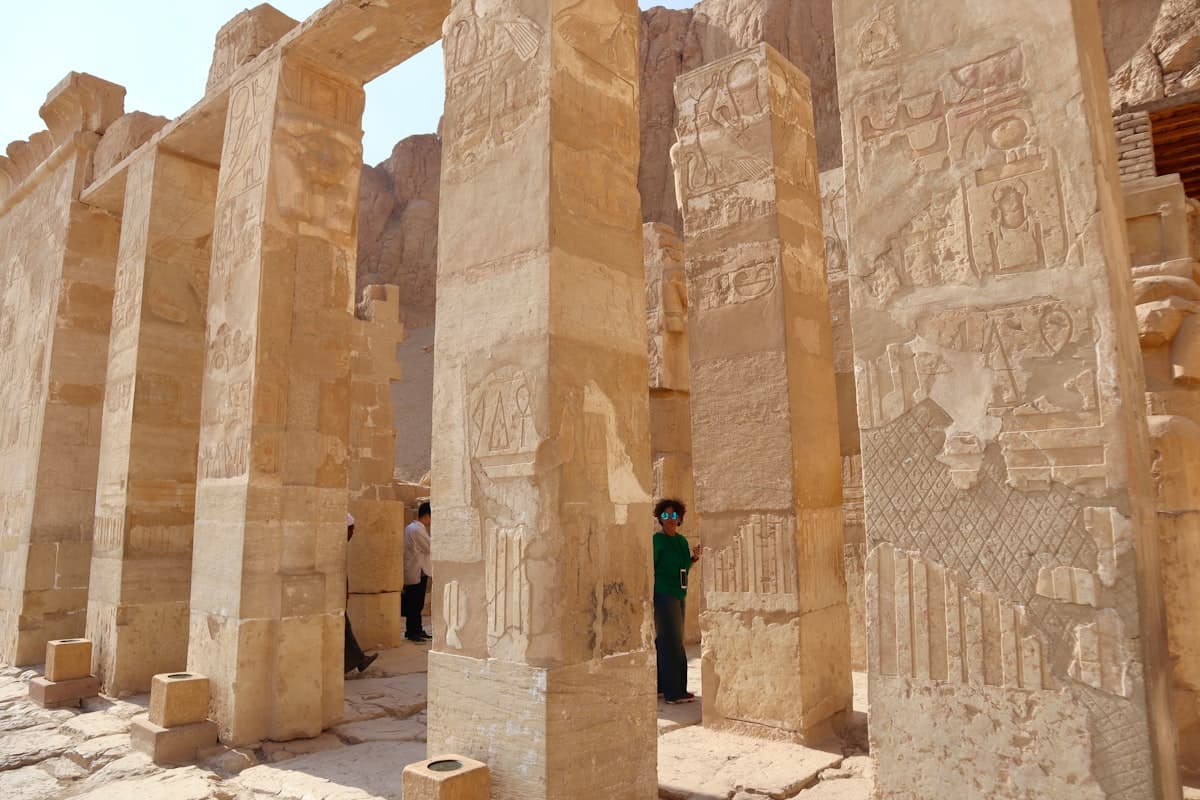
The roped-off enclosure means you cannot approach closer than about 20 meters from the Sphinx itself. Ignore anyone who tells you that paying extra gets you closer. It does not.
For the classic frontal view, stand at the eastern end of the enclosure near the base of the ramp. Early morning puts the sun behind you and full on the Sphinx's face, which is what you want for photographs and for seeing the carved details of the headdress and the remnants of the uraeus cobra above the forehead.
For a dramatic low-angle view with the Khafre Pyramid directly above the Sphinx's head, position yourself slightly to the north of the center axis. This alignment only works visually from specific spots along the north enclosure wall.
For the panoramic view that shows all three pyramids and the Sphinx in one frame, you need to walk to the road that runs along the south side of the plateau, roughly 400 meters from the Sphinx. This is also the spot from which the famous photograph of the pyramids apparently emerging from the Cairo suburbs is taken.
---
The Sound and Light Show
The Sphinx narrates the Sound and Light Show held on the plateau most evenings. The show runs in rotating language schedules (English, French, German, Arabic, Spanish, Japanese), so check the specific night for your language at soundandlight.com.eg before booking. Tickets cost EGP 550 (roughly $11 USD) and are purchased at the site or online.
The show begins at 7:30pm from October to April and at 8pm from May to September. You sit in a grandstand facing the Sphinx with the pyramids lit behind it. The production quality is dated, the narration is theatrical, and the whole thing lasts about 45 minutes. Whether it is worth attending depends entirely on how much you want to see the plateau at night. For the atmosphere of sitting in the desert dark with floodlit limestone in front of you, yes. For the narration itself, not particularly.
---
Common Mistakes Tourists Make
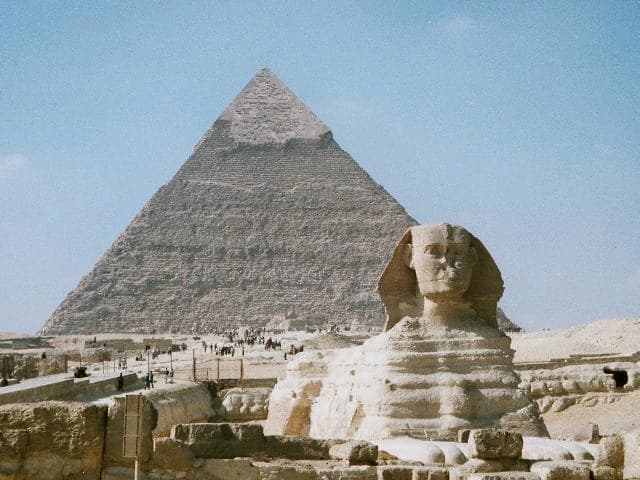
Arriving mid-morning. Tour groups from Cairo hotels depart after breakfast and reach the plateau between 9:30am and 10:30am. If you arrive then, you are joining 15 to 20 coaches-worth of people in the enclosure simultaneously. Arriving at 8am when the gates open means you often have 45 minutes with very few people around you.
Buying camel or horse rides near the Sphinx enclosure entrance. The handlers who approach you outside the eastern entrance are not affiliated with any official tour operation. Prices quoted are often in USD, the ride is very short, and getting off when you want to can involve pressure for extra payment. If you want to ride, arrange it through your hotel or a licensed operator in advance.
Skipping the Khafre Valley Temple. Almost every visitor walks past its entrance without going in. It takes 20 minutes, requires no extra ticket, and offers genuine quiet and architectural detail that the open-air enclosure cannot.
Assuming the Sphinx ticket is separate. There is no separate Sphinx ticket. The plateau admission covers the enclosure. If someone outside the gate offers to sell you a "special Sphinx access" ticket, it does not exist.
Standing only at the front. The south flank of the Sphinx, viewed from the enclosure wall near the Valley Temple, shows the full extent of the body and the repair courses of limestone blocks added during various restoration campaigns. This angle also shows the erosion patterns that sparked the controversial geological debate about water erosion versus wind erosion.
Paying for an unlicensed guide inside the site. Men in galabeyyas who approach inside the enclosure and offer historical commentary are not licensed Egyptologist guides. Their information is often inaccurate and they will expect payment. A licensed guide, arranged in advance, costs EGP 300 to 500 per hour and will have an official Tourism Ministry badge.
Leaving without water. There is one official kiosk on the plateau selling water at EGP 30 to 50 per bottle. The desert sun at the plateau is direct and relentless from 10am onward. Bring at least one liter per person from outside the gate, where water costs EGP 10 to 15.
---
Practical Tips
What to bring: Sun hat with a full brim (baseball caps leave your neck exposed), SPF 50 sunscreen, one liter of water minimum per person, a small cash supply in EGP for the ticket booth, and a phone with offline maps downloaded since mobile signal inside the plateau can be inconsistent.
Photography: Tripods are technically not permitted inside the enclosure without a media permit, though small lightweight travel tripods are rarely challenged. The plateau does not permit drone flights. Anyone offering to photograph you with a professional camera for a fee inside the site will ask for payment that can reach EGP 200 to 500 if you are not clear about costs upfront.
Dress code: There is no formal dress code for the Sphinx enclosure itself, unlike mosque visits. Comfortable, loose clothing and closed shoes are practical. The limestone gravel underfoot is rough and uneven.
Booking: You do not need to book Giza Plateau tickets in advance online. Tickets are purchased at the main entrance booths. On extremely busy days in peak season (late December, spring school holidays), queues at the booth can reach 20 to 30 minutes. Arrive early to avoid this.
Combining with other sites: The Egyptian Museum in Downtown Cairo is approximately 30 minutes from Giza by Uber and costs EGP 450 entry. If you are doing both in one day, do the plateau first starting at 8am, leave by noon, eat lunch, and reach the museum by 2pm for a 2 to 3 hour visit before it closes at 5pm. The new Grand Egyptian Museum at the edge of the plateau is a full separate day.
Harassment and touts: The situation at Giza is notably more pressured than at sites like Luxor or Aswan. The approach that works: make eye contact once, say "la shukran" (no thank you) clearly, and keep walking without slowing. Engaging with a question, even to decline, extends the interaction.
The Sphinx of Giza has sat on this plateau for roughly 4,500 years, absorbing sand, wind, restoration plaster, and approximately 14,000 tourists per day at peak season. It does not need embellishment. Show up early, walk the full enclosure, look at the face from directly in front when the morning light is on it, and give yourself at least five minutes of standing still. That is all it requires of you.
Frequently Asked Questions
The Weekly Dispatch
More on Egypt, every Friday.
Cultural depth and places most guides never mention.
No spam. Unsubscribe anytime.