Alexandria Egypt Travel Guide: The Mediterranean's Ancient Crown
Your complete Alexandria Egypt travel guide — from Pharos lighthouse ruins to Corniche sunsets, catacombs, and the best seafood you'll ever eat. Plan smarter.
Audio Guide: Alexandria Egypt Travel Guide: The Mediterranean's Ancient Crown
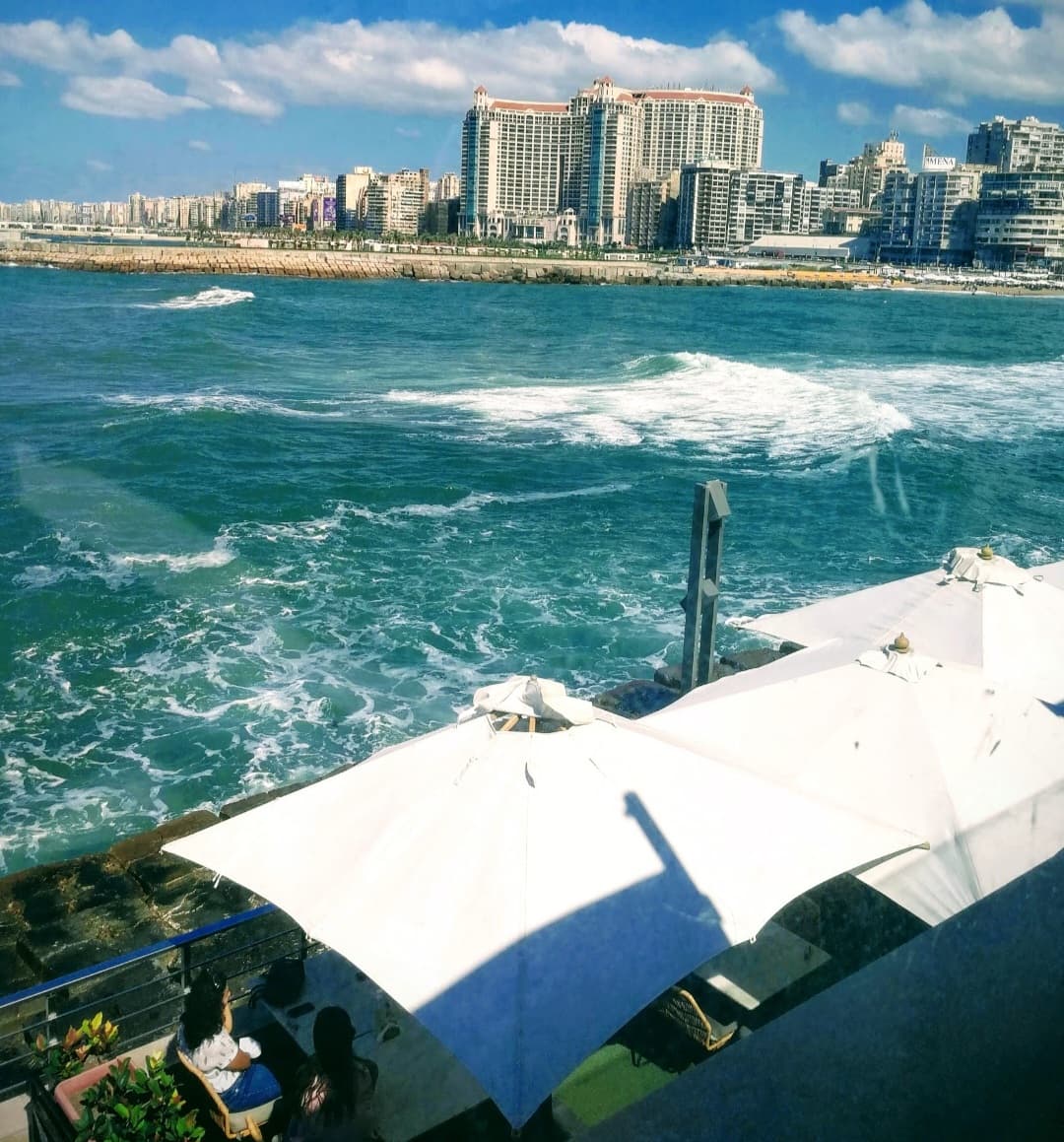
Alexandria hits differently from the moment the train from Cairo deposits you onto its breezy platform. The air carries salt and diesel and something floral — jasmine from a street cart, maybe — and the sky opens up wide over a city that faces the Mediterranean with an almost defiant elegance. This is Egypt's second city, its intellectual capital, the place where Cleopatra plotted and Alexander the Great dreamed of forever. And it remains startlingly undervisited, which means you get it largely to yourself.
Why Alexandria Deserves More Than a Day Trip
Most visitors to Egypt treat Alexandria as a quick excursion from Cairo — four hours there, four hours back, a rushed lunch. That's a genuine mistake. Alexandria rewards slow travel. Its pleasures are layered: a Roman amphitheatre tucked behind an unremarkable doorway, a 19th-century villa turned into a surreal antique shop, a fish restaurant where the owner personally escorts you to choose your catch from a bed of shaved ice. The city's Greek, Roman, Jewish, Arab, Ottoman, and British pasts don't just coexist — they stack on top of each other in alleys and facades and accents you can spend days unpacking.
The Mediterranean light here is extraordinary, softer and more diffuse than Cairo's desert glare. By late afternoon it turns the limestone buildings along the Corniche the color of warm honey, and the harbor — once the site of the ancient Pharos lighthouse, one of the Seven Wonders of the World — glitters copper and silver.
Getting to Alexandria from Cairo
The most comfortable option is the Spanish Train (officially the Talgo), which runs twice daily between Cairo Ramses Station and Alexandria Misr Station. The journey takes roughly 2 hours 15 minutes, tickets cost around 100–200 EGP (approximately $3–6 USD) depending on class, and the seats are genuinely comfortable. Book at the station or through the Egyptian National Railways website — go early, as popular weekend trains sell out.
Private minibuses from Cairo's Turgoman Bus Station run frequently and cost about 60–80 EGP, but the journey stretches to 3 hours and depends heavily on highway traffic. Taxis and ride-shares from Cairo run roughly 800–1,200 EGP and make sense only if you're a group splitting the cost.
If you're flying internationally, Borg El Arab Airport serves Alexandria with connections to several European and Gulf cities. It sits about 45 km from the city center; taxis to downtown cost 200–300 EGP and take 40–60 minutes.
Best Time to Visit Alexandria
April through June and September through November are the sweet spots. Temperatures hover between 20–28°C (68–82°F), the sea is swimmable, and the city feels alive without being overwhelmed. Alexandria has a real beach culture — Montazah, Mamoura, and Agami fill with Egyptian families during July and August, which is festive but crowded and hot (up to 35°C/95°F). Winter (December–February) brings cool Mediterranean weather around 12–18°C, occasional rain, and dramatically emptier streets, which has its own melancholy appeal.
Ramadan transforms Alexandria into a nocturnal city — the Corniche fills after Iftar with families, street food vendors, and a warm communal energy that's worth experiencing if your schedule allows, though some restaurants operate on reduced hours.
The Essential Sights
Bibliotheca Alexandrina
The modern reincarnation of the ancient Library of Alexandria opened in 2002 and remains architecturally audacious — a massive tilted disc of Aswan granite etched with scripts from 120 world languages, slicing into the harbor's edge. Inside, the main reading hall descends in cascading terraces toward natural light, sheltering 8 million books. The complex also houses four museums (including a phenomenal antiquities collection), a planetarium, and rotating contemporary art exhibitions.
Entry to the main library is free for visitors; individual museums cost 80–150 EGP each. The complex is open Sunday through Thursday, 10am–7pm, and Saturday 12pm–4pm. Closed Fridays. Allow at least 2 hours, more if you linger in the exhibitions.
The Catacombs of Kom El Shoqafa
Descend three levels underground into one of the most unsettling and magnificent ancient sites in all of Egypt. Carved into rock in the 2nd century AD, these burial chambers belong to a moment when Egyptian, Greek, and Roman funeral traditions were in active conversation — deities wear each other's costumes, hieroglyphics and Greek script share the same walls, and the overall effect is dreamlike, even slightly hallucinatory. The air is cool and damp regardless of the season above. Bring a light layer.
Admission is around 180 EGP for foreigners. Open daily 8am–5pm. Located in the Karmouz district; a taxi from the Corniche runs about 50–70 EGP.
Qaitbay Citadel
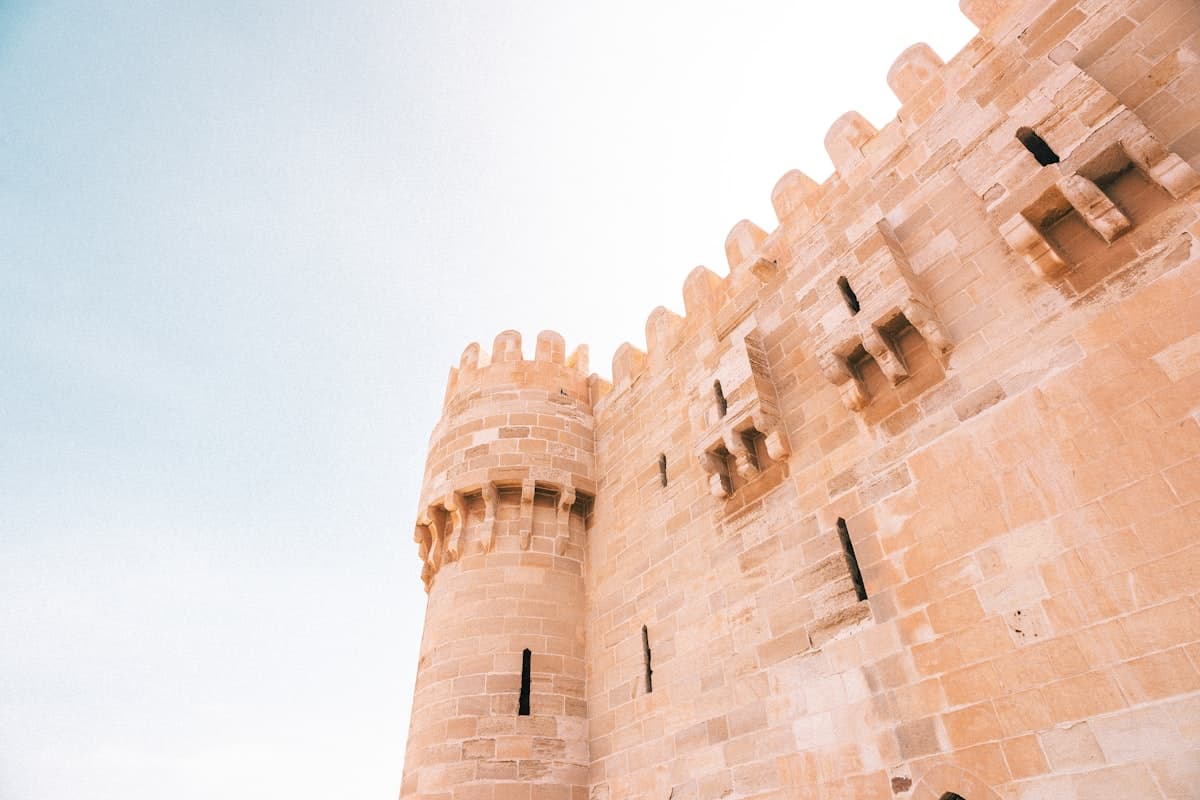
Built in 1477 on the exact site of the ancient Pharos lighthouse, the Citadel of Qaitbay juts into the Mediterranean on its own small peninsula at the western edge of the Eastern Harbor. The fortress is imposing but what you're really here for is the perspective: standing on the sea-facing ramparts with spray on your face and the city skyline behind you, you understand exactly why Alexander chose this spot. It's one of the great views in Egypt.
Admission is 100 EGP for foreigners. Open daily 9am–5pm (Fridays close 11am–1pm for prayer). The surrounding fish market and corniche walk are free and equally worthwhile.
Montazah Palace Gardens
At the eastern edge of Alexandria, the royal palace complex built by Khedive Abbas II offers 150 acres of Mediterranean gardens, private beaches, and a fairy-tale Ottoman palace (closed to the public, but visible from the grounds). The gardens are perfect for a slow afternoon — flowering hedgerows, pine shade, couples renting paddleboats on the small bay. Entry costs around 35 EGP. The adjacent beach clubs charge separately for sea access (100–200 EGP per day depending on the season).
The Roman Amphitheatre at Kom El Dikka
Unearthed accidentally in the 1960s during construction of a housing block, this remarkably well-preserved Roman theatre is the only one of its kind discovered in Egypt. White marble seating rises in thirteen tiers, and ongoing excavations around it continuously reveal new mosaics and villa foundations. It's compact but extraordinary. Open daily 8am–5pm; admission around 140 EGP.
Where to Eat in Alexandria
Alexandria's food culture is deeply, proudly seafood-centric. The ritual is simple: walk into a harbor-side restaurant, select your fish or shrimp or calamari from the ice display at the entrance, have it weighed and priced, then specify your preferred preparation — grilled, fried, or sayyadiya (a rich rice-and-onion fisherman's stew). Bread, salads, and tahini appear automatically.
Fish Market Restaurant near the Corniche is the classic tourist-friendly option — touristy in the best sense, buzzing and theatrical, with prices that are fair if you confirm per-kilo costs before ordering. A generous lunch for two runs 400–700 EGP.
For something more local, head to Mohamed Ahmed in Raml Station for the legendary foul and falafel breakfast — a queue snakes out the door from 8am but moves fast. Order the foul with butter and cumin and eat standing at the marble counter like everyone else.
Kadoura Restaurant on the Corniche is the old-school institution — founded in 1949, no-frills plastic chairs, incredible consistency.
Practical Tips and Warnings
Navigation: Alexandria's streets follow a partially logical grid near the Corniche but dissolve into labyrinthine older neighborhoods inland. Google Maps works reasonably well here; download offline maps before you arrive. The blue-and-white tram system (one of Egypt's last surviving tram networks) is cheap (5 EGP) but slow and confusing for first-timers — use it for the experience, not efficiency.
Swimming: The Eastern Harbor is not suitable for swimming (heavily trafficked). Beaches improve significantly east of the city toward Montazah and beyond.
Scams: The Corniche attracts a handful of persistent commission-based touts directing tourists to specific restaurants and shops. Polite firmness works. Book restaurants directly and navigate independently.
Cash: While larger hotels accept cards, most restaurants, museums, and taxis are cash-only. ATMs are plentiful in the Raml Station area.
Dress: Alexandria is more cosmopolitan than many Egyptian cities but still culturally conservative in most neighborhoods. Light, modest clothing (shoulders and knees covered) is appropriate outside beach areas.
Safety: Alexandria is generally safe for tourists. Exercise standard urban caution at night in areas away from the Corniche.
Staying in Alexandria
The Four Seasons San Stefano represents the luxury tier — a beachfront tower with a private beach and harbor views from around $200/night. For mid-range, the Steigenberger Cecil Hotel in Raml Station occupies a gloriously faded 1930s building with Churchill and Durrell associations, at roughly $80–120/night. Budget travelers find clean, centrally located guesthouses in the Raml and Mansheyya neighborhoods for 300–500 EGP per night.
Nearby Attractions Worth the Trip
El Alamein (105 km west, roughly 90 minutes by car or bus) is one of WWII's most significant North African battlefields. The war cemeteries — British, German, and Italian — are haunting and immaculately maintained, and the small museum holds an impressive collection of period equipment and maps. It's a full-day excursion but a profound one.
Abu Mena (45 km southwest), a UNESCO World Heritage Site and early Christian pilgrimage city, is rapidly deteriorating due to rising groundwater — which makes visiting now, while structures are still recognizable, feel genuinely urgent.
Frequently Asked Questions
How many days do you need in Alexandria? Two full days covers the major sites comfortably and leaves room for wandering. Three days lets you breathe — add a morning in the antique shops of the Attarine district, an evening walk along the full Corniche length, and a half-day excursion east toward Montazah's quieter beaches.
Is Alexandria safe for solo travelers and women? Yes, with the caveats that apply across Egypt. Street harassment exists, particularly on the Corniche after dark. Dressing modestly, walking with purpose, and using ride-hailing apps (Uber and Careem both operate here) rather than hailing random taxis reduces friction significantly. Solo travelers report Alexandria as notably more relaxed than Cairo.
What's the single best thing to eat in Alexandria? Order the whole grilled sea bass (faroukh el bahar) at any reputable harbor restaurant, drizzled with lemon and served with a salad of tomatoes and parsley. It costs roughly 150–250 EGP per kilo and tastes of everything this city promises — simple, fresh, and absolutely itself.
The Weekly Dispatch
More on Egypt, every Friday.
Cultural depth and places most guides never mention.
No spam. Unsubscribe anytime.