Dahab Egypt Travel Guide: The Insider's Complete Guide
Plan your trip to Dahab Egypt with real prices, top dive sites, where to eat, how to get there, and the insider tips most guides never mention.
Quick Facts
- Best time to visit
- October to April. Best diving visibility and comfortable temperatures (20 to 28°C). Avoid July to August (40°C plus).
- Entrance fee
- No entrance fee for Dahab itself. Blue Hole informal access fee EGP 20 to 30 (under $1 USD). Dive sites accessed through dive centers at EGP 600 to 900 per dive including equipment (approx $20 to $30 USD).
- Opening hours
- Dive centers daily 7am to 6pm. Waterfront restaurants daily 8am to midnight or later. No restricted access hours for the town or beaches.
- How to get there
- Shared minibus from Sharm el-Sheikh airport: EGP 50 to 80 per person, 1.5 hours. Private taxi from Sharm: EGP 400 to 600. Cairo to Dahab by East Delta bus via Sinai Terminal Abbassiya: EGP 200 to 300, 8 to 10 hours. No direct flights to Dahab.
- Time needed
- Minimum 4 days. 7 days ideal for combining diving, snorkeling, and one inland excursion. Many visitors stay 2 to 4 weeks.
- Cost range
- Budget EGP 800 to 1,500 per day (hostel bed, street food, one dive). Mid-range EGP 2,000 to 4,000 per day (private hotel room, restaurant meals, guided activity). Long-stay apartment rental from EGP 8,000 to 15,000 per month.
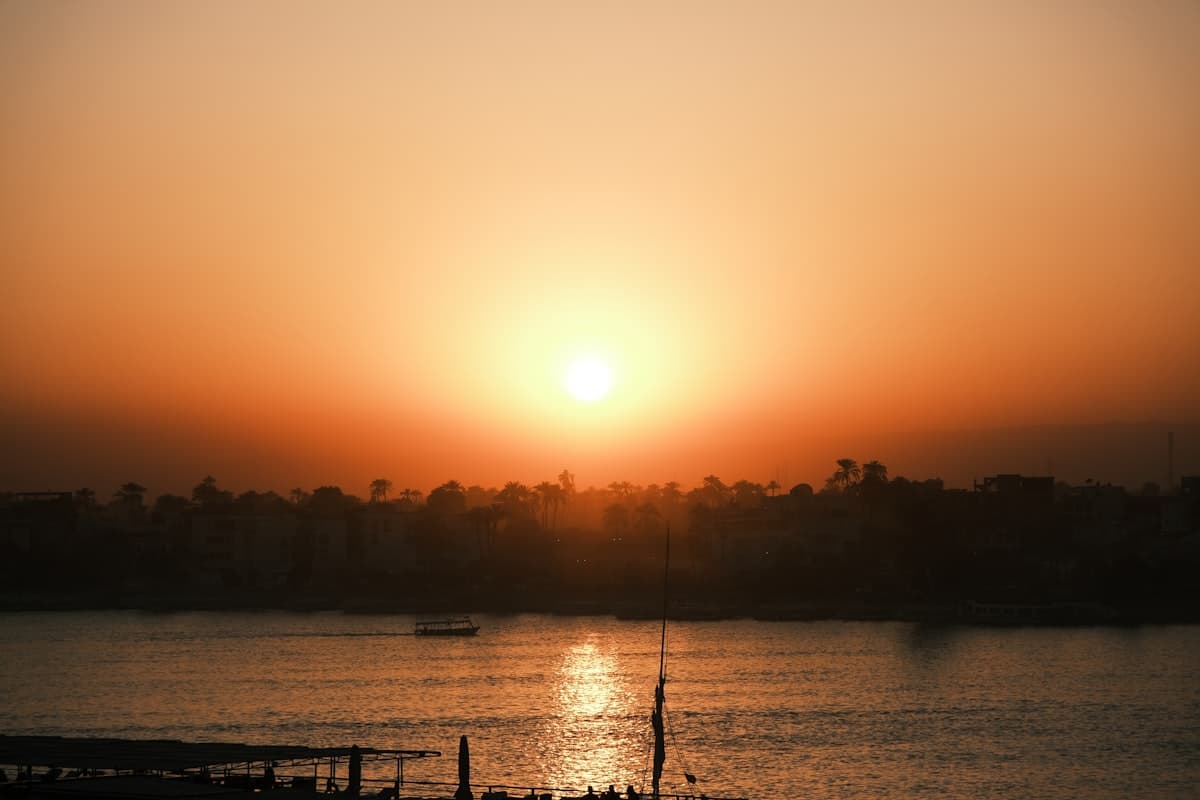
The first thing that hits you when you walk into Dahab's waterfront strip at dusk is not the Red Sea itself but the smell of it: salt and seagrass and faintly, beneath everything, the warm mineral tang of the desert just a few hundred meters behind you. This is a town caught between two worlds, and that tension is exactly what makes it one of the most liveable, most addictive places on the Egyptian coast.
Dahab is not Sharm el-Sheikh. It never wanted to be. Where Sharm sells packaged luxury and crowd-managed coral, Dahab sells slowness. Backpackers have been coming here since the 1980s, divers since the discovery of the Blue Hole made it famous in the 1990s, and now a steady stream of digital nomads, freedivers, and Cairo escapees who rent apartments by the month and forget to leave. The town sits on the Gulf of Aqaba on the Sinai Peninsula, about 85 kilometers north of Sharm, and the light here in the late afternoon turns the Hijaz mountains across the water in Saudi Arabia into something between copper and violet. You will spend more time than you planned staring at those mountains.
This Dahab Egypt travel guide covers everything you need before you arrive: real prices, the dive sites worth your time, what to eat and where, how to avoid the traps that catch most first-timers, and the parts of the Sinai that most tourists miss entirely.
Quick Facts
Best time to visit: October to April for diving, hiking, and outdoor activities. Avoid July and August when temperatures exceed 40°C and the waterfront becomes genuinely uncomfortable.
Entrance fees: There are no entrance fees for Dahab town itself. Snorkeling at the Blue Hole: no official fee, though you will pay a parking or access fee of around EGP 20 to 30 (under $1 USD) at informal checkpoints. Ras Abu Galum Protectorate day entry: EGP 5 (effectively free). Sinai Trail hiking permits: arranged through licensed Bedouin guides, typically bundled into tour costs.
Opening hours: Dahab as a destination operates around the clock. Dive centers typically open 7am to 6pm daily. The Assalah waterfront restaurants run from roughly 8am to midnight or later.
How to get there: From Sharm el-Sheikh airport (SSH), shared minibuses run to Dahab for EGP 50 to 80 per person (about $1 to $2.50 USD) and take roughly 1.5 hours. Private taxis cost EGP 400 to 600 ($13 to $20). From Cairo, East Delta buses run via Taba and take 8 to 10 hours; book at Cairo's Sinai Terminal in Abbassiya for EGP 200 to 300 ($6.50 to $10). There are no direct flights to Dahab.
Time needed: Minimum 4 days to scratch the surface. A week is the sweet spot. Many people stay two to four weeks.
Cost range: Budget EGP 800 to 1,500 per day (hostel, street food, one dive). Mid-range EGP 2,000 to 4,000 per day (private room, restaurant meals, guided activities). Long-term apartment rentals in Assalah start around EGP 8,000 to 15,000 per month.
The Layout of Dahab: Where You Actually Want to Be
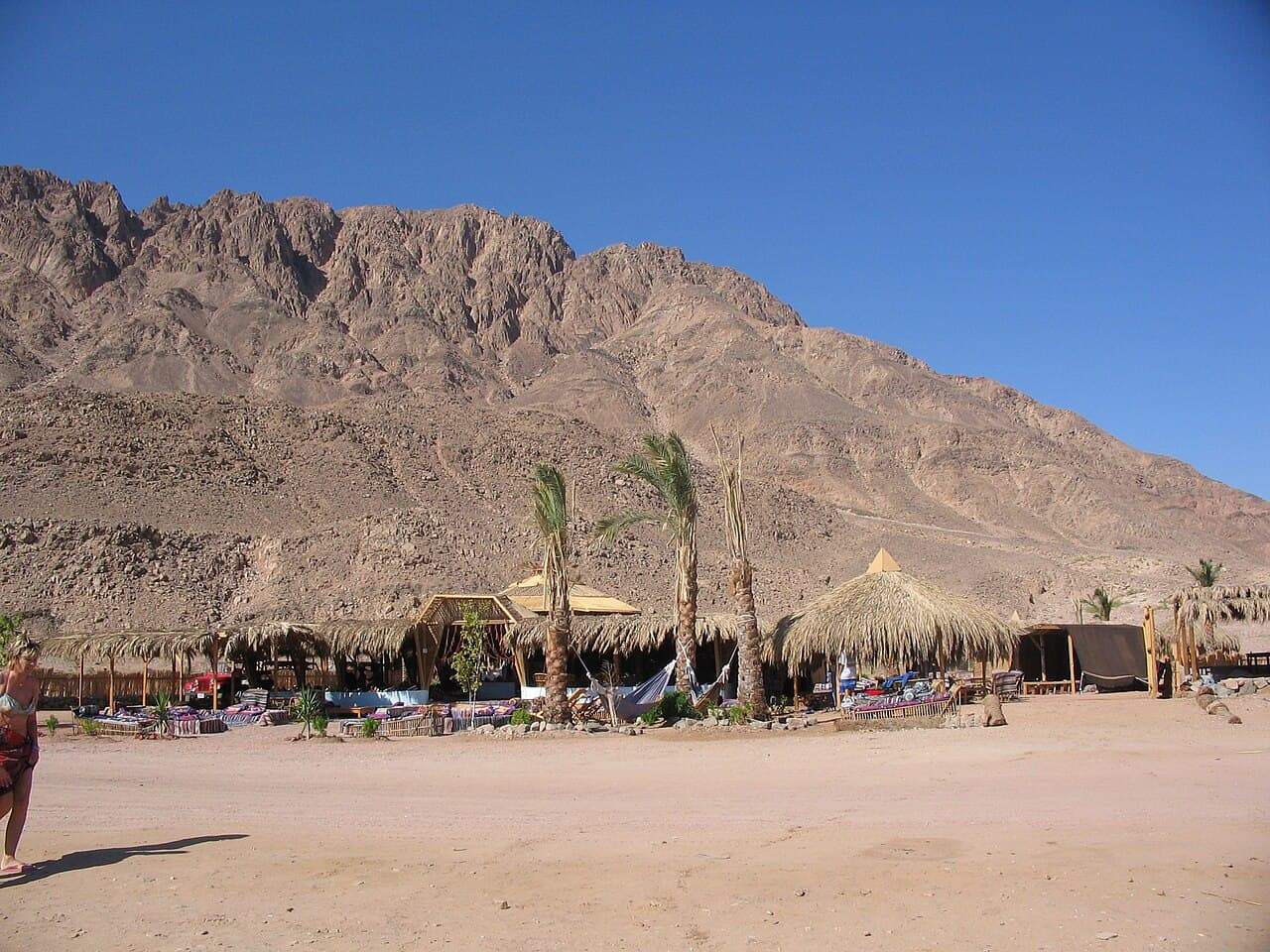
Dahab divides into three zones and understanding them saves you from booking accommodation in the wrong one.
Assalah is where you want to be. It is the original Bedouin fishing village turned traveler hub, and the waterfront promenade here, called the Masbat, is lined with cushioned restaurants built on platforms over the sea. The snorkeling directly off the Masbat is genuinely good. The streets behind the waterfront hold dive centers, gear shops, budget guesthouses, mid-range hotels, and the kind of coffee shops where people sit for three hours with a laptop and one mint tea.
Mashraba connects Assalah to the more commercial center and has some excellent mid-range accommodation options that are quieter than the strip itself.
Dahab City (sometimes called the New Town) is where the bus station is and where most locals actually live. It is functional rather than atmospheric. You will pass through it but you will not stay there unless you have a specific reason to.
The Blue Hole: What Nobody Tells You
The Blue Hole is 6 kilometers north of Assalah and it is both as spectacular as advertised and more complicated than most guides admit. It is a 130-meter-deep submarine sinkhole in the reef, visible from above as a deep indigo circle in an otherwise turquoise lagoon. For snorkelers, the shallow saddle on the seaward edge of the hole offers some of the most dramatic reef scenery in the Red Sea without going deeper than 5 meters.
For divers, the standard route is the Bells dive: entering a shaft to the north and exiting through the Arch at 56 meters to come back through the mouth of the hole. The Arch has killed a significant number of divers, most due to narcosis and poor depth judgment. Reputable dive centers in Dahab will not take recreational divers to the Arch. If a center offers it to you as a casual add-on, walk away.
Practical details: get there before 9am. By 10am the small parking area fills with day-trip buses from Sharm and the atmosphere shifts from serene to chaotic. The Bedouin-run cafe at the top of the hill above the hole does strong tea and decent eggs for EGP 50 to 80. There are toilets. Bring your own water.
Dive Sites Beyond the Blue Hole
Dahab has roughly 20 named dive sites within easy reach and the Blue Hole, for all its fame, is not necessarily the best one for most divers.
The Canyon is a five-minute walk from Assalah and is arguably better than the Blue Hole for the average recreational diver. You descend into a narrow fissure in the reef, swim through a cathedral-like space with light filtering down from above, and emerge onto a sloping reef garden. Depths range from 30 to 52 meters; a good dive center will plan a route that keeps recreational divers in the upper sections where the colors and marine life are richest.
The Islands sit directly off the Masbat waterfront and are accessible for shore snorkeling and easy dives. Napoleon wrasse the size of labradors patrol the sandy channels between coral heads here. This is also where you see the sea turtles that locals treat as neighborhood mascots.
Gabr el-Bint is the site serious divers come for. It requires a boat or a long shore walk and is rarely crowded. The walls are covered in pristine soft coral and the fish biomass is noticeably higher than the more-visited sites. Ask specifically for this site when you book.
Dive costs in Dahab run EGP 600 to 900 per dive including equipment ($20 to $30), or EGP 1,800 to 2,800 for a two-dive day trip with a reputable center. PADI Open Water courses start around EGP 6,000 to 8,000 ($200 to $270). Big Blue, Nesima, and Poseidon consistently get strong safety records and experienced guides.
Eating and Drinking on the Masbat
The waterfront cushion restaurants are a genuine pleasure if you know which ones to pick. They all look roughly similar from a distance: low tables on platforms over the water, shisha smoke drifting, fairy lights after dark. The food quality varies considerably.
Nirvana has been there long enough that the Bedouin family running it knows the difference between a tourist and a regular, and the food tastes like it. The grilled fish comes with rice and salad and costs EGP 200 to 350 depending on the catch. The mint lemonade is made with real mint, not syrup.
Leila's Bakery in the back streets of Assalah does the best breakfast in town: fresh bread, local honey, halawa, eggs cooked to order. Expect to pay EGP 80 to 120 and expect to wait for a table on weekend mornings.
Al-Capone sounds unpromising but does an excellent kofta and serves Stella beer, one of the few genuinely cold spots on the strip.
Street food behind the waterfront: a falafel sandwich costs EGP 5 to 10. Kushari is EGP 20 to 30 for a large bowl from the carts near the bus stop.
Hiking the Sinai Interior
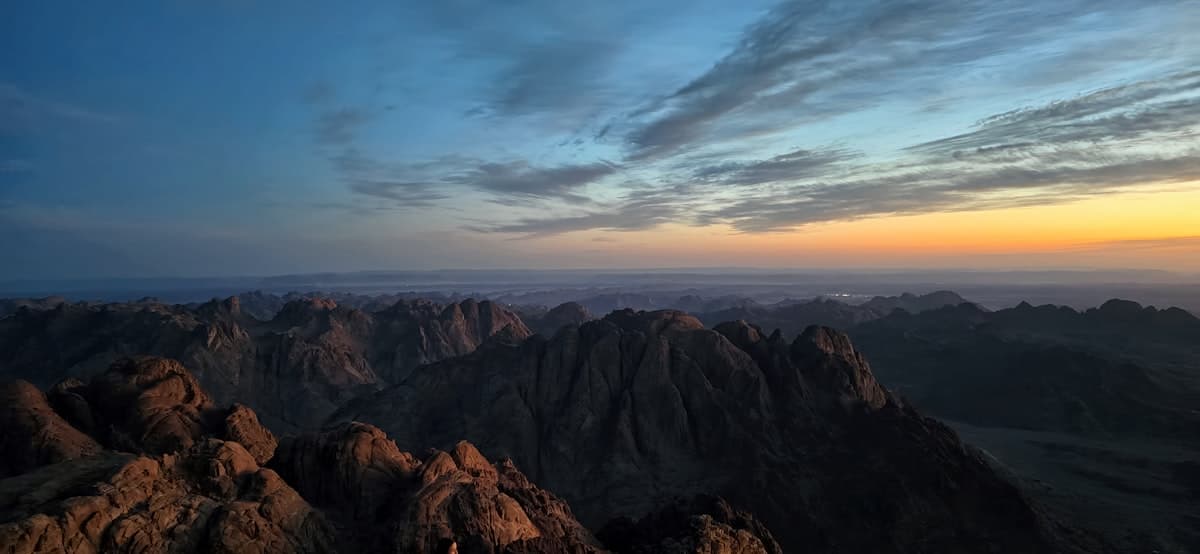
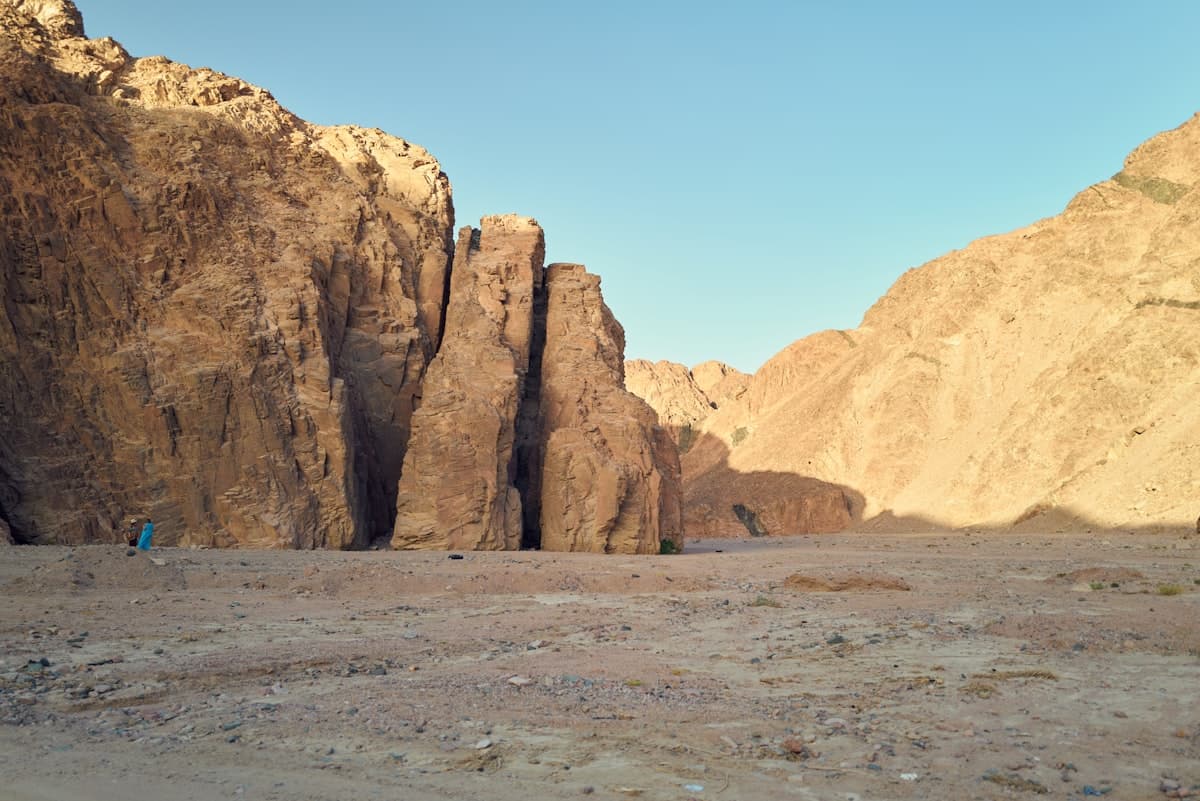
Most Dahab visitors never look up from the sea, which means they miss the other half of what makes this place extraordinary. The mountains immediately behind the town rise to over 1,500 meters and hold canyons, Bedouin gardens, and silence of a quality that is increasingly rare.
The Colored Canyon is two hours' drive north toward Nuweiba. The narrow slot canyon has walls banded in ochre, cream, violet, and rust, and it is best in the two hours after sunrise when the light bounces between the walls. Organized day trips from Dahab cost EGP 400 to 600 per person in a group, including a Jeep and a Bedouin guide. Do not attempt it without a guide; the trail is not obvious and the desert heat is serious.
Mount Sinai (Gebel Musa) is 90 kilometers from Dahab and most people do it as an overnight trip: drive to Saint Catherine's Monastery in the evening, hike up in the dark to reach the 2,285-meter summit for sunrise, descend past the monastery itself. Shared taxis from Dahab to Saint Catherine's cost EGP 50 to 100 per person. Entrance to the monastery is free but it closes at noon and is shut on Sundays and religious holidays.
Common Mistakes Tourists Make
Booking accommodation in Dahab City instead of Assalah. The bus drops you in the new town and some budget booking sites list hotels there without making the distinction clear. The waterfront, the dive centers, and essentially all the reasons people come to Dahab are in Assalah, 3 kilometers away.
Visiting the Blue Hole between 10am and 2pm. The combination of day-trip crowds, harsh overhead light that kills the underwater colors, and peak heat makes this the worst window. Go at 7am or 3pm.
Taking the first dive center that approaches you on the street. Dahab has a handful of genuinely excellent, safety-conscious dive operations and a longer tail of budget outfits with outdated equipment and guides who will take you deeper than they should to impress you. Check PADI or SSI certification and look at recent reviews on diving forums rather than general travel sites.
Hiring a private taxi without negotiating before you get in. There are no meters. Agree on a price in Egyptian pounds before the door closes. The going rate from Assalah to the Blue Hole is EGP 80 to 120 return with waiting time.
Underestimating the desert sun while snorkeling. The combination of cool water and intense Sinai sun means you burn on your back and backs of your legs before you feel anything. A rash guard or old t-shirt is not optional.
Changing money at the hotels. Rates at the ATMs in Assalah (there are two working ones near the waterfront, both with reasonable rates) or the bank in the new town are significantly better. Hotel exchange desks take a margin of 8 to 12 percent.
Missing the interior entirely. Three days on the reef and no time in the mountains or desert is a real loss. Even half a day in the Colored Canyon or a sunrise camel ride into the dunes behind town gives you a completely different country.
Practical Tips
Visas: Most nationalities can get a free Sinai-only visa on arrival at Sharm el-Sheikh airport or at the Taba border crossing. This allows you to stay in the Sinai, including Dahab, for up to 15 days. If you want to visit Cairo or the rest of Egypt during the same trip, you need a full Egyptian visa, which costs $25 USD on arrival.
SIM cards: Vodafone Egypt and Orange both have signal in Assalah. Buy a SIM at Sharm airport (EGP 150 to 200 for a data package) rather than relying on hotel wifi.
Water: Do not drink tap water. Large 10-liter water jugs cost EGP 15 to 20 from any grocery and last two people two or three days.
Safety: Dahab is extremely safe by any measure. The main practical concern is traffic on the single road through Assalah, which has no pavements in sections. Walk toward traffic and watch for the microbus drivers who treat the strip as a racetrack.
Freediving: Dahab has become one of the world's leading freediving destinations. Alchemy and Freedive Dahab both run courses starting from AIDA 1 level for beginners, costs starting around EGP 3,500 ($115) for a two-day course.
Currency: Carry cash. Many smaller restaurants, guesthouses, and gear shops do not take cards. The ATM limit per transaction is typically EGP 3,000 to 5,000; if you need more, plan multiple withdrawals.
Frequently Asked Questions
The Weekly Dispatch
More on Egypt, every Friday.
Cultural depth and places most guides never mention.
No spam. Unsubscribe anytime.
About the author
Sarah Osman
Cairo-based writer. Medical degree she never used. Twelve years in Egypt instead.
Full bio →