Greeks in Egypt: Alexandria's Lost World History Guide
Alexandria was founded in 331 BC and within 100 years held the largest library on earth. Almost nothing physical survives. What remains is stranger and more interesting.
Quick Facts
- Best time to visit
- October to April. The Mediterranean climate makes summer sticky and hazy. March to May is particularly good: clear light, manageable temperatures, fewer visitors than December-January.
- Entrance fee
- Graeco-Roman Museum EGP 200 (approx $4 USD), students EGP 100. Catacombs of Kom el-Shoqafa EGP 180 (approx $3.50 USD). Pompey's Pillar complex EGP 100 (approx $2 USD). National Museum of Alexandria EGP 150 (approx $3 USD).
- Opening hours
- Most sites daily 9am to 4pm (winter), some to 5pm (summer). Graeco-Roman Museum closed Mondays. Verify hours the day before as seasonal adjustments apply.
- How to get there
- Spanish train from Cairo Ramses to Alexandria Misr station: EGP 180-250 first class, 3 hours, book ahead. Within Alexandria: taxis EGP 30-60 per trip, microbuses EGP 3-5. The main Greek-era sites cluster within 3km of each other in central Alexandria.
- Time needed
- Minimum two full days to cover the Graeco-Roman Museum, Kom el-Shoqafa, Pompey's Pillar, and the National Museum with meaningful time at each. One day produces a checklist, not an understanding.
- Cost range
- Budget EGP 600-900 per day including hostel, street food, and site entries. Mid-range EGP 1,800-3,000 per day with a Corniche-area hotel and sit-down restaurants. Private guide for half-day EGP 400-600 extra.
Quick Facts
Best time to visit: October through April, when Mediterranean humidity drops and the light is clear rather than hazy.
Key site entrance fees: Graeco-Roman Museum: EGP 200 (approx $4 USD), students EGP 100. Reopened after a major renovation. Go. Catacombs of Kom el-Shoqafa: EGP 180 (approx $3.50 USD) Pompey's Pillar complex: EGP 100 (approx $2 USD) Royal Jewelry Museum (for Ptolemaic-era continuity): EGP 150 (approx $3 USD)
Opening hours: Most sites open daily 9am to 4pm in winter, some extending to 5pm in summer. The Graeco-Roman Museum closes Mondays.
How to get there: Alexandria is 3 hours by train from Cairo. Spanish trains (air-conditioned, first class) cost EGP 180-250 one way and leave Cairo Ramses station several times daily. Book at least a day ahead. From Alexandria Misr station, the key Greek-era sites cluster within a 3km radius. Taxis within the city run EGP 30-60 per trip. A microbus from the train station to the Corniche costs EGP 3.
Time needed: Two full days minimum to understand the layering. One day is a checklist. Two days is a conversation.
Cost range: Budget EGP 600-900 per day (hostel, street food, site entries). Mid-range EGP 1,800-3,000 per day (small hotel near the Corniche, sit-down restaurants).
---
Why Alexandria Is Not What You Think It Is
There are two Alexandrias. The one most visitors expect: columns, scrolls, Cleopatra, the lighthouse, the library. The one that actually exists: a working Mediterranean port city of 5 million people, built largely in the 19th and 20th centuries, sitting on top of a ghost city that archaeology is still, slowly, recovering from the ground and the sea.
Alexander the Great chose this particular stretch of coast in 331 BC reportedly after a dream in which Homer appeared and quoted the Odyssey at him. Whether or not you believe the dream, the geography was impeccable: a natural harbor protected by the island of Pharos, a freshwater lake behind, and a position that made it the pivot point between the Mediterranean world and the Nile corridor leading into Africa. He traced the city's outline himself, reportedly using barley flour because chalk ran out. Then he left and never came back. He died in Babylon eight years later, and his body, after a complicated journey through the ancient world, was eventually buried in Alexandria in a tomb that nobody has yet found.
The Greeks who ran Egypt after Alexander, the Ptolemies, were not Greek in any conventional sense by the third generation. They were a Mediterranean hybrid dynasty who spoke Greek, worshipped Egyptian gods, married their siblings (following Pharaonic custom), and produced the most intellectually extraordinary city of the ancient world. At its height, Ptolemaic Alexandria held perhaps 500,000 people, making it the second-largest city on earth after Rome. The Library of Alexandria, at its peak under Ptolemy III, may have held 700,000 scrolls, acquired partly through a policy of confiscating books from every ship that docked in the harbor, copying them, and returning the copies.
Almost none of the physical city survives above ground. The royal quarter, the library, the great Mouseion (the research institute the library served), the lighthouse, the mausoleum of Alexander: all gone. The medieval city was built on top of the ancient one. The sea level has risen. But what remains, and what the archaeology is slowly returning, is worth understanding deeply.
---
The Graeco-Roman Museum: Where the Hybrid Begins
The Graeco-Roman Museum on El-Mathaf El-Romani Street reopened after a fifteen-year renovation and it is, without qualification, the best place in the world to understand what Greeks in Egypt actually produced culturally. Not Greek culture. Not Egyptian culture. The specific fusion that happened when a Macedonian dynasty decided to legitimize itself by becoming Pharaoh.
The most important object in the collection is not the one in the main catalog photograph. It is a small, almost casually displayed bust of Serapis, the god invented by Ptolemy I around 280 BC. Serapis was a deliberately engineered deity: he combined the Egyptian Osiris-Apis bull god with the Greek Zeus and the healing god Asclepius, wrapped in iconography that both cultures could accept. He was worshipped across the entire Mediterranean world within a generation, eventually competing with the new Christian god for converts in Rome. The bust in the museum shows him with Greek features and Egyptian posture, a combination that reads as neither and both simultaneously. This is Alexandria.
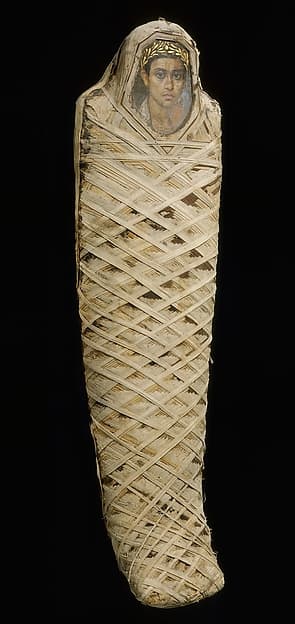
The museum also holds a collection of tanagra figurines, small terracotta statuettes of women that were mass-produced across the Hellenistic world, and a room of mummy portraits from the Fayum oasis, painted in the Roman period, which show Egyptian mummies accompanied by naturalistic portraits of the deceased in a completely Roman style. These Fayum portraits are the reason we know what people actually looked like in ancient Egypt. They are direct ancestors of European panel painting, and they were produced by communities that were simultaneously Egyptian, Greek, and Roman.
Spend at least 90 minutes here. Read the object labels. The museum was built in 1892, and the building itself, Italian-influenced with an internal courtyard garden, is a reminder that Alexandria's European chapter was another layer of the same civilizational palimpsest.
---
Kom el-Shoqafa and the Moment Three Religions Used the Same Chisel
The Catacombs of Kom el-Shoqafa, discovered in 1900 when a donkey fell through a hole in the ground, are the most intellectually specific thing in Alexandria. They were carved between the 1st and 4th centuries AD and they contain, in a single burial complex, the most concentrated example of Egyptian-Greek-Roman religious synthesis that has survived anywhere.
Descend the spiral staircase (bring a light if you have one, the site lighting is inconsistent) into a triclinium, a Roman dining room for funeral banquets, then further down into the main tomb chamber. The sculptures here are Egyptian gods wearing Roman armor. Anubis, the jackal-headed god of embalming, is depicted wearing a Roman military uniform. Sobek the crocodile god appears with Medusa's head on his breastplate, a Greek-Roman protective motif. The burial niches are carved in a style that combines Egyptian canopic imagery with Roman architectural decoration without apparent contradiction.
The people buried here were probably wealthy Alexandrian Greeks or Romans who had thoroughly absorbed Egyptian religious practice, or wealthy Egyptians who had absorbed Roman visual culture, or some combination that did not feel the need to resolve the question. This is not syncretism as a theological project. It is syncretism as daily life.
The site is not overcrowded, especially on weekday mornings. You will very likely have sections of it to yourself. The smell is cool stone and old dust, and the silence in the lower chambers is considerable.
---
Pompey's Pillar and What the Name Gets Wrong
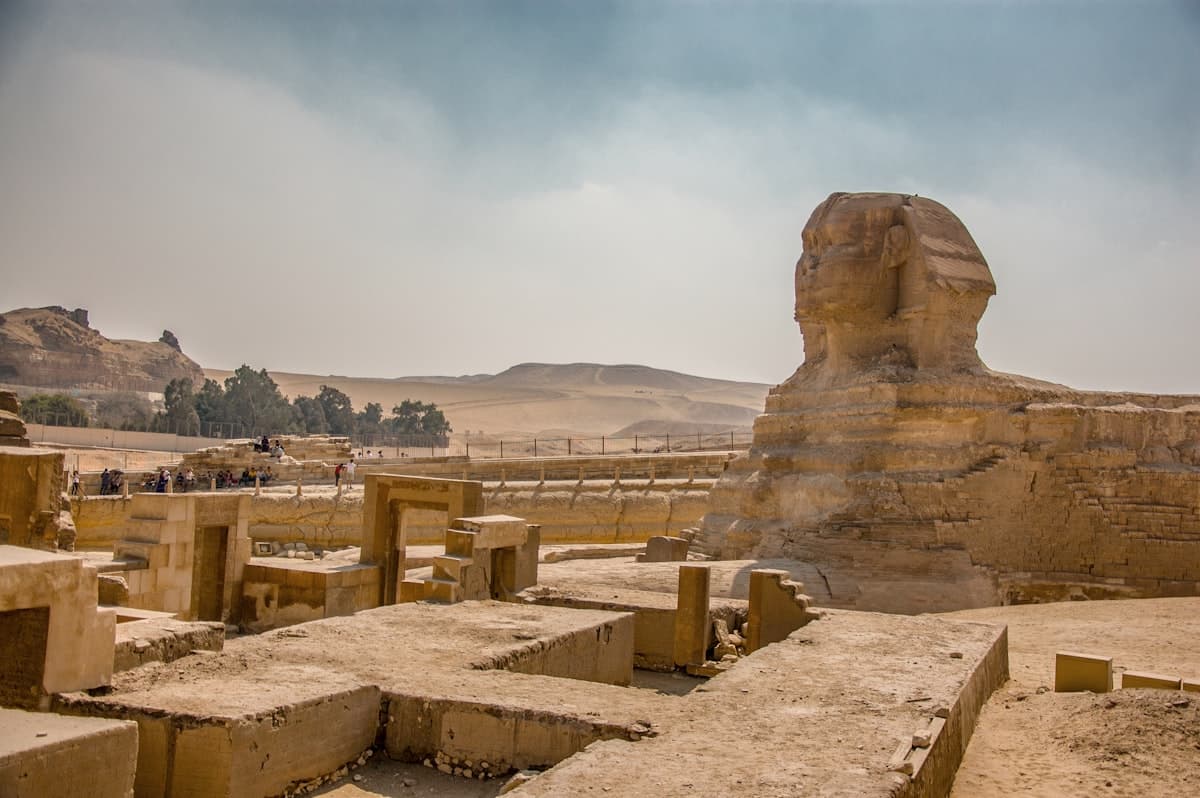
The 30-meter red granite column standing in the Serapeum district has been called Pompey's Pillar since medieval European travelers decided it must commemorate the Roman general Pompey, who was murdered on an Egyptian beach in 48 BC. It does not. The inscription at its base, in Greek, states clearly that it was erected in honor of the Emperor Diocletian around 300 AD. Pompey's name was attached to it by people who did not read Greek, a habit that has persisted for 700 years.
What the column actually marks is more interesting. It stands in the ruins of the Serapeum, the great temple of Serapis that was one of the largest religious complexes in the ancient world. In 391 AD, a Christian mob incited by Bishop Theophilus of Alexandria destroyed the Serapeum and likely burned a satellite library associated with it. This event is sometimes conflated with the burning of the main Library of Alexandria, which is a separate and still historically debated question, but the destruction of the Serapeum is documented and represented a specific moment when one religion decided to physically erase another. The column survived because columns are harder to pull down than statues.
The sphinx statues at the base of the column are pink Aswan granite, and they were not originally part of this complex. They were brought here from elsewhere, a reminder that Alexandria was itself assembled from pieces of Egypt it had absorbed.
---
The Connections: One City, Five Civilizations
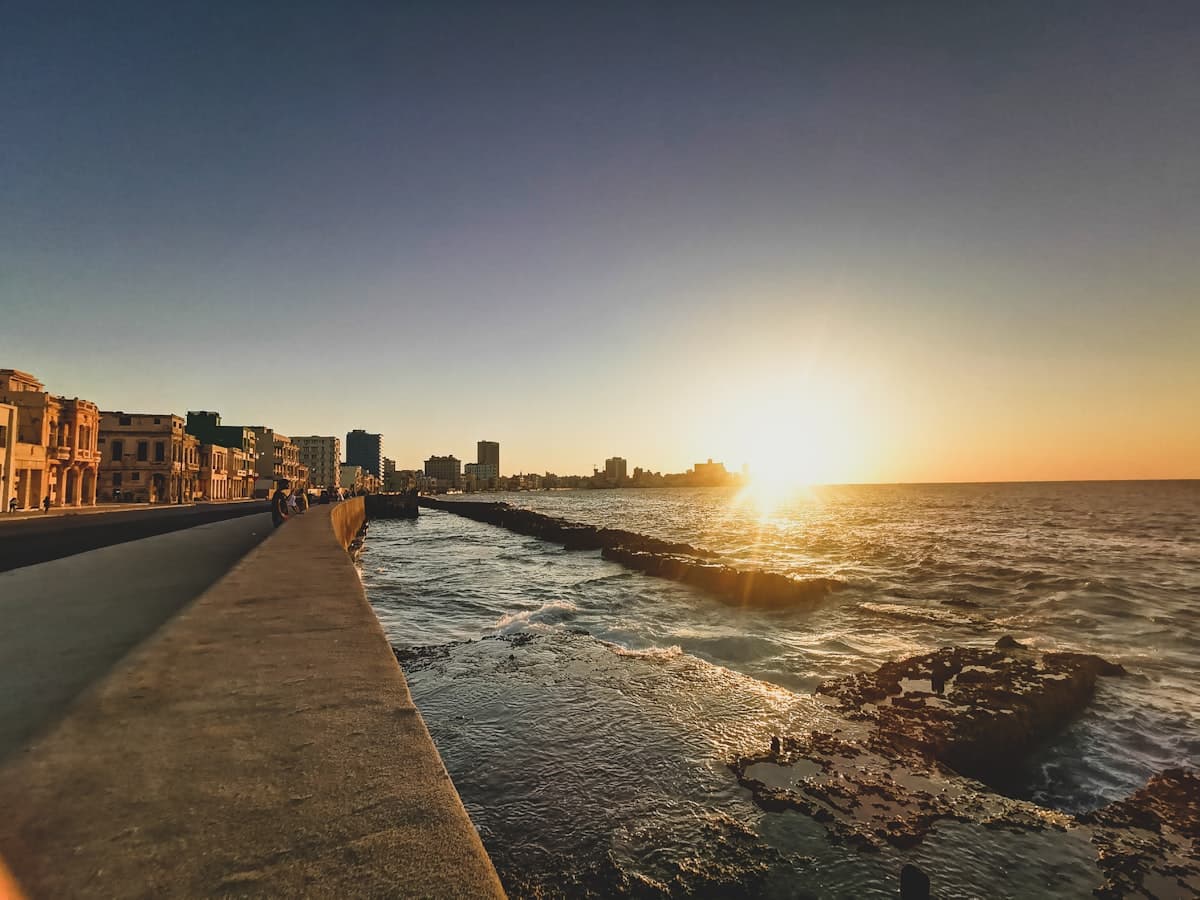
Alexandria is the place in Egypt where the civilizational layers are most compressed and most visible because the city has been continuously occupied and continuously contested.
The Ptolemies built on a Pharaonic fishing village called Rhakotis. The Romans built on the Ptolemaic city and added their own layer, including a hippodrome and baths whose outlines you can trace in the current street grid. The Byzantines converted the temples to churches. The Arab conquest of 641 AD under Amr ibn al-As resulted in a letter to the Caliph Umar famously describing the city as containing 4,000 palaces, 4,000 baths, 400 theaters, 12,000 vegetable sellers, and 40,000 Jews. Arab geographers continued to describe it as the greatest city in the world for another two centuries.
The medieval Mamluk and Ottoman periods gradually shifted Egypt's commercial center back to Cairo, and Alexandria contracted. Napoleon's 1798 invasion brought French scholars who documented the ruins systematically, and the Description de l'Egypte, the encyclopedia of everything French scientists observed, included detailed surveys of ancient monuments that no longer exist.
Mohammed Ali rebuilt Alexandria as a Mediterranean commercial hub in the early 19th century, bringing in Greek, Italian, and Syrian merchant communities who created the multilingual, caffeinated, slightly melancholy European-Egyptian city that Lawrence Durrell described in the Alexandria Quartet. That city, too, is largely gone, dispersed by the nationalizations of the 1950s and 1960s. What remains are the buildings without the people who filled them.
This is what Alexandria is: a city that has always been several cities at once, and has always been losing one while becoming another.
---
Common Mistakes
Expecting visible ruins on a Greek scale. Athens has the Acropolis. Rome has the Forum. Alexandria has almost nothing above ground from its greatest period. If you come expecting Parthenon-scale monuments to Ptolemaic civilization, you will be disoriented. Adjust the frame: you are here to read a city that exists mostly in fragments, in museums, in foundations that keep appearing under construction sites. This requires a different kind of attention.
Spending your first morning at Pompey's Pillar. Start at the Graeco-Roman Museum. The column makes more sense after you understand the Serapis cult. Sequencing matters here.
The Bibliotheca Alexandrina sound and light show. The modern library is an architectural statement worth seeing, but the EGP 150-200 evening cultural programs are generally surface-level introductions to Alexandrian history that will tell you nothing this article has not already covered. The library's manuscript museum (separate EGP 50 ticket) is a better use of an hour.
Skipping Kom el-Shoqafa because it sounds minor. Every general itinerary frontloads Pompey's Pillar and gives Kom el-Shoqafa twenty minutes. This is backwards. The catacombs are the site where the Greek-Egyptian-Roman synthesis is most physically present. Give it ninety minutes and a flashlight.
Going to the beach at Montazah on a cultural research trip. Montazah Palace and its grounds are pleasant, and the palace has a small Ptolemaic-era display. But the beach is the beach. Keep it for the last afternoon if you have energy, not as a substitute for site time.
Trusting a taxi driver's knowledge of site opening hours. Hours change seasonally and sites occasionally close for restoration without notice. Check with your hotel reception the morning before any planned visit, or call the Egyptian Museum Authority information line.
Assuming the Corniche cafes are tourist traps. The fish restaurants on the eastern Corniche are where Alexandrians eat. Order the catch of the day, ask for it grilled rather than fried, and pay EGP 120-200 for a meal that is as close to the ancient city's actual daily life as anything you will find here.
---
Practical Tips
The Graeco-Roman Museum has limited English signage in some rooms. A private guide for a half-day costs EGP 400-600 and is genuinely worth it for the context they provide at the museum specifically. Ask your hotel to arrange a licensed guide, not a fixer.
Alexandria's street harassment level is lower than Cairo's but not zero. The Corniche is fine. The neighborhoods around the older sites, especially Kom el-Shoqafa, involve more navigation through residential areas where uninvited guiding offers will come frequently. A firm but polite refusal works. Engaging with the offer does not speed things up.
Bring water. The sites have no reliable refreshment stands and summer temperatures regularly reach 35 degrees.
The best light in Alexandria is before 9am on the Corniche looking east, and in the late afternoon around 4pm when the Mediterranean light goes golden and the city's European facades glow. Photographers: plan accordingly.
If you have a second day, take a microbus east to Abu Qir, the site of the Battle of the Nile in 1798 where Nelson destroyed Napoleon's fleet, and where archaeologists have been recovering Ptolemaic-era statues and sphinxes from an underwater site off the coast since the 1990s. The town is unremarkable but the seafood is excellent and the idea of standing at a place where three historical eras collided in a single bay is one of those specifically Alexandrian pleasures.
Frequently Asked Questions
The Weekly Dispatch
More on Egypt, every Friday.
Cultural depth and places most guides never mention.
No spam. Unsubscribe anytime.