Jewish Alexandria Egypt: History, Synagogues and What Survives
At its peak, Alexandria's Jewish community numbered 80,000. By 1970, fewer than 100 remained. The synagogues are still there. The story of what happened is harder to find.

Quick Facts
- Best time to visit
- October to April. Mediterranean winters are mild (15 to 22 degrees Celsius), the city is less crowded, and the quality of light in the old quarter is clearer without summer haze.
- Entrance fee
- Eliyahu Hanavi Synagogue: free entry, donation expected (EGP 50 to 100 appropriate). Jewish Cemetery at Chatby: approximately EGP 100 (approx $2 USD), paid at the gate.
- Opening hours
- Eliyahu Hanavi: Saturday mornings and weekday visits by appointment only. Jewish Cemetery at Chatby: Sunday to Thursday, 9am to 3pm. Both sites can close without notice on Jewish or Egyptian public holidays.
- How to get there
- From Raml Station (downtown Alexandria), walk south on Nabi Daniel Street approximately 10 minutes to Eliyahu Hanavi. Taxi from Raml Station costs EGP 30 to 50. Taxi from the synagogue to Chatby Cemetery costs approximately EGP 40. No direct microbus route connects the two sites efficiently.
- Time needed
- 45 minutes to 1 hour for the synagogue. 1 to 1.5 hours for the cemetery. Add 30 minutes walking the former synagogue sites in Moharrem Bey and along the Corniche for context. Half day minimum, full day if combining with the Greco-Roman Museum and Cavafy Museum.
- Cost range
- Budget EGP 400 to 700 per day covering transport, site donations, and lunch. The heritage sites themselves cost almost nothing. Paid guided tours from major hotels cost EGP 800 to 1,200 and are not recommended.
At its peak, Alexandria's Jewish community numbered 80,000. By 1970, fewer than a hundred remained. The synagogues are still there, scrubbed and restored and largely empty, tended by Egyptian caretakers whose families have been Muslim for generations. This is not a story of erasure, exactly. It is something more complicated: a story of a civilization that was genuinely cosmopolitan, that collapsed in a single generation, and that left behind stone buildings far more durable than the political decisions that emptied them.
When you stand inside the Eliyahu Hanavi Synagogue on Nabi Daniel Street and look up at the chandeliers that were last lit for a full congregation before the 1956 Suez Crisis, you are not standing inside a museum. You are standing inside a city's unfinished sentence.
Quick Facts
Best time to visit: October to April, when Mediterranean temperatures stay between 15 and 22 degrees Celsius and the city is not under summer haze. Jewish heritage sites are open year-round but can close without notice for Egyptian state or Jewish calendar holidays.
Entrance fee: Eliyahu Hanavi Synagogue entry is free, though a donation is expected and appropriate. Some sources list a nominal entry of EGP 50 (approx $1 USD) collected informally. The Jewish Cemetery on Chatby Road charges approximately EGP 100 (approx $2 USD) for entry; confirm at the gate.
Opening hours: Eliyahu Hanavi is officially open Saturday mornings for those who coordinate in advance with the Jewish community representative, and by appointment on weekdays. Do not arrive unannounced and expect entry. The Chatby Cemetery is generally open Sunday through Thursday, 9am to 3pm.
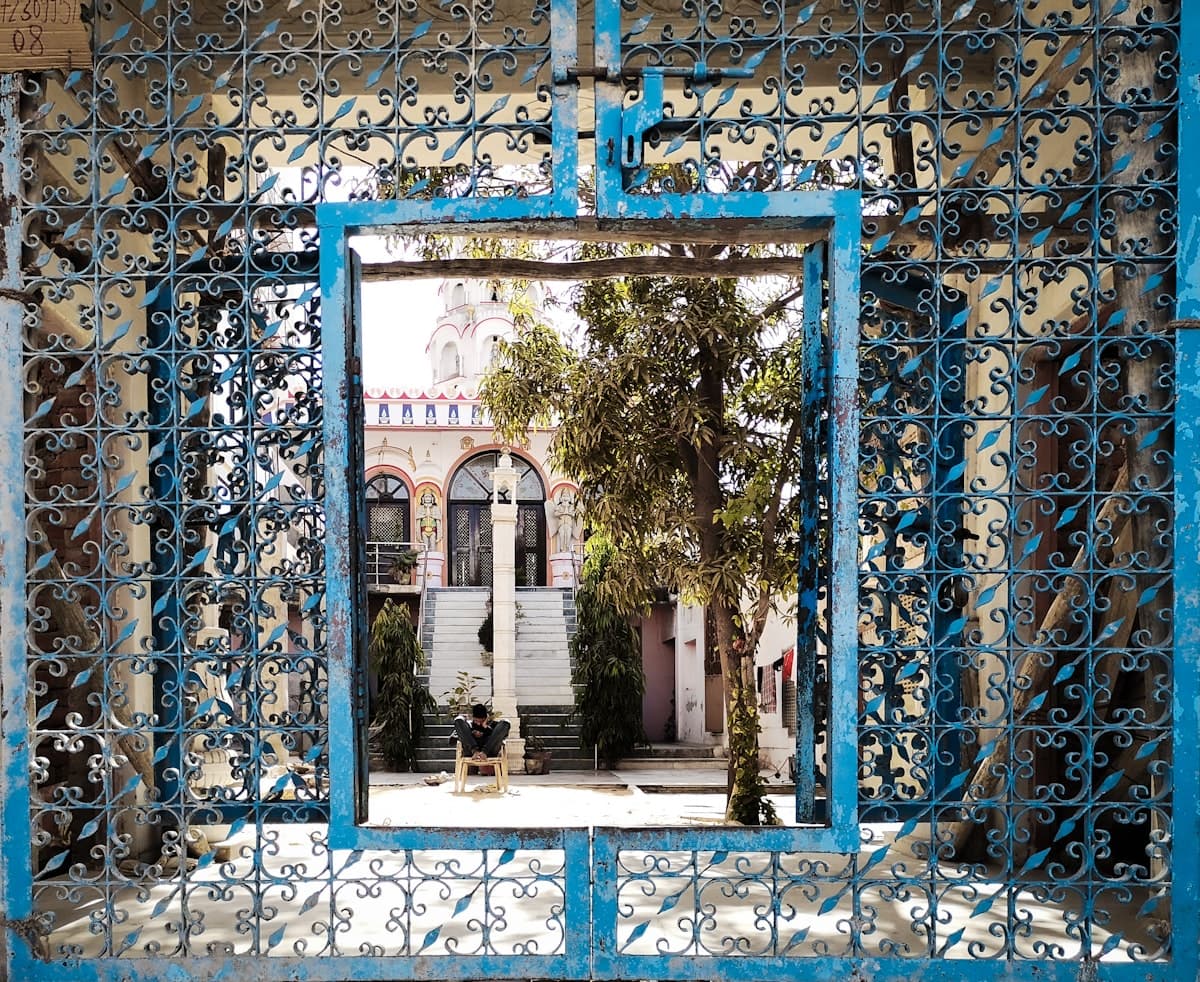
How to get there: From downtown Alexandria (Raml Station), walk south on Nabi Daniel Street for approximately 10 minutes. Eliyahu Hanavi is on your left, recognizable by its blue-painted iron gate. Taxis from Raml Station cost EGP 30 to 50. The Chatby Cemetery is a 15-minute taxi ride from the synagogue, approximately EGP 40.
Time needed: The synagogue itself requires 45 minutes to an hour. Add the Jewish Cemetery and the site of the former Ben Ezra Synagogue (now gone, replaced by a school near the Greek Catholic Patriarchate) and you have a half-day walk through the old European quarter. Combining with the Greco-Roman Museum and the catacombs of Kom el-Shoqafa makes a logical full day.
Cost range: Budget EGP 400 to 700 per day for this itinerary including transport and lunch in a local café. The sites themselves cost almost nothing.
Why This Place Matters
Alexandria's Jews were not a medieval minority clinging to the margins of an Islamic city. They were, for significant stretches of history, among the city's founders and architects. The Jewish community of Alexandria predates the Arab conquest by nearly a thousand years. When Alexander the Great established the city in 331 BCE, he reportedly allocated one of its five urban districts specifically to Jewish settlers. By the first century CE, the Jewish philosopher Philo of Alexandria was writing Greek-language theology that would directly shape early Christian thought, and the city's Jewish population had already translated the Hebrew Bible into Greek, producing the Septuagint, the version of scripture that most of the early Christian world actually read.
That is not a footnote. That is the foundation of Western religious literature sitting in a North African port city.
The community survived Roman rule, Byzantine Christianity, the Arab conquest, Ottoman governance, and French occupation. It survived Napoleon. What it did not survive was the combination of Israeli statehood in 1948, Egyptian nationalism in the early 1950s, and the Suez Crisis of 1956, after which Egyptian Jews were given 48 hours to leave and allowed to take one suitcase and a small amount of cash. Families that had lived in Alexandria for thirty generations packed what they could carry and went to Israel, France, Brazil, and Italy.
The buildings stayed.
The Synagogues: What You Will Actually See
Eliyahu Hanavi: The One That Survived
The Eliyahu Hanavi Synagogue, also transliterated as Elie Hazan or the Prophet Elijah Synagogue, is the largest and best-preserved Jewish site in Alexandria. Built in 1354 on the site of an earlier synagogue, it was substantially reconstructed in the nineteenth century by the Aghion family, one of the great Alexandrian Jewish banking dynasties. The interior holds roughly 700 people, with a women's gallery along the upper perimeter, massive brass chandeliers, and a bimah (raised reading platform) in dark wood that was carved in the 1880s.
What strikes most visitors is the quality of light. The clerestory windows are original, and the morning sun comes through them in columns that fall on marble floors that have not changed position since the building was new. The caretakers are Egyptian, appointed by the government, and they keep the space immaculate. There is a particular kind of institutional melancholy to a perfectly maintained room that no congregation will ever fill again, and Eliyahu Hanavi has it completely.
The synagogue sits on Nabi Daniel Street, a name that is itself a palimpsest: Nabi Daniel means Prophet Daniel in Arabic, and local tradition holds that Alexander the Great may be buried somewhere beneath this street. No excavation has ever confirmed this, but the street has produced enough Ptolemaic-era artifacts over the years that it is not a story to dismiss entirely.
The Jewish Cemetery at Chatby
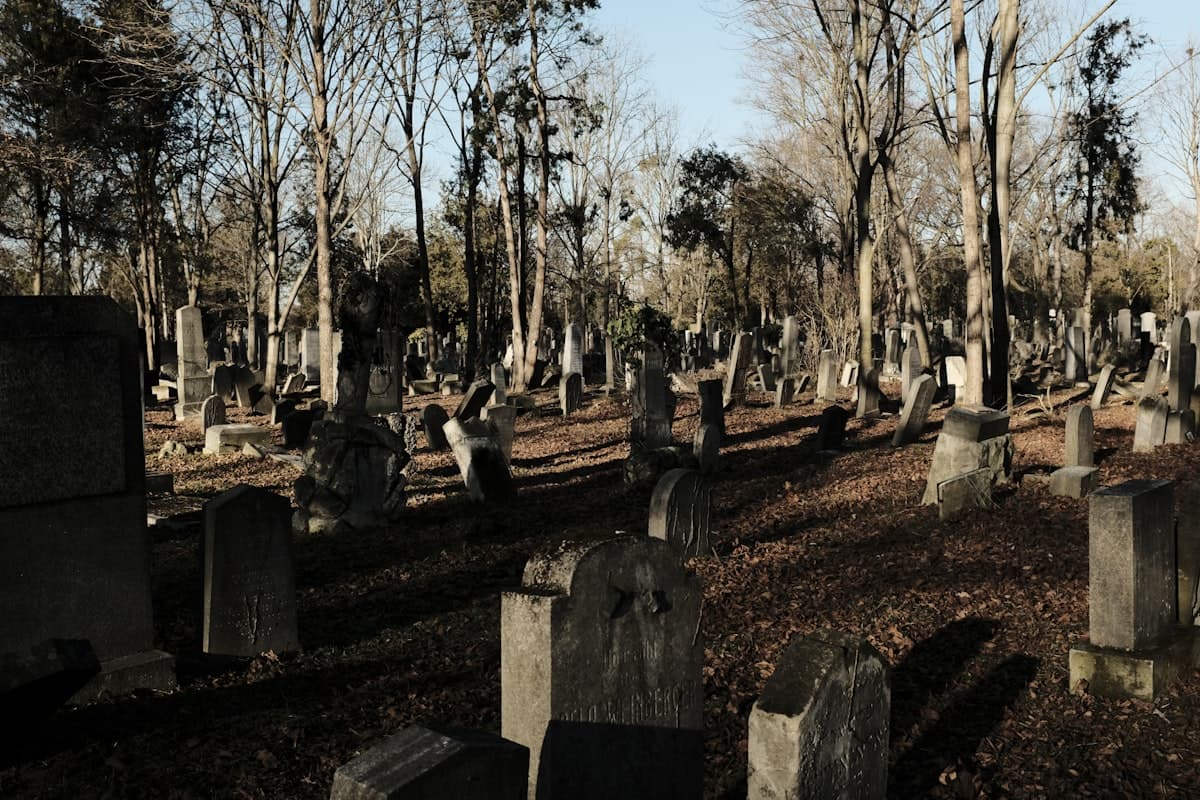
Far less visited, and far more revealing, is the Jewish Cemetery at Chatby, east of the city center. This is where the community left its most legible record. The graves run from the early nineteenth century through the 1960s, and they are written in French, Italian, Greek, Arabic, and Hebrew, sometimes all five on a single headstone. This was a community that did not translate itself into a single language because it lived in all of them simultaneously.
The Chatby cemetery contains a section dedicated to Jewish soldiers who died fighting for Britain in the North Africa campaign of World War II, a detail that shatters any simple narrative about the community's place in Egyptian or colonial history. These men fought under British command, were buried in Egyptian soil, and their graves are now tended by the Egyptian government's ministry of military cemeteries.
Arrive early. The cemetery receives very few visitors, and the caretaker will often walk with you and point out specific family plots. Bring a bottle of water to offer, and expect to spend time looking. The density of information on these stones, family names repeated across generations, professions, countries of origin, is the closest you will get to a demographic portrait of the vanished community.
What Happened to the Other Synagogues
Eliyahu Hanavi is the survivor. It is not the whole picture.
Alexandria once had dozens of Jewish congregational spaces, reflecting the internal divisions of the community: Sephardic Jews who arrived after the Spanish expulsion of 1492, Ashkenazi Jews from Eastern Europe who came through the Ottoman Empire, Karaite Jews who rejected the Talmud and maintained their own separate liturgical tradition, and Romaniote Jews whose Alexandrian roots were older than any of these groups.
The Sha'ar Hashamayim Synagogue in Cairo is often compared to Eliyahu Hanavi, and the two institutions maintained a rivalry and occasional cooperation for much of the twentieth century. But in Alexandria, the other congregational buildings have been repurposed or demolished. One former synagogue on the Corniche is now a commercial building whose owners are aware of its history and prefer that visitors not ask about it. Another, in the Moharrem Bey district, has been a school since the 1960s and retains its exterior arched windows but nothing of its interior.
The Ben Ezra Synagogue that tourists sometimes seek in Alexandria should not be confused with the Ben Ezra Synagogue in Cairo's Coptic quarter, which is well-preserved and accessible. The Cairo Ben Ezra is where the Cairo Geniza was discovered in 1896, a storage room containing nearly 300,000 Jewish manuscript fragments dating from the ninth to the nineteenth centuries, the largest single archive of medieval Jewish life ever found. The Alexandrian community had its own document caches, most of which are now dispersed through European university libraries.
The Connections
The Jewish history of Alexandria is inseparable from the city's broader character as a place where civilizations did not take turns but overlapped. The Eliyahu Hanavi Synagogue is three blocks from the Greek Orthodox Patriarchate. The Greek Orthodox Patriarchate is four blocks from the Latin Catholic Cathedral. The Latin Catholic Cathedral is adjacent to a nineteenth-century mosque built on the foundations of a Byzantine church that was itself built on a Ptolemaic temple precinct. None of these communities lived in isolation from the others, and the architecture reflects it: the Eliyahu Hanavi's nineteenth-century renovation used the same Italian craftsmen who were working on the city's Coptic and Catholic churches at the same time.
The Karaite Jewish community of Alexandria had its own particular connection to Egyptian history that most visitors never learn: the Karaites settled in Fustat (Old Cairo) in the tenth century, and their community records, preserved in the Cairo Geniza, provide historians with the most detailed account of daily life in medieval Egypt available from any source. Their presence in Alexandria was smaller and later, but it connected the city to a continuous tradition of Jewish scholarship in the Nile Valley stretching back to the Elephantine papyri, documents from a fifth-century BCE Jewish military colony at Aswan that are among the oldest evidence of Jewish religious life outside the Levant.
If you are coming from Cairo, visit the Ben Ezra Synagogue in Coptic Cairo first. Then come to Alexandria. The two cities held the two poles of Egyptian Jewish civilization, and you cannot fully understand either without the other.
Common Mistakes
Arriving without an appointment. Eliyahu Hanavi is not a museum with ticket booths. It requires coordination, either through the Egyptian Jewish community representative or through your hotel concierge. Showing up unannounced on a Tuesday afternoon will result in a locked gate and a frustrating conversation.
Treating this as a one-site itinerary. The synagogue alone gives you the architecture. The cemetery gives you the people. The former synagogue buildings in Moharrem Bey and along the Corniche give you the scale of what was lost. You need all three to understand the community, not just the one that survived.
Conflating Alexandria's Jewish history with Israeli-Palestinian politics. This is Egyptian history, Mediterranean history, and the caretakers and Egyptian guides who discuss it are doing so in that frame. Visitors who arrive wanting to make contemporary political arguments will find the conversation closing quickly and will miss a genuine historical education.
Skipping the Greek and Coptic sites nearby. The Jewish quarter, such as it was, was not a ghetto. It overlapped with the Greek Orthodox neighborhood, the Italian quarter, and areas that were simultaneously home to Egyptian Muslims. The Greco-Roman Museum (currently partially open after restoration) and the Cavafy Museum two blocks from Eliyahu Hanavi are essential companions to understanding the world these communities shared.
Paying for a guided "Jewish Alexandria" tour from the major hotels. The tours cost approximately EGP 800 to 1,200 per person and typically visit only Eliyahu Hanavi for forty minutes before moving on to the Bibliotheca Alexandrina, which has nothing to do with Jewish heritage. Walk the neighborhood yourself with preparation and you will see more.
Expecting photographic access without asking. Photography inside Eliyahu Hanavi is permitted but should be confirmed with the caretaker at the door. Photography in the cemetery requires a specific request and occasional refusal for certain grave sections. Do not photograph first and ask later.
Overlooking the Alexandrian Geniza fragments at the Bibliotheca Alexandrina. The new Library of Alexandria holds a digital archive and some physical reproductions of documents related to the city's Jewish community. This is free to access and staffed by librarians who actually know the collection. It is a better use of two hours than any paid tour.
Practical Tips
Dress conservatively when visiting. Eliyahu Hanavi is an active religious site, however infrequently used, and the caretakers maintain formal standards. Shoulders and knees covered is the baseline.
The best single resource before your visit is the work of historians Robert Ilbert and Ilios Yannakakis, particularly their edited volume on Alexandria's cosmopolitan era. More accessible in English is André Aciman's memoir "Out of Egypt," which describes a Jewish Alexandrian family's departure in the 1960s from the inside. Read it before you go, not after.
October through March is the right season. Summer in Alexandria is humid in a specific way that is distinct from Cairo's dry heat, and the Corniche crowds in July and August make navigation slow.
If you have a connection to the Alexandrian Jewish community, the organization Harissa, based in France, maintains contact records for descendants and can sometimes arrange access to parts of the Eliyahu Hanavi archive that are not publicly available.
The neighborhood around Nabi Daniel Street is safe and walkable. The street itself is commercial and busy during business hours, quiet in the evenings. Lunch at one of the fish restaurants on the Corniche, twenty minutes' walk away, is a reasonable break between the synagogue and the afternoon cemetery visit.
Frequently Asked Questions
The Weekly Dispatch
More on Egypt, every Friday.
Cultural depth and places most guides never mention.
No spam. Unsubscribe anytime.