Jewish Alexandria Egypt: Synagogues, History, and a Lost World
At its peak, Alexandria's Jewish community numbered 80,000. Today, fewer than a dozen remain. The synagogues still stand. Here is what they hold.

Quick Facts
- Best time to visit
- October to April. Alexandria's Mediterranean climate makes spring and autumn ideal. Summer brings humidity and crowds of Egyptian domestic tourists. Winter is cool and manageable, with occasional rain.
- Entrance fee
- Free entry to Eliyahu Hanavi synagogue. Donation appropriate. Jewish cemetery: informal caretaker fee EGP 50 to 100 (approx $1 to $2 USD).
- Opening hours
- Eliyahu Hanavi: Sunday to Friday 10am to 4pm. Closed Saturday and Jewish holidays. Call ahead to confirm: +20 3 492 5595.
- How to get there
- Train from Cairo Ramses Station to Alexandria Misr Station (EGP 85 to 220, 2 to 2.5 hours), then taxi EGP 30 to 50 to Nabi Daniel Street. Or Alexandria tram Line 1 to Raml Station (EGP 5 to 10) plus 7-minute walk.
- Time needed
- Synagogue alone: 45 to 60 minutes. Full Jewish Alexandria circuit including cemetery: half day. Full day combining with Catacombs of Kom el-Shoqafa and Graeco-Roman Museum.
- Cost range
- Budget EGP 300 to 600 per day in Alexandria. Specialist guide for Jewish history tour: EGP 800 to 1,200 for half day, strongly recommended.
At its peak, Alexandria's Jewish community numbered 80,000 people. Today, according to the last reliable census, fewer than a dozen remain in the entire city. The synagogues have outlasted almost everyone who prayed in them. That is either a tragedy or a monument, depending on how you stand in the light.
Alexandria's Jewish history is not a footnote to the city's story. It is one of the city's founding chapters. When Alexander the Great laid out the grid of his new city in 331 BCE, he designated a specific quarter for Jewish settlers. This was not an afterthought. The Jewish community of Alexandria would go on to produce the Septuagint, the Greek translation of the Hebrew Bible that shaped Christianity, translate Aristotle's physics into Arabic, and give the world Philo of Alexandria, whose synthesis of Jewish theology and Greek philosophy laid intellectual groundwork that both Islamic and Christian scholars drew on for a thousand years after his death.
To walk through what remains of Jewish Alexandria is to walk through one of the world's great stories of cosmopolitan civilization and its undoing.
Quick Facts
Eliyahu Hanavi Synagogue (main site) Entrance fee: Free for visitors, though a donation to the restoration fund is appropriate. Bring your passport. Entry requires registration with the caretaker. Opening hours: Sunday to Friday, 10am to 4pm. Closed Saturday and Jewish holidays. Confirm ahead of time, as hours shift without notice. Call the Jewish community office at +20 3 492 5595. Best time to visit: October to April, when Alexandria's Mediterranean climate is cool and manageable. Avoid August, when the city fills with Egyptian summer tourists and the humidity is punishing. How to get there: From Cairo, take the Egyptian National Railways train from Ramses Station to Sidi Gaber or Alexandria's main Misr Station. Express trains cost EGP 85 to 220 depending on class, journey time two to two and a half hours. From Misr Station, take a taxi to Eliyahu Hanavi on Nabi Daniel Street, roughly EGP 30 to 50. Alternatively, ride the Alexandria tram (Line 1) toward Raml Station and walk seven minutes south. Time needed: The synagogue itself takes forty-five minutes to an hour. A full circuit of Jewish Alexandria, including the sites of former community institutions and the Jewish cemetery, needs a half day. Combining this with the Graeco-Roman Museum and the Catacombs of Kom el-Shoqafa makes a full and coherent day about Alexandria's layered identities. Cost range: Low. The synagogue is free. A private guide who specializes in Alexandrian Jewish history costs EGP 800 to 1,200 for a half-day tour, and is worth every pound.
Why This Place Matters
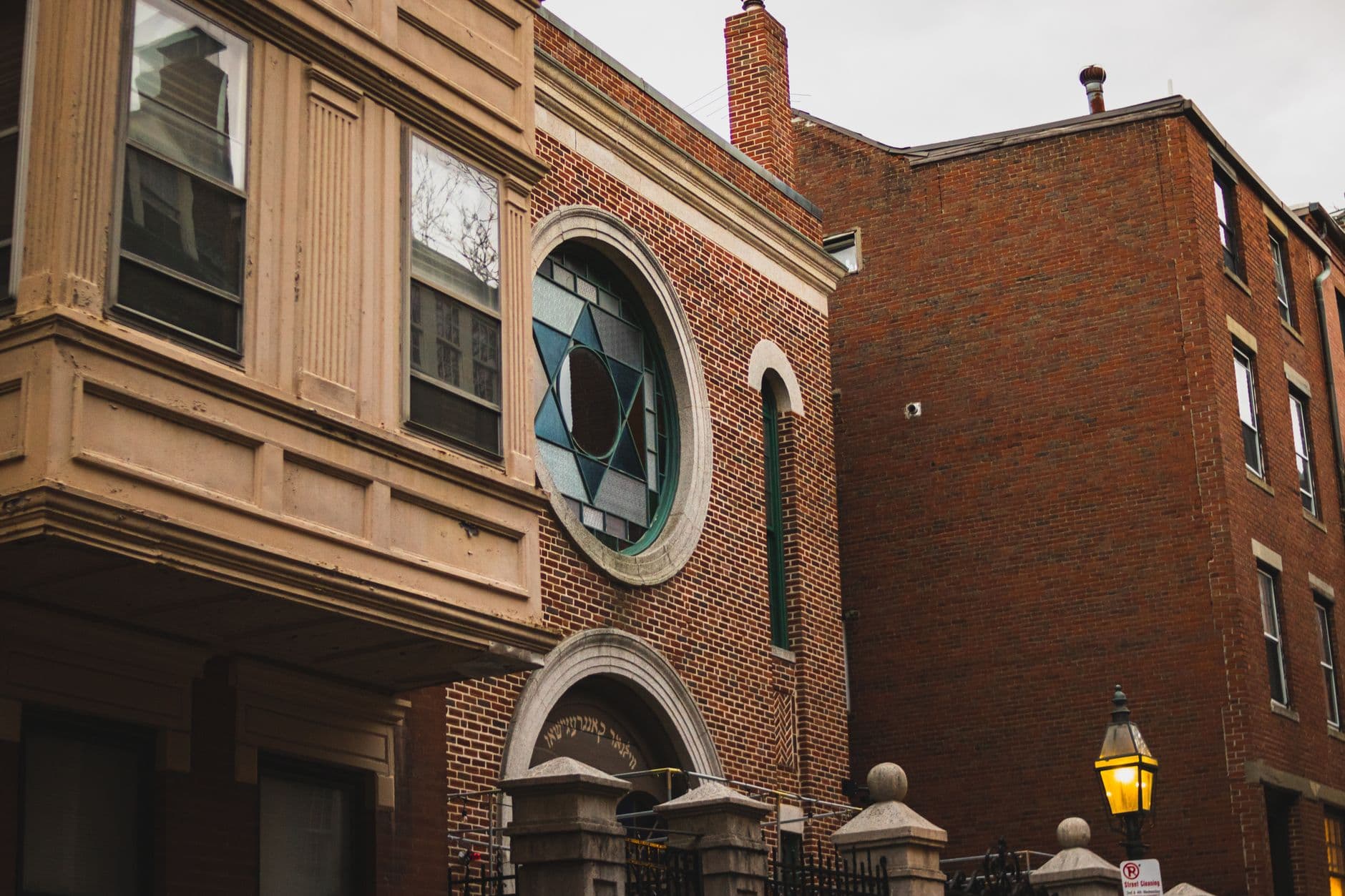
The Jewish community of Alexandria was not a diaspora community in the modern sense. It was ancient, urban, and foundational to the city itself. By the first century BCE, Jews comprised roughly one third of Alexandria's total population, concentrated in two of the city's five administrative districts. The community was wealthy enough, and established enough, to build a synagogue described by the Talmud as so large that a flag had to be waved from the bimah so worshippers at the back would know when to say Amen.
That original synagogue is gone. The Romans destroyed it during the Jewish revolt of 115 to 117 CE, a conflict almost unknown outside specialist circles but catastrophic in scale: the Kitos War killed hundreds of thousands across Egypt, Cyprus, and Cyrenaica, and effectively ended the ancient Alexandrian Jewish community as it had existed. What followed was centuries of rebuilding, contraction, and rebuilding again.
The community you encounter in the nineteenth and twentieth centuries, the one that produced the poet Constantine Cavafy's neighbors, the one that filled the Eliyahu Hanavi Synagogue, was largely shaped by waves of Sephardic Jews expelled from Spain in 1492, Karaite Jews with roots in Egypt going back to the ninth century, and Levantine traders who followed Muhammad Ali's opening of Alexandria as a commercial port in the 1820s. By the 1920s, Alexandria's Jews held Egyptian, Italian, Greek, French, and British passports simultaneously. They spoke four languages in a single sentence. They ran cotton exchanges, department stores, publishing houses, and literary salons.
All of it unraveled in less than a decade. The 1948 Arab-Israeli war, the 1952 revolution, and above all Nasser's 1956 nationalization decrees and the resulting expulsions emptied the community faster than anyone thought possible. Between 1956 and 1967, more than 50,000 Jews left Egypt. Many left with one suitcase and a prohibition on taking more than a few pounds sterling in cash.
Inside Eliyahu Hanavi: What You Will Actually See
The synagogue sits on Nabi Daniel Street in central Alexandria, a street whose name is its own palimpsest: Nabi Daniel means Prophet Daniel, and the street has been associated with Jewish and early Christian presence since late antiquity. Some Alexandrians will still tell you, with complete seriousness, that Alexander the Great is buried somewhere beneath it. No excavation has confirmed this, but no excavation has been thorough enough to rule it out.
Eliyahu Hanavi, meaning Elijah the Prophet, was built in its current form in 1354 and rebuilt substantially in 1850. The 1850 reconstruction is what you see: a building that reads as vaguely Italianate from the outside, with arched windows and a dignified stone facade, and reveals itself as something else entirely once you are inside.
The interior is large enough to seat seven hundred people. The marble columns are the first thing you notice, twenty-two of them, pale and cool in the filtered light. The wooden pews are still in place, though nobody sits in them. The women's gallery runs around three sides of the upper level. The bimah, the raised reading platform, occupies the center of the nave. The Aron Hakodesh, the ark that holds the Torah scrolls, is at the eastern wall, and it still contains scrolls. This is not a museum. The scrolls are real and maintained by the community.
The synagogue underwent a major restoration completed in 2020, funded partly by the Egyptian government. This matters more than it sounds: the Egyptian state spending public money to restore a Jewish house of worship is a political and cultural statement, imperfect and complicated, but real. The restoration is careful and clearly done with respect. The brass chandeliers have been relit. The stained glass is repaired.
What you feel inside is not precisely grief, though grief is present. It is something closer to the specific silence of a place built for a crowd that no longer comes. The caretaker, a Muslim Egyptian man whose family has managed the building for decades, will tell you this without sentimentality. He knows the names of families. Some of them write from Tel Aviv, from Paris, from São Paulo. Some of them send their grandchildren to visit.
The Torah Scrolls and the Geniza Question
One detail most visitors do not ask about: Eliyahu Hanavi still holds a collection of documents and ritual objects that have not been fully catalogued. Jewish law prohibits destroying sacred texts, so old documents accumulate in a geniza, a storage room for worn religious items, until they can be properly buried. The Cairo Geniza, discovered in 1896 in the Ben Ezra Synagogue, contained 300,000 manuscript fragments that rewrote the history of the medieval Mediterranean world. Alexandria's remaining documents have attracted less attention. Whether anything comparable remains here is an open question.
The Wider Map: What Else Survives
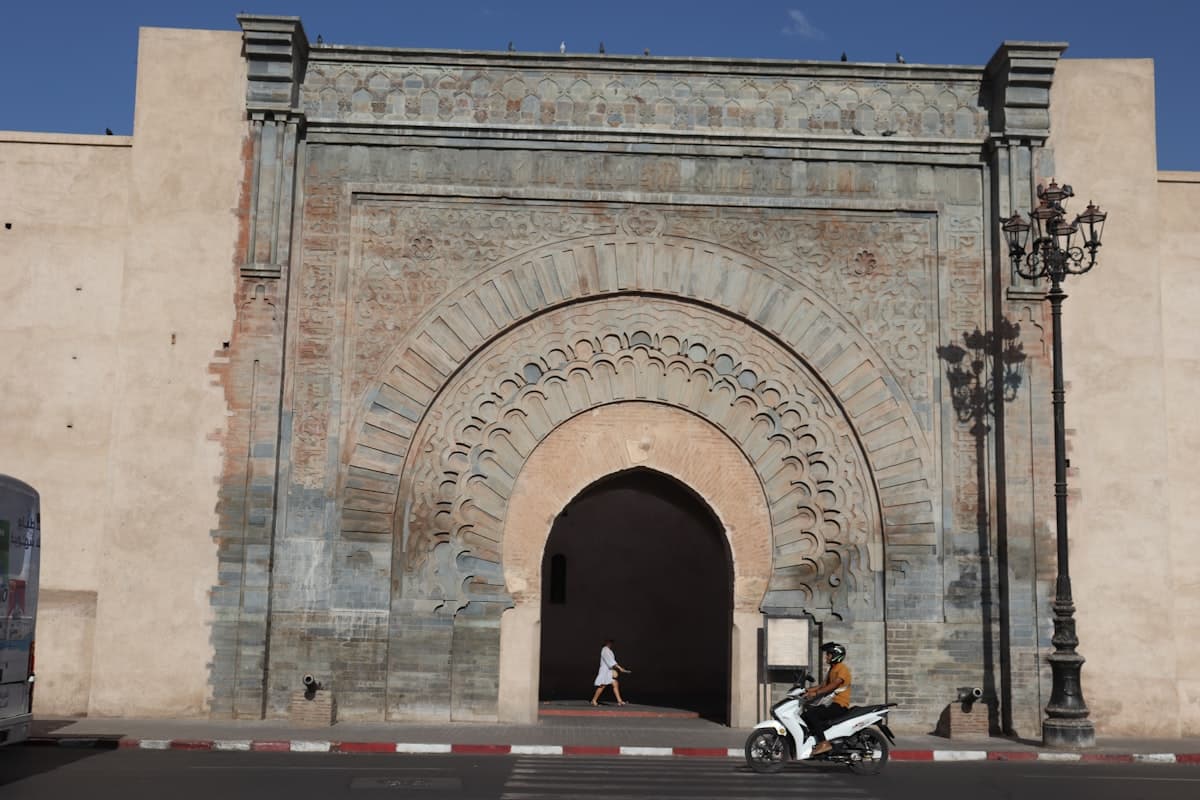
Eliyahu Hanavi is the main site, but it is not the whole picture.
The Alexandrian Jewish Cemetery on Abou Quer Road is one of the most affecting places in the city, and almost nobody goes there. It contains graves dating from the sixteenth century through the mid-twentieth. The inscriptions move between Hebrew, French, Italian, Arabic, and Ladino, the Judeo-Spanish language that Sephardic Jews carried from the Iberian Peninsula and preserved for five centuries. You will find family plots that read like small migrations: a patriarch born in Izmir in 1840, a daughter born in Alexandria in 1872, a granddaughter born in Alexandria in 1901, and then nothing. The family line stops. They left, or they died, or both. Entry is managed through the Jewish community office. Call ahead.
The site of the Ben Ezra Synagogue's Alexandria branch and several former Jewish schools and clubs are now private buildings or government offices, but the architecture is still legible. On certain streets in the Manshiyya district, you can see the bones of what Alexandria was: a city where the signage was in five languages and the buildings refused to commit to a single architectural tradition.
The Karaite Synagogue in the Sporting district represents a distinct thread. Karaite Jews, who reject the rabbinic oral tradition and interpret scripture literally, have been in Egypt since at least the ninth century. Their Egyptian community, which once numbered in the tens of thousands, is now almost entirely based in Israel. The Karaite synagogue in Alexandria is closed to the public but can sometimes be accessed through community contacts arranged through the main Jewish community office.
The Connections
Alexandria's Jewish history does not exist separately from its Islamic or Coptic history. It is braided through both.
The street where Eliyahu Hanavi stands, Nabi Daniel, runs roughly along the ancient canopic way of Greco-Roman Alexandria. Beneath it, archaeologists have confirmed layers of Ptolemaic construction. The neighborhood around it has been, in sequence, a Ptolemaic residential district, a Roman commercial zone, a Byzantine Christian quarter, an early Islamic settlement, an Ottoman merchant district, and a nineteenth-century cosmopolitan neighborhood where Jewish, Greek, Italian, and Syrian families lived in adjacent buildings and did business across religious lines daily.
The Egyptian Jewish community produced Youssef Chahine, arguably the most important filmmaker in Arab cinema history, whose family was part of Alexandria's Levantine Catholic community but who grew up in the same cosmopolitan matrix. It produced the poet Edmond Jabès, whose meditations on exile and language influenced Jacques Derrida. It produced Georges Moustaki, the Greek-Jewish Alexandrian who became one of France's most celebrated chanson singers. These are not obscure figures. They shaped European and Arab culture in the twentieth century, and their Alexandria made them.
The Catacombs of Kom el-Shoqafa, a fifteen-minute drive from Eliyahu Hanavi, show the same layering from a different angle: a Roman-era burial site that fuses Egyptian, Greek, and Roman iconography in a way that makes it impossible to identify the religion of the people buried there. Alexandria has always refused clean categories.
Common Mistakes
Arriving without calling ahead. The synagogue does not keep reliable public hours. The caretaker may be there; he may not be. One phone call the day before saves a wasted trip. The number is +20 3 492 5595.
Treating this as a Holocaust memorial site. It is not, and arriving with that frame misreads the history. The Egyptian Jewish community's dispersal was driven by nationalism, war, and political expulsion, not genocide. The history is painful and complex. Bring curiosity, not a pre-written narrative.
Skipping the cemetery for the synagogue. Most organized tours go only to Eliyahu Hanavi. The cemetery on Abou Quer Road is more personally revealing and almost always empty of other visitors. If you visit only one site, it should not replace the synagogue, but if you have time for both, do not sacrifice the cemetery.
Booking a general Alexandria city tour. Almost no standard tour operator covers Jewish Alexandria with any depth. A guide who specializes in Alexandrian history or minority communities is worth the extra cost. Ask at the Cecil Hotel or contact the Egyptian Society for Historical Studies for recommendations.
Visiting the Montaza Palace complex instead of spending more time here. The palace grounds are pleasant and the beaches nearby are fine, but the palace itself offers nothing you cannot see in a photograph. The two hours most tourists spend there would be better given to sitting in the Jewish cemetery with a notebook, or walking Nabi Daniel Street slowly.
Expecting visible Jewish community life. There is almost none. Do not come expecting a living neighborhood, a kosher restaurant, or a community Shabbat you can attend. Come to understand what was here and what it cost to lose it. That is the actual experience on offer.
Ignoring the Arabic context. The story of Egyptian Jews is also a story about Arab nationalism, about the consequences of the founding of Israel, about what it means when a state decides who belongs. Egyptian friends and colleagues will have complicated feelings about this history. Engage with those complications. They are part of the visit.
Practical Tips
Wear conservative clothing to the synagogue, as you would at any religious site in Egypt. Shoulders and knees covered. Remove your shoes if the caretaker indicates it, though this is not always required.
Bring cash for the cemetery caretaker's informal fee, around EGP 50 to 100. There is no ticket booth.
Photography inside Eliyahu Hanavi is generally permitted, but ask the caretaker first. The Torah scrolls should not be photographed without explicit permission.
If you read French, the best preparation is Robert Ilbert's "Alexandrie 1830-1930", a two-volume social history that treats the Jewish community as central to the city's story rather than marginal to it. In English, André Aciman's memoir "Out of Egypt" gives you the texture of Alexandrian Jewish life in its final years through personal prose that no guidebook can replicate. Read it before you go.
Alexandria's taxi drivers are generally honest and the fares are low by any international standard. Negotiate before you get in, agree on EGP 40 to 60 for most central routes, and pay in exact change if possible.
The best coffee near Eliyahu Hanavi is at Trianon Café on Raml Station square, a 1929 institution that has served Alexandrians of every religion and none. Order the Turkish coffee, sit by the window, and watch the city that contains all of this history go about its day.
Frequently Asked Questions
The Weekly Dispatch
More on Egypt, every Friday.
Cultural depth and places most guides never mention.
No spam. Unsubscribe anytime.