Jewish Alexandria: History, Synagogues and a Vanished World
At its peak, Alexandria's Jewish community numbered 80,000. Today, fewer than a dozen remain. The synagogues still stand. This is what happened.

Quick Facts
- Best time to visit
- October to April. Alexandria's summer humidity is severe and the synagogue is not air-conditioned. Winter light is clear and the streets around the Jewish quarter are more comfortable to walk.
- Entrance fee
- Free, but access requires prior arrangement. Tip the caretaker EGP 50 to 100. Jewish cemetery: free, tip recommended.
- Opening hours
- Eliyahu Hanavi Synagogue: approximately Sunday to Thursday 10am to 4pm, but hours vary and closure without notice is common. Confirm before visiting.
- How to get there
- Train from Cairo Ramses Station to Alexandria Misr Station: EGP 75 to 200 depending on class, approximately 2 hours. Within Alexandria, taxi or Uber from Ramla tram station to Nabi Daniel Street costs EGP 30 to 50 (under $2 USD). Tram from central Alexandria: EGP 5.
- Time needed
- Two hours for Eliyahu Hanavi alone. Half a day for the synagogue, Jewish quarter streets, and cemetery combined. Full day if adding Kom el-Dikka and the Cavafy Museum.
- Cost range
- Budget EGP 200 to 400 for the Jewish heritage sites alone. Mid-range EGP 800 to 1,500 with a specialist guide (strongly recommended). Day trip from Cairo including train: add EGP 150 to 400 for transport.
At its peak, Alexandria's Jewish community numbered 80,000 people. Today, according to the last reliable count, fewer than a dozen Jewish residents remain in the city. The synagogues have not been demolished. They have not been converted into mosques or apartments. They are being restored, at Egyptian government expense, which is perhaps the most complicated and interesting fact of all.
Quick Facts
Eliyahu Hanavi Synagogue (primary site) Entrance fee: Free (foreign visitors must register with the Jewish community trust or arrange access through a licensed guide; access is not guaranteed for walk-ins) Opening hours: Sunday to Thursday, approximately 10am to 4pm, though hours vary seasonally and the building is sometimes closed without notice. Call ahead or ask your hotel concierge to confirm. Best time to visit: October to April, when Alexandria's humidity drops and the Mediterranean light is clear rather than hazy. Avoid visiting during Jewish high holidays unless you are attending services, as the building may be closed to tourists. How to get there: From central Alexandria, take a taxi or ride-share (Uber operates in Alexandria) to Shar'a Nabi Daniel in the Manshiyya district. The fare from Ramla tram station is roughly EGP 30 to 50 (under $2 USD). The tram itself from the city center costs EGP 5. Do not attempt this neighborhood without a basic map; Google Maps works but street signage is inconsistent. Time needed: Allow two hours for the synagogue itself. A full half-day if you walk the surrounding streets of old Jewish Alexandria, including the sites of the former Jewish quarter. Cost range: Budget EGP 200 to 400 per day for this area combined with nearby sites; mid-range EGP 800 to 1,500 if you hire a specialist guide (strongly recommended).
Why This Place Matters
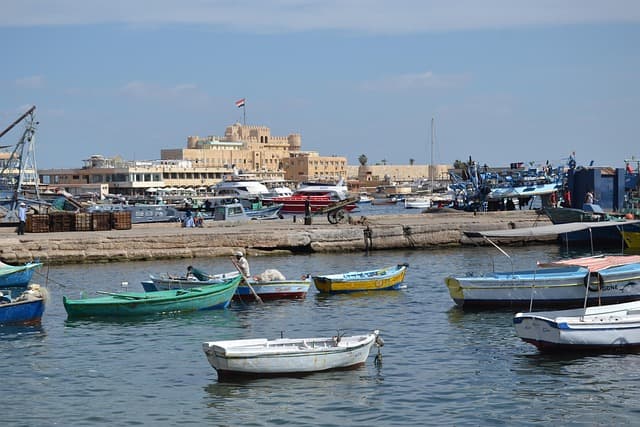
Alexander the Great founded this city in 331 BC, and Jews arrived almost immediately. By the first century AD, two of Alexandria's five districts were majority Jewish. Philo of Alexandria, the philosopher who attempted to reconcile Jewish theology with Greek philosophy, was born here around 20 BC. His work would later influence both Christian theology and Islamic Neoplatonism, which means that the intellectual architecture of three world religions carries traces of Jewish Alexandria. This is not a minor footnote. It is a central fact of Mediterranean intellectual history.
The community that Philo knew was eventually fractured by the Roman suppression of the Jewish revolts between 115 and 117 AD, when the Jewish population of Alexandria was decimated in fighting so severe that it effectively ended Jewish life in the city for generations. The community rebuilt slowly, flourished under Byzantine and then Arab rule, contracted during the Crusades, and expanded dramatically under Ottoman and then Khedival rule in the nineteenth century. By 1900, Alexandria had become one of the great cosmopolitan port cities of the world, and its Jewish community, which included Sephardic families from Spain, Karaites, Italian Jews, and long-established Egyptian families, was woven into the commercial and cultural fabric of the city at every level.
The novelist Edmond Jabès was born here. So was the banker and philanthropist Felix de Menasce, whose family built one of the city's most important cultural institutions. The department store Cicurel, which became the landmark of downtown Cairo's shopping culture, was founded by an Alexandrian Jewish family. The erasure of this community from Egypt's public memory has been so thorough that most Egyptians in their thirties and forties are genuinely unaware it existed at the scale it did.
What Happened: 1948 to 1967
The community did not disappear overnight, and it did not disappear entirely because of antisemitism, though antisemitism was part of it. The 1948 Arab-Israeli War triggered the first major wave of emigration, accompanied by bombings in the Jewish quarter and a climate of fear. But many families stayed. The real rupture came in 1956, when Nasser nationalized the Suez Canal and Britain, France, and Israel attacked Egypt. In the weeks that followed, the Egyptian government expelled roughly 25,000 Jewish residents who held British or French citizenship, canceled the Egyptian citizenship of thousands more, and sequestered Jewish-owned businesses and properties. This was not a pogrom. It was a bureaucratic dismantling, conducted with stamps and forms, that achieved in months what violence might have taken years to accomplish.
The families that remained after 1956 faced a second wave of pressure following the 1967 war, when Jewish men in Egypt were interned as potential enemy combatants. By 1970, the community that had numbered 80,000 in 1948 had contracted to fewer than 3,000 nationwide. By 1990, that number was under 200. The people who left took almost nothing. The synagogues, the cemeteries, the community records, and the buildings remained.
The Synagogues: What You Will Actually See
Eliyahu Hanavi: The One That Survived Fully Intact
The Eliyahu Hanavi Synagogue on Nabi Daniel Street is the main event, and it is genuinely worth your time. Built in 1354 on the site of an earlier synagogue, the current structure dates primarily from an 1850 restoration funded by the community's Sephardic elite. The interior has a double row of Corinthian columns in pink Aswan granite, a carved wooden ark behind the bimah, and a gallery for women that runs around three sides of the nave. The building holds approximately 700 people. On most days, it holds a caretaker and perhaps a few visitors.
The Egyptian government began a restoration project here in the 2010s, and the work is visible: fresh paint, stabilized columns, repaired mosaics in the floor. The restoration has been somewhat controversial among diaspora Egyptian Jews, some of whom feel that maintaining beautiful buildings while the community itself is extinct is a complicated kind of memorial. Others see it as an act of historical honesty. Both positions are reasonable.
What most visitors do not notice: the synagogue sits on Nabi Daniel Street, which is named for the prophet Daniel, who according to local tradition is buried nearby. The street itself is built over what was, in antiquity, the intersection of Alexandria's two main colonnaded avenues, the site where Alexander the Great's tomb was believed to stand. You are standing on the most archaeologically significant street in the city, in a building that has been continuously used for religious purposes for at least seven centuries.
The Mosseiri and Green Family Synagogues
Two smaller synagogues in the city are effectively inaccessible without significant local connections. The Mosseiri Synagogue in the Ibrahimia district is locked and has been since the 1970s. The Green Family Synagogue in Sidi Gaber exists primarily in photographs. These buildings are not ruins; they are simply closed, their keys held by the Jewish community trust in Cairo, which manages Alexandria's Jewish patrimony from 200 kilometers away. If you are serious about seeing the full picture, contact the Bassatine Association or the Cairo Geniza Project before your trip. They occasionally facilitate access.
The Jewish Cemetery
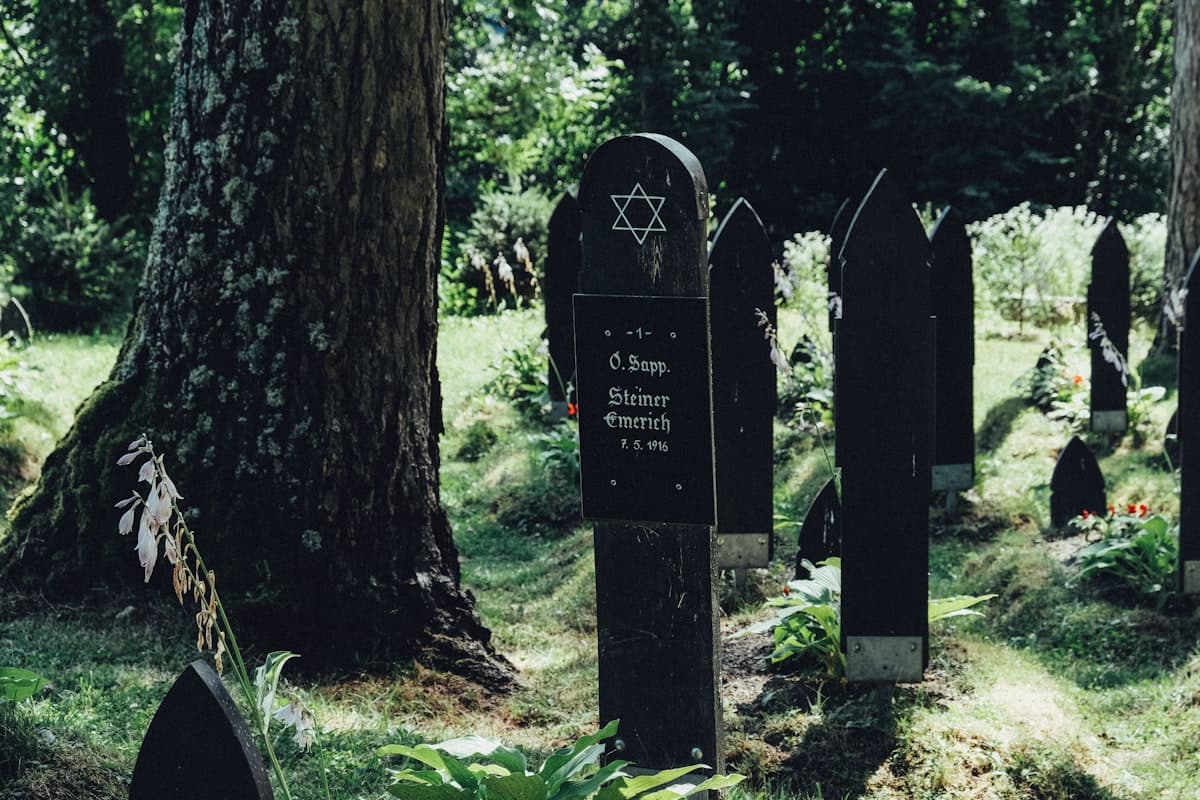
The Jewish cemetery at the edge of the Chatby neighborhood is more accessible than the smaller synagogues and arguably more affecting. It holds graves dating from the nineteenth century through the late twentieth, with inscriptions in Hebrew, French, Italian, Arabic, and Ladino, sometimes on the same stone. The range of languages on a single gravestone is a compressed education in what this community actually was. The cemetery is administered by the Egyptian government and is generally open, though the caretaker's schedule is unreliable. Bring a small tip of EGP 50 to 100.
The Connections: Jewish Alexandria and the Larger City
The Nabi Daniel Mosque, directly across the street from the synagogue, was built in the sixteenth century over a site that both Muslim and Jewish traditions associated with the prophet Daniel. The proximity is not accidental. Jewish and Muslim communities in Ottoman Alexandria shared patron saints and sacred geography in ways that do not fit neatly into contemporary frameworks of religious conflict.
The nearby Kom el-Dikka archaeological site, where Polish excavators have been working since 1960, sits atop what was the Roman civic center. It is four minutes' walk from the synagogue. Beneath the Roman villa currently on display, there are Ptolemaic structures that were contemporary with the height of Alexandria's ancient Jewish community. A visitor who walks from Eliyahu Hanavi to Kom el-Dikka to the Cavafy Museum (the Greek poet Constantine Cavafy lived 200 meters from the synagogue) is not moving between unrelated sites. They are walking through overlapping communities that shared the same streets for two thousand years.
In Cairo, the Ben Ezra Synagogue in Coptic Cairo tells a parallel story and makes a useful complement to the Alexandria visit. The Ben Ezra is better known internationally because it is where the Cairo Geniza was discovered in 1896, a collection of 300,000 manuscript fragments that rewrote the history of medieval Jewish life and, incidentally, medieval Islamic commerce.
Common Mistakes
Showing up without confirming access. The Eliyahu Hanavi Synagogue has no reliable walk-in policy for foreign visitors. Egyptian authorities take security at Jewish sites seriously, and the building is sometimes locked for reasons that have nothing to do with you. Email the Jewish Community of Alexandria through the Egyptian Jewish Heritage Organization before you arrive.
Hiring a standard Alexandrian city guide. Most licensed guides in Alexandria have no specialist knowledge of Jewish history. They will give you the broad strokes and miss everything that matters. The Bassatine Association in Cairo can refer you to guides who know this material. Pay the difference; it is worth it.
Skipping the neighborhood in favor of just the synagogue interior. The streets around Nabi Daniel, including Shar'a Fouad and the old fabric market, contain buildings that were once Jewish-owned businesses, community clubs, and schools. A specialist guide can point them out. Without one, you are just looking at storefronts.
The Alexandria National Museum is not worth a long detour for this specific interest. It has modest Ptolemaic material and almost nothing on the modern Jewish community. The Museum of Alexandria, which had a dedicated section on Alexandrian Jewish life, was still reorganizing its collections as of my last visit. Ask specifically before going.
Expecting the city to market itself on this history. Alexandria does not. Unlike some cities that have developed Jewish heritage tourism infrastructure, Alexandria treats this history as present and complicated rather than packaged for export. This is actually more honest, but it means you have to work harder to find what you are looking for.
Treating this as a tragedy tourism exercise. The Jewish community of Alexandria was not only a victim community. It was also one of the wealthiest, most culturally productive, and most internationally connected urban communities in the Mediterranean world. Coming only to mourn its disappearance misses most of what it actually was.
Overlooking the Cavafy Museum. It is not a Jewish site, but Cavafy's poems are saturated with the pluralist Alexandria that produced Jewish Alexandria. His poem "The God Abandons Antony" describes a city that knows it is losing something irreplaceable and chooses to face that loss with dignity. Read it before you go.
Practical Tips
Dress conservatively. The synagogue is an active, if rarely used, religious site, and covering your shoulders and knees is respectful and expected. Women who visit during occasional services should bring a headscarf.
Photography inside Eliyahu Hanavi is sometimes permitted and sometimes not, depending on who is on duty. Ask before you take out your camera. Outside, the street is public and photographable.
The surrounding neighborhood is safe by day and perfectly navigable. Avoid visiting after dark simply because the streets are poorly lit and the sites themselves close before sunset.
Alexandria's Mediterranean humidity means the city is genuinely unpleasant in July and August. The synagogue is not air-conditioned. October through March is the right window.
If you are visiting from Cairo, the Alexandria train from Ramses Station takes two hours on the express and costs EGP 75 to 200 depending on class. The Spanish Car (first class) costs roughly EGP 180 and is comfortable. Do this as a day trip or stay at least one night; the city reveals itself slowly and rewards the extra time.
Frequently Asked Questions
The Weekly Dispatch
More on Egypt, every Friday.
Cultural depth and places most guides never mention.
No spam. Unsubscribe anytime.